
0
Product added

Some watch complications, such as day and date displays, are familiar sights. Others are truly exceptional. The sonnerie complication belongs firmly in that second group: an autonomous chiming function that's as refined as it is full of surprises!
In watchmaking, the sonnerie, like the alarm function, is an audible complication, also known as an “acoustic complication.” It falls into three main categories:
The differences between these types of sonnerie matter: they don't all chime the same way! Since you often can't tell them apart just by looking at the dial or case, you need to listen closely and take your time to identify the type of chime.
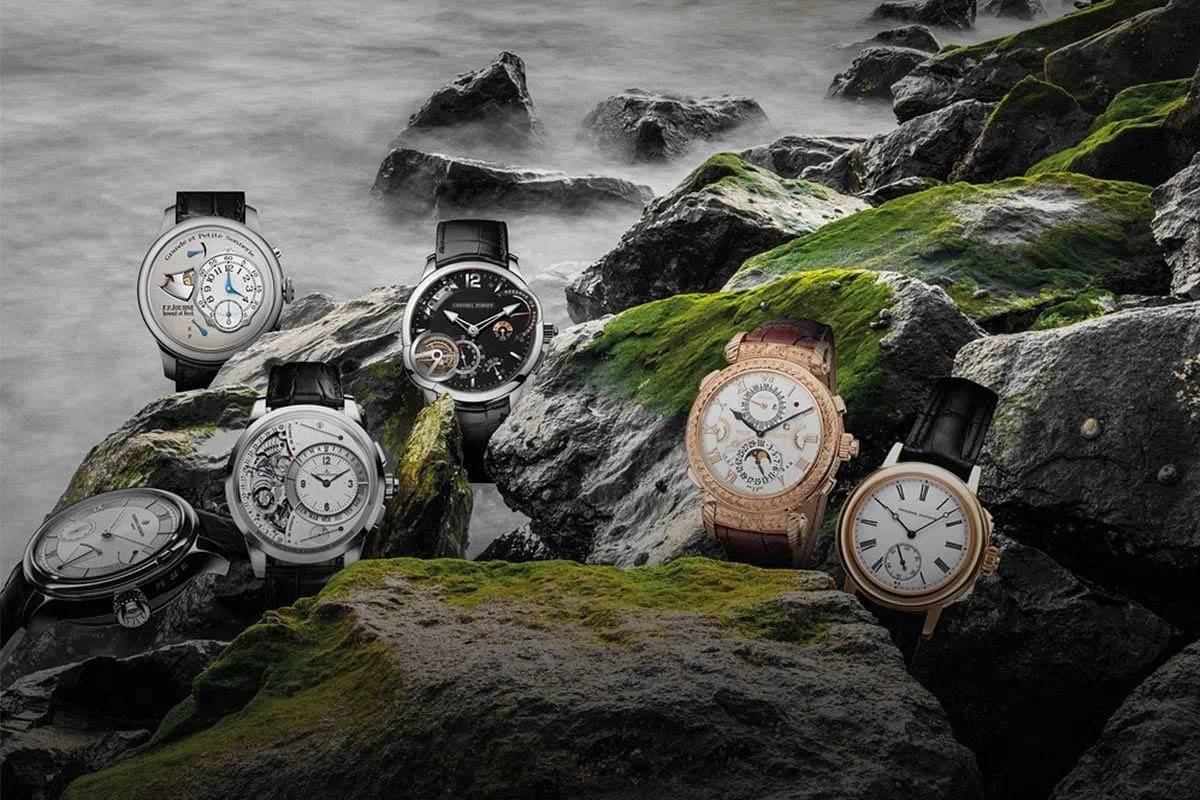
Various chiming watches (Source: The Peak Magazine)
It's also important not to confuse a sonnerie with a minute repeater. A minute repeater must be activated manually, usually with a sliding lever on the left side of the case. Sonneries chime automatically, without any action from you. That's the key difference between the two systems: watches with a sonnerie (grande, petite, or a passing chime) have no on/off button that lets you trigger the chime whenever you like.
As we'll see, the sonnerie wasn't developed overnight… It took centuries of watchmaking advances to make it small enough to fit inside the slim case of a wristwatch.
To find the first timepieces with a chiming mechanism, we need to go back several centuries… It's the 15th century, long before wristwatches appeared. Yet domestic clocks capable of striking the hours automatically already existed.
Though bulky, these models were considered revolutionary in their day. Imagine that! They chimed on their own every hour, letting people hear time pass. They had a touch of magic that still captivates us today.
A century later, in the 17th century, some clockmakers in England and Germany achieved a remarkable feat: miniaturizing the chiming mechanisms of domestic clocks to fit pocket watches. This gave rise to the first portable timepieces with a sonnerie complication.
These portable models were extremely expensive to make, so only an elite few could afford them. Among their makers was Edward East, clockmaker to King Charles II, who created a series of watches with an automatic chime and quarter repetition as early as the first half of the 17th century. Remarkable, isn't it?

Portrait of Edward East, 1602-1696 (Source: Worn & Wound)
Considered the oldest pieces of their kind, his creations are now displayed in various collections. If you're planning a trip to England, you can admire some of these marvels at the British Museum.
Also in England, clockmaker and mechanic Samuel Knibb produced portable pieces during the same period with designs that were strikingly modern for their time. These models impress with both their technical features and their appearance.
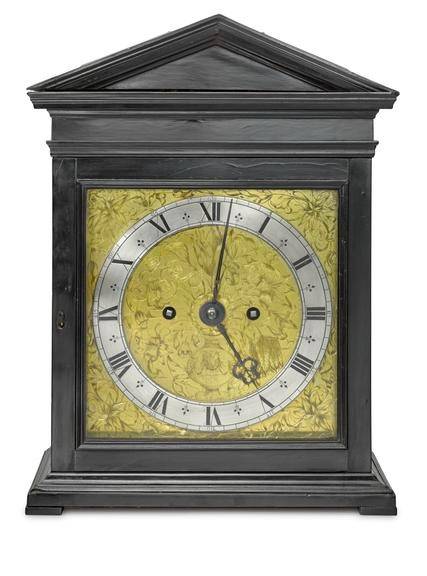
Table clock by Samuel Knibb, circa 1665 (Credit: The Clockmaker's Charity)
The model shown above is remarkable. Its gilded brass dial is compact (23 cm on each side), while its solid oak case with ebony veneer houses a hand-wound mechanical movement with an 8-day power reserve. Besides striking the hours automatically, this clock also announces the half-hours, a remarkable little piece of precision jewelry!
In France, the first clocks that struck the hours automatically appeared a little later, in the late 17th century, during the reign of Louis XIV. The king's clockmaker, Isaac Thuret, created clocks adorned with exquisite details that showcased the French clockmaking expertise of the era.
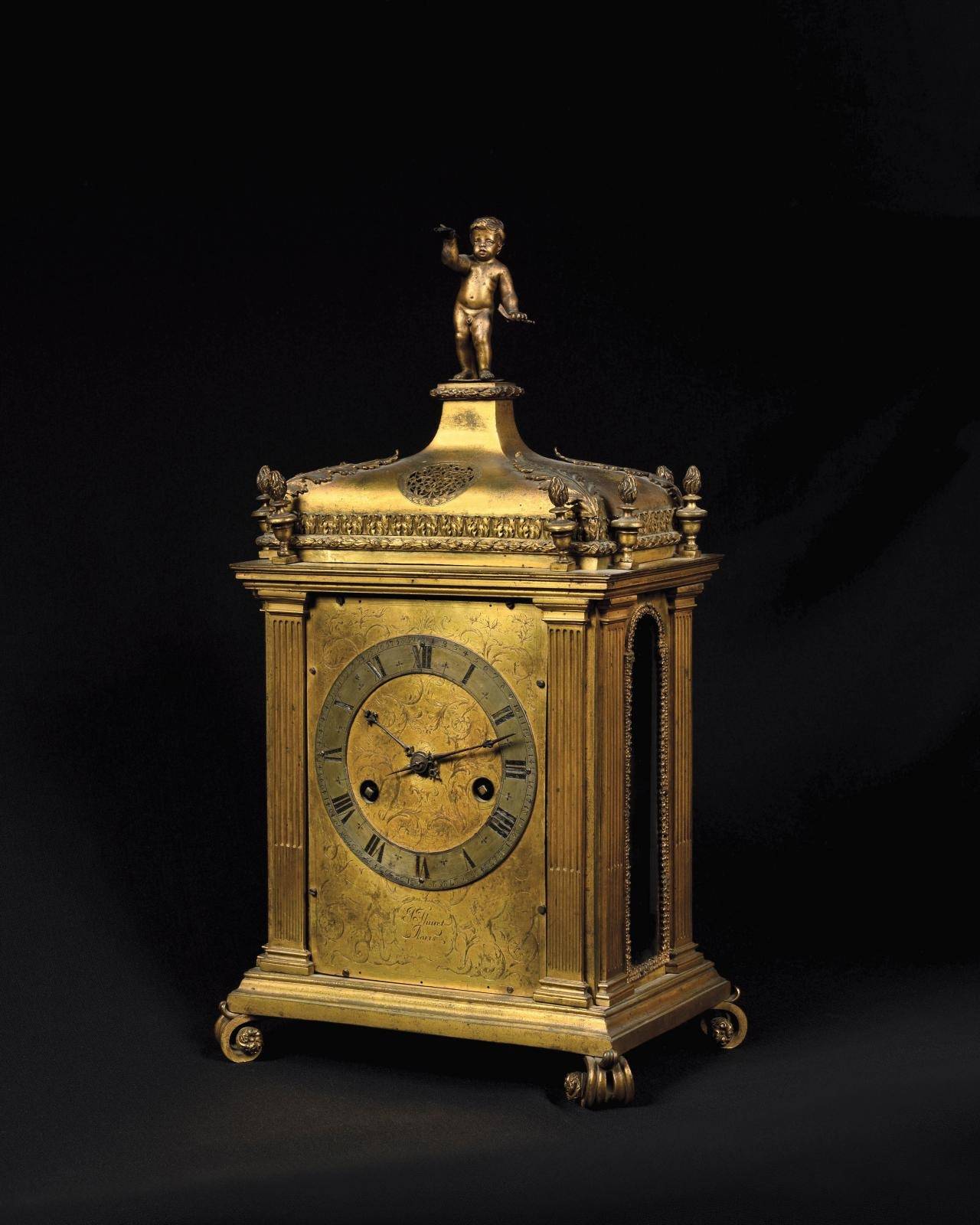
Table clock by Isaac Thuret, circa 1680 (Source: Gazette Drouot)
Made of metal or wood, Isaac Thuret's creations were also remarkably compact. To give you an idea, some of his clocks that struck the hours and half-hours measured just 24 cm wide and barely 16 cm high. Thuret's portable clocks may seem rather bulky to us today, but remember: they were made around 350 years ago, when people still lit their homes by candlelight… and champagne didn't yet exist!
In the 18th century, another French watchmaker, Antoine Thiout, made a name for himself with noteworthy pieces. The author of Traité d'Horlogerie Mécanique et Pratique, he created timepieces with a distinctive aesthetic blending watchmaking ingenuity with decorative art.
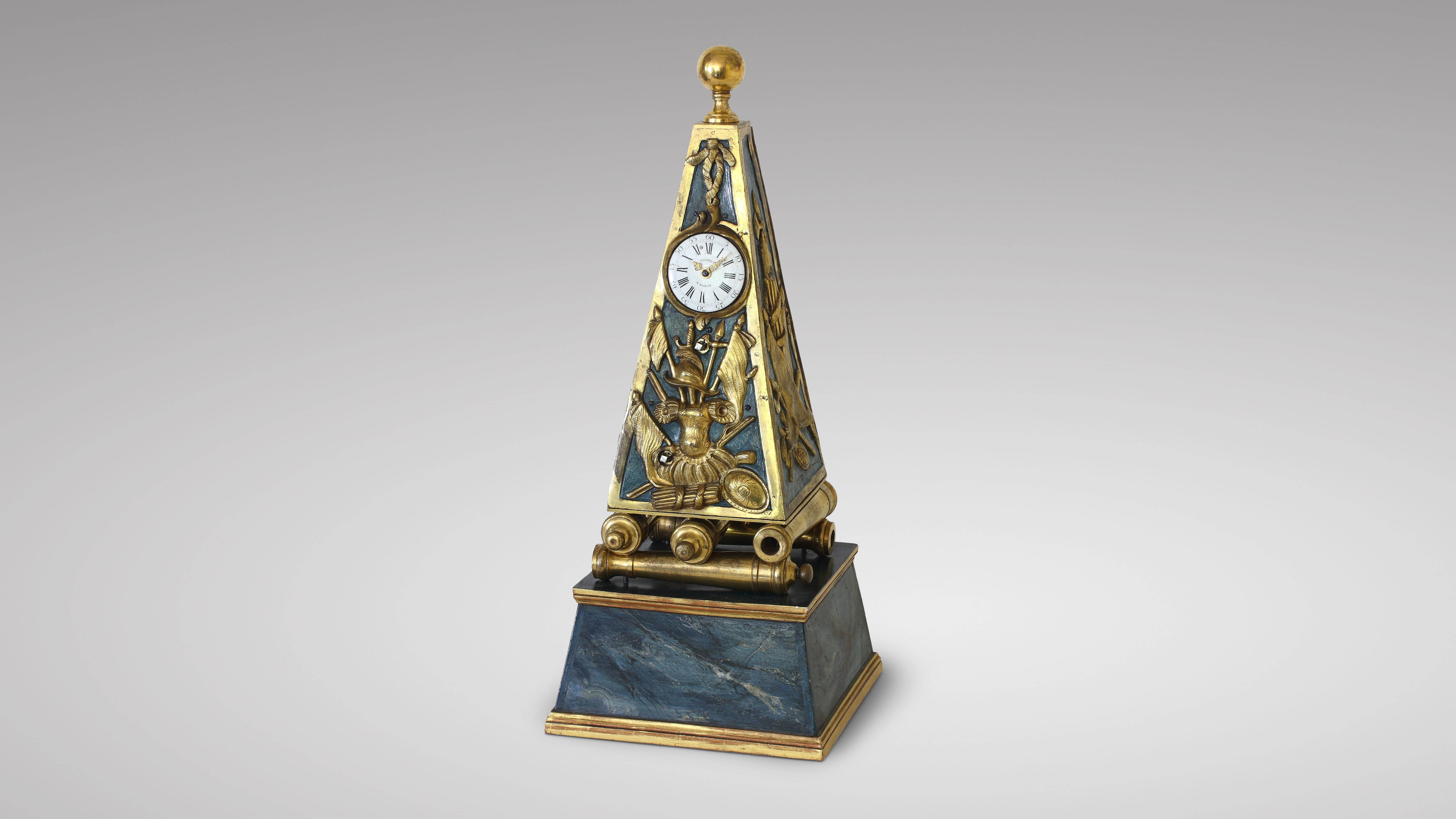
“Obelisk” clock by Antoine Thiout, circa 1760 (Source: Jacques Nève)
But what about pocket watches? As early as the 17th century, some pocket watches made in Germany, England, and the Czech Republic featured a complication that chimed automatically. Unfortunately, very little information about them survives.
One thing is certain: all the automatically chiming clocks we've explored paved the way for even more technically impressive timepieces. They led to the first watches with petite and grande sonneries, inspired by church bells and able to strike the quarters as well as the hours.
The first chiming pocket watches required extraordinary miniaturization: a mechanism originally designed for massive clocks had to fit into a case that was often flat and sometimes only a few millimeters thick. The process began with domestic clocks, moved through portable clocks and spherical portable watches, and ultimately led to pocket watches as we know them.
These early examples appeared between the late 18th century and the early 19th century. Often unsigned, they bear no brand name as watches do today, but their craftsmanship is exceptional: solid 18K yellow gold (750/1000), finely engraved cases, refined details… They sit at the intersection of watchmaking and goldsmithing.
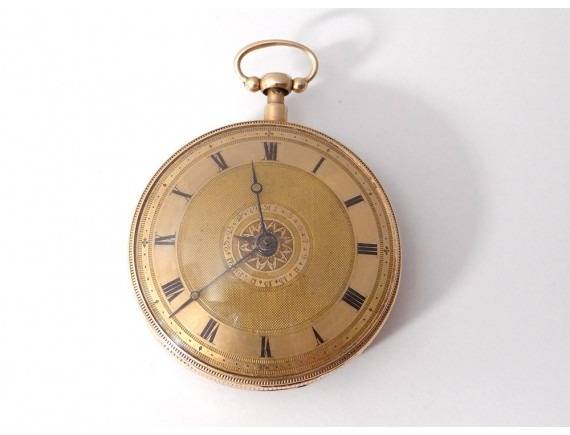
Unsigned chiming pocket watch, late 18th / early 19th century (Source: Antiques de Laval)
Similar models with solid silver cases can also be found from the 19th century. In addition to a grande sonnerie, some models by renowned makers include an alarm, handy for waking up in the morning!
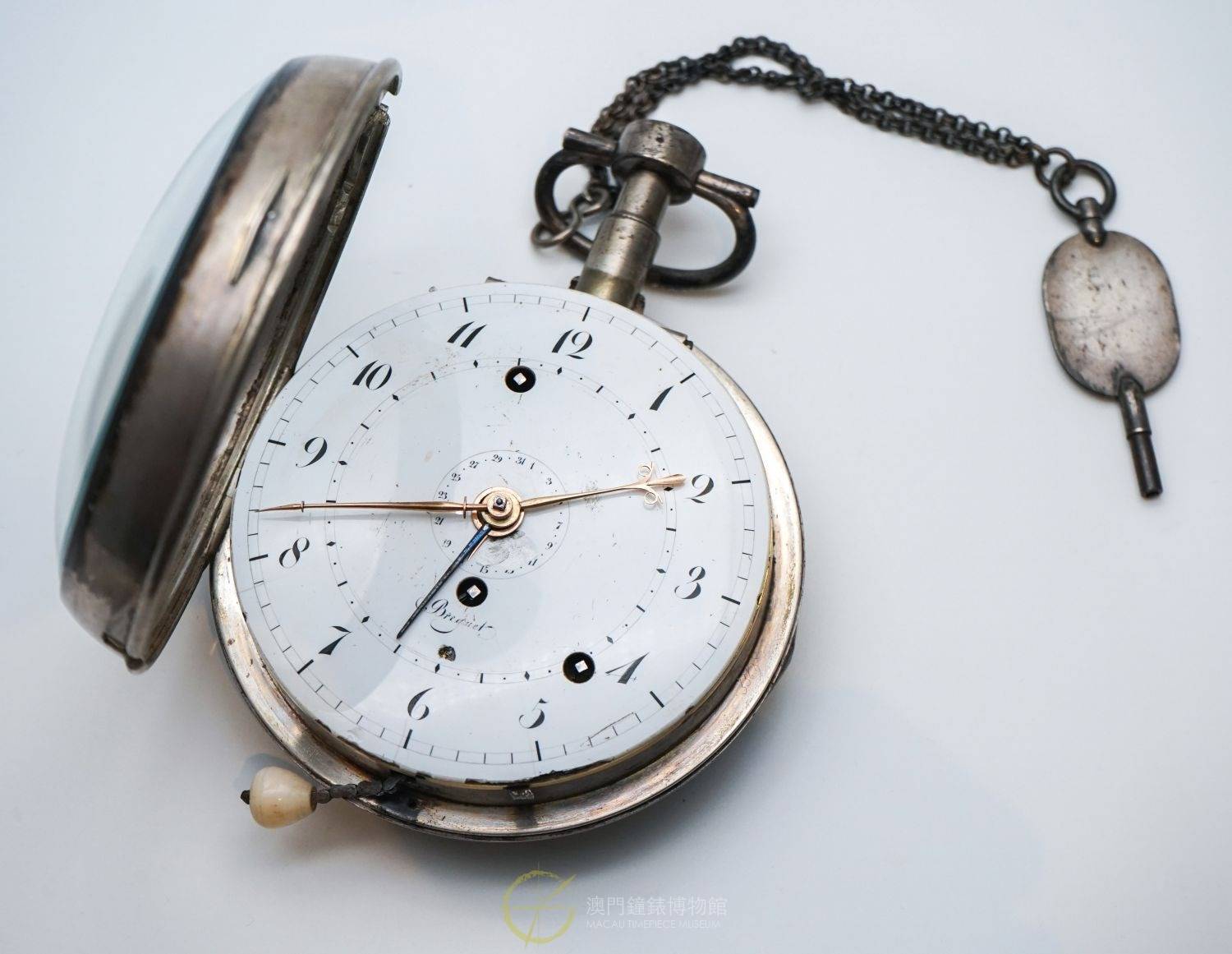
Breguet-signed pocket watch with sonnerie and alarm, circa 19th century (Source: MacauTimepiece Museum)
Their dials are often made of white enamel, a glossy, milky material highly prized at the time. By the early 20th century, chiming pocket watches had grown even more complex, sometimes incorporating a calendar or moon phase complication. In short, they gained more functions.
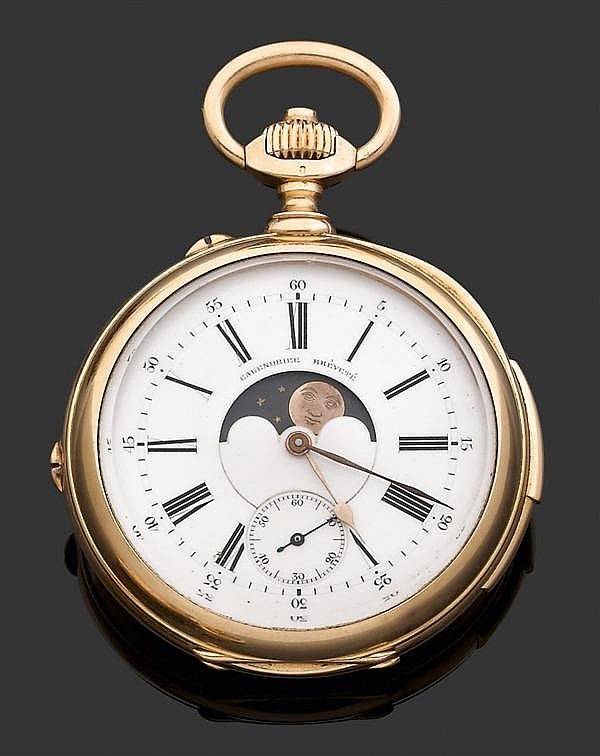
Unsigned pocket watch with sonnerie, calendar, and moon phase, circa 1910 (Source: Tajan)
At that point, every watch with a sonnerie complication was still a pocket watch. Wristwatches were beginning to catch on, but they remained far too small to house this kind of chiming mechanism.
For watchmakers, shrinking the components was an enormous challenge. It wasn't until the late 20th century that the first wristwatches equipped with a petite or grande sonnerie appeared.
Long thought impossible, this feat was finally achieved by Philippe Dufour in 1992! It was a landmark year in watchmaking: Dufour presented a 41 mm wristwatch made entirely by hand and equipped with a grande sonnerie, a petite sonnerie, and a minute repeater.
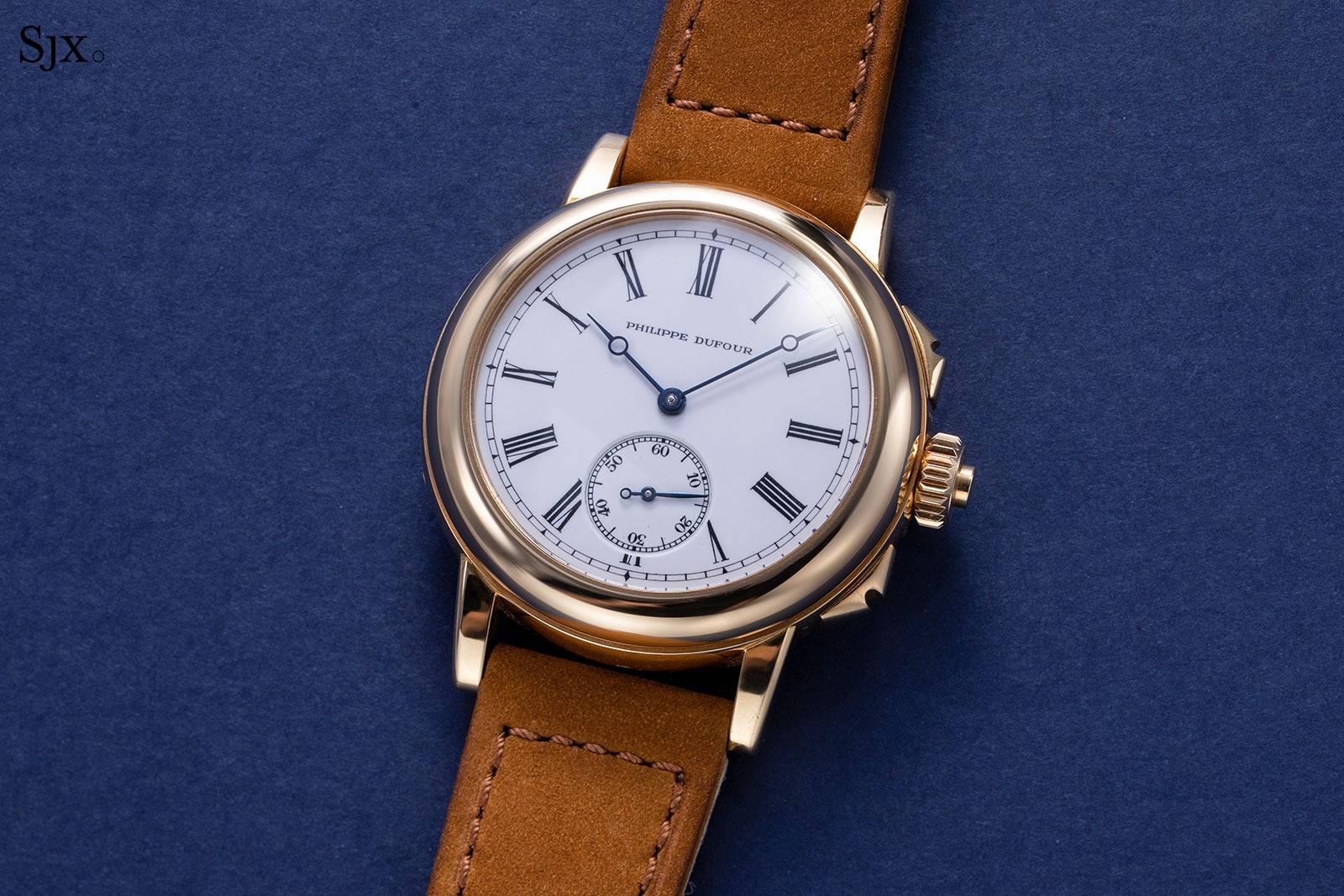
Philippe Dufour Grande Sonnerie, 1992 (Source: SJX Watches)
Its enamel dial, Roman numeral hour markers, Breguet hands, and small seconds at 6 o'clock subtly evoke pocket watches of the past. Notably, Philippe Dufour had previously made five pocket watches with grande and petite sonnerie for Audemars Piguet, a manufacturer that would unveil a technically similar watch that same year.
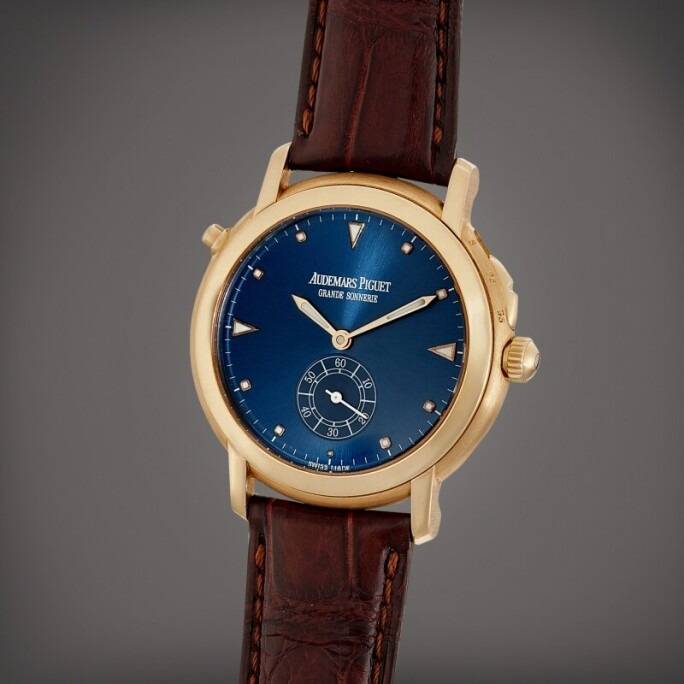
Audemars Piguet Jules Audemars Grande Sonnerie, circa 1992 (Source: Sotheby's)
It took three years of research and development to bring this model to life. Audemars Piguet's watchmakers began the project in 1989, and the Jules Audemars Grande Sonnerie wasn't unveiled in Basel until 1992. Made in just 50 pieces, this watch holds a surprise… Behind its seemingly simple dial and classic 38.5 mm case in 18K rose gold (750/1000) lies caliber 2868, a 51-jewel mechanical movement with both grande and petite sonnerie.
At the start of the 21st century, in 2006, Seiko surprised the watch world with a wristwatch featuring a passing chime. Part of its Credor collection, the piece looks unlike what the Japanese brand usually offers.
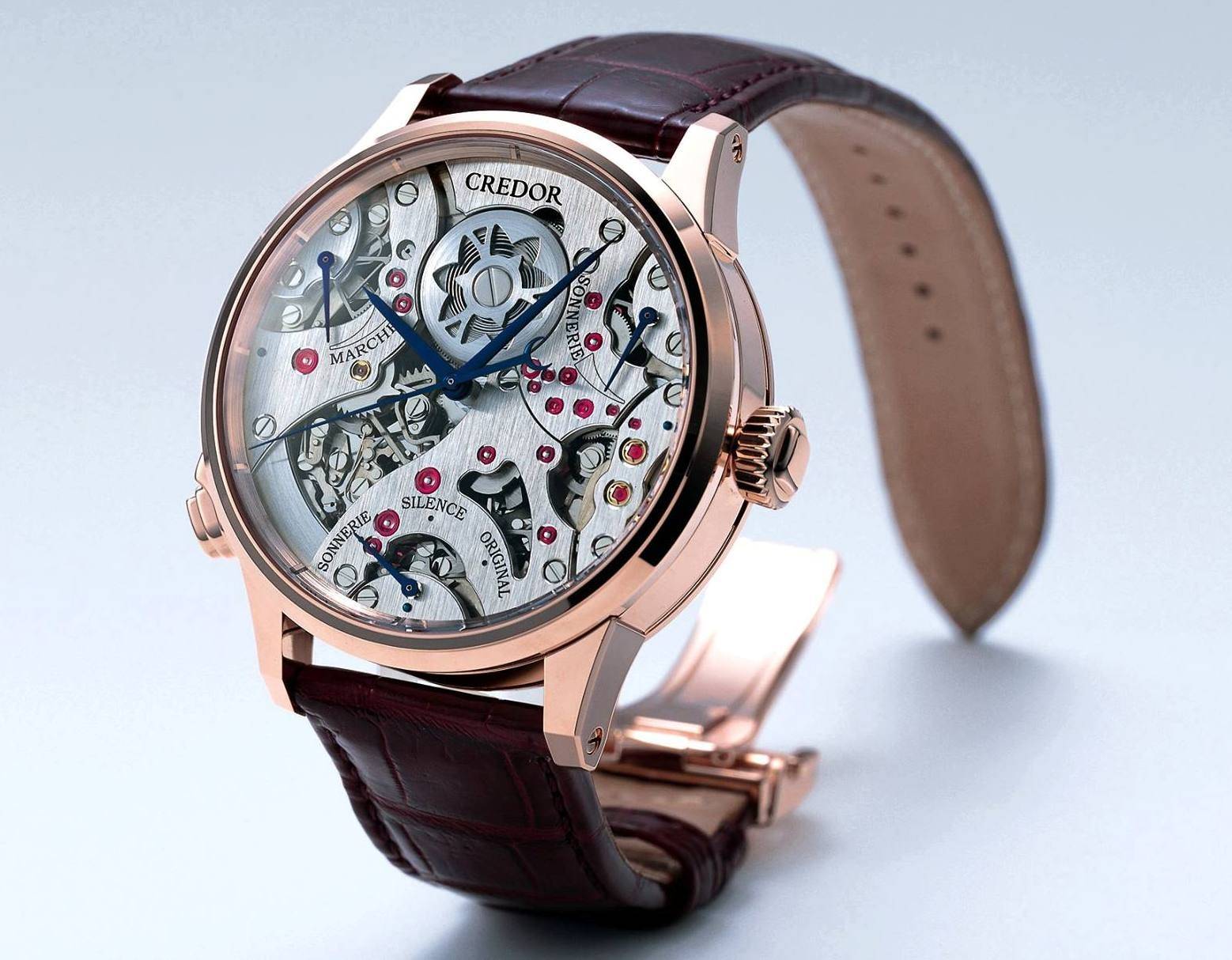
Seiko Credor Spring Drive Sonnerie GBLQ998, 2006 (Source: MasterHorloger)
While the Credor line is often defined by understated elegance, reference GBLQ998 takes a futuristic turn. Powered by the Spring Drive hybrid movement, it features a fully skeletonized dial whose metallic gray finish blends seamlessly with the caliber.
A few years later, in 2020, Patek Philippe unveiled a remarkable model: reference 6301P. With a 37 mm case measuring just 7.5 mm thick, this watch combines two acoustic complications: grande and petite sonnerie.
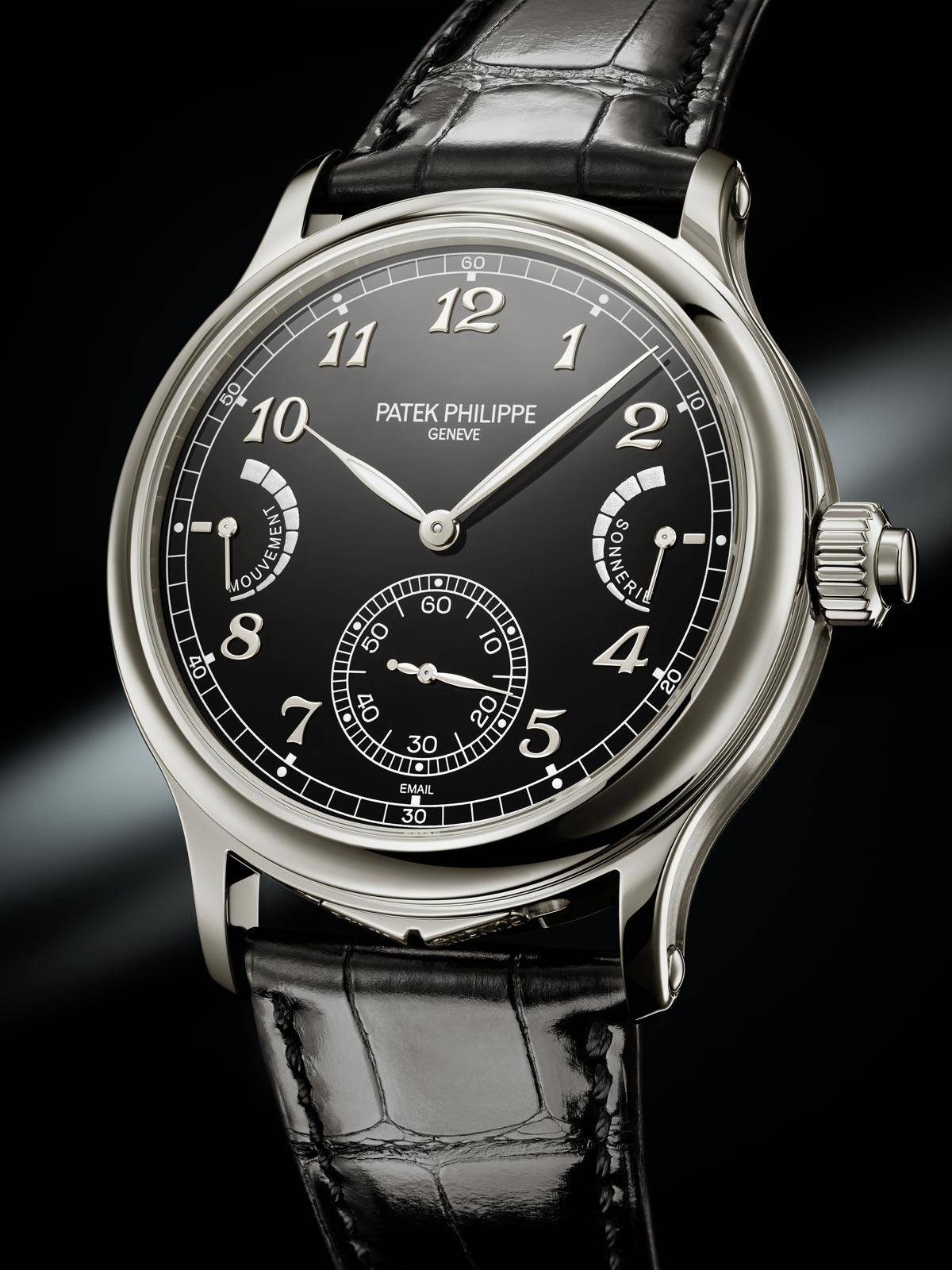
Patek Philippe ref. 6301P, circa 2020 (Source: La Cote des Montres)
Its dial also features an unusual pair of indicators: the sonnerie's power reserve at 3 o'clock and the movement's power reserve at 9 o'clock. A world first!
As for the price of a new piece, the Patek Philippe 6301P was still listed in the catalog in late 2025 at 1 442 000 €.
But back to our journey through history! As we noted at the start of this guide, chiming watches draw inspiration from church bells. No account of the sonnerie complication would be complete without the MeisterSinger Bell Hora Edition Notre-Dame, created in collaboration with Ocarat.
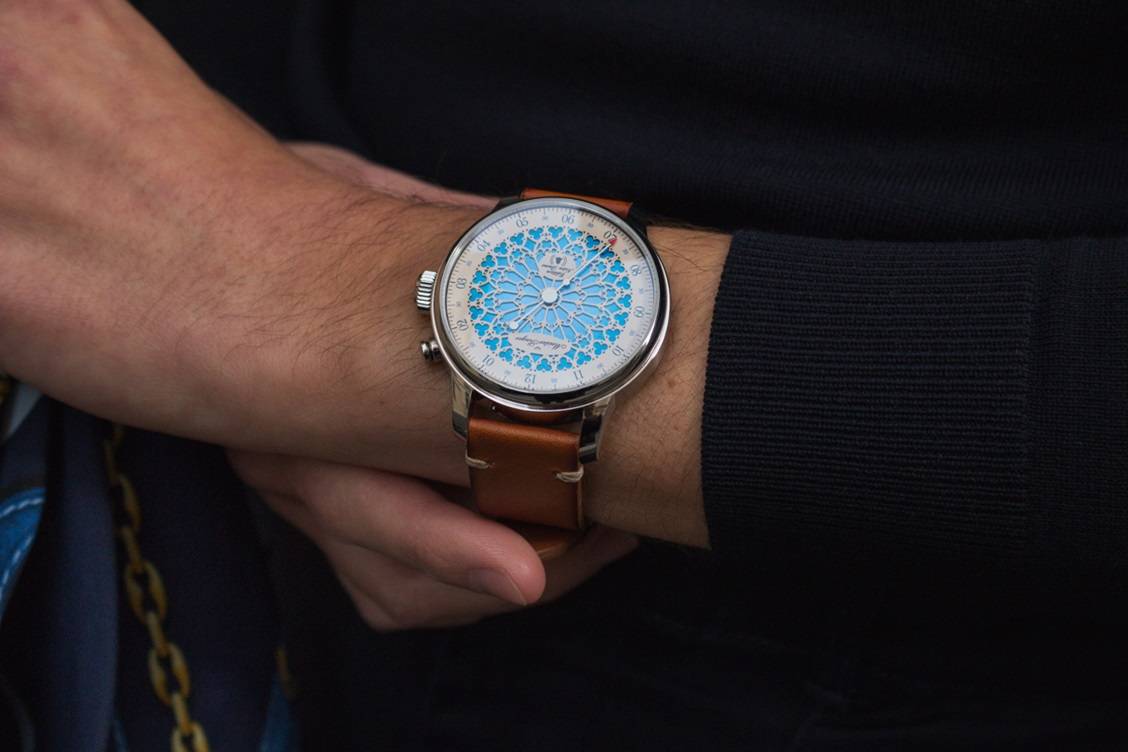
MeisterSinger Bell Hora Edition Notre-Dame x Ocarat (Source: Mr Montre)
Released in 2024 to celebrate the reopening of Notre-Dame Cathedral in Paris, this watch, limited to 70 pieces, features an intricately detailed dial and a passing chime that sounds a soft, pleasant “ding” every hour.
From the first domestic clocks of the 15th century to today's wristwatches, with the portable inventions of the past along the way, the history of the sonnerie complication is rich and fascinating. If there's one takeaway, it's this: wristwatches with a passing chime, petite sonnerie, or grande sonnerie are a remarkably recent development.
Now that you know the history of chiming watches, ready to find out how they work?
Whether it has a passing chime, a petite sonnerie, or a grande sonnerie, a chiming watch relies on an exceptionally sophisticated mechanical system. It turns energy stored in the watch into a rhythmic sequence of sounds, letting you “read” the time by ear without even looking at the dial. But you know that by now!
Now let's get a little more technical and see how it all works…
First, unlike a minute repeater, which sounds on demand, a sonnerie operates on its own. Depending on the mechanism, it automatically strikes the hours, quarters, and sometimes half-hours. To keep it working for as long as the watch runs, watchmakers designed a separate power system.
The sonnerie's mainspring doesn't need to be wound separately, and that's no oversight! Otherwise, the chime would stop as soon as the wearer forgot to wind its dedicated spring. To prevent that, watchmakers devised an ingenious solution: a barrel dedicated to the chiming mechanism, fitted with a spring that remains pre-wound (under tension). The watch's main movement automatically replenishes the spring's energy, ensuring it has enough power to sound the chime when needed.
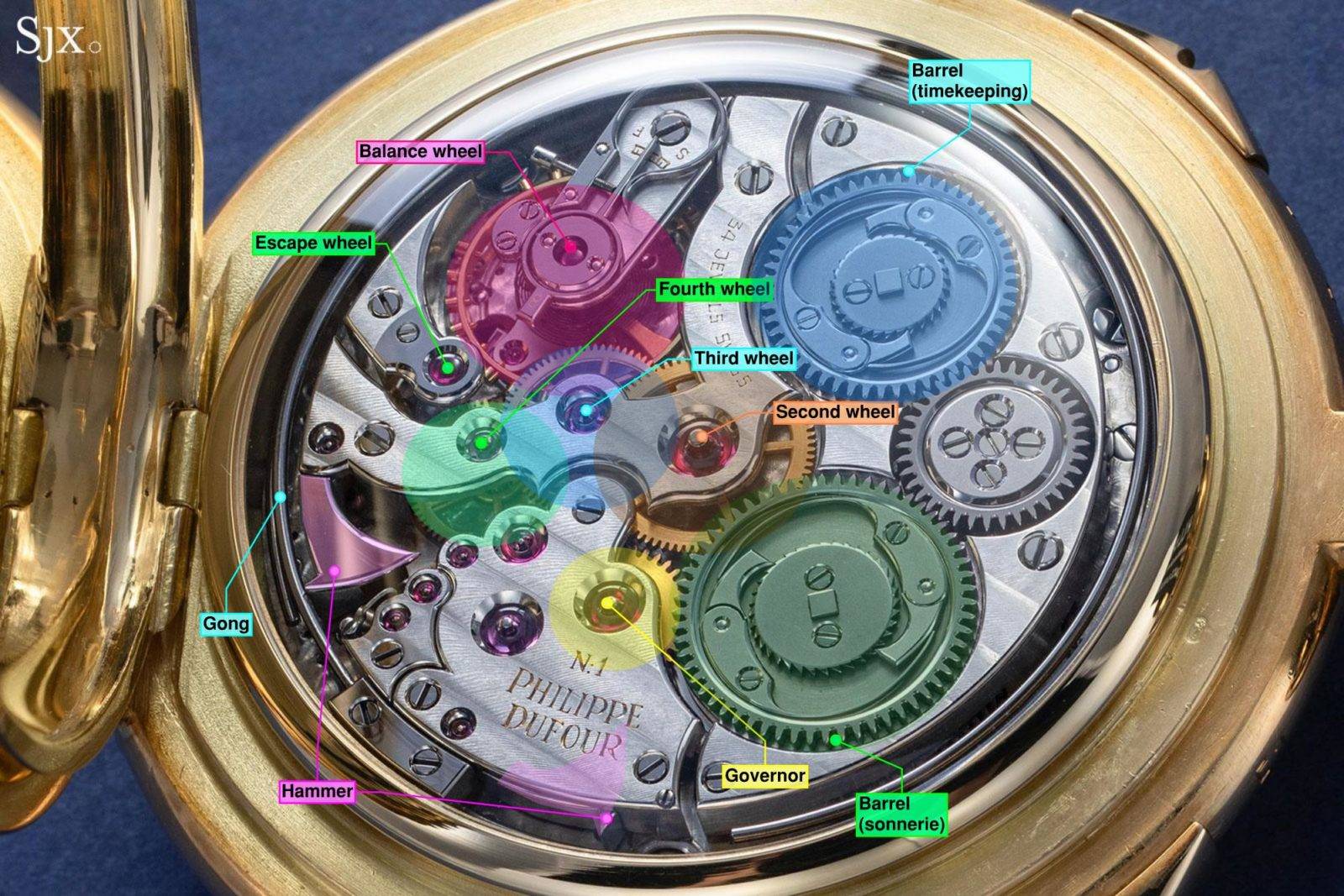
Components of an Audemars Piguet grande sonnerie pocket watch by Philippe Dufour (Source: SJX Watches)
When the mechanism is activated (at regular intervals for a passing chime or according to a set cycle for petite and grande sonneries), the spring's energy passes through a gear train that drives several essential components… These include a rack and a snail cam. Working together, they determine how many strikes to sound based on the time shown. The rack “reads” the position of the snail cam, whose stepped profiles correspond to the hours and quarters, and relays that information to the hammers.
These hammers, usually two or three in number, strike slender metal gongs coiled inside the case. The resulting tone depends on the gong's length and material; that interplay gives each watch its distinctive sound. To keep the strikes evenly paced, a speed regulator controls the release of energy and prevents the chime from racing.
A petite sonnerie automatically strikes the hours and quarters without repeating the hour at every quarter. A grande sonnerie, by contrast, repeats the hour at every quarter, providing a fuller audible reading of the time while demanding far more energy management and mechanical precision.
Ultimately, every chime is the result of perfect coordination among the gears, levers, hammers, and gongs. It's a living mechanism that turns the passage of time into music with a regularity and poetry all its own to watchmaking!
Share :
Official European Union notice on your rights in the event of a product's lack of conformity.


