
0
Product added
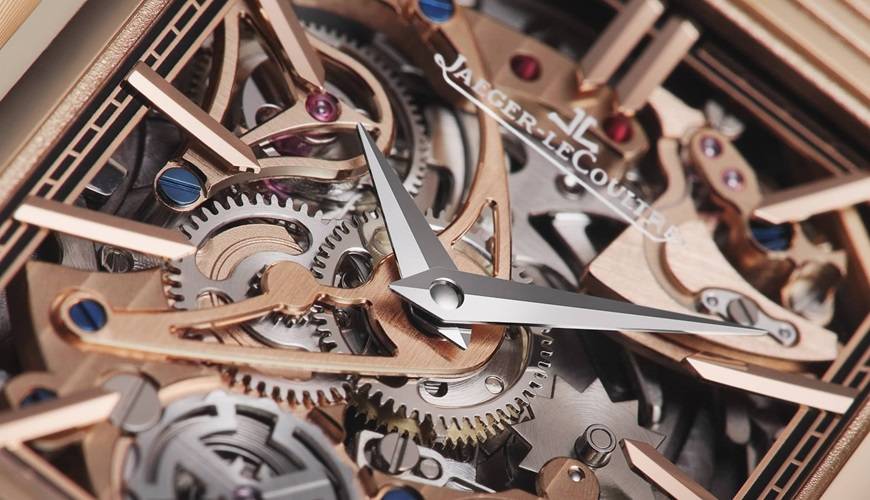
As you probably know, watches make a variety of sounds. The best known is, of course, the familiar tick-tock of our mechanical and quartz watches, whether fast or slow… But beyond that familiar rhythm, some watches make far more melodic sounds thanks to a special complication: the minute repeater.
This guide explores that extraordinary watch function in simple terms, making it accessible to everyone.
Looking at the dial of a minute repeater watch, nothing - or almost nothing - sets it apart from a simpler model without this function. One very subtle clue may, however, give it away… On the case, you'll typically find a "slider" (also called a "slide" in English), which can also take the form of a push button, more or less prominent depending on the brand, model, and era. Most of the time, this mechanism is positioned on the left side of the case!
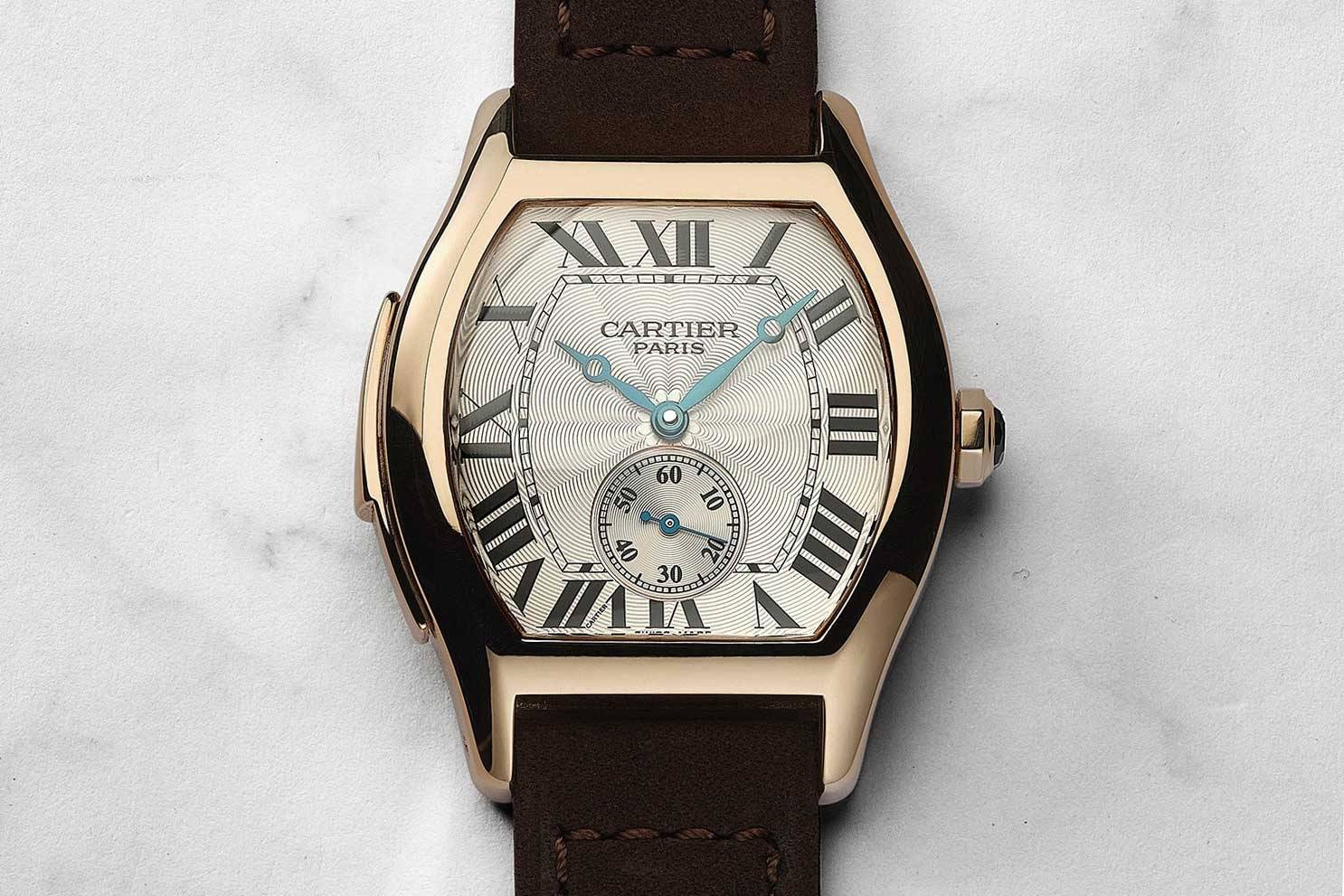
Cartier CPCP Tortue Minute Repeater watch (Source: Revolution Watch)
This seemingly minor detail reveals a complication that belongs to the most exclusive circle of prestigious and complex watchmaking functions, while remaining remarkably discreet in appearance. Indeed, a minute repeater watch houses a mechanical movement whose architecture can comprise nearly 300 parts!
This ingenious mechanism of hammers and gongs chimes, on demand, the hours, quarters, and minutes through a process we'll detail further in this guide. Rather than dazzling the eye, this complication has a different ambition entirely - to charm the ear!
To make the indication clear, the watch uses different tones to distinguish each piece of information…
Activating the mechanism relies on triggering the slider or push button. It must be engaged fully for the mechanism to function - otherwise, no sound will chime.
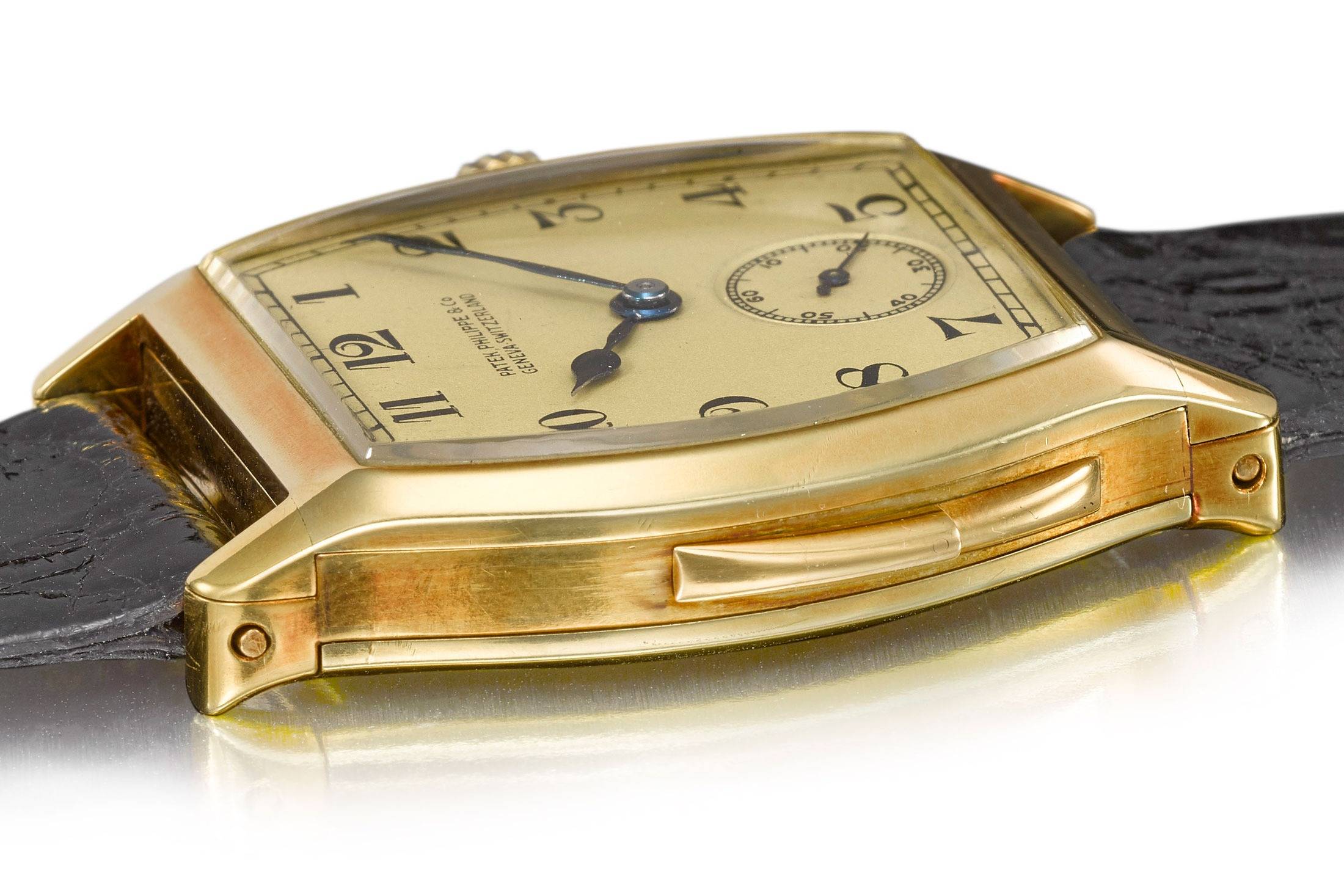
Slider of a vintage Patek Philippe minute repeater watch (Source: Hodinkee)
First appearing in the late 18th century on pocket watches, where this external command already existed in the form of a slide or push button, the minute repeater has endured to the present day. On contemporary watches, this system remains fully functional, but it also stands as a precious aesthetic legacy, a testament to centuries of watchmaking ingenuity!
To truly appreciate the minute repeater complication, we need to travel back several hundred years and look at how people lived in centuries past…
According to historical accounts, it was during the 17th and 18th centuries that it all truly began. The invention of this complication is generally credited to Daniel Quare, a talented English watchmaker who is also responsible for placing the minute hand at the center of the watch dial.

Portrait of Daniel Quare, 1649-1724 (Source: Wikipedia)
The very first watch fitted with a minute repeater came to life in the early 18th century, around 1710 to be precise. It was crafted in Friedberg, a city in Germany that today falls within the Rhine-Main region.
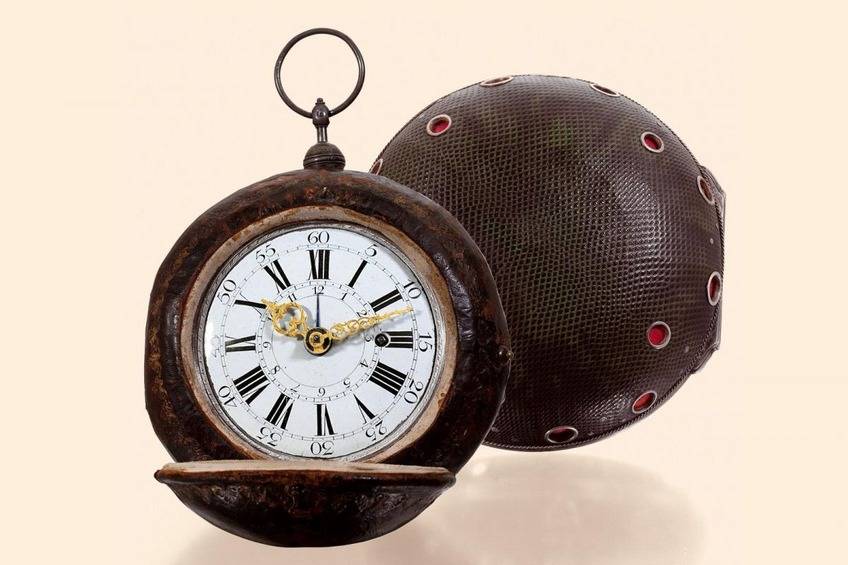
Carriage clock by Julien Leroy, circa 1710 (Source: Watchonista)
Known as the "Carriage Clock," this relatively large piece, conceived by watchmaker Julien Leroy, took the form of a sphere covered with a leather membrane that served as protection. To allow the sound produced by this innovative timepiece to pass through, the membrane had been carefully perforated in multiple places.
The innovative concept of the minute repeater was later taken up and refined by Thomas Mudge, another English watchmaker. However, despite his efforts, integrating such a mechanism into a portable timepiece remained challenging due to the excessive thickness of the sound-emitting system.
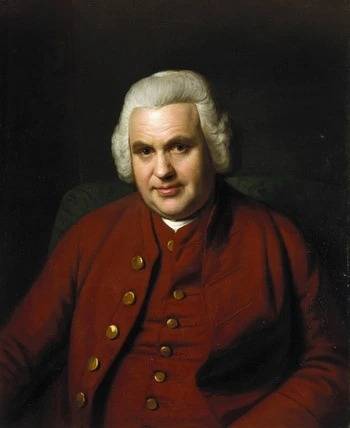
Portrait of Thomas Mudge, 1717-1794 (Source: Antiquarian Horology)
That's where the genius of Abraham-Louis Breguet came in! An indispensable French watchmaker we mention in our guide on the history of watchmaking… He completely reimagined the architecture of the complication by positioning some of the components required for its operation around the periphery of the movement. He also replaced the bells traditionally used by watchmakers with an ingenious system of gongs, far thinner in profile. Through this innovation, he succeeded in maximizing the slimness of the mechanism, enabling its integration into relatively compact portable timepieces.
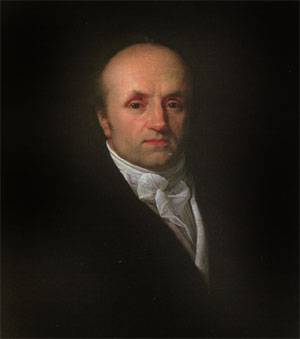
Portrait of Abraham Louis Breguet, 1747-1823 (Source: Wikipedia)
It is thanks to his expertise that, from the 19th century onward, watches equipped with a minute repeater complication could be produced in a slimmer, more elegant format. Often taking the form of pocket watches, their cases were crafted in solid yellow gold, embodying both the technical prowess and aesthetic refinement of their era.
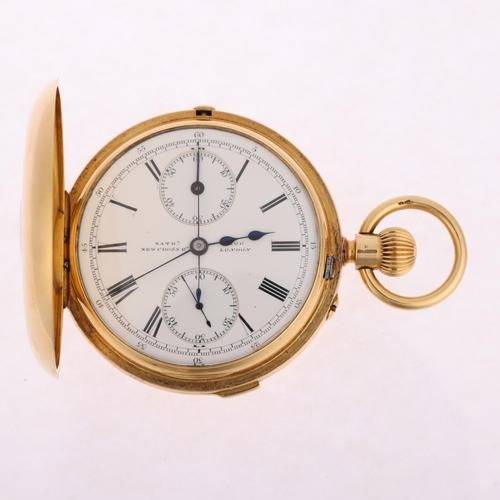
Minute repeater watch by Nathaniel Wegg, 19th century (Source: Burstow & Hewette)
As we mentioned earlier, understanding the appeal of this auditory complication means stepping back into the fabric of society as it once was, and observing how people organized their daily lives. At the time, the Church wielded considerable influence - it was one of the few institutions capable of structuring our days through sound. After all, who hasn't heard church bells marking the hours? Many people naturally drew a connection between this auditory perception of time and the symbol of power embodied by religious institutions.
That digression aside, let's return to what truly matters here: the minute repeater complication and the evolution of the watches that have featured it.
At the end of the 19th century, a groundbreaking piece appeared - the world's first wristwatch ever fitted with this complication. Conceived by the Brandt brothers (founders of the renowned Omega house), it was unveiled in 1892. An interesting aside: despite the brand's official founding in 1848 in La Chaux-de-Fonds, this pioneering timepiece did not yet bear the famous Omega horseshoe logo!
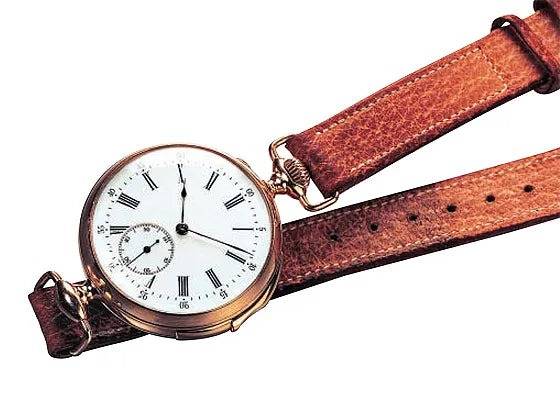
First wristwatch with minute repeater complication by the Brandt brothers, 1892 (Source: WatchTime)
This miniaturization feat was all the more remarkable given that in 1892, wristwatches had yet to become widespread. It wasn't until the early 20th century that they truly gained popularity. In the meantime, pocket watches with minute repeaters continued to captivate a discerning audience, particularly throughout the first half of the 20th century.
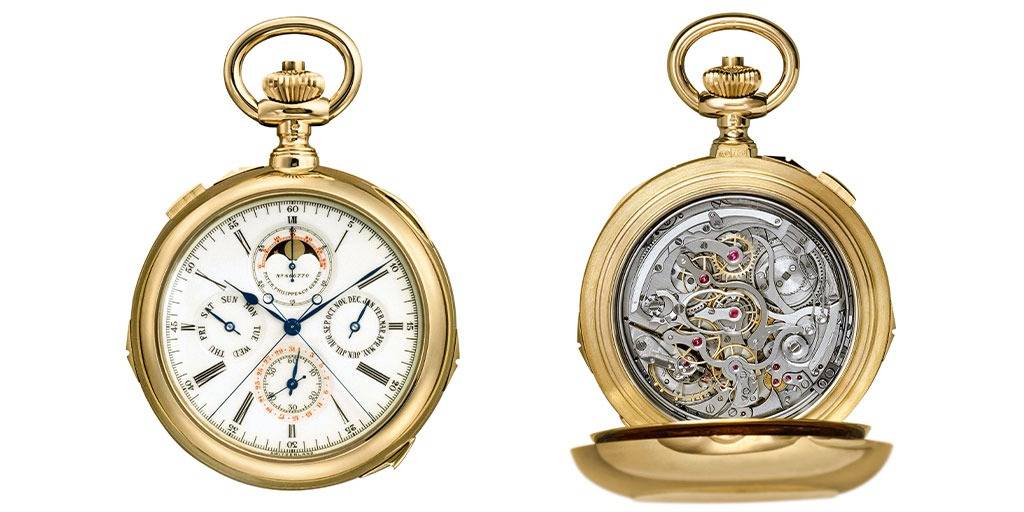
Patek Philippe pocket watch with minute repeater, circa 1920 (Source: collectability.com)
In the 1920s, several great houses attempted to draw the public toward wristwatches featuring this complication. Among them were Patek Philippe, Audemars Piguet, and Cartier, whose models were in fact manufactured by Audemars Piguet. Looking at these creations, one detail immediately stands out: they almost all shared a remarkably similar aesthetic…
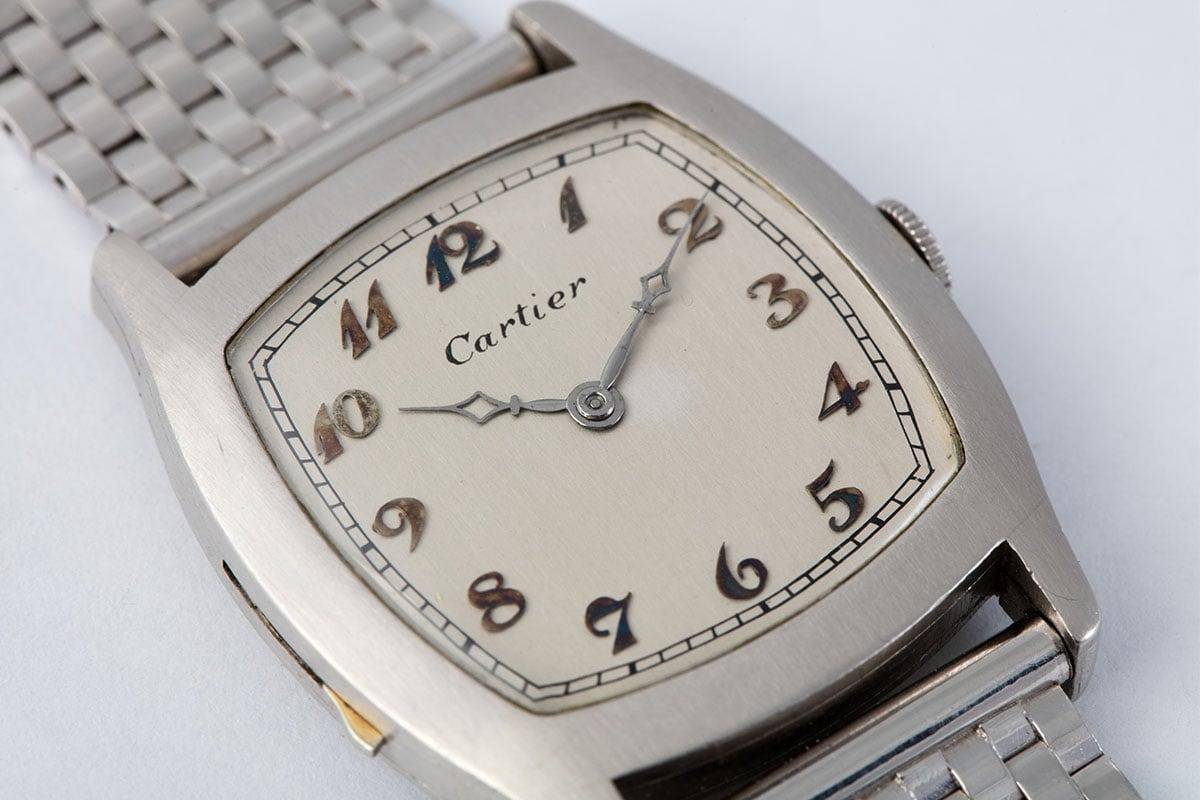
Cartier platinum wristwatch with minute repeater, circa 1920 (Source: Monochrome Watches)
Their tonneau case, paired with stylized applied Breguet numerals, reflected a clear ambition: to embrace the Art Deco movement and align with the aesthetic sensibilities of the era.
Despite this refinement, minute repeater watches remained highly niche throughout the 20th century. Few manufactures offered them, and they stayed firmly in exclusive territory.
In the 1980s, Blancpain would nevertheless reignite interest in this complication with a variant of its celebrated Villeret collection featuring the complication.
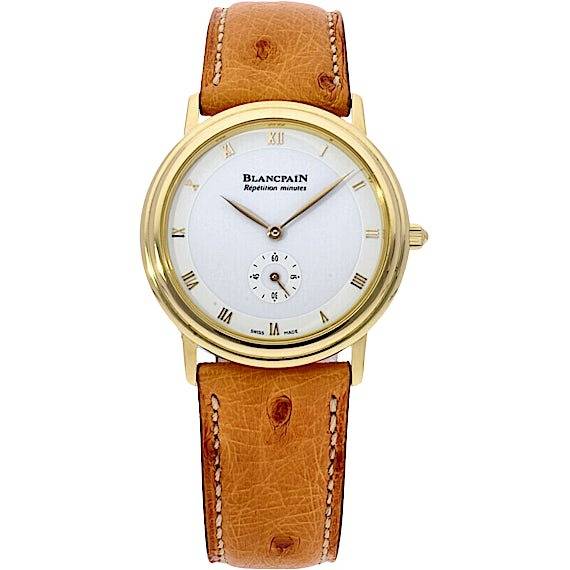
Blancpain Villeret minute repeater, 1989 (Source: Chronext)
Ultra-thin, elegant, and timeless, this watch fit perfectly within the house's philosophy - it is, as a reminder, considered the oldest watch brand in the world!
Then, as the new millennium approached, Audemars Piguet unveiled an even more singular piece combining a minute repeater with a jumping hour. And if you're not quite sure what that is, no worries - our guide on the jumping hour complication has you covered.
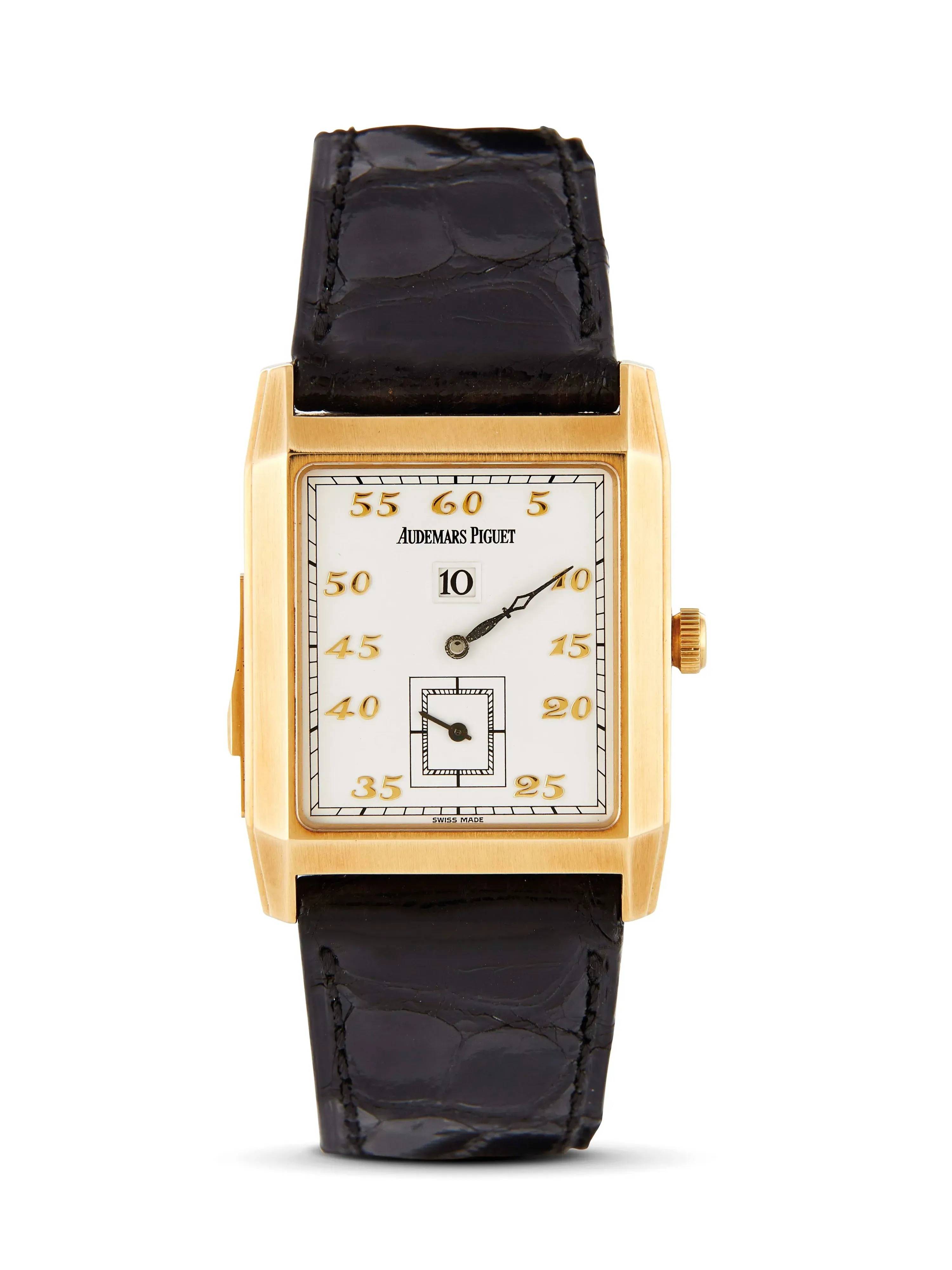
Audemars Piguet ref. 25723, circa 1990 (Source: Pandolfini)
The Audemars Piguet reference 25723 perfectly illustrates the return of the minute repeater in contemporary watchmaking. Available in two versions - one in 750/1000 yellow gold (18 carats) and the other in 950/1000 platinum - this watch, though released in the 1990s, admirably revived the aesthetic codes of 1930s timepieces. From the characteristic case lines to the small seconds, through the applied Breguet numerals, every design element evoked the style of early 20th-century watches.
In the same decade, Jaeger-LeCoultre unveiled a piece that would leave its mark: a limited edition of 500 pieces, instantly recognizable thanks to an unprecedented detail - a small aperture at 5 o'clock on the dial. Through this circular cutout, the wearer could admire the repeater regulator (also known as the "governor") along with the hammers responsible for producing the sound.
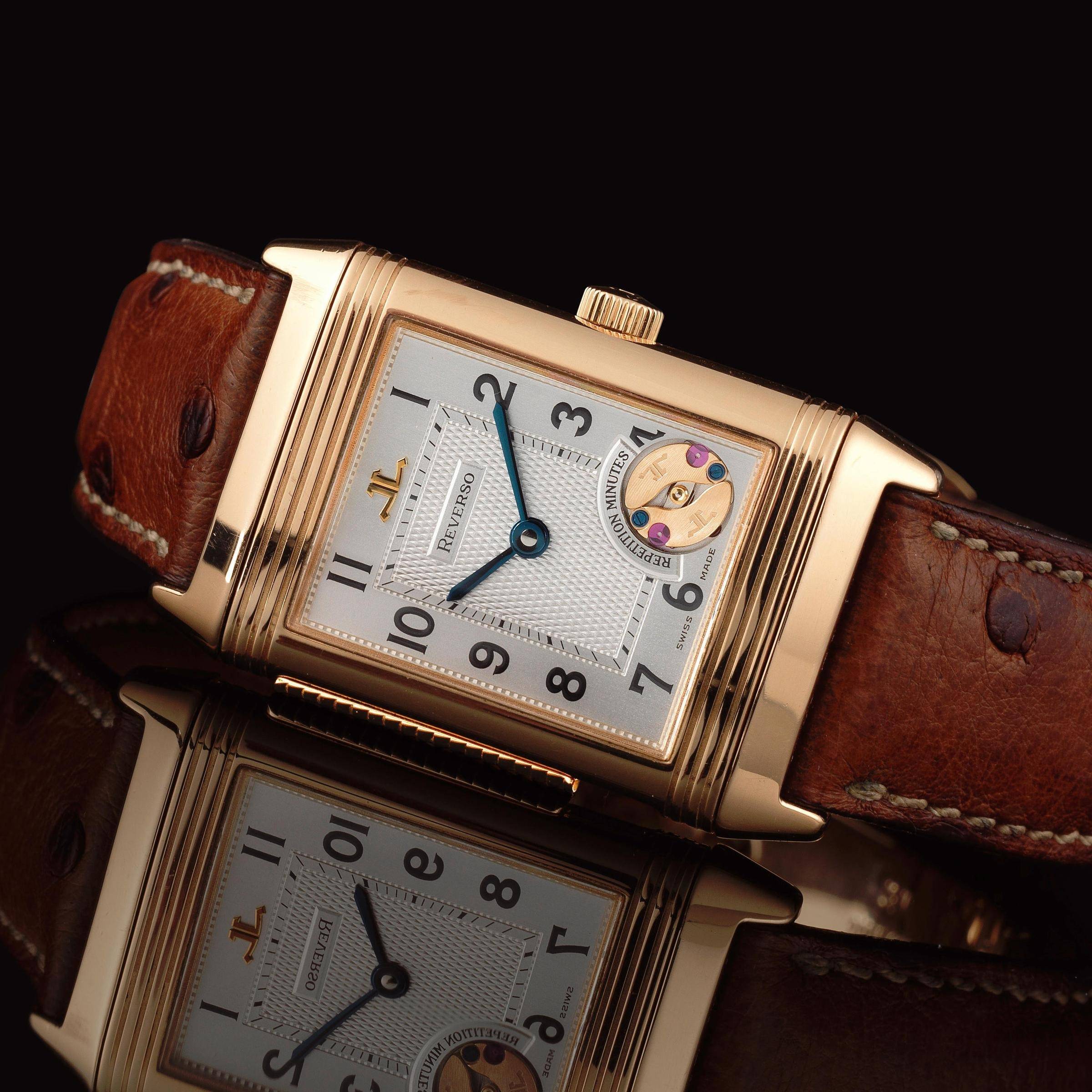
Jaeger-LeCoultre Reverso ref. 270.2.73, circa 1990 (Source: Bonhams)
This was the celebrated Reverso Minute Repeater ref. 270.2.73, crafted in 750/1000 rose gold (18 carats). To mark the 60th anniversary of its iconic Reverso, Jaeger-LeCoultre rose to a major technical challenge: developing a manually wound rectangular mechanical movement housing no fewer than 306 components and the famous complication. This groundbreaking movement was named the Calibre 943.
Worth noting: this watch was offered at a price that, in the highly exclusive world of haute horlogerie, placed it among the most "accessible" minute repeaters of its era. But let's be clear - at CAD 98,000, it remained well out of reach for most people.
In the 2000s, IWC followed a similar path, equipping its legendary Portugieser with a minute repeater. The reference 5240 was offered in two variants - one in rose gold and the other in platinum - both released as limited editions.
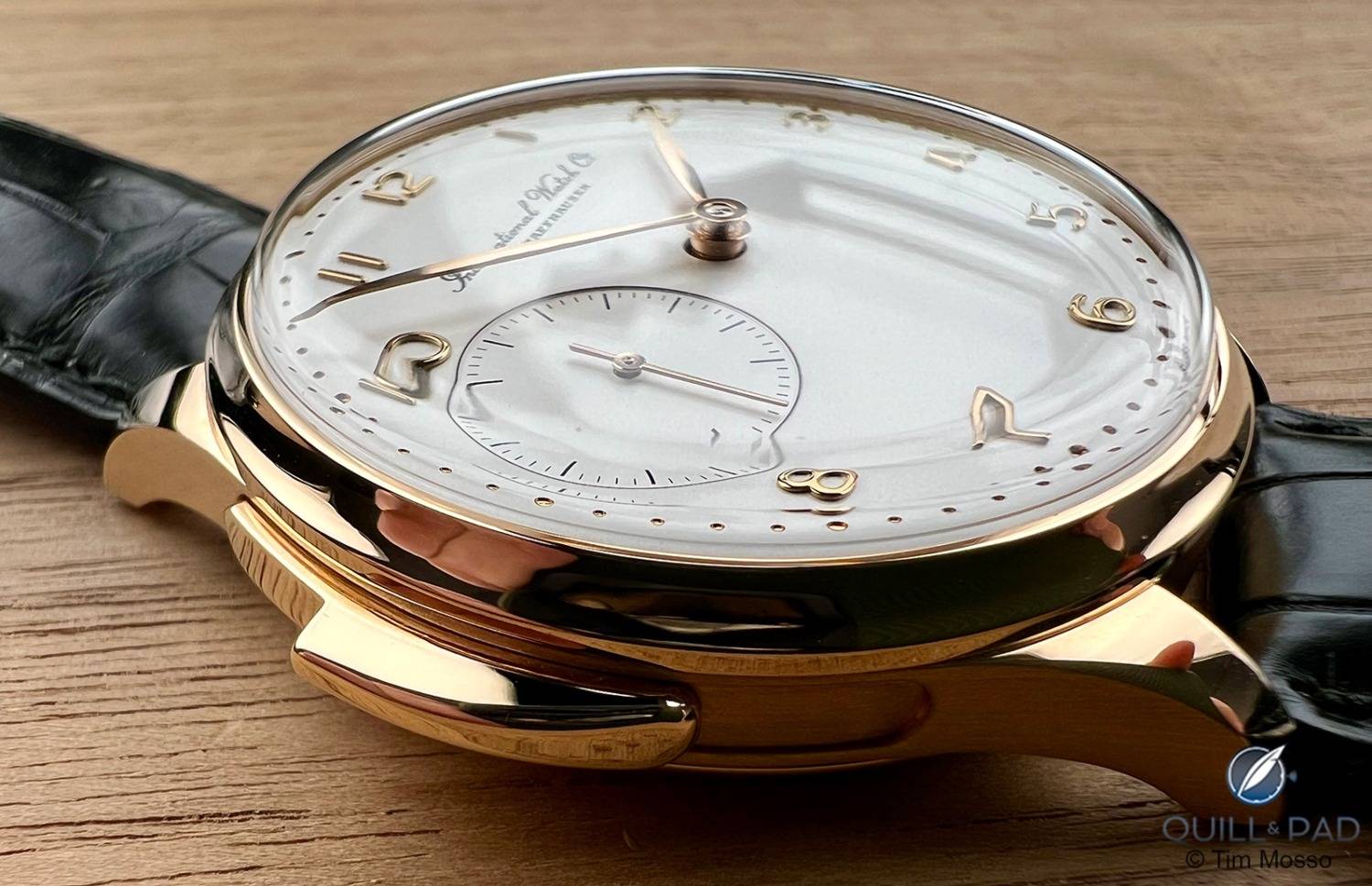
IWC Portugieser reference 5240, circa 2000 (Source: Quill & Pad)
As you've gathered, the minute repeater complication remained rare - even obscure - throughout the 20th century and into the early 21st. Yet it's clearly regaining visibility today. One look at the catalogs of the great manufactures makes that plain: models equipped with this complication are multiplying, even if their prices remain very high.
If you're currently looking for this type of watch, you'll find prestigious references at Patek Philippe, Breguet, Girard-Perregaux, Zenith, Cartier, Jaeger-LeCoultre, F.P. Journe, and A. Lange & Söhne. Some of them even combine the minute repeater with other exceptional complications, such as the tourbillon or the perpetual calendar, reaching the very pinnacle of technical and aesthetic achievement!
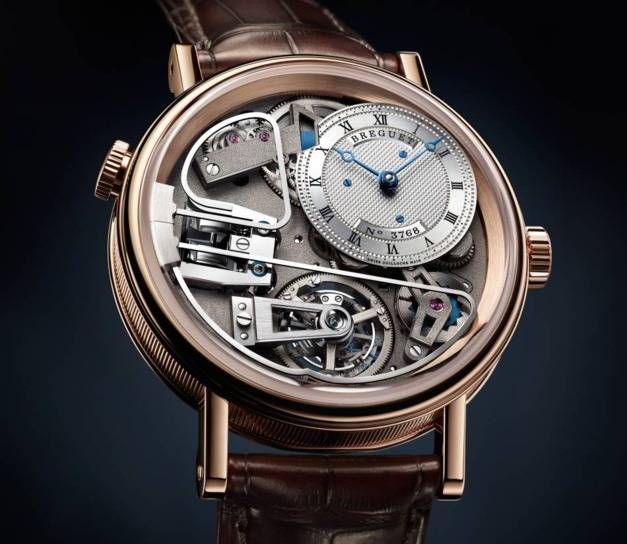
Breguet with minute repeater and tourbillon complication (Source: Montres-de-luxe)
Breguet exemplifies this trend perfectly with models combining a minute repeater and tourbillon - a pairing that represents the pinnacle of watchmaking virtuosity. But the most striking example may well be the Parmigiani Armoriale, whose blue guilloché dial is entirely free of hands and markings. Here, everything unfolds on the back of the timepiece…
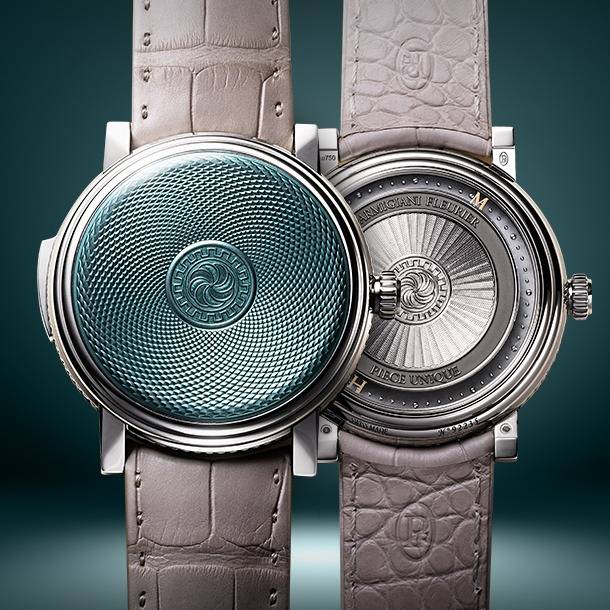
Parmigiani Armoriale watch (Source: Ethos Watches)
Floating around the periphery, the letters "H" for Hours and "M" for Minutes are used to set the watch, offering a radically different interpretation of reading the time.
As you've gathered, most contemporary watches fitted with a minute repeater are no longer satisfied with that complication alone. They have entered a true race for the extraordinary, with each manufacture pushing the boundaries of ingenuity to deliver the most exceptional piece - both acoustically and mechanically.
After this journey through the centuries, it's time to open the case of a minute repeater watch and discover how all that mechanical magic works…
Now that you know both the purpose and the fascinating history of the minute repeater complication, how about diving into the inner workings of this type of mechanism? Don't wait - let's see how all that magic happens!
You may recall, at the beginning of this guide, we mentioned that minute repeater watches can be equipped with a slide or a small push button. Well, that little element actually serves not one but two distinct functions…
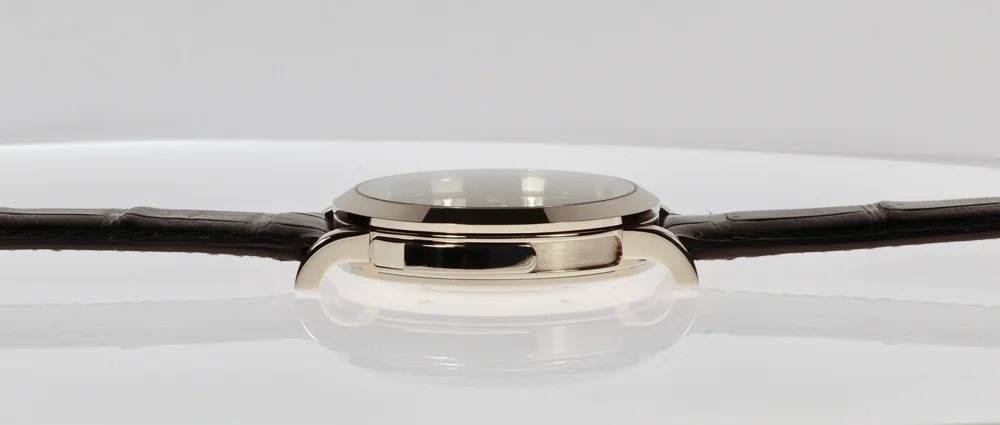
Slider of a minute repeater watch (Source: The Naked Watchmaker)
First, it serves to "wind" an independent mainspring dedicated specifically to the minute repeater. This engineering choice is fundamental: it ensures that the energy used to activate the chime never draws from the watch's main power reserve (the one that drives the hands). So even if the watch is running low on power, the chiming mechanism will always function fully and harmoniously. That's watchmaking ingenuity at its finest!
Additionally, the slide or push button protects the movement by requiring full engagement. If the gesture isn't completed all the way, nothing happens - preventing any risk of jamming or damage.
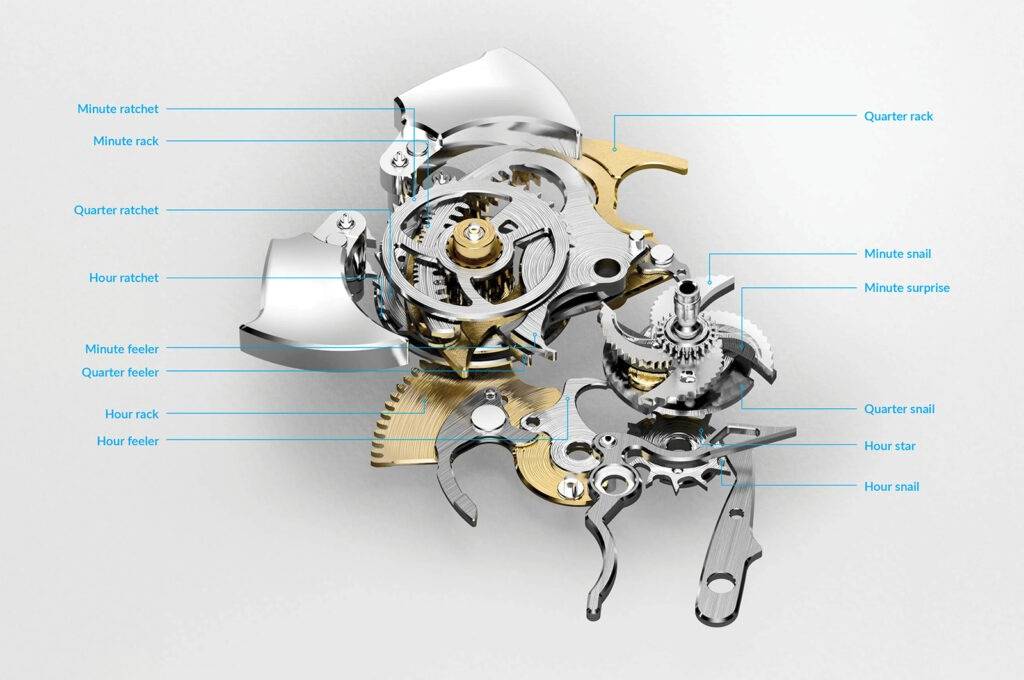
Components of a Chopard L.U.C. Full Strike watch (Source: Revolution Watch)
Once the system is wound, two other components come into play: the "racks"… There are three of them, and they break down as follows:
These three finely toothed components are, in a sense, the memory of the mechanism: their role is to read the position of the hands on the dial in order to determine how many hours, quarters, and minutes must be struck. It is through them that the passage of time can be converted into an audible signal!
Each segment corresponds to a precise number of strikes to be delivered. The racks thus orchestrate the entire process, translating the silent measurement of time into a sonic sequence. But none of this would be possible without the sound system housed within minute repeater watches…
But the true magic of the minute repeater lies in the transition from mechanics to sound. To achieve this, the system relies on two small hammers and two miniature gongs, always crafted with the utmost precision.
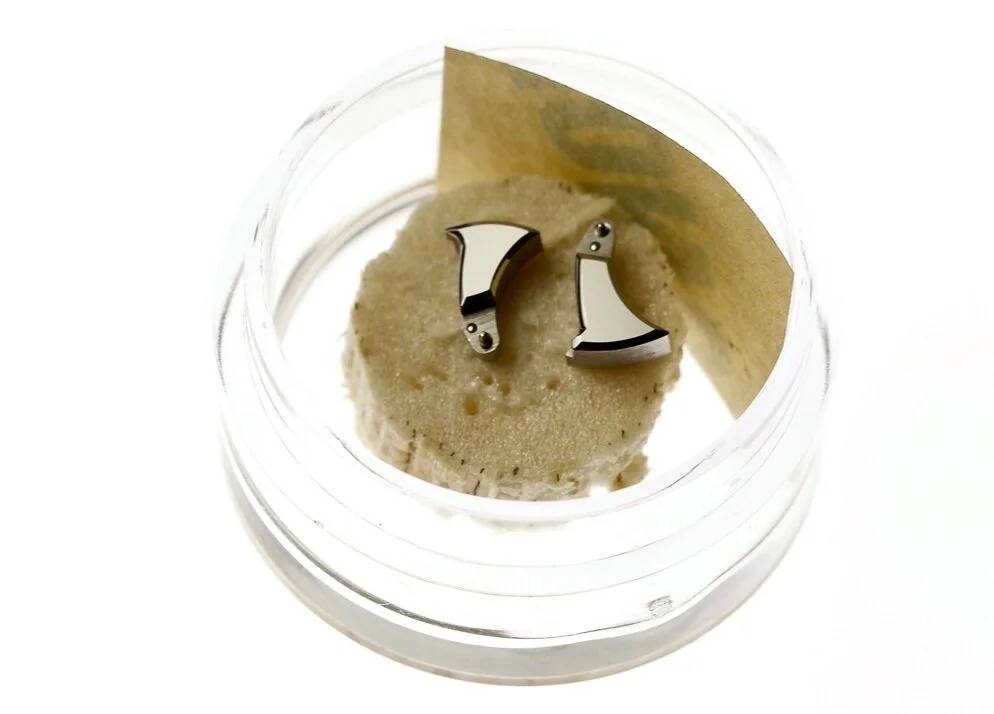
Hammers of a minute repeater watch (Source: The Naked Watchmaker)
Driven by the mechanism, the hammers strike the metallic gongs that coil inside the case, and each gong is tuned to produce a distinct note.
And at this point, we know exactly what you're thinking… This two-gong system can chime the hours and the minutes - great. But what about indicating the quarter hours? Well, minute repeater watches have a clever trick for that: they strike both gongs simultaneously… This action creates a tone midway between low and high, which is used to chime the quarters. Ingenious, wouldn't you say?
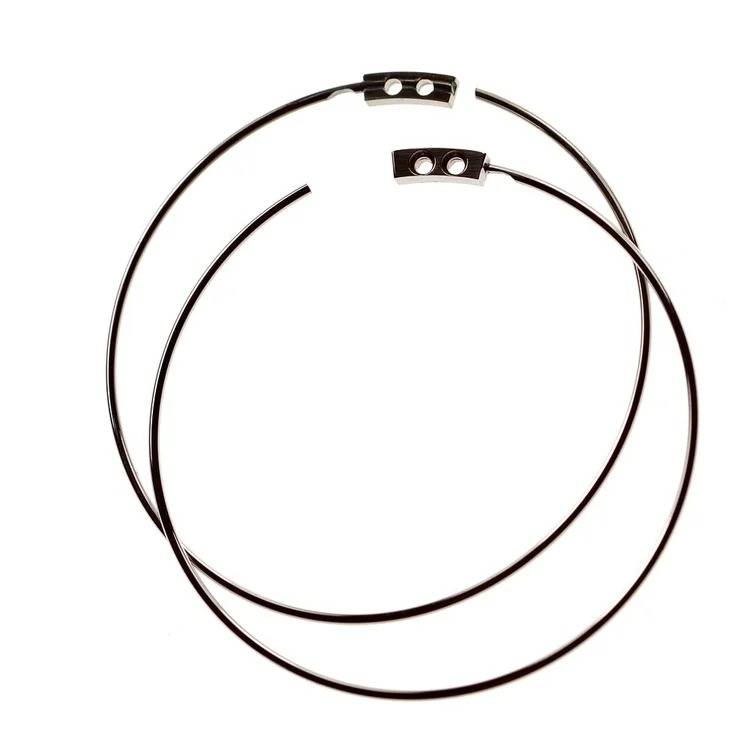
Gongs of a minute repeater watch (Source: The Naked Watchmaker)
To make this clearer and understand exactly how a minute repeater watch actually chimes, let's walk through a concrete example! Picture yourself late in the morning - it's 10:35 - and you decide to activate the slider on your minute repeater watch. At that moment, you'll hear:
Adding 10 hours, 30 minutes, and 5 minutes gives exactly 10:35. In short, your watch chimes the correct time!
There you have it - you now know a great deal about this remarkable watchmaking complication: the minute repeater. From its purpose to its inner workings, not forgetting its rich history. And remember, it doesn't just chime the minutes - it also tells the hours and the quarter hours. Despite its remarkable discretion, it opens new horizons in horology, offering a truly unique way to experience the passage of time. When all is said and done, wearing a minute repeater watch is a bit like carrying a miniature church carillon on your wrist - shaped like a conventional watch.
Cover photo credit: Jaeger-LeCoultre
Share :
Official European Union notice on your rights in the event of a product's lack of conformity.


