
0
Product added
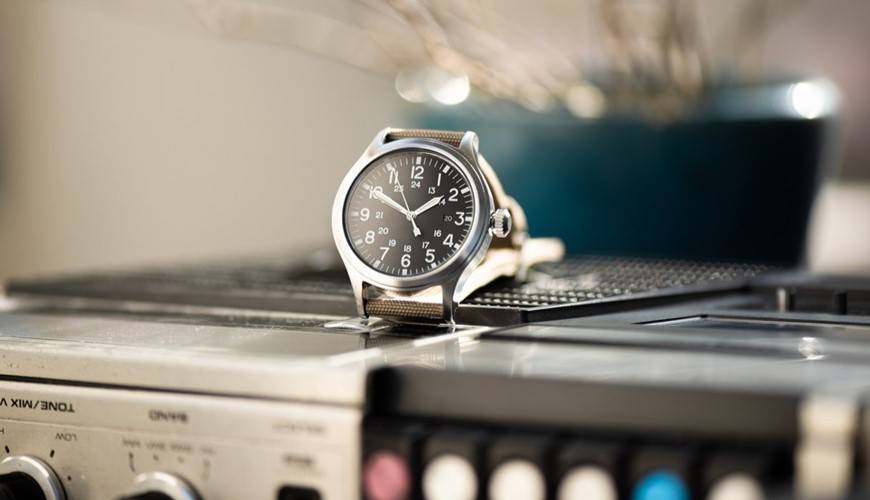
You may already know that many objects we take for granted in everyday life actually have their origins in the military world. GPS, canned food, aviator sunglasses, and the safari jacket are perfect examples.
But what about timepieces directly born from or inspired by militaria? It's a fascinating question - because as you're about to discover, the world of military watches is an incredibly rich one. Far from being limited to a single style, these instruments come in a wide range of forms and aesthetics, each one purpose-built to meet a specific need driven by very real field constraints.
As the name suggests, a military watch is first and foremost a timepiece designed to accompany military personnel across any terrain and in any conditions encountered around the world. Built for intensive use, these watches take a resolutely functional approach and, as such, feature a specific set of technical characteristics.
The design of their dials, too, leaves nothing to chance. It draws directly from the legacy of watches historically worn by soldiers throughout the centuries. Beyond their purely utilitarian role, military watches carry a genuine horological heritage, blending the demands of the field with aesthetic traditions forged through history.
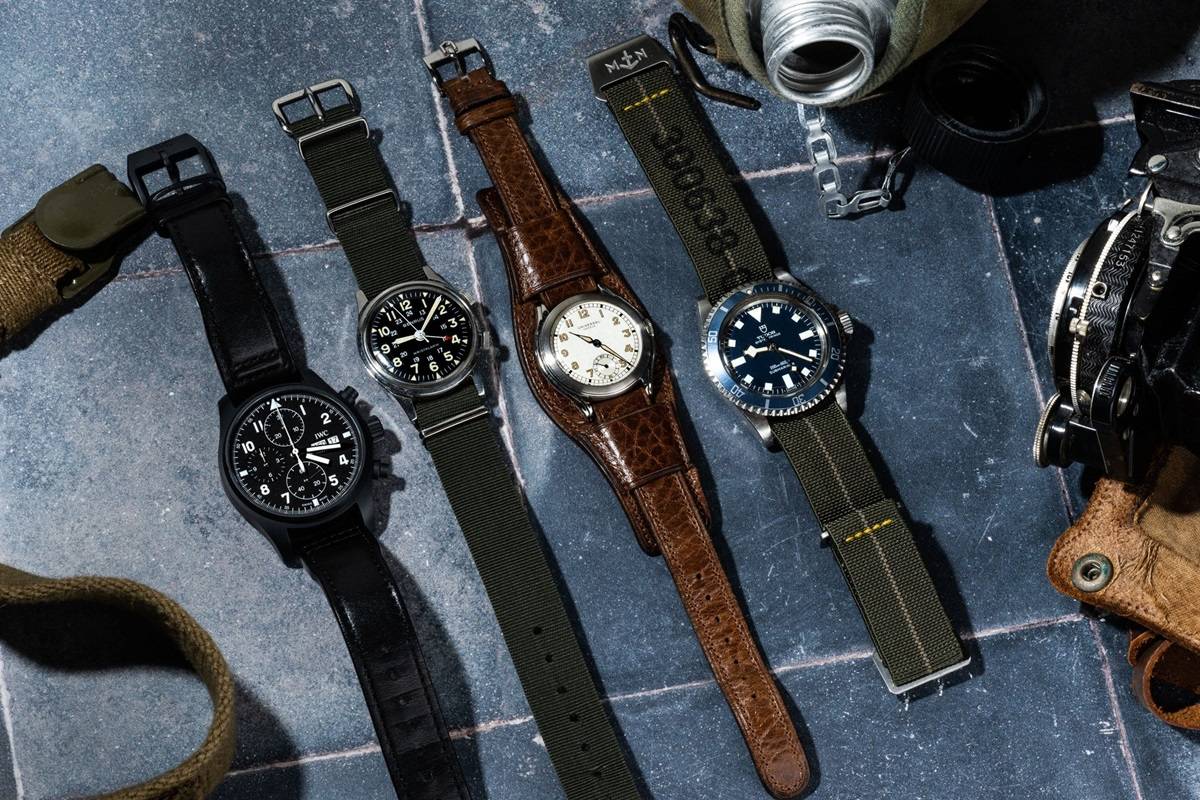
Various modern and vintage military watches (Source: Analog:Shift)
Military watches share a core set of characteristics, directly shaped by their original purpose. They stand out first and foremost for their ultra-legible dials, most often featuring highly contrasted, luminescent Arabic numeral indices to ensure instant time-reading in any lighting condition. The hands - also luminescent - generally take proven functional shapes such as "Sword," "Syringe," "Cathedral," or "Flieger." On certain vintage models made in the mid-twentieth century, one may even encounter the rarer so-called "Pontifice" hands.
To learn more on the subject, check out our guide to watch hands!
Rounding out the picture are basic water resistance (admittedly lower than that of a dive watch, but sufficient for everyday military use) and solid shock resistance - essential for withstanding the rigors of the field. These timepieces are also very commonly paired with a NATO strap in nylon, in khaki or olive green tones that evoke the military world, or with a genuine leather strap. The latter is frequently adorned with two rivets on aviation-oriented models - a detail that is both functional and iconic.
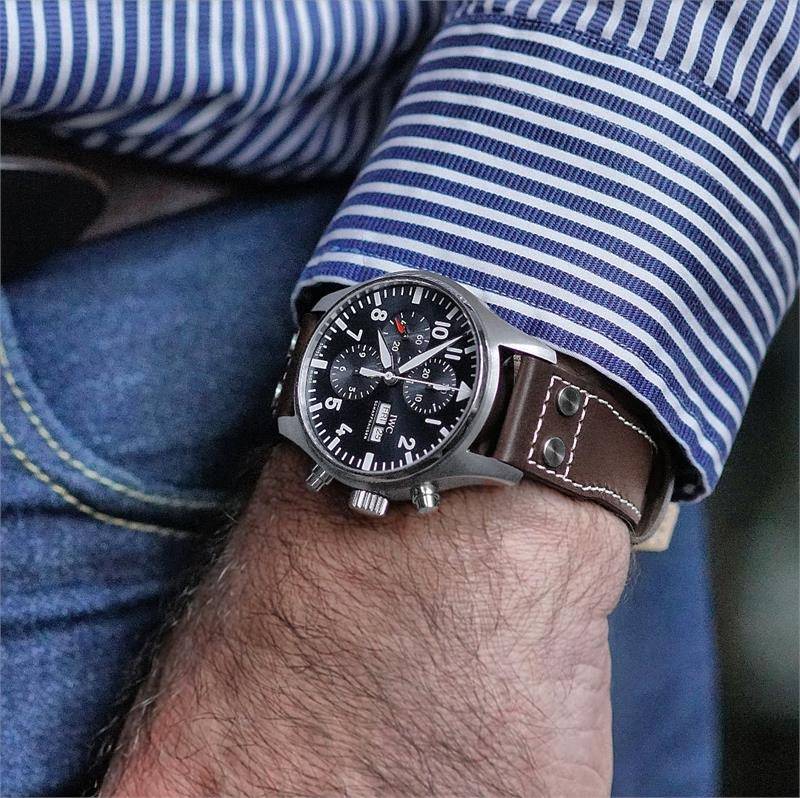
Pilot Chronograph Watch with Riveted Leather Strap (Source: B & R Bands)
That said, be careful not to overgeneralize - military watches each have their own personality. Some are designed to accompany soldiers on the ground, while others are specifically built for aviators on aerial missions, with very distinct constraints and requirements.
As we just mentioned, a military watch is more than a set of technical specifications - however specific those may be. It's also an immediately recognizable style. Built first and foremost for action and efficiency, these timepieces follow strong aesthetic codes that make them instantly identifiable.
It's also worth keeping in mind that military watches fall into two distinct subcategories. On one side, there are field watches designed for ground troops. On the other, aviator watches built to meet the very specific demands of aerial missions.
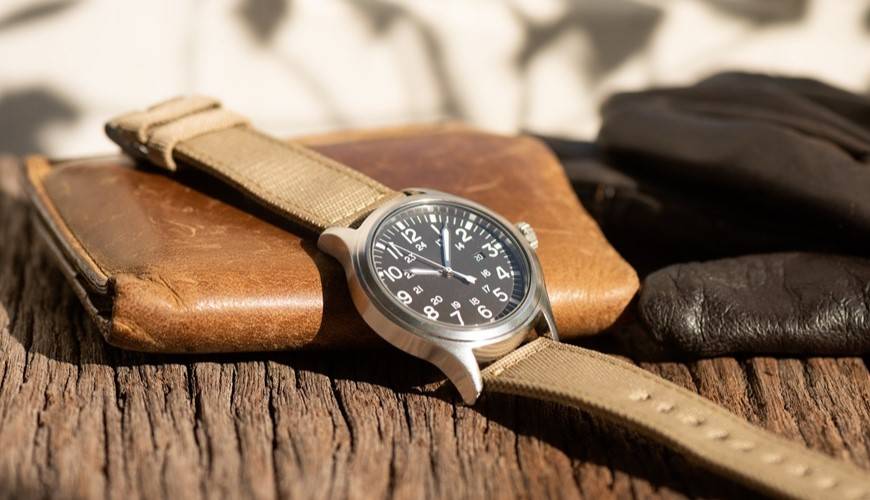
Often referred to as "Field Watches" (even among French-speaking collectors), military field watches trace their roots to the very real needs of soldiers deployed on land-based theaters of operations.
To truly appreciate the significance of these timepieces, we need to step back in time. As we explained in our guide to the history of watchmaking, it was the soldiers of World War I who played a major role in popularizing the wristwatch. At the time, wearing a watch on the wrist rather than in a pocket was already a practical necessity in the field.
That said, while World War I marked a turning point in the adoption of the wristwatch, it wasn't until a few years later that it truly took on the form and aesthetic codes we know today. The field watches developed during World War II played a key role in defining the functional design of Field Watches, laying the foundations of a style that is at once utilitarian, legible, and durable.
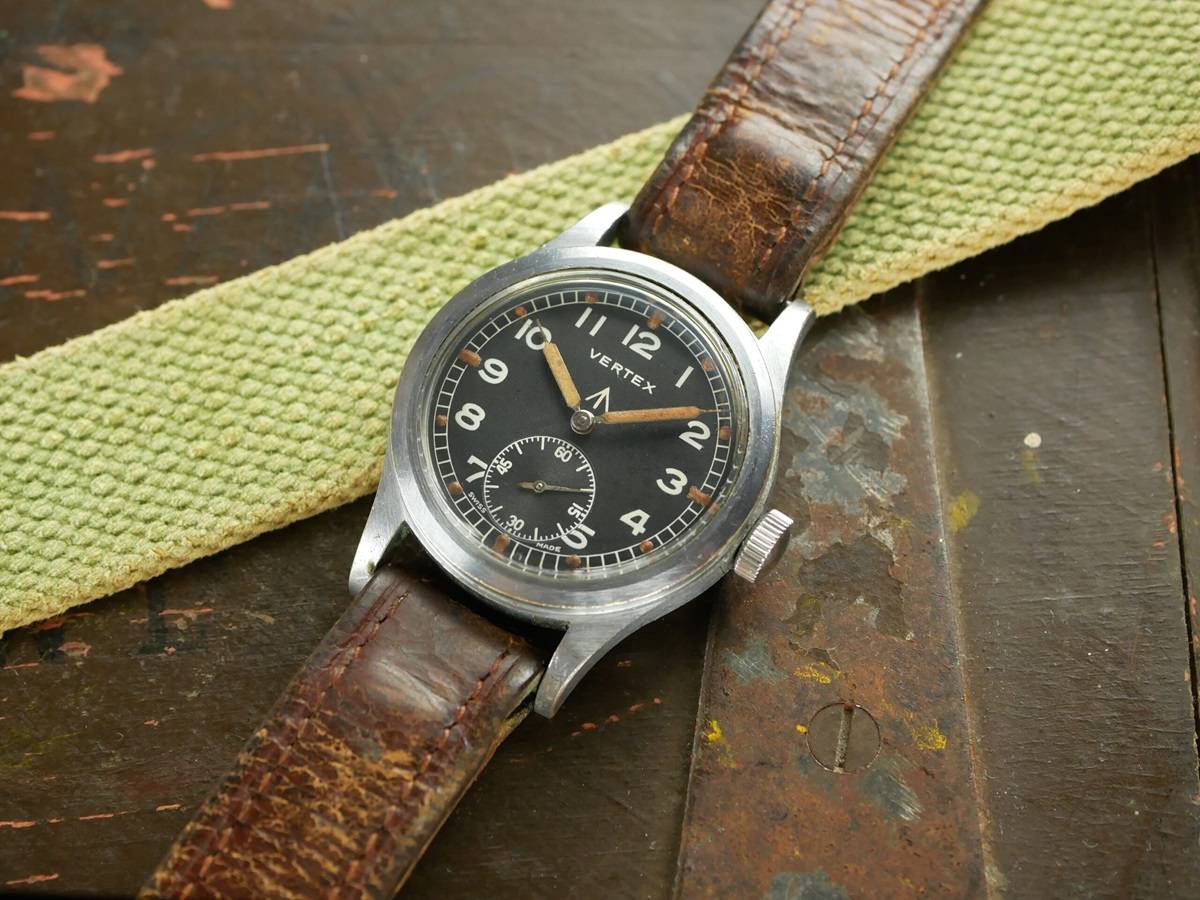
Military Field Watch by Vertex, circa 1945 (Source: Finest Hour Timepieces)
At that time, the development of military watches left very little room for improvisation. Governments placed orders directly with watchmaking manufacturers, supplying them with an extremely strict set of specifications. Every detail was meticulously defined: dial legibility, case robustness, movement precision, resistance to harsh conditions... Brands had almost no creative freedom and could not afford the slightest deviation - not in dial design, not in case design. The watch had to be, above all, a functional, reliable, and standardized instrument.
During World War II, several watchmaking houses produced Field Watch-style timepieces to equip soldiers. However, it is the models made for the British Army that hold a particularly special place in the hearts of collectors today. These watches were produced under twelve distinct brands:
Collectively known as the "Dirty Dozen" (a nickname taken directly from a film released in 1960), these twelve references are today among the most sought-after vintage military watches in the world. They all share one iconic visual element: the famous "Broad Arrow" insignia.
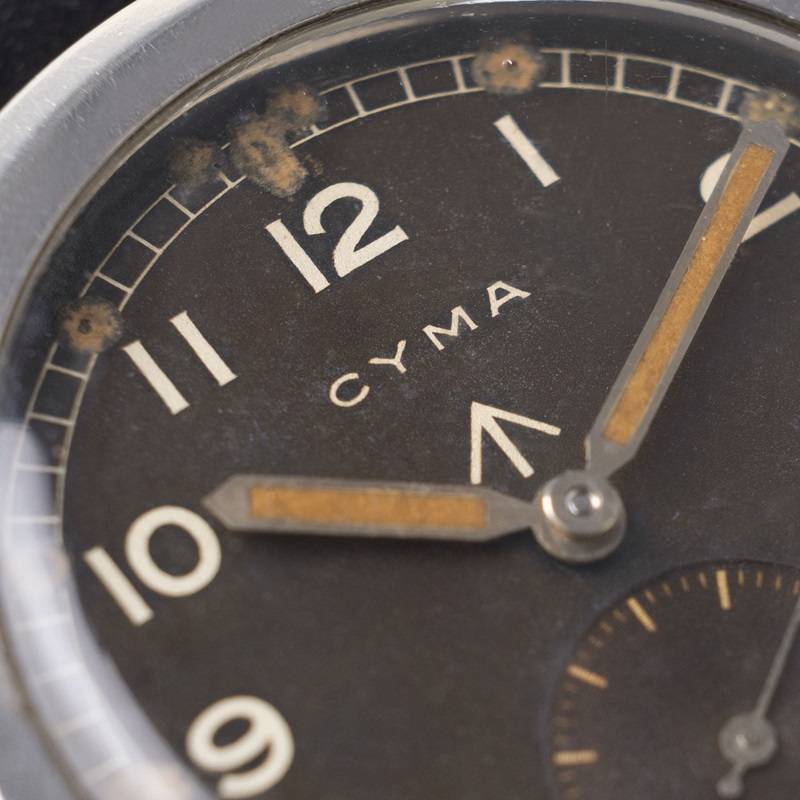
Broad Arrow Insignia on a Cyma Watch Dial (Source: Bulang and Sons EU)
This immediately recognizable three-pronged mark was placed directly on the upper portion of the dial, between the brand logo and the hands' axis (and often also on the caseback). It indicated that these watches were the property of the British government - more specifically, that they had been issued to the British Ministry of Defence, the well-known MoD ("Ministry of Defence").
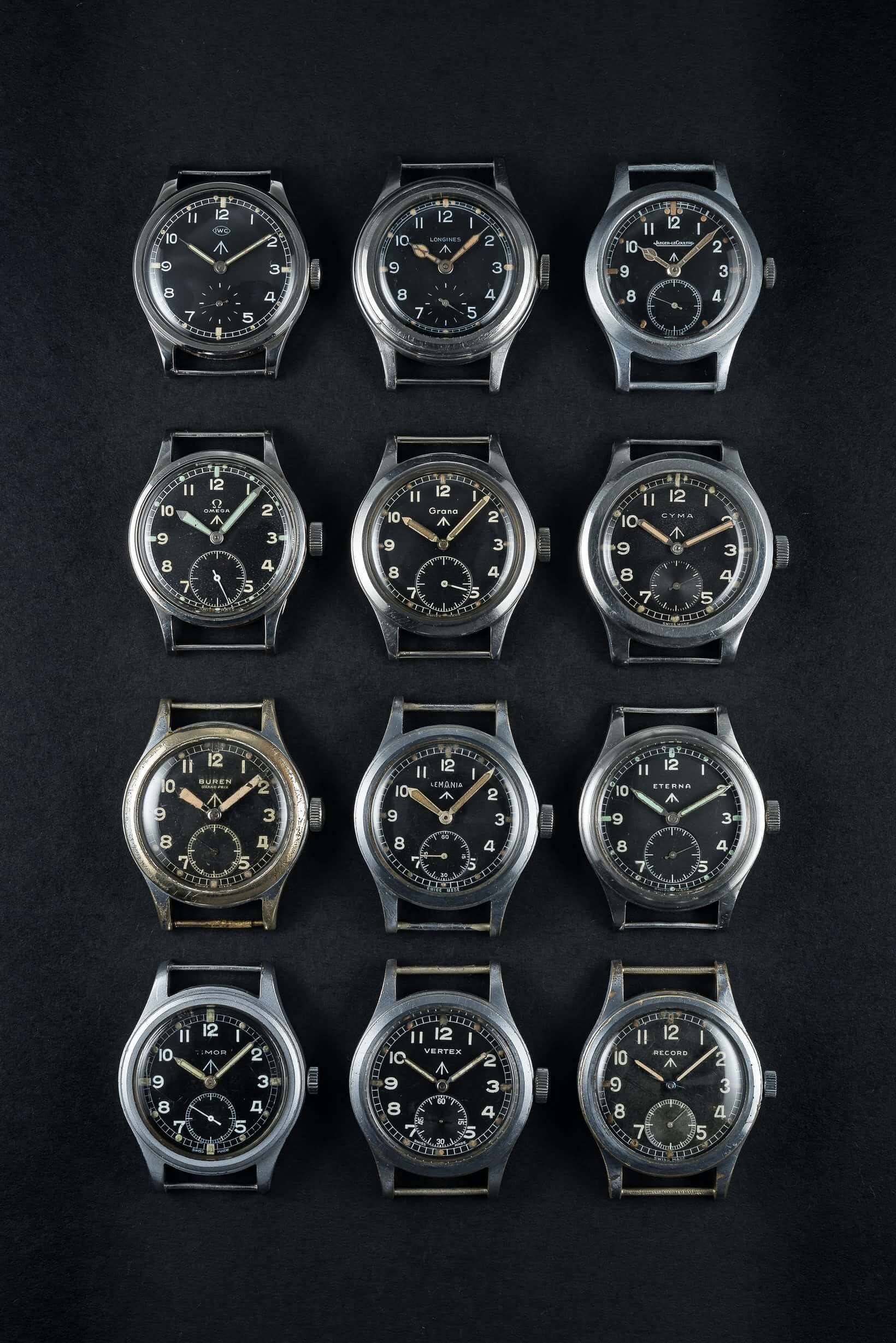
Dirty Dozen Watches from World War II (Source: Montredo)
Although made by different manufacturers, these models all share a common aesthetic: a chrome metal case, a matte black dial, luminescent hands, and a small seconds subdial at 6 o'clock that is, ironically, anything but small.
But the Field watch considered most iconic today is, without a doubt, the Hamilton Khaki Field. This piece was conceived in 1942, the year Hamilton became the official watchmaker of the US Army.
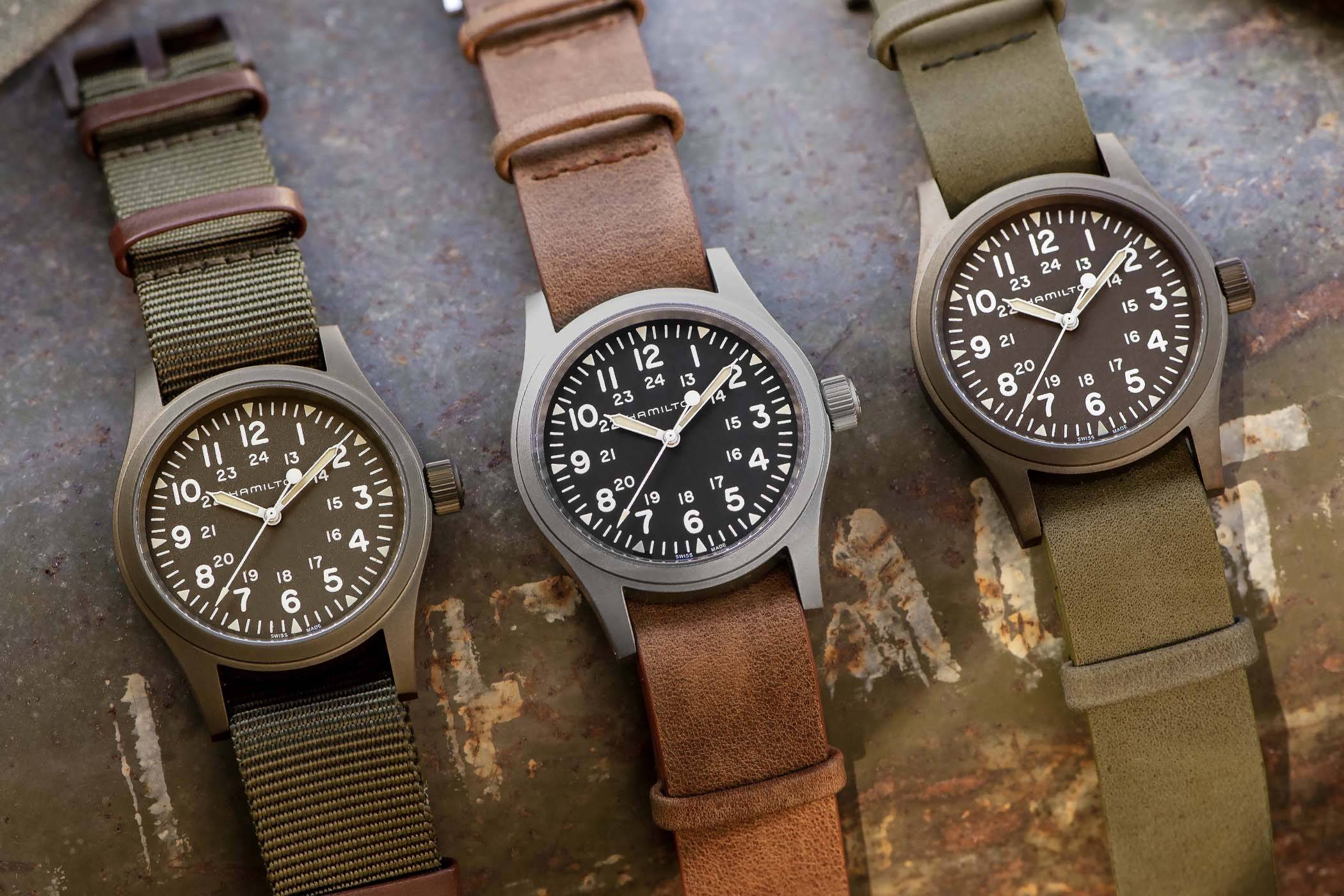
Several Versions of the Hamilton Khaki Field Mechanical Watch (Source: Monochrome Watches)
Today, several brands continue to offer quality Field Watches. Among them: Tudor, Formex, Lang 1943, Stowa, Hamilton, Baltic, Victorinox, Wolbrook, Seiko 5, Vario, Festina Swiss Made, Praesidus, Kelton, and even Timex!
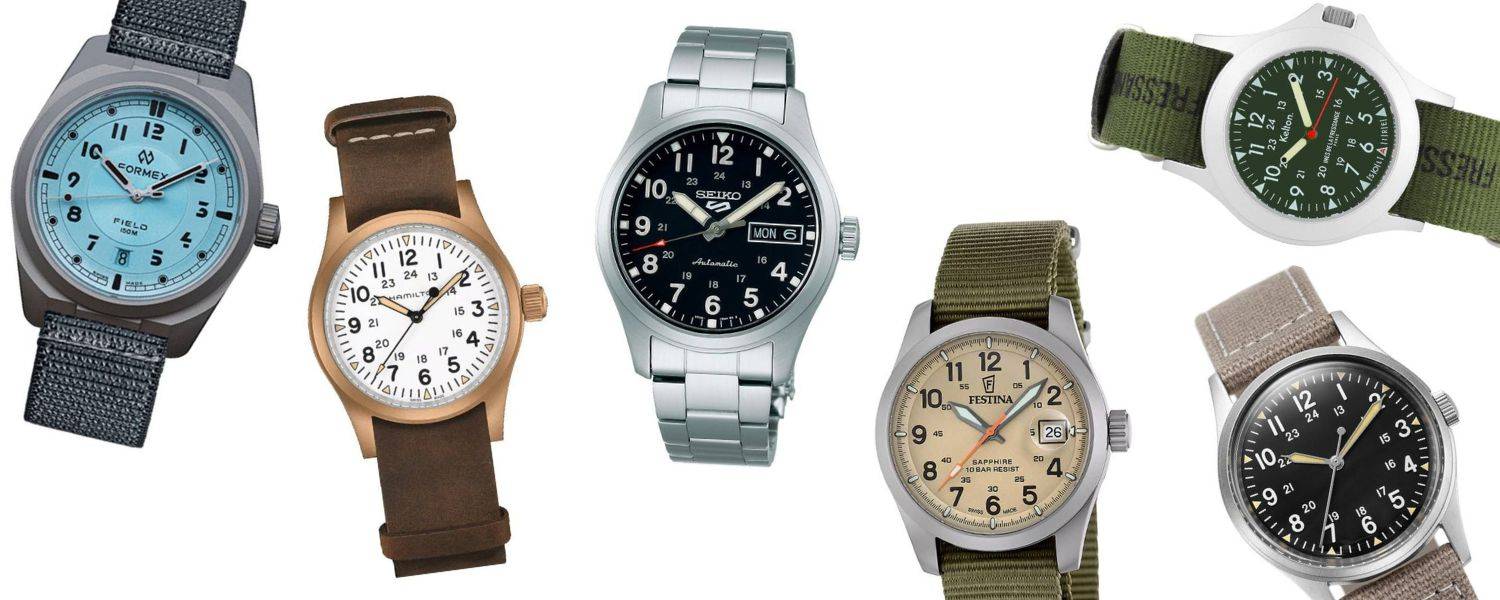
Modern Field Watches from Various Brands
This wide offering means field watches are now accessible at every price point. But regardless of their price range or the era in which they were made, military field watches - known as "Field Watches" - share a number of common characteristics, including:
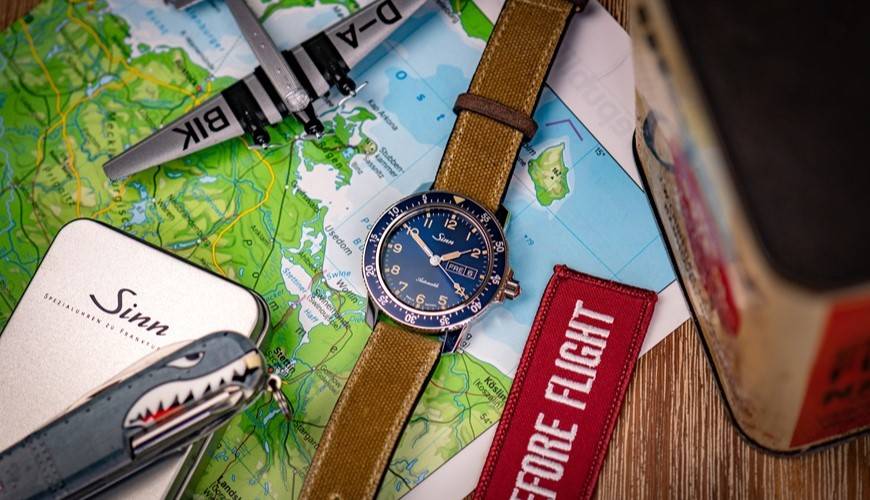
Aviation watches - also known as "aviator watches" or "pilot watches" - have evolved considerably over time. Born from a military heritage, they come in many forms today, including the "Weems", "Type 20", "Type 21", and the iconic "Flieger" models. These terms you've likely heard in conversations among watch enthusiasts - we'll walk through each one here to better understand their history and defining characteristics.
It is worth noting that the very first pilot's watch (non-military) in history was conceived by Louis Cartier for Albert Santos-Dumont, the famous Brazilian aviator. Cartier designed a wristwatch specifically for him, allowing Santos-Dumont to read the time in flight without having to pull his pocket watch from his jacket - a practical innovation that would lay the groundwork for modern pilot's watches!
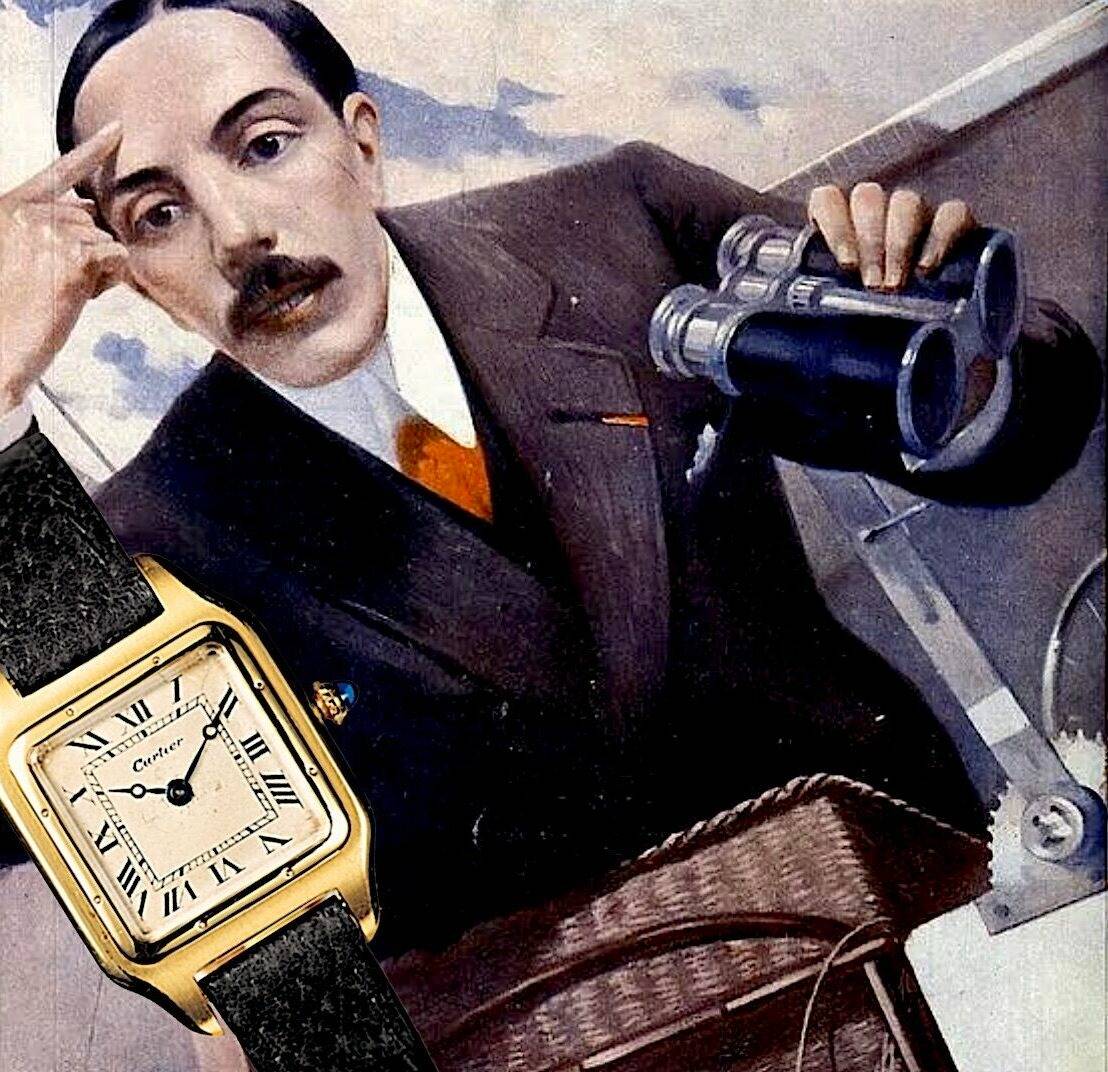
Illustration of Alberto Santos-Dumont and His Cartier Watch (Source: TimeOver)
The watch created for Alberto Santos-Dumont didn't quite match the image we have today of an aviator's watch. In fact, it more closely resembled the classic watches that would become popular a few years later, during the first half of the twentieth century.
It wasn't until the 1930s that the watchmaking creation that would truly lay the groundwork for the military pilot's watch came to life. Swiss manufacturer Longines played a central role in this evolution. In May 1930, it launched production of a model called the "Weems" - a watch often found signed Wittnauer, the latter being an agent who purchased Longines watches in Switzerland to sell them in the United States.
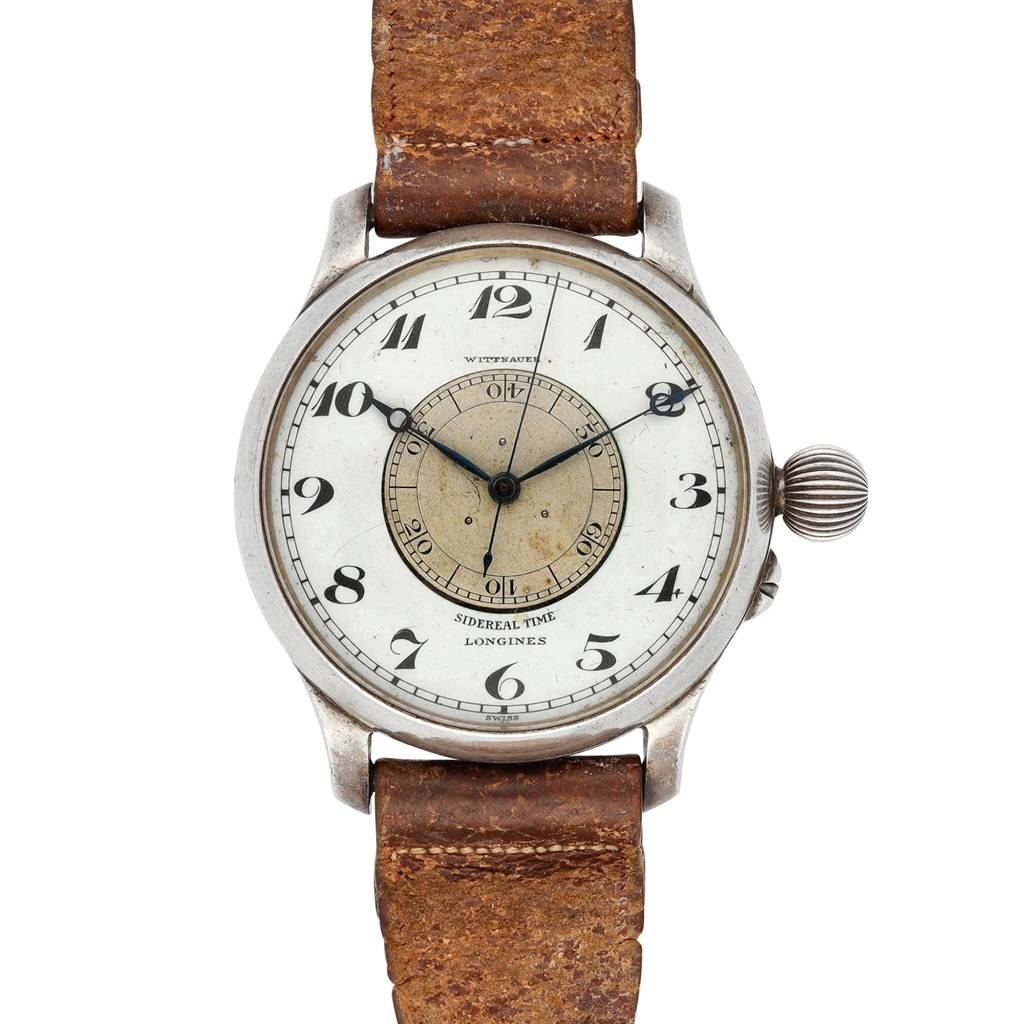
Wittnauer Weems by Longines, circa 1937 (Source: Sotheby's)
A notable feature of the "Weems" model was the ability to set the time to the nearest second using the central rotating disc on the dial. It can even be considered the forerunner of the "hacking seconds" mechanism found on certain contemporary watches.
In August 1931, this model was adopted by the US Army Air Corps, which used it as a military instrument until 1946. The military version was distinguished by one key technical change: second-hand synchronization was no longer achieved via the rotating disc on the dial, but through an external lockable bezel controlled by a dedicated crown.
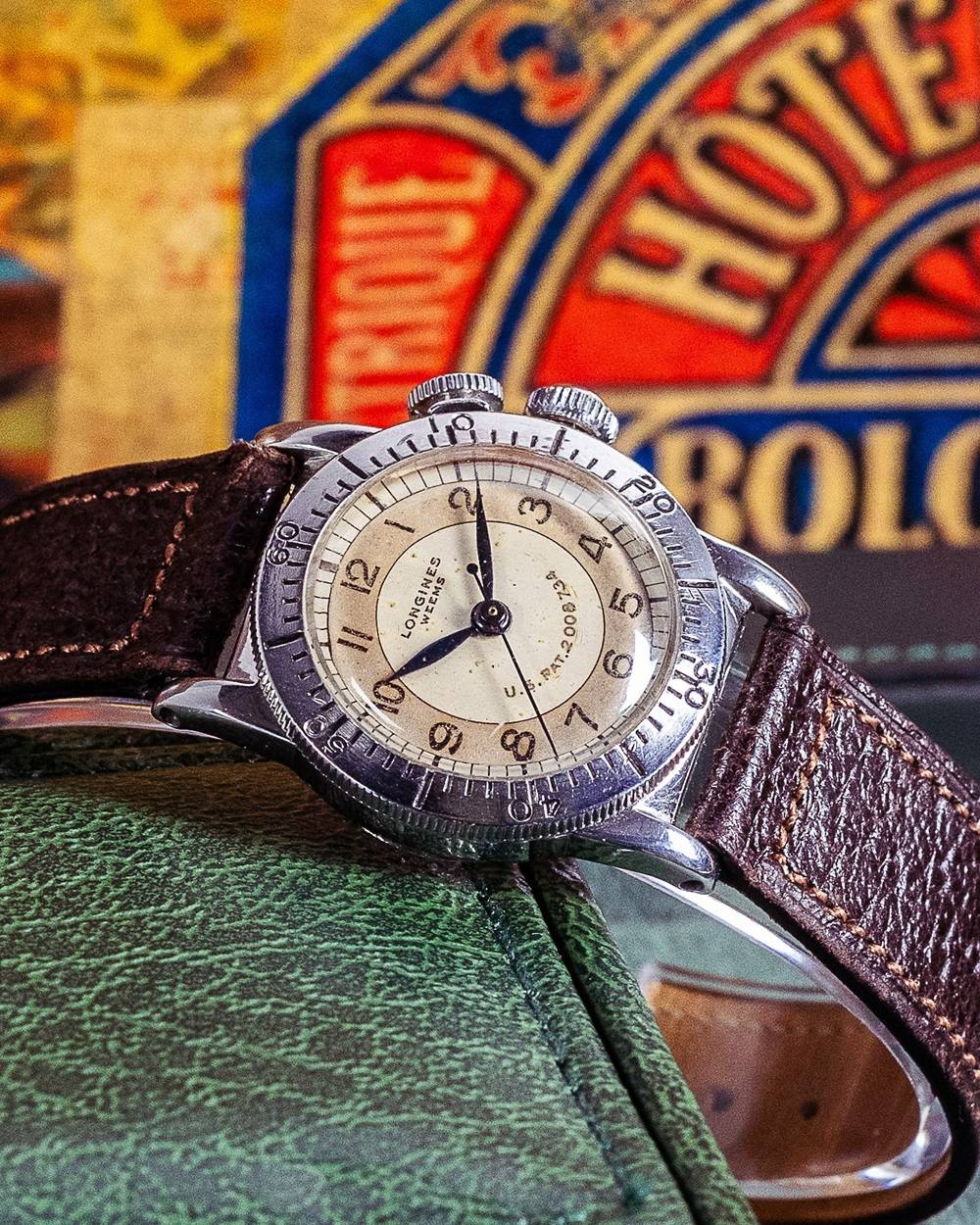
Longines Weems, circa 1940 (Source: The Time Watches)
The Wittnauer Weems also laid the groundwork for a more advanced aviation watch, again from Longines: the iconic Longines Lindbergh Hour Angle!
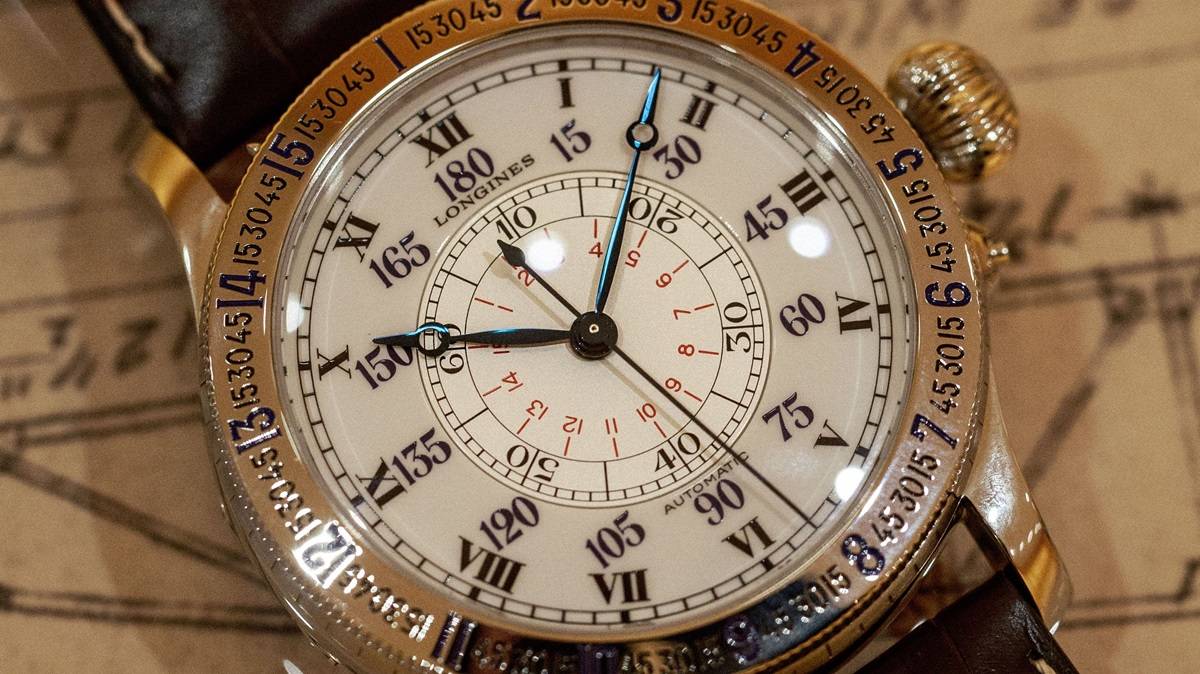
Longines Lindbergh Hour Angle (Source: Gear Patrol)
But the watches worn by US military pilots aren't the only ones to have become iconic. Those worn by French Air Force pilots have also left their mark on history.
Developed in the early 1950s, the "Type 20" or "Type XX" chronograph watches made a lasting mark on the watchmaking world - all the more so as certain manufacturers continue to produce them to this day.
Originally, the term "Type 20" referred not to a specific watch, but to a highly strict set of specifications defined by the French Air Force to create the ideal watch for its pilots. Among the key requirements:
Several brands took on the challenge and produced chronographs in compliance with these specifications, including:
The model considered most iconic today remains, without question, the Breguet Type XX (sometimes called the "Breguet Type 20") - a highly desirable, top-quality chronograph still produced by Breguet to this day!
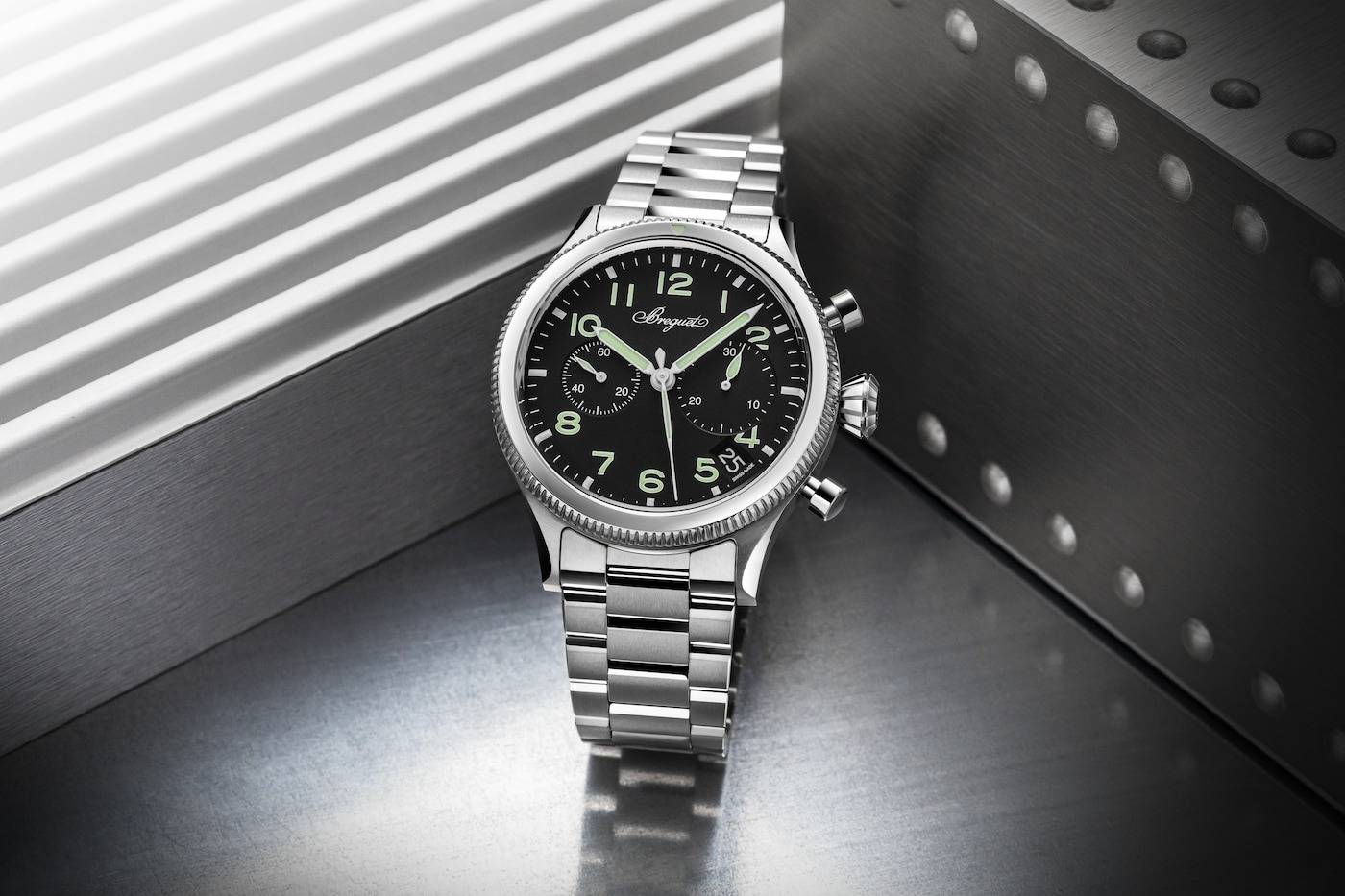
Breguet Type 20 Chronograph Watch Ref. 2057 (Source: Official Breguet Website)
These specifications were updated in 1956 and renamed the "Type 21" or "Type XXI." The main new requirement was that watches now incorporate a rotating bezel for reading an hour graduation.
French brand Dodane became the leading manufacturer of Type 21 chronographs. That said, several other manufacturers now offer compelling modern takes on the concept - among them Dodane, of course, but also Airain, Breguet, and Mathey-Tissot.
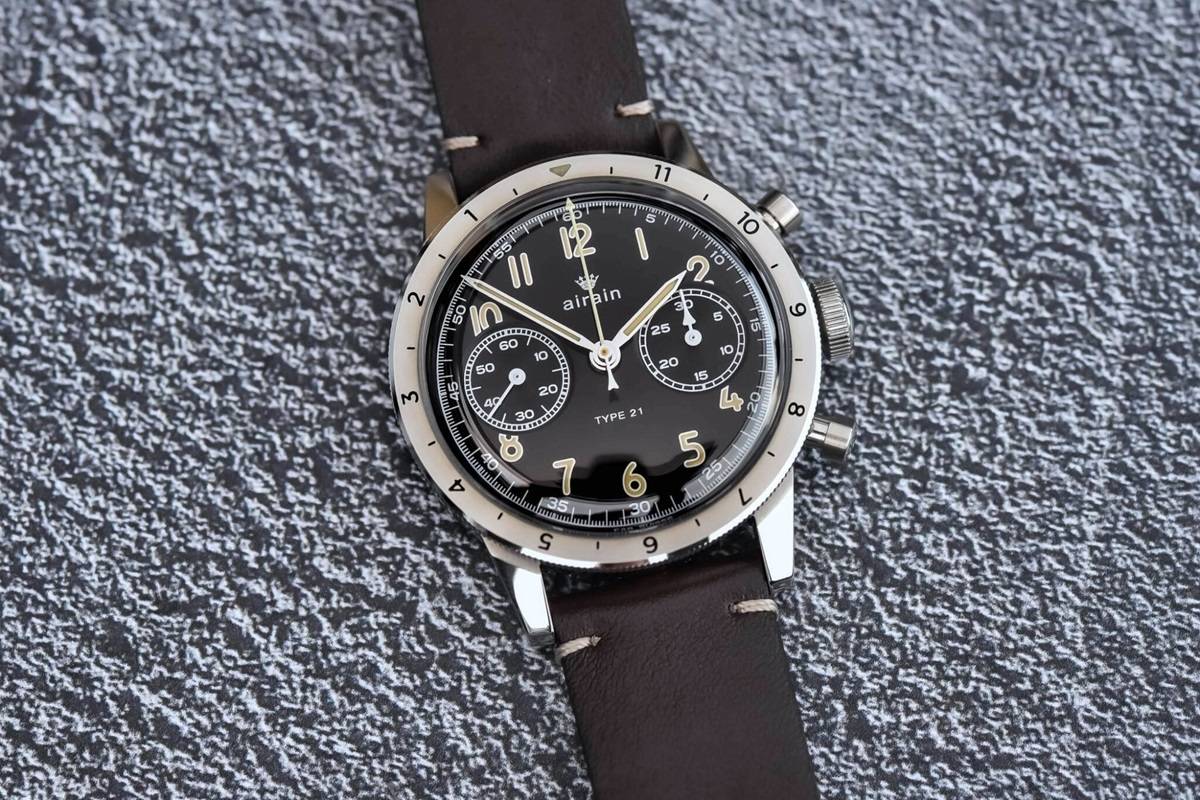
Modern Airain Type 21 Chronograph Watch (Source: Monochrome Watches)
Alongside the Longines Weems and the Type 20 and Type 21 chronographs, another family of military watches designed for aerial operations stands out: the "Flieger."
These watches share many similarities with the Field Watches discussed earlier, but with a few notable differences. The dial is typically black, and their design draws from the cockpit instruments used to fly aircraft. Flieger watches use a 12-hour graduation - unlike Field Watches, which often feature 24-hour markings - yet remain very clear and easy to read. It's also worth noting that some models place the minute track front and center, with the hour markings taking a secondary role, to allow more precise readings during flight.
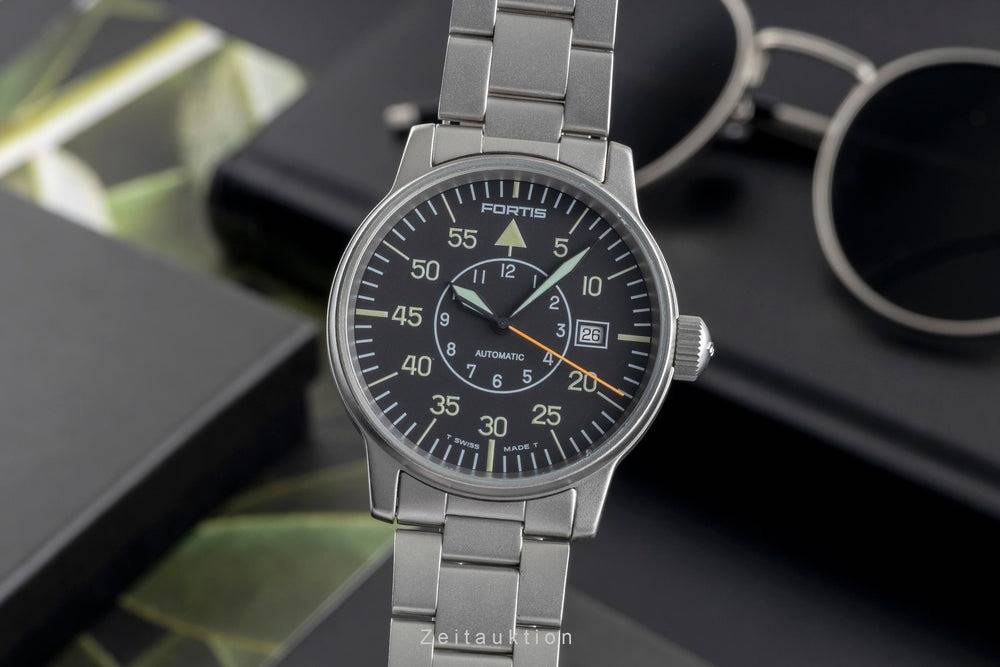
Fortis Flieger Watch Ref. 595.10.46.1 (Source: Zeitauktion)
The watches enthusiasts around the world refer to as "Flieger watches" are also distinguished by their elegant finishing. Their cases are often fully brushed, setting them apart from Field Watches which, as we've seen, most commonly feature a sandblasted, much more matte-looking case.
Originally designed to accompany pilots in the air, "Flieger"-type watches can also incorporate additional functions, such as a chronograph complication or a GMT complication (sometimes referred to as "UTC").
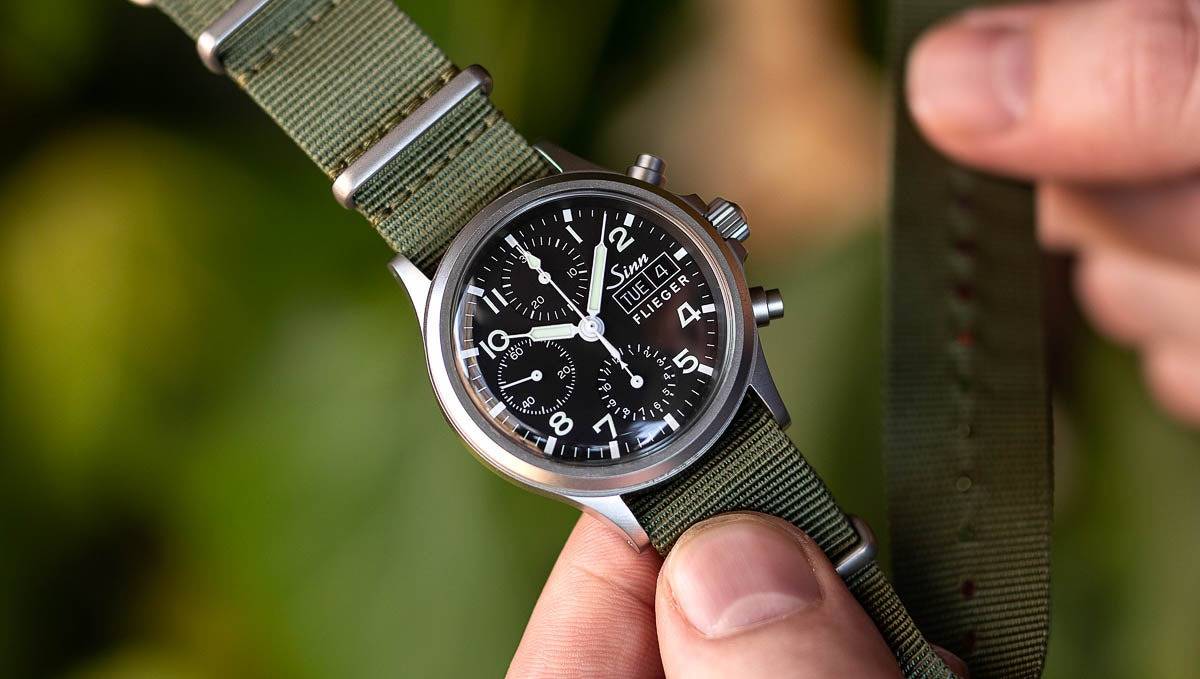
Sinn 356 Flieger Watch with Chronograph Complication (Source: WatchGecko)
A Flieger watch can be a relatively straightforward piece, with just three hands (hours, minutes, seconds) and sometimes a date display. That said, this family of watches also includes far more complex timepieces.
Today, the historic maisons remain very active in the Flieger watch segment, and a number of newer brands have also staked their claim. If you're looking to acquire one, you'll find great options from IWC, Oris, Sinn, Matwatches, Fortis, Hamilton, Victorinox, Laco, Festina Swiss Made, Citizen, Avi‑8, JDM Military, and Patrouille de France - all offering models inspired by this style.
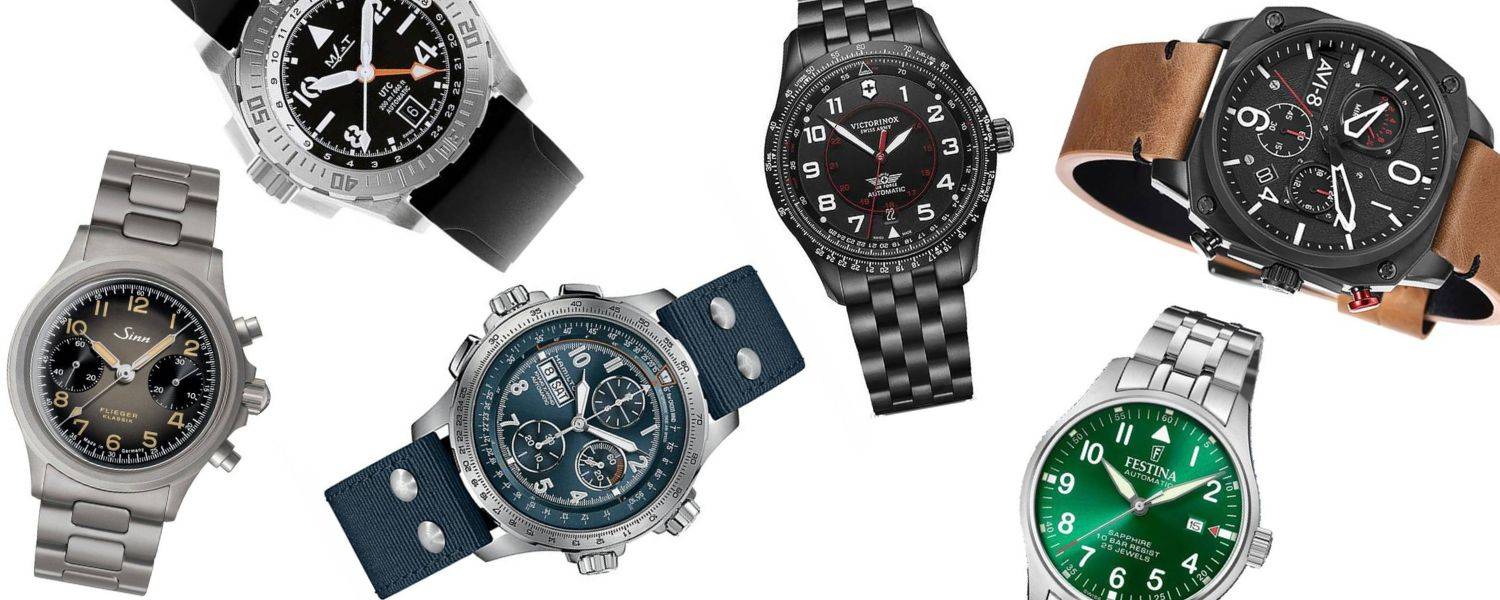
Modern Military Aviation Watches from Various Brands
As you may have noticed looking at the various models presented, the case of aviator watches tends to be relatively refined - especially compared to that of field watches. These models feature more classic finishes, such as polished or brushed surfaces, two textures that lend them a pleasing level of shine and bring them closer to the "civilian" watches we wear every day.
Whether Weems, Type 20, Type 21, or Flieger, these military aviation watches - though different from one another - share a number of common characteristics:
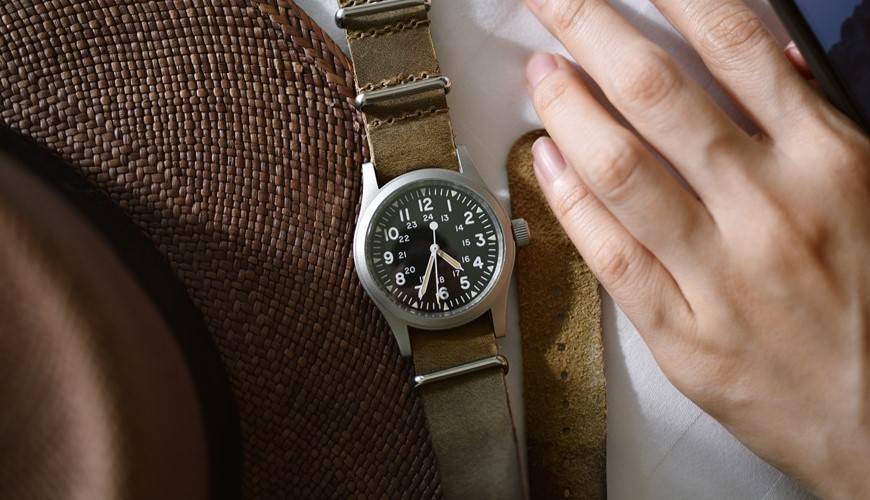
At first glance, a military watch might seem intimidating - but rest assured, it's far easier to pull off than a pair of cargo pants or combat boots! Ironically, there are even classic, non-military watches available with camouflage dials.
Whether it's a "Field," "Weems," "Type 20," "Type 21," or "Flieger," a military watch works just as well with a casual outfit as with a more polished look. This versatility may come as a surprise - but it holds true. Their understated design, combined with their often compact diameter, means they never look out of place despite their technical character.
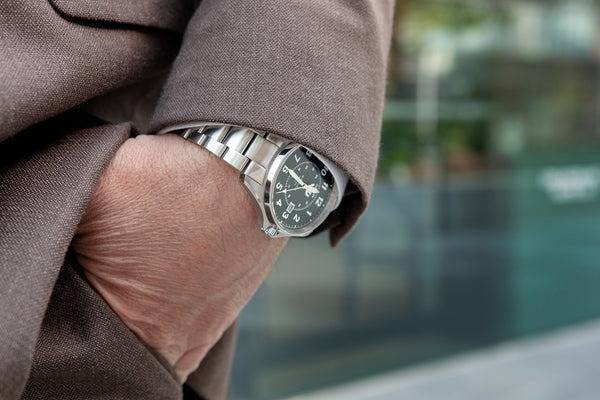
Wasson Military Watch Worn with a Suit (Source: Wasson Watch Co.)
Worn with a dressed-up outfit, a military watch can even add a touch of sophistication - speaking not only to your appreciation for fine timekeeping, but also to your knowledge of the watch's history. Watch enthusiasts and casual wearers alike have no trouble pairing a dive watch with a dress shirt, so why should a military watch be any different?
Another major strength of military watches is their exceptional legibility. Their thick hands with fine tips, luminescent indices, and clear markings make them practical everyday accessories.
When all is said and done, isn't the military watch one of the most compelling watch styles to adopt, no matter the day or the outfit?
Share :
Official European Union notice on your rights in the event of a product's lack of conformity.