
0
Product added
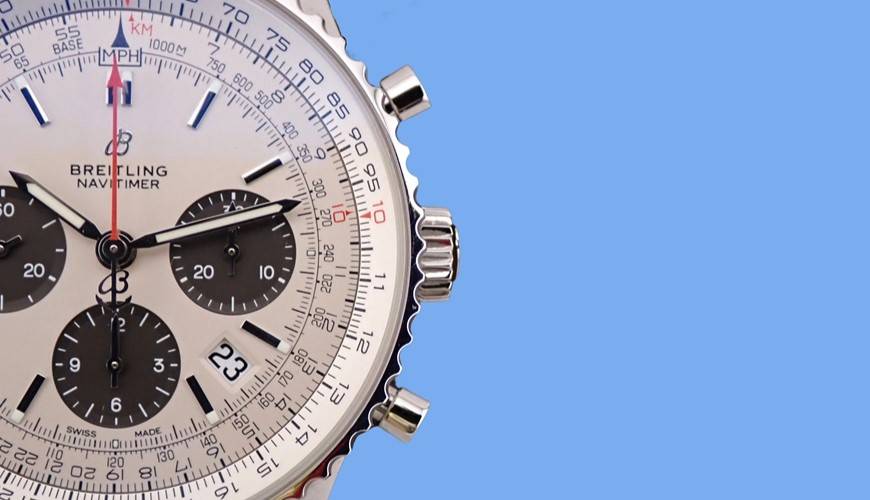
An instrument of precision and passion, the chronograph has fascinated people for more than two centuries! Born from the desire to capture a moment with absolute precision, it has accompanied some of humanity's greatest adventures: sporting records, feats of aviation, and space missions. Every press of its pusher tells a story, pauses time, and captures a singular moment....
Have chronographs always caught your eye? Want to learn everything about these watches that are as beautiful as they are useful? You're in the right place!
The Le Robert dictionary defines "chronograph" as "an instrument that records durations" - in other words, a device designed to measure time over a given period. By now, you're starting to get a clear picture of what a chronograph is, but be careful not to jump to conclusions just yet!
Although these terms are often used interchangeably, in watchmaking, "chronograph" and "chronometer" are not the same thing. The similarity between the two words makes the mix-up an easy one to make…
That said, we won't dwell on this distinction any further. The key takeaway is that, regardless of the terminology, all chronographs share the ability to time a specific event. If you'd like to learn more about the concept of "chronometer," we invite you to check out our guide to mechanical and automatic watches, where you'll find everything you need to understand the difference and avoid any confusion.
Chronographs are useful across many fields, starting with sport, where they measure athletic performance and ultimately separate competitors at the finish line. In disciplines like the Tour de France time trial, for instance, a chronograph is indispensable - without one, it would simply be impossible to determine the winner.
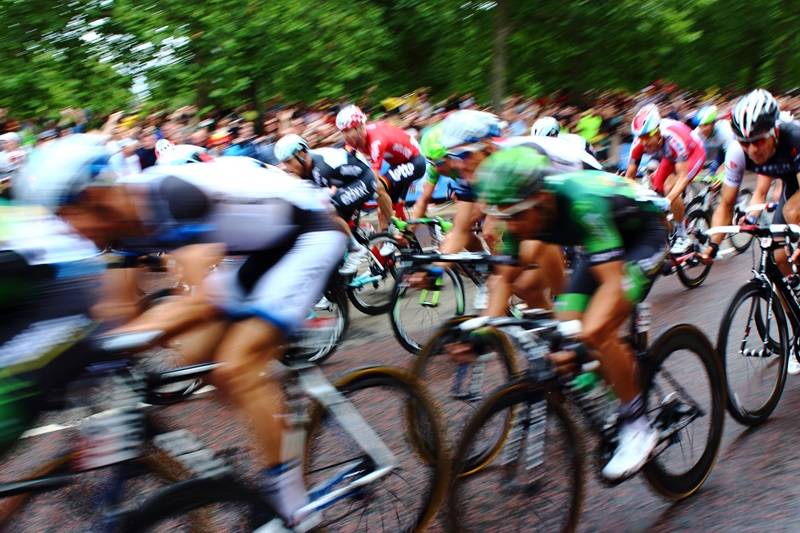
They are also widely used in sports like soccer and rugby, where precise timekeeping is essential for signaling halftime, tracking added time, or managing extra time. But the applications don't stop there…
Depending on their configuration and the functions they offer, chronographs can also be used to measure distances or take a patient's pulse. Some versions of these instruments can even calculate how far away a lightning strike has occurred.

The chronograph is a watchmaking complication that serves a purpose in every field where precise timekeeping is critical. That's likely why it remains one of the most beloved watch functions of all time.
When you stop to think about it, it's remarkable just how much a chronograph can do, isn't it?
For a long time, history credited the invention of the chronograph to Nicolas Mathieu Rieussec, a French watchmaker at the court of King Louis XVIII. He had been commissioned by the king, who wanted a way to time horse races. In 1821, Rieussec unveiled his invention: the "chronographe-encreur" (ink chronograph). Designed to meet the king's needs, it was a case containing two graduated rotating discs onto which ink was dropped to record elapsed time.
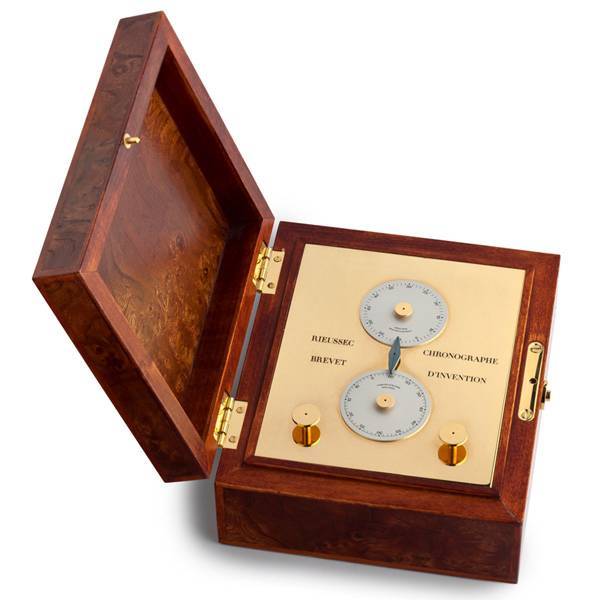
Nicolas Mathieu Rieussec's Ink Chronograph, 1821 (Source: Europa Star)
What we'll take away here is that Nicolas Mathieu Rieussec was the first to use the word "chronograph," derived from the Greek terms "chronos" and "graphein," meaning "time" and "to write," respectively. A chronograph is, quite literally, a tool that writes time!
That could have been the beginning of the chronograph's story - but a few years ago, we discovered that a man named "Louis Moinet" had actually invented, in 1816, a device that bore a striking resemblance to the chronograph watches we know today…
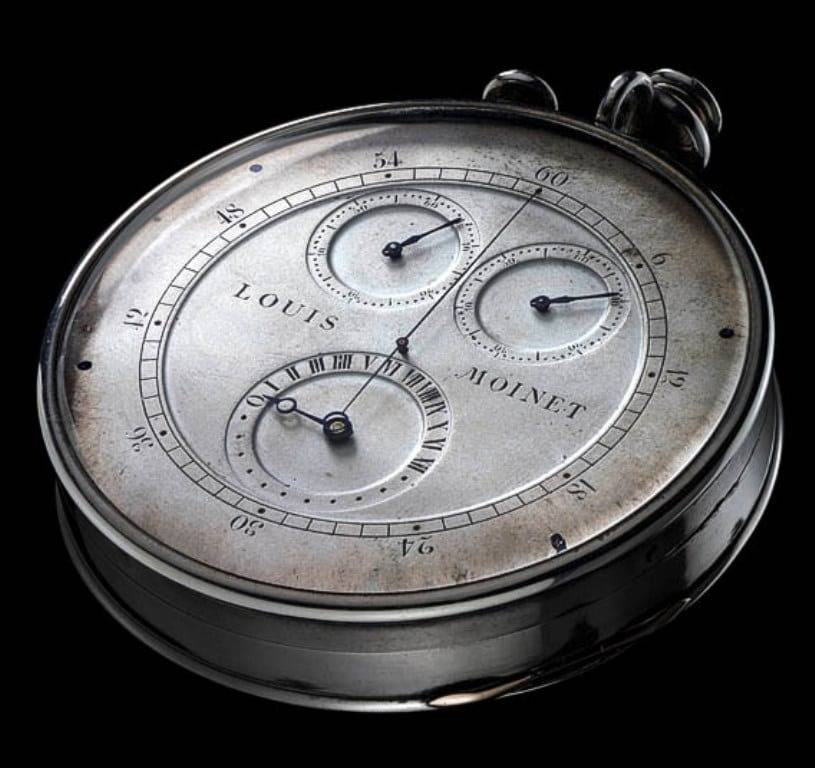
Louis Moinet's Compteur de Tierces, 1816 (Source: AutomotivPress)
Named the "Compteur de Tierces" (Third-Counter), this invention by Louis Moinet took the form of a pocket watch with 3 sub-dials and could be operated via a single pusher.
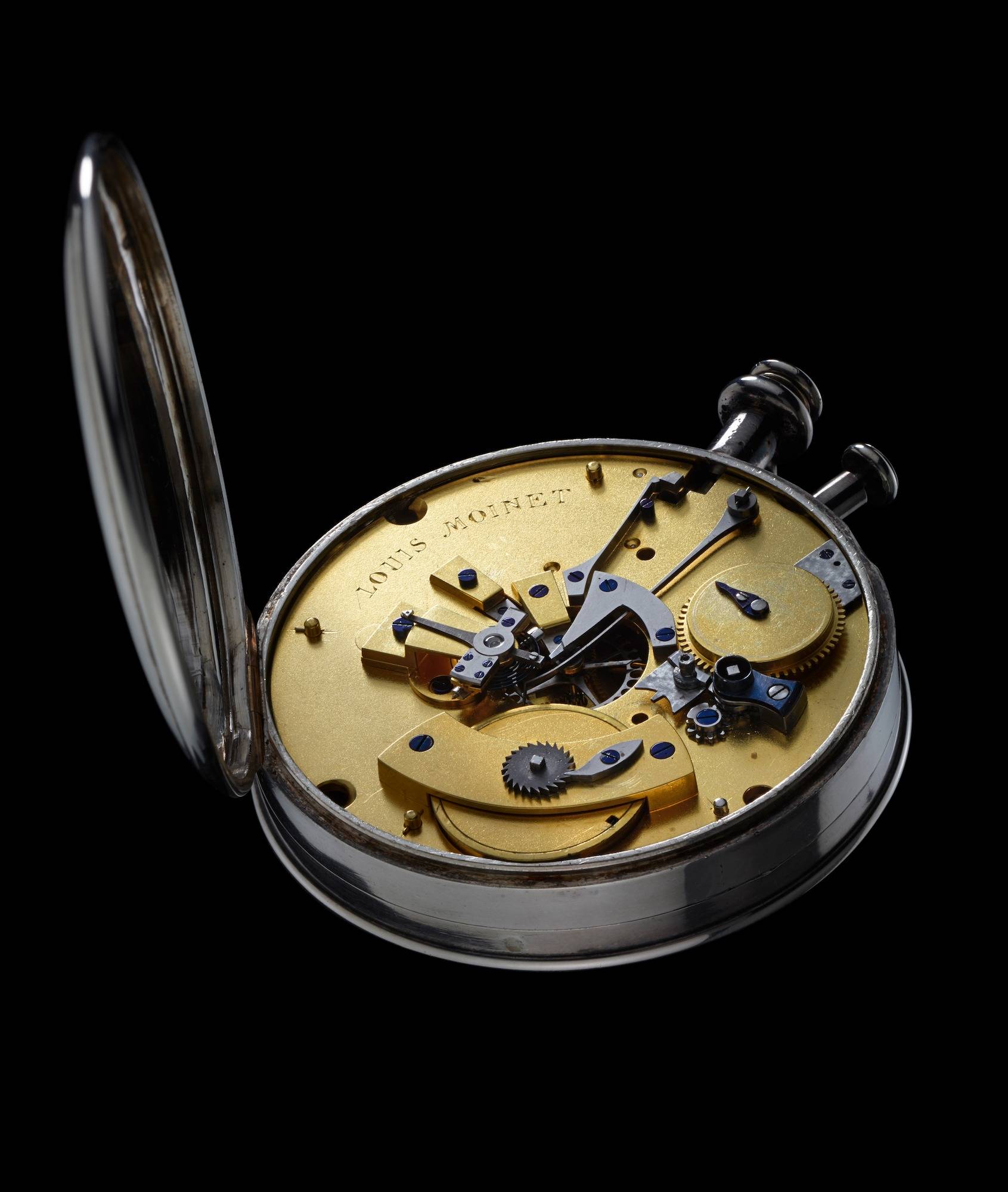
Movement of Louis Moinet's Compteur de Tierces (Source: Louis Moinet)
Moinet's "Compteur de Tierces" is distinguished by its high-frequency movement, beating at 30 Hz, which allowed events to be timed with extreme precision down to 1/60th of a second. For context, a modern high-frequency chronograph typically operates at 36,000 vph (5 Hz) - a significantly lower frequency. This exceptional precision is largely due to the fact that the instrument was originally conceived for astronomical observation, a field that demands the highest possible accuracy.
Until 1880, pocket watches equipped with a chronograph complication were rare. After that date, production ramped up significantly, driving costs down and making them more accessible to the general public.
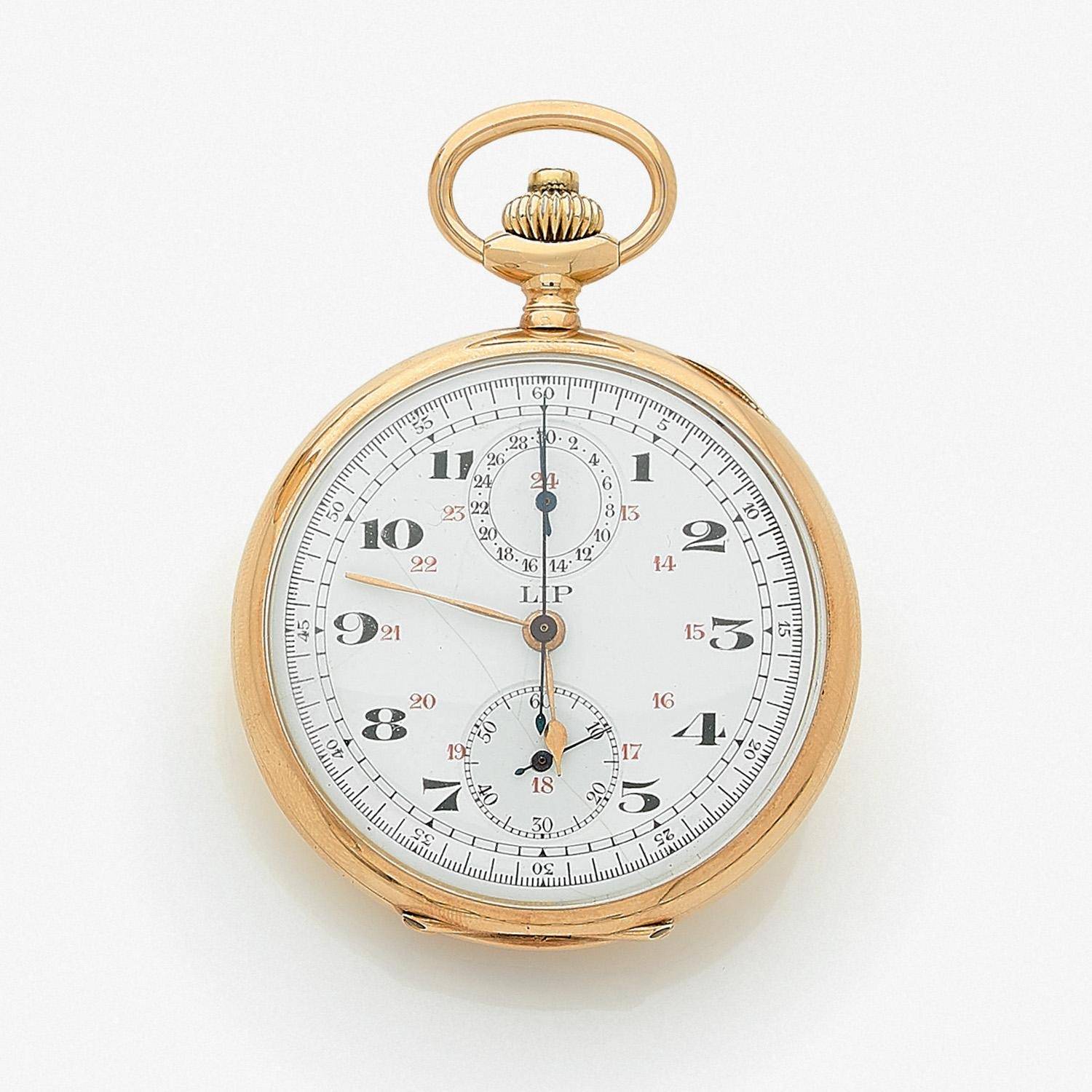
Lip Pocket Watch with Chronograph Complication, circa 1900 (Source: Invaluable)
In the United States, Waltham produced chronographs that evolved with the times to become more practical. It's worth noting that movements developed by Waltham tended to feature a simpler architecture than their Swiss Made counterparts.
But we were still far from the chronographs we know today. If you've read our guide on the history of watches, you'll know that the first wristwatches only emerged at the turn of the 20th century.
From that point on, certain brands staked their claim in this space. Several renowned houses - including Longines, Lemania, Minerva, Helvetia, Breitling, and Gallet - built their reputations on the quality of their chronographs during the first half of the 20th century.
Longines was a true pioneer in this field, developing the caliber 13.33Z in 1913. This manually wound mechanical movement with a chronograph complication measured just 29 mm in diameter and 6 mm in thickness - a remarkable technical achievement for its time.
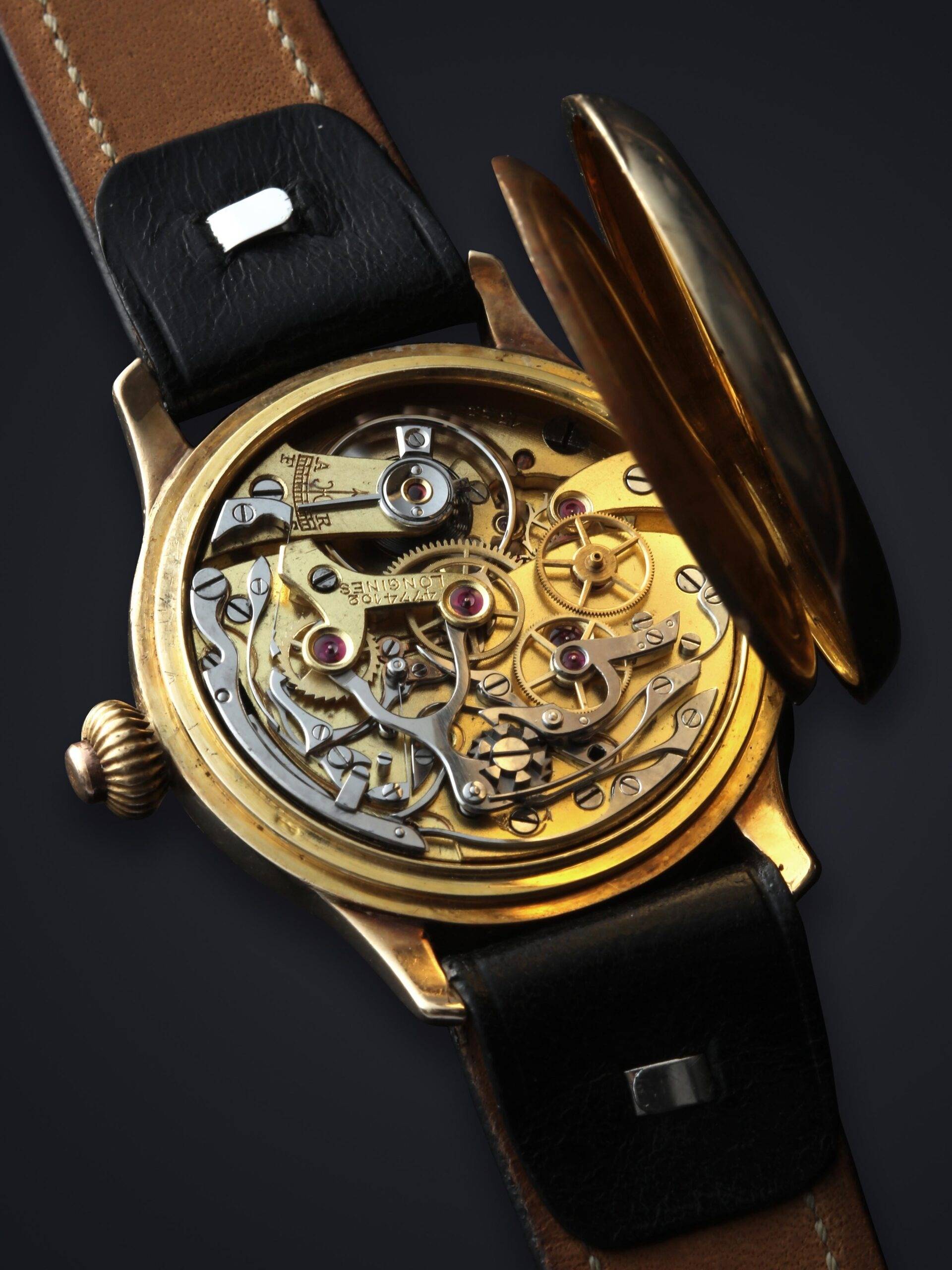
Longines Chronograph, Caliber 13.33z (Source: ChronoVantage)
This caliber was distinctive for being operated by a single pusher built into the crown - a concept that gave rise to so-called "mono-pusher" chronographs. Compact and elegant, these models would go on to become iconic.
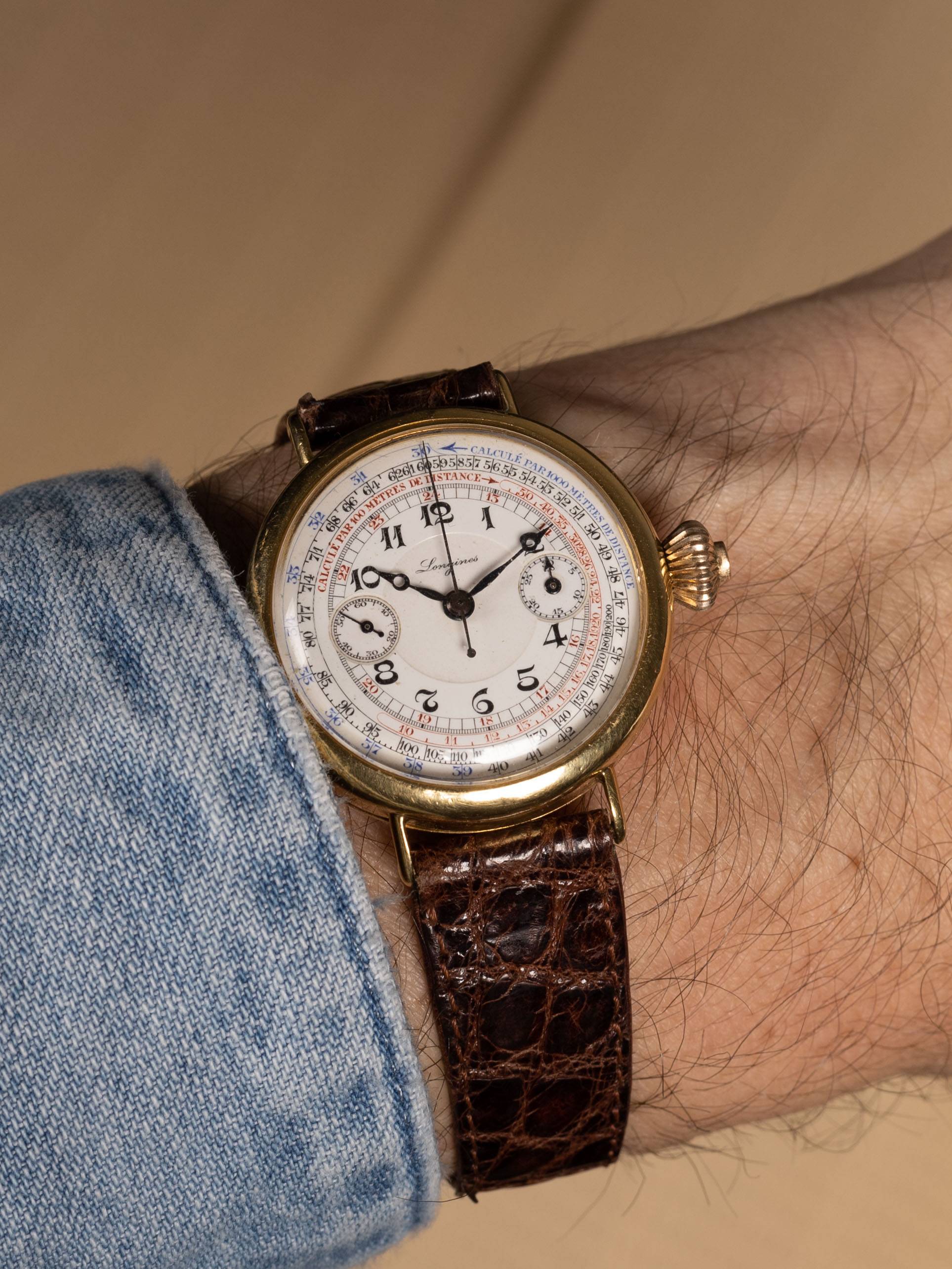
Longines Chronograph, caliber 13.33Z (Source: wrist icons)
In 1915, Gaston Breitling revolutionized the chronograph world with a new innovation. He introduced a model featuring a central seconds hand, a 30-minute counter, and - most significantly - an independent pusher. Now offset from the crown, this dedicated pusher marked a genuine turning point in chronograph design.
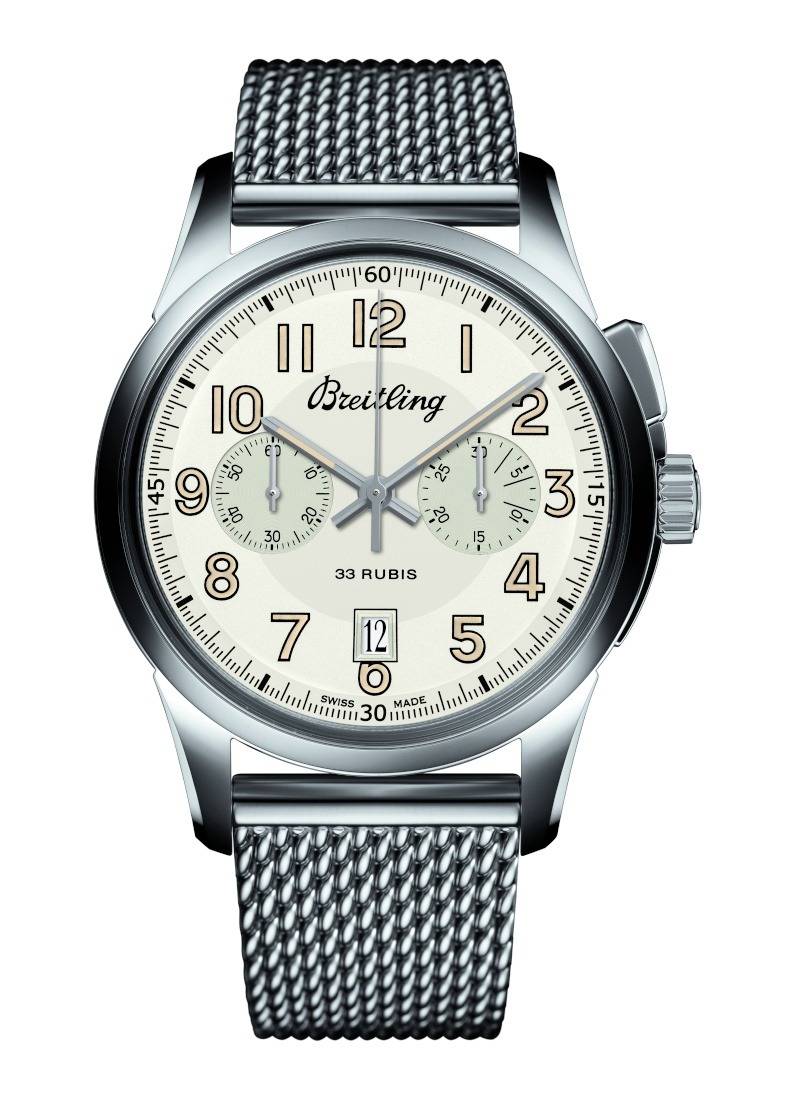
Breitling Transocean Chronograph 100th Anniversary Edition, 1915-2015 (Source: Passion Horlogère)
This was the height of the Art Deco era, and chronographs embraced the movement's hallmark blend of modernity and elegance. Case makers pushed the boundaries of design, crafting innovative and captivating forms that were as beautiful as they were functional.
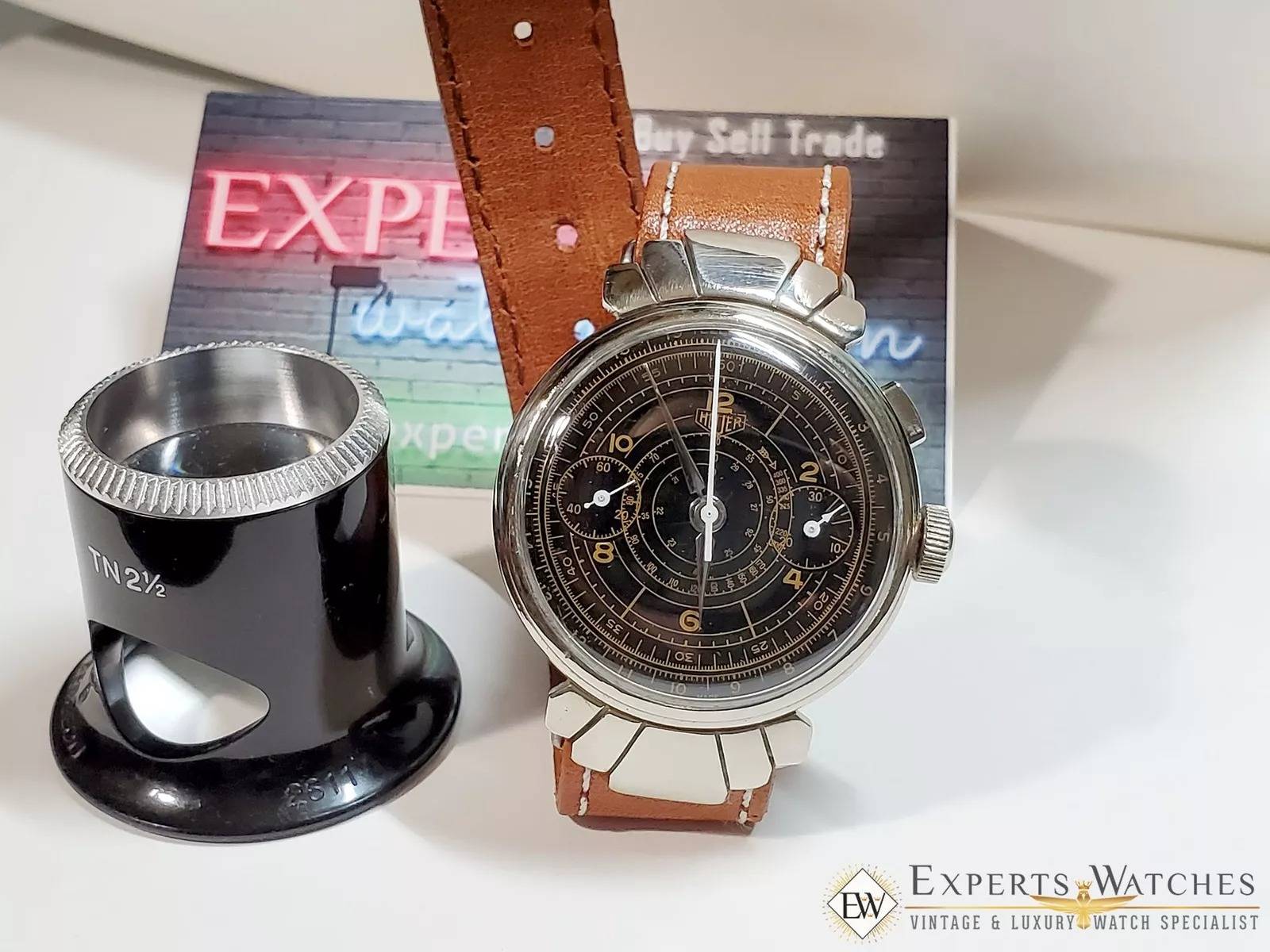
Art Deco Style Heuer Chronograph, circa 1930 (Source: Experts Watches - eBay)
"Mono-pusher" chronographs continued to dominate through the 1930s, before gradually giving way to models closer to what we know today, equipped with two pushers.
These new chronographs became hugely popular from the mid-20th century onward. A large number of models were fitted with the Landeron 48 caliber - a manually wound mechanical movement that made it possible to produce affordable models. Manufactured from 1937 through the 1970s, this caliber was produced in more than 3.5 million units.
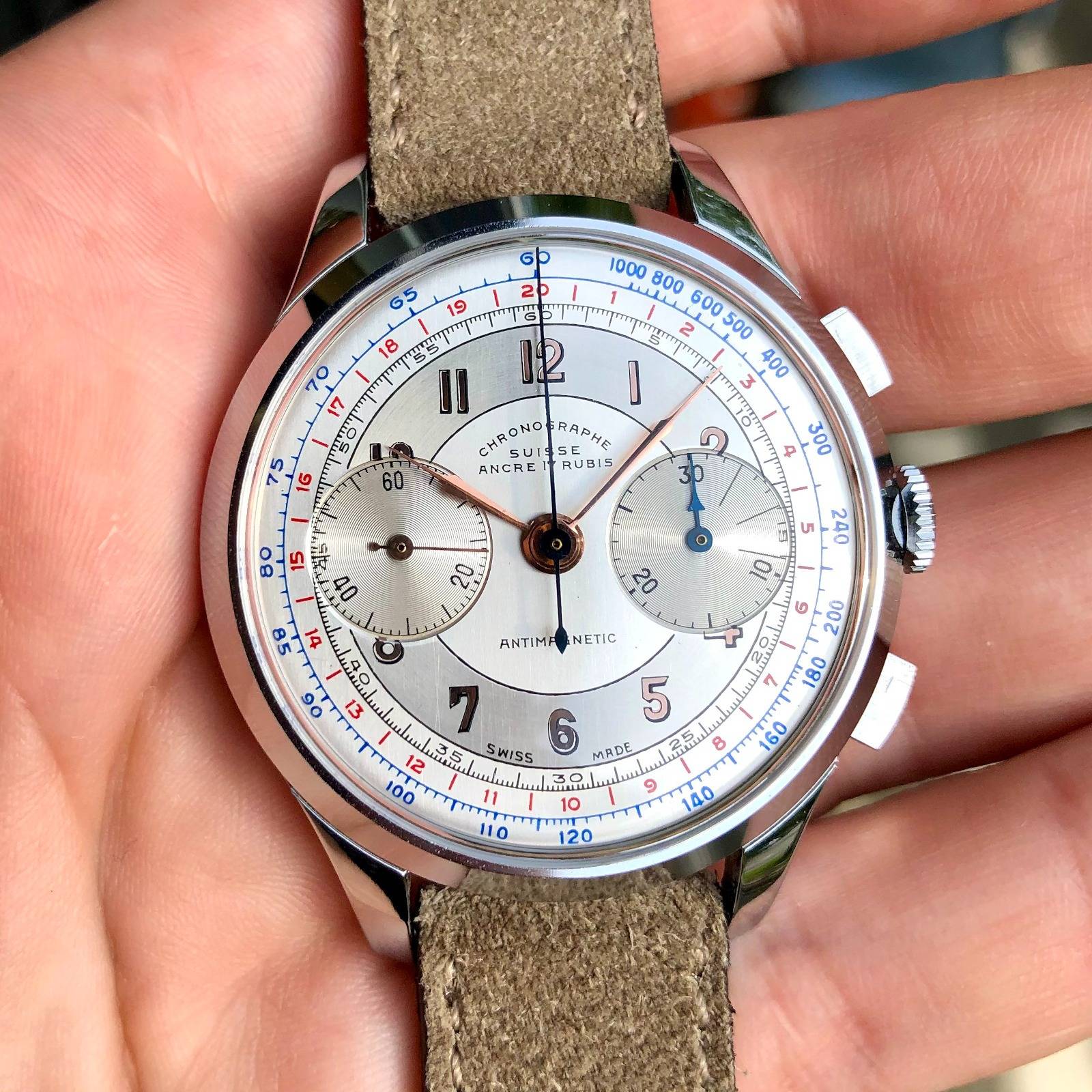
Swiss Chronograph, Landeron 48 Movement (Source: Brussels Vintage Watches)
Many chronographs of that era proudly displayed the inscription "Chronographe Suisse" on their dials.
However, all these chronographs ran on manually wound mechanical movements. It wasn't until the late 1960s that the very first self-winding mechanical chronograph came to life.
It was Zenith that made headlines in 1969, at a press conference where the brand unveiled its new high-frequency automatic movement featuring a chronograph complication.
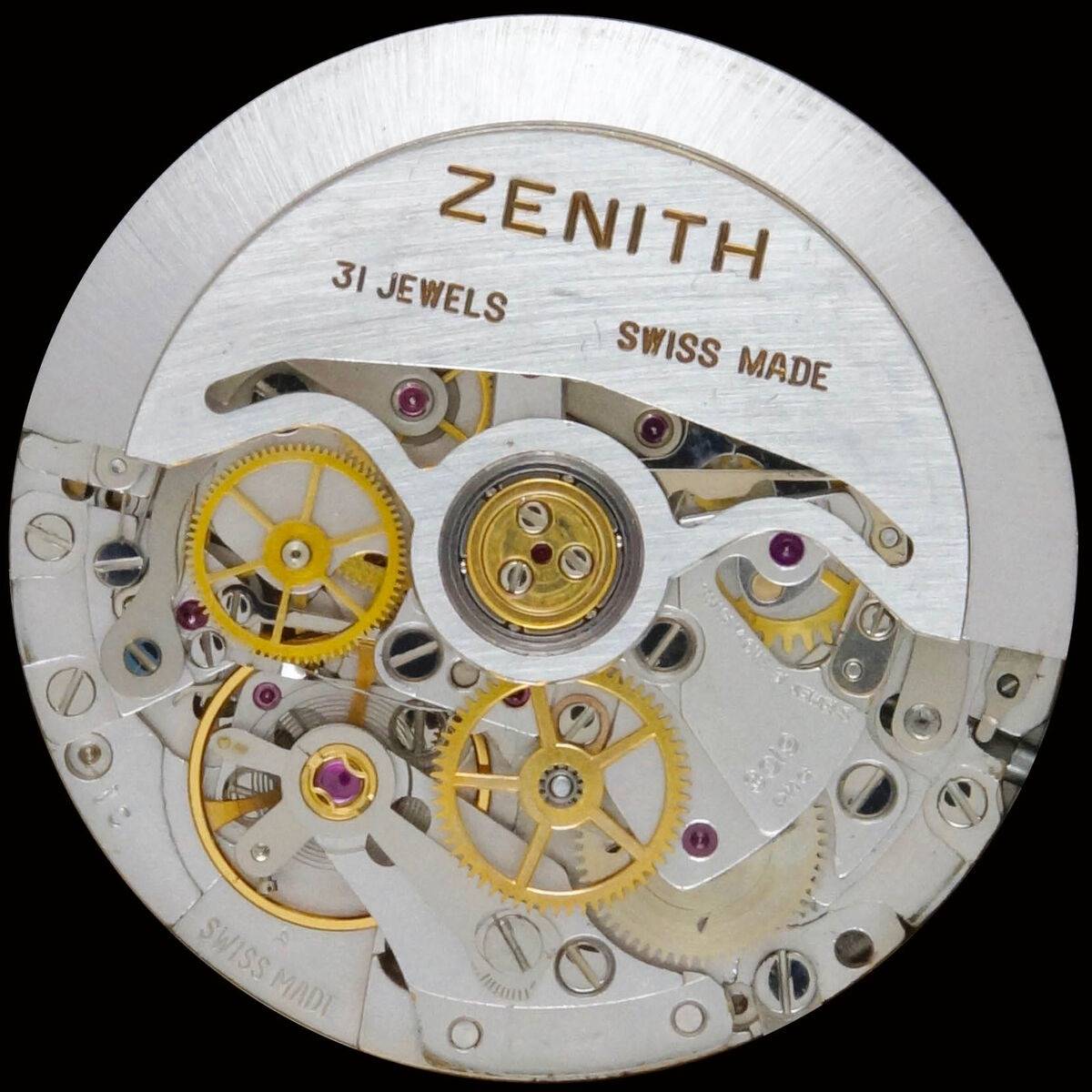
Zenith 3019 PHC Automatic Chronograph Movement (Source: Clinique Horlogère)
This movement, named "3019 PHC," boasts impressive specifications: a diameter of 30 mm, a thickness of 6.5 mm, an operating frequency of 36,000 vph, a power reserve of 50 hours, and 31 jewels.
Some time later, this groundbreaking movement was renamed "El Primero" - which, in Spanish, literally means "The First." And that is indeed the name by which it is known today among the vast majority of enthusiasts!
The Zenith El Primero movement was even used in the Rolex Daytona between 1988 and 2000. These watches, often nicknamed the "Daytona Zenith," were fitted with the Rolex "Calibre 4030" movement - which was nothing more than a Zenith El Primero reworked by the crown brand to suit its own requirements.
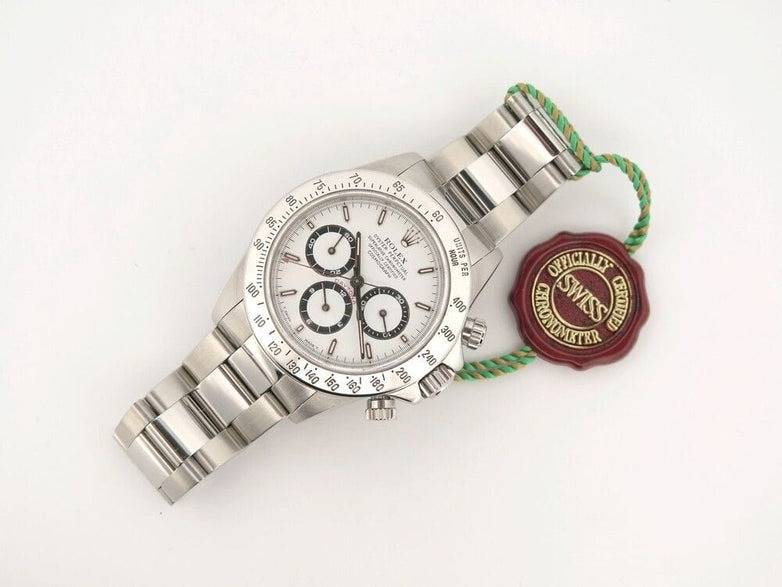
Rolex Daytona "Zenith" ref. 16520, 1997 (Source: 58 Facettes)
Lowering the operating frequency to 28,800 vph and removing the date complication were the most significant modifications Rolex made to the El Primero caliber for its Daytona.
In 2017, Zenith unveiled a new caliber, the "El Primero 9004," which set precision records by being capable of timing an event to 1/100th of a second. Remarkable, isn't it?
Today, chronographs powered by a meca-quartz movement are hugely popular! To find out who invented them, check out our dedicated guide to hybrid watches!
Let's take a step back and look at the chronograph's place in pop culture. First and foremost, this watchmaking complication is inseparable from the world of motorsport - and that connection has played out on the big screen as well…
In "Le Mans," a 1971 film centered on the legendary 24 Hours of Le Mans race, Steve McQueen wears a Heuer Monaco on his wrist. It's a chronograph watch featuring not a round but a square case.
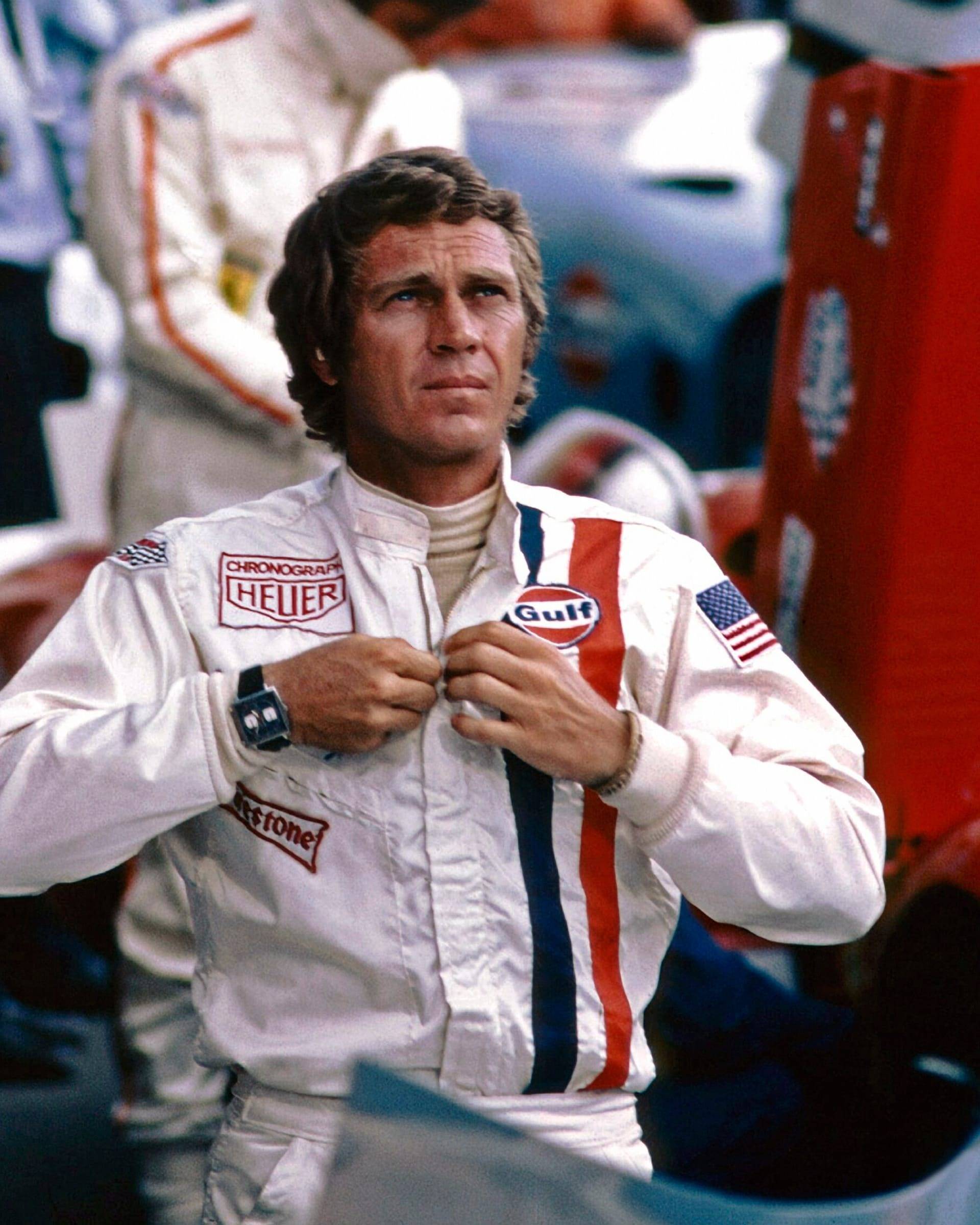
Steve McQueen wearing a Heuer Monaco in Le Mans, 1971 (Source: Tag Heuer)
That's why many people believe that the man known as "The King of Cool" actually owned a Heuer Monaco - but the truth is a bit more nuanced. While the legendary American actor did wear the chronograph during filming of Le Mans, he never personally owned one.
The chronograph watch has also been featured in numerous other films. In "Night Caller" (French title: Peur sur la ville), a 1975 film, Jean-Paul Belmondo wears a Rolex Daytona 6263 with a black dial and light-colored sub-dials. This reference is nicknamed "Big Red" because of the "Daytona" text printed in red above the 6 o'clock sub-dial. Notably, the watch was part of Belmondo's personal collection.
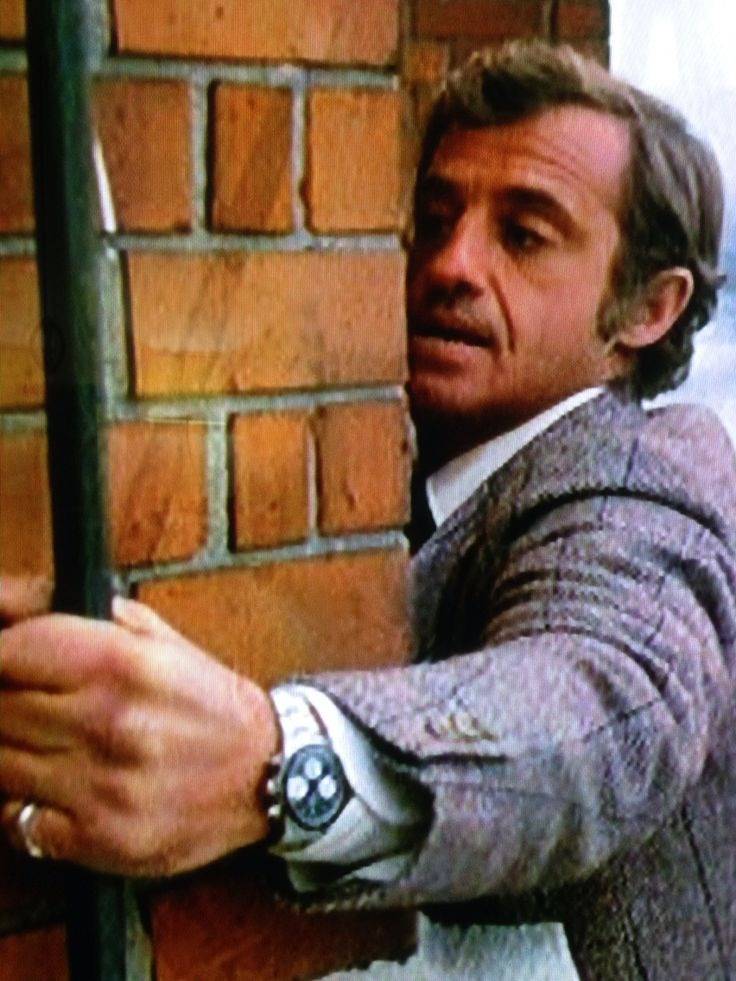
Jean-Paul Belmondo wearing a Rolex Daytona 6263 in Fear Over the City, 1975 (Source: Phi£ - Pinterest)
In "Once Upon a Time in Hollywood," Quentin Tarantino's 2019 film, Brad Pitt sports a chronograph with a one-of-a-kind look. It's a Citizen Challenge Timer 67-9020, a model nicknamed "Bullhead" for its unconventional layout, with two pushers and a crown positioned at the top of the case.
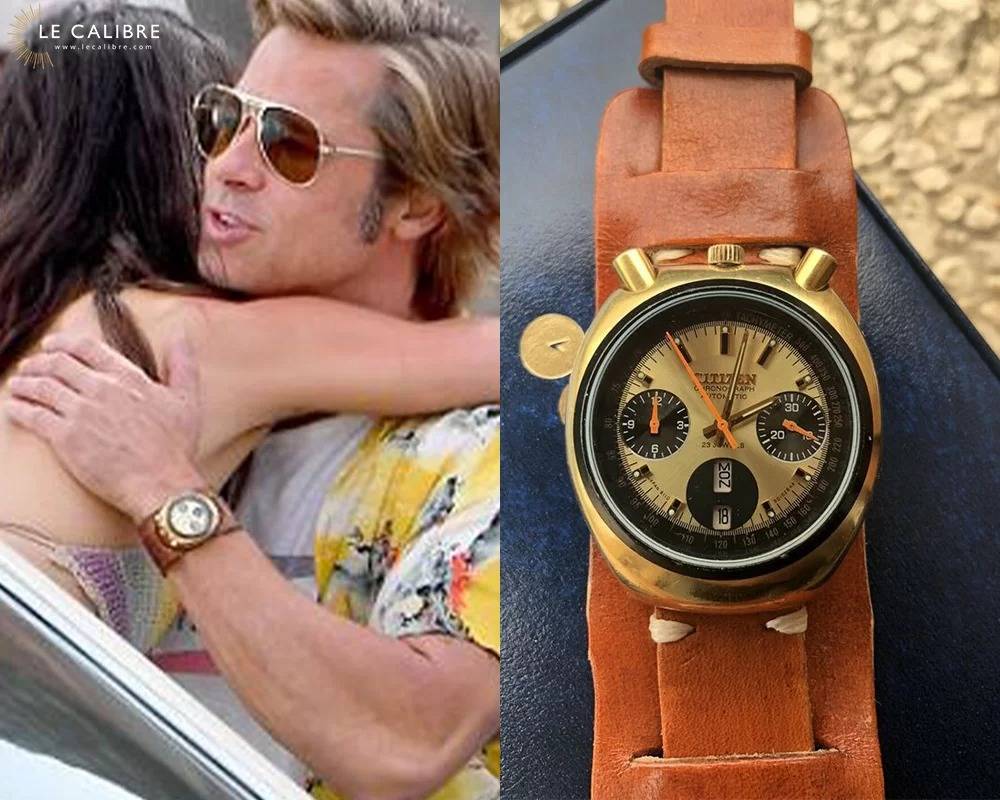
Brad Pitt wearing a Citizen "Bullhead" in Once Upon a Time in Hollywood, 2019 (Source: LeCalibre)
Here are three iconic films - past and present - in which the lead characters proudly sport a chronograph. It's clear that the watch we call the "chrono" is far from done capturing our imagination!
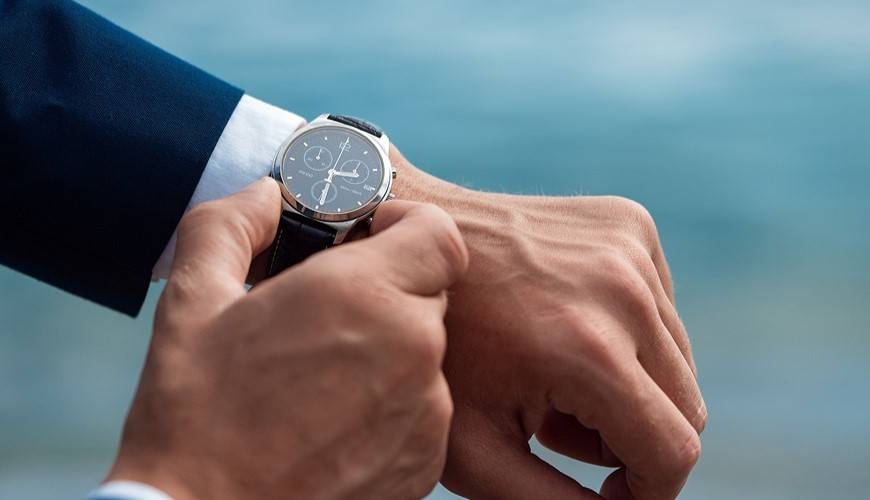
Today, most chronograph watches feature a crown and two pushers on their right side. Their dials include sub-counters, often called "registers" or "sub-dials." And given the complication they house, these watches also come with a dedicated central hand and a graduated bezel.
It's precisely this combination of elements that sets chronographs apart from more traditional watches and makes them such effective tools. Here's how the whole system works:
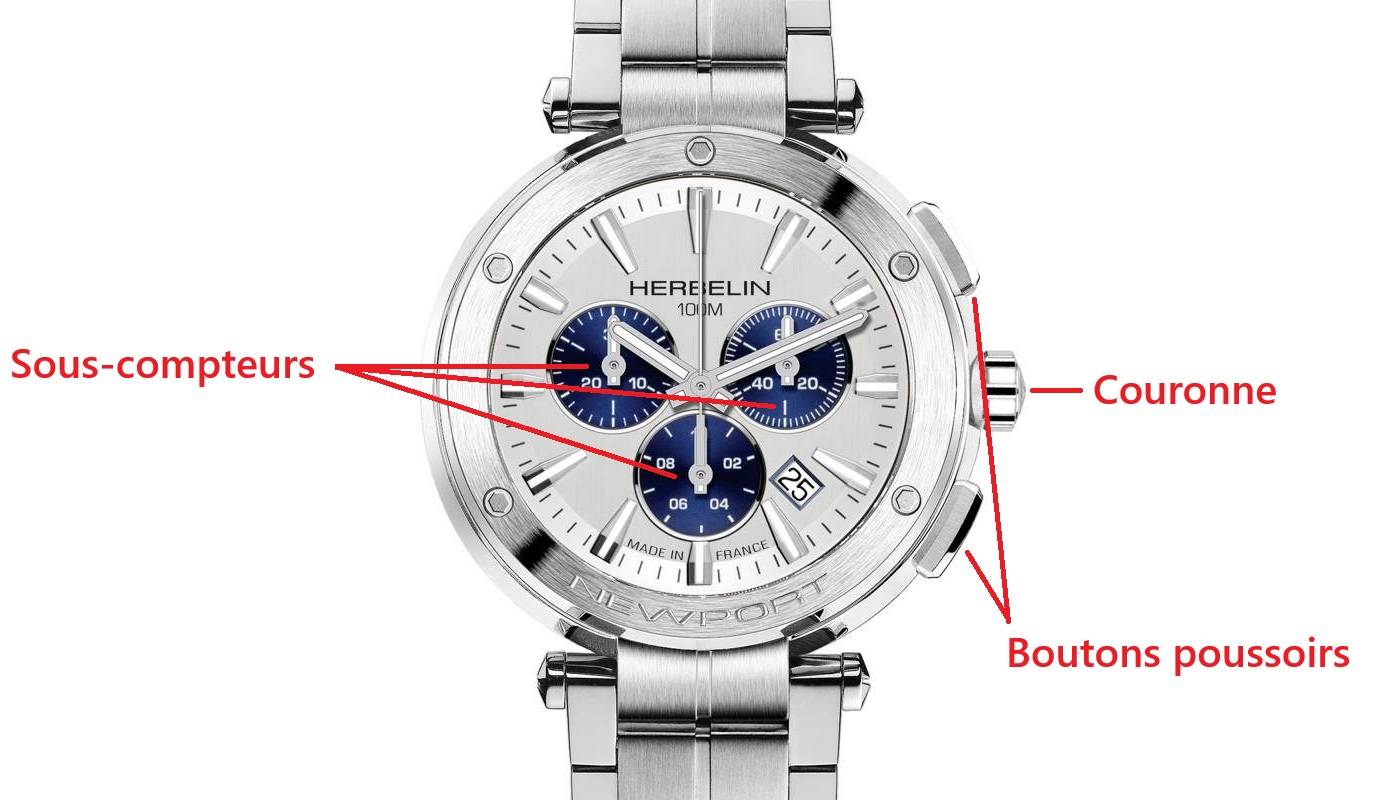
Chronograph Watch Configuration
As we mentioned, some chronographs feature two or three sub-counters - and these are referred to as "Bicompax" and "Tricompax," respectively.
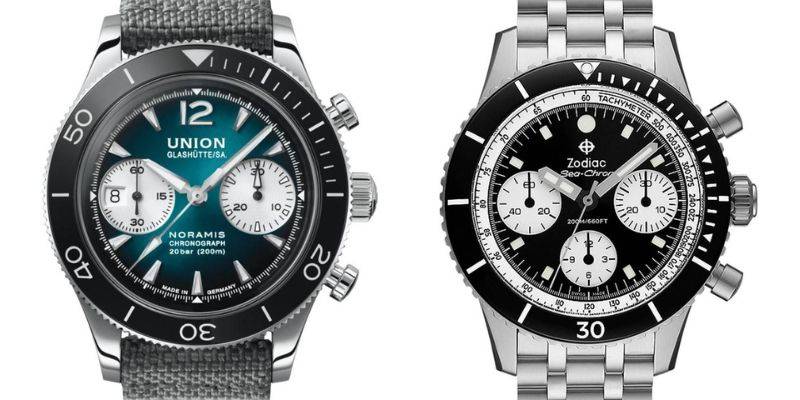
Bicompax Chronograph vs. Tricompax Chronograph
A Bi-compax chronograph (with two registers) can only time events up to 30 minutes to one hour, whereas a Tri-compax chronograph (with three registers) generally offers the ability to measure up to 12 hours. Quite something!
On a Bicompax chronograph, the registers are most often found at 3 o'clock and 9 o'clock, while on a Tricompax chronograph, they are typically positioned at the bottom of the dial at 3, 6, and 9 o'clock. Some Tricompax models concentrate the registers on the left side of the dial at 6, 9, and 12 o'clock. Other configurations exist as well, though they are less common.
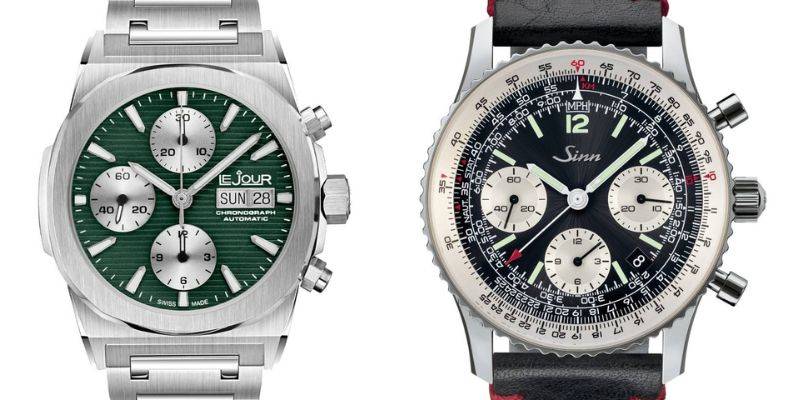
Two Tricompax chronographs in two different configurations
Chronograph watches are considered complex timepieces. Their movements - whether mechanical or automatic - contain far more parts than those of simpler watches, such as a basic three-hand model with a date.
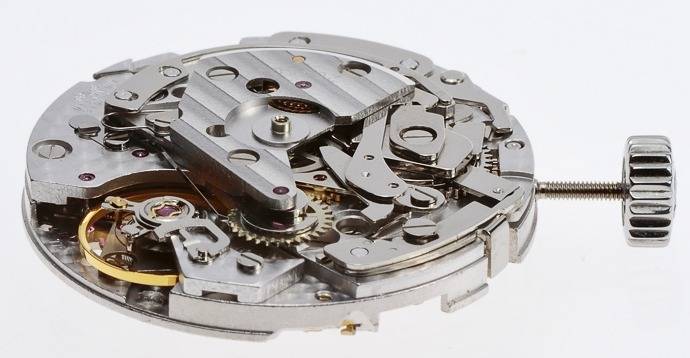
Valjoux 7750 Movement Partially Disassembled (Source: The Naked Watchmaker)
To give you a sense of scale, an automatic movement with a chronograph complication typically contains between 200 and 300 parts. Some chronograph watches even feature nearly fifty jewels in their movement. Pretty remarkable, right?
Another key feature of chronographs is what is known as a graduated bezel. This is essentially a measurement scale that can appear either around the perimeter of the dial or directly on an external dedicated bezel on the case.
This bezel can display a variety of markings, but the "Tachymeter" is by far the most common.
Graduated up to 1,000 units, the tachymeter scale calculates how many times you can complete a given action within one hour. To make it concrete, here's an example: if you're out for a run and warming up by lapping a building, simply start the chronograph when you set off, circle the building, and stop it when you're back at your starting point.
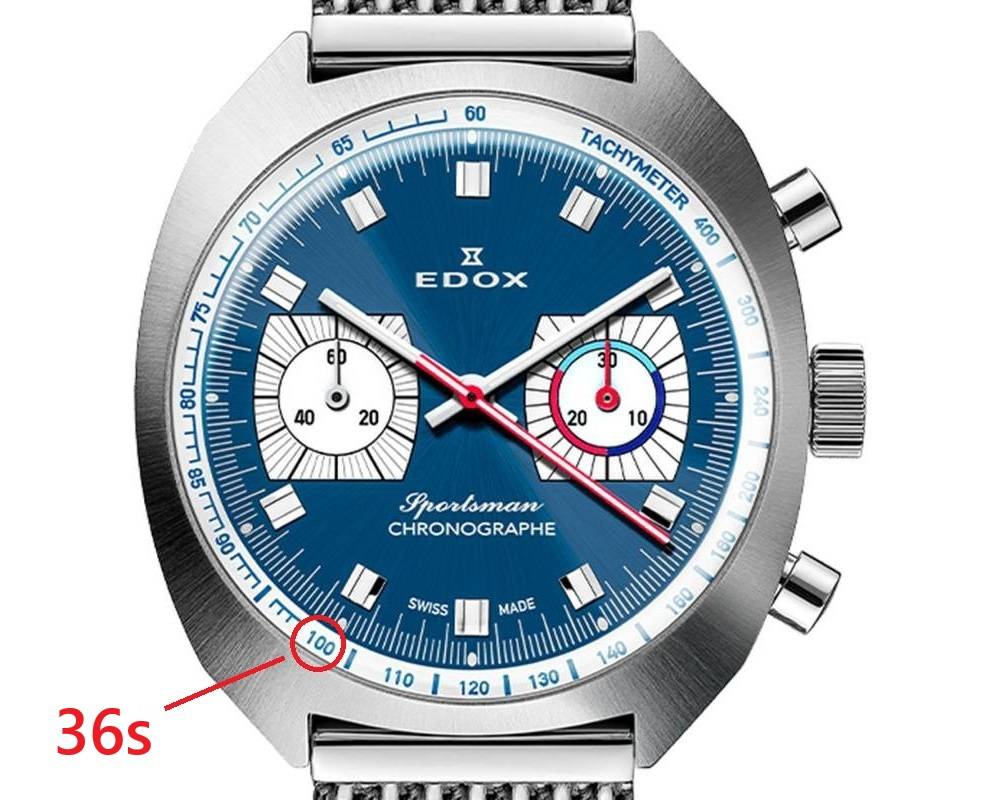
Tachymeter bezel marking at 36 seconds
If it took you 36 seconds to circle the building, the tachymeter reads "100."
This figure simply means that, if you keep up that pace without stopping, you could complete 100 laps of the building in 1 hour. Let's check the math: 36 seconds x 100 = 3,600 seconds - and yes, there are exactly 3,600 seconds in an hour. The numbers add up!
It's also worth knowing that some chronographs are built for more specialized uses. These rarer models may feature a different scale, such as a telemeter or a pulsometer.
The telemeter scale calculates the distance between you and a distant observed event, using the speed of sound. This function was widely used by soldiers during both World Wars! Indeed, the telemeter allowed combatants to determine with reasonable accuracy how far away enemy forces were located.
The telemeter scale is also positioned around the perimeter of the watch dial. In appearance, it's actually quite similar to the tachymeter scale, with one key difference: its graduation is not expressed in units but rather in kilometers, ranging from 1 to 20 km.
So how do you actually use a chronograph with a telemeter? Again, let's walk through a concrete example - this time, lightning. On a stormy day, look out your window and start the telemeter the moment you see lightning in the distance. Let the watch run and stop the telemeter as soon as you hear the thunderclap. Then consult the telemeter scale.
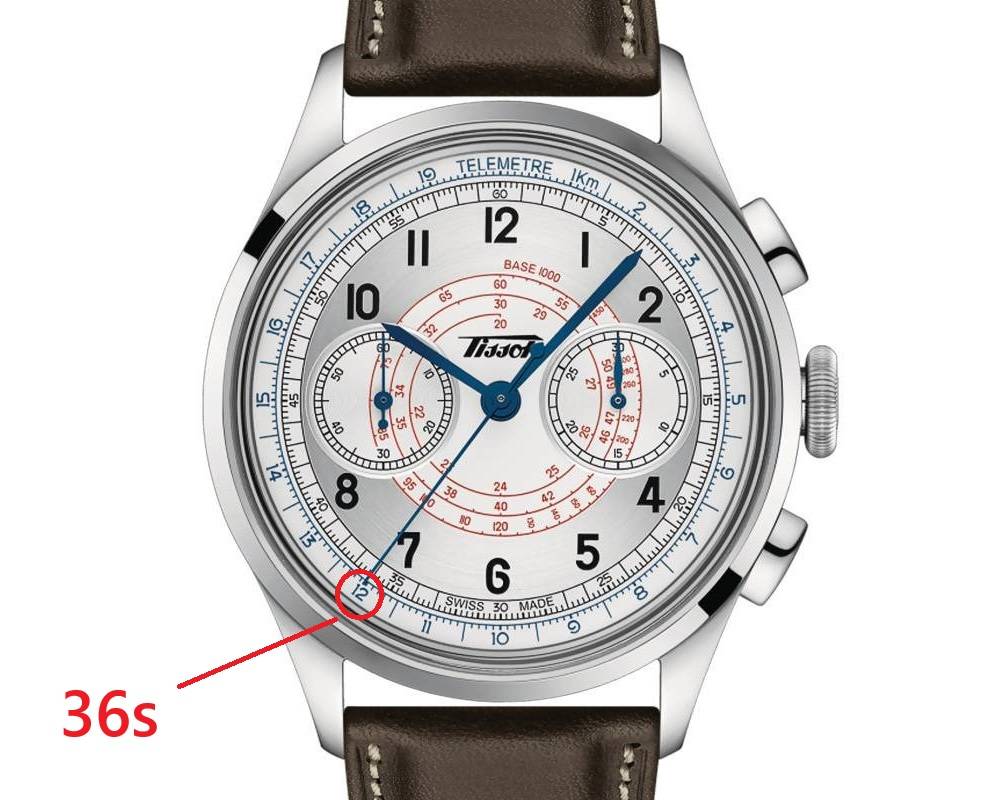
Telemeter bezel marking at 36 seconds
If the chronograph hand stopped at 36 seconds, it means the lightning you just saw struck 12 kilometers away.
The "pulsometer," as you might expect, is a function designed for physicians. Rarer than the tachymeter and the telemeter, it allows the user to take a patient's pulse.
The pulsometric scale can be graduated for 10, 15, or 30 beats, allowing you to easily measure a person's heart rate.
Here's how to use a pulsometer: start the chronograph on the first pulse and stop it on the last. On a watch graduated for 10 beats, count 10 pulses before stopping the chronograph. On a watch graduated for 30 beats, count all the way to 30. Simple enough! Once you're done, just check where the hand has stopped on the pulsometric scale and read the value indicated.
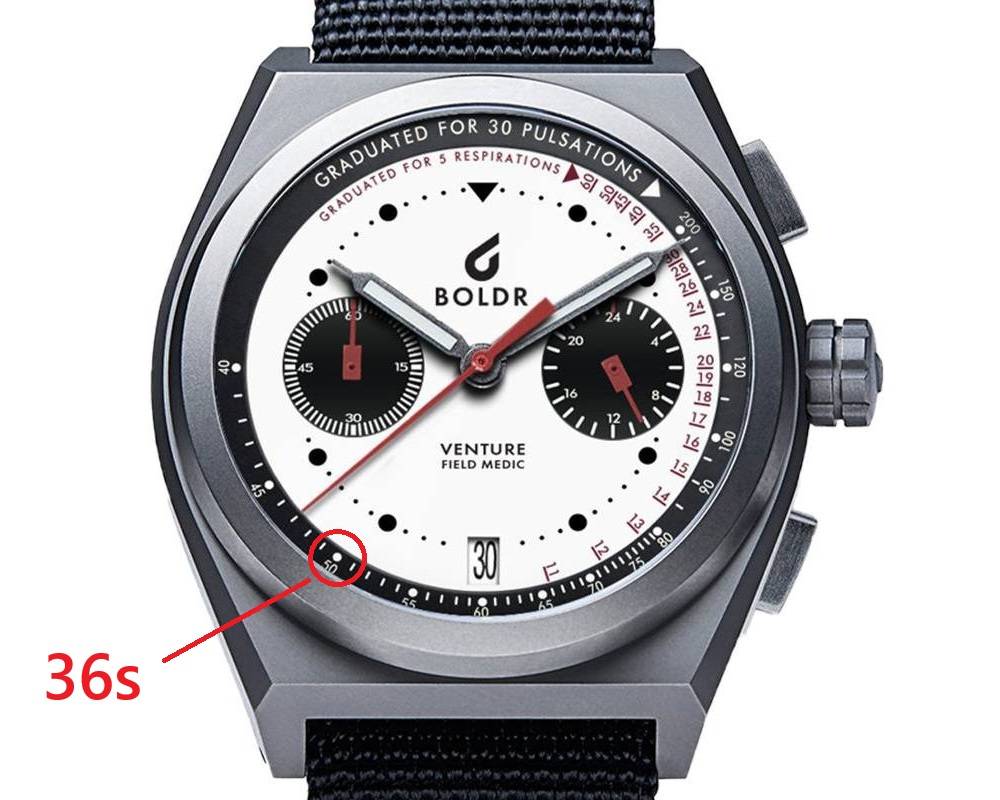
Pulsometric bezel marking at 36 seconds
If your pulsometric bezel is graduated for 30 beats and you counted 30 pulses in 36 seconds, the heart rate being measured is 50 beats per minute.
Some chronograph watches even combine two measurement scales. So don't be surprised if you come across a watch featuring both a tachymeter and a telemeter - it's entirely possible.
As you can see, chronographs can range from feature-packed to beautifully minimalist - but either way, they always have that certain something that draws the eye.
The "Flyback," also known as "Retour en Vol," is an additional function offered by certain chronograph watches designed for specific uses. Invented by Longines in the 1930s, it was developed for aviation. It allows a pilot who has already started the chronograph to stop it, reset it, and restart it - all with a single press of one button (typically the pusher at 4 o'clock). It's essentially a 3-in-1 function.
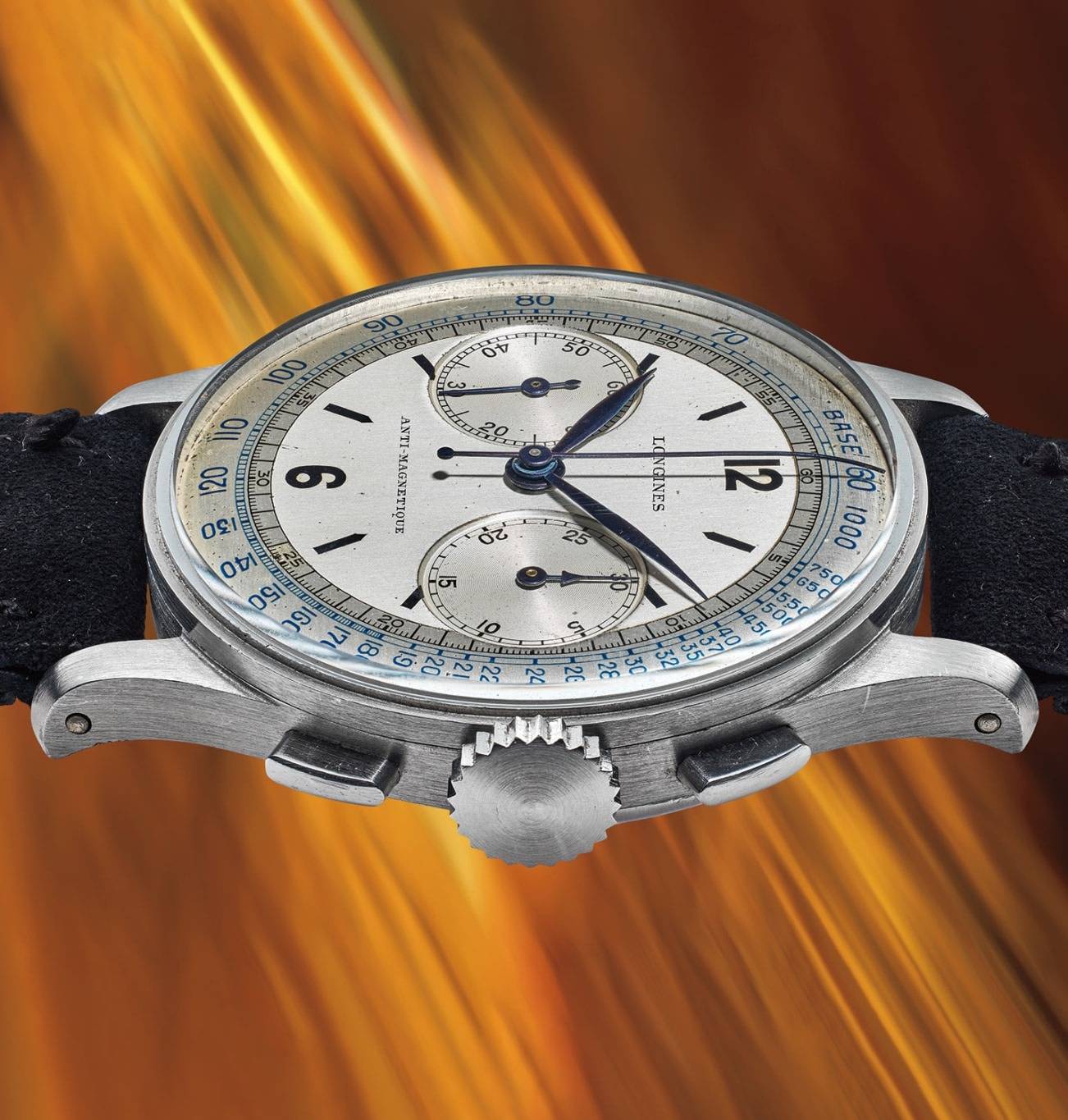
Longines Chronograph Caliber 13Zn with Flyback Function, circa 1930 (Source: Phillips)
The Flyback delivers a real time advantage, it lets pilots perform precise calculations while staying fully focused at the controls of their aircraft.
The Split-Seconds function is something else entirely. It allows you to time two events that start simultaneously but end at different moments. Invented by Louis-Frédéric Perrelet (the founder of Perrelet watches) in 1928, it is found in only a handful of chronographs today.
A split-seconds chronograph has the distinctive feature of carrying not one but two central seconds hands. It's worth noting that when the chronograph is reset, it's nearly impossible to distinguish one hand from the other, as they overlap and are typically identical in size.
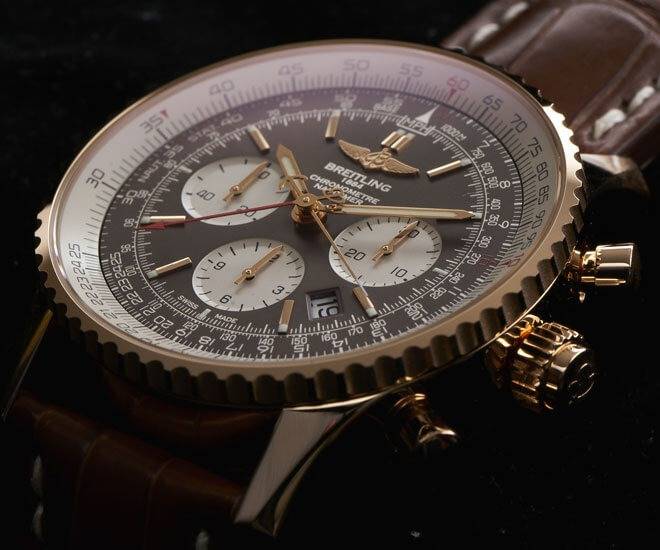
Breitling Navitimer Chronograph with Split-Seconds function (Source: LUXUO)
This function proves invaluable in many sporting competitions, such as relay races. Here's how it works: you start the chronograph by pressing a pusher, and both hands launch simultaneously. When the first runner hands off the baton to the second, you press the pusher again. At that moment, one of the two seconds hands stops while the other keeps running. The Split-Seconds function thus allows you to capture the exact time of each runner!
Chronographs have that special, almost magical quality that makes them so endlessly appealing. They're practical across a wide range of activities, they carry an unmistakably sporty aesthetic, and they work for virtually any occasion. From Jean-Paul Belmondo to Paul Newman, Brad Pitt to Steve McQueen - some of cinema's greatest icons, past and present, have made this watch their own. And it's safe to say the chronograph isn't done turning heads anytime soon.
Share :
Official European Union notice on your rights in the event of a product's lack of conformity.


