
0
Product added
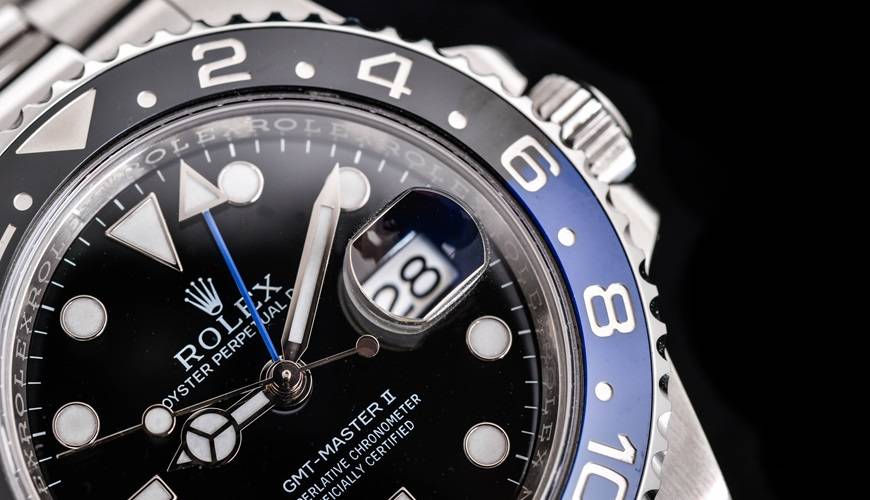
Once reserved for a select few, the GMT complication has become especially popular lately. It adds just one hand to a watch, proving that a small detail can make all the difference in watchmaking. It can even make daily life easier for many people, including professionals who travel frequently.
In short, this feature is anything but a gimmick. Here's why!
Despite what some might think, GMT isn't just a watch complication… The letters stand for “Greenwich Mean Time.” It's a global timekeeping reference that divides the world into time zones. That's why it isn't the same time in New York and Paris!
If you've read our guide to the history of watchmaking, you know that GMT was established as a time standard to make communication between regions easier. Before that, time could vary not just from country to country, but from city to city, even across small areas! Some clocks, including those in train stations, were set according to their location and the Sun's movement. Looking back, that's pretty wild, isn't it?
At the International Meridian Conference in Washington in 1884, common rules were established, making time zones easier to organize worldwide. GMT remained the standard for nearly a century, with the Sun's position still serving as the basis for calculating time.
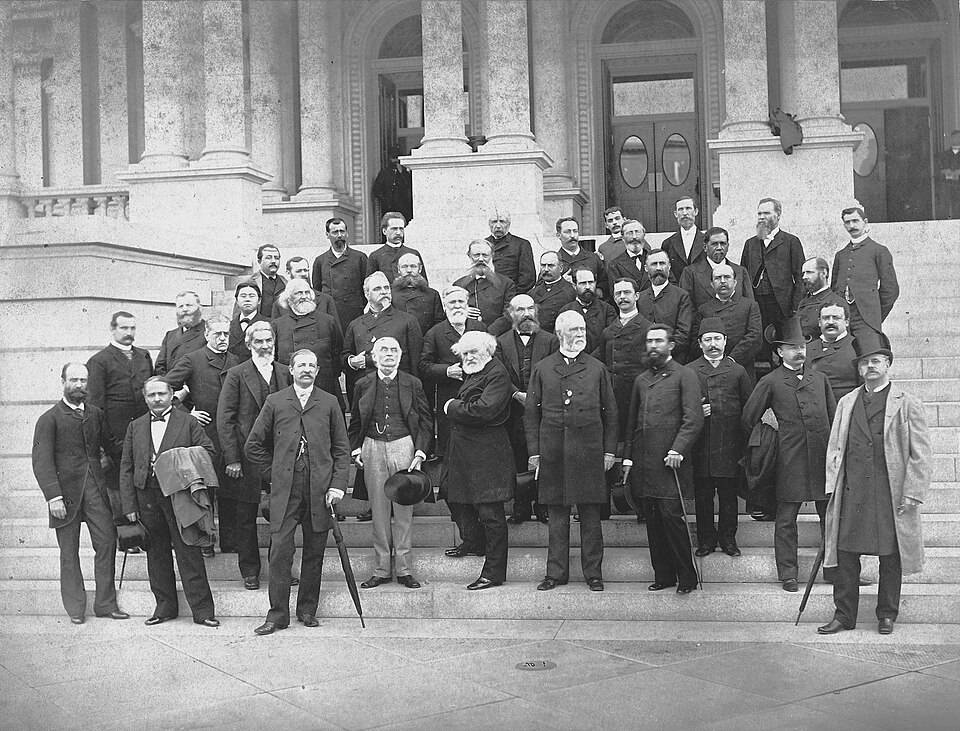
Members of the International Meridian Conference in Washington, 1884 (Source: Wikipedia)
The transition to UTC, or “Coordinated Universal Time,” did not begin until 1972. Based on atomic clocks, this system offers unparalleled precision. Strictly speaking, UTC isn't a time-zone system but a reference time scale that makes it possible to determine the precise time anywhere in the world.
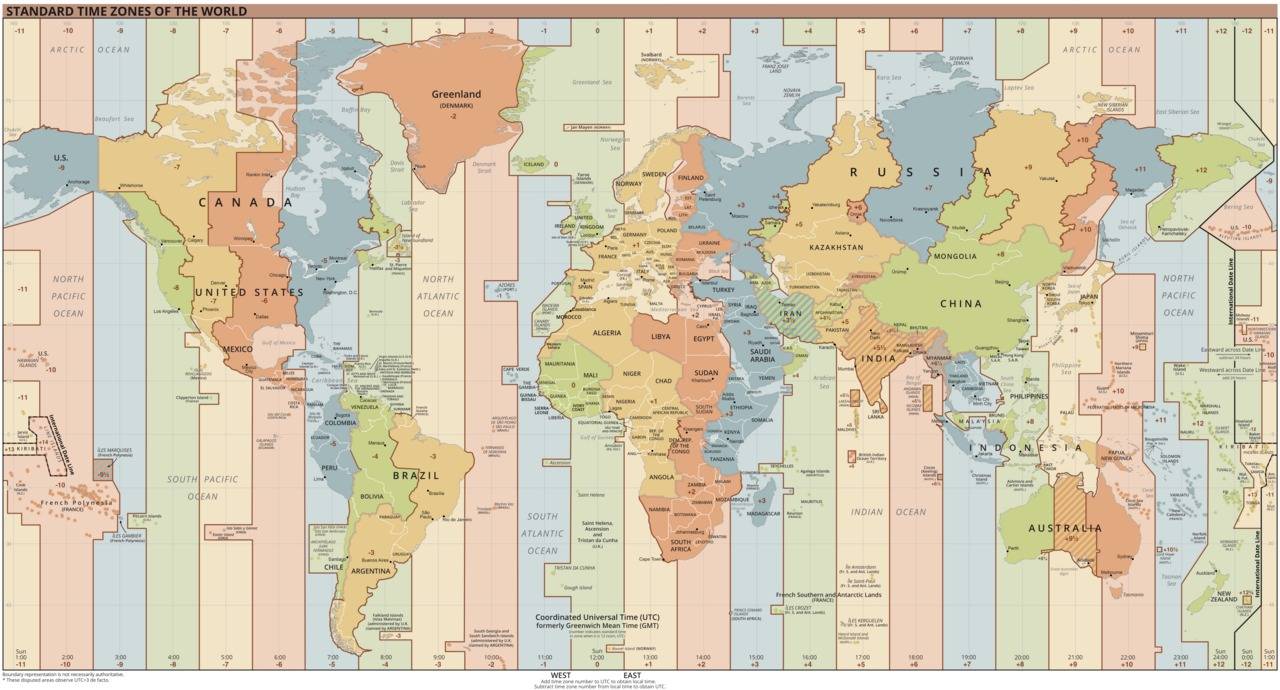
Map of GMT and UTC time zones worldwide (Source: Wikimedia)
That's a quick refresher on GMT! Now let's get back to the focus of this guide: the GMT complication found in certain watches.
Although this feature is most often called “GMT,” watchmakers such as Sinn, MAT, Rado, Formex, and IWC use “UTC” in some model names. That choice probably reflects the history we've just covered. For practical purposes, though, “GMT watch” and “UTC watch” mean the same thing.
So what does this complication actually do? The GMT function displays two time zones at once on a single watch. It's especially useful for frequent international travelers: globetrotters, flight crews, and airline pilots. Anyone with family or contacts abroad may find it handy, too.

The GMT complication is useful for travelers
On a GMT watch, the main time zone is displayed like it is on a conventional watch: on a 12-hour dial with hour, minute, and seconds hands. The second time zone is shown by a dedicated “GMT hand” that makes one full rotation every 24 hours. To read it, you use a scale often, though not always, found on what's called the “GMT bezel.”
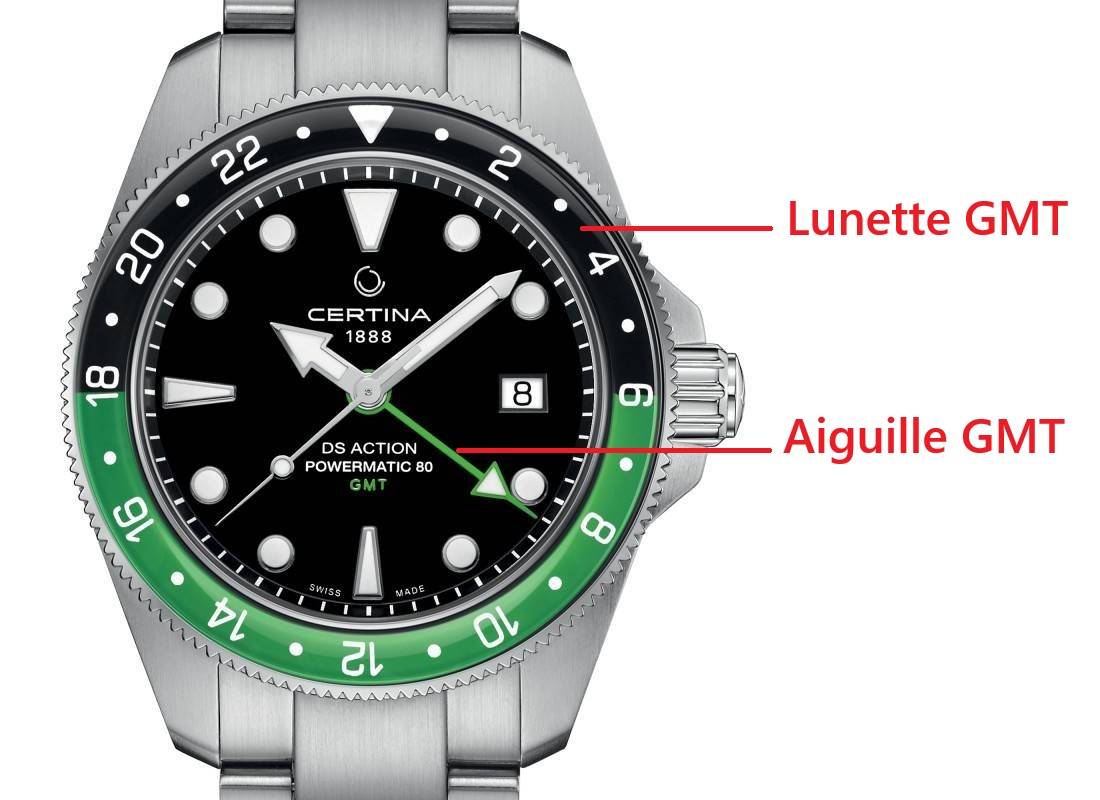
GMT bezel and hand
But… no spoilers! We won't say more just yet. Keep reading this guide for a closer look at how the GMT complication works.
The GMT complication is deeply tied to aviation history. The first wristwatch with this function has an origin story that's both technical and adventurous: it was designed around pilots' specific needs. The idea began with Samuel W. Glur, a Glycine sales representative and frequent traveler.
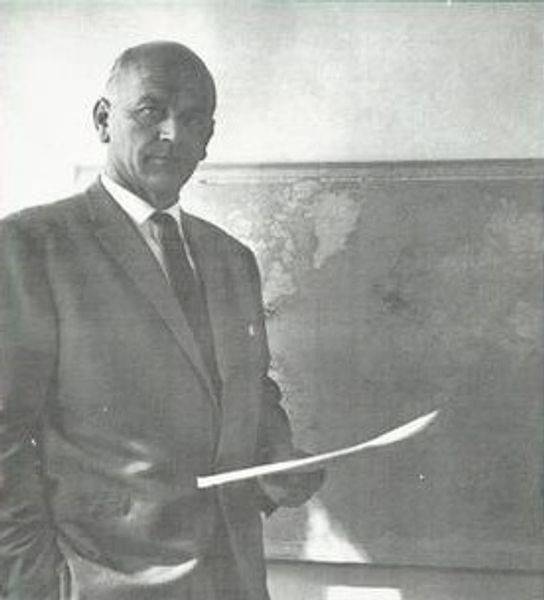
Portrait of Samuel W. Glur (Source: glycinetennial)
During his travels, he took the time to ask pilots what their ideal aviator's watch would look like. Their answers were unanimous: they wanted a water-resistant watch that could display a second time zone.
Their request didn't fall on deaf ears. Samuel W. Glur soon shared what he had learned with his colleagues… and in 1953, the Glycine Airman was born.
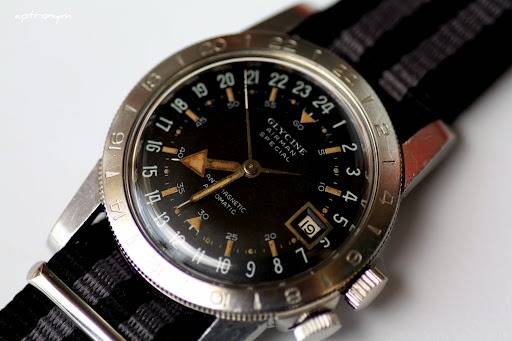
Glycine Airman Special, circa 1950 (Source: Horlogium @aptronym)
Originally powered by a self-winding mechanical movement, the Felsa 692, this 36 mm watch was a remarkable technical achievement for its time.
Want to know what an automatic movement is? Explore our guide to mechanical and automatic watches.
What made it different? An unusual GMT function combining a rotating 24-hour bezel with a dial also marked in 24 hours. Its hour hand therefore made one full rotation every 24 hours, unlike the 12-hour rotation of a conventional watch.
What most sets the Glycine Airman apart from newer GMT models, though, is its lack of a dedicated GMT hand. It had just three hands, for the hours, minutes, and seconds; its rotating bezel let you read a second time zone. To do so, you unscrewed the crown at 4 o'clock to unlock the bezel, rotated it by the desired time difference using the bezel's “24” marker as a reference, then checked which number on the bezel the hour hand pointed to.
What makes this a true GMT watch isn't its set of hands, but its 24-hour bezel!

How is a GMT complication useful when traveling?
Here's a concrete example: if you were in Basse-Terre at 17 h and wanted to know the time in Paris (6 hours ahead), you would align the bezel's “24” with the 6 h marker on the dial. The hour hand would then point to 23 h, showing you the time in Paris. The hardest part was knowing the exact time differences between zones, whether by memorizing them or writing them in a notebook!
Soon after that first innovation, another landmark watch arrived in 1954: the Rolex GMT-Master 6542, designed for pilots at Pan Am Airlines. It laid the groundwork for how modern GMT watches function.
It featured a two-tone blue and red Bakelite bezel (Bakelite was a synthetic resin popular at the time), a now-legendary color scheme enthusiasts call “Pepsi.”
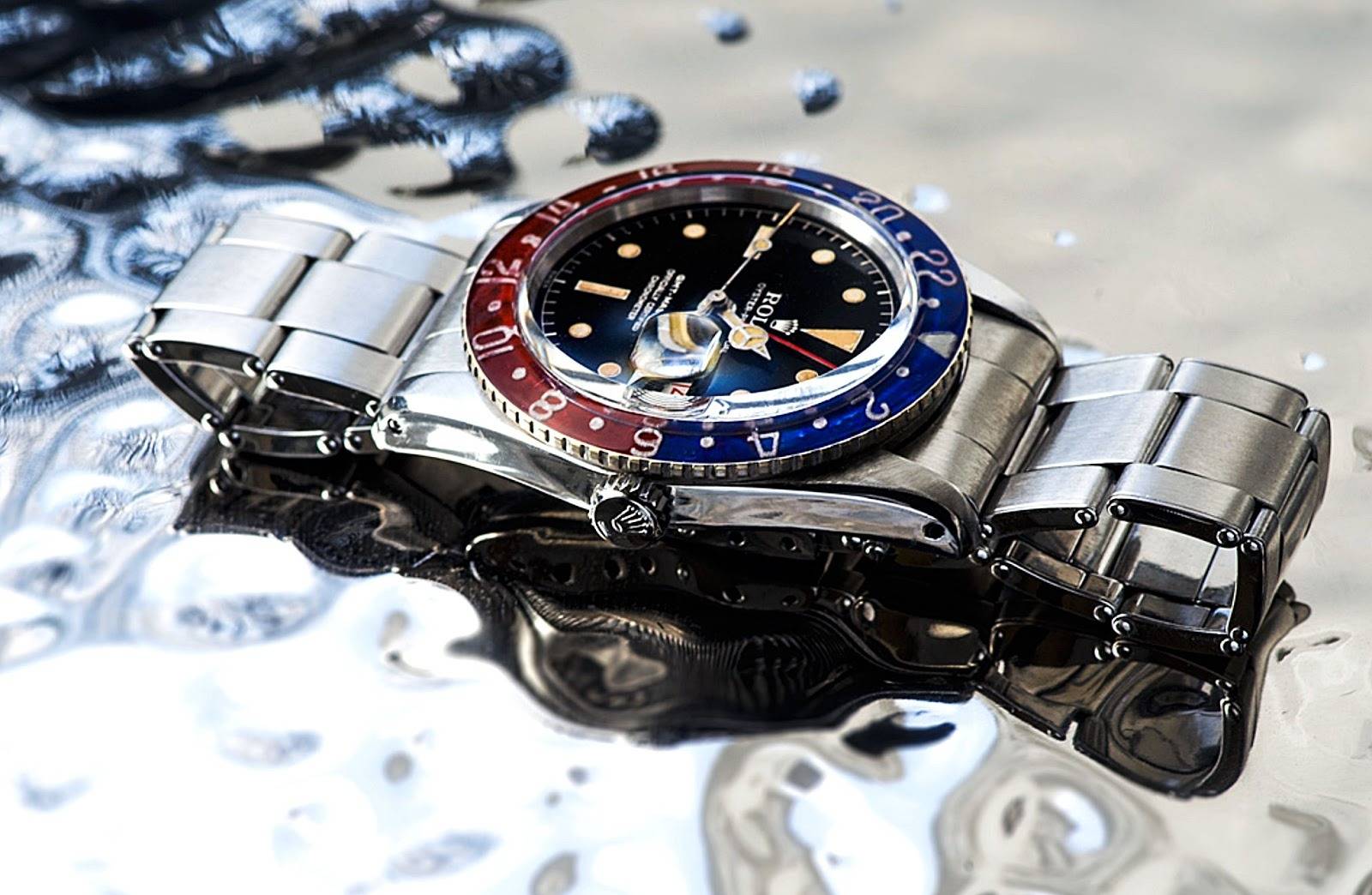
Rolex GMT-Master 6542, circa 1950 (Source: Rolex Magazine)
This Rolex had a 38 mm case, no crown guards yet, a riveted Oyster bracelet, and hour markers coated in radium (a radioactive luminescent material). Most notably, it introduced a dedicated GMT hand, painted bright red, that made a second time zone instantly readable (a key difference from the Glycine Airman released a year earlier).
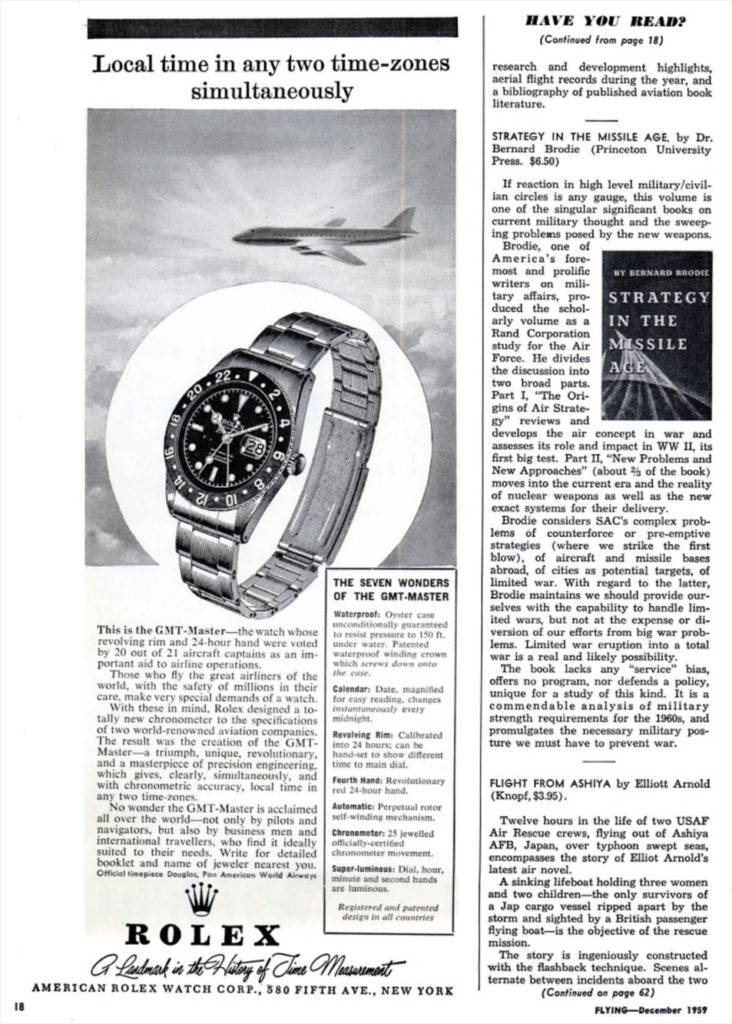
Rolex GMT-Master 6542 advertisement, circa 1950 (Source: Les Rhabilleurs)
It displayed time in two ways: the main time with a hand that completed a rotation every 12 hours, and the second time zone with a GMT hand that completed a rotation every 24 hours. This display, which became the standard, was easy to read and quickly won over airline pilots.
The Rolex GMT-Master 6542 came in several versions, including a rare white-dial model nicknamed “Albino” and even an all-yellow-gold version! Its fame would grow further through the movies…
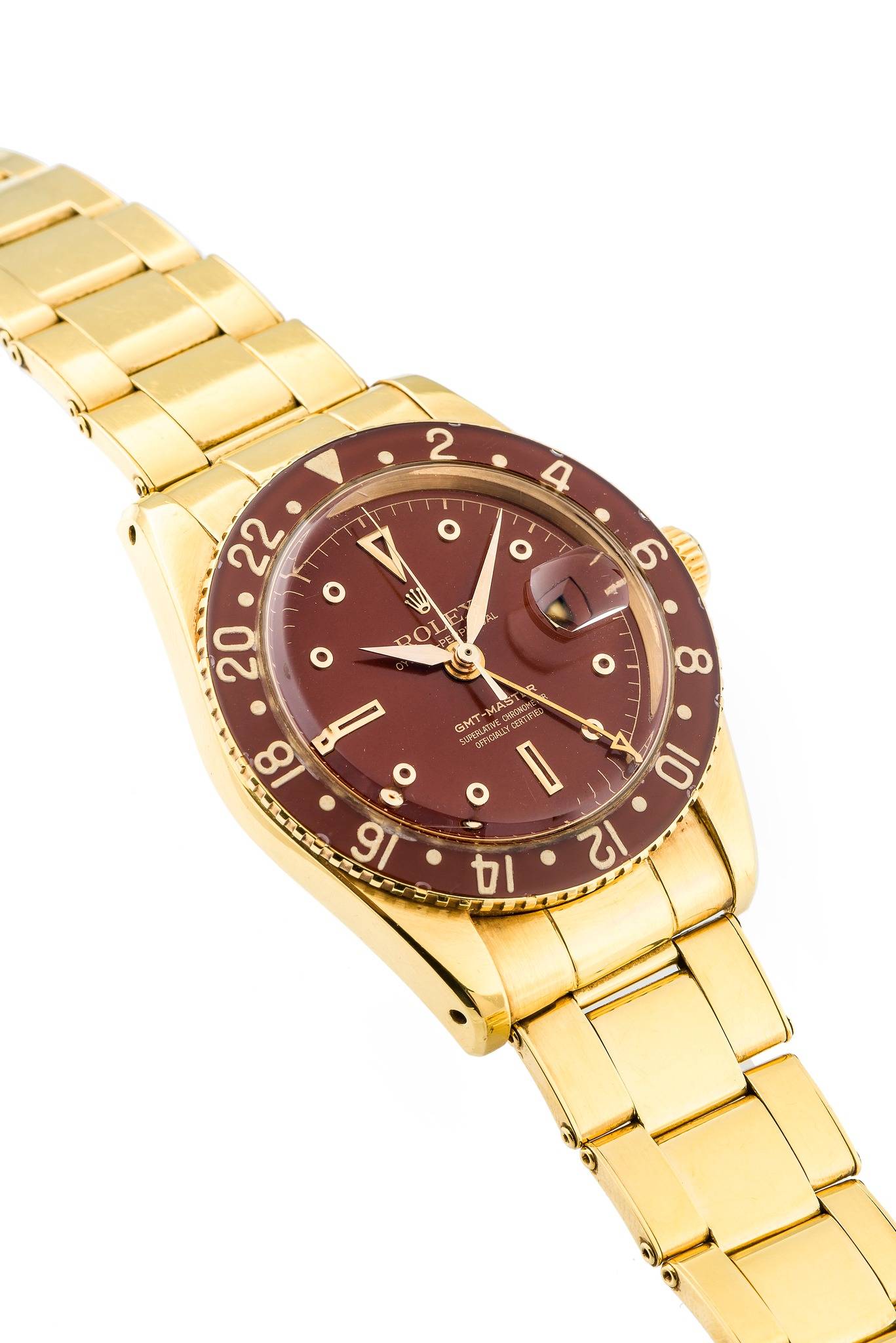
Rolex GMT-Master 6542, circa 1950 (Source: Antiquorum)
In the film Goldfinger, released in 1965, it appeared on the wrist of Pussy Galore, the famous Bond girl. The stainless steel watch, with its Oyster bracelet and Pepsi bezel, was prominently featured on screen, further cementing its iconic status.

Pussy Galore wearing a Rolex GMT-Master 6542 in Goldfinger, 1975 (Source: Le Petit Horloger)
A few years later, another GMT-Master, reference 1675, had its moment on screen. In the cult classic Apocalypse Now (1979), Marlon Brando wore one… modified by the actor himself! To suit his character, he removed the GMT bezel and replaced the steel bracelet with a black rubber strap made to look like lizard leather.
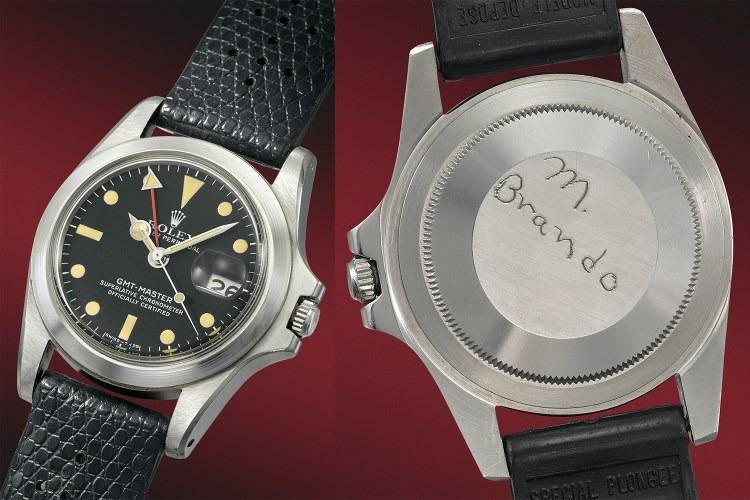
Marlon Brando's Rolex GMT-Master 1675 in Apocalypse Now (Source: InsideHook)
A rough engraving was also added to the case back. Ironically, this deliberately unrecognizable version became one of cinema's most iconic watches! In 2019, Christie's auctioned it for a hefty sum of around 5 million euros.
Just 3 years later, in 1982, another Hollywood star joined the story: Clint Eastwood. In Firefox, he appeared wearing a Rolex GMT-Master 16753. This two-tone steel and yellow gold model, with a chocolate-brown dial and Jubilee bracelet, belonged to the actor's personal collection.

Clint Eastwood wearing a Rolex GMT-Master 16753 (Source: Rolex Magazine)
He wore the model in several other films, including Tightrope (1984) and In the Line of Fire (1993). Watch enthusiasts have since nicknamed this Rolex reference “Root Beer,” “Dirty Harry,” and “Clint Eastwood.”

Pablo Picasso wearing a Rolex GMT-Master (Source: Rolex Magazine)
The GMT complication won over pilots and adventurers… and artists, too. Painter Pablo Picasso wore a Rolex GMT-Master, proudly showing it off in one of his best-known black-and-white portraits, in which he wears a Native American headdress.
It's worth noting, though, that GMT remained a niche complication for a long time. Few vintage models have it, making them all the more sought-after today. But with renewed interest in technical watches, GMT is now more popular than ever!
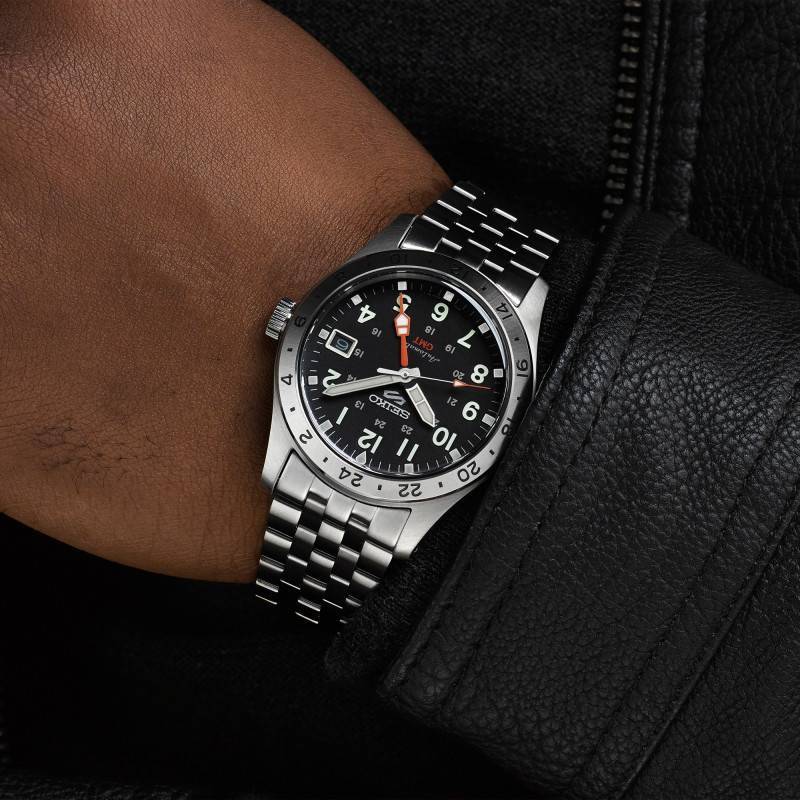
Seiko 5 Sport GMT Ref. SSK023K1
Many brands now offer watches with this feature, and you can even get an automatic GMT watch for well under 1 000 €. Just a few years ago, that would have been unthinkable! It's welcome news for travelers and watch enthusiasts alike…
Watches with a GMT complication have an additional hand, called the “GMT hand,” specifically for displaying a second time zone. It shares the central axis with the standard hour and minute hands and, depending on the model, the seconds hand.
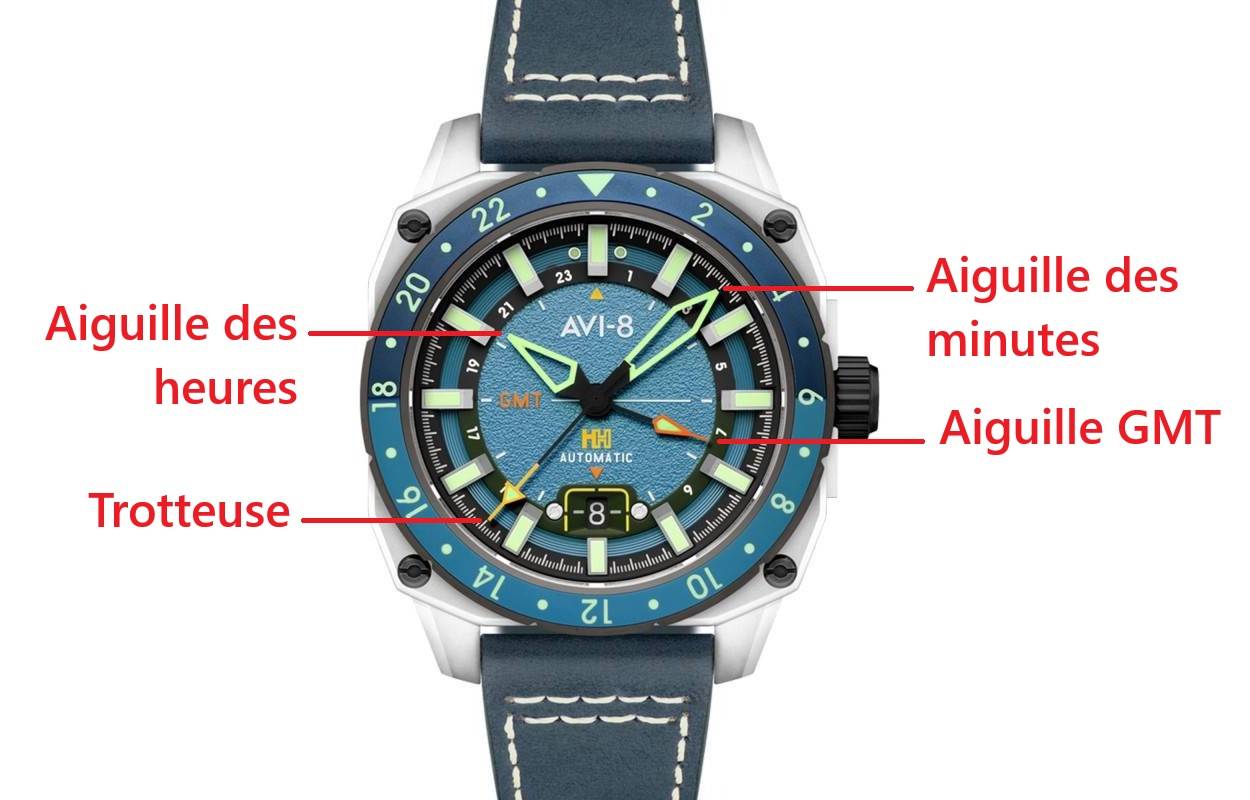
The 4 hands of a GMT watch
Watch brands often get creative with the GMT hand. Its distinctive shape and color, whether red, orange, green, yellow, or even pink, usually make it easy to spot at a glance. That pop of color isn't just for looks: it also makes the watch easier to read, especially for travelers in a hurry or professionals on the move.
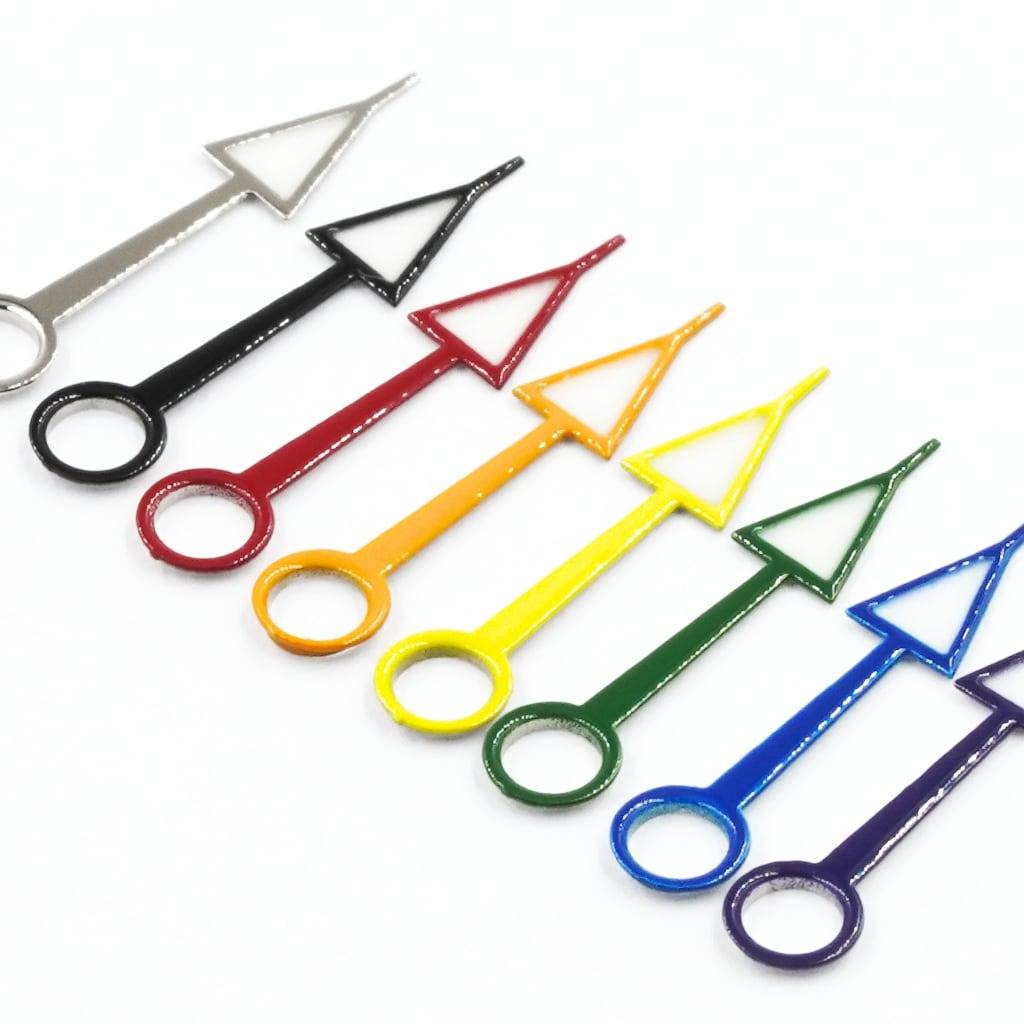
GMT hands compatible with the Seiko NH34 movement (Source: Lucius Atelier)
You can also recognize GMT watches by their 24-hour scale. On some models, particularly dressier watches, the scale appears directly on the dial.
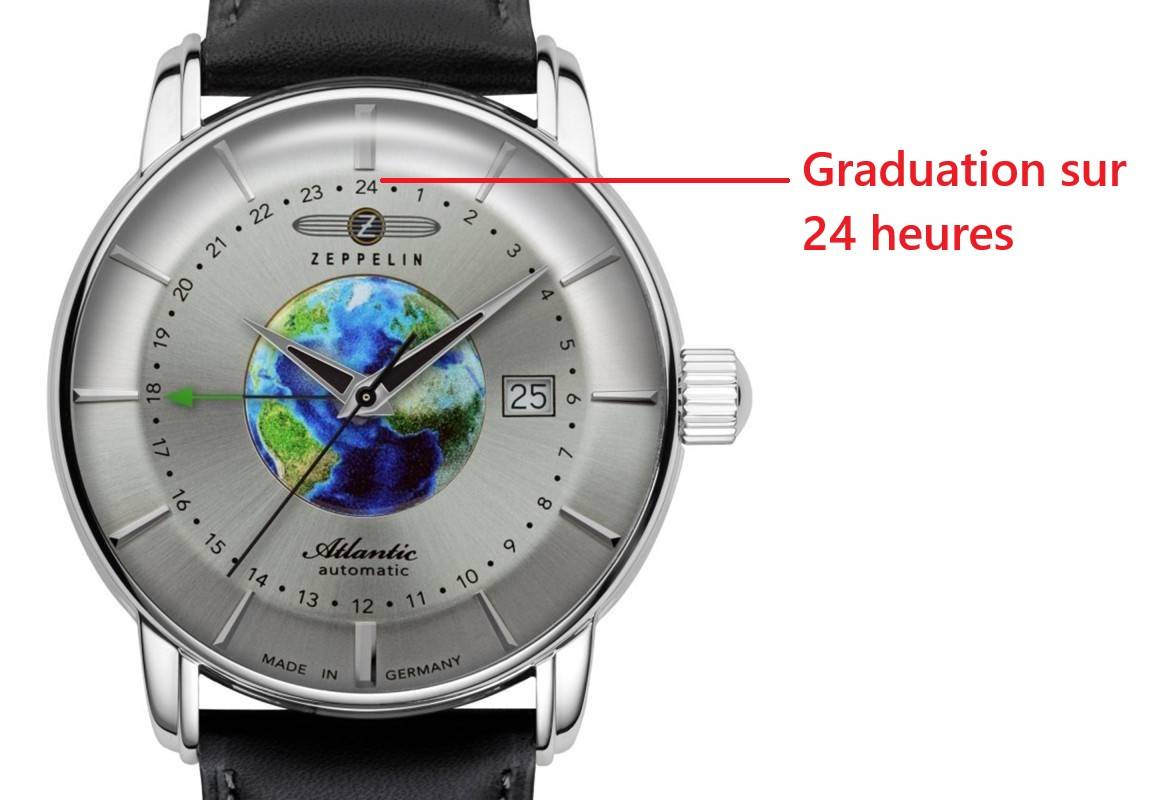
GMT watch without a GMT bezel, with a scale on the dial
On most sportier watches, however, the scale sits on a rotating bezel, often one that turns in both directions. Some GMT watches even have two 24-hour scales: one on the dial and one on the bezel.
To make their GMT watches easier to read, many watchmakers choose a two-tone bezel that distinguishes daytime from nighttime hours.
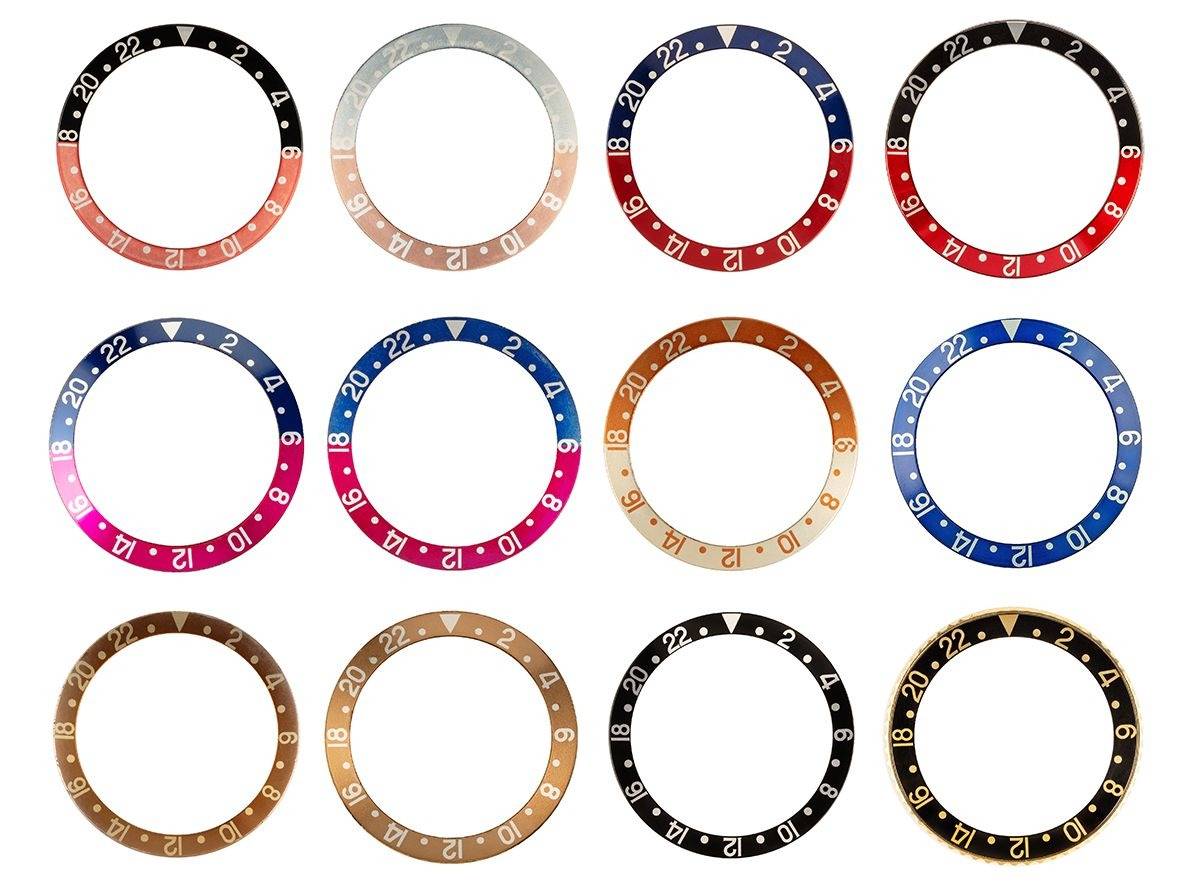
Rolex GMT bezels (Source: Bob's Watches)
The famous blue-and-red “Pepsi” combination, along with black-and-blue, gray-and-black, and green-and-white variations, offers a wealth of appealing looks… with nearly endless possibilities.
If you've been following along, you probably have some idea how to read this kind of watch by now…
This is a good time to recap what you'll find on a modern GMT watch with a 12-hour dial:
You'll notice that the dedicated GMT hand and the graduated bezel are the only two elements that use a 24-hour scale. That's why you always read them together!
If your watch is set as follows:
Now you can see two time zones at once! To check the time in New York at any hour, simply find your watch's GMT hand and see where it points on the bezel. Just make sure the bezel hasn't been turned accidentally, or your second time-zone reading could be wrong!
Did you know your watch's GMT bezel can also show a third time zone?
Say you have family or clients in Helsinki, Finland, and you want to keep track of the time there. From experience or a quick search, you know Helsinki is 7 hours ahead of New York. Start by rotating your watch's GMT bezel to move its small triangle or “24” marker, depending on the model.
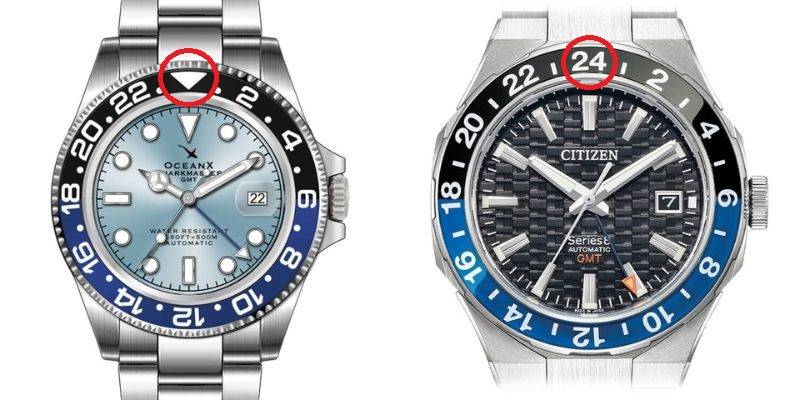
GMT bezel marker to move
And remember: while your watch's bezel is marked in 24 hours, its dial is marked in 12. So don't align the bezel's triangle with the 7 o'clock marker; align it with 3h30 instead! Once you've done that, leave everything as it is… your watch is set to display a third time zone.
Then, whenever you want to know the time in Helsinki, just see which number on the bezel your GMT hand points to.
Rotating the GMT bezel can display a third time zone, but it can also make the second harder to read. To solve this, some watches have two 24-hour scales, so you can read both the second and third time zones with ease.
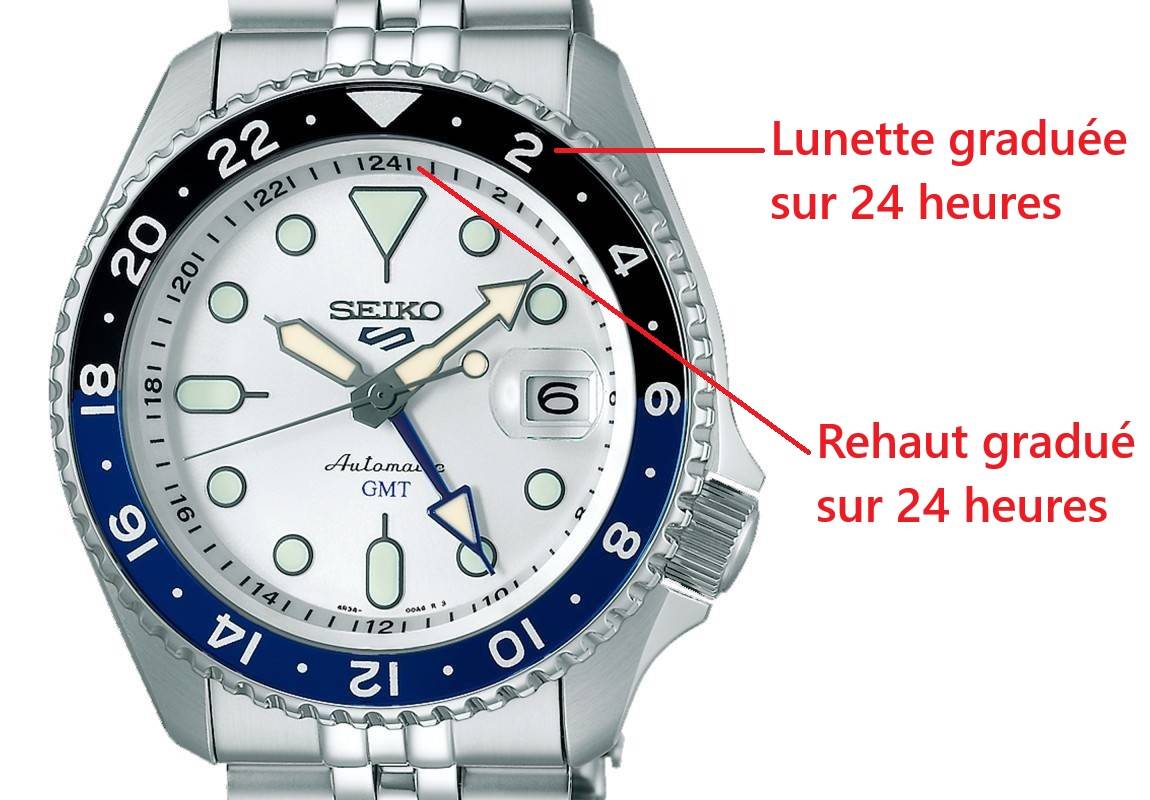
GMT watch with two 24-hour scales
Note: With their graduated bezels, some GMT watches can look a lot like dive watches. Just compare a Rolex GMT-Master with a Rolex Submariner. You don't need to be an expert to spot the similarities!
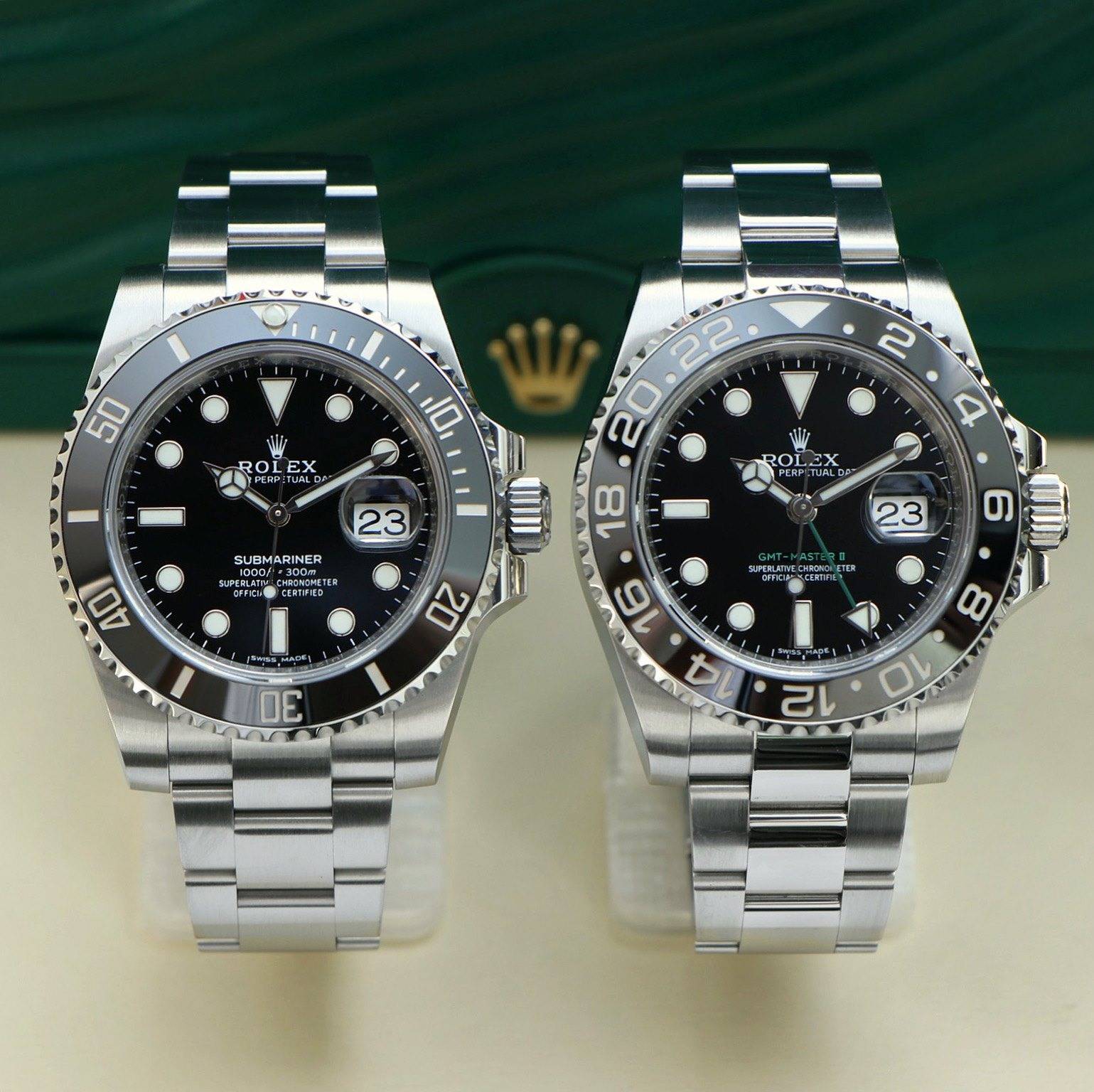
Rolex Submariner 116610LN vs. Rolex GMT-Master II 116710LN (Source: Everest Horology Products)
Some brands even blur the lines by offering professional dive watches with a GMT function. The Omega Seamaster Diver 300M, Longines HydroConquest, and TAG Heuer Aquaracer are all available in versions with this complication.
Understanding how a GMT watch works is one thing; setting it correctly is another… And not every model is set the same way.
There are two main types: “true GMT” watches (also called “traveler's GMT”) and “office GMT” watches (or “caller GMT”).
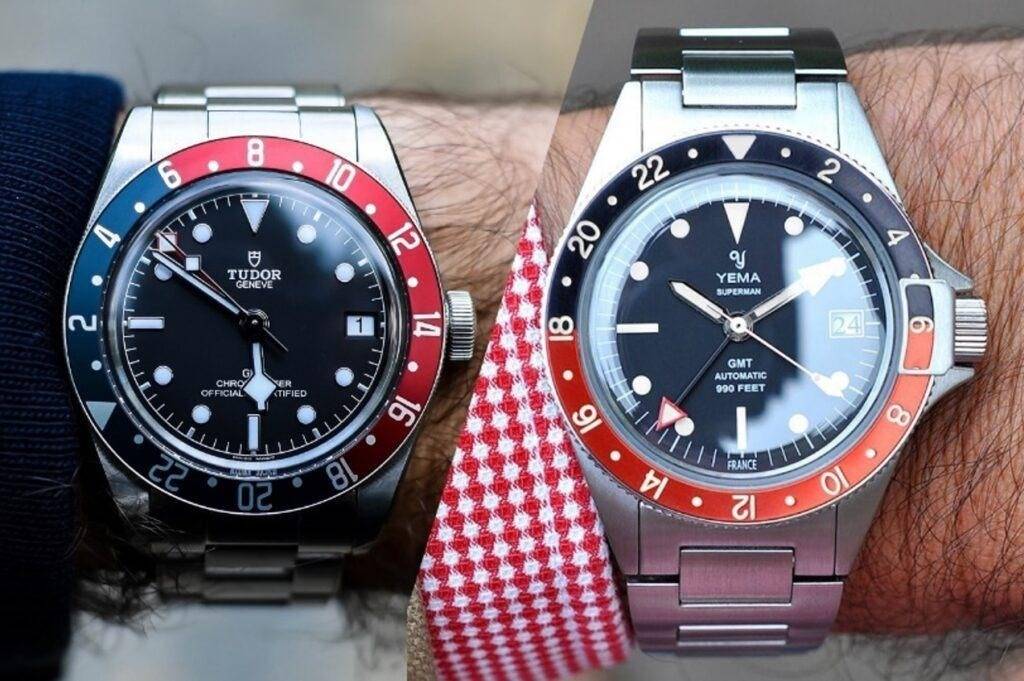
“True GMT” vs. “office GMT” watch (Source: WatchCrunch @watchobsessed)
You may not be the master of time just yet… but you're now well equipped to understand, use, and appreciate the GMT complication, from how it works to its history and design details.
Share :
Official European Union notice on your rights in the event of a product's lack of conformity.


