
0
Product added
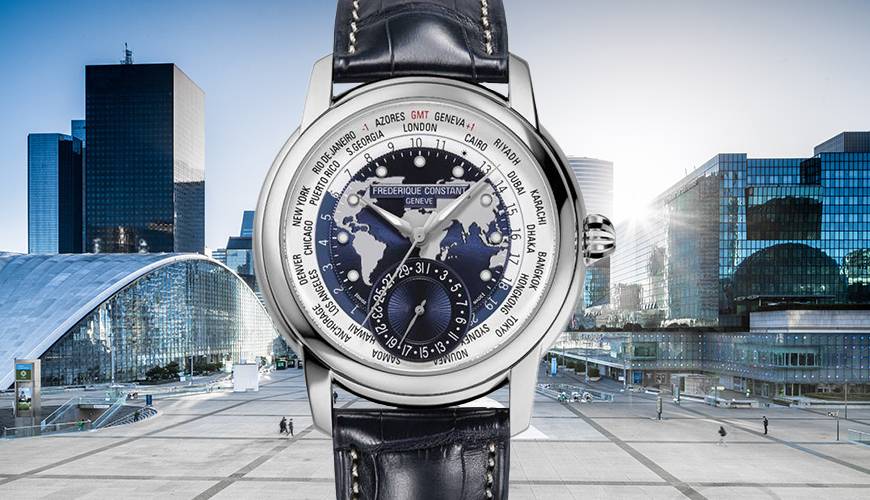
You probably know that the time changes depending on where you are in the world… Different time zones mean the gap between places can be small or substantial. If it's 10 o'clock in Paris and someone asks you the time in London, you'd probably say 9 o'clock, and you'd be right. But imagine someone stops you on the street and asks what time it is in Rio de Janeiro or Hawaii. That's a little harder to answer…
To solve this problem, some watches offer a feature designed for business travelers: the world time complication!
Also known as "Worldtime," "World Time," or "Worldtimer," the World Time function is a particularly visual watchmaking complication - one that significantly enriches a watch's display by packing in a wealth of information at once.
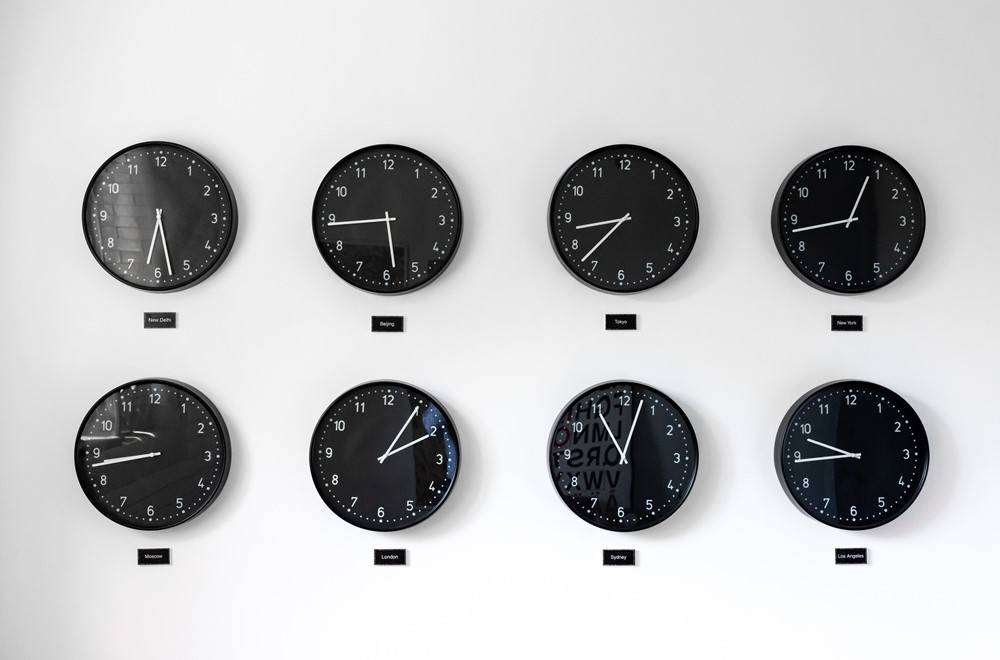
The Time in Major World Cities at a Given Moment
At a single glance, it displays the time across 24 geographic zones around the world - an invaluable tool for business professionals operating internationally, in constant contact with suppliers and partners spread across every corner of the globe.
While they may look modern, watches featuring this complication have been around for a long time. They also share several distinctive design elements that make them instantly recognizable. Let's take a closer look…
While the invention of the World Time complication is generally credited to Swiss independent watchmaker Louis Cottier in 1931, the true story is a little more nuanced. In fact, we need to go all the way back to 1885 to find the seeds of the idea. At that time, Emmanuel Cottier (Louis's father) conceived a system for displaying the time across multiple geographic zones - in response to a very specific request from a chief engineer on the Canadian railway network, who was tired of having to wear a different watch every time he crossed a time zone.
Although this Swiss solution was ingenious, it remained impractical and needed significant improvements - improvements that his son Louis would deliver nearly half a century later.
Let's go back to 1931, when Louis Cottier's creation was unveiled. It took the form of a white gold pocket watch marked "Baszanger Geneve" (Baszanger being a distributor of the model based in Carouge, a town in the canton of Geneva).
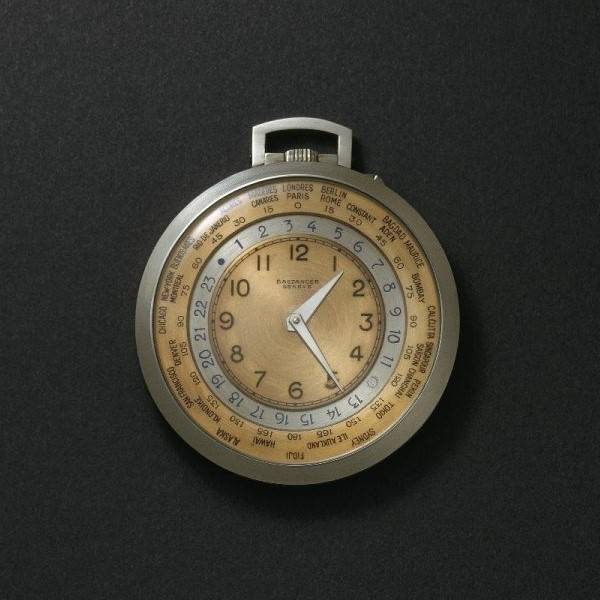
World Time Watch by Louis Cottier, circa 1931 (Source: mahmah.ch)
Fitted with two hands - one for the hours and one for the minutes - this remarkable piece for its era stands out for a far more information-rich display than that of a traditional pocket watch.
It features a triptych layout: at the center, a dial with Arabic numerals and a railway-minute track; an inner bezel graduated on 24 hours; and a wider outer bezel displaying the names of major world cities arranged by time zone, with a scale from 0 to 180 (in both directions) - all within a case just 44mm in diameter and 0.69cm thick. A remarkable achievement for its time!
This revolutionary timepiece is today on display at the Musée d'art et d'histoire (MAH) in Geneva. If you'd like to see it for yourself, now you know where to go.
Although this first creation did not bear a major brand name, Louis Cottier began collaborating with the Vacheron Constantin Maison as early as 1932 to develop a World Time model for their collection.
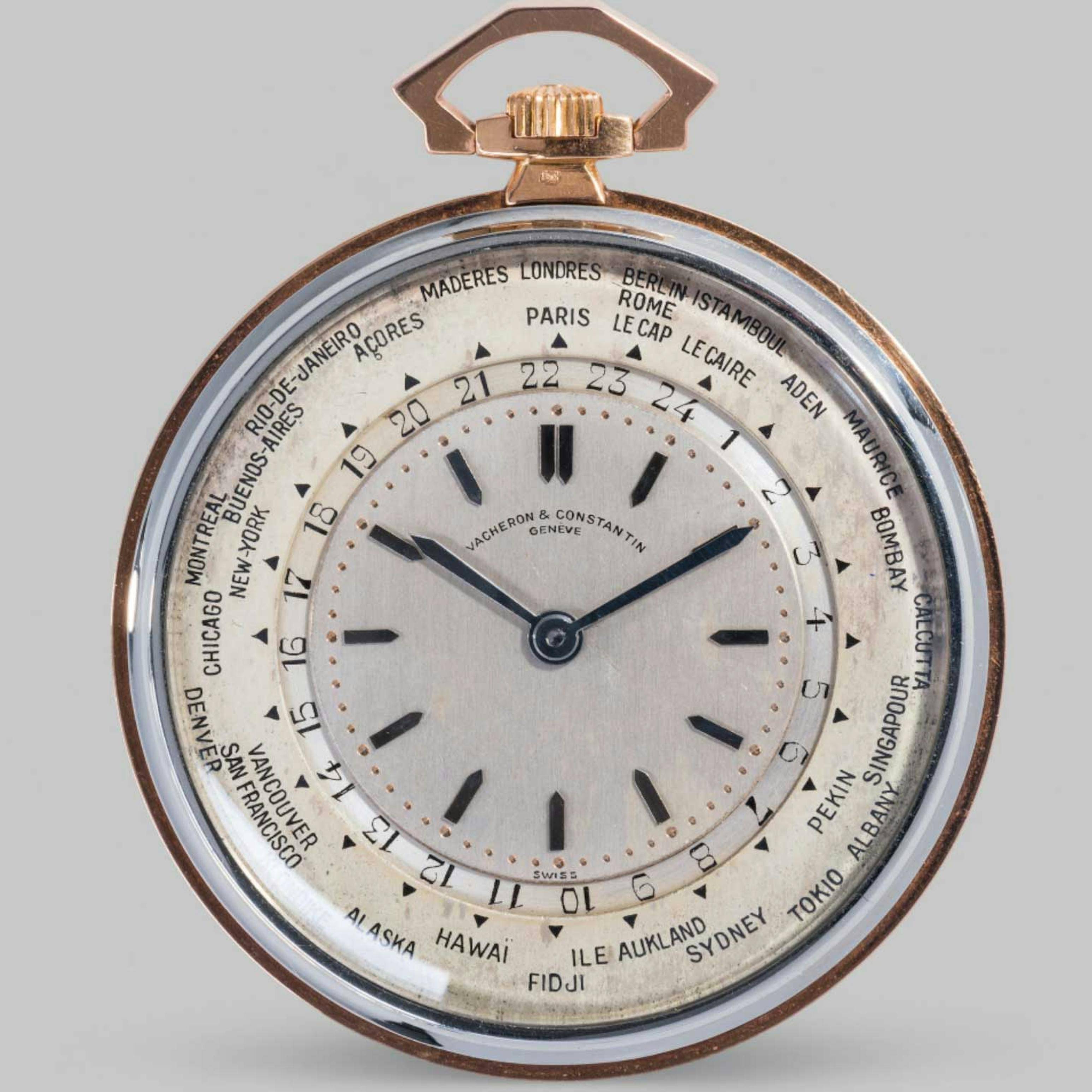
Vacheron Constantin World Time Watch by Louis Cottier, 1933 (Source: The 1916 Company)
If you've followed the history of watchmaking through our guides, this won't surprise you - this period corresponds to the gradual adoption of the GMT (Greenwich Mean Time) system, which made reading time on a global scale far easier. At the same time, the rise of the telephone and the widespread adoption of the wristwatch contributed to the gradual obsolescence of pocket watches.
So, while technically impressive, this 1931 watch quickly became outdated in its form. In 1937, Patek Philippe gave Louis Cottier an ambitious brief: to miniaturize the complication for integration into a wristwatch. A formidable challenge - and one he met brilliantly.
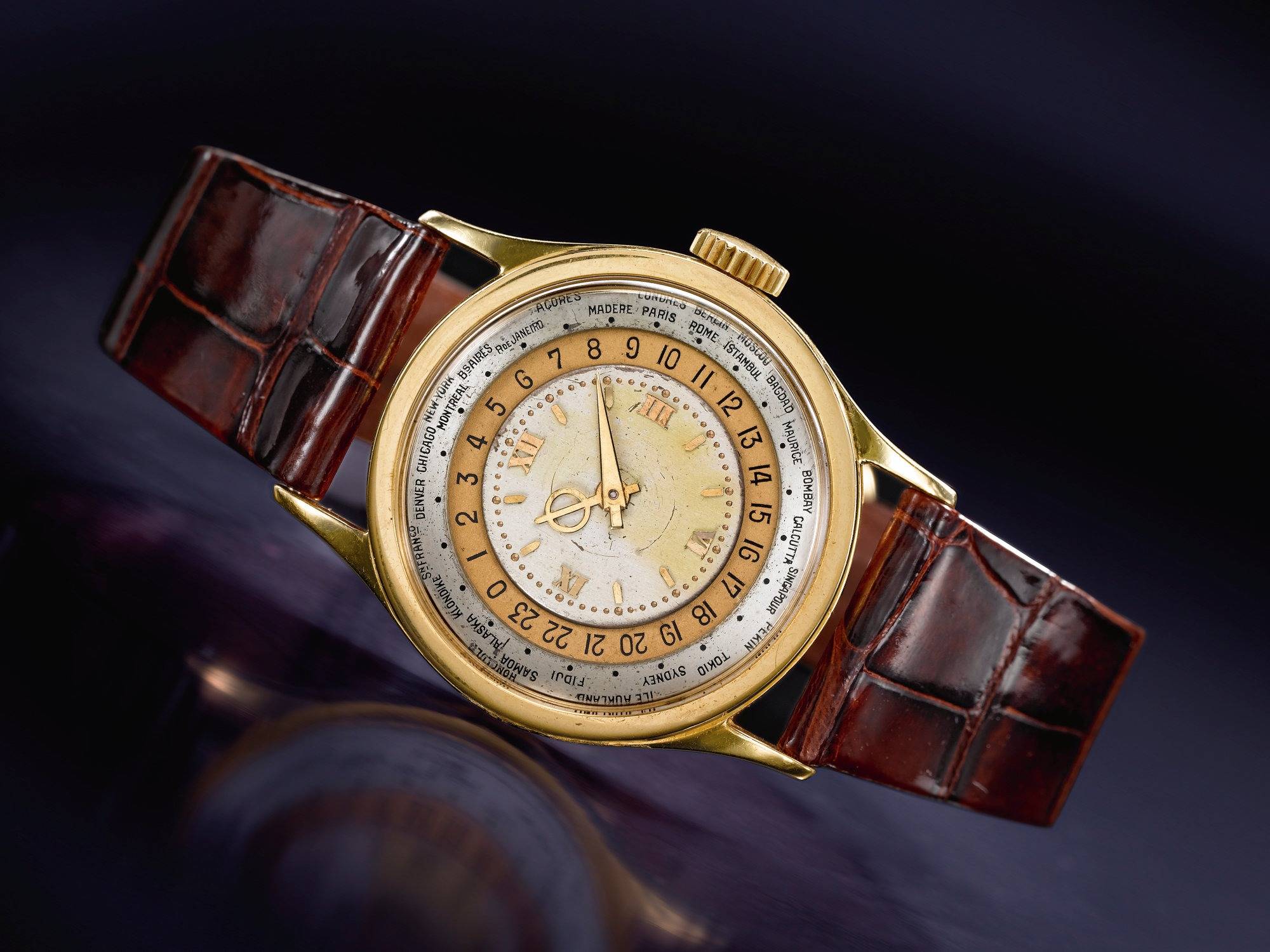
Patek Philippe 96 HU World Time, circa 1937 (Source: The Hour Glass)
In the years that followed, models from these prestigious brands were updated with new features, making them increasingly practical to use.
Vacheron Constantin, Patek Philippe, and even Rolex - Louis Cottier worked with several of the world's most celebrated watchmaking Maisons. Yet it's worth noting that the watches equipped with this famous World Time complication were haute horlogerie timepieces, reserved for the elite of the era. An audience that prized these models as practical tools for world travel, worn right on the wrist.
In the late 1940s, a new development emerged at Patek Philippe - one that, though no one knew it yet, would forever change our understanding of World Time watches. In 1948, the Maison launched the Patek Philippe 1415, a remarkable timepiece featuring a world map on its dial. Yes, you read that right!
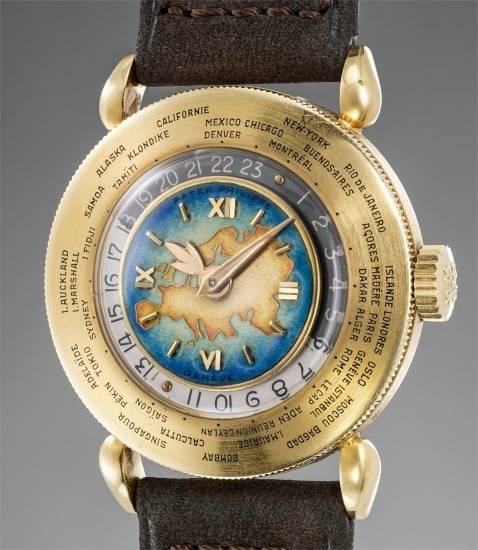
Patek Philippe ref. 1415, circa 1949 (Source: Phillips)
This luxurious 31mm watch crafted in precious metals featured an artistic, multicolored dial face, sumptuously executed by master dial makers. Look closely and you'll appreciate the precision craftsmanship required to create this polychrome cloisonné enamel dial.
Here's an interesting footnote: did you know that in 2002, a platinum Patek Philippe 1415 HU made in 1946 sold at auction for just over 6,500,000 Swiss francs - a sum that, at the time, made it the most expensive watch ever sold at auction?
From the 1950s onward, air travel began to go mainstream, and the general public could finally cover hundreds - even thousands - of kilometers with their heads in the clouds. A true dream for the era! Owning a World Time complication watch suddenly made perfect sense.
Let's jump forward a few years to 1964, when the first Japanese World Time watch entered the market. Developed by Seiko, this model stood out for the presence of a GMT hand - a detail that marked a clear break from the timepieces previously created by Swiss watchmaking Maisons during the first half of the 20th century.
Want to learn more about this hand and what it can do? Check out our guide to the GMT complication!
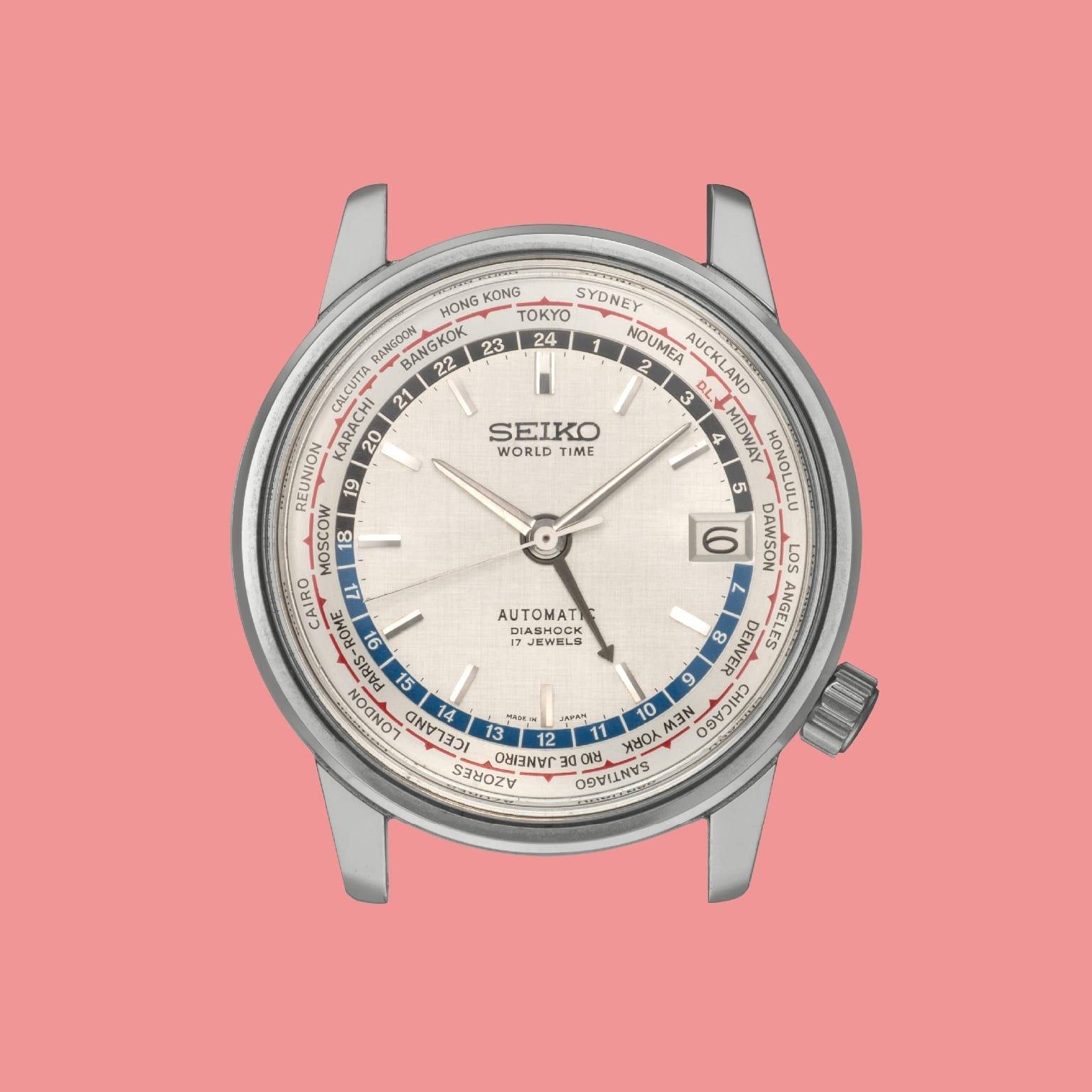
Seiko World Time Ref. 6217-7000, 1964 (Source: seiko-design.com)
The Seiko World Time reference 6217-7000 features a dial with an internal 24-hour scale, easy to read thanks to a contrasting two-tone color scheme. Depending on the configuration, this scale can be blue and black or red and white - it all comes down to the main color of each model's dial!
In any case, this 38mm watch unveiled in the mid-1960s features a rotating bezel around the perimeter of its dial on which the names of 26 world cities can be read.
Interestingly, the Seiko World Time 6217-7000 existed in a rather special version made specifically for the 1964 Tokyo Olympic Games. If you're ever lucky enough to hold that exact model in your hands, flip it over and look at the caseback - it's engraved with the Olympic flame!
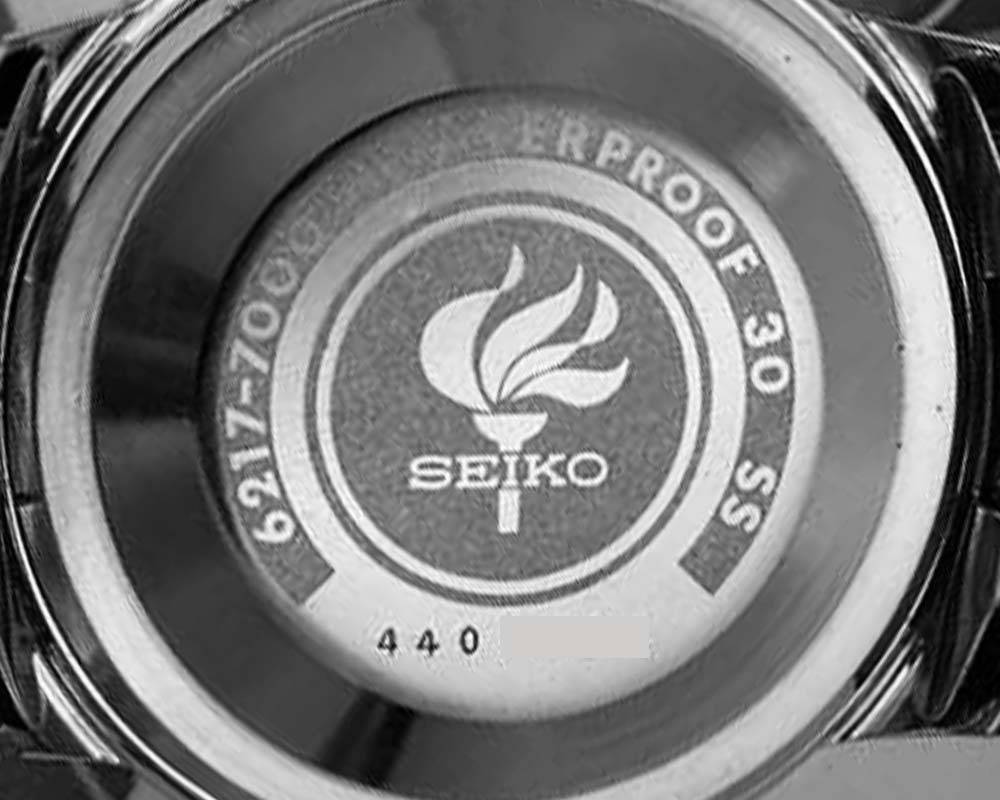
Caseback engraved with the Olympic flame on a Seiko 6217-7000 (Source: seikoworldtime.com)
Another fun fact about the Seiko World Time 6217-7000: it is powered by an in-house automatic movement, the Seiko 6217 (fitting, right?). This is the same caliber found inside a model you've probably heard of: the Seiko 62MAS - a dive watch highly sought after by vintage enthusiasts.
If you've been following our watchmaking guides, you'll know that the world of horology went through major upheavals over the last century - particularly during the 1970s. As a reminder, the world's first quartz watch was unveiled by Seiko at the end of 1969, and digital watches soon followed. So you can see where this is going: the World Time complication isn't limited to analog (hand-driven) displays - it also appeared on digital models, and as early as 1977!
It was at this moment that Seiko unveiled its reference M158-500X, a watch now known as the "Seiko Pan Am." The nickname stems from the fact that this World Time model was inseparable from the airline pilots of the era.
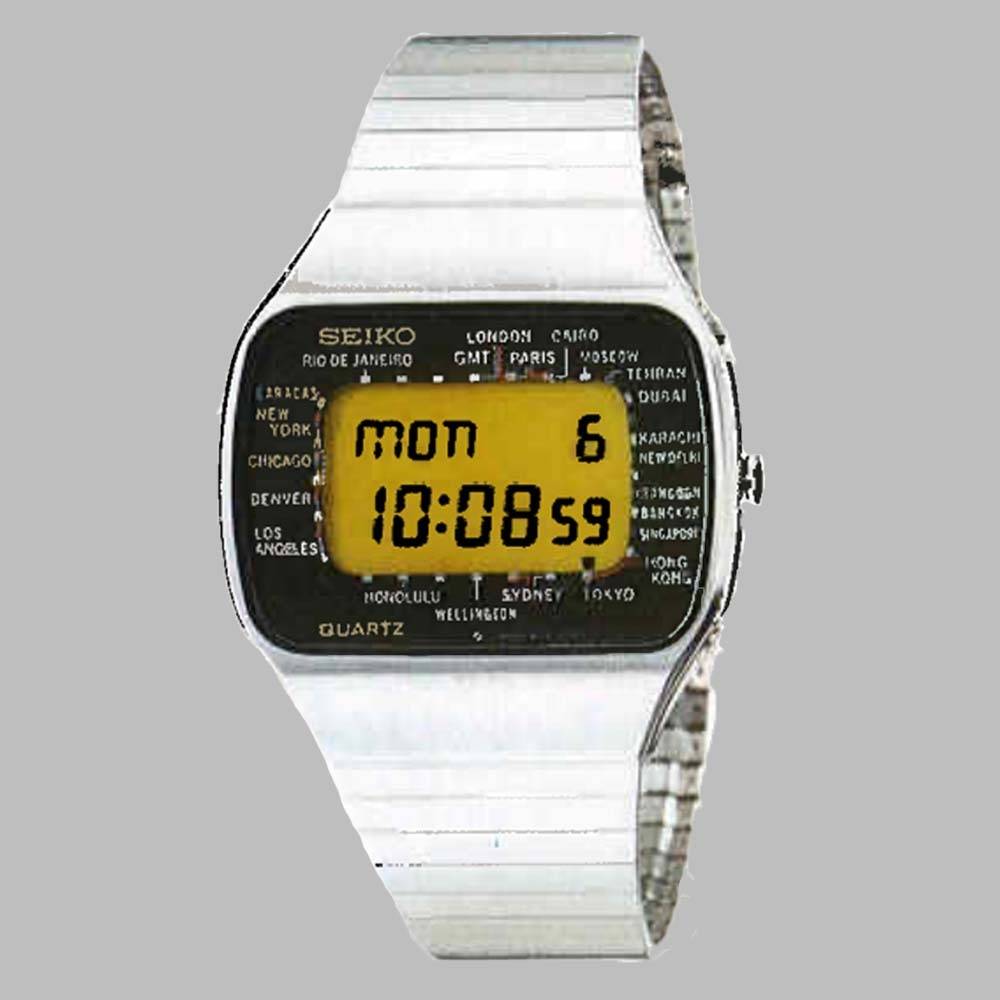
Seiko M158-5000 "Pan Am", 1977 (Source: seikoworldtime.com)
In an era before smartphones, pilots saw it as an extraordinary tool that could genuinely simplify their daily lives. The Seiko Pan Am competed with other digital watches of the same style, but it stood out as one of the most functional of the bunch.
The Seiko M158 was produced in several variations, each with its own distinctive features. The M158-5000 was the most universal, designed for both the Japanese domestic market and international distribution. Alongside it was the M158-5009, offered in grey stainless steel and in a gold-tone version.
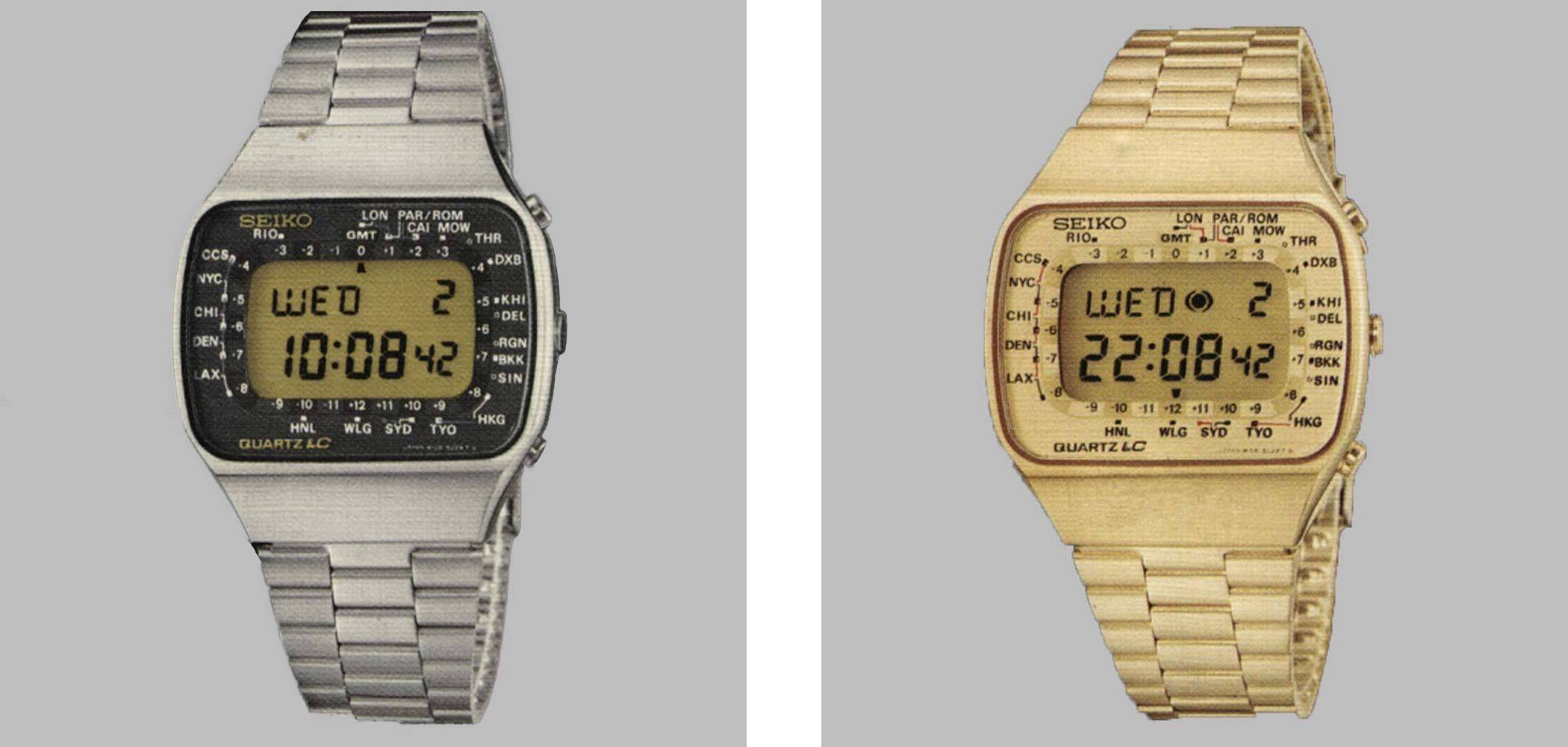
Seiko M158-5009, 1977 (Source: seikoworldtime.com)
Flashier in style, this variant was exclusively available on the North American market and featured a slightly more conventional bracelet, easily recognized by its 3 rows of links.
In 1977, another Japanese player entered the World Time watch market - and you definitely know this one: none other than Casio! Priced at £129.95 (the equivalent of just over 900 € today), the Japanese Casiotron X-1 promised to display the correct time anywhere in the world - all with a few presses of its push button.
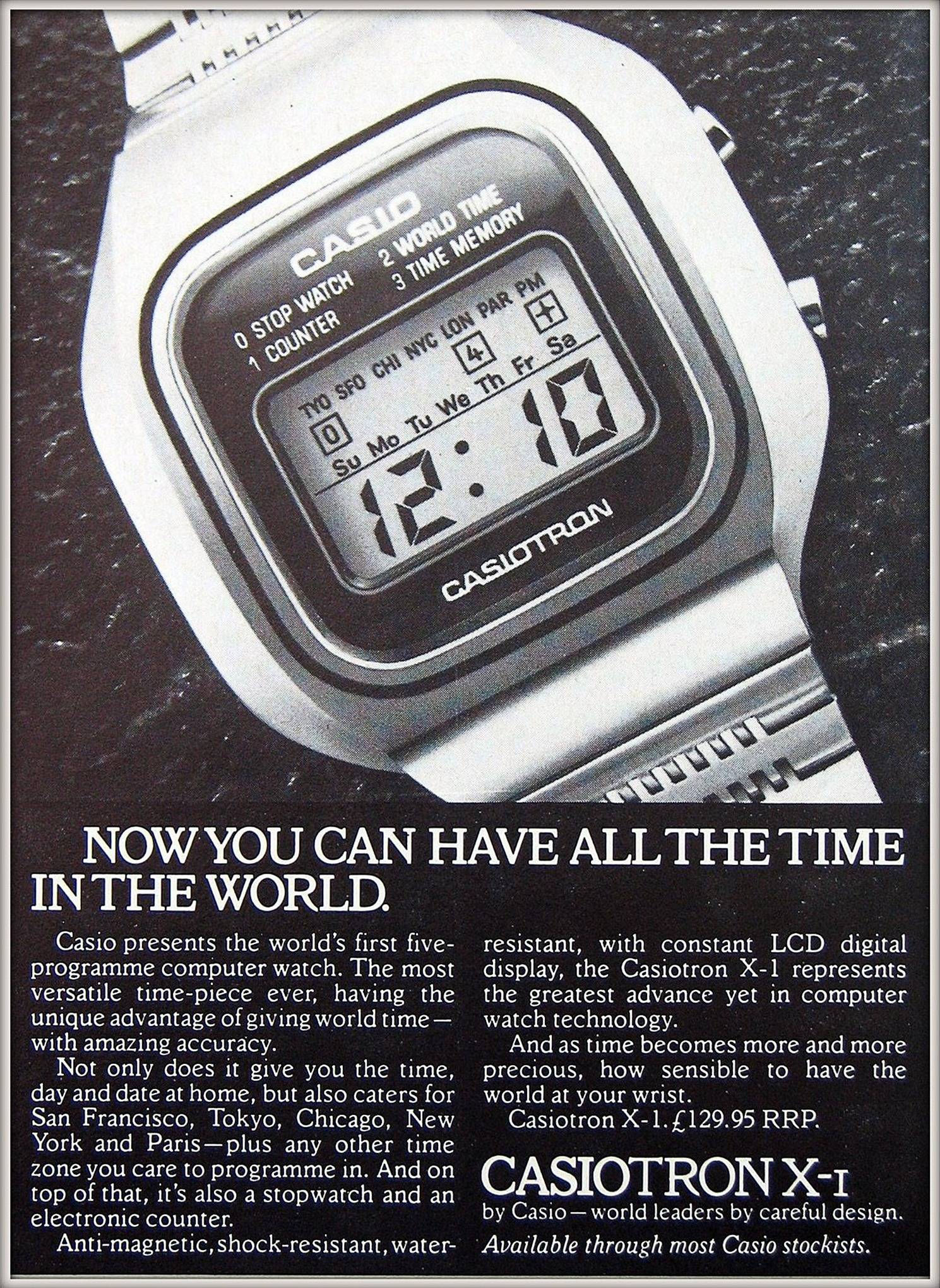
Casio Casiotron X-1 Advertisement, 1977 (Source: Reddit @AzerVisuals)
Throughout the 1970s and 1980s, Seiko released new models - increasingly functional digital "World Time" watches - while still retaining the overall aesthetic that had made the original 1977 model such a success. As they say, the old ways are often the best…
A fan of these avant-garde LCD watches? Check out our guide to smartwatches and discover everything there is to know about these landmark timepieces!
In the very late 1980s, another Swiss World Time watch emerged and quickly became an icon: the Ebel Voyager. A direct derivative of the Ebel 1911 - itself an absolute icon of the 1980s - the Voyager presented itself as a sport-chic style watch with a meticulously crafted case (very much in keeping with the aesthetic sensibility of that decade).
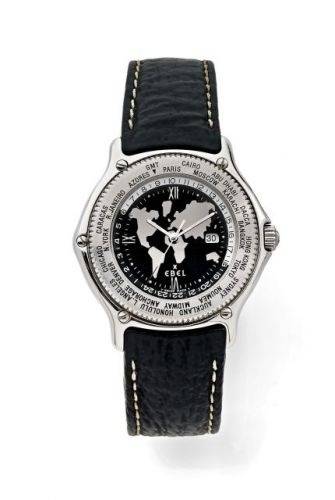
Ebel Voyager, circa 1990 (Source: Collector Square)
The dial of this model, released in 1989, featured a rotating 24-hour graduated bezel around its perimeter. The case was topped by a rotating bezel engraved with the names of major world cities. Available in steel, in a steel-and-gold combination, and in an all-gold version, the watch was offered with a wide variety of dials. While models adorned with applied Roman numerals are the most common, pieces featuring a world map on the dial are rarer - especially those on which the continents are rendered in colored enamel. And that flat representation of the globe makes perfect sense on a watch originally designed for travelers!
Today, World Time complication watches (also known as "Worldtimer" watches) are offered by brands such as Frédérique Constant, Alpina, and Mido. Those with a bigger budget will find what they're looking for at luxury Maisons such as Patek Philippe, Girard-Perregaux, Nomos, IWC, Omega, and Jaeger-LeCoultre.
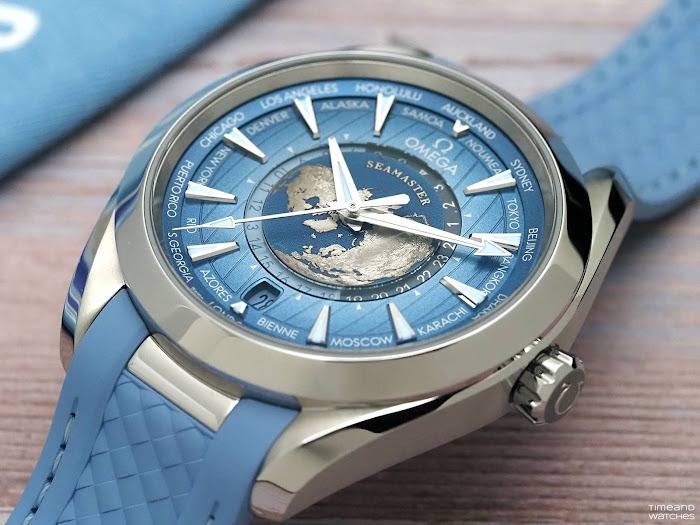
Omega Seamaster Aqua Terra Worldtimer (Source: Time and Watches)
Keep in mind that watches featuring a World Time complication tend to be quite expensive. If you're set on owning one but your budget is tight, Casio Worldtime watches with their digital display are an excellent option - affordable, robust, and well-designed, they offer a genuine hands-on experience of this very special watchmaking function.
Now that you know the full history of World Time watches in detail, how about discovering how they actually work?
To understand how World Time watches work, the first step is simply to look at one. Do that, and you'll quickly notice that they share a common configuration built around two bezels:
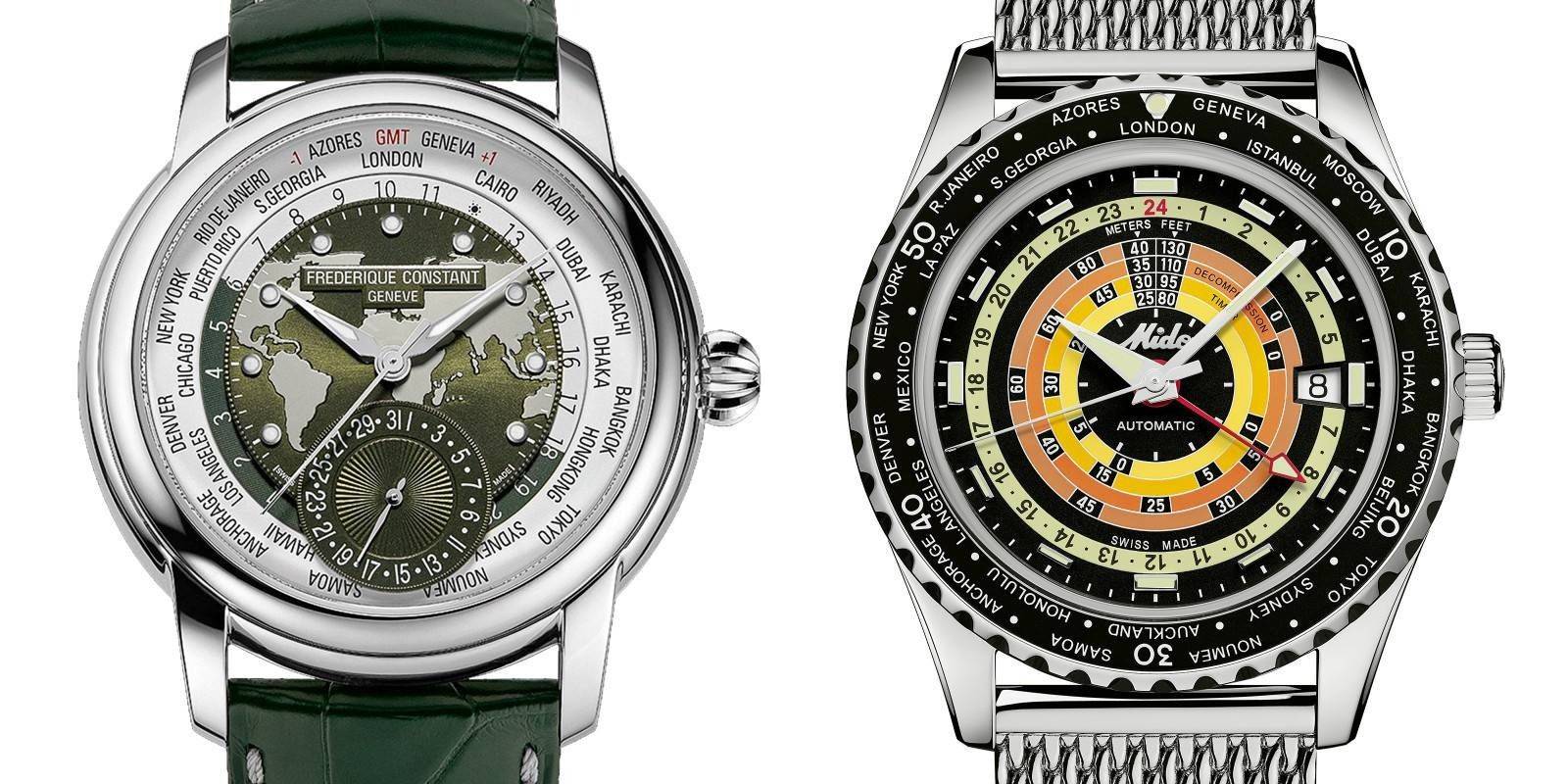
Two World Time Watches in Two Different Configurations
Depending on the model, these two bezels can be arranged in different ways. They may both sit beneath the watch crystal, or one may be under the crystal while the other is positioned on the outside - directly on the case.
On watches that adopt this second configuration - with the two bezels separated by the crystal (like the Mido watch shown above) - note that the 24-hour graduated bezel sits around the perimeter of the dial, while the city-name bezel is mounted on the case.
Why? The 24-hour bezel is driven by the watch movement so that it rotates as time advances. Once your watch is properly set, all you need to do to know the time in any displayed city is align that city's name with the corresponding number on the 24-hour graduated disc directly opposite it.
Here's a fascinating anecdote: Vacheron Constantin conceived a watch specifically designed for travelers and those with ties to the Middle East - a region where time offsets of 15, 30, or even 45 minutes can exist between two nearby locations.
Now that you understand how the complication works, let's look at how to correctly set a World Time watch.
As we just saw, the first 24-hour graduated bezel is driven automatically by the watch movement. It rotates in sync with the hands, ensuring a continuous, real-time display of the time across all time zones.
The city bezel, on the other hand, is manually operated. Two scenarios arise depending on its position:
To make this concrete, let's walk through an example. Imagine you're in London and it's 10:09 in the morning.
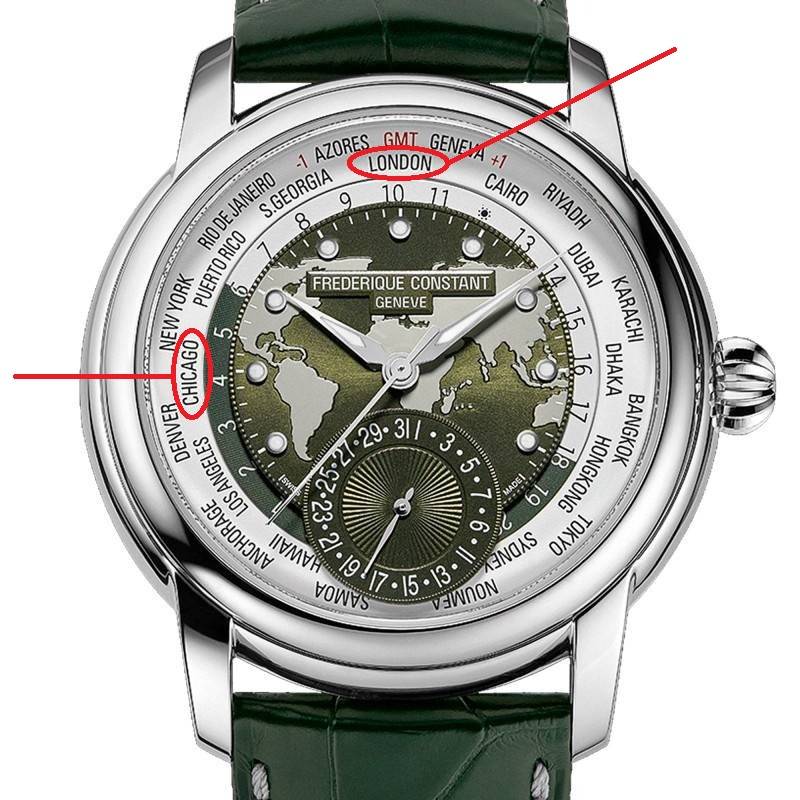
Reading a World Time Complication Watch
Your first step is to set your local time. To do this, look at the positioning of the cities on the outermost disc and locate "London." Then rotate the disc so that London lines up with the "10" marker on the other bezel (the one graduated on a 24-hour scale).
Once this setting is done, there's nothing more to do - your watch will display the real-time local time for every city shown on its bezel.
As for the minutes, they are read in the traditional way - using the watch's minute hand. In this example, we can see that it is 10:09 in London, and also 4:09 in Chicago.
You now know how a World Time watch works and how to set it. It's a watchmaking complication that rarely gets the spotlight - often overshadowed by the chronograph and GMT functions - yet it proves invaluable for travelers, diplomats, and anyone operating on a global scale.
And when you truly understand this mechanism and its global time-display logic, one question inevitably arises: is the World Time function not, in fact, the ultimate evolution of the GMT complication?
Worth pondering…
Share :
Official European Union notice on your rights in the event of a product's lack of conformity.


