
0
Product added
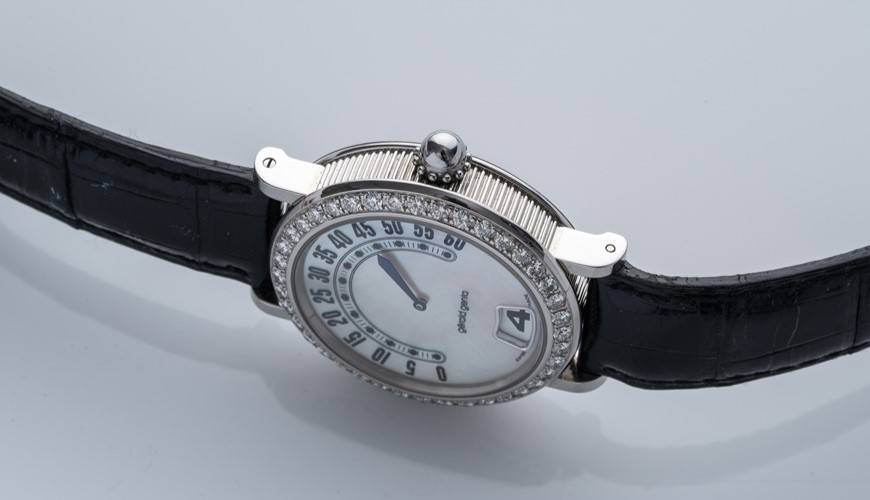
When you think of a watch complication, what comes to mind first? If you're a regular reader of our watch guides, you probably picture a feature that does something beyond telling the hours, minutes, and seconds. And that makes perfect sense…
But what if we explored a unique complication today? It may not add a revolutionary new function, but it offers an entirely different way to experience the passage of time. Here's a closer look at the jumping hour complication!
The "Jumping Hour," also known by its English names "Jump Hour" or "Jumping Hour," refers to a specific type of display complication. Contrary to what one might expect from a watch complication, timepieces equipped with this system don't offer an additional function per se. What sets them apart is the way they tell the time - an approach that departs significantly from the norm.
On a jumping hour watch, the time is not indicated by a traditional hand. Instead, a small window - known as an "aperture" (or "guichet") - is built directly into the dial. It is through this opening that you read the time, displayed clearly and legibly via a numeral printed on a rotating disc.
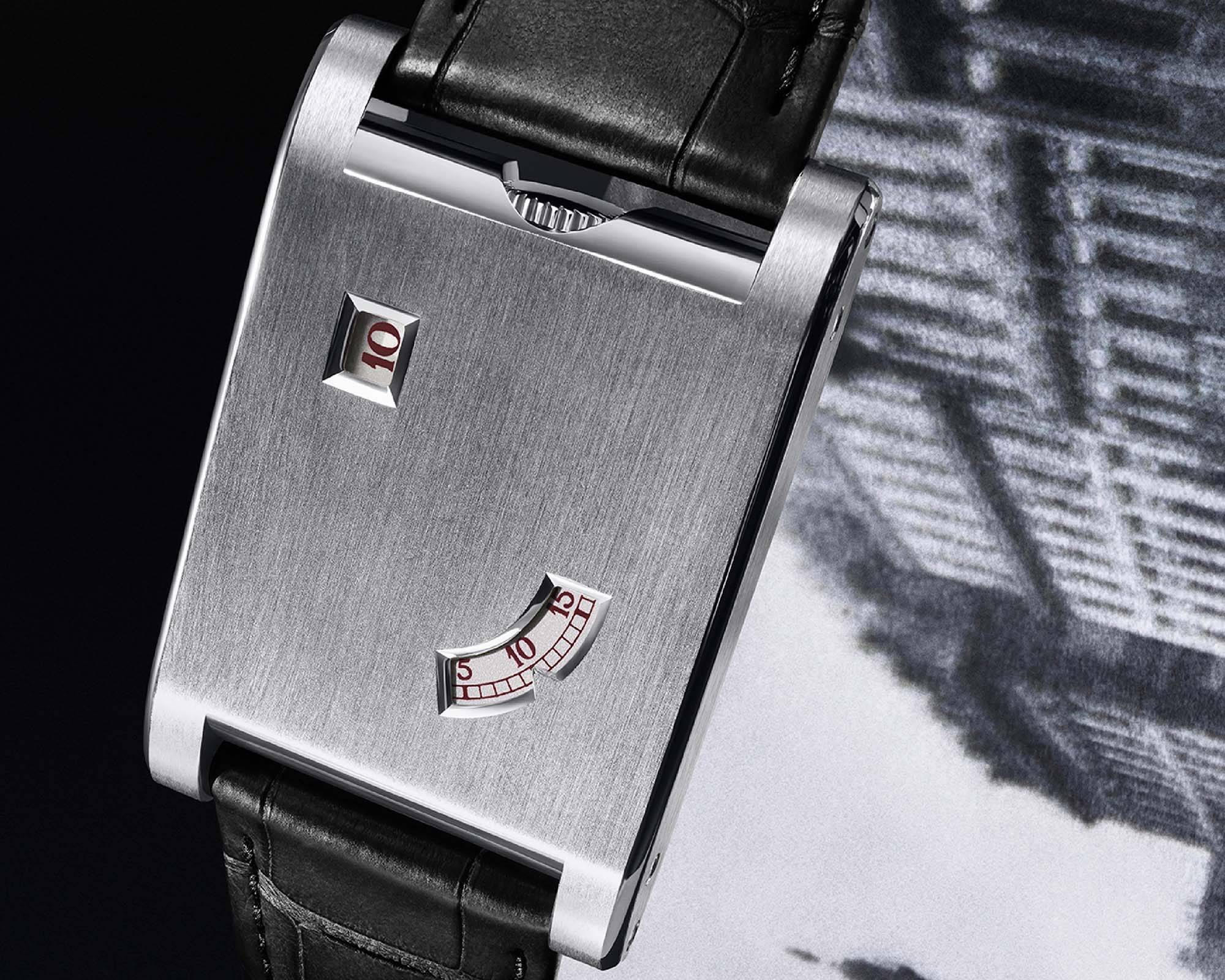
Cartier Tank with Apertures (Source: La Cote des Montres)
If you've read our guide dedicated to the date complication, you may have noticed a striking resemblance between the hour aperture on jumping hour watches and the far more common one found on date-display models. This visual similarity can easily cause confusion, especially at first glance.
Inside this hour aperture, the numeral displayed always corresponds to the current hour. What makes this type of display unique is the behavior of the hour disc! When an hour ends, the numeral doesn't slide slowly - it "jumps" instantly to the next one. This instantaneous movement, evoking the leap from one numeral to the next, is precisely what gives this complication its name: "jumping hour."
As for the minutes, several configurations exist. In most cases, they are indicated by a rotating disc which, unlike the hour disc, does not jump but turns continuously. Alongside these, some models also use a hand to display the passing minutes.
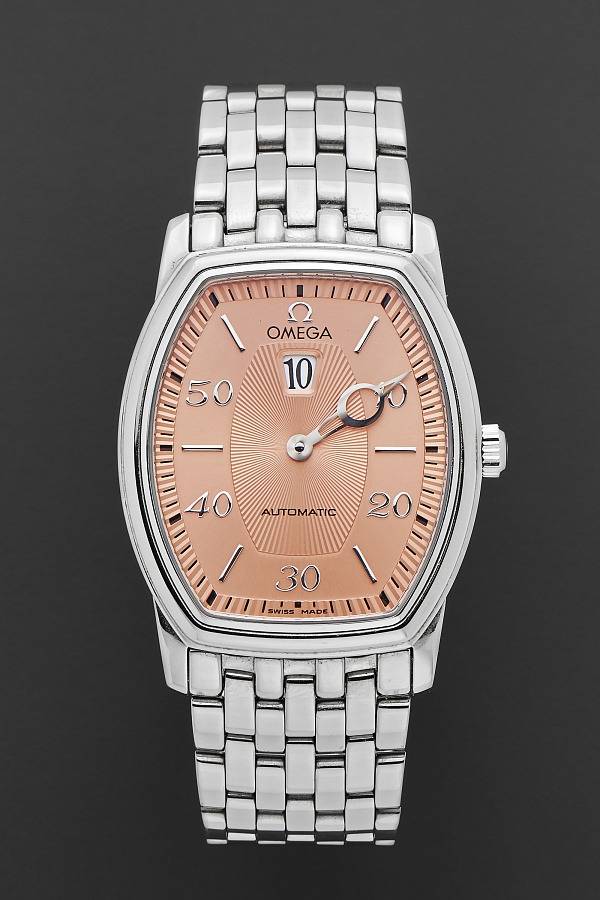
Omega jumping hour watch with a minute hand (Source: Ineichen Auctioneers)
Even rarer, some high-end watchmaking timepieces also feature a jumping minutes display - though this type of mechanism remains the exception.
As for the seconds, they are not always present on jumping hour watches. In fact, many models display only the hours and minutes. When a seconds display is included, it typically takes the form of a continuously rotating disc, similar to the minutes disc.
This approach to displaying the time can seem avant-garde, even futuristic. Yet jumping hour watches are far from a recent invention. Quite the contrary - their origins trace back nearly two centuries, to France, where this ingenious concept first came to life!
The very first jumping hour watch known to history is a French invention dating from the 1830s. It was created by Blondeau, watchmaker to King Louis-Philippe I. This one-of-a-kind piece, crafted in 750 yellow gold (18 carats), stood out as much for its innovative display as for the richness of its finishing, featuring remarkable engraving and enameling work.
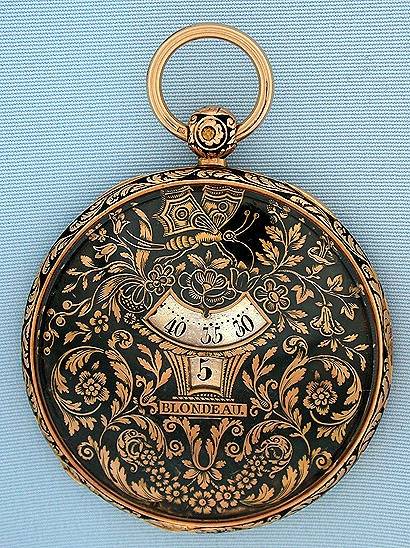
The first jumping hour watch in history by Blondeau, 1830 (Source: Watchismo Blogspot)
To decorate his piece, Blondeau used the "champlevé" technique, which involves lightly engraving the metal surface to inlay enamel. The time was displayed through a small stylized aperture (the famous "guichet") positioned almost at the center of the dial, while the minutes ran on a continuously rotating disc placed just above. When that disc reached the sixtieth minute, the hour disc jumped from one numeral to the next in a clean, precise motion - giving full meaning to the term "jumping hour."
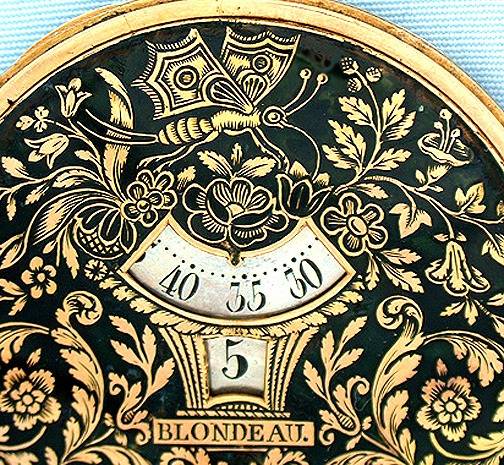
Dial detail of Blondeau's jumping hour watch, 1830 (Source: Watchismo Blogspot)
A close look at the dial of this creation reveals the full delicacy of its execution - floral motifs, refined foliage, and a large butterfly adorning the area above the minutes indicator. Blondeau's watch was an exceptional piece… but also one well beyond the reach of ordinary mortals, reserved exclusively for the sovereign. It would take several more decades before this type of display became accessible to the general public.
It was at the end of the 19th century, in 1883, that the first jumping hour watch produced at scale appeared. It was the work of Josef Pallweber, an Austrian watchmaker, and took the form of a pocket watch - no surprise to anyone familiar with the history of watchmaking, since wristwatches did not yet exist at the time. This timepiece featured a white dial bearing the inscriptions "Hours" and "Minutes," along with the distinctive signature "Patent Automatic Timekeeper."
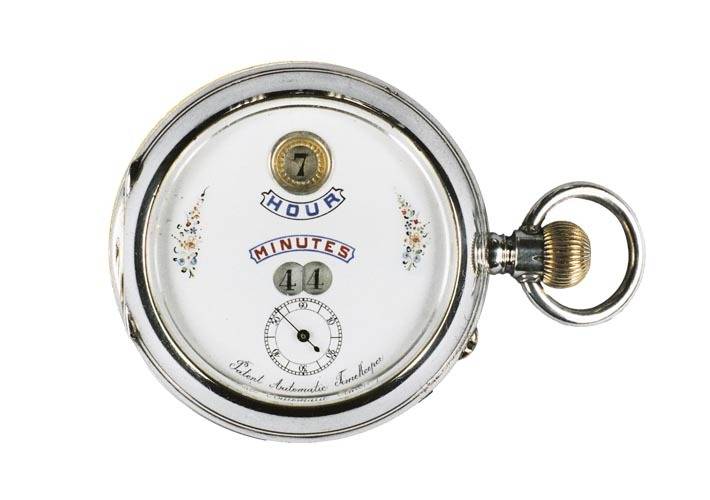
Josef Pallweber jumping hour watch, 1883 (Source: chronograph.am)
The hours were displayed in a circular aperture at the top of the dial, while the minutes were read at the center. The seconds were shown in the classic manner of the era via a small seconds subdial at the bottom of the dial. In 1883, Josef Pallweber sold the license for his invention to IWC, which produced nearly 15,000 examples between 1885 and 1887. It is therefore not uncommon to find an example from this period bearing the inscription "International Watch Co." in place of the original signature "Patent Automatic Timekeeper."
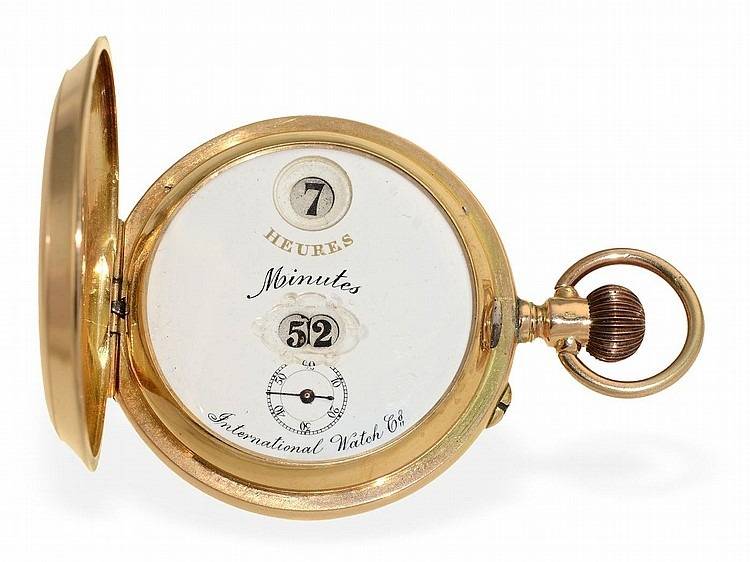
Josef Pallweber jumping hour watch by IWC (Source: Invaluable)
Some models made by IWC bear another inscription: "Pat. Feb. 24, 1885", a sign that examples produced at the time came in variants. Cases could be crafted in solid silver or solid 750 gold (18 carats). IWC was not the only manufacture to exploit Pallweber's patent! Swiss brands such as Cortébert and Gédéon Thommen also produced watches based on the same architecture.
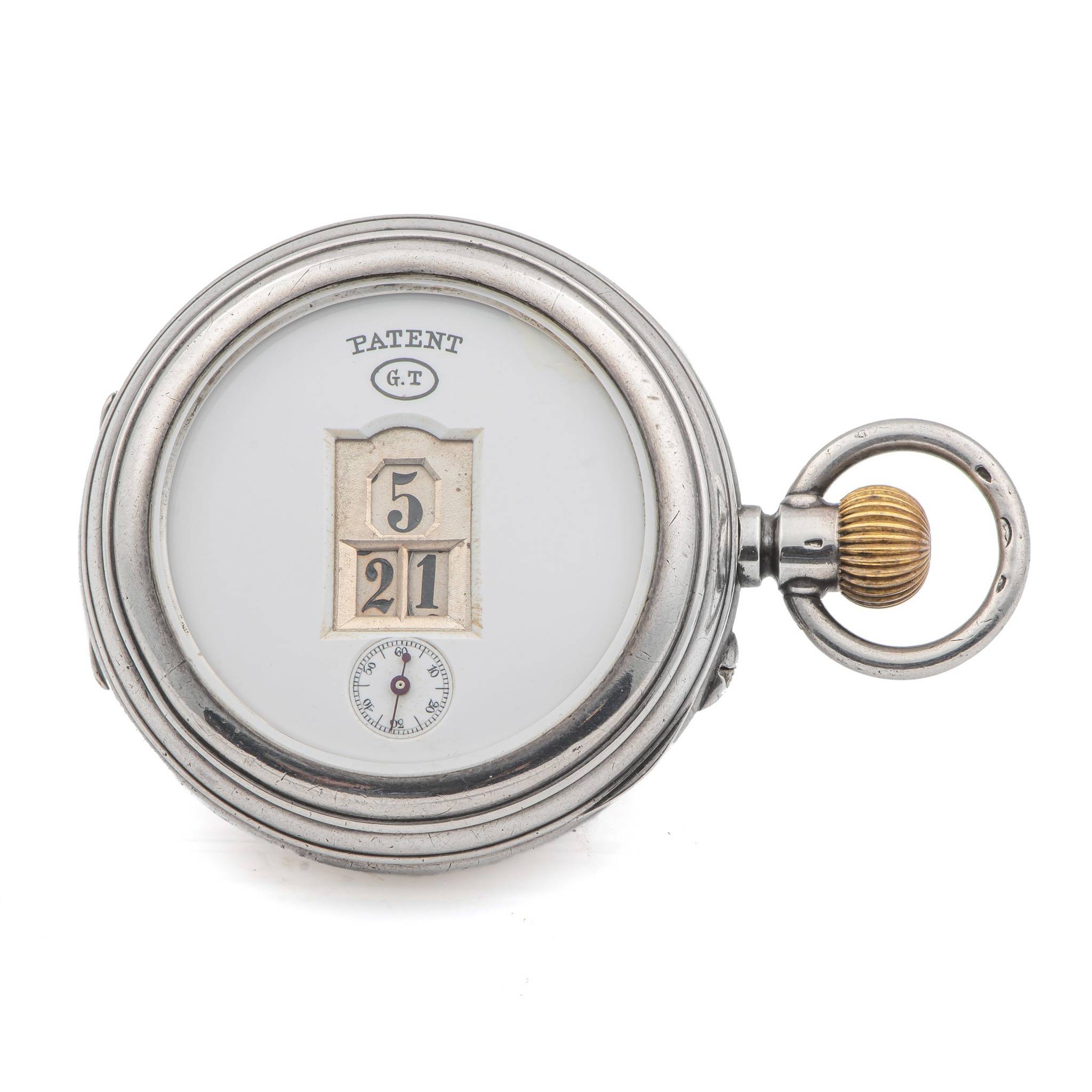
Gédéon Thommen jumping hour watch in 935 silver (Source: Antiquorum)
The original model featured a double jumping display. Both the hours and the minutes jumped from one numeral to the next, making the time exceptionally easy to read. A truly disruptive innovation for its era, one that would leave a lasting mark on the history of watch displays. While this timepiece looked like a traditional pocket watch, its way of telling the time was a genuine breakthrough in watchmaking!
It would take several more decades before the first jumping hour wristwatches appeared. The challenge was significant: Pallweber's system had to be dramatically miniaturized. The very first wrist models emerged in the 1920s, at the height of the Art Deco era - which explains the bold, avant-garde design of these pieces.
At that time, major brands such as Rolex, Movado, and Cortébert entered the space. Their models featured rectangular cases with clean lines, very much in vogue at the time. Alongside these, many unsigned, unbranded jumping hour watches also reached the market. They are sometimes called "digital watches" - not because they are electronic, but because they display the time mechanically, using discs rather than hands.
Interestingly, major watch houses didn't always sign these models, which means some examples turn up unsigned. This is notably the case with jumping hour watches from the Rolex Marconi line.
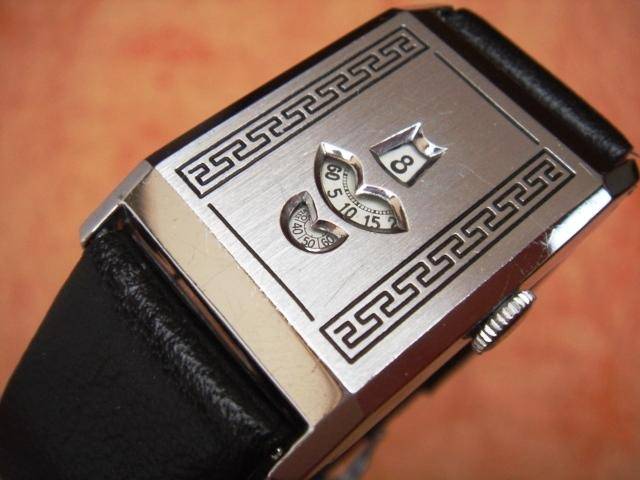
Rolex Marconi watch (Source: CrazyWatches.pl)
Among the most iconic creations of the era is the Cartier Tank à Guichets, a 1930s example of which was sold in 2008 by the British auction house Christie's - for the tidy sum of just under 30 000 €!
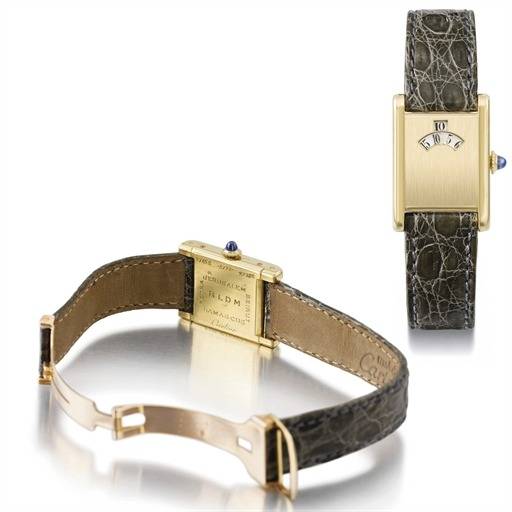
Cartier Tank with Apertures sold by Christie's in 2008, circa 1930 (Source: Collector Square)
While these watches share many similarities, certain manufactures managed to set themselves apart. Doxa and Cord, for example, released pieces with a distinctive, almost mysterious design!
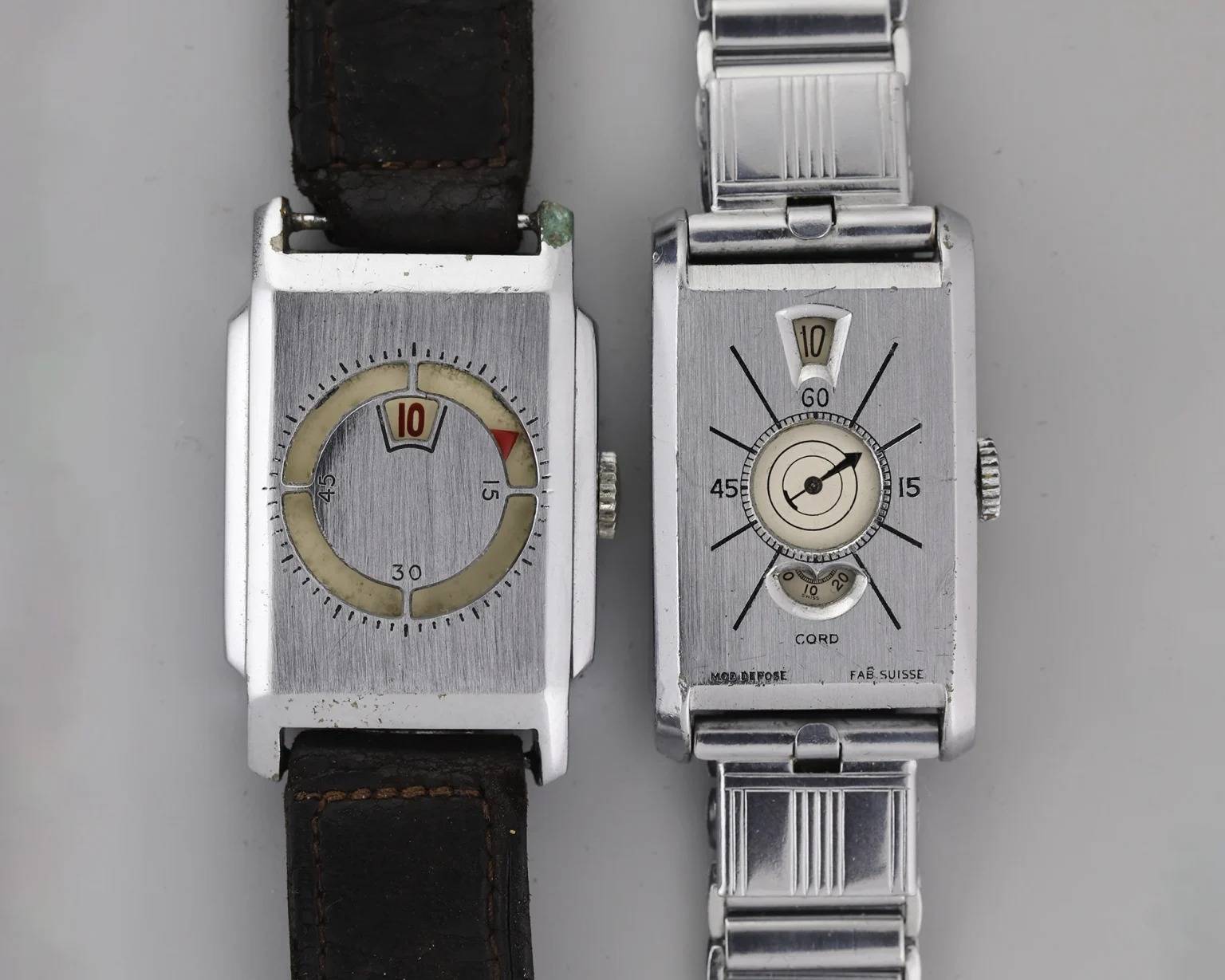
Doxa and Cord jumping hour watches, 1932 (Source: Swisswatches Magazine)
While some omit the seconds display entirely, others show them via a graduated rotating disc or a traditional hand. A few more eccentric, rarer creations use a central star to mark the passage of seconds.
Among the most original pieces is the Lip Baschmakoff, a French model highly sought after by collectors. Designed by Prince François de Baschmakoff, the first designer to collaborate with Lip, this watch stands out for its display built around three discs (for hours, minutes, and seconds) integrated into a unique format. Unveiled in chrome-plated metal and gold-plated versions, it was originally offered with either a genuine leather strap or a metal bracelet matching the case.
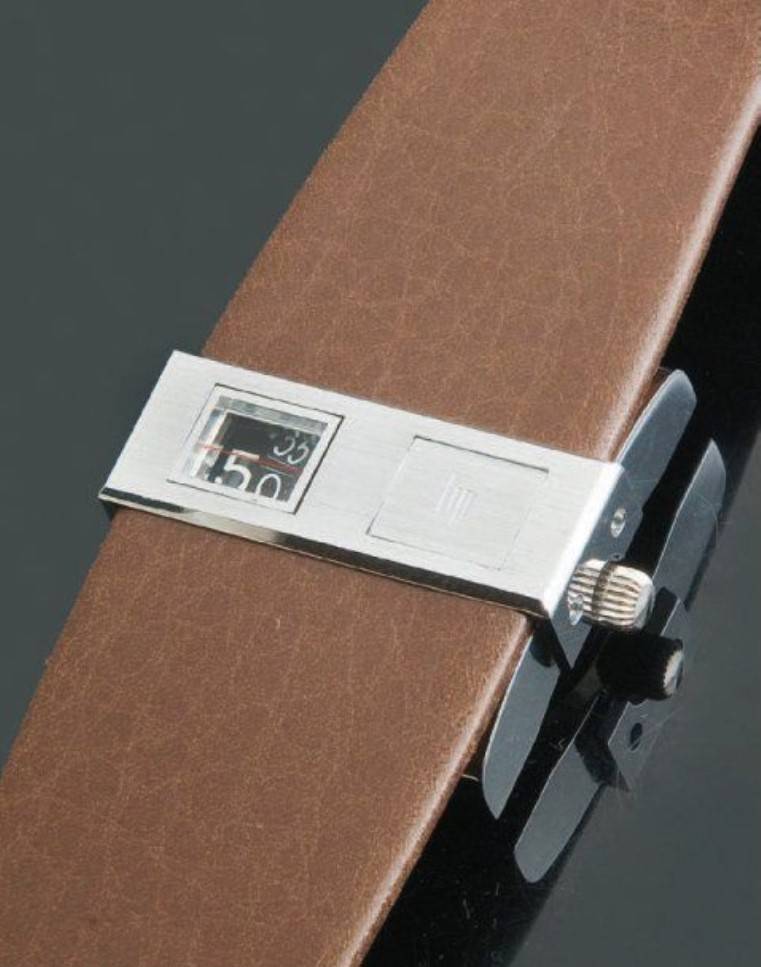
Lip de Baschmakoff, circa 1972 (Source: Gros & Delettrez)
This type of display, where the discs sit side by side, is often referred to as "Directime" - a sub-category of jumping hour watches. And the attention to design in the Lip Baschmakoff extended all the way to its packaging: the piece was delivered in a plastic case with a forward-looking aesthetic - so forward-looking, in fact, that it won the award for most stylish packaging of 1970!
During that same decade, jumping hour watches drew inspiration from the "Space Age" artistic movement, a style inspired by space-age objects that was hugely popular in interior design.
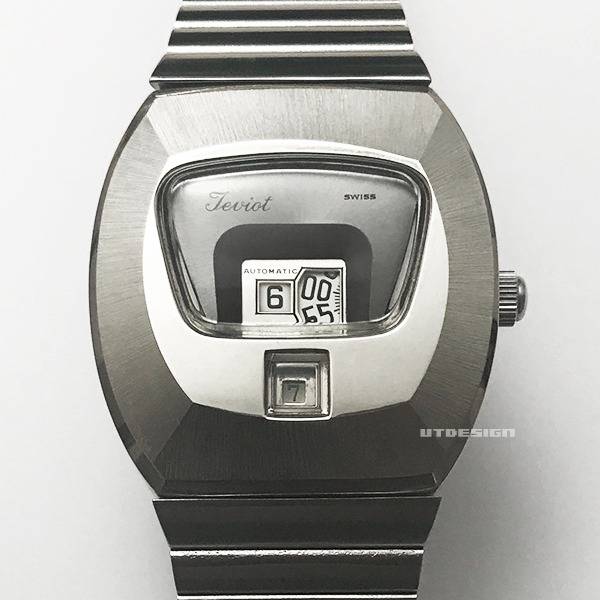
Teviot jumping hour watch reminiscent of the "Space Age" style (Source: UTDESIGN)
Often housed in chrome cases, these futuristic-looking timepieces can evoke all kinds of imagery. Some might see a space shuttle dashboard instrument; others, an astronaut's helmet…
In the years that followed, quartz watches appeared that closely resembled jumping hour models. These could be found from Citizen sub-brands such as Q&Q or 1481010 Independant, as well as from more fashion-oriented brands like Gucci, Fossil, and Esprit.
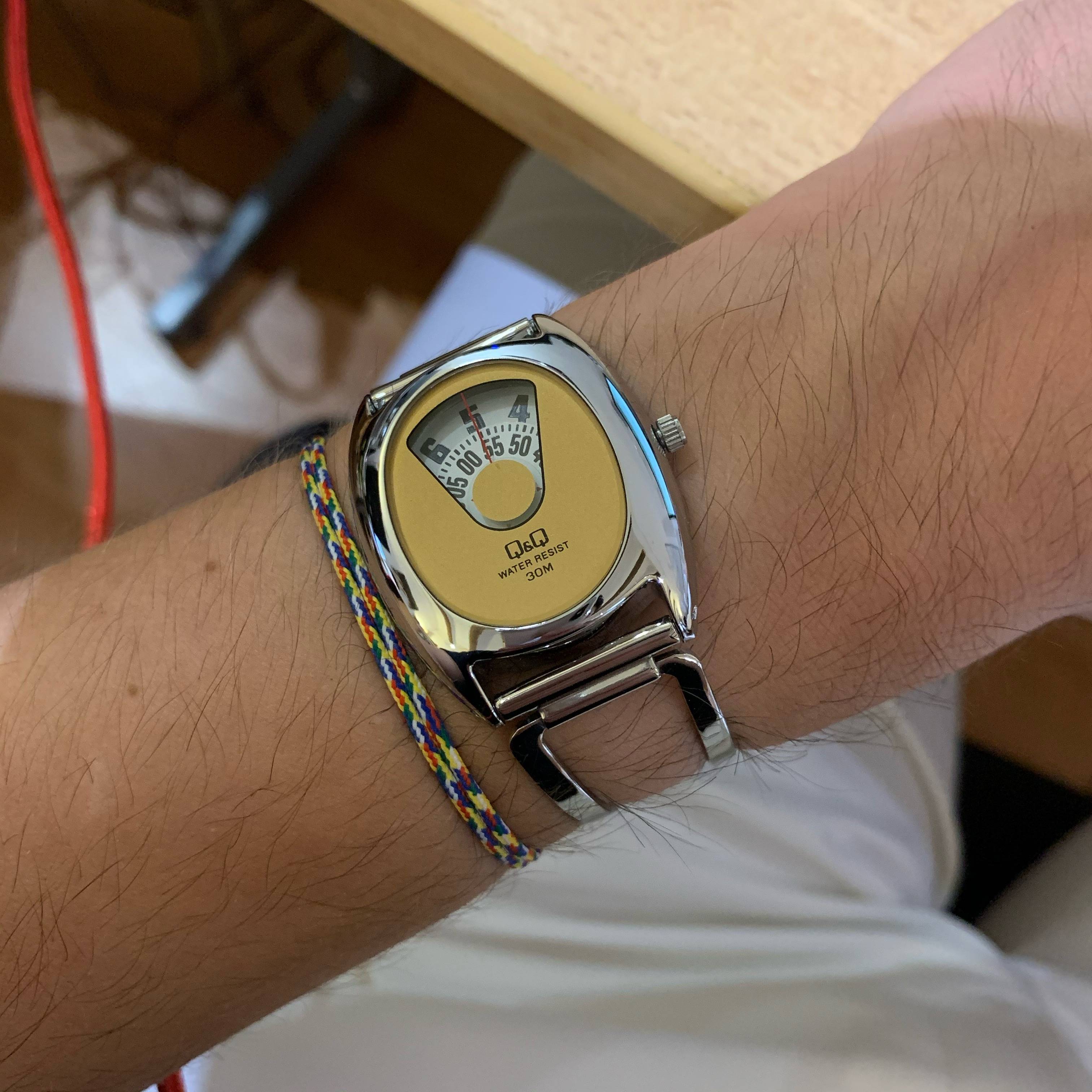
Q&Q watch (by Citizen) with rotating discs
Yet despite their appearance, these watches work differently… While they do use rotating discs, the hour display doesn't jump - it turns continuously. Their operation is more reminiscent of the analog counters found on car dashboards.
Among true quartz jumping hour watches, the Chaumet Jump Hour 10A from the 1990s stands out for its elegance. This ultra-slim model, with its fully polished solid gold circular case, displays only the hours and minutes. Its rarity and refinement make it a truly exceptional piece!
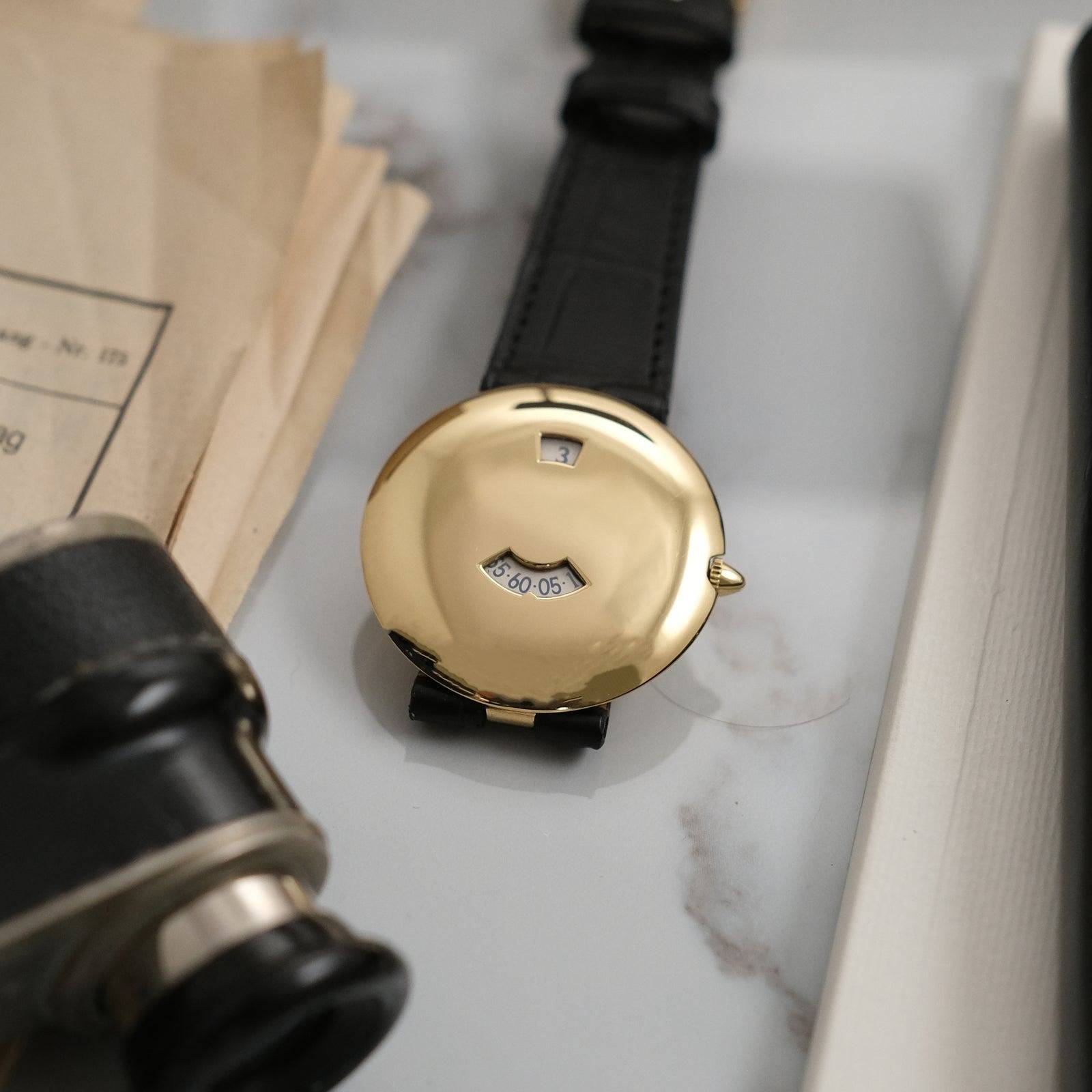
Chaumet Jump Hour 10A watch (Source: Mr Watchley)
Also in the 1990s, legendary designer Gérald Genta unveiled a collection called "Retro Fantasy," combining a jumping hour with retrograde minutes (another watchmaking complication). These playful creations feature Disney characters - Mickey, Donald, and Goofy - all brought to life on genuine mother-of-pearl dials set in stainless steel or solid gold cases.
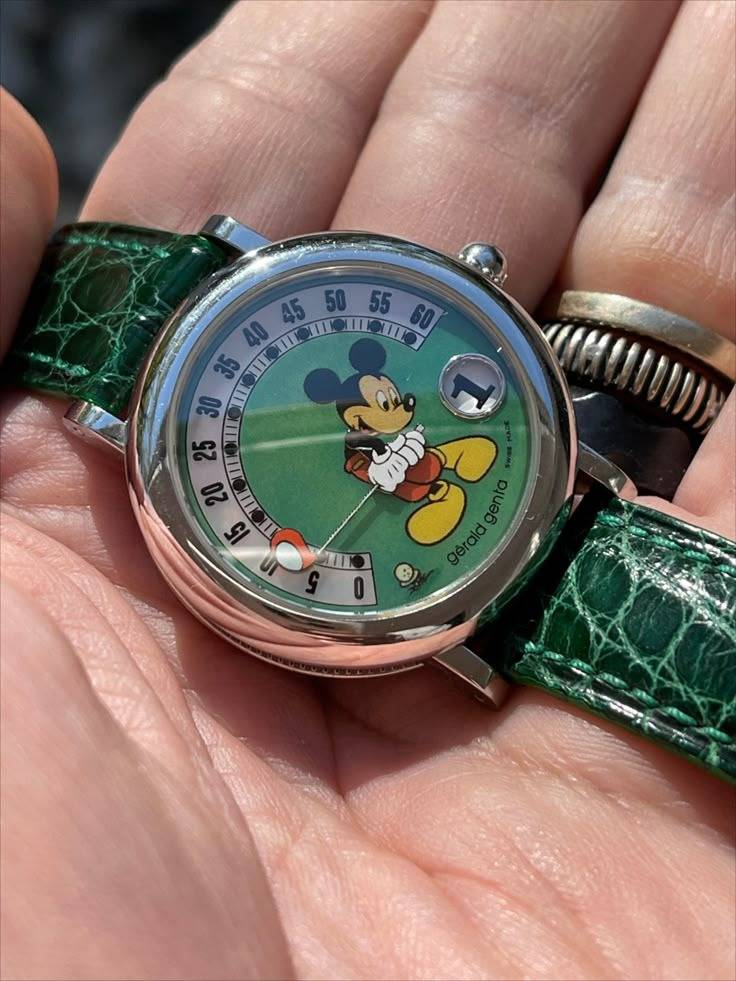
Gerald Genta "Retro Fantasy" Disney watch, circa 1990 (Source: Andrea Foffi)
In the 21st century, jumping hour watches have become increasingly rare. Few watch brands still include them in their catalog. Yet some houses continue the tradition, to the delight of enthusiasts. In 2018, IWC paid tribute to its heritage by reissuing a Pallweber watch to mark the 150th anniversary of the original model. In 2021, the brand Vario introduced the ИAVI x POPEYE Jumping Hour, a piece with an offbeat aesthetic that recalls Mr. Genta's Retro Fantasy watches.
Finally, the brand Reservoir appears to have made jumping hour watches its specialty. Its bold, diverse catalog demonstrates that, beyond its history, this complication continues to inspire modern creations with a strong personality.
Now that you have a sense of the jumping hour's history - from the earliest historical pieces to incorporate this complication through to more contemporary watches - let's turn to the more technical side: how this complication actually works!
Before getting into the technical details, one important clarification is needed… The vast majority of jumping hour watches are mechanical. They can run on either a manual-winding or automatic movement. Not sure what that means? Head over to our guide to mechanical and automatic watches to find out!
Now that you have that key detail in mind, let's dive deeper into the inner workings of jumping hour watches!
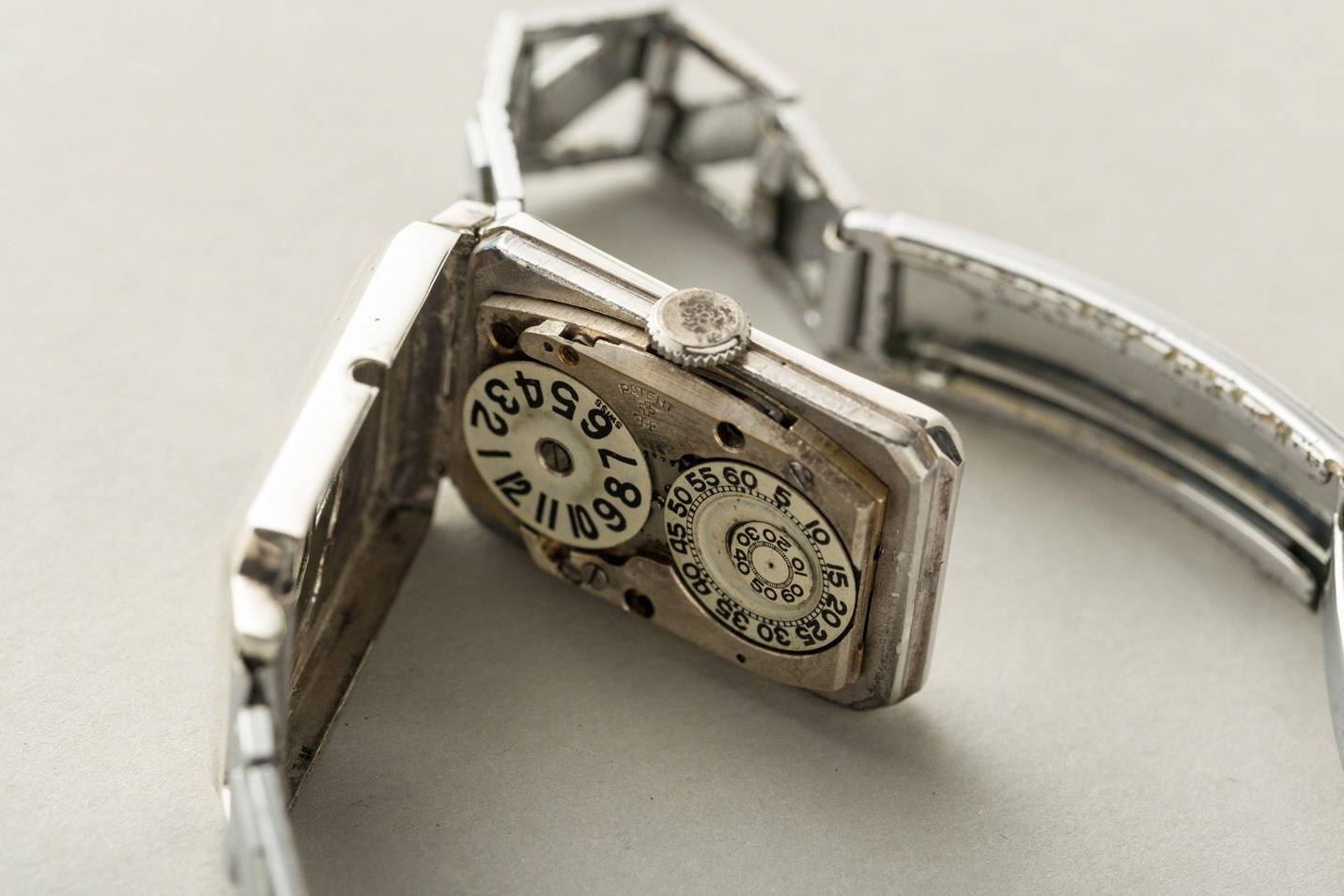
Discs from a jumping hour watch (Source: Shuck the Oyster)
Unlike traditional watches that use hands, jumping hour watches rely on a disc system:
All of these elements are carefully orchestrated to work in perfect synchronization.
This is often the first question that comes to mind when discovering this complication! How does the hour disc manage to jump so abruptly from one numeral to the next, with no visible transition?
The answer lies in one essential movement component: a small spring called a "tension spring," dedicated specifically to this task. Here's how it works:
But don't expect the disc to change exactly on the hour. In reality, the jump typically occurs with a slight offset… Sometimes a few seconds early, sometimes a few seconds late. For example, if your watch shows 10:59, it's quite possible the jump to 11:00 will happen at 10:59:55… or at 11:00:10. If your watch behaves this way, it's perfectly normal - nothing to worry about.
This phenomenon comes down to the purely mechanical nature of the system, which cannot achieve the split-second synchronization that an electronic movement would deliver.
The jump of the hour disc is an abrupt action that demands a significant amount of energy - far more, in fact, than the continuous sweep of a hand. For this reason, some watchmakers like A. Lange & Söhne choose to fit not one but two springs in their jumping hour watches. This ensures sufficient energy reserves without compromising the watch's overall precision.
Setting a jumping hour watch is simpler than it sounds, though it can vary slightly depending on the model. Two main configurations exist: those that use only discs, and those that combine a disc with a hand.
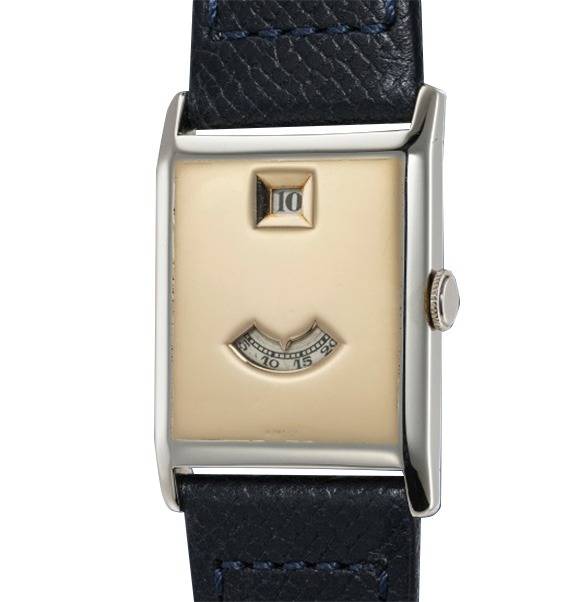
Vintage Audemars Piguet jumping hour watch (Source: Sotheby's)
In this case, the time is read solely through numerals visible through apertures.
To set your watch, simply pull out the crown and turn it (clockwise or counterclockwise, depending on the model). This advances the minutes disc. Once it reaches the 60th minute, the hour disc automatically jumps to the next numeral.
Simply turn the discs until the displayed time matches the actual time.
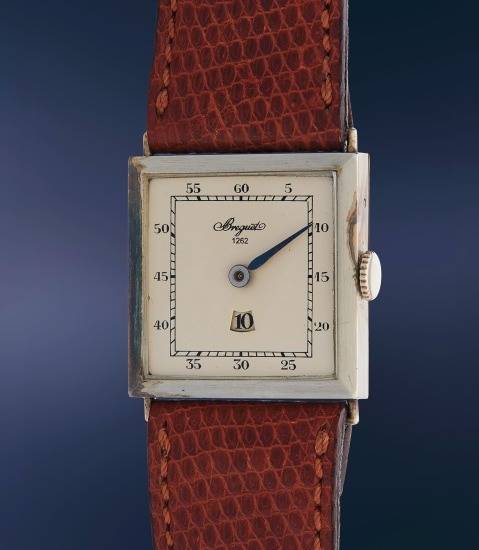
Vintage Breguet jumping hour watch (Source: Phillips Auction)
On these watches, which look more like a conventional display, setting the time is done by pulling the crown one notch, then turning it just as you would on a traditional watch.
This action advances the minute hand, and once it completes a full rotation around the dial (60 minutes), the hour disc automatically jumps to the next numeral.
Keep in mind that, despite their unusual appearance, jumping hour watches are actually quite straightforward to set. All you need to know is the type of display your model uses, and the process becomes immediately clear.
You're now an expert on the jumping hour complication. If you love original, unconventional timepieces, you know exactly which historic models to seek out to stand apart from the crowd!
Share :
Official European Union notice on your rights in the event of a product's lack of conformity.


