
0
Product added
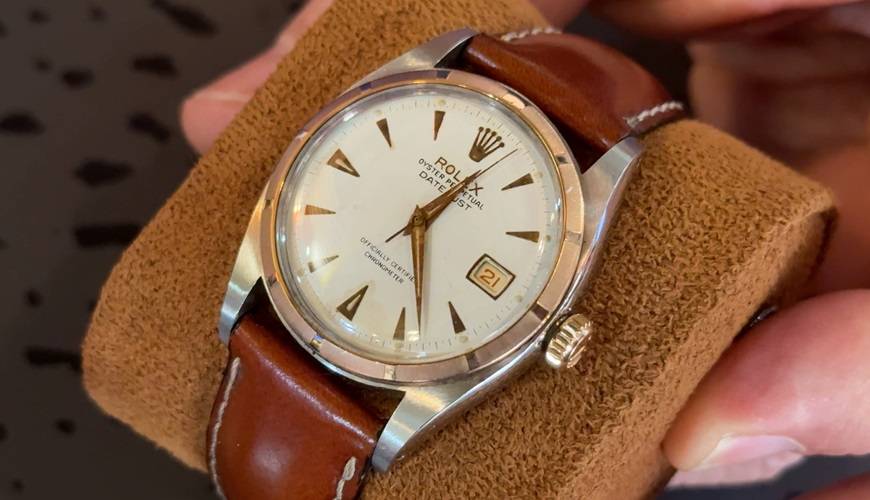
Unlike some more niche watch complications, the date display is a practical everyday feature for everyone. Loved by some and overlooked by others, it never fails to make an impression...
How well do you really know this complication, its intriguing history, and how it works? One thing is certain: this dedicated date complication guide will teach you something new about the watch on your wrist every day!
Among all watchmaking complications, the date function is arguably the simplest - yet also one of the most widespread. To appreciate just how popular it is, take a look in any watch store window or browse any watch retailer's website: you'll find it on the vast majority of watches being made today.
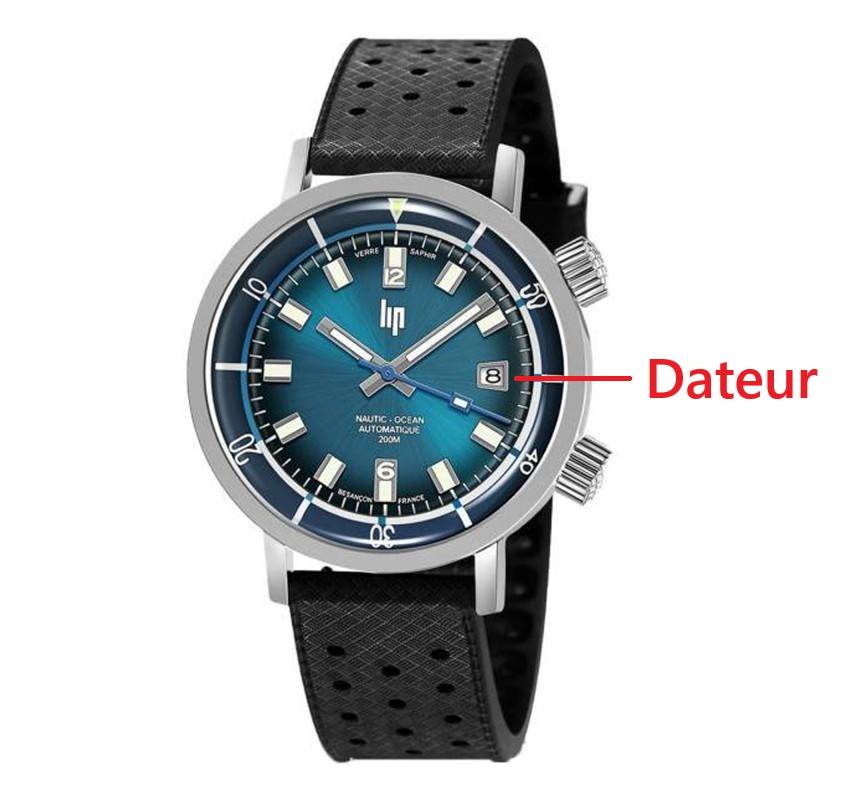
Watch Equipped with a Date Complication
This complication is especially valued for its practicality! It lets you check today's date at a glance - no need to reach for your phone. A real time-saver when you need to date a document or fill out a form.
In practice, the date is usually displayed through a small aperture on the dial called the "date window," "date display," or "date complication." It is most commonly positioned at 3 o'clock, right next to the winding crown. However, its location can vary depending on the model - some watches display the date at 4 o'clock, 6 o'clock, 9 o'clock, or elsewhere on the dial.
Let's now take a look at when this complication first appeared!
The first mass-produced watch to feature a date complication dates back to 1915. It was the House of Movado that pioneered it, with a timepiece featuring a rather unconventional design - the date display was not on the dial, but directly on the case.
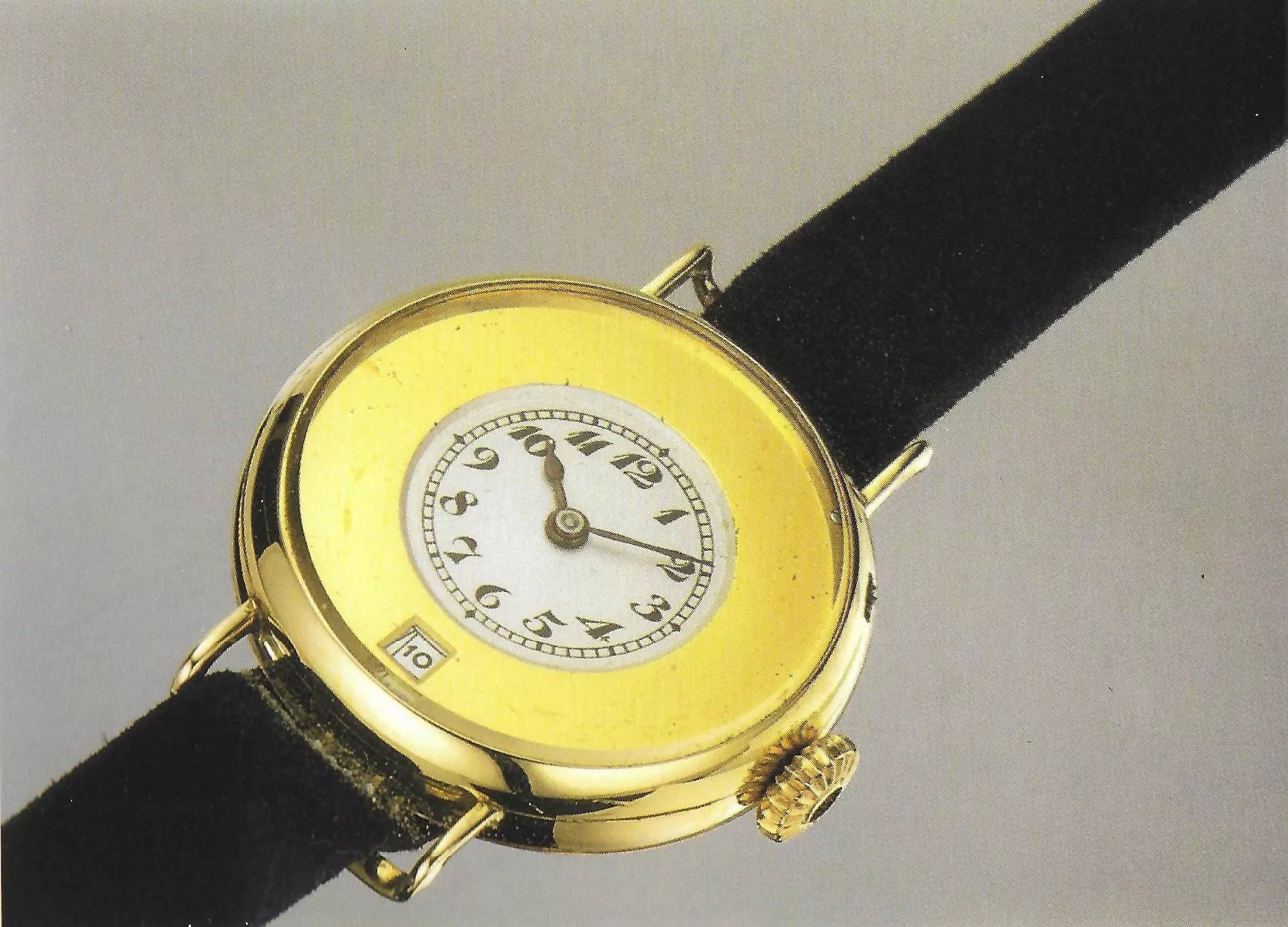
Movado with date complication, 1915 (Source: Fritz von Osterhausen's - "The Movado History")
An original choice that, looking back with today's eyes, almost gives the impression the date function was added as an afterthought - like a secondary feature.
If you've read our guide on the history of watchmaking, you already know that wristwatches began to go mainstream at the start of the 20th century. And it was precisely between the 1920s and 1930s that the public started demanding watches with a date function.
It was in this context that in 1930, a company affiliated with Girard-Perregaux named Mimo unveiled the Mimo-Meter. This watch marked a turning point: it was the first to feature a date display integrated directly into the dial, exactly as on the vast majority of watches today.
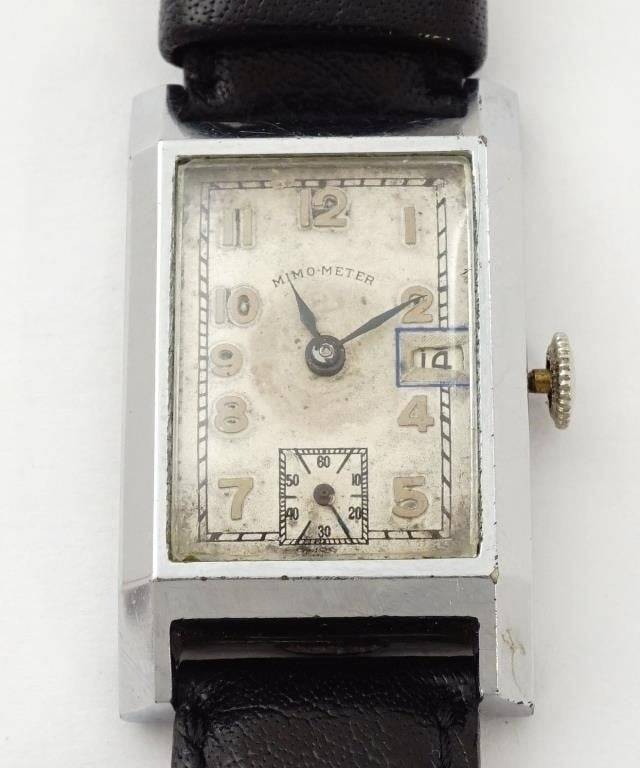
Mimo-Meter with date complication, 1930 (Source: Jones & Horan)
The Mimo-Meter is thus regarded as the watch that truly laid the foundation for the date window as we know it today.
About fifteen years later, in 1945, another major milestone in the history of date watches emerged: Rolex celebrated the manufacture's 40th anniversary by launching an iconic model, the Datejust reference 4467. You've almost certainly heard of it - its impact on watchmaking history is hard to overstate.
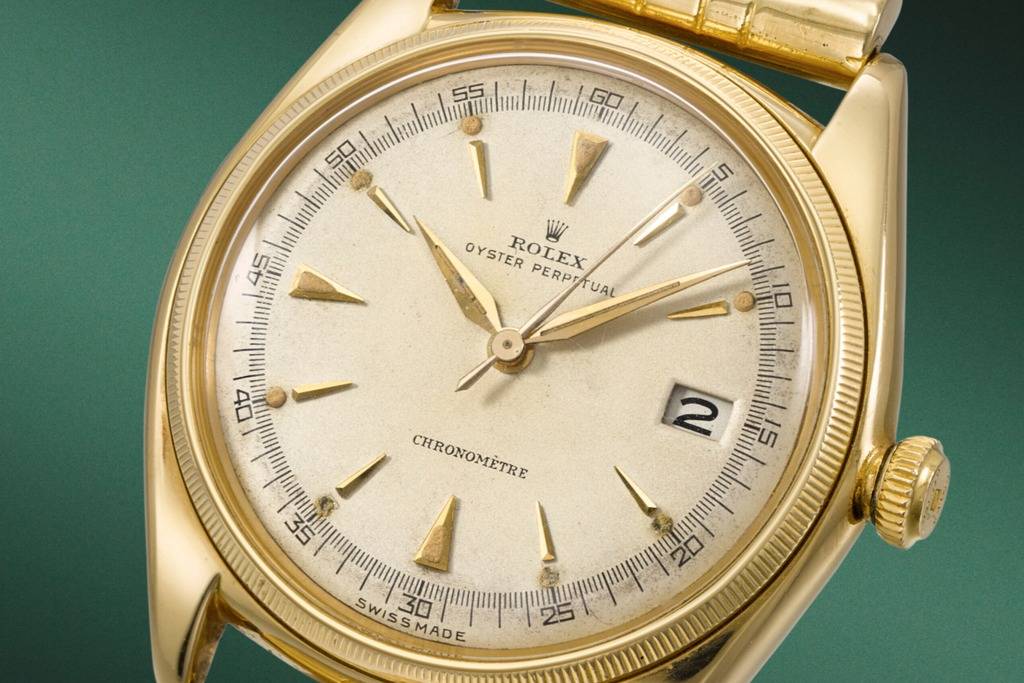
Rolex Datejust ref. 4467, 1945 (Source: Goldammer)
What sets the Rolex Datejust apart from its predecessors is its automatic movement. Unlike the 1915 Movado and the 1930 Mimo-Meter - both manually wound - this new Rolex is powered by a self-winding movement, a more modern choice for the era.
Looking to understand the difference between all these movement types? Don't miss our dedicated guide to mechanical and automatic watches.
Worth noting: just as on the Mimo-Meter released 15 years earlier, the date display on the very first Rolex Datejust was positioned at 3 o'clock. And if you need a mnemonic to remember all these key dates, just think of it this way - during the first half of the 20th century, a landmark date watch appeared every 15 years!
Here's a fun fact to bring up at your next watch enthusiast dinner… When the Rolex Datejust launched in 1945, it didn't yet feature the now-iconic "Cyclops" lens - that small magnifying bubble that has since become one of the brand's signature elements. It wasn't until the early 1950s that this magnifying dome appeared on the crystal to improve date legibility. Legend has it the invention came about after Hans Wilsdorf, Rolex's founder, heard his wife complain that she couldn't read the date on her Datejust.
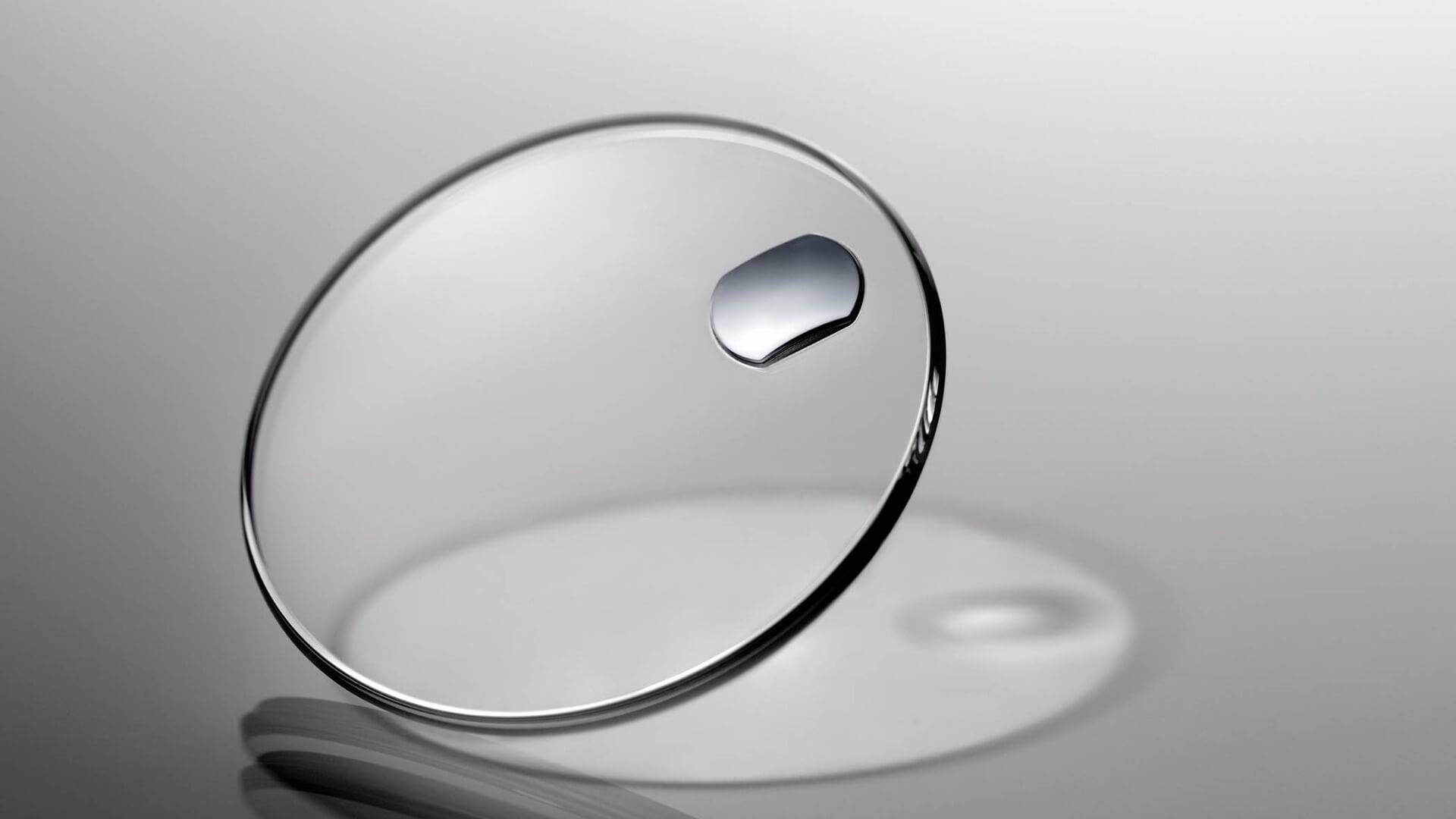
Rolex "Cyclops" magnifying lens (Source: Montredo)
In the early 1950s, the Rolex Datejust gained a second major feature: instant date change at midnight. Before that, the date disc took some time to transition from one date to the next. Thanks to this innovation, the change became instantaneous!
From that point on, watches featuring a date window began to gradually enter the mainstream, largely driven by the widespread adoption of automatic movements. In fact, it was truly from the mid-1960s onward that date watches really gained ground.
A telling example is IWC. Between 1964 and 1976, the brand produced three times more automatic movements with a date complication than automatic calibers without one - a telling figure that speaks to the growing demand for this feature.
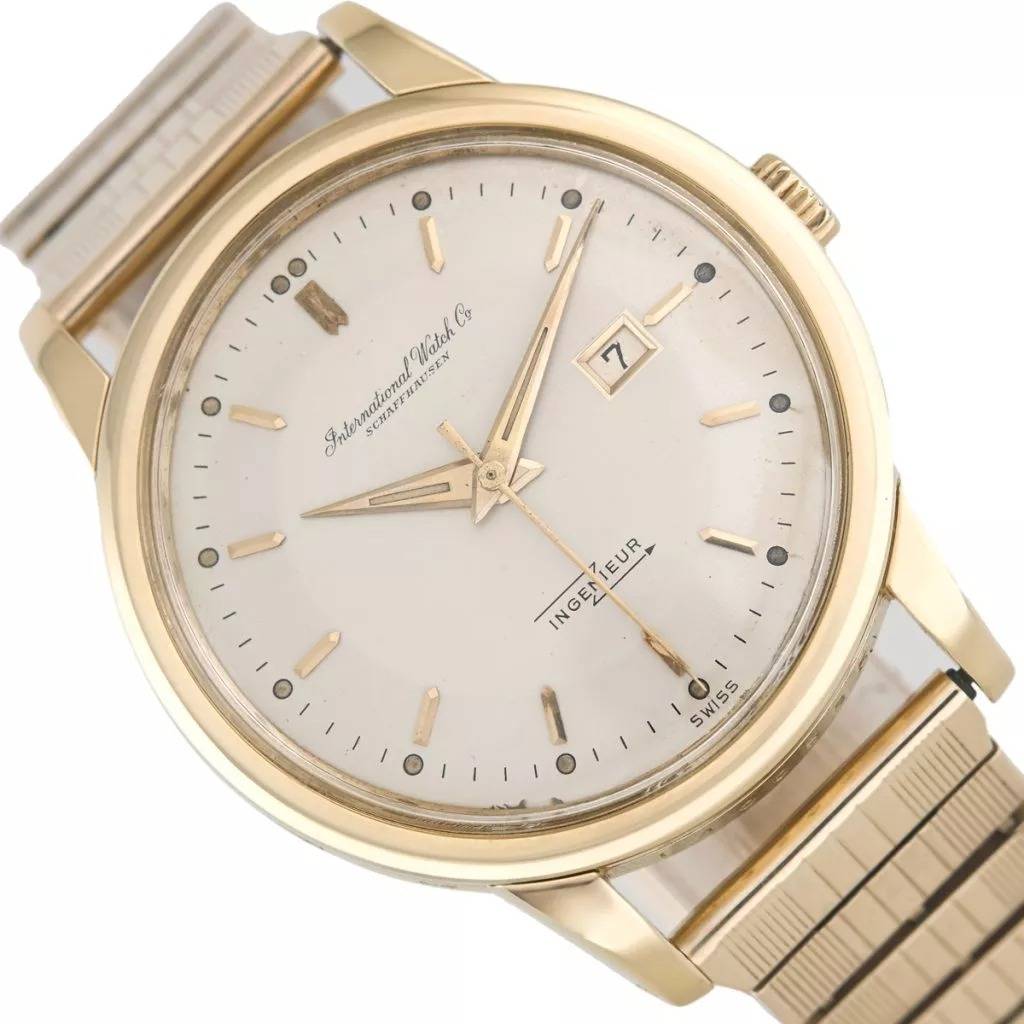
IWC Ingenieur with date complication, circa 1960 (Source: Vintage Gold Watches)
Vintage watch enthusiasts will tell you as much… Manually wound mechanical watches equipped with a date complication are far less common than their automatic counterparts.
Don't overthink it - just remember that the date complication became mainstream at roughly the same time as automatic movements.
In the second half of the 20th century, some watchmaking Houses sought to stand out by reimagining the date display. This was the case for Universal Genève and Zenith, which launched models nicknamed "Keyhole", a nod to their lock-inspired design.
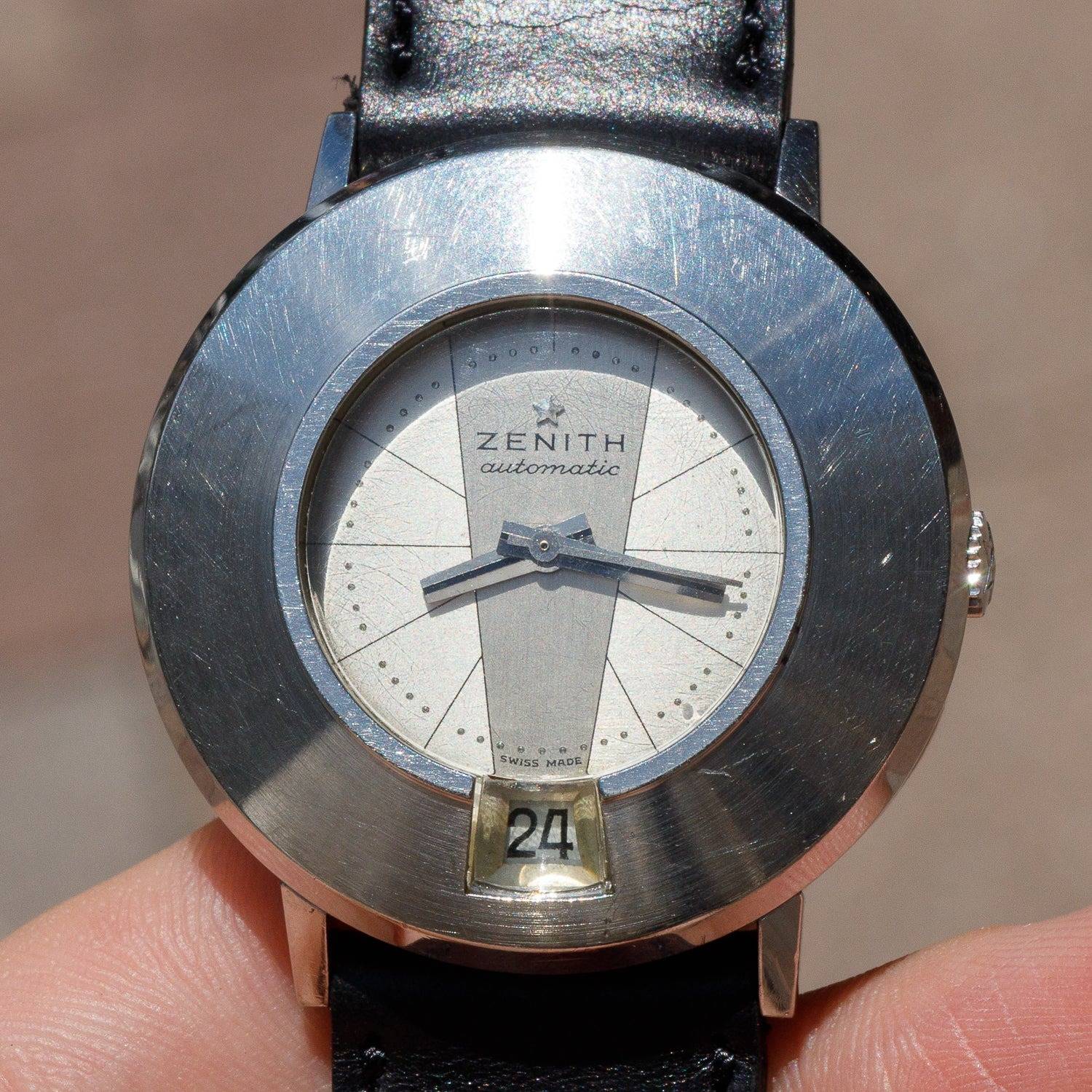
Zenith "Keyhole" watch, circa 1970 (Source: Timeanagram)
These watches stand out for their round case, a small dial that appears proportionally modest relative to the overall diameter, and a striking interplay of geometric lines. In short, they're watches that broke the mold with style.
In the world of watchmaking, the date complication ranks among the simplest. Its operation is based on a relatively straightforward mechanical principle. A watch equipped with this complication contains a date disc, along with a mechanism designed to advance it once per day.
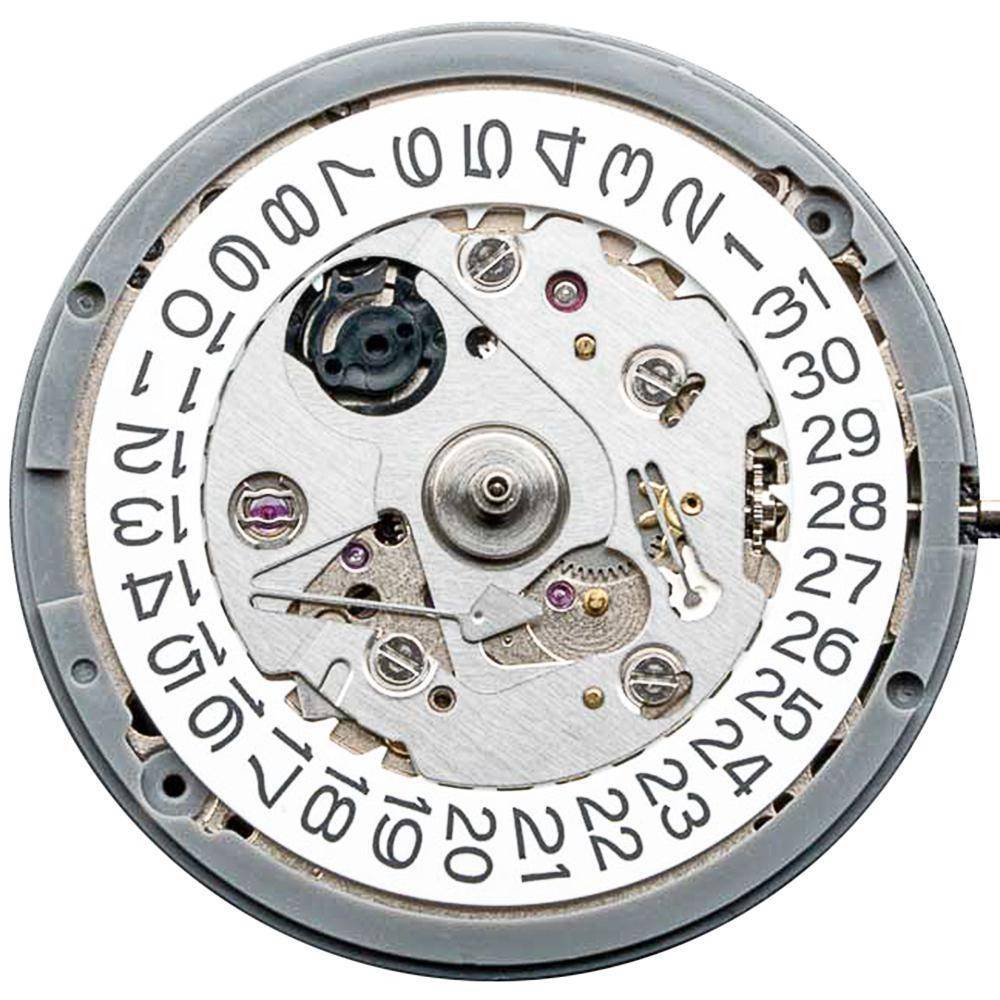
Seiko NH35 movement, date disc side (Source: My-Montre)
If you're new to the world of watchmaking, spotting a date watch is easy! As mentioned earlier, this type of watch features a small aperture on the dial (the date window) typically located at 3 o'clock or 6 o'clock, though it can also appear at 4:30 on some more distinctive models.

Watches with Date at 3 O'Clock, 4:30, and 6 O'Clock
Let's take a moment to bust a common myth… No, your watch's date does not necessarily change at exactly midnight. In fact, on most watches, the date disc begins its transition one or several hours before. So between 23:00 and midnight, or even between 22:00 and 1:00 in the morning, your watch's date mechanism may already be in motion.
That said, there is one essential precaution to keep in mind: it is strongly advised against setting the date on your watch while the date disc is in the process of turning. Why? Because at that moment, any manipulation could damage or even break the teeth of the date mechanism, which would mean a visit to the watchmaker.
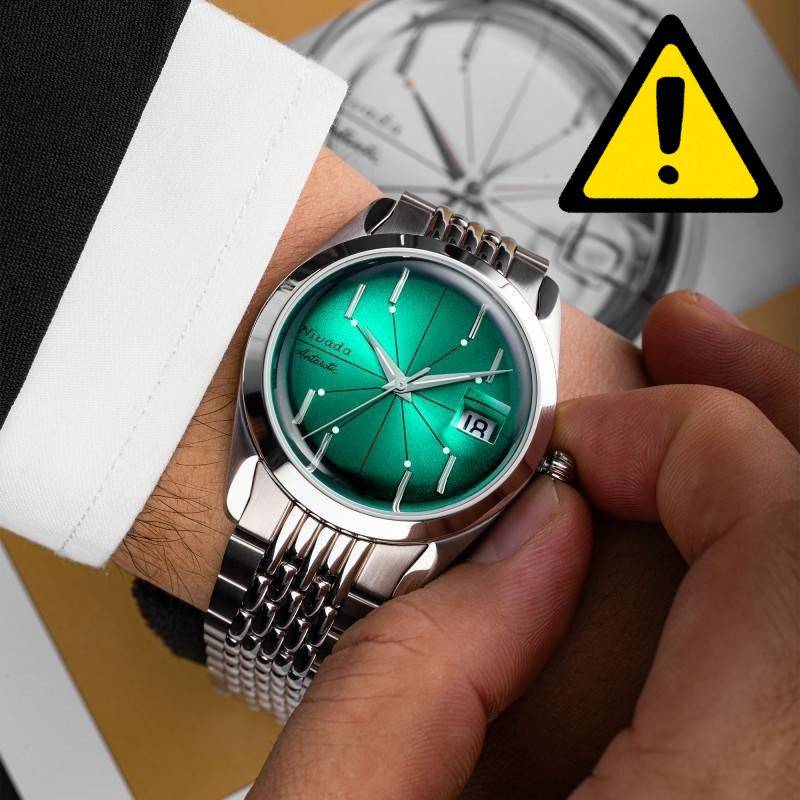
Beware the "Dead Zone" of Your Watch's Date Complication
In watchmaking, this critical time window is known as the "Dead Zone." It generally spans from 21:00 to 3:00 in the morning, during which you should absolutely avoid setting the date. To protect your watch's longevity, simply remember: if you need to adjust the date, do it outside this window - ideally during the day, when the date mechanism is fully at rest.
It may surprise you, but not all date watches are set the same way. To fully grasp this difference, it's important to distinguish between vintage watches and more contemporary models.
On most vintage watches - particularly those produced before the 1970s - there was no quick date correction mechanism. To adjust the date, you had to manually advance the hands until you reached the desired date, a process that could quickly become tedious.
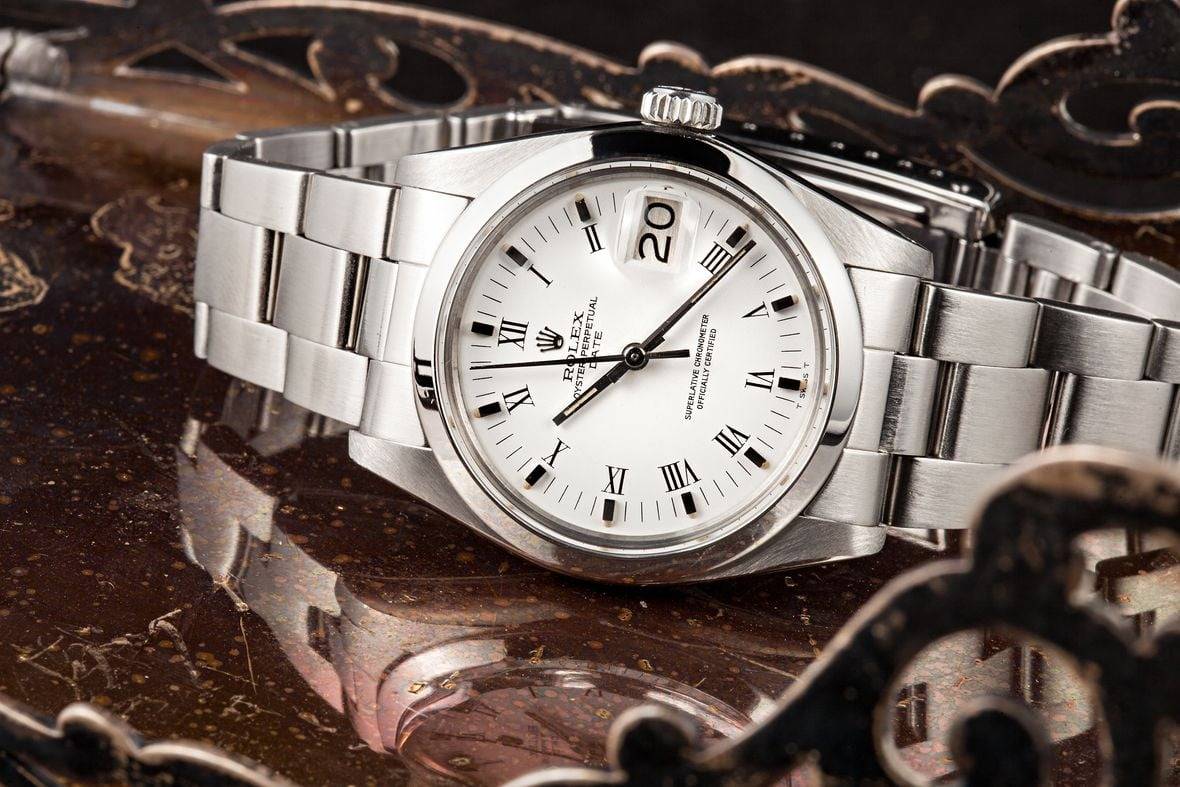
Rolex Oyster Date ref. 1500 without quick date setting, circa 1960/1970 (Source: Bob's Watches)
For example, if your vintage watch shows the 20th and today is the 28th, you'd need to rotate the hands through 16 full cycles to set the date - a genuinely tedious process. It's precisely why many collectors wear their vintage pieces without ever bothering to set the date.
Conversely, the majority of modern watches feature a quick date correction system. To find out whether yours has one, take a look at the crown - if it can be pulled out to two positions, there's a good chance the first position is dedicated to setting the date.
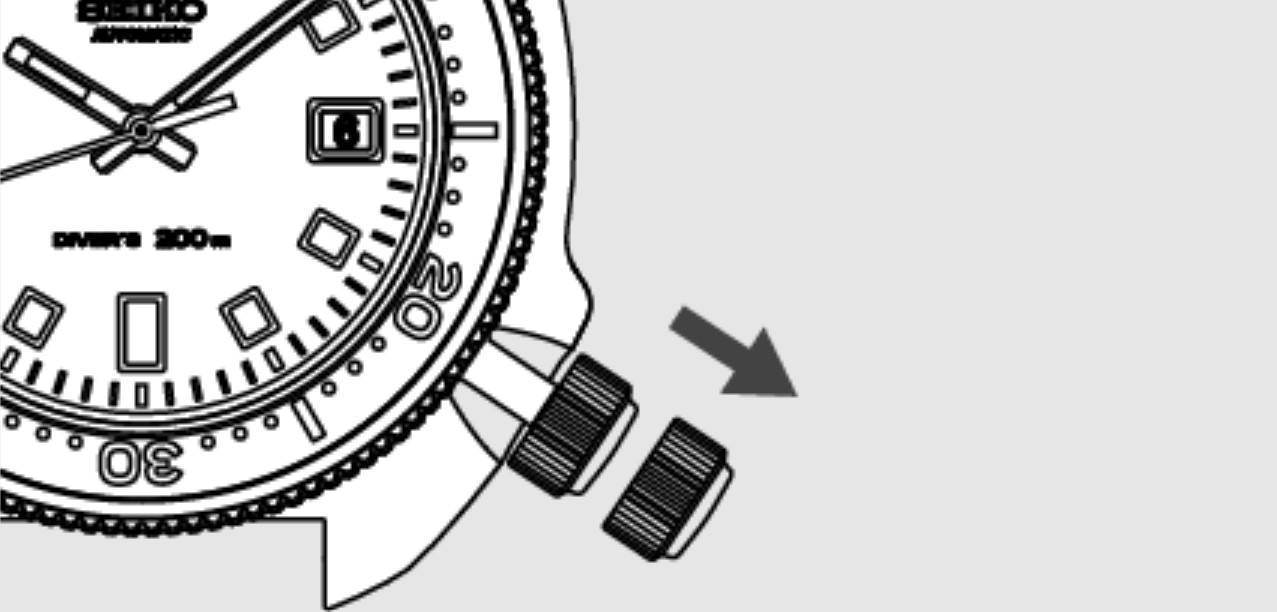
How to Set the Date on Your Watch (Source: Seiko Watch)
In that case, setting the date is a breeze! Simply pull the crown out to the first position, then turn it (clockwise or counterclockwise depending on the model) to scroll through the dates in just a few seconds.
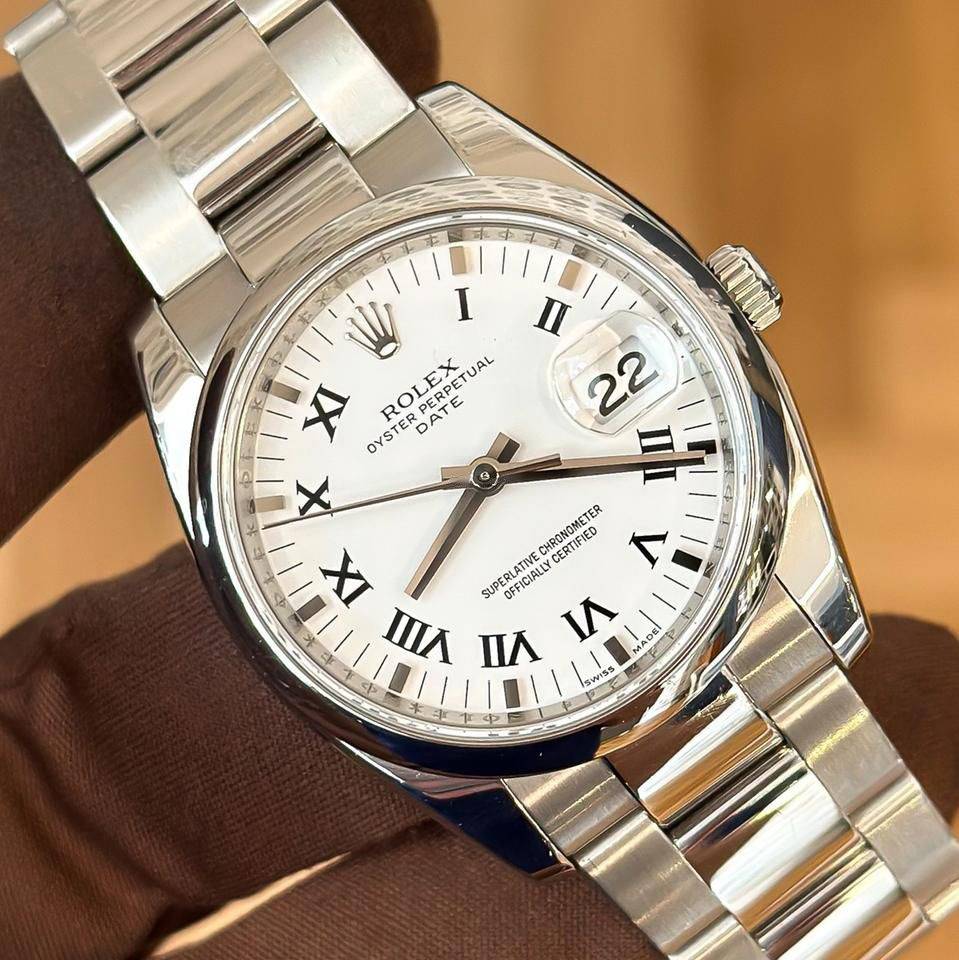
Rolex Oyster Date 115200 with quick date setting, 2017 (Source: WeWatches)
If you browse watch forums and enthusiast communities, you'll notice that this quick date setting system is often referred to by the English term "quickset." A watch with a quickset feature is therefore equipped with a date complication offering rapid correction!
Important note: if when setting your watch the hands appear to be in the so-called "dead zone," but you're unsure whether they're actually between 21:00 and 3:00 in the morning or between 9:00 in the morning and 15:00, it's safer to advance the hands of your watch further…
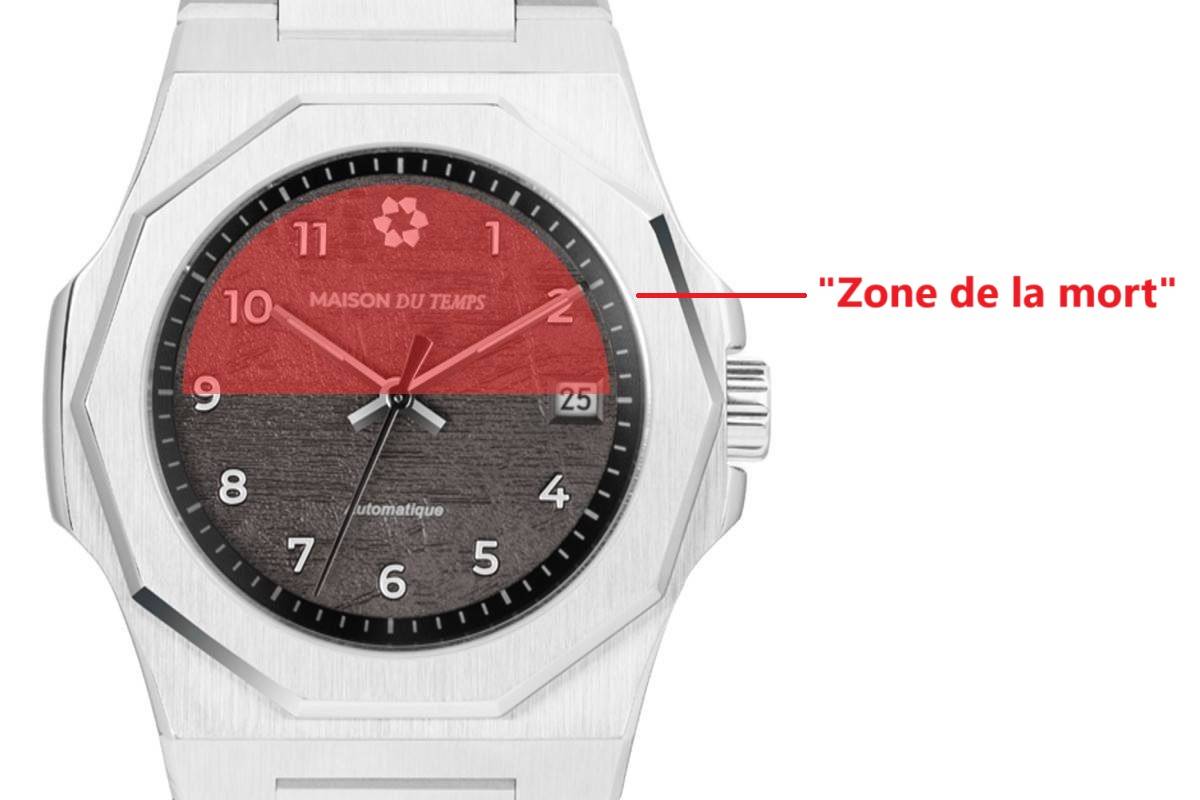
When to Avoid Setting the Date
Move to a safe zone such as 6 o'clock or 18:00, then use the quick date correction to set the date back to the previous day, and advance the hands again to complete your watch's adjustment. This way, you eliminate any risk of damaging the date mechanism - and avoid a trip to the watchmaker for repairs!
While the date window remains the most common way to display the date on a watch, there are other approaches - sometimes more original, sometimes more technical - for incorporating this complication into the dial. The pointer date and the big date are two perfect examples.
Let's start with the pointer date… Unlike conventional watches where the date is shown through a small window, a watch with a pointer date uses a dedicated central hand to display the date. It points to a scale graduated from 1 to 31, typically arranged around the outer edge of the dial. This hand, mounted at the same center point as the hour and minute hands, points to the current date - hence the name.
This original approach to displaying the date is often found on watches with a triple date, on moonphase watches, and on the iconic Oris Big Crown Pointer Date. Some things really do speak for themselves!
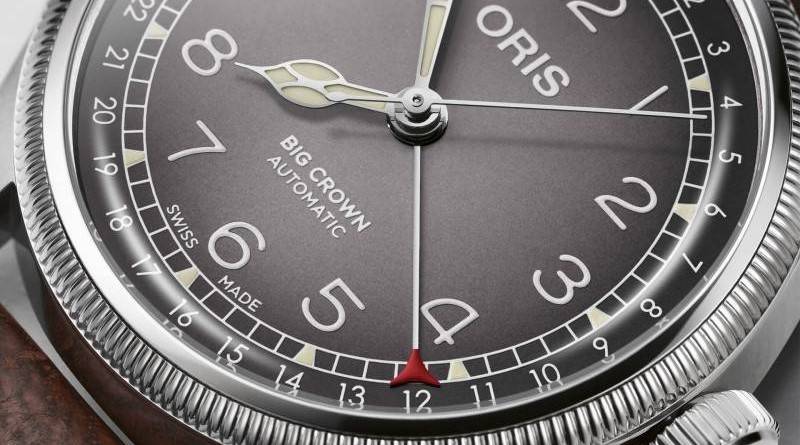
"Pointer Date" Hand on an Oris Big Crown Watch
The pointer date is also a highly aesthetic way to incorporate the date into a watch design. It preserves the symmetry of the dial!
There is also a more subtle variant of the pointer date. Some watches feature a dedicated sub-dial for the date.
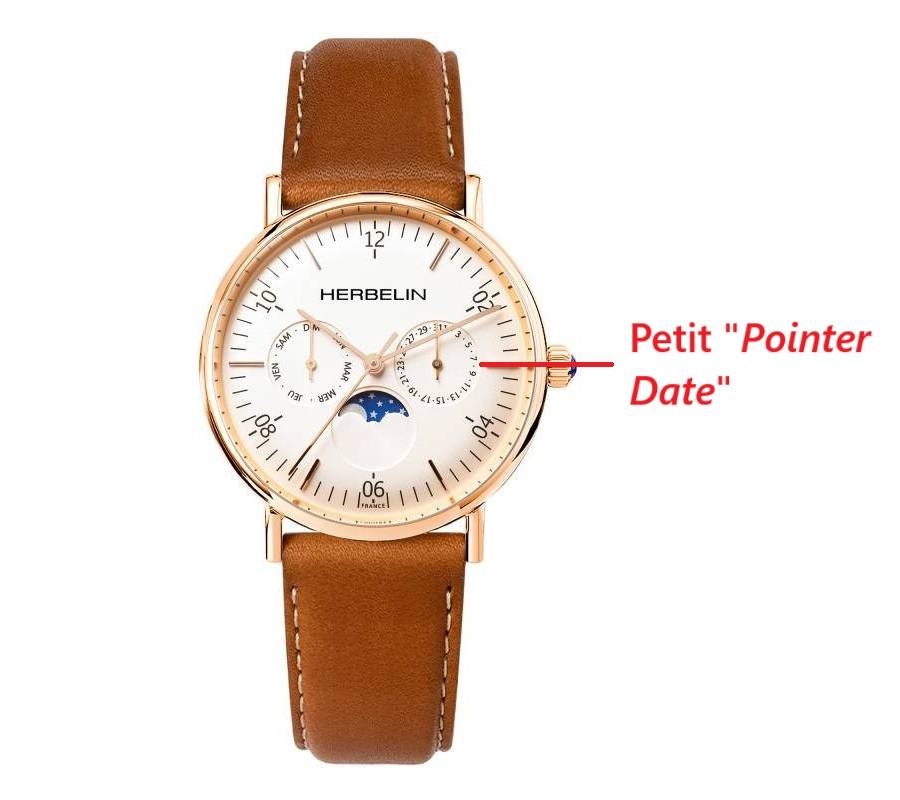
Watch with Small "Pointer Date"
This small circular counter, often positioned at the bottom or side of the dial, is also graduated across 31 days, and a small hand indicates the current date. A technical flourish that will delight fans of understated yet refined complications.
Let's move on to an even more sophisticated complication: the big date. The concept is straightforward - it's about improving date legibility by displaying it in a larger-than-standard format. To achieve this, the watch uses not one but two separate windows: the first shows the tens digit (0 to 3) and the second shows the units digit (0 to 9).
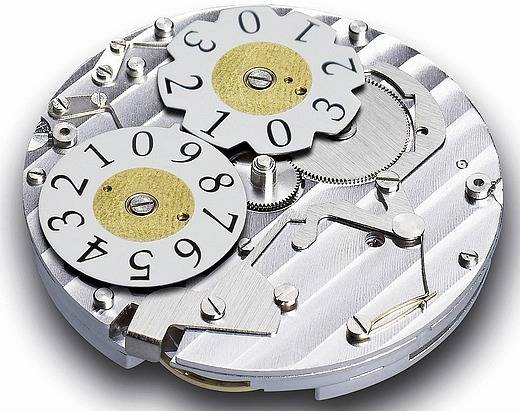
Unitas 6497 movement with big date module (Source: Men's Up)
So for the 16th of the month, you'll read a "1" in the first window and a "6" in the second. The result: a date that's far easier to read, often showcased beautifully on the dial.
This complication was introduced in 1932 by Helvetia, which was then affiliated with Omega, through a movement known as the caliber 75A. This barrel-shaped mechanical movement, fitted with 15 jewels, was originally designed for rectangular watches. From this base, Helvetia developed an adapted version featuring a big date display.
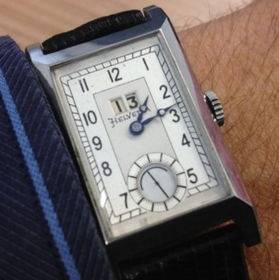
Helvetia large date watch, circa 1930 (Source: Helvetia Watch History)
Here's an amusing footnote: some of the earliest big date watches could display dates up to the 39th! At the end of each month, the owner had to manually adjust the date disc by several days to get back to the correct date. These were truly the early days of this complication…
Fortunately, Helvetia quickly improved its movement by adding a quick date correction function, activated via a small pushbutton on the case. A genuine breakthrough for the time, it saved valuable time for the wearer.
It's worth noting that this big date addressed a genuine need: improving legibility, which was often considered too poor on classic date windows like the one on the Mimo-Meter mentioned at the start of this guide. In its advertising campaigns, Helvetia proudly promoted "calendar watches with a highly visible date display" - proof that legibility was already a key marketing argument!
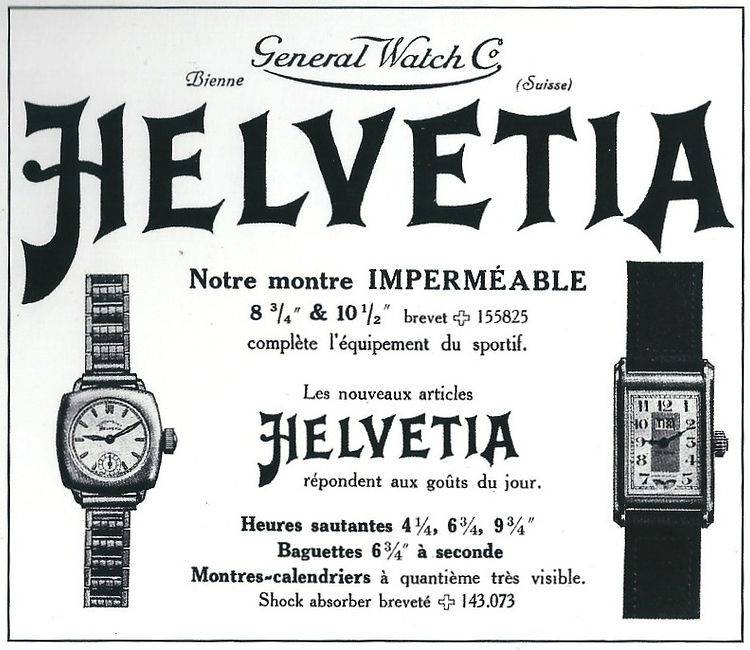
Vintage Helvetia advertisement, 1930s (Source: Helvetia Watch History)
In the years that followed, brands such as Mimo, Girard-Perregaux, Solvil, Ditis, and Angora followed suit, offering their own big date watches - often in rectangular cases - powered by the renowned Helvetia 75 movement.
As we've just seen, the date complication - seemingly ordinary at first glance - conceals a fascinating technical and aesthetic history. From the very first date display in the mid-1910s to innovations like the quickset, the pointer date, and the big date, this small function has continuously reinvented itself, evolved, and adapted to what watch lovers want.
Sure, glancing at the date on your watch might seem like second nature today. But now you know that behind every date window or hand lies more than a century of horological innovation - and that's worth a closer look.
Share :
Official European Union notice on your rights in the event of a product's lack of conformity.


