
0
Product added
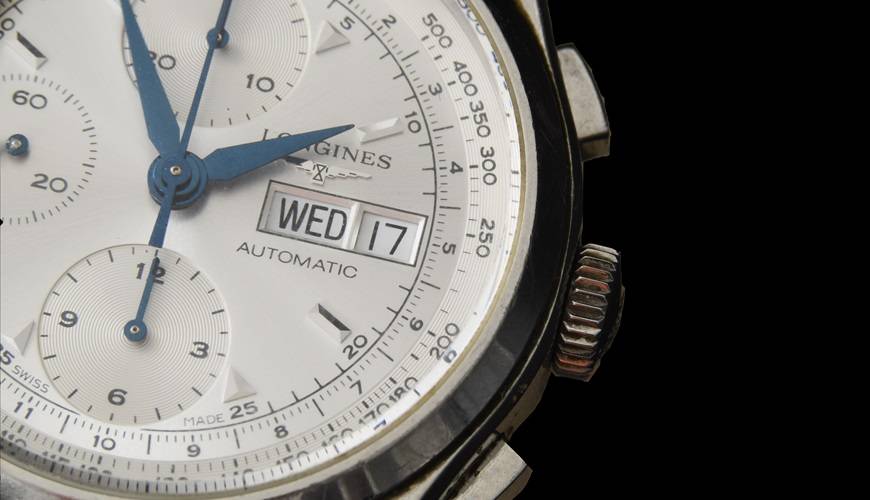
When watch enthusiasts get together, mechanical watches are almost always at the center of the conversation - and for good reason. These timepieces embody generations, even centuries, of accumulated horological expertise, representing a true standard of excellence.
Mechanical watches are timepieces whose heart is made up of a remarkable array of tiny components and gears that bring them to life before our often awestruck eyes.
Within this category, we distinguish two main families:
Our dedicated watch guide on mechanical timepieces gives you all the clarity you need to make informed choices.
Let's start from the beginning and take a look at how a so-called "mechanical" watch actually works. As a reminder, no battery is required - and that's exactly where the name comes from!
Look at your watch from the front and focus on its edges. See that small, ridged button - almost always on the right side? That's what's known as the watch's "crown" or "winding stem."
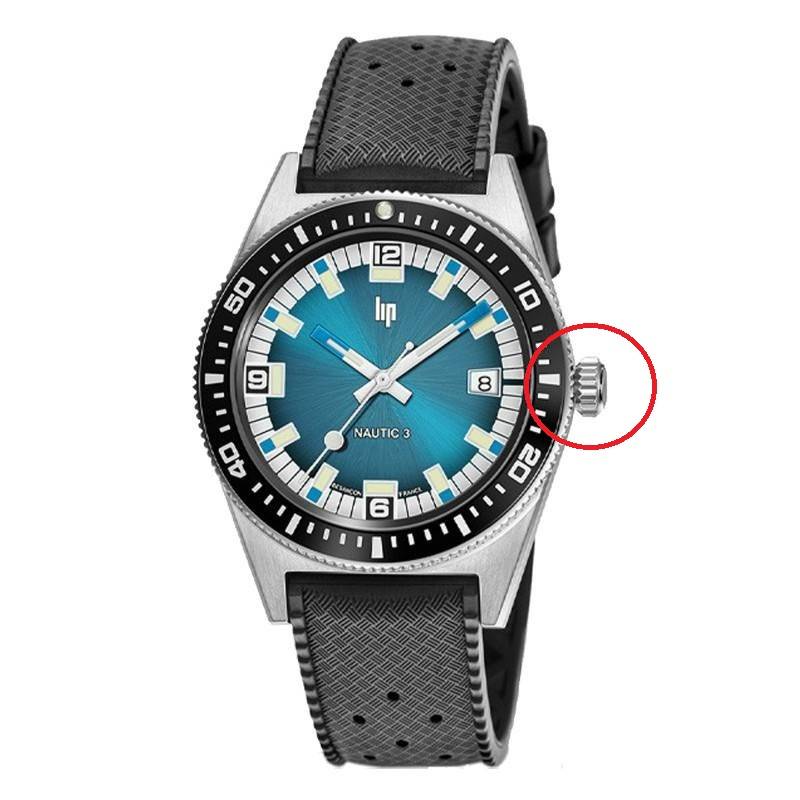
Watch Crown / Winding Stem
Turn that small button clockwise and you'll hear a faint click and feel a slight resistance - that's perfectly normal. You're "winding" the watch, meaning you're feeding it energy. Think of it as charging it up. In watchmaking terms, what you're doing is "cocking" - tensioning - the mainspring inside the movement.
It consists of an extremely thin metal strip coiled around itself and enclosed in a cylindrical housing called a "barrel."
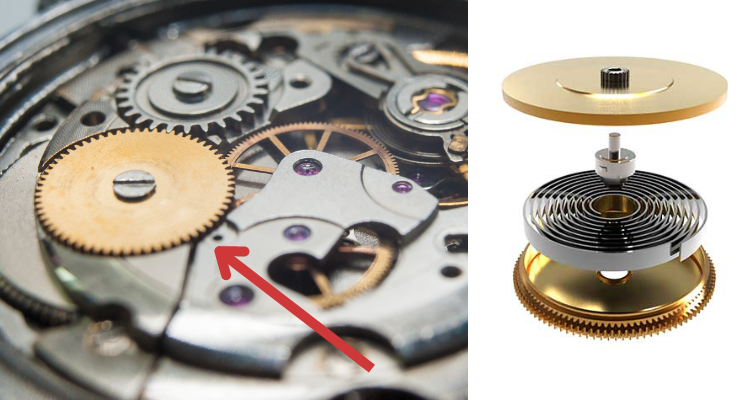
Mainspring barrel of a mechanical watch (Source: Générale Ressorts)
It stores the mechanical energy you feed it with your fingers - much like an energy reservoir. When it is…
Some watches even feature a small indicator on the dial that lets you check the remaining power reserve at a glance. Handy, right?

Power Reserve Indicator
The correct term for the maximum running time of a mechanical watch is its "power reserve." To help illustrate the concept: a watch with a 38-hour power reserve, wound fully and left on a table, will run accurately for 38 hours. Simple enough so far. Beyond those 38 hours, the watch will continue running for a while longer - but with significantly reduced accuracy, which is why maintaining sufficient energy in the barrel matters. Shortly after, the watch will finally stop altogether.
Two tips here:
Now that you understand how a mechanical watch is wound, you're probably wondering how it manages to display the time accurately. Totally fair question!
In reality, the energy stored in the mainspring barrel is distributed through several components. You may have noticed that the barrel has a toothed rim along its side - it's precisely this that transfers energy to the gear train. The gear train then channels that energy throughout the watch.
But that energy needs to be controlled - otherwise, the gear train would spin at a completely unregulated pace. That's where the escapement comes in!
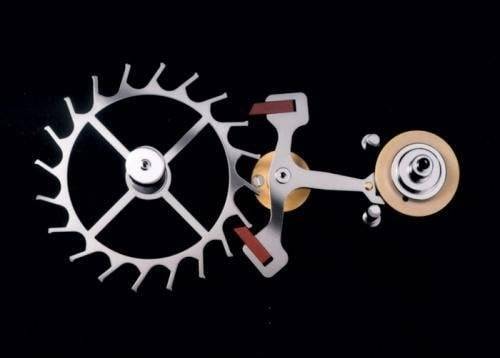
Escapement of a Mechanical Watch (Source: Europa Star)
This small assembly of parts is designed to prevent energy from flowing freely - in other words, it keeps everything in check.
The escape wheel is connected, via its teeth, to a T-shaped component called the "pallet fork." Its role is to alternately lock and unlock the escape wheel using its pallets. Its name comes from its resemblance to a ship's anchor.
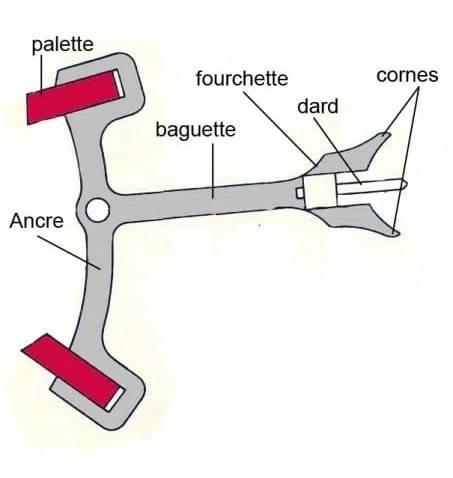
Lever of a mechanical watch (Source: Chronotempus)
The pallet fork then works in conjunction with a component known as the "impulse pin." The back-and-forth motion of the balance wheel, commonly referred to as "oscillations," directly controls the escapement.
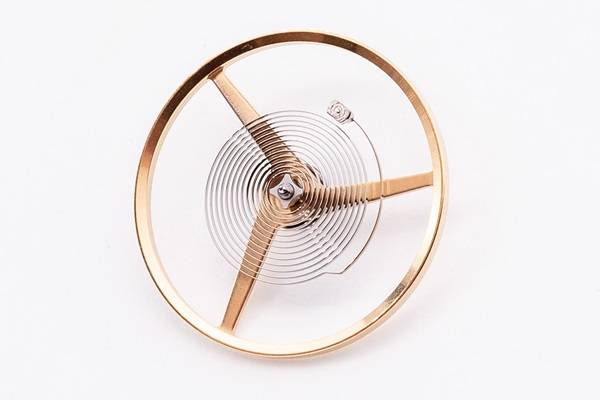
Balance wheel and hairspring of a mechanical watch (Source: Wikipedia)
The hairspring, also made from a coiled metal wire, then works to maintain the most regular oscillations possible.
To regulate the timekeeping of a mechanical watch - its accuracy - the hairspring can be adjusted. It is controlled by a "regulator" which, depending on its position, either tensions or relaxes the spring.
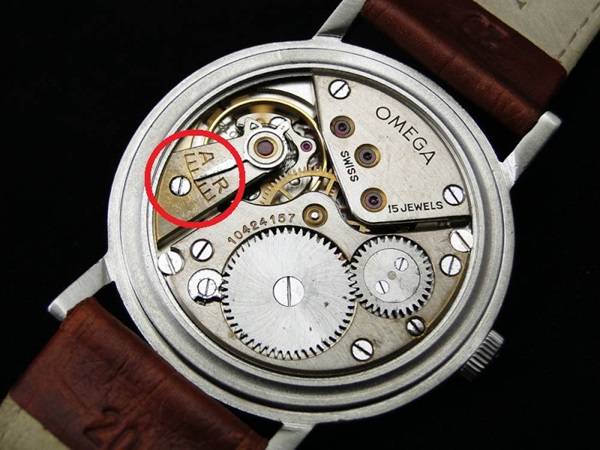
Regulator of a vintage Omega watch (Source: Forum A Montres)
This is why mechanical movements may display the markings "+/-", "F/S" (for "Fast/Slow"), or "A/R" (for "Advance/Retard").
Note also that depending on the movement, the balance wheel can make between 18,000 and 28,800 beats per hour. This is referred to as "alternations per hour" or "operating frequency." While most watches on the market run at 21,600 alt/h, the highest-performance mechanical models can reach an operating frequency of 36,000 alt/h.
In theory, the higher the operating frequency, the greater the watch's accuracy.
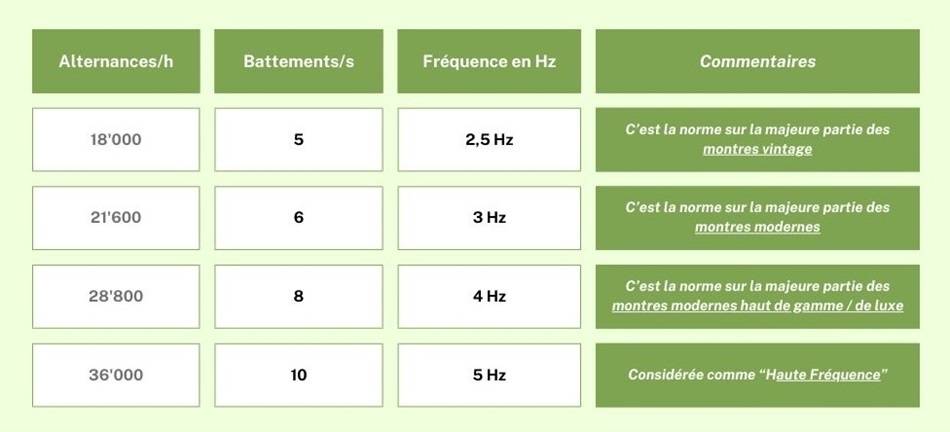
The operating frequencies of mechanical movements
The motion of the seconds hand, known as the "sweep hand," is tied to the movement's operating frequency. On a movement running at 28,800 alt/h, the seconds hand moves 8 times per second.
The higher a movement's operating frequency, the smoother the sweep of the seconds hand. On a high-frequency or "Hi-Beat" movement, the seconds hand appears to glide continuously without any stepping motion.
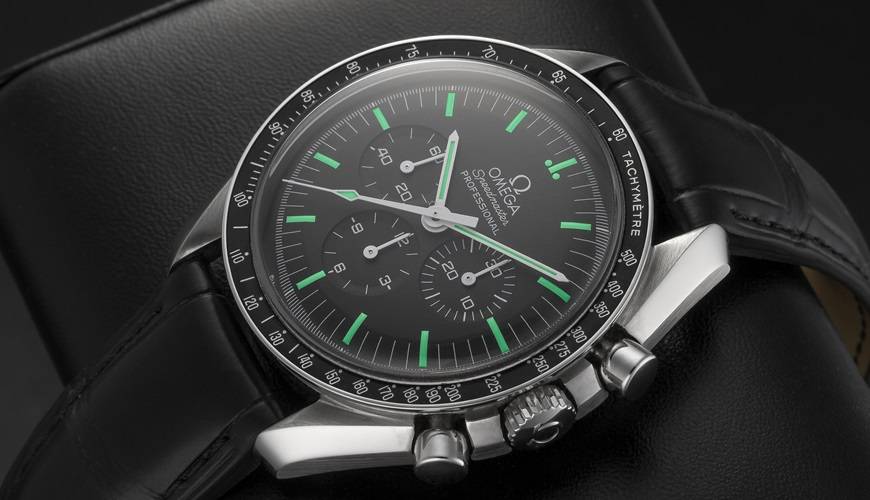
Hand-wound mechanical watches are considered the most classic timepieces of all. Descended directly from the pocket watches of old, these pieces - whose mechanisms only work when wound by hand - were long the standard. In fact, the vast majority of mechanical watches sold during the first half of the 20th century were of this type.
Today, manually wound mechanical watches still exist, but they are becoming increasingly rare on the new watch market, despite their many advantages.
Keep reading to uncover all their secrets!
If you've read our guide "Watchmaking: History and Evolution," you know that watches powered by a mechanical movement have been around for centuries.
It was the gradual evolution of watchmaking techniques, from the Neolithic period through the early 20th century, that gave rise to the first manually wound mechanical wristwatches.
Remember, before the 1900s, watches were primarily designed to be carried in a vest pocket or worn directly around the neck.
In short, the history of these timepieces is fascinating!
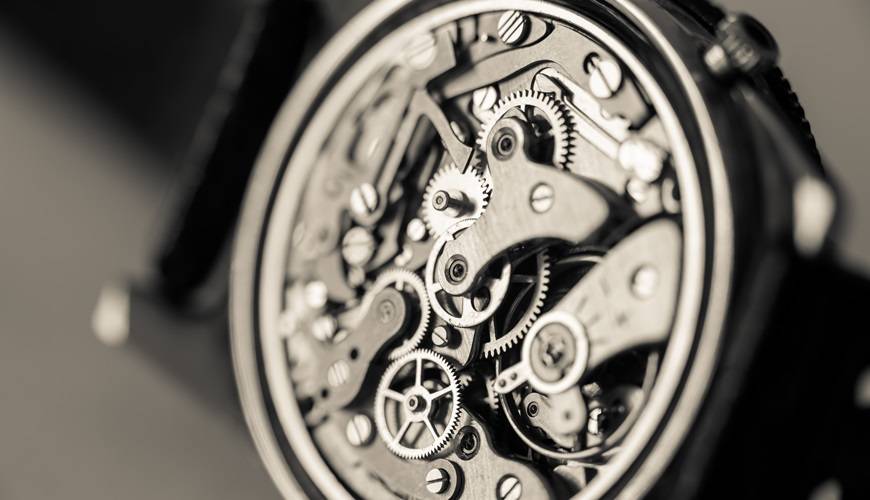
Like everything in life, manually wound mechanical watches have their advantages - but also a few drawbacks…
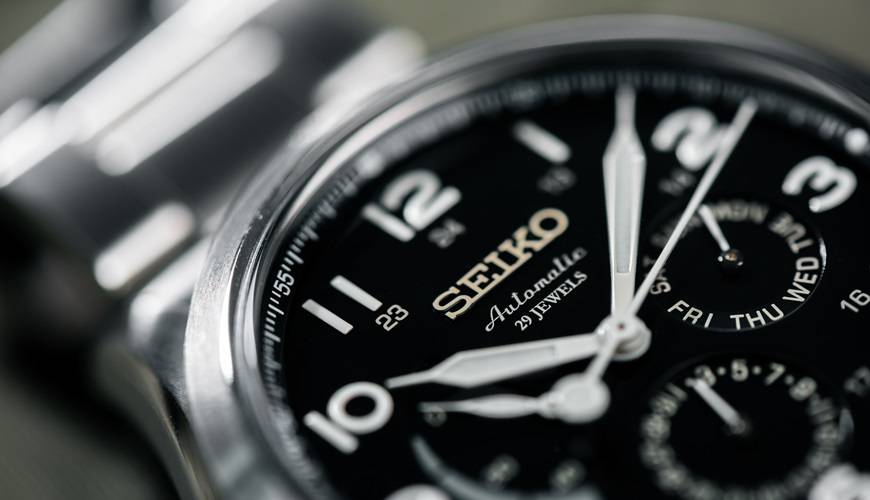
Automatic watches are today the most widespread type of mechanical watch.
For simplicity, we'll use the term "automatic watch" here to mean "self-winding mechanical watch."
Let's not waste any time - here's how automatic watches came to be.
Automatic watches are widely considered an evolution of hand-wound mechanical watches. But do you really know when they first appeared?
To understand this, a brief history lesson is in order. Get ready for a journey through time - one that begins precisely in 1777. That's when Swiss watchmaker Abraham Louis Perrelet developed a rotating rotor system to wind the movements of pocket watches.
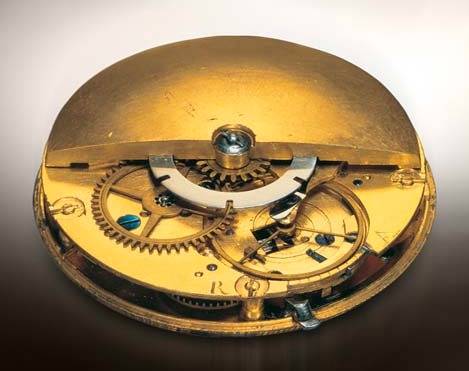
Self-Winding Movement by Abraham Louis Perrelet, 1977 (Source: Time Transformed)
While the concept had limited appeal in pocket watches, it was a completely different story for wristwatches. Since wristwatches can receive up to 40,000 arm movements in a single day, a rotor-based automatic winding system could be tremendously beneficial for them.
In the 1920s, British watchmaker John Harwood filed a patent for an automatic wristwatch that winds itself via an oscillating weight.

Vintage advertisement for the Harwood automatic watch (Source: Paul Bouyssou)
Keep in mind, however, that the oscillating weight in Harwood watches did not rotate freely above the movement - its travel was actually stopped by two shock absorbers.
In 1930, French watchmaker and jeweler Léon Hatot also filed a patent for an automatic watch with a rather unusual operating principle. In his invention, it is the entire movement that shifts and acts as the oscillating weight.
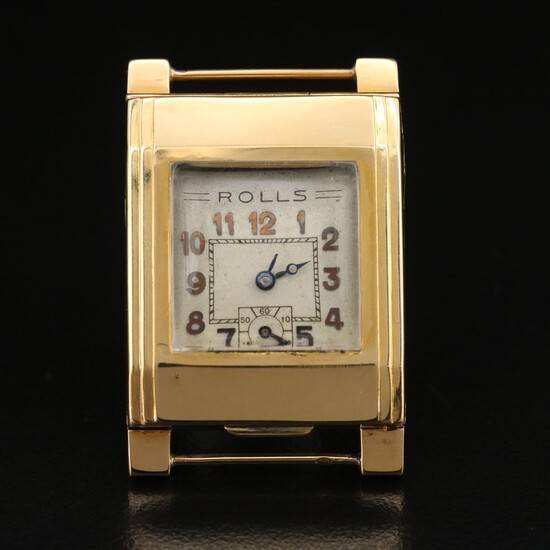
Rolls ATO Watch by Blancpain (Source: LOT-ART)
When the watch moves, its dial appears to float on a vertical axis - the result of its sliding movement mounted on a ball-bearing system. This is why, when viewed from the front, the dial seems to glide behind the crystal. It was Blancpain that would bring Léon Hatot's watch to market, releasing it under the name "Rolls Ato."
As a fun side note, the crownless design of the watches conceived by John Harwood and Léon Hatot was also an attempt to solve another problem common to timepieces of the era: water resistance.
Shortly after, calibers heavily inspired by Harwood's automatic movement began to appear. In their design, an oscillating weight - or "rotor" - moves within a limited space before hitting against two cushioned buffers.
While the term "bumper movement" is sometimes used to describe a movement of this family, the expression "bumper movement" appears to be by far the most widely used in everyday conversation.
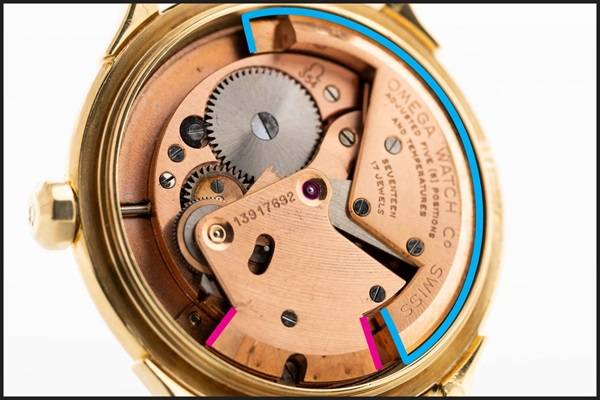
Omega bumper movement (Source: Goldammer Archives)
During the 1940s and 1950s, bumper movements were used by major watchmaking houses such as Mido, Omega, Movado, Fortis, Juvenia, Richard, etc.
In 1931, Rolex unveiled its first perpetual movement, the cal. 620, and 2 patents related to it were filed in 1933. The centrally mounted rotor spins freely to wind the watch continuously - hence the name "Rolex Perpetual."
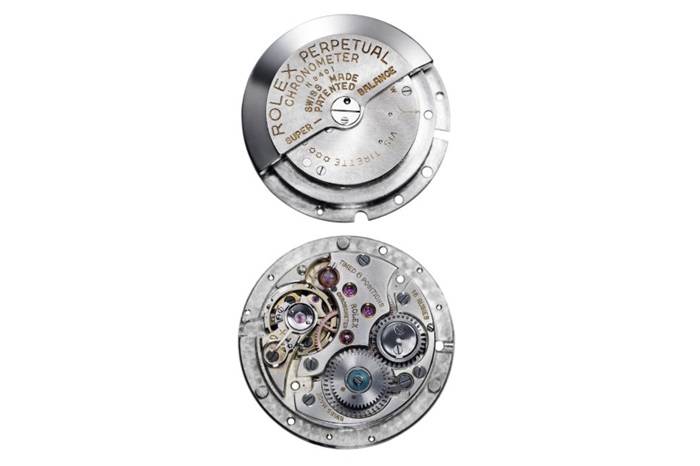
Rolex 620 Automatic Movement (Source: Rolex)
The Rolex Caliber 620, with its fully free-spinning oscillating weight, laid the foundation for all modern automatic movements. Yet despite its innovation, the Crown brand's mechanism had one significant technical limitation: its rotor could only wind the watch when rotating in one specific direction.
It wasn't until the 1940s that the market saw an automatic movement whose rotor could wind the watch regardless of the direction it rotated.
This caliber, developed by Felsa, is known as the "Bidynator" and comes in two versions: the F 690 (without date) and the F 692 (with date).
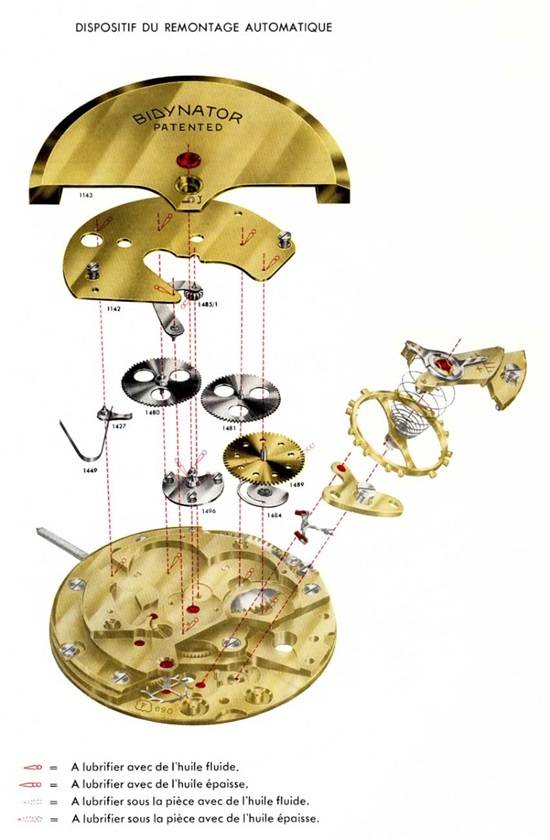
Exploded View of a Felsa Bidynator Movement (Source: Jacques Etoile)
Several major watch houses, including Breitling, Arsa, Onsa, and Eberhard & Co., would adopt this type of movement.
In the 1950s, a brand-new type of automatic movement emerged, featuring a mini oscillating weight known as a "micro-rotor." Patented by Swiss manufacture Universal Genève in 1954, this caliber features a distinctive architecture in which the oscillating weight is housed directly within the movement. To achieve this, the rotor must be drastically reduced in size - hence the term micro-rotor.
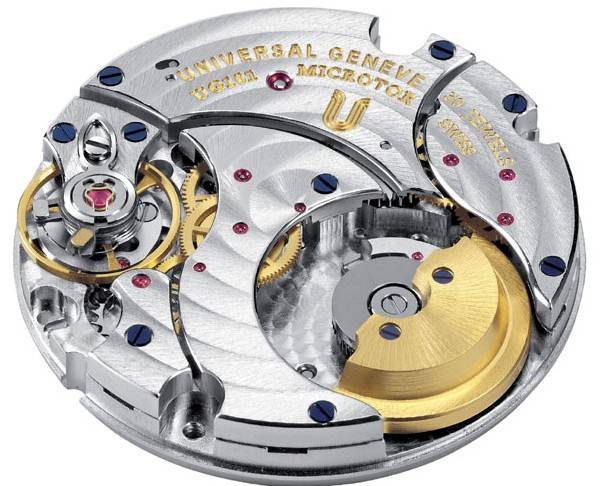
Universal Genève micro-rotor movement (Source: Montres de luxe)
In 1957, the brands Buren and Piaget also joined the movement, helping to bring the concept to a wider audience.
With their discreet micro-rotor, these movements had a slim profile and were often chosen to create the thinnest automatic watches of the era.
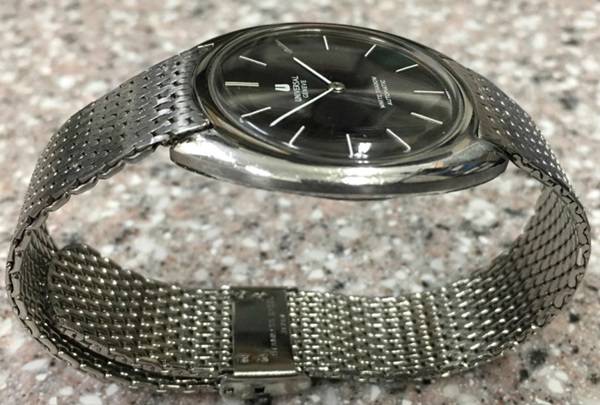
Universal Genève White Shadow Watch with Micro-Rotor (Source: Adam Vintage)
Certain vintage models from the Shadow line by Universal Genève can be cited here as examples.
Their distinctive architecture combined the slimness of manual-winding movements with the convenience of automatic-winding movements.
It is also worth noting that several watchmaking brands are now working to develop their own micro-rotor movement. One standout example is Yema and its Calibre CMM.20, the very first French movement equipped with a mini oscillating weight. How's that for homegrown innovation!
Whether you choose a hand-wound or an automatic mechanical watch, keep in mind that either way, your timepiece will be relatively sensitive to shocks. But don't worry - as long as you're reasonably careful and don't, say, do home renovations with it on your wrist, you should have no issues.
Also note that any mechanical watch, regardless of type, will need to be serviced by a watchmaker every 7 to 10 years (approximately) for a full overhaul.
To better understand the world of watch movements, it's important to keep in mind that not all watchmaking manufacturers produce their own movements.
When a company develops a movement in-house to equip its own watches, it is referred to as a "maison movement," a "manufacture movement," or an "in-house movement." All of these terms, which you'll find across watch blogs and forums, mean the same thing.
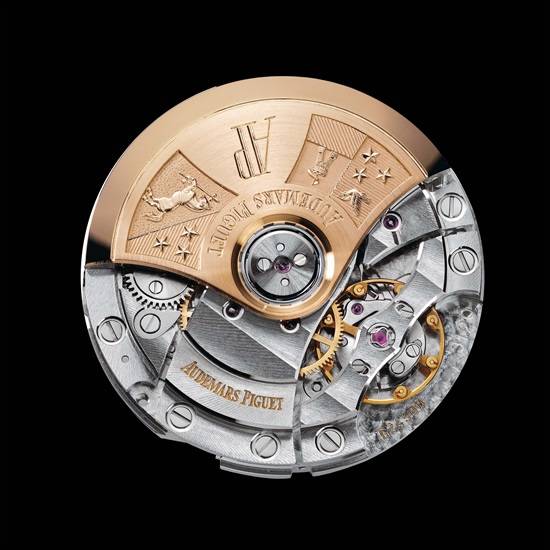
Audemars Piguet Manufacture Automatic Movement (Source: La Cote des Montres)
Developing an in-house movement takes considerable time and is extremely costly. It also represents a real risk for brands, which must be able to recoup the investment through high production volumes once the mechanism is ready. Watches fitted with a manufacture caliber thus reflect a broader vision - and are often highly regarded by collectors. Having an in-house caliber in your watch is considered a genuine mark of distinction.
When a watch brand turns to a third-party company for its movements, it uses "blanks." Simply put, blanks are movements delivered as kits - with unassembled parts. Once received, brands then assemble them and sometimes customize them to best fit their watches. In watchmaking terms, this is called "casing" movements.
While some large and/or luxury houses are able to produce watches with in-house movements, the majority of watch brands today rely on specialist suppliers for their blanks.
The watchmaking world today counts a large number of blank movement manufacturers, including ETA/Valjoux (Swatch Group), Sellita, Miyota (Citizen Group), Soprod (Festina Group), SeaGull, Seiko, and La Joux-Perret… The list goes on.

The Main Ébauche Manufacturers
These companies can be of Swiss, Japanese, Chinese, or French origin, making it now possible to source ébauches from all four corners of the world. But don't make the mistake of assuming all ébauches are created equal. They span the full price range: some budget-friendly options are chosen to power entry-level watches, while higher-end versions are often selected for the most luxurious timepieces.
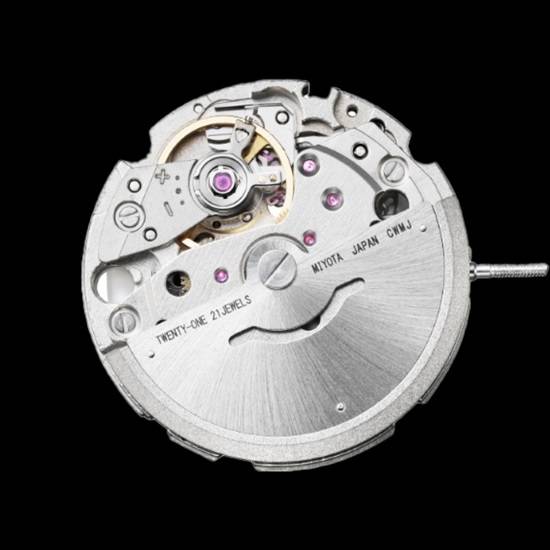
Miyota 8215 automatic movement (Source: Miyota)
Some movement blanks were produced for several decades and in the millions. That's how the Miyota 8215, the ETA 2824/2, the Valjoux 7750, and the ETA 2892 A2 became landmark calibers, recognized by most watch enthusiasts.
What do the following watches have in common?
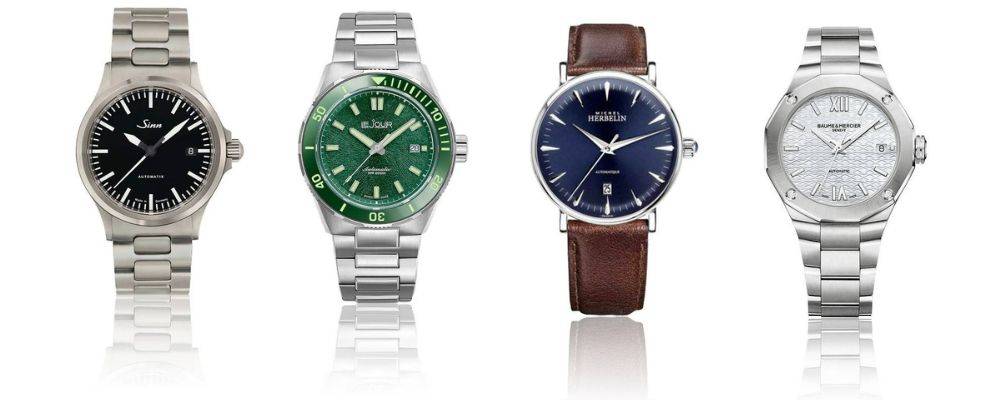
Automatic Watches with Sellita SW200 Movement
They all share the same Sellita SW200 movement as their base!
And here you'll notice something interesting: some very well-known watch brands like Seiko or Citizen manufacture their own movements and also supply other watchmakers with blanks. That's absolutely right.
For example, a Miyota movement (Citizen Group) can be considered an in-house caliber when fitted in a Citizen watch. However, the same mechanism placed in a watch from a brand outside the Citizen Group would not be considered a manufacture movement. It all comes down to lineage.
Also keep in mind that the same blank movement can be offered in various quality grades. At ETA, for example, the caliber 2824 is available in "Standard," "Elaboré," "Top," and "Chronometer" grades - each offering different levels of finishing and performance.
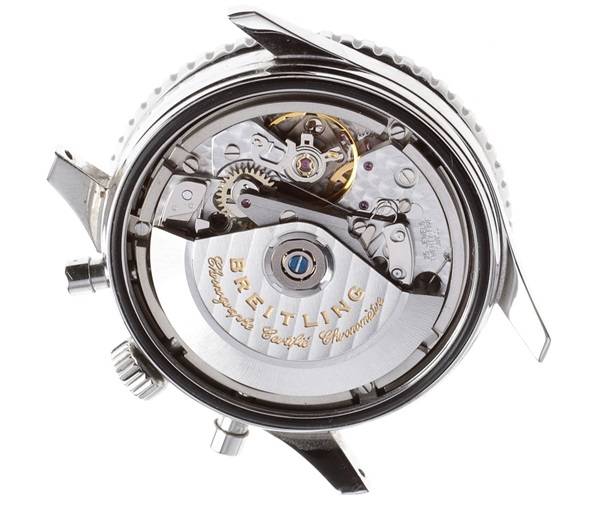
COSC-Certified Valjoux 7750 Movement (Source: The Naked Watchmaker)
Terminology can vary from one brand to another. Sellita, for example, uses the designations "Standard," "Special," "Premium," and "Chronometer" to indicate the quality level of its movements.
Finally, it's worth noting that in-house movement development is a growing trend today. Several brands - including Oris with its Caliber 400, Yema with its CMM.20, and Tudor with its Manufacture Calibre MT5601 - have embraced this journey, which often signals a move upmarket.
The accuracy of a mechanical watch is expressed as "drift" and measured in seconds per day. While this typically falls within +/- 30 seconds per day, it can reach as little as +/-2 seconds per day in top-of-the-range models.
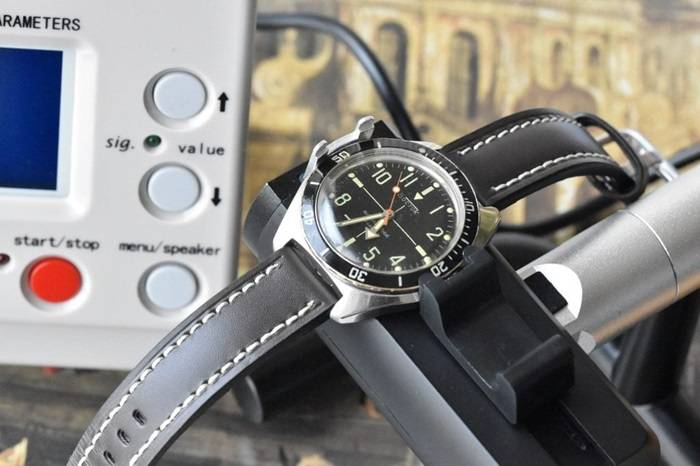
Accuracy testing of a watch on a timegrapher (Source: Vintage Watch INC.)
It's worth reiterating an important point here: no matter how high-end a mechanical watch may be, its accuracy can never match that of a quartz watch.
While mechanical watches generally offer accuracy that's perfectly adequate for everyday use, some models can gain or lose several seconds - or even minutes - over just a few days. That's why many mechanical timepieces require occasional time adjustments.
To go back to the example of the ETA movements mentioned earlier, note that depending on their finishing level (called "grade"), they can offer very different levels of accuracy. To illustrate, here are the regulation specifications for the 2824-2 movement:
In practice, a watch rated at +/-30 seconds per day could run anywhere from -30s/day to just +2s/day. It's ultimately a bit of a lottery!
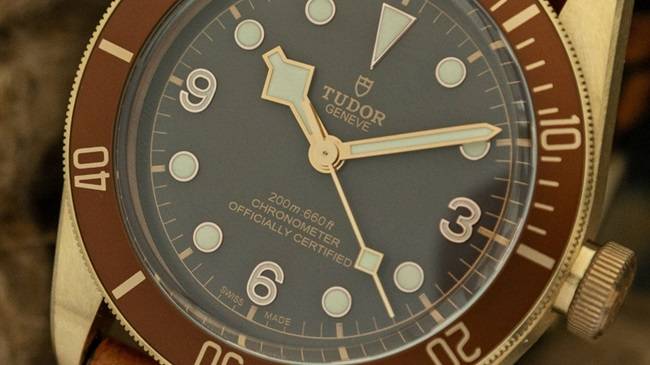
COSC-Certified Chronometer Tudor Watch (Source: Montredo)
If you want to be sure you're buying an exceptionally accurate mechanical timepiece, you'll want to look at what's known as a "chronometer watch" (not to be confused with a "chronograph watch," which measures elapsed time intervals).
Chronometer watches are models that have passed a rigorous battery of tests to deliver an exceptional level of accuracy. Today, the most recognized certifications include the COSC, the Rolex Superlative Chronometer, METAS, the Vipère de Besançon, and the WEMPE Chronometre. Each has its own specifications and tolerance margins.
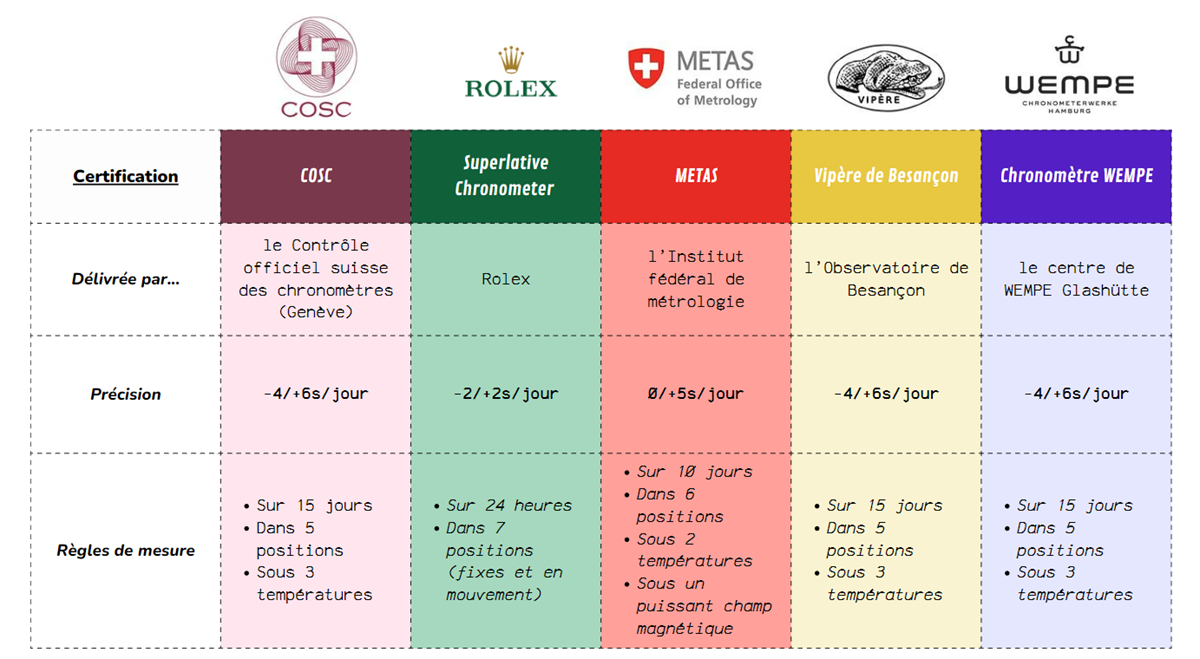
The main chronometric certification bodies and their criteria
While these 5 chronometric certifications are the most well-known, there are many others, such as the "Geneva Seal," the "Patek Philippe Seal," the "Grand Seiko Standard," and the "Fleurier Quality."
As this guide has shown, hand-wound and automatic mechanical watches represent the pinnacle of watchmaking. Their operation is rooted in a long - very long - tradition of horological craft, which is precisely why some enthusiasts swear by nothing else. While both types offer clear advantages, they also come with a handful of drawbacks worth considering before you make any purchase.
Keep in mind that while mechanical watches can be seen as a symbol of horological prestige, their accuracy simply can't compete with that of quartz or smartwatches. Between tradition and precision technology, the choice is yours.
Share :
Official European Union notice on your rights in the event of a product's lack of conformity.


