
0
Product added
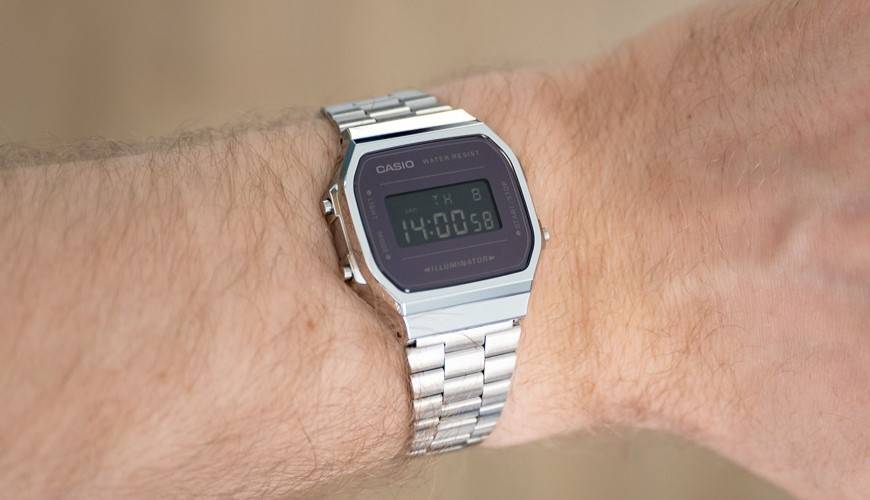
Delightfully retro, emblematic of the 1970s and 1980s… Digital watches are bold, personality-packed objects that, after years in the background, are making a major comeback!
Those who grew up with them love them for their history, while younger fans are often simply drawn to their effortlessly cool retro look. Our guide to digital watches takes you on a fascinating journey through the many mysteries surrounding these iconic timepieces.
Also referred to as a "numeric display," this type of display shows the time using numerals rather than traditional hands. It stands in contrast to the analog display used by hand-driven watches.
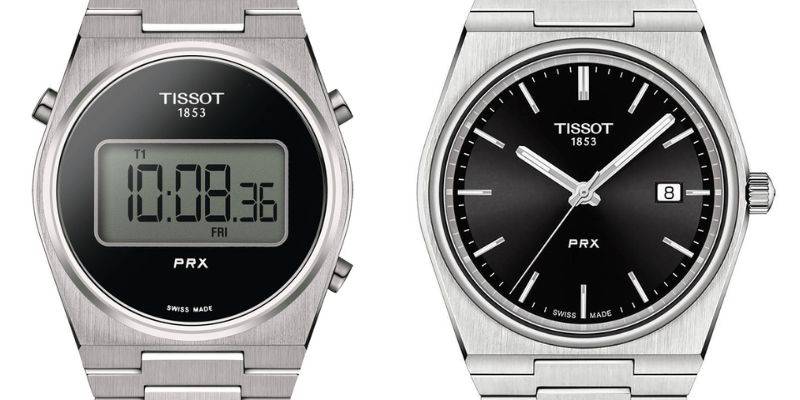
Digital Watch vs. Analog Watch
To display the time, digital watches typically use a liquid crystal display, also known as an "LCD screen" or "Liquid Crystal Display." This screen generally appears as a gray, beige, or green background with black numerals. While most models feature this standard display, some take a different approach…
This is the case with "reverse" digital display watches, where light numerals contrast against a black background. At one point, it wasn't uncommon to see people modifying their watches to achieve this sleeker, more intriguing look. In response to this enthusiasm, many watch brands began offering models in this style.
Less common, some digital watches display the time using discs or small colored LEDs - red, blue, green, and so on… What makes them distinctive is that the time doesn't appear permanently; you have to press a button to see it for a few seconds. This unusual behavior is due to the high energy consumption of these watches - but we'll come back to that…
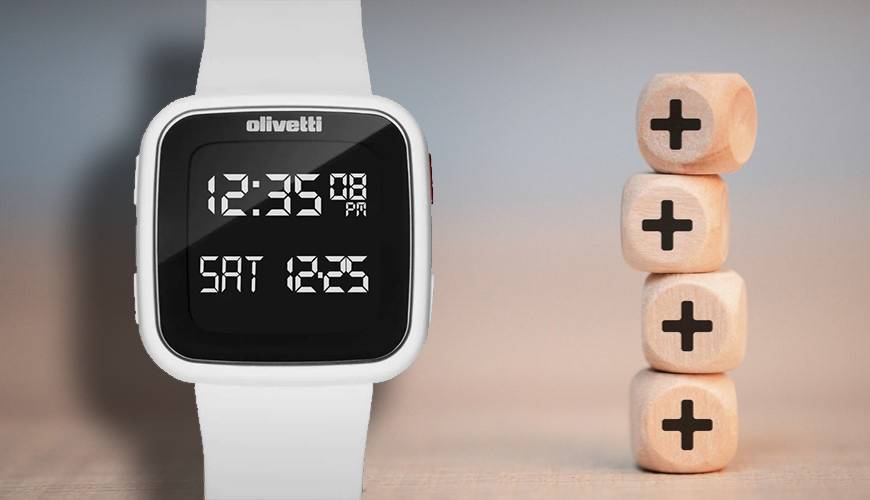
Thanks to its unique approach, the digital display comes with a host of advantages…
Note: these advantages apply to LCD screen watches, namely the most widely available digital models today.
It may come as a surprise, but the very first digital watches in history used a rotating disc system to represent the passage of time. Jump hour watches introduced a hands-free time display - first in the form of pocket watches, then as wristwatches.
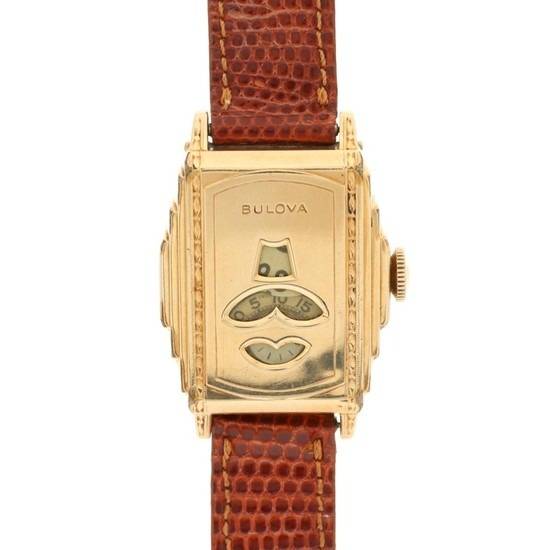
Bulova Jump Hour Watch, circa 1920 (Source: Lot Art)
These watches were powered by a hand-wound mechanical movement and took an original approach: creating timepieces capable of representing the passage of time in a way other than hands. However, they were not yet referred to as "digital." It would take until the 1960s for that term to begin appearing on the dials of digital watches.
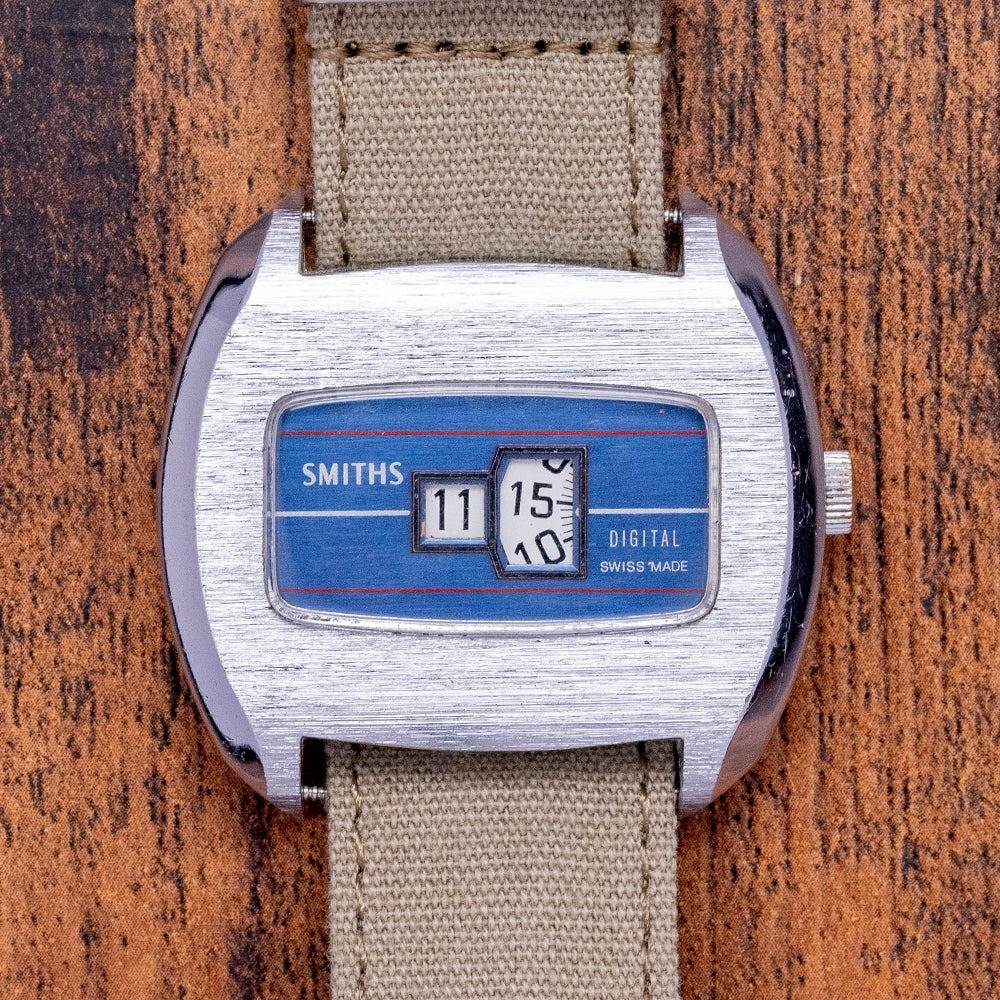
Smiths Digital Watch (Source: Kibble Watches)
At that time, certain hand-wound mechanical models displayed the time using continuously sliding discs rather than instantaneous jumps. It was precisely at this moment that the term "digital" began to enter mainstream usage.
Setting those early mechanical models aside, the Pulsar P1, launched in 1972, is widely considered the first modern digital display watch. It featured a metal case with a brushed finish, centered around a black screen displaying red numerals for hours and minutes via an LED display.
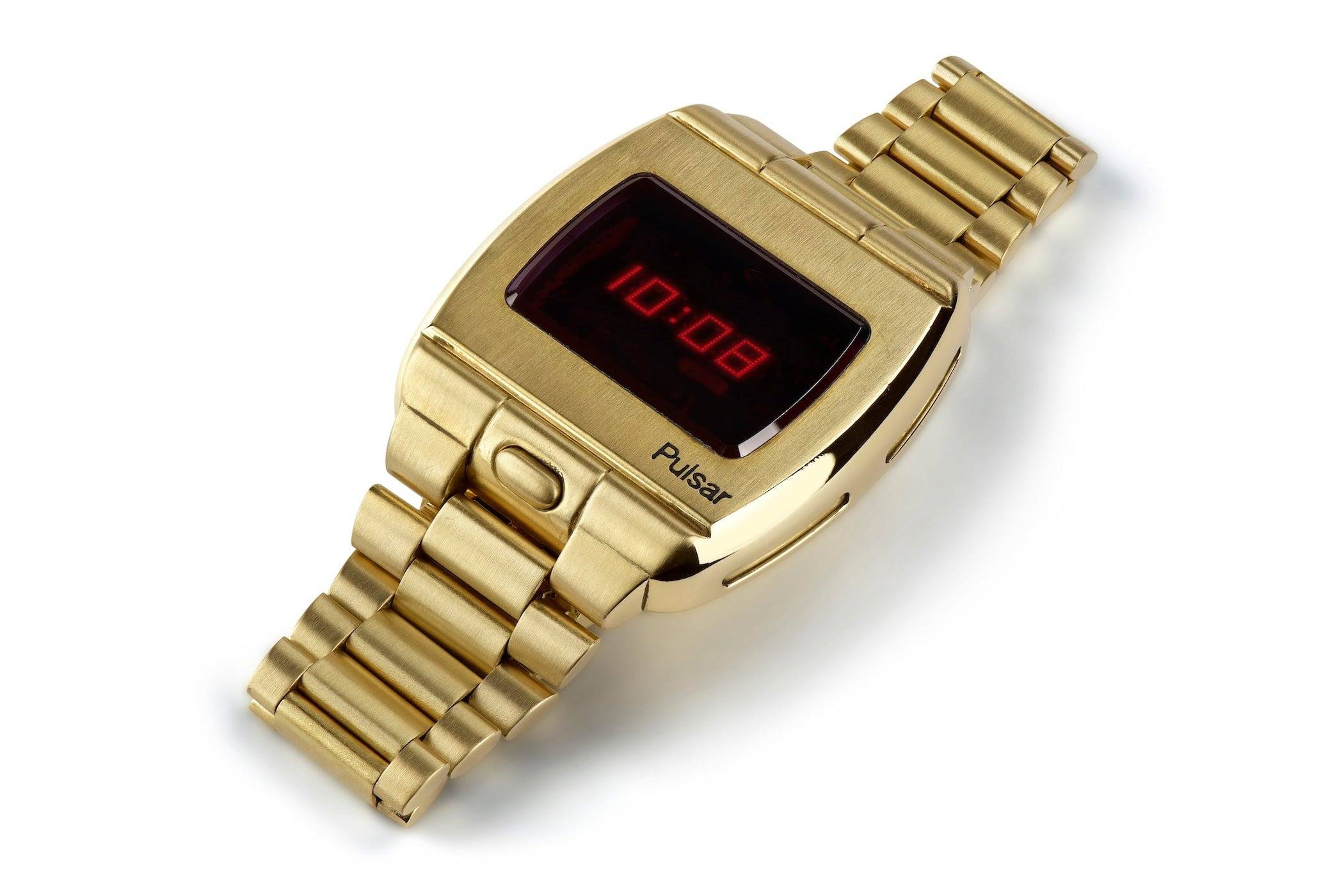
Pulsar P1 Watch, 1972 (Source: Monochrome Watches)
This reference was quickly superseded in 1973 by the Pulsar P2, with an even more modern aesthetic. For vintage watch enthusiasts, this model was recently reissued by Hamilton under the name "American Classic PSR."
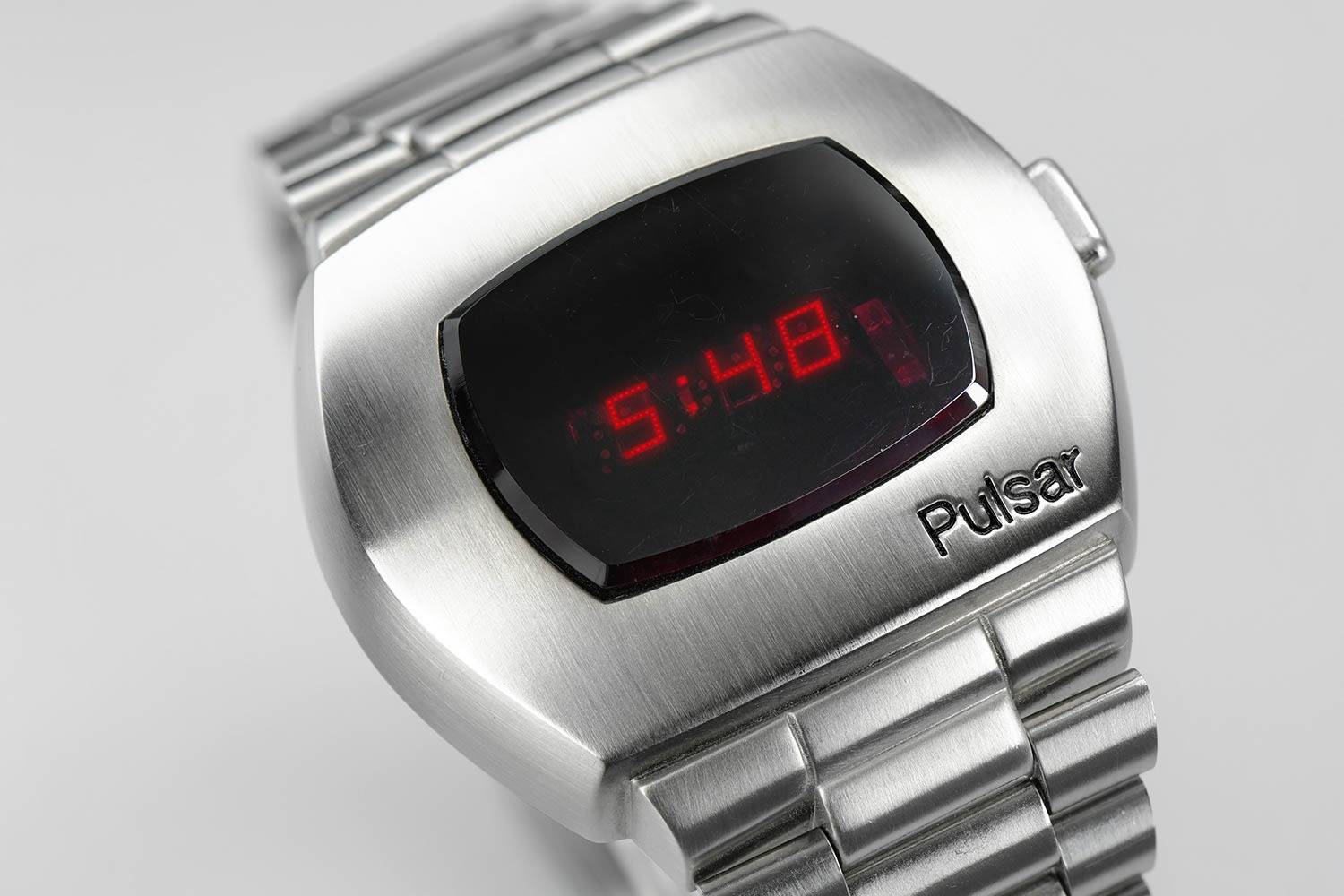
Pulsar P2 Watch, 1973 (Source: Revolution Watch)
The very first digital watch with an LCD screen arrived shortly after, also in 1973, thanks to Japanese brand Seiko with the LC V.F.A. 06LC. Its six-digit screen - capable of displaying seconds - introduced an innovative format that was quickly adopted as a standard by many other manufacturers.
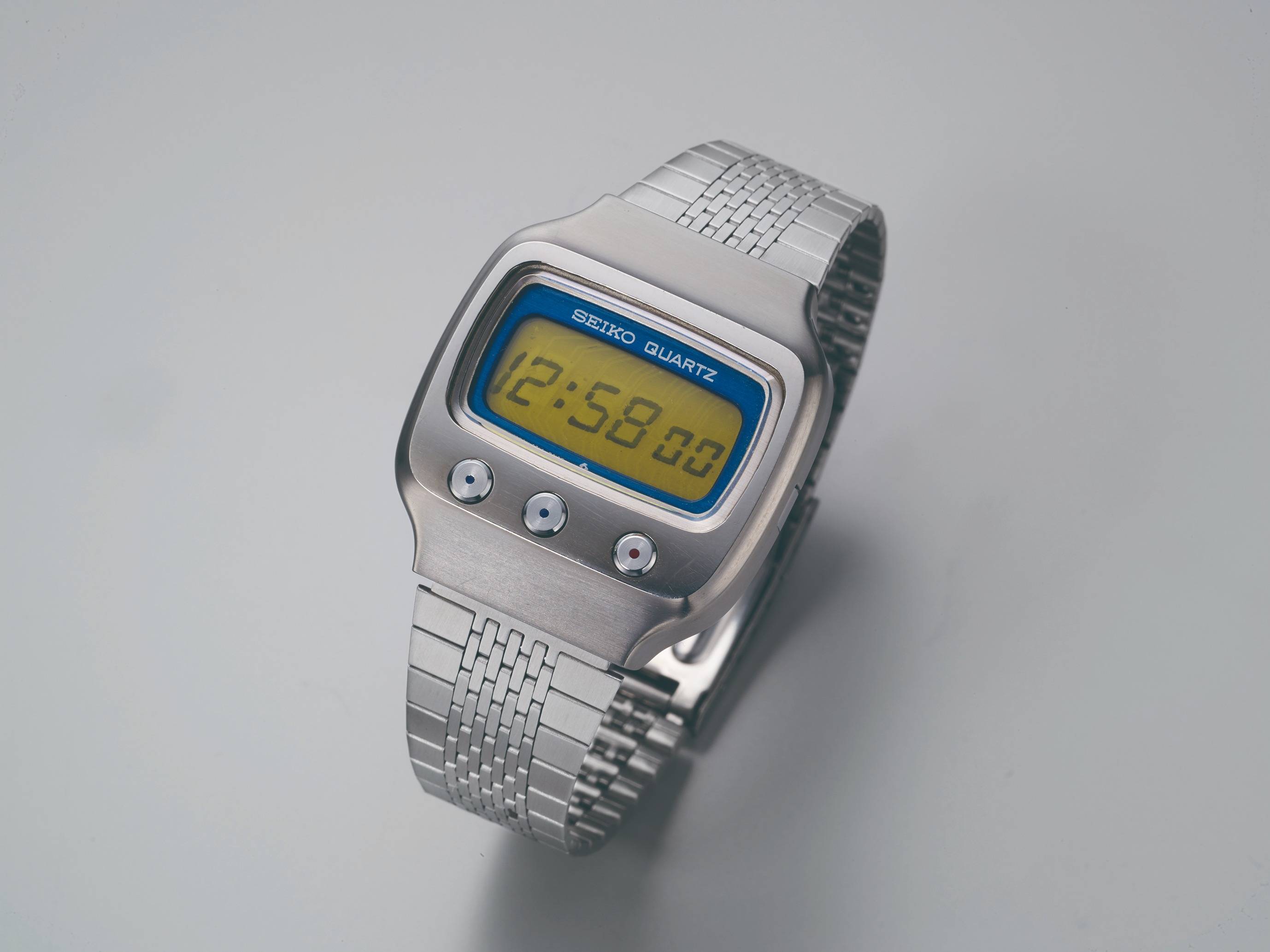
Seiko LC V.F.A. 06LC Watch, 1973 (Source: seiko.co)
The Seiko LC V.F.A. 06LC stood out for its futuristic design, water resistance, and three round push-buttons positioned beneath the screen for adjustments. However, this innovation came at a price - the model was sold at a very high price point, out of reach for many…
In 1974, Casio entered the arena with the "Casiotron," reference QW02, the brand's very first wristwatch. It displayed hours and minutes, but also featured a calendar capable of recognizing months of 28, 29, 30, and 31 days - a true perpetual calendar complication.
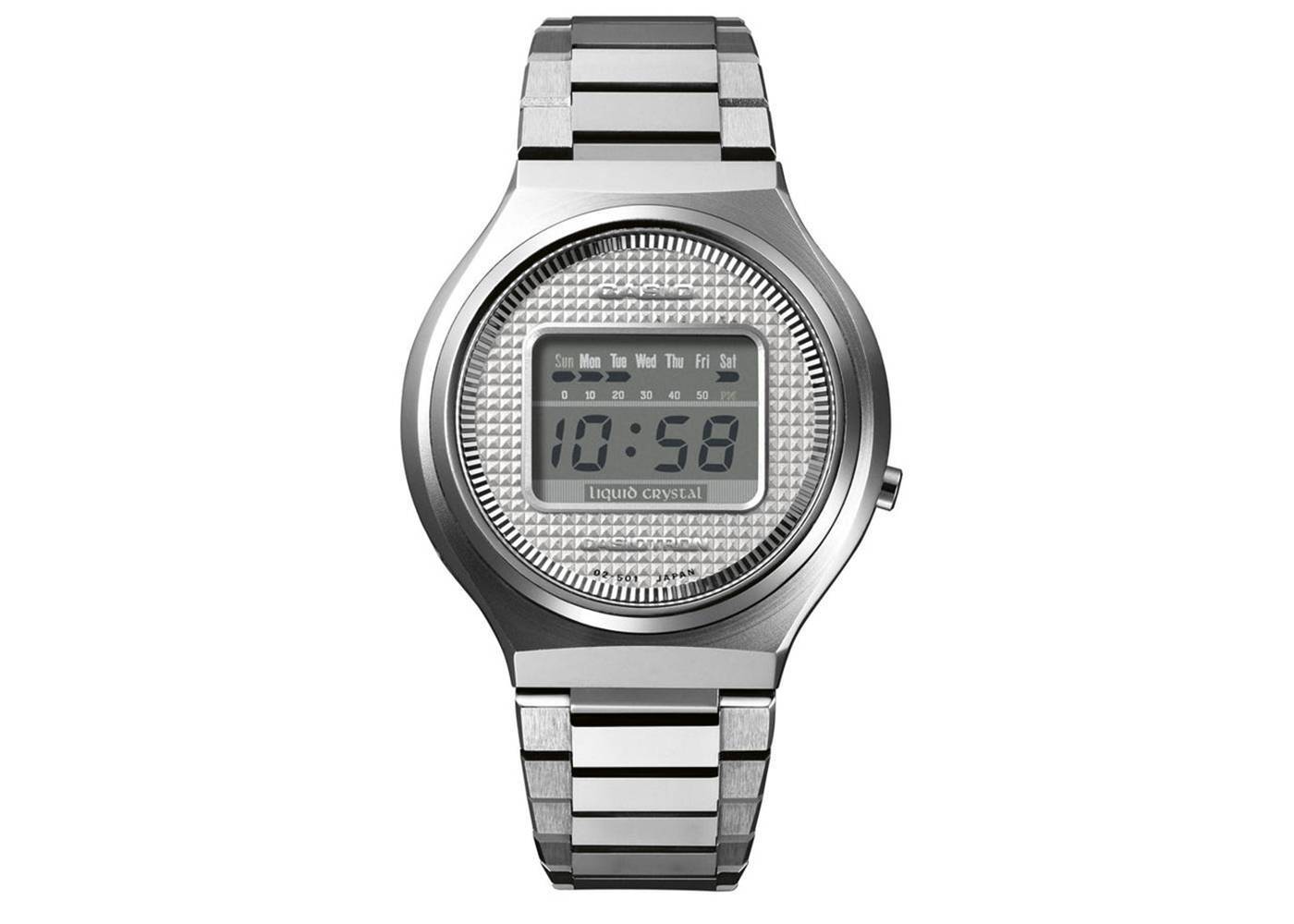
Casio Casiotron Digital Watch 1974 (Source: Europastar)
In the years and decades that followed, several Swiss brands - including Omega, Zodiac, Heuer, and Tissot - released digital watches with a distinctive, forward-looking aesthetic.
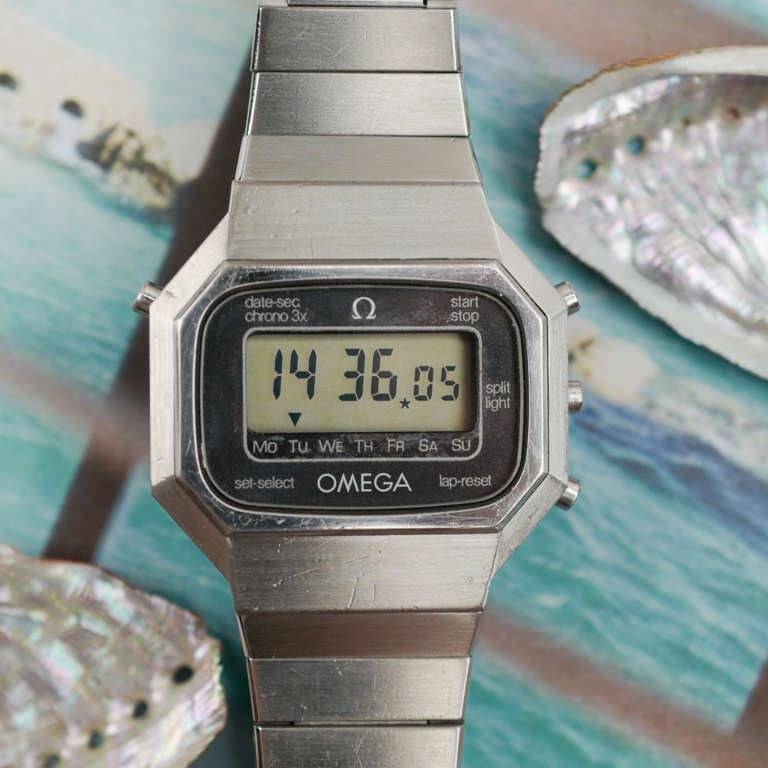
Omega Seamaster Digital Display Watch Ref. 386.0803, 1979 (Source: Café Noir - Les montres)
In France, the Jaz brand stood out with a wide range of affordable quartz watches, from sporty models to dressier, more elegant pieces that could easily be worn with a suit.
Some digital watches have even achieved cult status: the Casio F-91W, one of the most affordable watches in the world, and the Casio CA-53W, the legendary calculator watch worn by Marty McFly in Back to the Future.
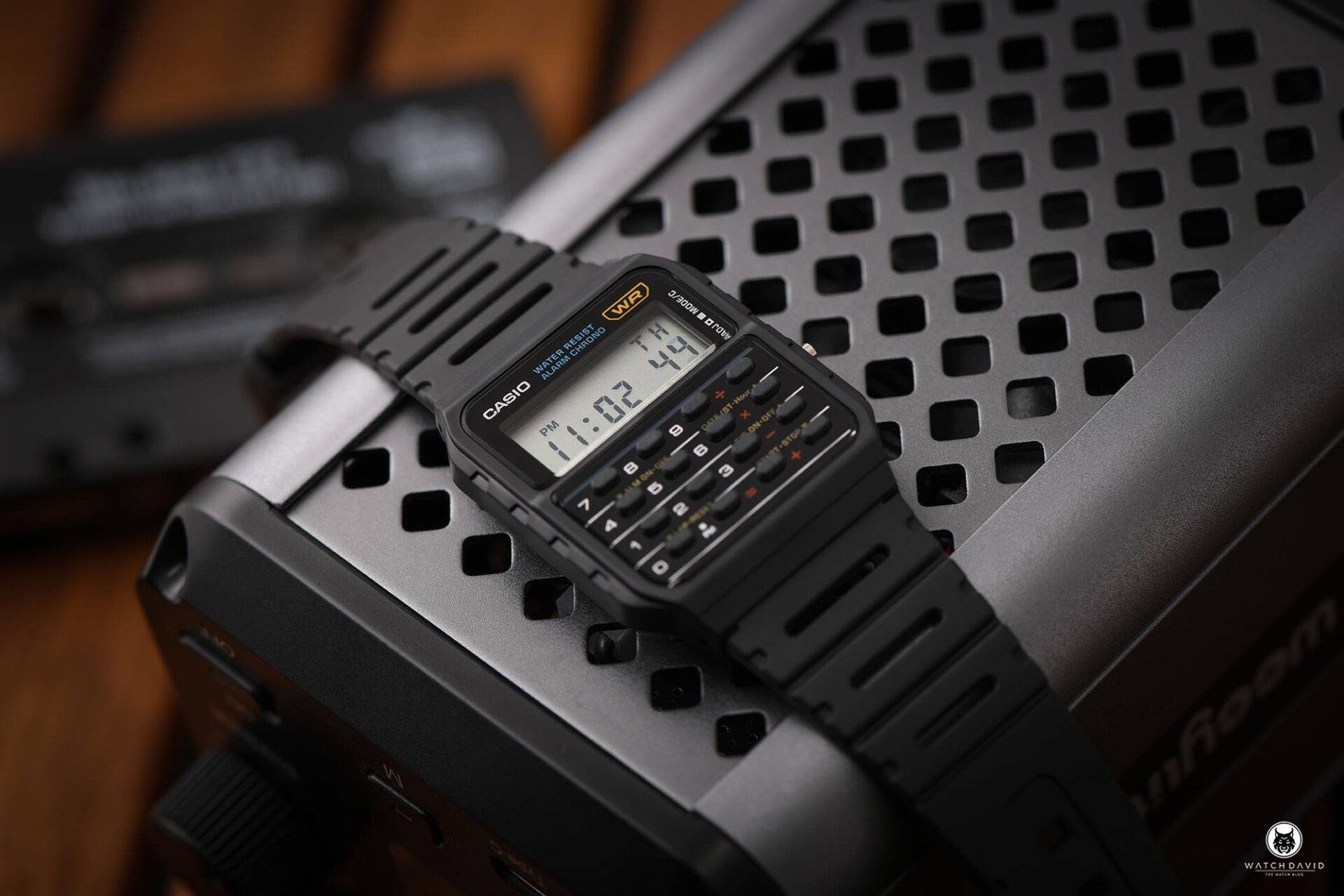
Casio CA-53W-1 Calculator Watch (Source: WATCHDAVID)
Casio's chrome models have gone far beyond watch enthusiasts - they've become true pop culture icons! These pieces prove you don't need to spend a fortune to own a legendary timepiece.
Today, the trend is all about reissuing iconic models. Several brands are drawing on their archives to offer modern reinterpretations of their classics, such as the Girard-Perregaux Casquette and the Casio Casiotron - two of the most iconic creations in digital watch history.
Today, digital displays are everywhere! And wristwatches aren't the only ones equipped with them. A significant proportion of alarm clocks, wall clocks, and small desk clocks feature a digital display.
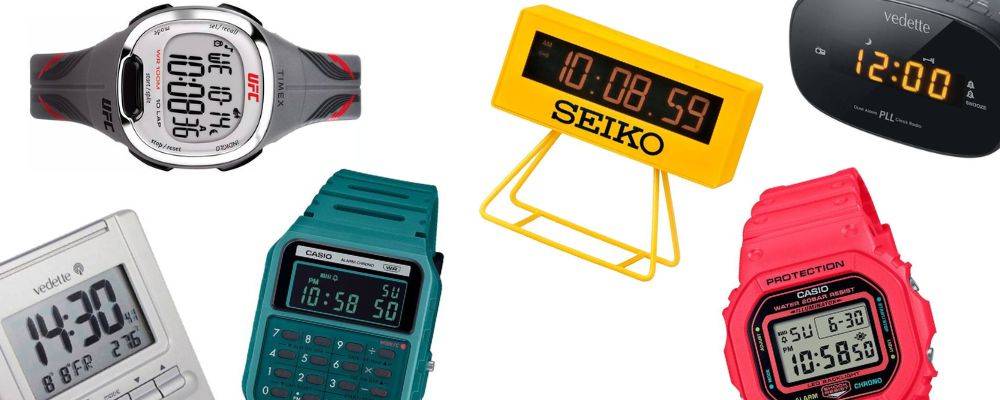
Several Watches, Alarm Clocks and Clocks with Digital Displays
The success of this display format comes down to its simplicity, functionality, readability, and convenience. Some brands have even made digital watches their specialty. Japanese brand Casio is undoubtedly the most iconic, having built an entire lineup around the LCD screen. Other players have joined the race as well, including Timex, D1 Milano, Swatch, and Tissot - which even released a digital version of its iconic PRX.
As for wall clocks, most of us have walked into a school, a gym, or a sports hall where a digital clock hung on the wall - usually square, sometimes round, always black, showing the time with tiny red LEDs. A true blast from the past!
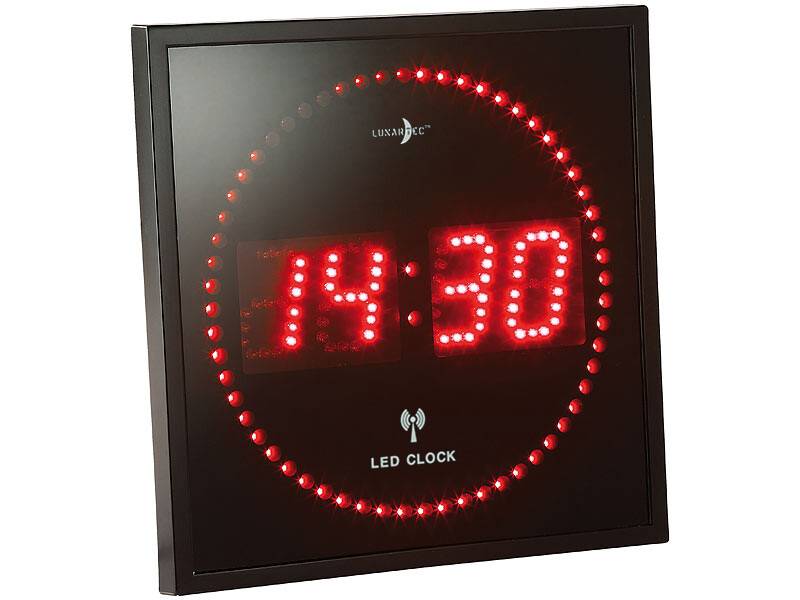
Lunartec LED Digital Wall Clock (Source: Pearl)
These examples clearly show that digital timekeeping displays are literally everywhere. Their ease of reading and relatively low cost - particularly in terms of maintenance - explain why it's common to encounter them in public spaces.
As you've gathered, digital display doesn't have just one face - it can take many different forms, each with its own way of working…
As we've just seen, the rotating disc display was the very first digital display system used in watchmaking.
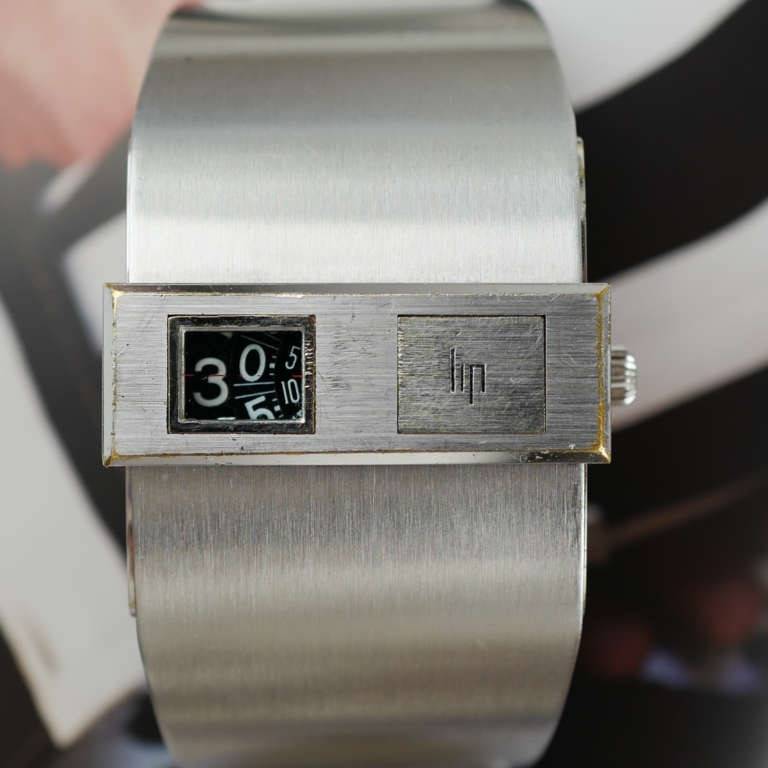
Lip de Baschmakoff Watch, circa 1970 (Source: Café Noir - Les montres)
In mechanical digital display watches, timekeeping relies on a system of printed rotating discs. These discs can operate in two different ways.
These two approaches - continuous and jumping movement - illustrate the different ways mechanical watchmaking interpreted digital display before the arrival of electronic solutions…
With the rise of electronics, LED digital display was a true game-changer!
LED watches are defined by their use of light-emitting diodes forming segmented numerals. At the heart of their system is a quartz oscillator that provides a time reference. An integrated circuit then interprets this frequency and drives the necessary segments to display the time. Each segment is a small diode that lights up when current flows through it in the correct direction.
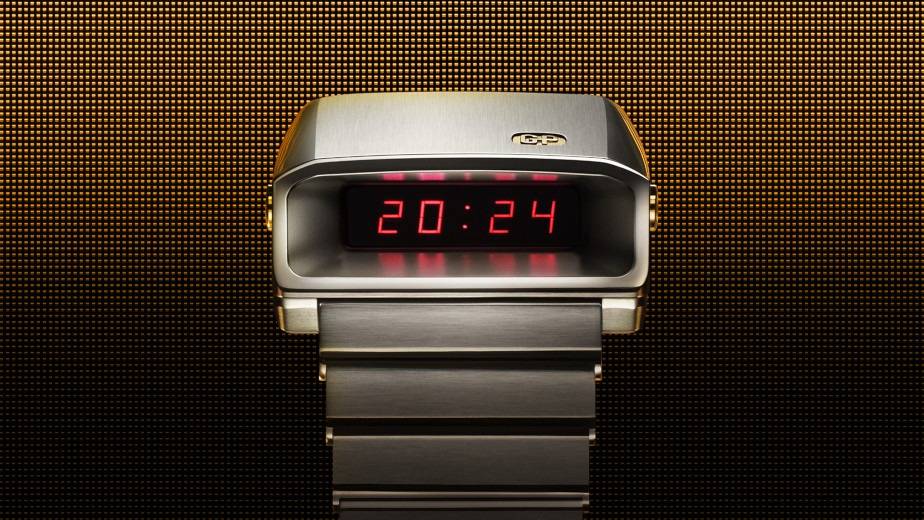
Girard Perregaux Casquette (Source: Girard Perregaux Official Website)
This process delivers instant readability even in total darkness, but comes with relatively high energy consumption… To preserve battery life, the display is often only activated on demand. The diodes used in these watches are typically made from gallium arsenide, a semiconductor material well-suited to producing bright red light - which long defined the aesthetic of the first electronic digital watches. That said, models with green, blue, and even orange displays are now available too!
LCD display, meanwhile, has established itself as the most energy-efficient solution. An LCD screen is based on a layer of liquid crystals sandwiched between two glass plates coated with transparent electrodes and placed between two polarizers.
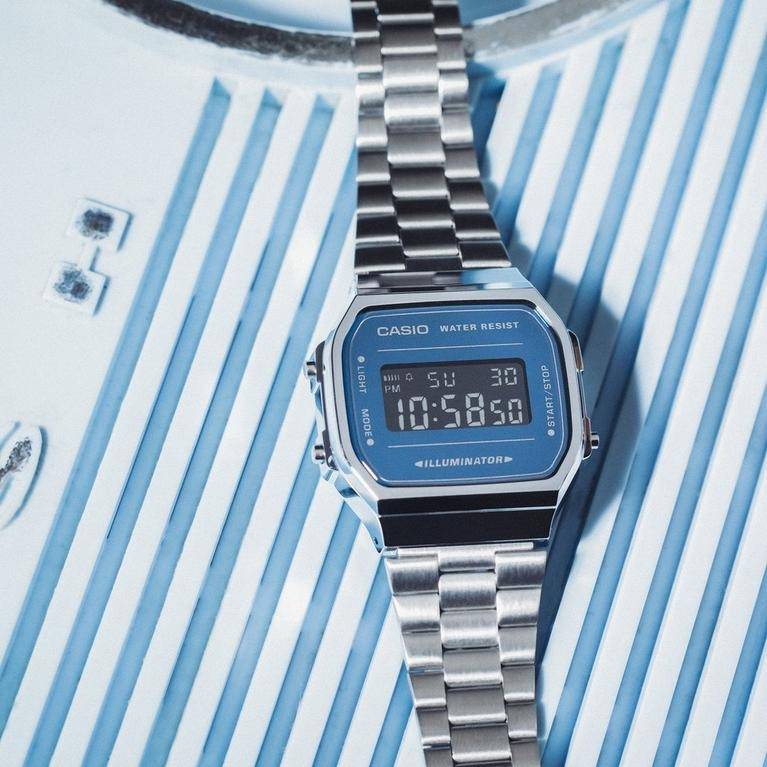
Casio Digital Watch A168 Space Colors (Source: Sports Direct)
Without any applied voltage, the liquid crystals adopt a twisted orientation that allows ambient light to pass through the first polarizer, reorient inside the cell, and then pass through the second polarizer. The segment then appears bright.
When a voltage is applied, the crystals' orientation changes, the light is no longer redirected and is blocked by the second polarizer: the segment turns dark. This so-called "passive" operation uses ambient light reflected off the back of the screen and requires almost no energy. The integrated circuit simply controls whether or not a low voltage is applied to the desired segments, enabling a very long battery life. This type of display offers comfortable readability in bright light and can be supplemented by a spot backlight for reading in the dark.
Particularly useful at night, the backlight is often provided by a small diode similar to a tiny bulb. The most advanced LCD digital watches, however, use a far more powerful backlighting system. Casio offers these backlight modes under the name "Illuminator," while Timex markets theirs as "Indiglo."
As we've seen, digital display has endured across the ages while staying true to its own identity. It remains a unique path in the art of measuring time - defined by precision, readability, and unmistakable character!
Share :
Official European Union notice on your rights in the event of a product's lack of conformity.