
0
Product added
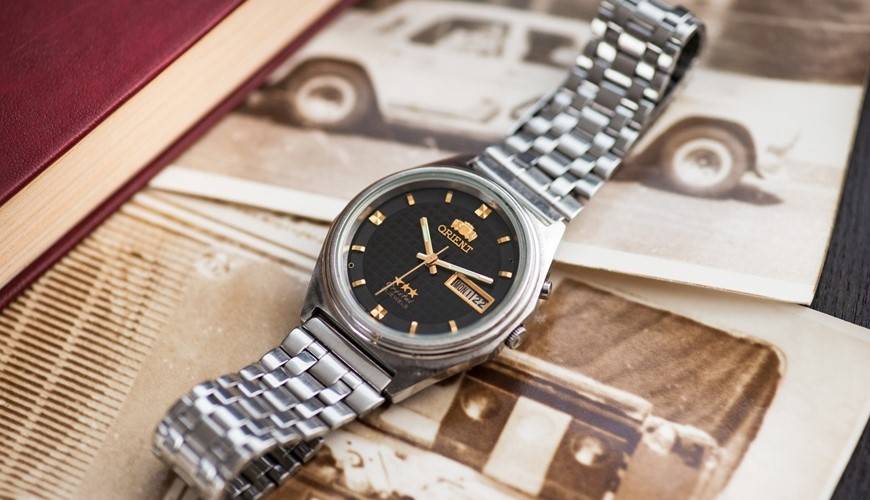
The day-date is a particularly handy watch complication that keeps you… up to date! No more wondering what day or date it is. The answer is right there on your watch dial.
Behind this seemingly simple complication lies a fascinating history you might never suspect from wearing a day-date watch. This guide will tell you all about it.
The "day-date" complication is actually quite rare when you think about it… As the name suggests, it allows a watch to simultaneously display the day of the week and the current date.
If you've read our guide on the date complication, you probably already know that watches with a simple date display have become the standard today. But don't jump to conclusions… Watches that also show the day of the week are far less common!
On a day-date watch, these two pieces of information can be presented in different ways. They are typically displayed through one or two openings on the dial, known as "apertures" or "windows."
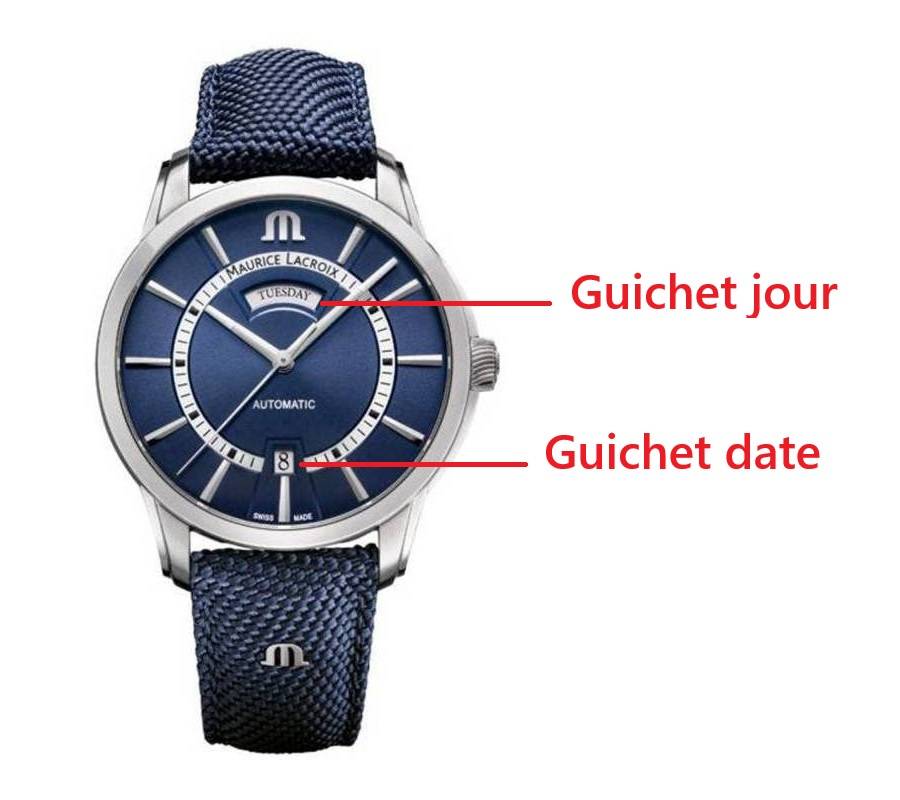
The 2 Windows of a Day-Date Complication Watch
As for the day display, it can appear spelled out in full or in abbreviated form. It's quite common to see "Mon" for "Monday" or "Sat" for "Saturday."
As you can see, the day-date complication isn't limited to a single aesthetic - it offers a rich variety of interpretations. And that's exactly what we'll explore in this watch guide dedicated entirely to it.
Throughout this story, you'll discover how two brands - separated by thousands of miles - each played a key role in developing and then popularizing this very distinctive complication.
From the moment wristwatches first appeared in the early 20th century, wearers quickly expressed a desire for a timepiece that could display not just the time, but also the day and date. To meet that demand, watchmakers competed fiercely in ingenuity, producing creations that were both practical and often remarkably inventive.
In the 1930s, the Swiss brand Sperina introduced an Art Deco model that looked similar to its competitors - with one key difference: its case incorporated a full calendar.
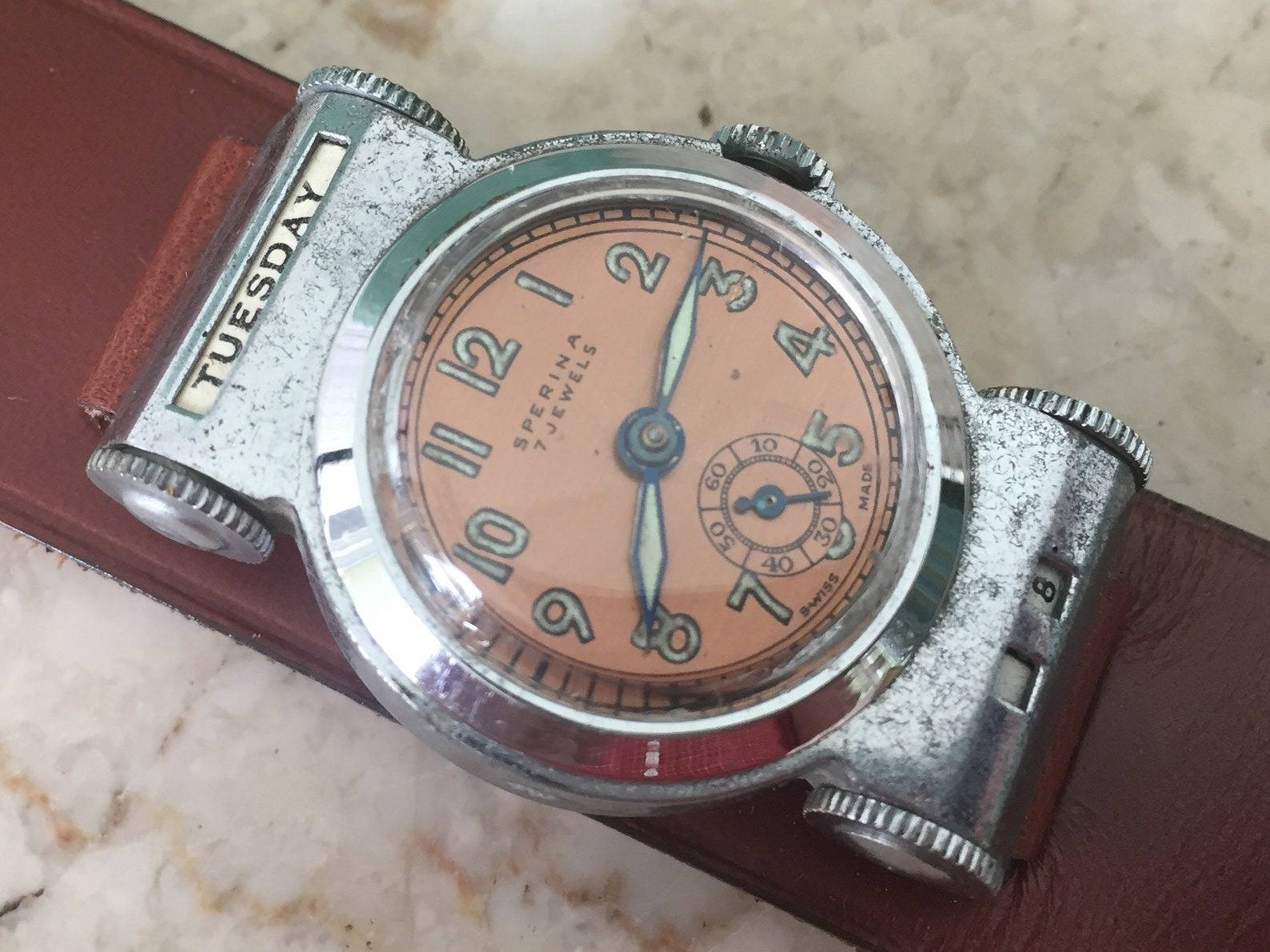
Sperina watch with day-date calendar, circa 1930 (Source: Etsy @delovelyness)
The day was displayed at the top of the case, while the date appeared at the bottom, both driven by two discs that had to be advanced manually. The wearer had to remember to update the calendar every day - much like flipping through a desk agenda. You get the idea!
Digging a little deeper, we find that other brands - such as Springbok - also conceived similar models. This naturally leads us to explore the very first day-date display watches, timepieces that sometimes featured surprisingly inventive configurations.
In these early versions, the date was often indicated by a central hand pointing to a numbered scale from 1 to 31 around the dial. This display - known as a "pointer date" - will be familiar if you've read our guide on the complication. The day, meanwhile, appeared in abbreviated form in a small window.
In the 1940s, several brands added this configuration to their catalogs, including Benrus and Jaeger-LeCoultre.
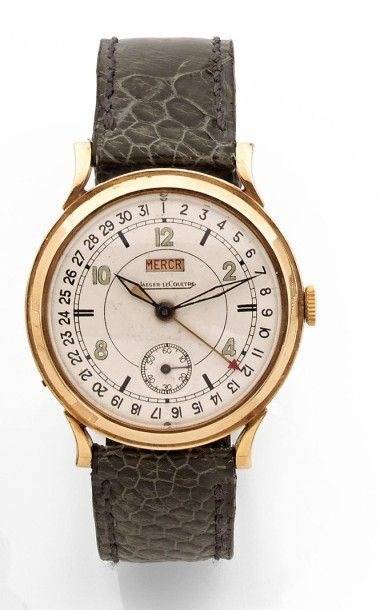
Jaeger-LeCoultre day-date complication watch, circa 1940 (Source: Drouot)
In reality, these models closely resembled what are known as "triple date" watches (displaying day, date, and month), from which the month indication had simply been removed, leaving only the day and date.
But the first truly landmark watch to offer this complication in a fully realized form remains, without question, the Rolex Day-Date, reference 6511, unveiled in 1956. Its mechanism is documented in a Swiss patent (CH322341A), and the innovation is credited to a Rolex engineer, Marc Huguenin. It's the watch that sparked a lasting enthusiasm for this complication!
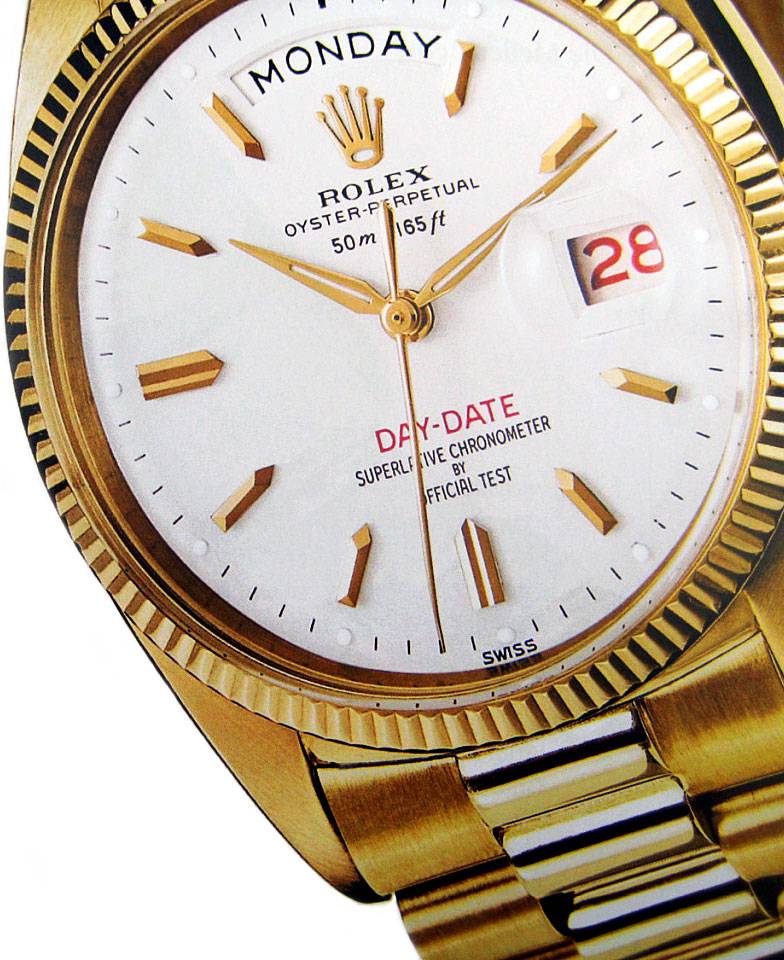
Rolex Day-Date 6511 (the first of its name), 1956 (Source: Rolex Magazine)
Over the years, Rolex continued to refine the model, notably introducing the quick-set feature - or "Quickset" - making it easy to adjust the date, and later the day as well in subsequent versions. This improvement significantly enhanced the Day-Date's ease of use.
Old advertisements even highlighted another advantage: the watch was available in 26 different languages - a first at the time!

Vintage advertisement highlighting the 26 languages of the Rolex Day-Date (Source: Revolution Watch)
During that same decade, other brands like Movado also began offering day-date complication watches. Like the Day-Date, these models were often powered by automatic mechanical movements - a modern technology at the time - that allowed the watch to wind itself through the motion of the wearer's wrist.
Want to learn more about this technology? Check out our guide to mechanical / automatic watches!
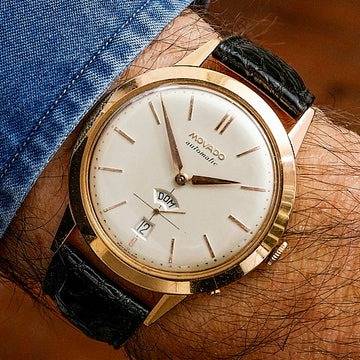
Movado day-date, 1958 (Source: Pascal Karp Watches Expertise)
That said, Movado opted for an abbreviated display for the days of the week - much like other timepieces that, as we'll see, played a pivotal role in popularizing this complication.
Because today, it's hard to talk about the day-date complication without thinking of Japanese brands like Seiko, Orient, Casio, or Citizen. And there's a very specific reason for that...
To understand this, we need to go back to the early 1960s, when Seiko launched a series of day-date watches called the Seikomatic Weekdater. These models displayed the date at 3 o'clock and the day (spelled out in full) in an aperture at 6 o'clock.
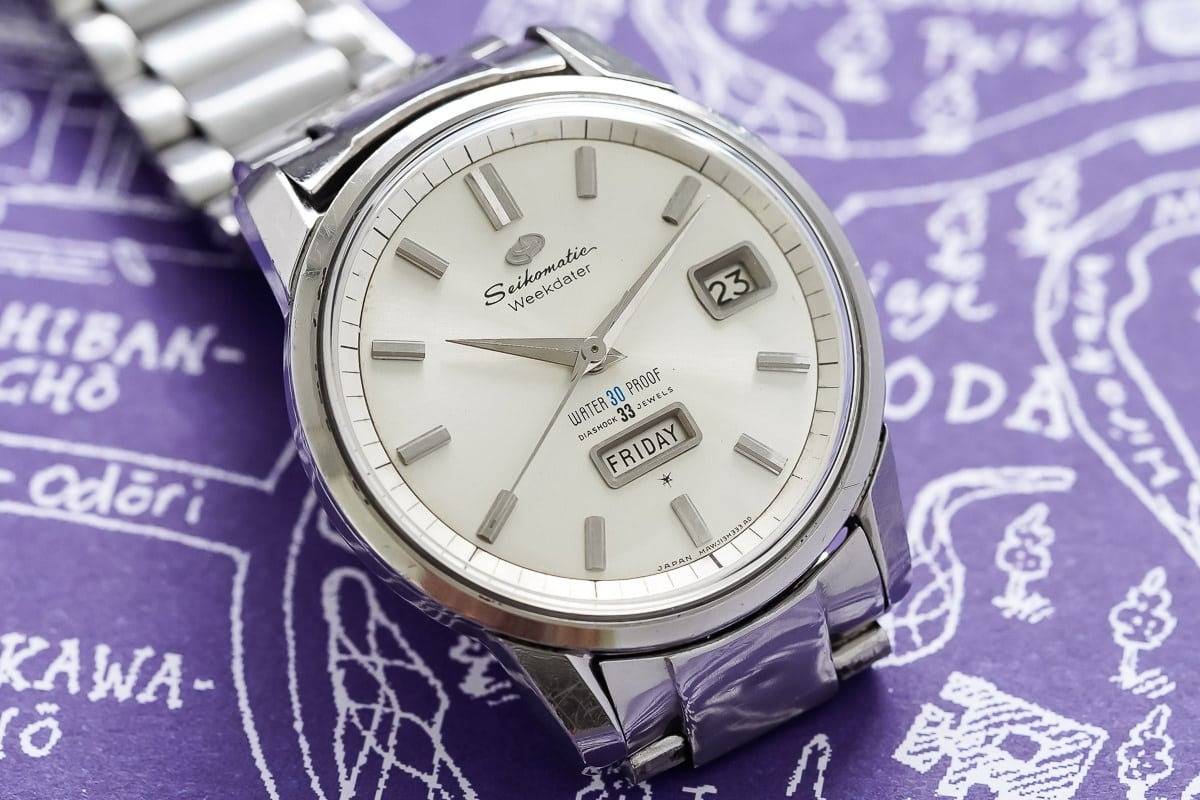
Seikomatic Weekdater, 1963 (Source: The Chrono Duo)
While their functionality remained close to that of the Rolex Day-Date, Seiko quickly set its sights on making this complication more accessible. That ambition gave birth to the Seiko 5 - a line of affordable, modern watches built to a very specific brief. For the Japanese brand's engineers, dropping such a useful complication, even on "budget" models, was simply out of the question.
At that time, Taro Tanaka, Seiko's head of design, felt that a separate display for the day and date was not optimal. His thinking: since the hour, minute, and second hands all share a common axis, why not group the day and date into a single window for faster reading? The idea of a combined day-date display at 3 o'clock was born.
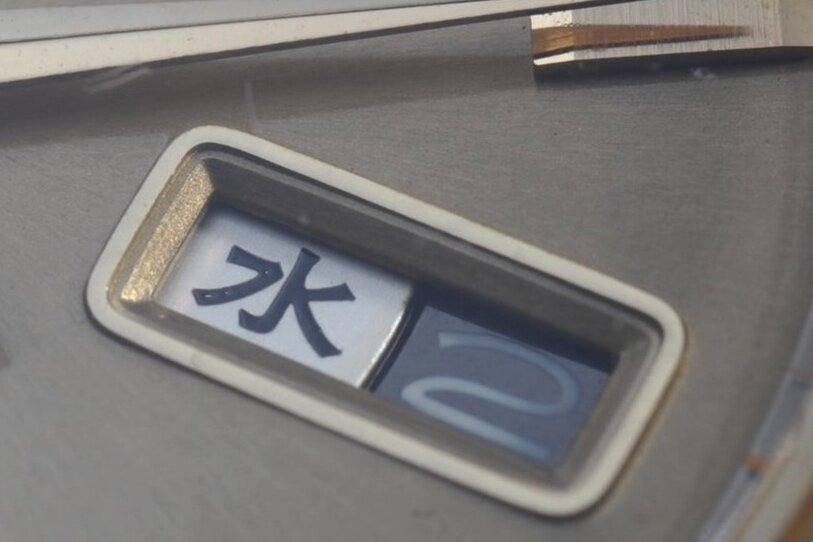
Day-date window on a Seiko 5 (Source: Wadokei)
With the official launch of the Seiko 5 in 1963, Seiko helped bring the day-date complication to a wider audience. And did you know that the "5" in "Seiko 5" refers to the five defining features of these models? Indeed, every Seiko 5 includes: an automatic movement, water resistance, a recessed crown at 4 o'clock, a sturdy case and bracelet, and… a day and date display!
Since then, this 3 o'clock display has become iconic on Seiko watches, and more broadly on any watch powered by a movement produced by the brand.
From the 1960s onward, several major Swiss houses began incorporating the day-date complication into their collections. Omega, Longines, Eterna-Matic, Tissot… each brought their own interpretation to the table. Some stayed true to their brand DNA with original designs, while others drew clear inspiration from the iconic Rolex Day-Date.
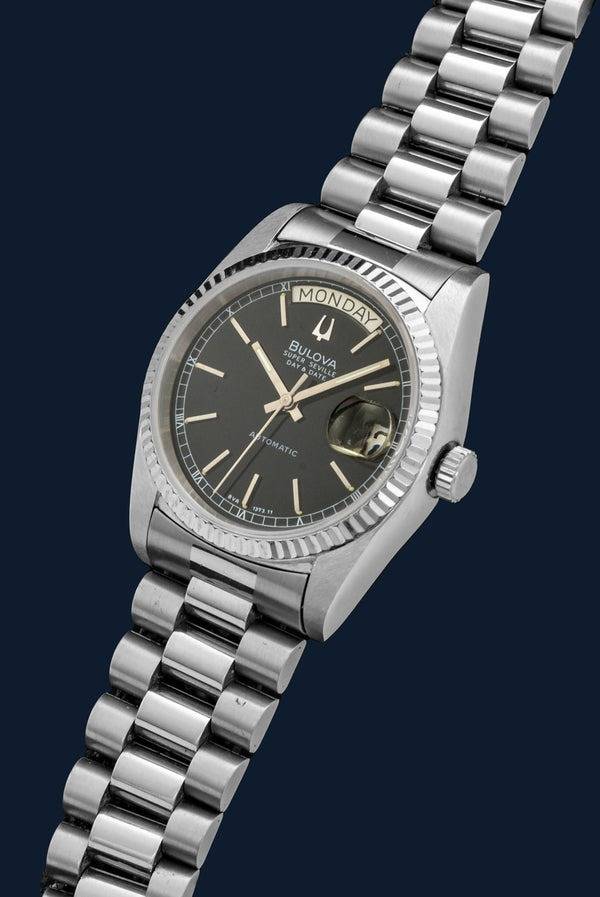
Bulova Super Seville, circa 1990 (Source: The Beautiful Watch)
This is the case with Bulova's Super Seville, Orient's President, and certain references from Mido's Commander line. These models - sometimes referred to as "homage watches" (or "homage watches") - draw heavily from the aesthetic codes of the iconic crown-logo original.
Among the most notable examples of this trend:
Today, finding a day-date watch is easier than ever - whether you prefer a distinctive design or a nod to the original Rolex. Japanese brands remain particularly active in this space: Seiko, Orient, Citizen, and Casio all continue to offer models with this complication. On the Swiss side, Hamilton, Victorinox, and Mido provide compelling alternatives in both mechanical and quartz. More accessible options are available from brands like Lip, Timex, Lotus, and Festina.
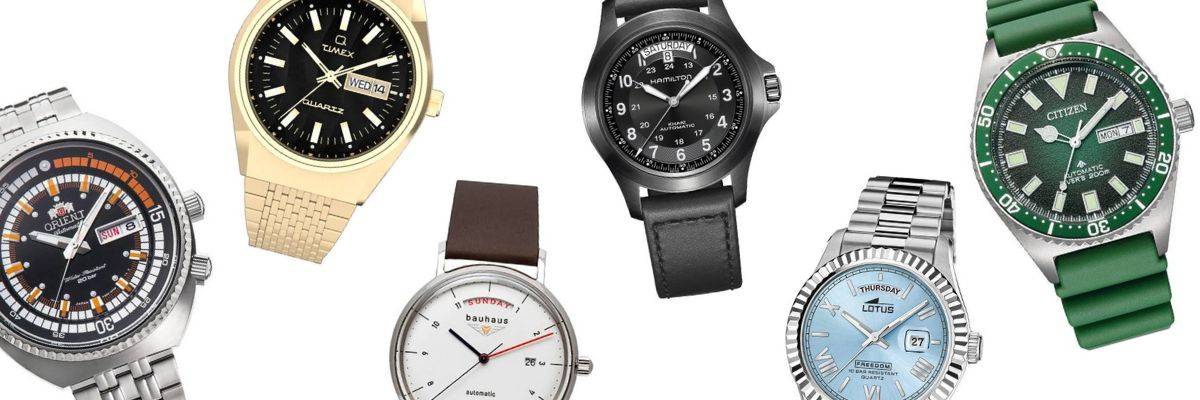
Day-Date Complication Watches for Every Budget
Note, however, that day-date watches displaying the full day name remain rarer than those using an abbreviated format.
Now that you're well-versed in the day-date complication, why not take your curiosity a step further? Because this practical function isn't just a favorite among enthusiasts - it's also made its mark on the big screen!
The Day-Date has earned a prized spot on the wrists of fictional characters as iconic as the actors who played them. In Le Guignolo (1980), Jean-Paul Belmondo plays Alexandre Dupré, a charming and carefree thief who's always impeccably dressed. His yellow gold Rolex Day-Date is a perfect fit for this character - elegant yet slightly provocative, blending luxury with effortless cool.

Jean-Paul Belmondo wearing a Rolex Day-Date, Le Guignolo - 1980 (Source: Spotern)
A few years later, Don Johnson - alias Sonny Crockett in the cult series Miami Vice (1984-1989) - was spotted wearing a Rolex Day-Date. In that highly stylized world where wardrobe carried nearly as much weight as the action sequences, the Day-Date completed the detective's look perfectly: white suit, pastel T-shirt, and a fast boat. On its own, it embodied the bold yet accessible luxury aesthetic that defined the show and the decade.

Don Johnson wearing a Rolex Day-Date, Miami Vice (Source: Rolex Magazine)
The Rolex Day-Date also appeared on the wrist of Tony Soprano, the charismatic mob boss of The Sopranos (1999-2007), portrayed by James Gandolfini. In that context, the watch is more than an accessory - it becomes a social code, a marker of power.

James Gandolfini wearing a Rolex Day-Date, The Sopranos (Source: Rolex Magazine)
In Tony's world, the Rolex isn't a gadget - it's a status marker, a piece that asserts his position in the hierarchy and his ability to move between the street and the boardroom.
But the Rolex Day-Date isn't just a star on screen. It's equally ubiquitous in real life, adorning the wrists of countless influential figures - from heads of state to rap icons to sports legends.
Among its unofficial ambassadors:
And perhaps more surprisingly, the Dalai Lama Tenzin Gyatso! A devoted watch enthusiast, he received a Day-Date as a gift and wore it for many years. A fascinating contrast between the material luxury of the watch and the spirituality embodied by its wearer.

The Dalai Lama wearing a Rolex Day-Date (Source: Rolex Magazine)
Since its launch, the Rolex Day-Date has been offered exclusively in precious metals (yellow gold, white gold, platinum…), making it an iconic piece at the top of Rolex's lineup. This positioning explains why it is so often seen as a true symbol of success and status.
And yet, its appeal across such a wide and varied audience speaks to a simple truth: the day-date complication, beyond its aesthetic appeal, is genuinely useful in everyday life - regardless of status or lifestyle.
As explained in the first part of this guide, a day-date complication watch is defined by the presence of two windows on its dial. These apertures display, respectively, the day of the week and the date of the month. The information visible through these windows comes from two separate discs housed beneath the dial, designed to rotate one after the other or simultaneously, depending on the movement's configuration.
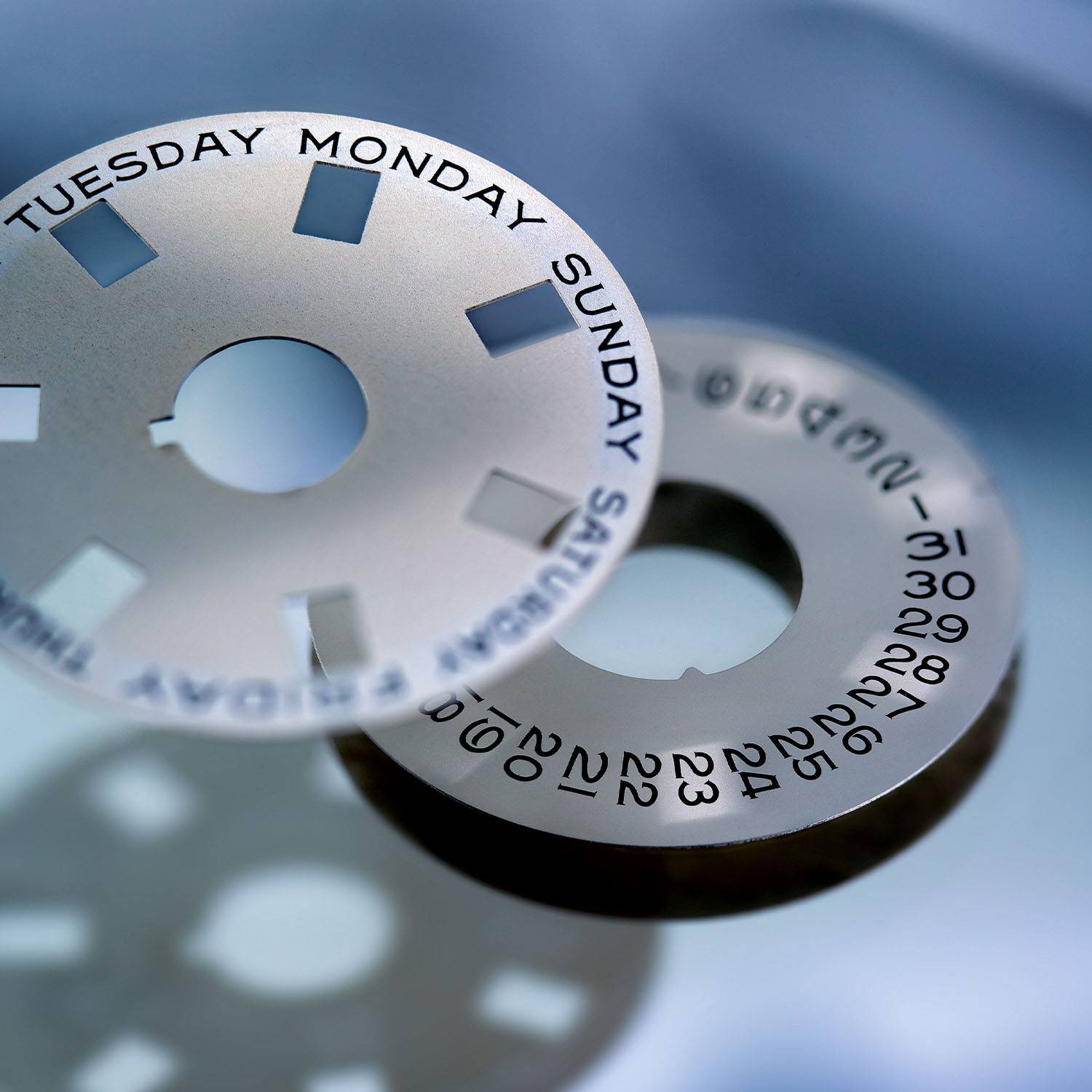
Day and date discs of a Rolex Day-Date (Source: Monochrome Watches)
It may seem obvious, but it's worth pointing out - the way the discs function can vary from one watch to another. On some models, the date disc begins to turn first, followed by the day disc. On others, both change simultaneously in a coordinated motion. These differences depend on the movement used by the watch.
Take the hugely popular Seiko 5, particularly references starting with SRPD, powered by the Seiko 4R36 automatic movement.
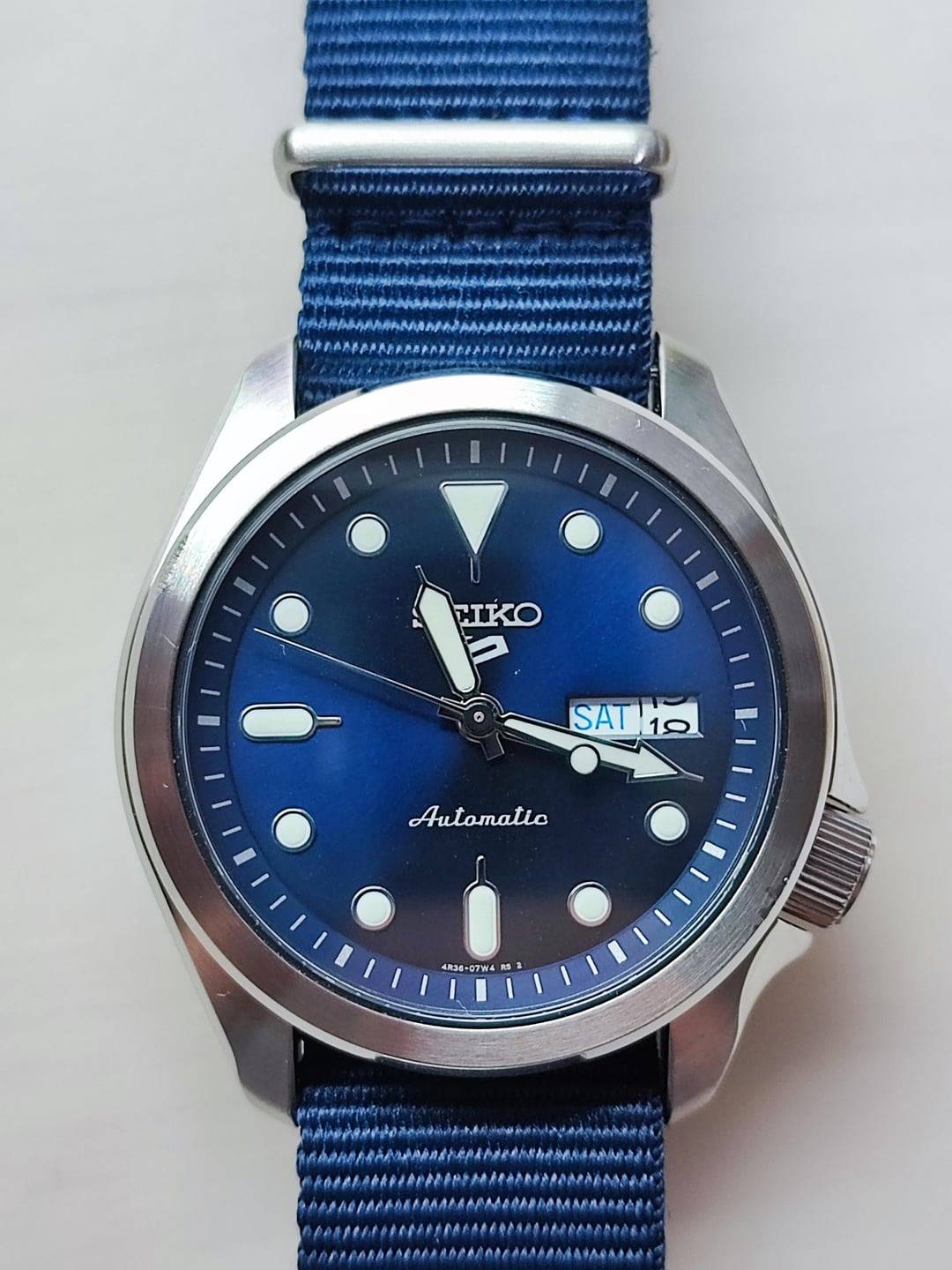
Seiko SRPD updating its date (Source: Reddit - @KH2814)
On these models, the day-date complication update unfolds over the course of several hours:
The Seiko 4R36 automatic movement that powers these watches therefore takes 5 hours to complete its day-date complication update.
On other watches, both discs begin and finish their cycle at the same moment - the Rolex Day-Date being a prime example. If you observe the vintage reference 1803 in action, you'll notice that the day and date jump simultaneously at midnight. This approach makes misreading the watch in the early morning hours virtually impossible.
Beyond the mechanics, the placement of the windows also varies from watch to watch. You'll come across models with:
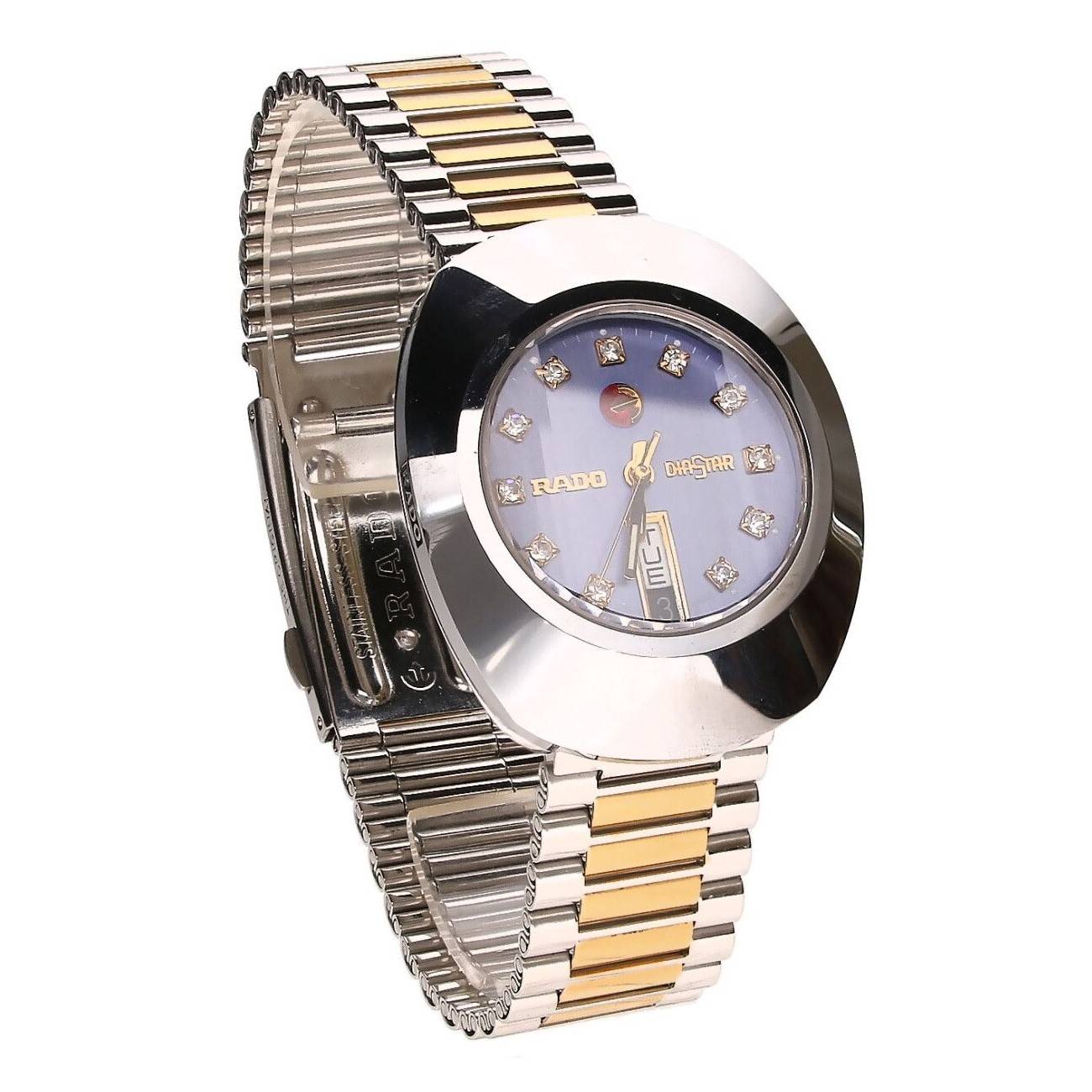
Rado DiaStar day-date with day + date window at 6 o'clock (Source: Ross's Auctioneers & Valuers)
The day of the week can also be displayed in two ways. On some dials, the day is spelled out in full ("Monday," "Friday"…), while others opt for an abbreviated format ("Mon," "Fri"…). Generally, watches that display the full day name feature an aperture at 12 o'clock, giving them a very balanced and legible look.
One fun configuration places the day window at 6 o'clock - like a little open mouth that seems to "tell" you the day of the week.

Orient SEV0J006DH with day disc at 6 o'clock (Source: Vnlux)
These kinds of details - admittedly anecdotal - are part of what gives certain day-date watches their charm and personality!
Another interesting feature: the day can sometimes be displayed in two different languages (you may have noticed this when we mentioned the Seiko SRPD earlier). Seiko has offered dual-language displays on its Seiko 5 line for many years. On these models, you can choose between two languages - most commonly English and Spanish, though versions combining English and French, English and Arabic, and others also exist.
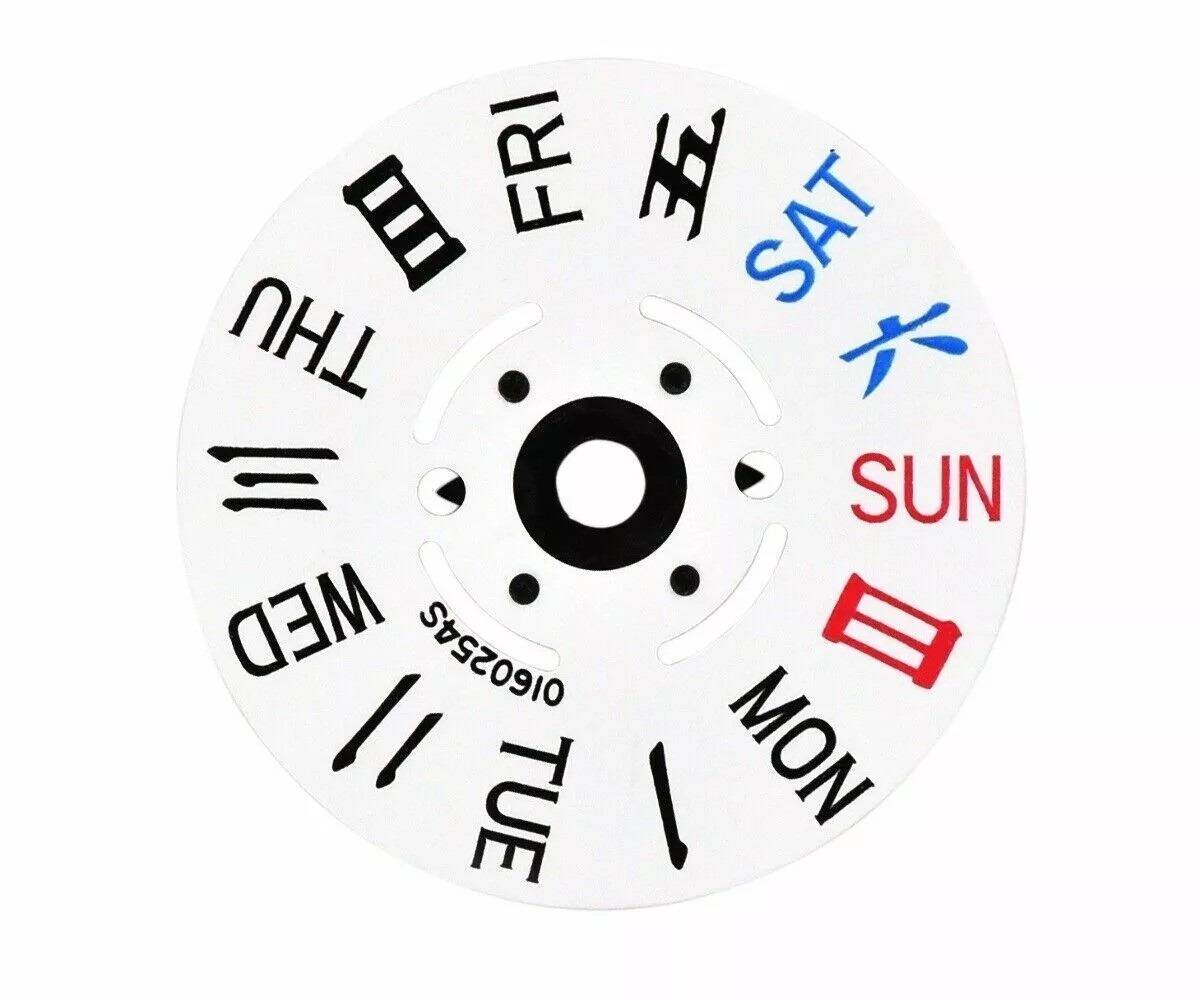
Dual-language date disc for Seiko 7S26 movement (Source: eBay @EWATCHPARTS)
With each change of day, the watch first shows the primary language, then switches to the other a few hours later. A handy detail for multilingual users… or simply for the curious!
Another nice Seiko touch: weekdays are displayed in black, except Saturday (in blue) and Sunday (in red) - a quick visual way to spot the weekend at a glance.
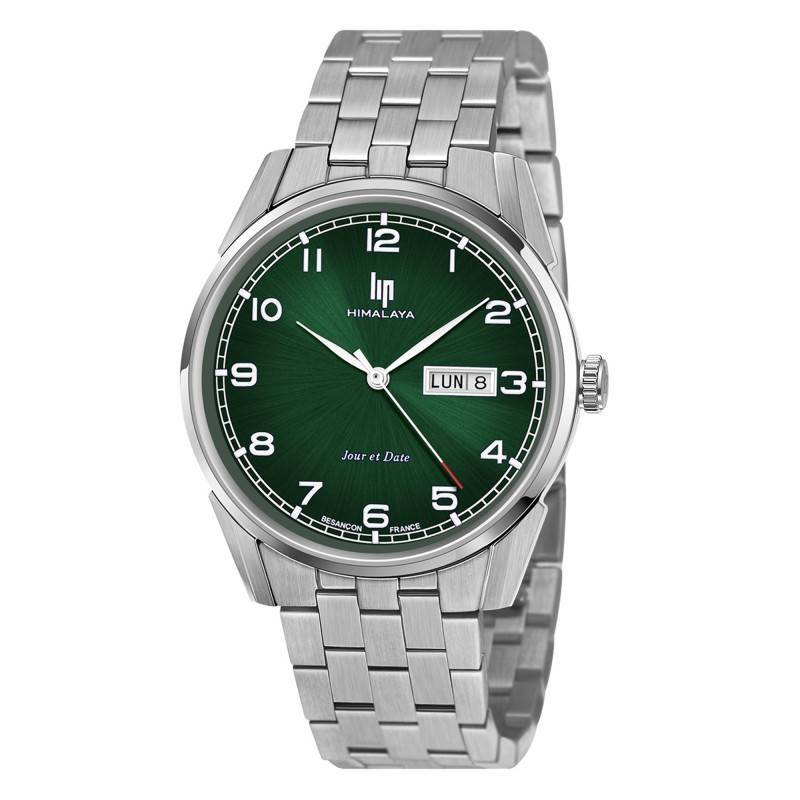
Lip Himalaya Day-Date with Miyota quartz movement
A detail also found on certain Citizen watches and on quartz watches powered by a Miyota movement.
While most day-date watches stick to a traditional aperture display, some watchmakers explore more original solutions. One example is Oris and its Artelier Pointer Day, on which the day of the week is indicated by a hand pointing to a scale engraved around the dial's perimeter.
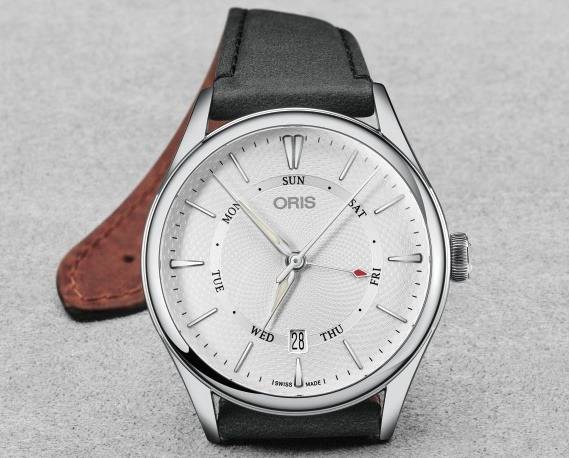
Oris Artelier Pointer Day-Date (Source: Master Horloger)
The date, meanwhile, remains readable through a classic window. This technical choice - both aesthetic and ingenious - perfectly illustrates the creativity of watchmakers when it comes to reimagining such a functional complication.
If you've followed our series of guides, you know that setting watch complications almost always involves manipulating the crown. Pull it out and you'll find it has multiple positions - each one serving a specific purpose.
On a day-date watch, setting the day and date is typically done by pulling the crown to the first position. But that's not always the case - and here's exactly why…
The first thing to determine is whether or not the watch has a quick-set mechanism, also known as a "quickset." This system - now standard on most modern watches - allows you to adjust the date (and sometimes the day) without having to advance the hands. Keep in mind, though, that it's not always present, especially on vintage pieces.
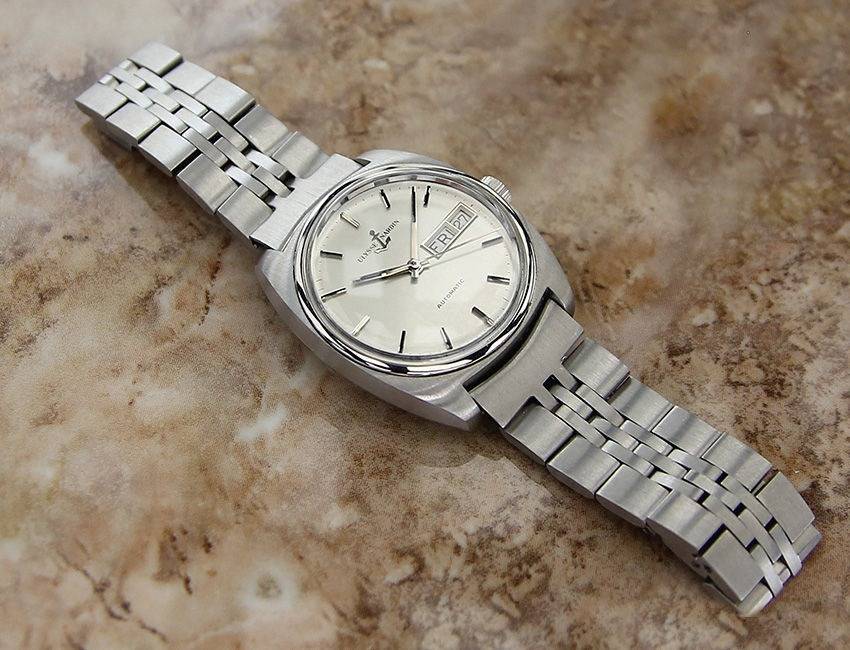
Ulysse Nardin vintage day-date, circa 1960 (Source: WatchArtExchange)
On most vintage models, the quickset function is simply absent. This was notably the case with the Rolex Day-Date reference 1803 and its caliber 1556. On that watch, changing the day or date meant advancing the hands forward... again and again... until reaching the desired display. A lengthy process, but the only option at the time.
Over time, some watches evolved toward a partially improved system. They offered a quickset for the date only, but not for the day. This was the case, for example, with certain Rolex Day-Date models from the 1970s, such as the reference 18038 equipped with caliber 3055.
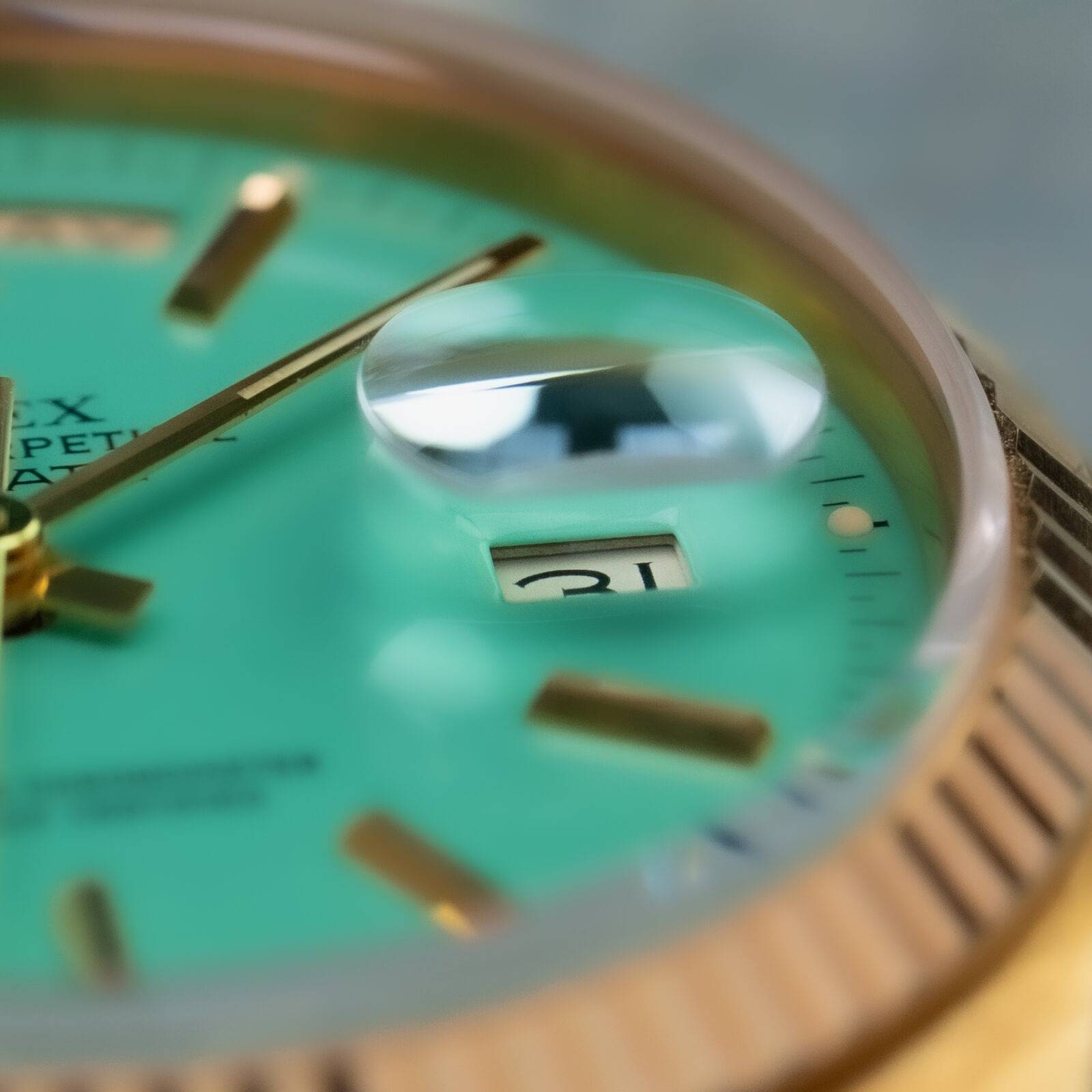
Date window of a Rolex Day-Date 18038 (Source: Amsterdam Vintage Watches)
On these models, the date could be adjusted quickly via the crown, but changing the day still required advancing the hands manually until it updated.
Conversely, as early as the 1970s, Seiko was already innovating by equipping its Seiko 5 watches with a full quick-set system - covering both the day and the date. Quite a technical feat for watches at that price point!
On most modern watches equipped with a quickset system, the crown typically offers the following functions:
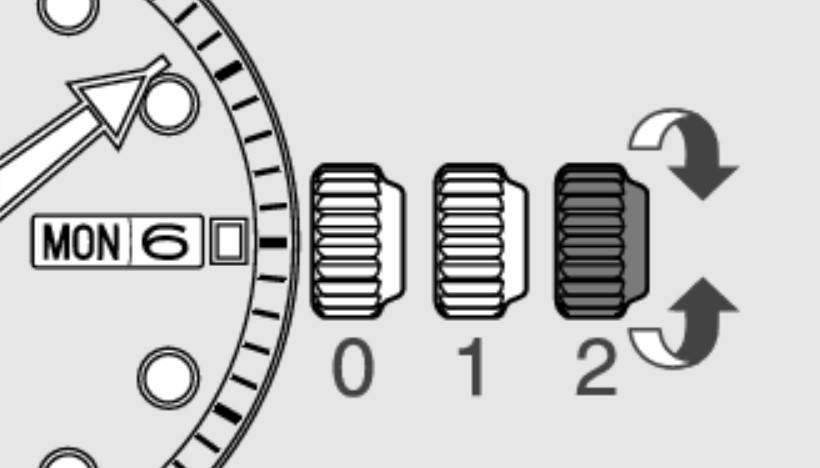
The crown positions on a day-date watch (Source: Seiko Watch)
The system is intuitive, fast, and saves you from manually spinning through 24 hours. But beware - that convenience can hide a very real mechanical trap!
If you've read our guide dedicated to the date complication, you're already familiar with the infamous "danger zone" - the period during which the discs are in the process of changing, typically around midnight. On a day-date watch, this is even more critical.
Take watches equipped with the Seiko 4R36 caliber. As we saw earlier, this movement begins updating the date from 22:00, then continues to advance the day display through approximately 03:00. Throughout that entire window - and even a bit before the process starts - using the quickset is absolutely off-limits!
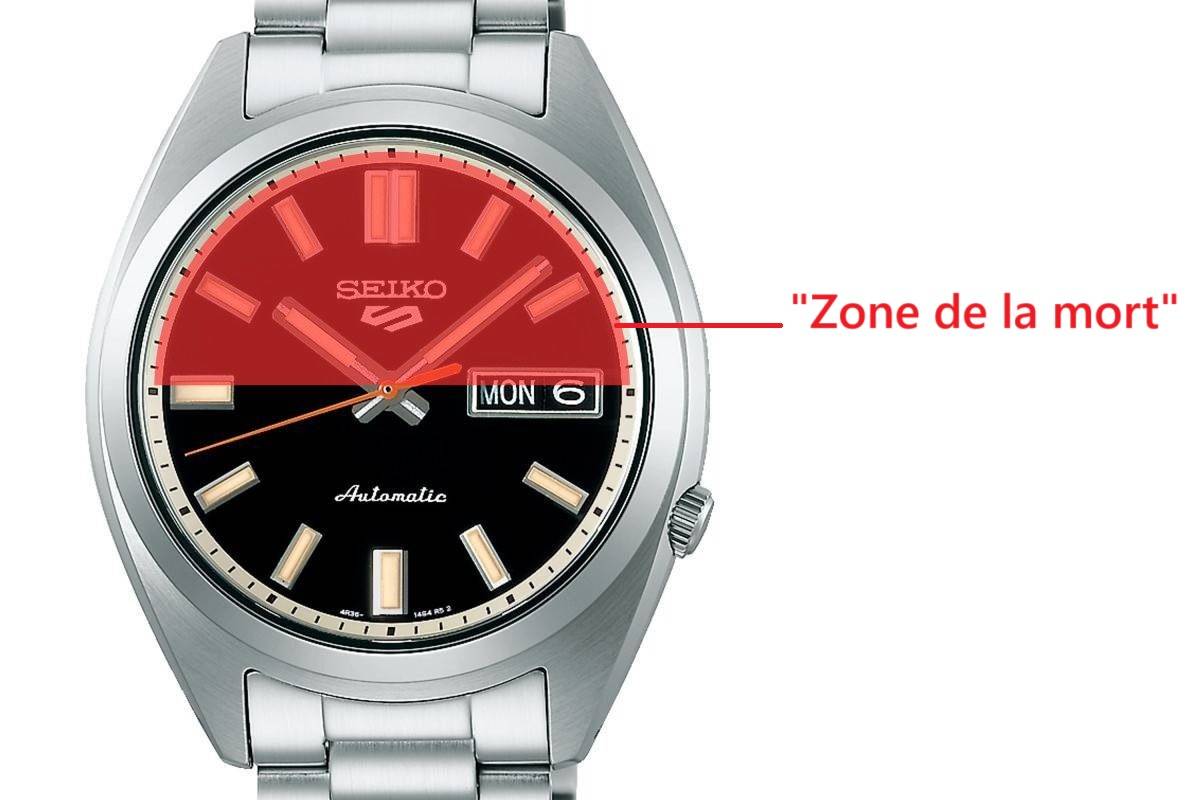
When Not to Set the Day-Date Complication
Why? Because trying to force the update via the crown risks stripping the disc teeth - or worse, permanently damaging the mechanism. A mistake that can be very costly to repair.
Our advice: avoid any quick-set adjustment of the day or date between 21:00 and 04:00, regardless of the caliber. It's better to wait, or advance the hands manually to a safer time - around 06:00 or 18:00, for example.
What about older watches without a quickset? All is not lost!
Let's use a Rolex Day-Date 1803 as an example. Say it reads Monday the 3rd, but the actual date is Tuesday the 5th. Here's a simple method to set it correctly:
By repeating this motion, you can adjust the date independently of the day, or vice versa, without having a true quickset system. A handy little trick worth knowing!
From the earliest experimental day-date watches to the great manufactures that revolutionized this genuinely useful complication, you now know a great deal about day-date watches!
Whether you already own a watch with this complication or are planning to get one soon, you now know how to set it properly without causing any damage. And don't forget - the day-date complication is as subtle as it is impressive.
Share :
Official European Union notice on your rights in the event of a product's lack of conformity.


