
0
Product added
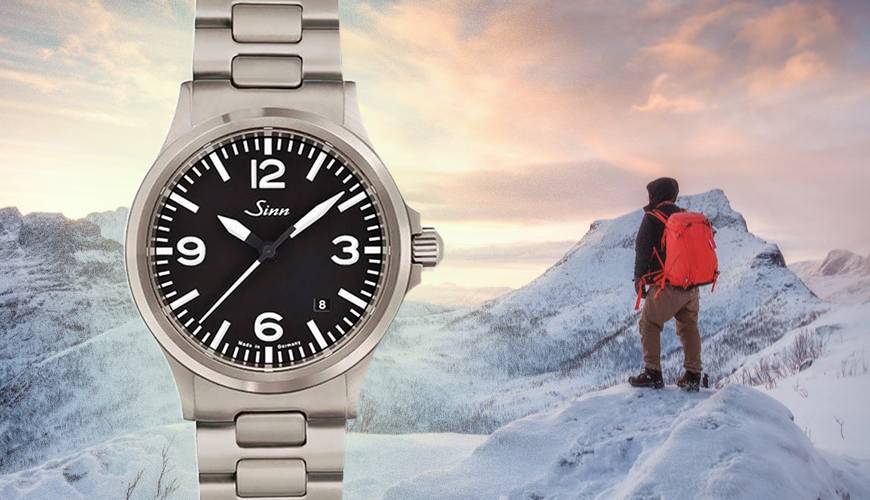
Exploration has always captivated the human spirit. Whether scaling the world's highest peaks or venturing into uncharted territories, these expeditions have shaped history and fired the collective imagination.
In these often hostile environments, reliable instruments become absolutely essential. Among them, certain watches have proven to be true companions for explorers - built to withstand cold, shocks, and extreme conditions alike.
To better understand the origins and appeal of these adventure-ready timepieces, we've put together this watch guide dedicated entirely to exploration watches… Ready to set out on an adventure?
As their name suggests, exploration watches are instruments designed to accompany explorers on expeditions to every corner of the globe, regardless of the terrain encountered. Snow-capped summits, scorching deserts, impenetrable forests, polar regions - these watches must be able to withstand sometimes extremely hostile environments, without fail.
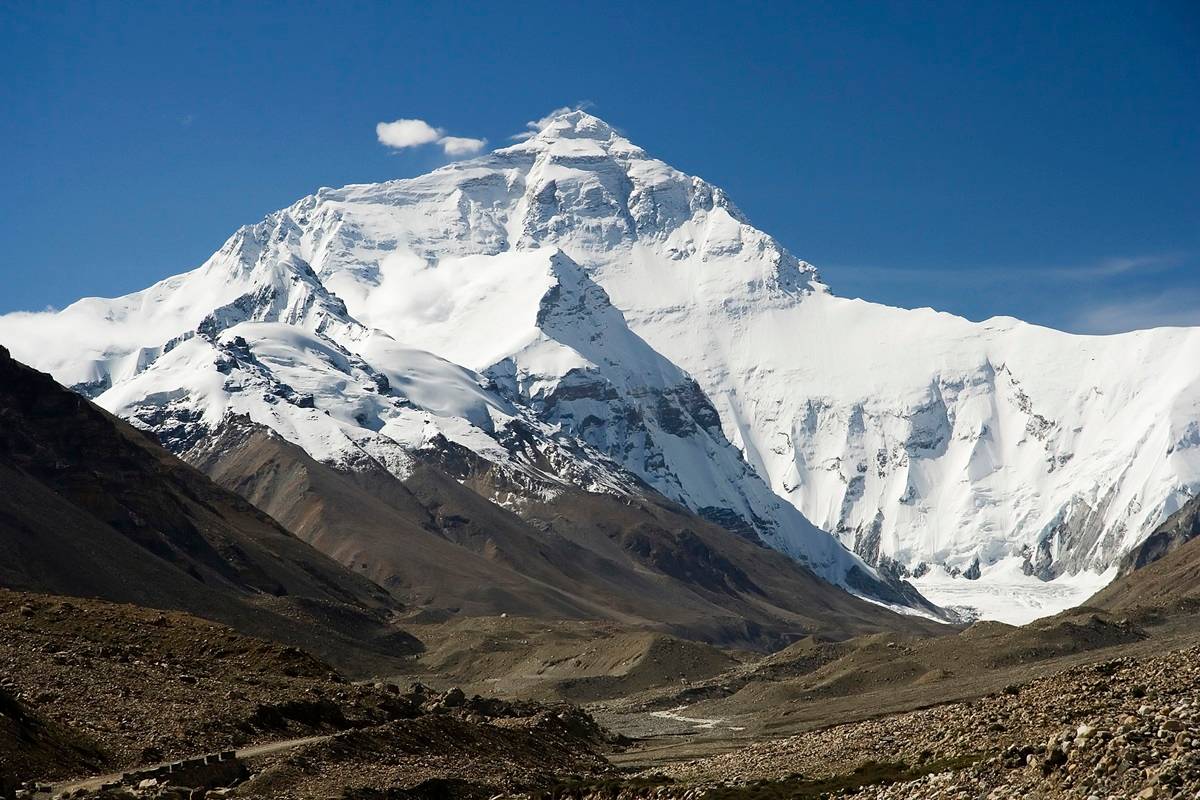
Mount Everest (Photo credit: Luca Galuzzi)
To meet these demands, exploration watches typically incorporate a set of specific technical features. Case robustness, movement reliability, enhanced water resistance - all essential factors for optimal performance, even in extreme conditions. We'll explore each of these aspects in greater detail later in this guide.
Legibility is also a central attribute of these timepieces. In an exploration context, being able to read the time quickly and without ambiguity - day or night - is crucial. High-contrast dials, clearly visible indices, and luminescent material are therefore among the most sought-after features, making these watches true instruments for orientation and timekeeping.
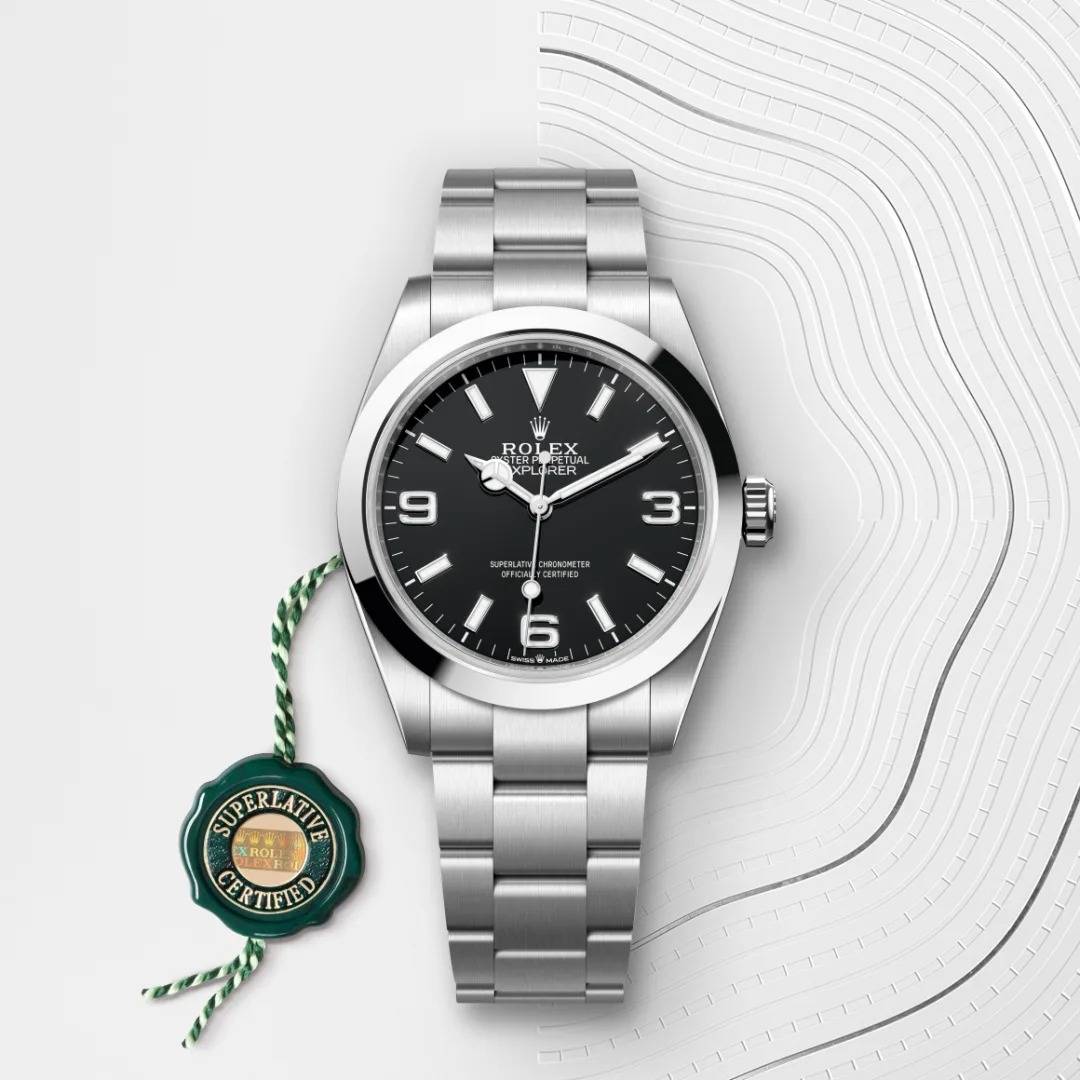
The Rolex Explorer I, the archetype of the exploration watch (Source: Auberi)
Some exploration watches also feature a GMT complication, allowing a second time zone to be displayed - a valuable function for globetrotters and adventurers crossing multiple regions of the world. That said, not all models include this complication: many settle for a simple three-hand display, prioritizing reliability and legibility above all else.
Over the decades, these watches have accompanied some of the greatest human adventures, from high-altitude expeditions to explorations of the most remote corners of the planet. And behind each of these watches often lies a fascinating story. To truly understand the soul of exploration watches, one must look to the models that shaped their history…
It all began in 1950. That year, a French mountaineer - a politician and industrialist by trade, Lyonnais by birth - was selected by the French Mountaineering Federation to lead an extraordinary expedition: the ascent of Annapurna.
As a reminder, the Annapurna is a mountain massif in the Himalayas, located in Nepal, whose highest peak reaches an altitude of 8,091 meters. It is considered one of the highest summits on the planet!

The Annapurna (Source: Travesia Pirenaica)
With the goal of reaching its summit, Maurice Herzog set out on the adventure alongside fellow French climber Louis Lachenal. The expedition was conducted under extreme conditions - no oxygen tanks, no maps. It took them nearly two months just to approach the site. Only after this initial phase did the actual ascent begin, ultimately leading them to what is known as the "first 8,000" - their first conquest of a summit exceeding 8,000 meters in altitude.
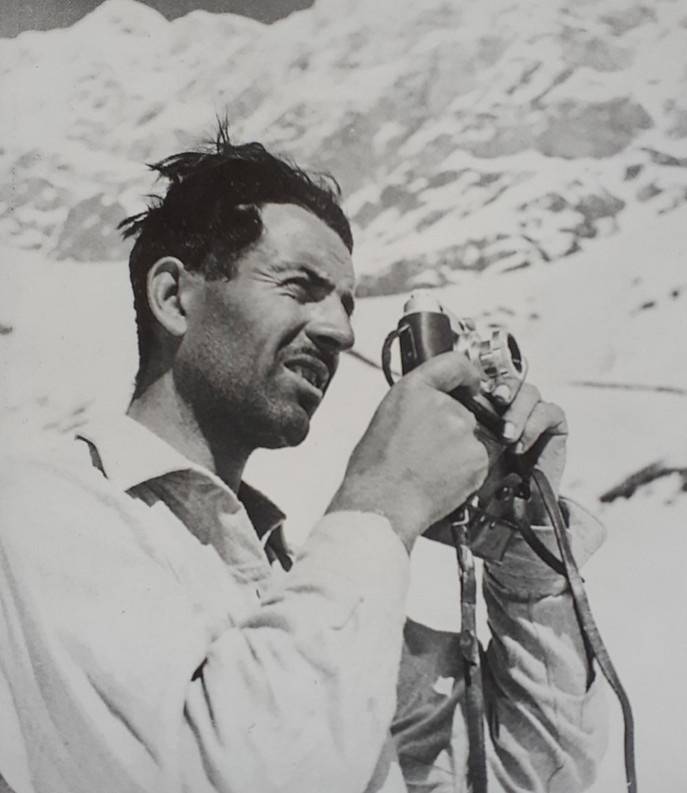
Maurice Herzog (Source: Montagnes Magazine)
But neither climber would emerge from this adventure unscathed. The extreme cold pushed their bodies to the limit. On the descent, both suffered severe pain. The consequences were dire: following the expedition, Maurice Herzog spent nearly a year in hospital and had to undergo the amputation of all his toes and a large portion of his fingers.
Following this feat, watchmaker Lip sold a model called the "Annapurna" for a number of years. Now virtually impossible to find on the market, these vintage watches are highly sought after by watch enthusiasts, particularly by collectors of French timepieces.
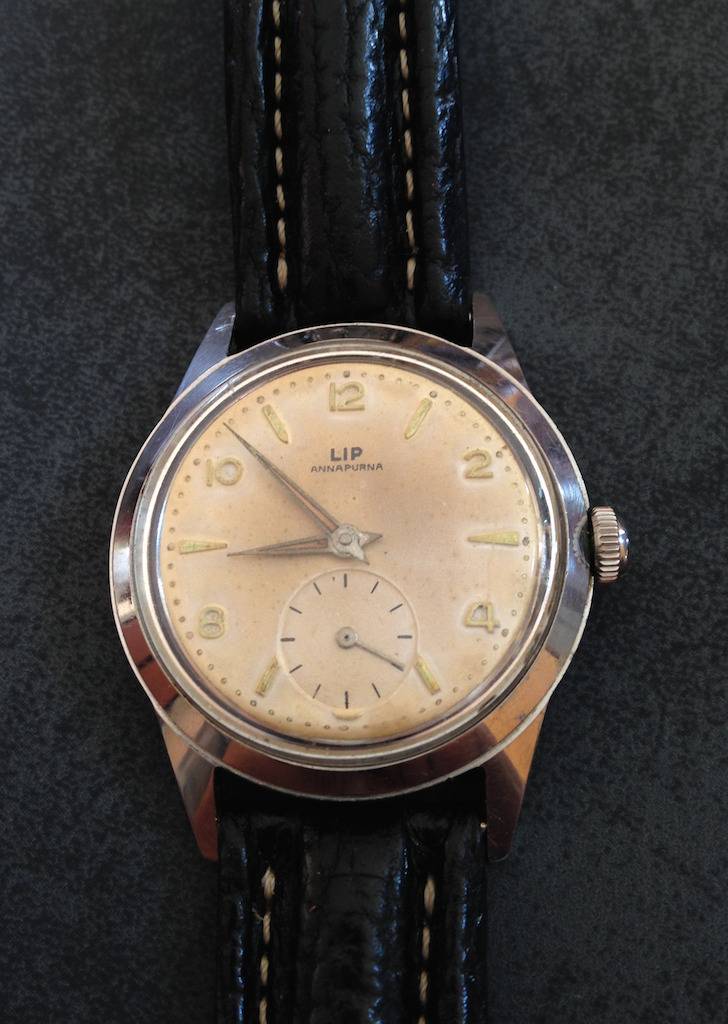
Lip Annapurna watch, circa 1950 (Source: Montres Mécaniques Passion Magna - @galahad87)
This scarcity is due in part to the very limited number of examples produced. As we'll see shortly, this model would also change its name as early as 1953 to better align with public expectations…
Fun fact: the Lip Annapurna was recently re-released by the brand in a more upscale version. It features a slightly larger diameter (39 mm) and is powered by the Lip R26 manufacture caliber, an automatic mechanical movement.
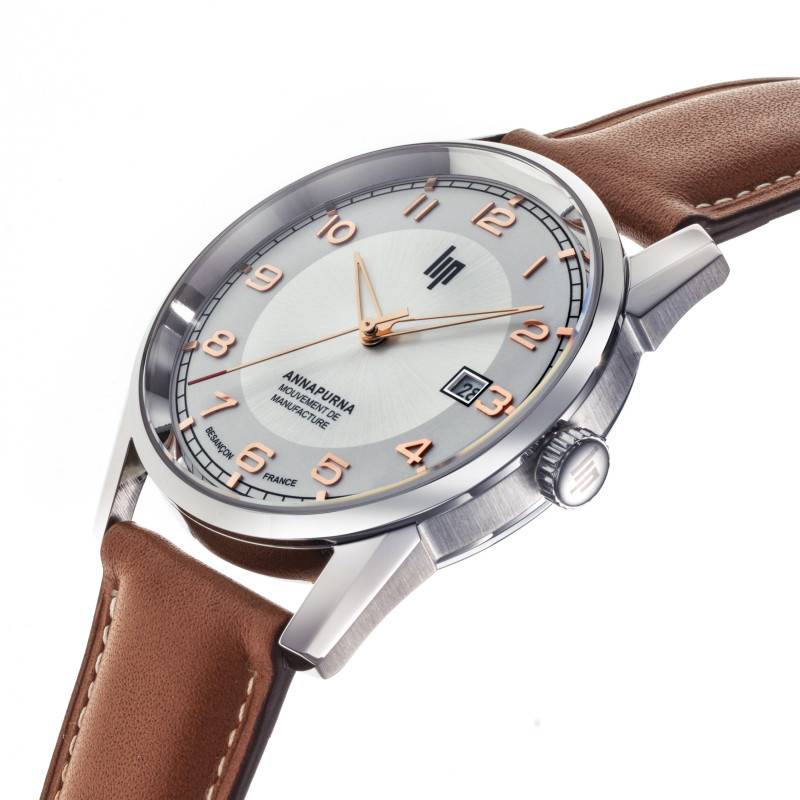
Lip Annapurna modern watch ref. 676011 (Source: official Lip website)
Just two years after the achievement of French climbers Maurice Herzog and Louis Lachenal, it was the turn of Edmund Hillary and Tensing Norgay (sometimes spelled "Tenzing Norgay") to embark on a new expedition. Both were seasoned mountaineers: the first a New Zealander, the second originally from northeastern Nepal.
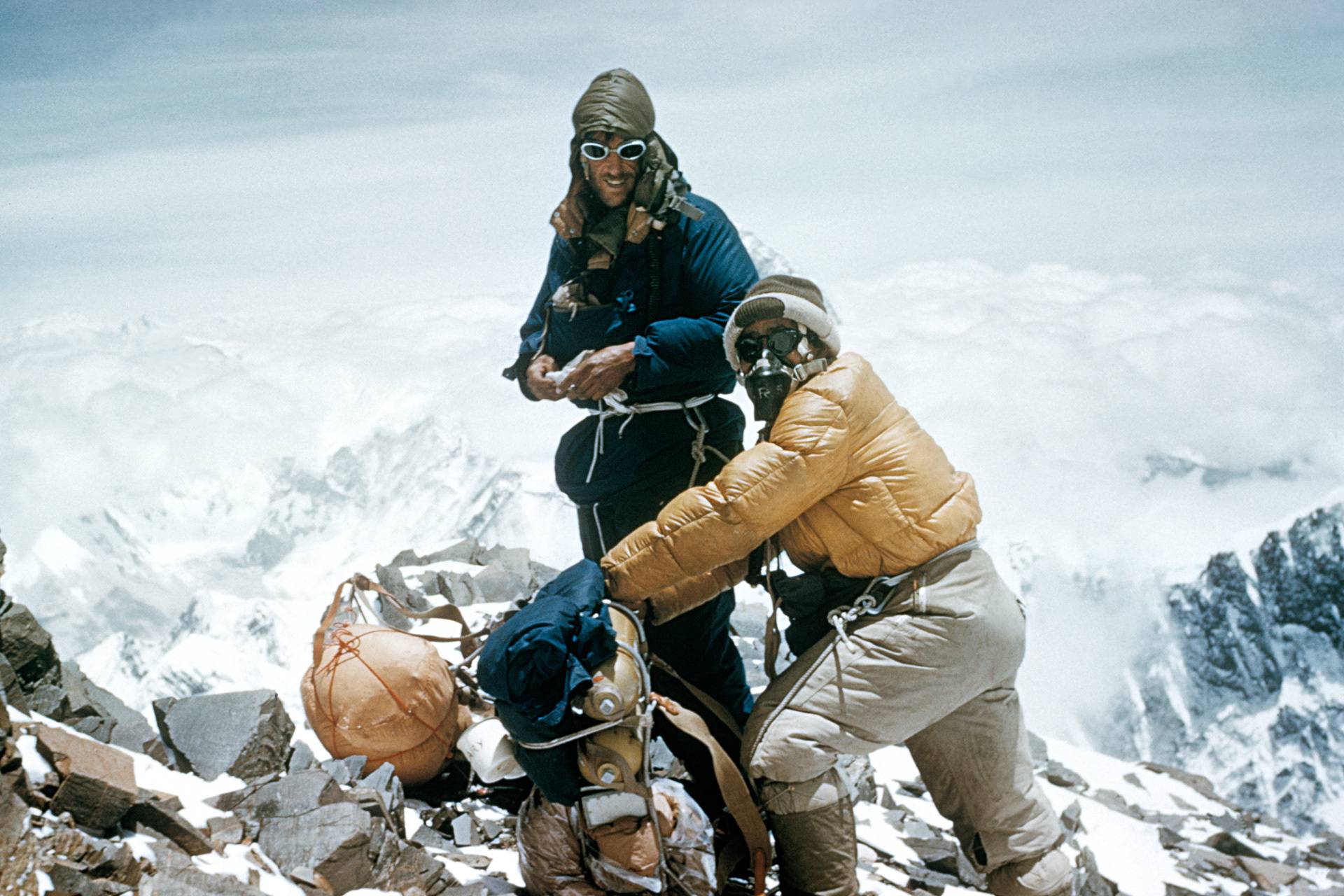
Edmund Hillary and Tensing Norgay (Source: Rolex.org)
At the time, this was not the first attempt to summit Everest. Yet no climber had officially reached what is known as "the roof of the world." The 1953 British Everest Expedition therefore had a clear ambition: to write Edmund Hillary and Tensing Norgay into the history books.
This was no small undertaking - the expedition mobilized extraordinary resources. Nearly 400 men and around twenty Sherpas accompanied the two climbers. But beyond the logistics, one element was essential: reliable, accurate, and rugged timekeepers.
Edmund Hillary wore a Smiths De Luxe, a watch from a British brand known primarily at the time for its pocket watches. The model featured a water-resistant stainless steel case and housed a 15-jewel manual-winding mechanical movement, lubricated with an oil specially formulated to withstand low temperatures.
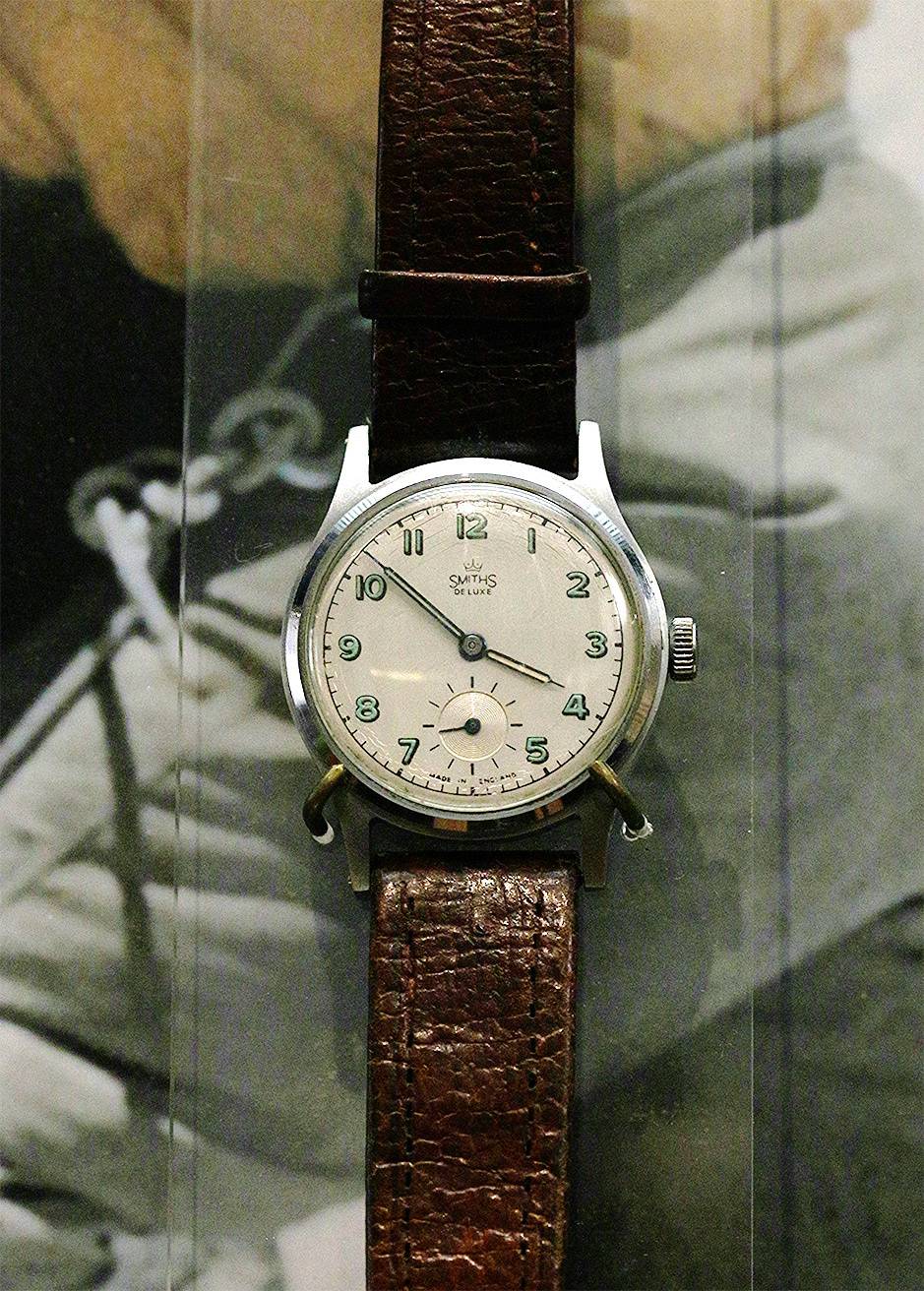
Edmund Hillary's Smiths De Luxe watch (Source: Flickr - @Noodlefish)
Tensing Norgay wore a Rolex Oyster Perpetual Datejust crafted entirely in yellow gold. If you've read our guide dedicated to the date complication, you already know that this model marked a major turning point in the history of timekeeping in the mid-20th century.
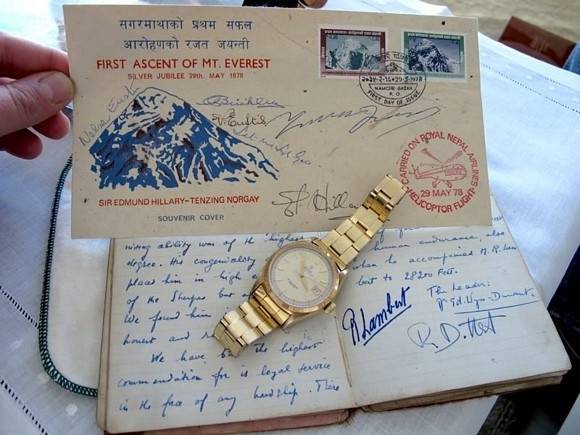
Tensing Norgay's Rolex Datejust watch (Source: Rolex Passion Report)
On May 29, 1953, at precisely 11h30, after tremendous physical effort, the two men finally reached the summit of Everest. In a moment of elation, Hillary reportedly exclaimed: "We knocked the bastard off!" At 8,848 meters above sea level, the two explorers lingered for only about fifteen minutes, long enough to take in an extraordinary panorama.
Following this historic achievement, both Smiths and Rolex chose to pay tribute to the ascent. As early as 1953, Smiths released a model named the "Everest," offered in several versions.

Vintage advertisement for the Smiths Everest watch, 1953 (Source: horlogerie.wiki)
Some feature a small seconds subdial at 6 o'clock, while others use a central seconds hand. Either way, the earliest Smiths Everest models remained visually faithful to the watch worn by Edmund Hillary, retaining the look of classic timepieces that could easily be imagined paired with the dress attire of the era.
That same year, Rolex unveiled a model stamped "Explorer," reference 6150. Its dark dial, punctuated by the numerals 3, 6, and 9, quickly became iconic. This watch is now known as the "Rolex Explorer I" (or "Rolex Explorer 1"), for a very specific reason - one we'll come back to in just a moment.
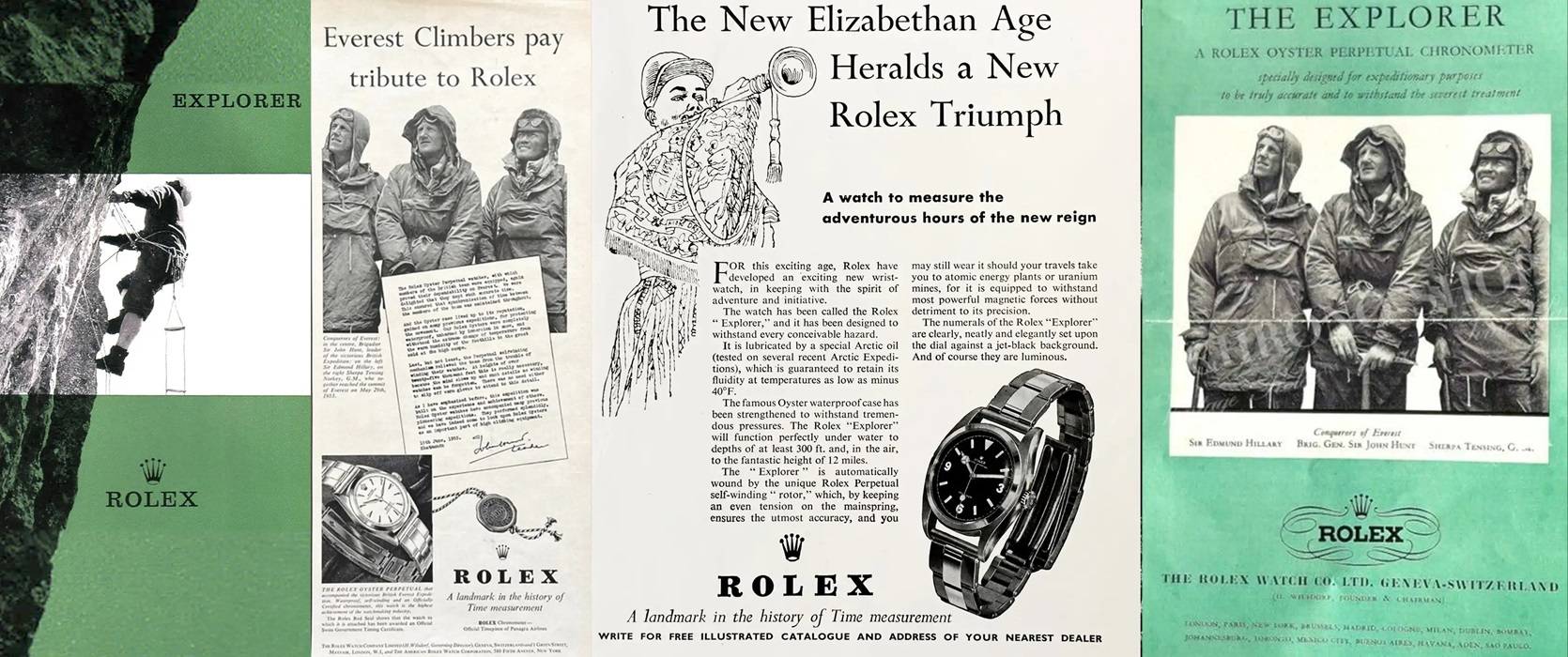
Vintage advertisement for the Rolex Explorer watch, circa 1950 (Source: Mostra Store)
Following this event, watchmaker Lip unveiled the Lip Himalaya in 1953. In reality, it was simply the Lip Annapurna, rebranded in the wake of the Everest summit on May 29, 1953. It should be noted, however, that no Lip watch was worn during that expedition: the name change was a purely marketing decision.
Indeed, following the ascent of Everest, all media attention turned to this iconic summit of the Himalayan range, situated between Nepal and China.
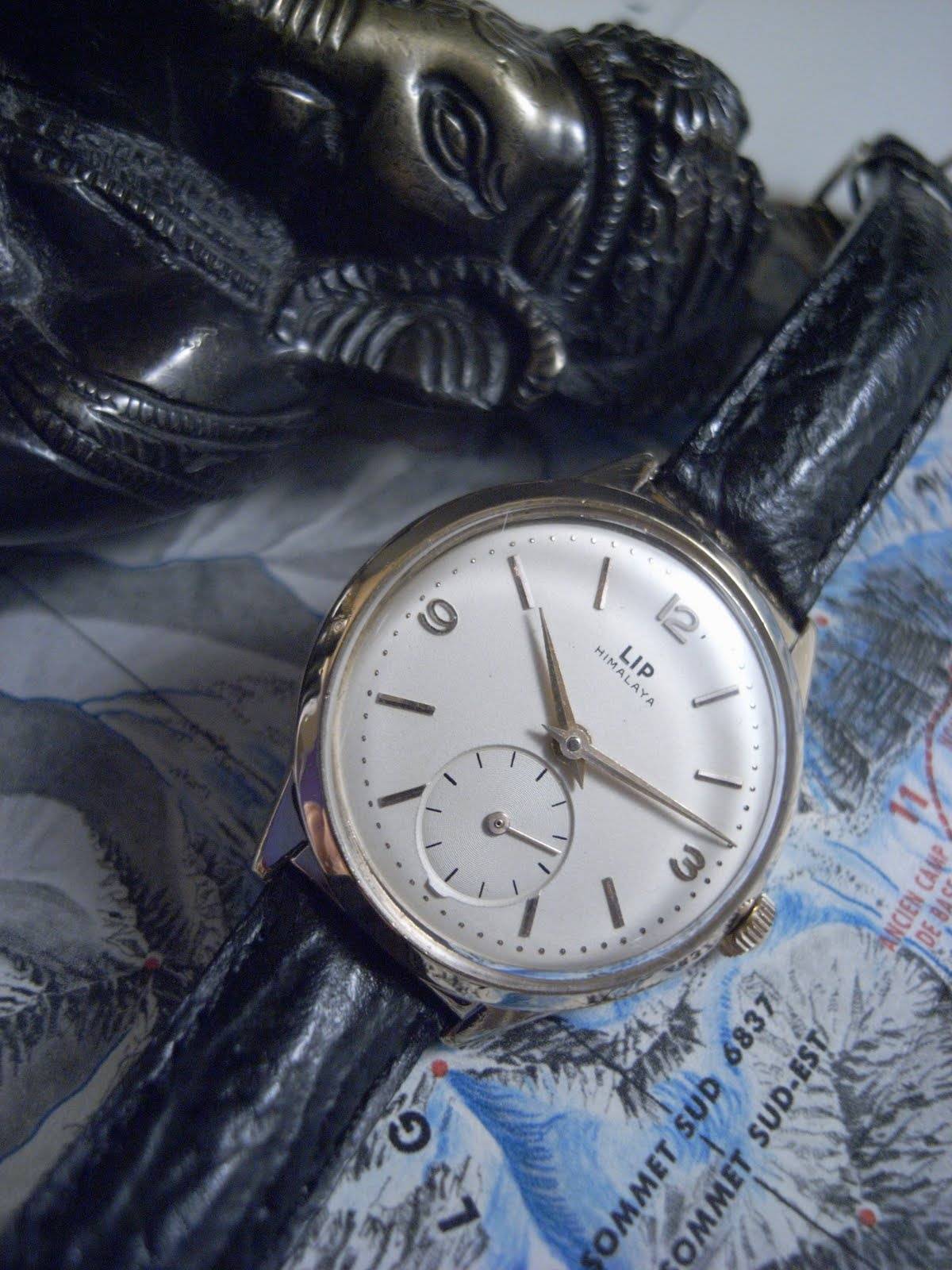
Lip Himalaya watch, circa 1950 (Source: Montres Mécaniques Vintage - Blogspot)
In the late 1950s, it was Japan's turn to introduce a watch embodying the spirit of exploration. That watch was the Seiko Laurel Alpinist. Launched in 1959, it was part of the manufacturer's "Laurel" line - a range of mid-range models whose name pays tribute to the very first wristwatch commercialized by Seiko in 1913.
While the Seiko Laurel Alpinist outwardly embraces the codes of a relatively classic watch, it sets itself apart through technical features designed to withstand the elements. Its screw-back case, for example, provides an effective barrier against sand and dust. Meanwhile, the hour and minute indices and hands are coated with luminescent material, ensuring excellent legibility even in challenging conditions.
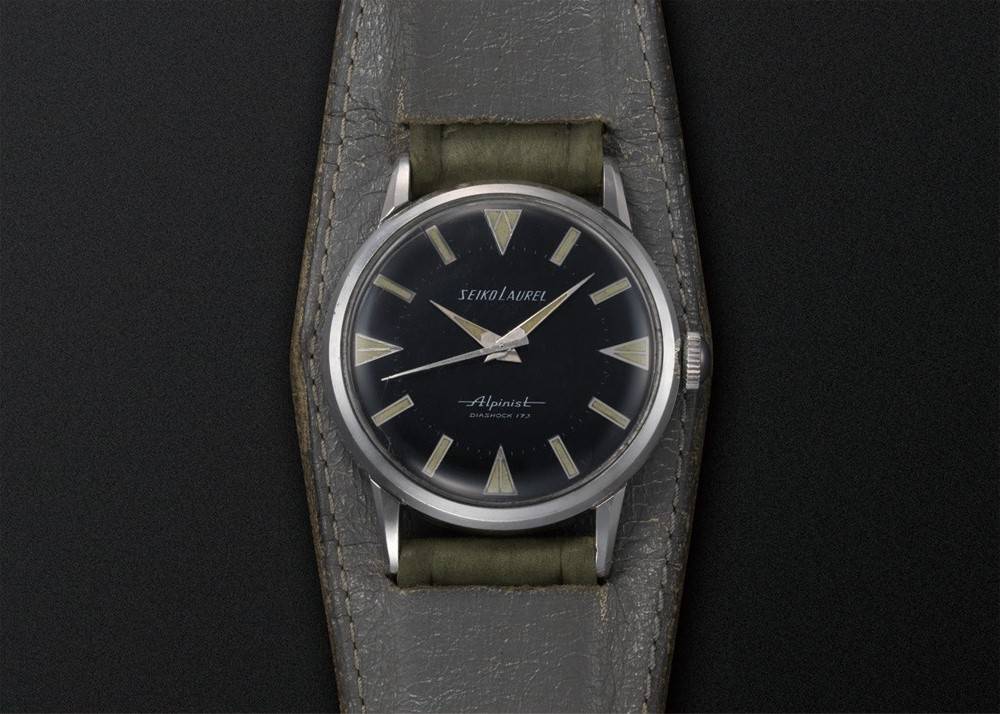
Seiko Alpinist watch, 1959 (Source: Seiko Watches)
One interesting detail is worth highlighting! The indices at 3, 6, 9, and 12 o'clock feature a distinctive shape reminiscent of mountains, while also evoking the four cardinal points found on a compass.
To better protect the watch against perspiration, Seiko also chose to equip it with an exceptionally thick leather strap, lined with a leather backing plate, in the style of so-called "bund" straps.
Good to know: Seiko recently released a limited-edition re-creation of this historic model. Reference SJE085J1 belongs to the "Prospex" line - a collection dedicated to professional watches - and bears the name "Seiko Prospex Alpinist 1959 Re-Creation."
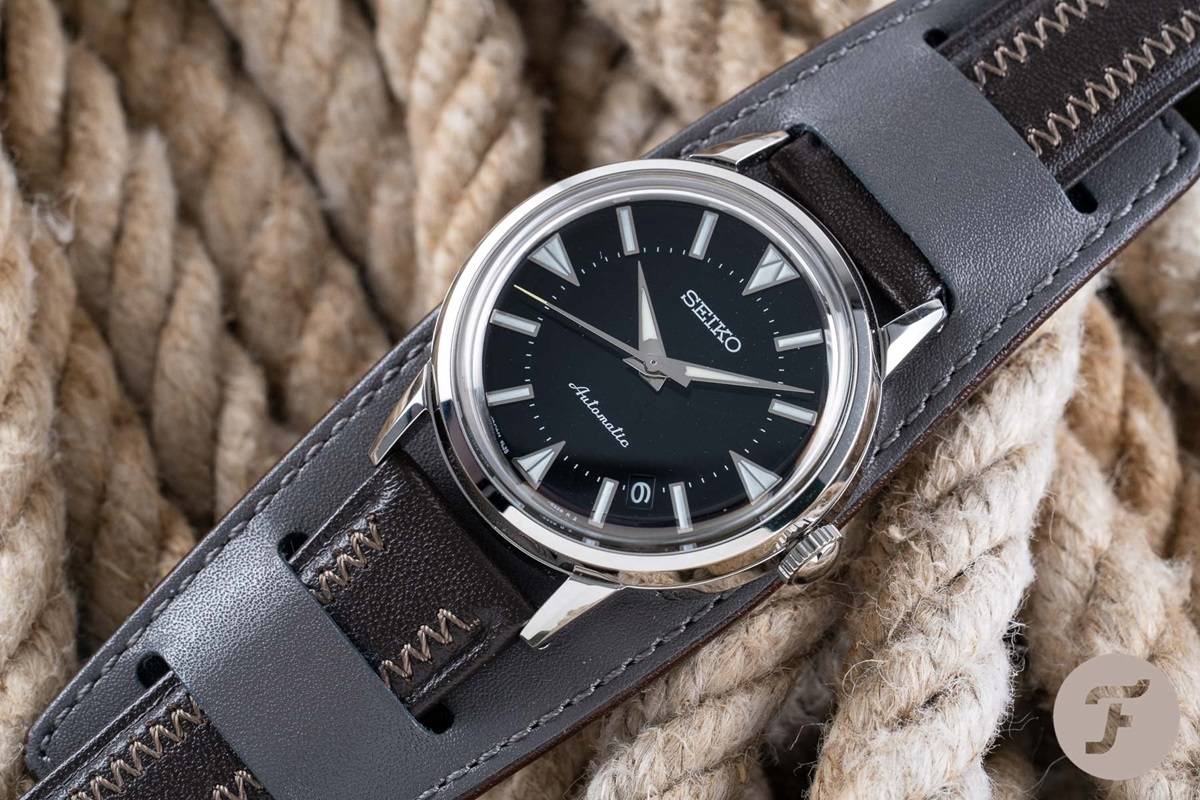
Seiko Prospex Alpinist 1959 Re-Creation ref. SJE085J1 (Source: Fratello Watches)
No conversation about exploration watches would be complete without mentioning the Tudor Ranger. Unveiled in the 1960s, it stands as the worthy heir to the Tudor watches used during the Greenland expedition between 1952 and 1954.
At the time, the models worn by explorers had not yet been labeled "Ranger." That name would only appear in the 1960s, with the launch of reference 7995/0 (also sometimes simply referred to as "7995").
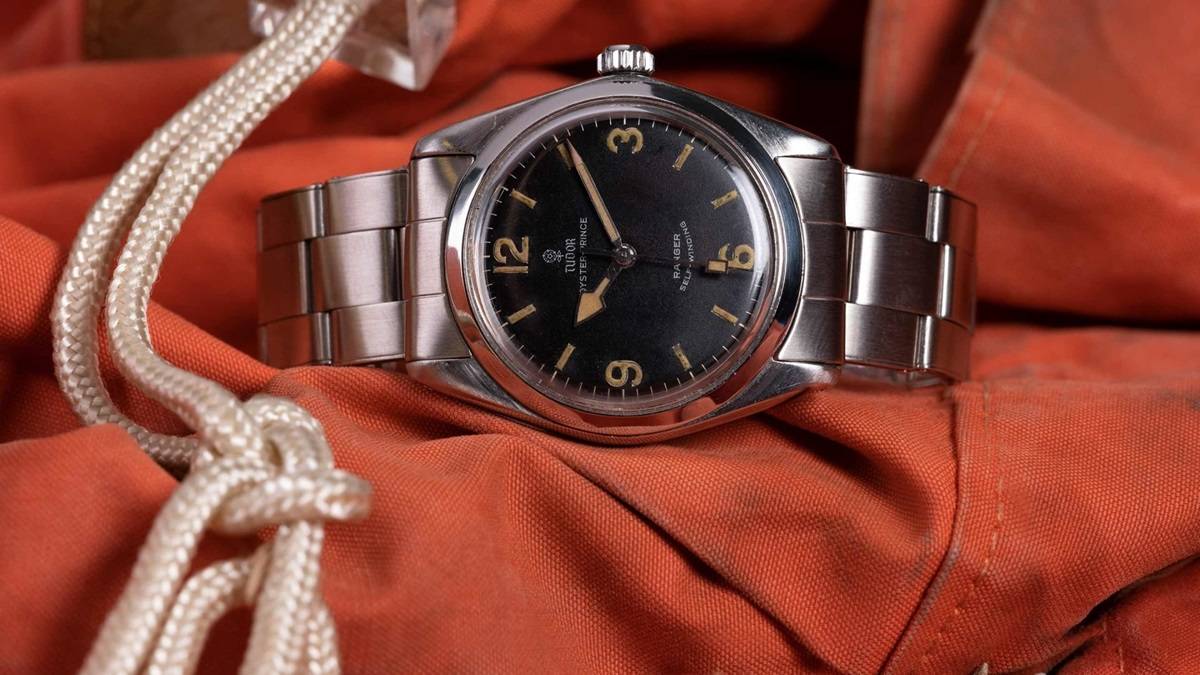
Tudor Oyster Prince Ranger ref. 7995/0 watch, circa 1960 (Source: official Tudor website)
If you follow watchmaking, you likely know that Tudor is a brand owned by Rolex - so it comes as no surprise that the Tudor Ranger bears a strong resemblance to the Rolex Explorer discussed earlier.
Powered by an automatic movement (as highlighted by the "self-winding" inscription in capital letters on the dial, just above the 6 o'clock index), the Tudor Oyster Prince Ranger offered high-end finishing while remaining significantly more affordable than the Rolex Explorer I.
It was distinguished by certain details, however, most notably its large numeral index at 12 o'clock, which was absent on its more prestigious counterpart.
A few years later, in 1971, the crown brand returned to the spotlight with a brand-new model: the Rolex Explorer II, reference 1655. It is worth noting that, despite its numbering, this watch (sometimes called the "Rolex Explorer 2") was never intended to replace the Explorer I. It was designed as an alternative, occupying a distinct place within the Rolex collection.
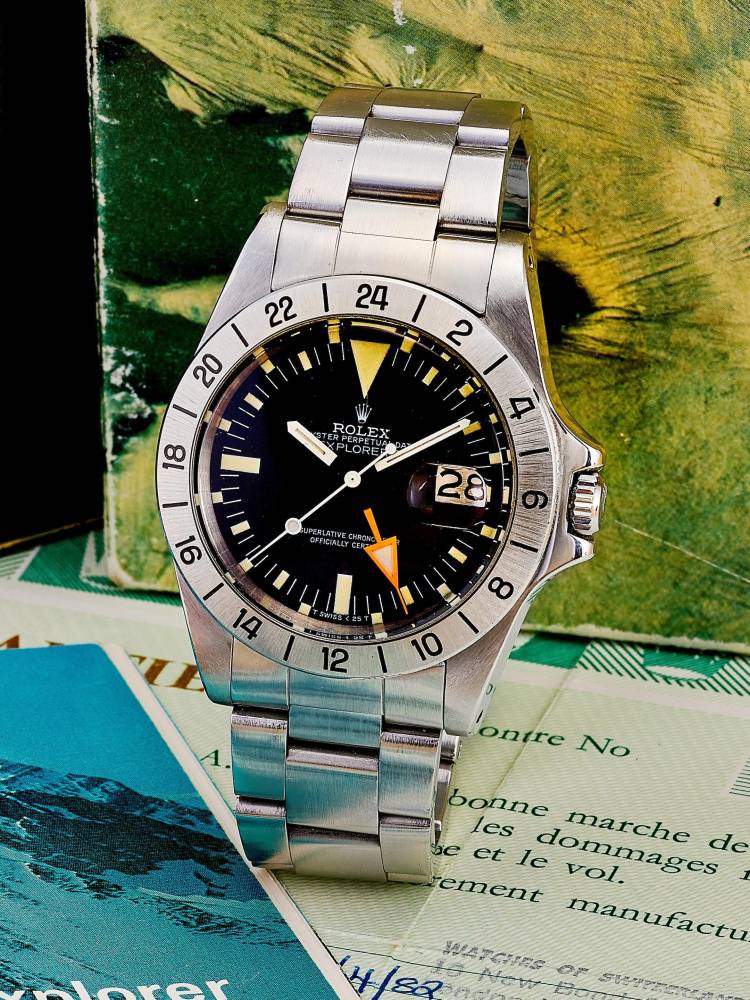
Rolex Explorer II "Freccione" ref. 1655 watch (Source: Collector Square)
And for good reason - the Explorer II differs profoundly from the Explorer I, both aesthetically and technically. It features a larger 40 mm case diameter (versus 36 mm for the Explorer I) and a radically different dial, over which an additional hand is layered.
This large orange hand displays a second time zone, as the watch is equipped with a GMT complication. To read this information, simply align the hand with the fixed 24-hour graduated bezel.
But beyond this classic function, the Rolex Explorer II offered a more discreet advantage that was particularly useful for explorers - especially cavers. Because this hand completed a full rotation of the dial every 24 hours, it also made it possible to distinguish day from night, an essential reference in underground environments where all sense of natural light disappears.
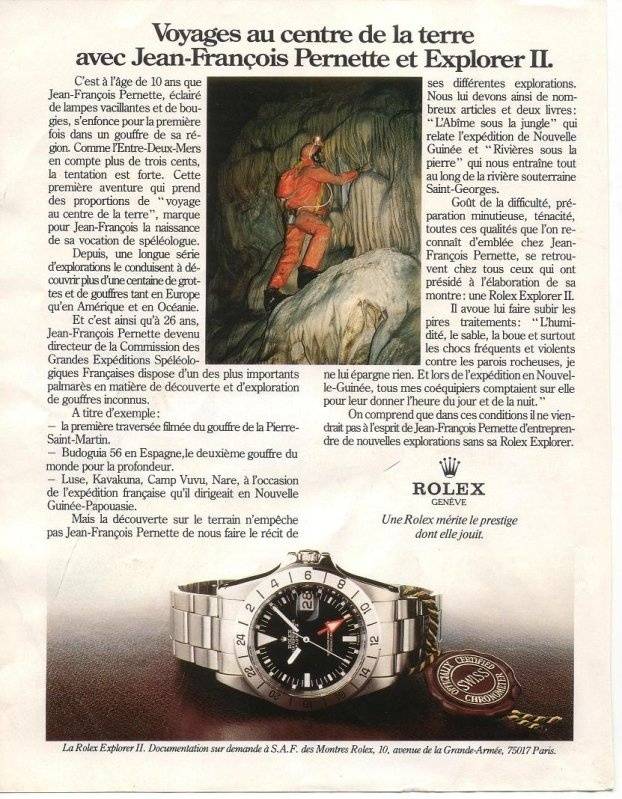
Vintage advertisement for the Rolex Explorer II "Freccione" ref. 1655 (Source: WatchProZine)
Here's a piece of trivia every crown brand enthusiast should know… Due to the striking resemblance between the GMT hand of the Rolex Explorer II 1655 and a large arrow, watch lovers quickly gave this model an Italian nickname: "Freccione," which literally means "big arrow."
It comes as no surprise, then, that browsing watch forums, specialist websites, or chatting with fellow enthusiasts, you may well come across the expression "Rolex Freccione." It is simply a nickname given to the iconic reference 1655.
Another equally fascinating story involves Steve McQueen! If you've read our guide dedicated to motorsport watches, you'll know he's famous for wearing a Heuer Monaco in the film "Le Mans."
What's lesser known, however, is the rather far-fetched story linking him to the Rolex Explorer II 1655. In the 1970s, an Italian magazine reportedly claimed that the actor owned this model in his personal collection - a completely inaccurate claim that nonetheless sparked a stubborn rumor.
Result: despite the complete absence of any proof, the nickname stuck. To this day, some collectors and enthusiasts still refer to this reference as the "Rolex Steve McQueen." In the world of watchmaking, it seems, legends die hard!
Since the 1970s, exploration watches have naturally evolved, keeping pace with technical advances and the changing expectations of users.
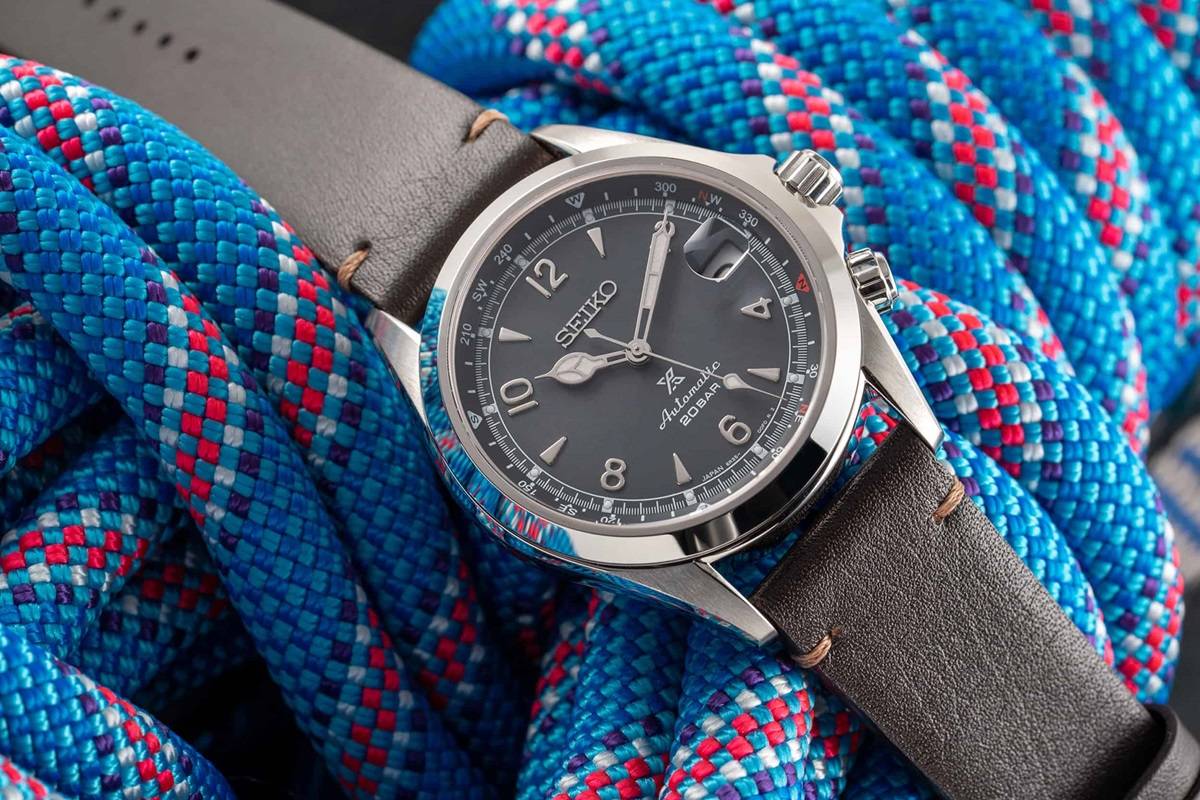
Seiko Alpinist ref. SRPB201j1 (Source: WornandWound)
While iconic references such as the Lip Himalaya, the Seiko Alpinist, the Tudor Ranger, and the various Rolex Explorer models remain available in brand catalogs, new players have emerged over the decades.
Today, these brands push the boundaries with ever more technical timepieces, incorporating modern materials such as titanium and rubber, often paired with the latest surface treatments. Some innovations address dehumidification, for example - a crucial factor in ensuring watch reliability in extreme environments.
Among the brands that best illustrate this evolution, notable mentions include Sinn, Victorinox, Longines, and Timex, each contributing in their own way to redefining what a modern exploration watch can be.
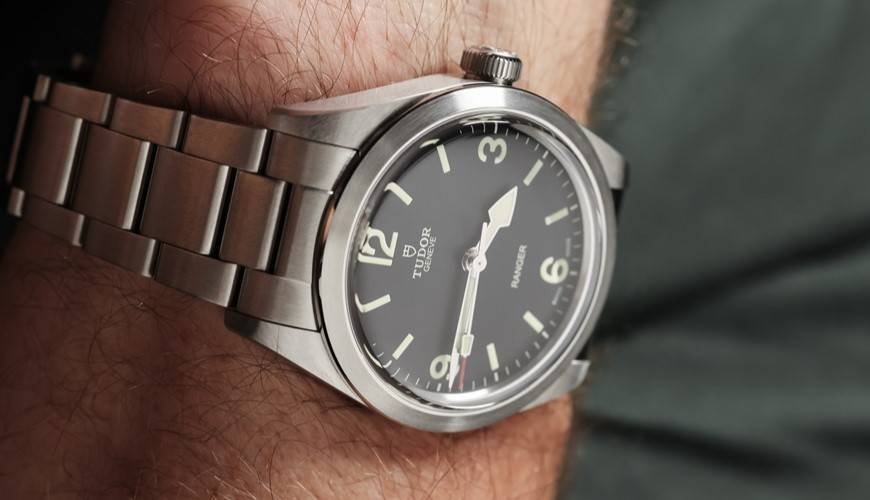
As tool watches, exploration watches come with a very specific set of attributes…
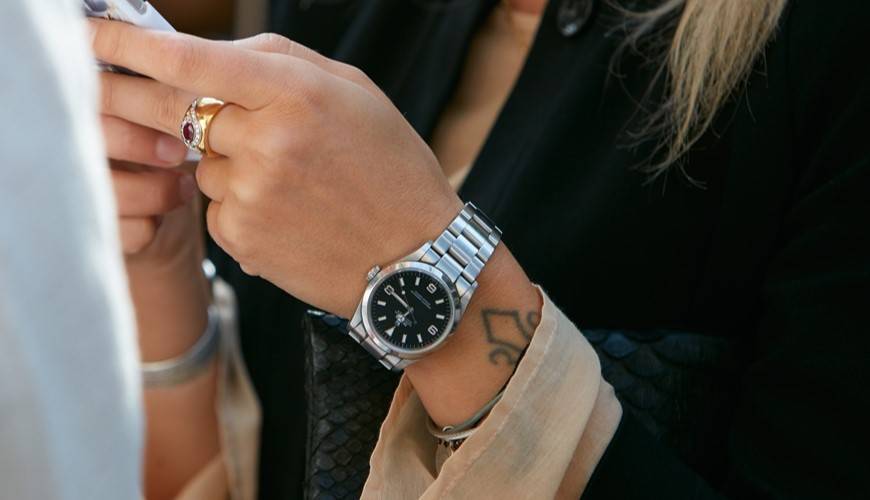
As we've seen, every exploration watch has its own personality and unique story. But the question remains: does it make sense, today, to invest in an exploration watch - especially if you're not actually an explorer?
Honestly, the answer can be yes. For one thing, you won't struggle to find a model that suits you. Some bear a strong resemblance to sport watches, while others lean more toward classic watches - elegant and versatile.
Beyond that, the technical attributes of exploration watches make them perfectly suited for everyday wear. Their exceptional dial legibility, case water resistance, and movement anti-magnetism all deliver reliability and comfort day in, day out. Add the understated charm of certain references, and you get watches that are both functional and a pleasure to wear - whether at the office, out on the town, or on your next adventure.
Share :
Official European Union notice on your rights in the event of a product's lack of conformity.