
0
Product added
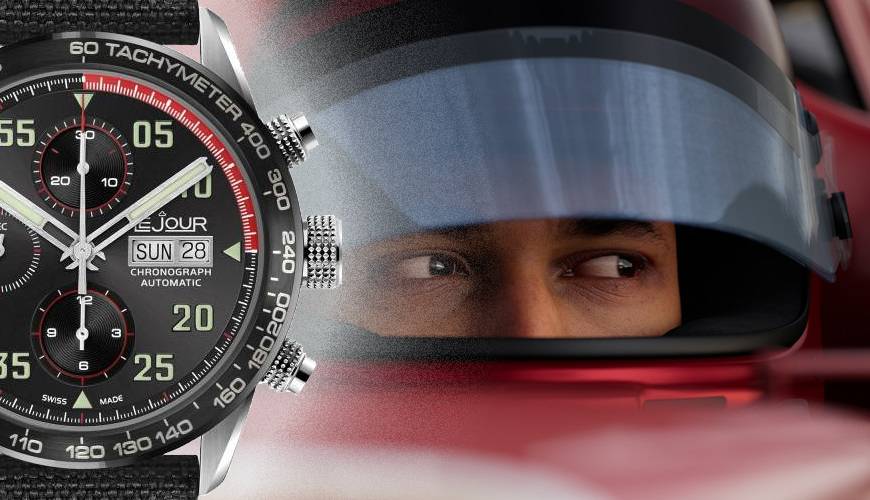
At first glance, watchmaking and the automobile may seem like very different worlds - yet they share a remarkable number of common threads. Escapement, transmission, clutch, regulator, torque… these terms are just as at home in the world of watches as they are under the hood of a car.
To go even deeper, we've put together a guide dedicated to the watches that shaped the history of motorsport. Some are well known to enthusiasts - others have quietly slipped through the cracks over the years.
So don't waste a second - get in gear with our guide to motorsport watches!
Like most sports watches, the motorsport watch is first and foremost a tool conceived, at its core, to serve a very specific purpose: timing races and accompanying drivers pushing their machines to the limit.
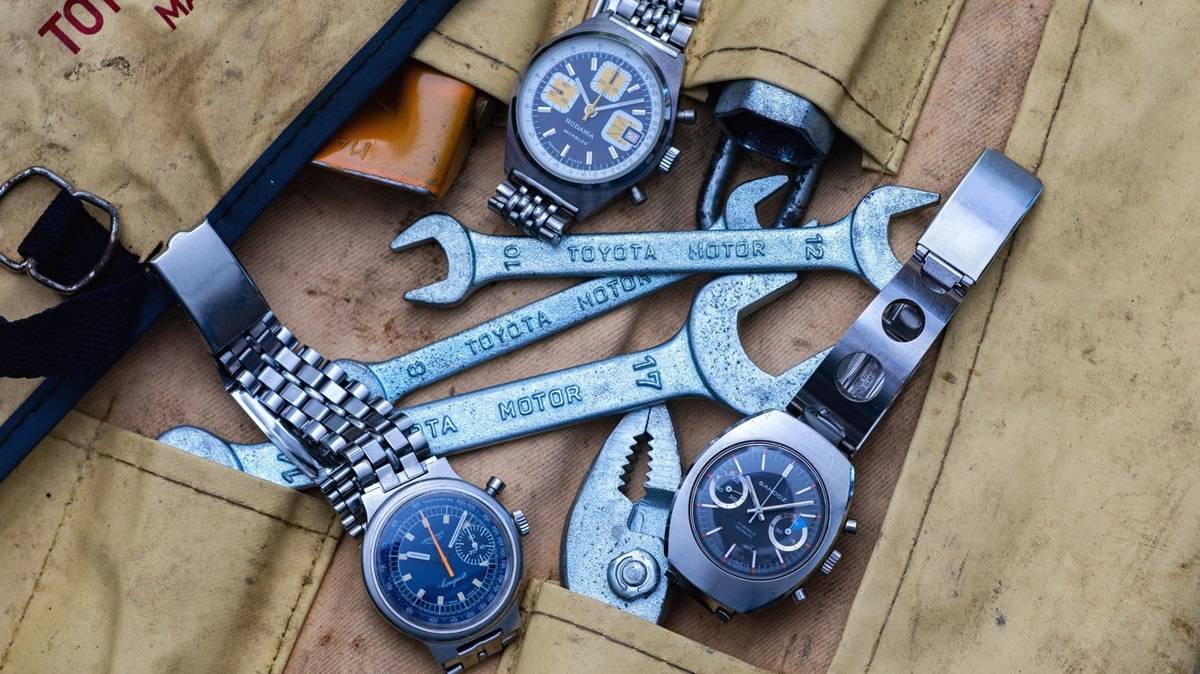
Several vintage motorsport chronograph watches (Source: Vintage View)
This is precisely why watch enthusiasts generally place these models in the "tool watches" category. You'll often come across this English term, even on French-language forums. Due to their primary function, motorsport watches are almost always equipped with a chronograph complication - though a few exceptions do exist.
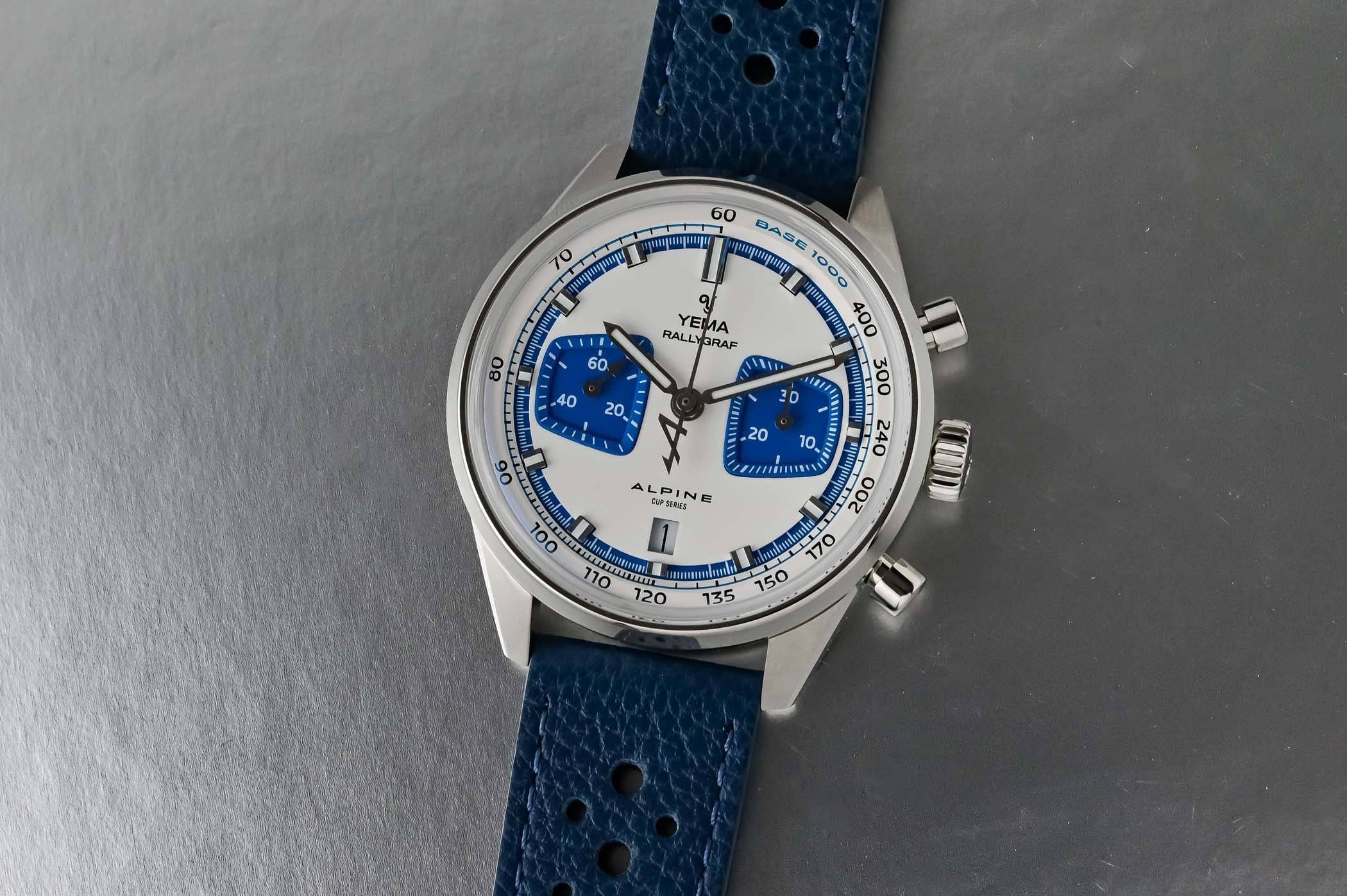
The ultimate motorsport watch: the Yema Rallygraf Alpine Cup Series (Source: Monochrome Watches)
These models, designed with a strong emphasis on legibility, are generally characterized by dials on which the various pieces of information are clearly identifiable. Most often black, grey, white, blue, or red, they can also feature contrasting sub-dials paired with a red or fluorescent orange chronograph hand. In the world of motorsport watches, color choices are never left to chance.
The links between watchmaking and the automotive world go back a long way. From the very beginning of the last century, a rather distinctive creation was already taking shape: a piece developed by Mido for the automaker Bugatti. This watch took the form of a "radiator watch," its bell-shaped case directly inspired by the iconic grille of Bugatti automobiles.
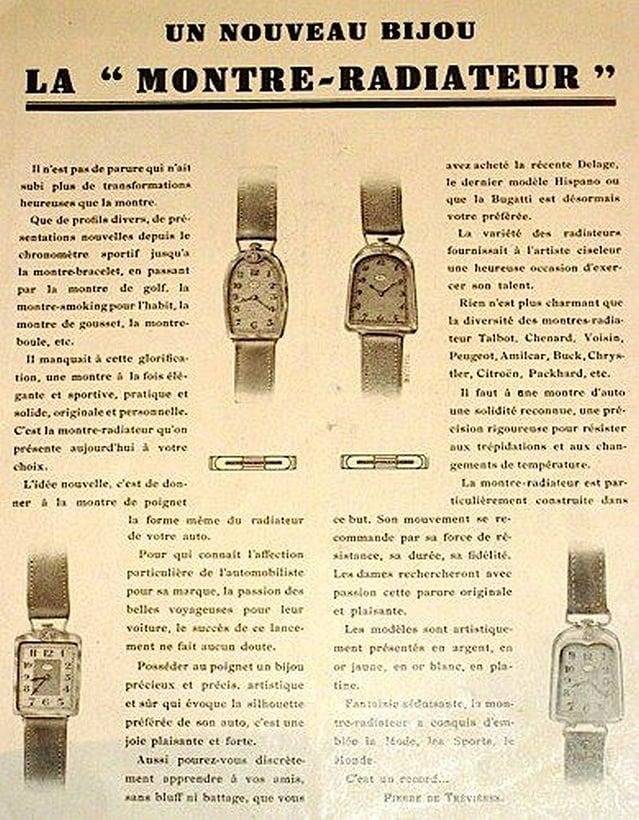
Vintage advertisement for Mido radiator watch, circa 1920 (Source: Montres de luxe)
Crafted in yellow gold, the case housed a clean dial featuring a pattern that, from a distance, resembles a honeycomb but actually replicates the shape of an automotive grille. The flame-blued hands and the Bugatti logo positioned at 12 o'clock, just below the winding crown, gave the piece a particularly elegant level of detail.
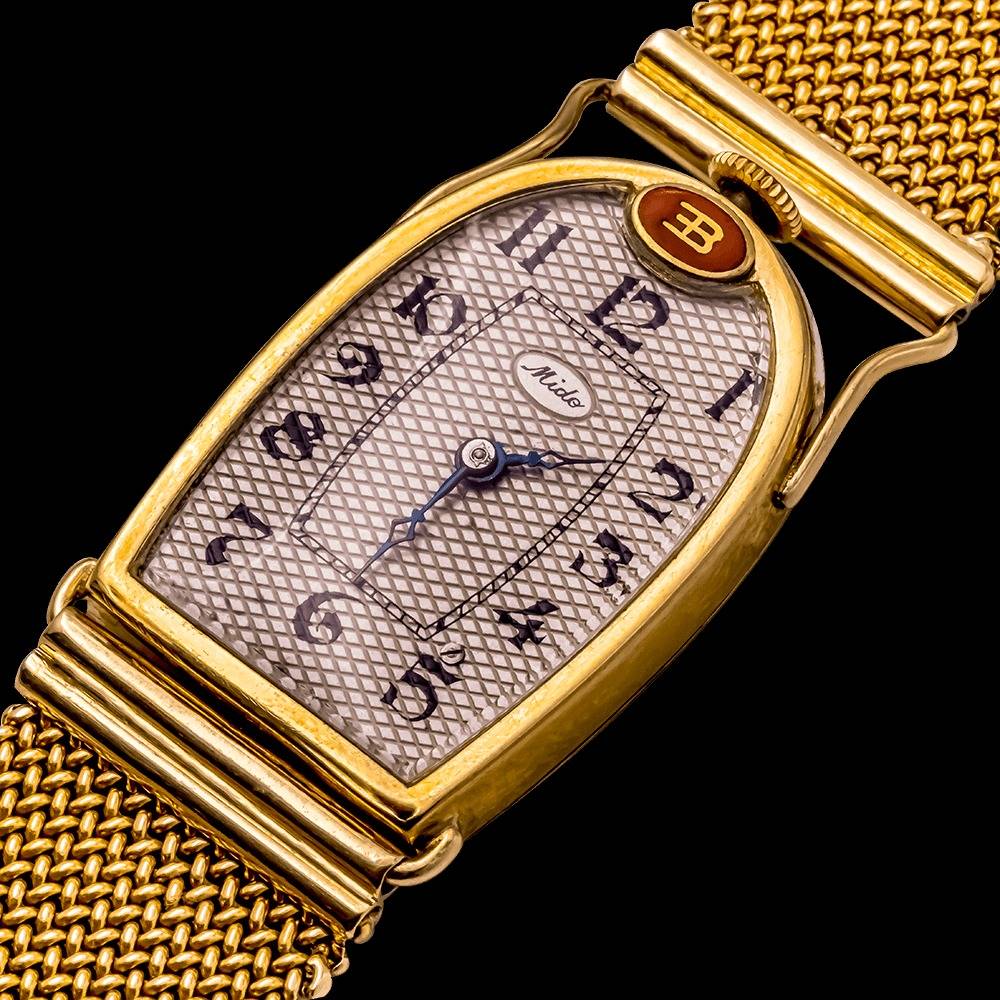
Mido x Bugatti radiator watch (Source: Mido official website)
Produced in very limited numbers, this watch still surfaces at auction from time to time. One notable example: in April 2021, Ettore Bugatti's personal watch was sold for 272 800 € at a sale held in Toulouse by the auction house Stanislas Machoïr.
While the watch born from the Mido and Bugatti collaboration is relatively well known among vintage watch enthusiasts, the model produced through the Mido and Ford collaboration is far more obscure. This rare variant, crafted in solid silver, featured a distinctive dial pattern and gilded Breguet hands. The Ford manufacture logo was still positioned at 12 o'clock. Its silver appearance gave it a distinctly Art Deco character.
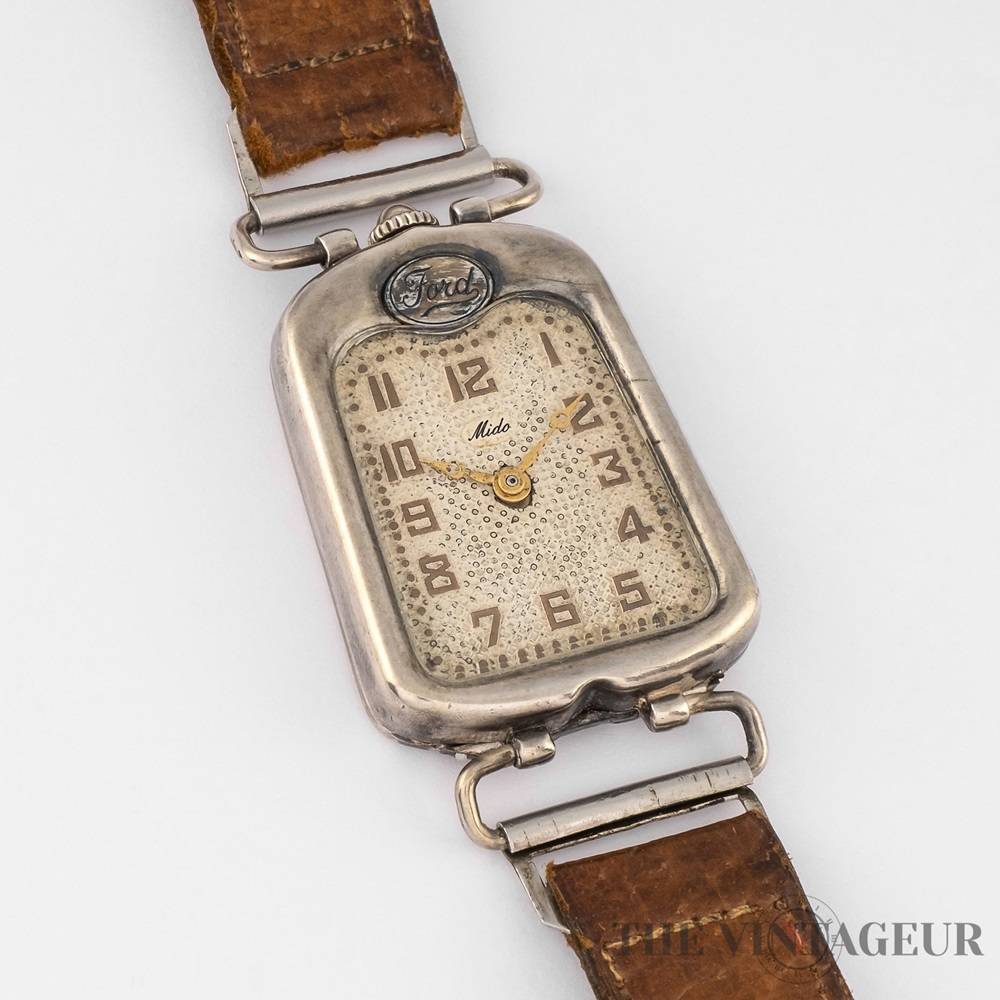
Mido x Ford radiator watch, circa 1920/1930 (Source: The Vintageur)
Although these radiator watches developed by Mido featured a design directly inspired by the automotive world, they were read in a perfectly conventional way, just like any other rectangular watch of the era. Yet if you drive regularly, you've probably already noticed how difficult it can be to read the time when your hands are on the steering wheel. The viewing angle is far from ideal, and glancing at your watch can even become dangerous - especially at high speed in a vintage car with no airbags or modern safety features.
It was precisely to address this issue that some brands developed specialized watches known as "driver's watches" (not to be confused with "diver's watches," which we covered in our guide to dive watches). The specific design of these models was engineered to make it easier to read the time with hands on the steering wheel. They were not strictly motorsport watches, but rather watches designed for road professionals: truck drivers, traveling sales reps, taxi drivers, and bus drivers.
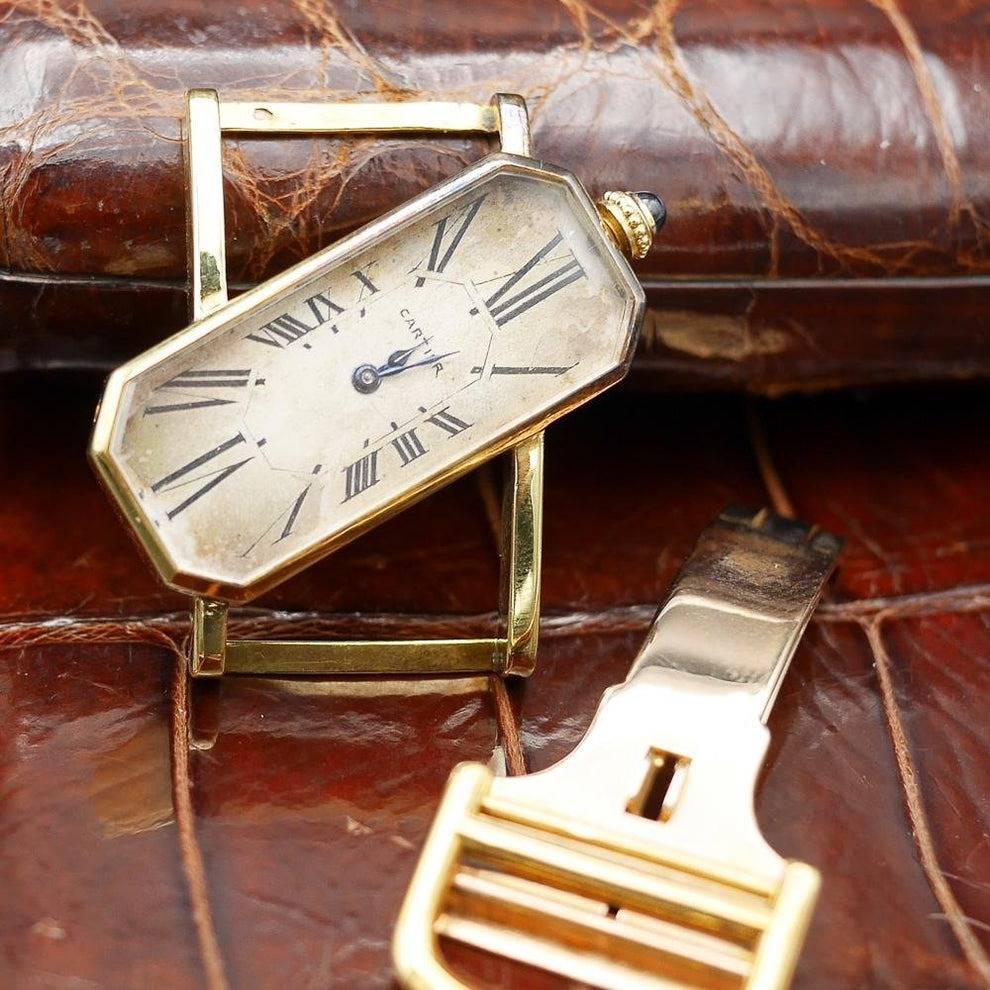
Cartier "Driver's Watch," circa 1930 (Source: Pires-Mauboussin)
Some houses, such as Cartier, have produced stunning luxury models that are now particularly prized by collectors due to their extreme rarity. If the subject intrigues you, browse auction catalogs or websites specializing in vintage watches - you may just be lucky enough to come across one of these rare specimens.
In 1916, Heuer introduced a remarkable instrument called the "Mikrograph," a device capable of measuring times to 1/100th of a second during motor races.
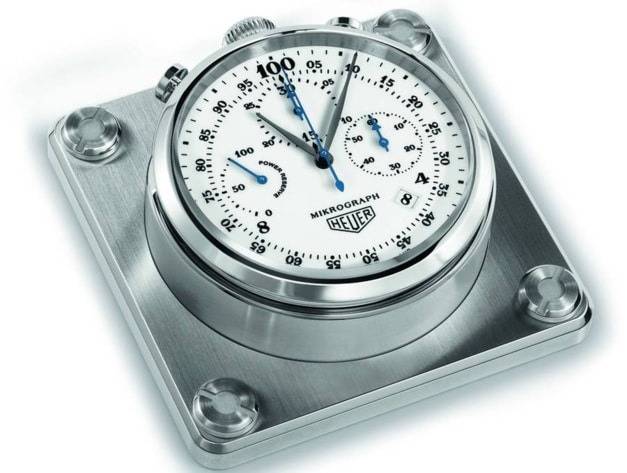
Heuer Mikrograph 1916-2016 Anniversary Edition (Source: AutomotivPress)
This piece, revolutionary for its time, helped Heuer begin building its reputation by capitalizing on the precision of its instruments. A genuine asset for the brand - all the more so since motorsport was not the only arena in which it would make its mark during the first half of the 20th century.
In the 1930s, certain automotive dashboard instruments began to appear. Depending on the model, they could be integrated directly into cars or remain completely standalone. It was in this context that Heuer introduced in 1933 a new instrument called "Autavia". As a fun fact, the name is a portmanteau of two words: "auto" and "aviation."
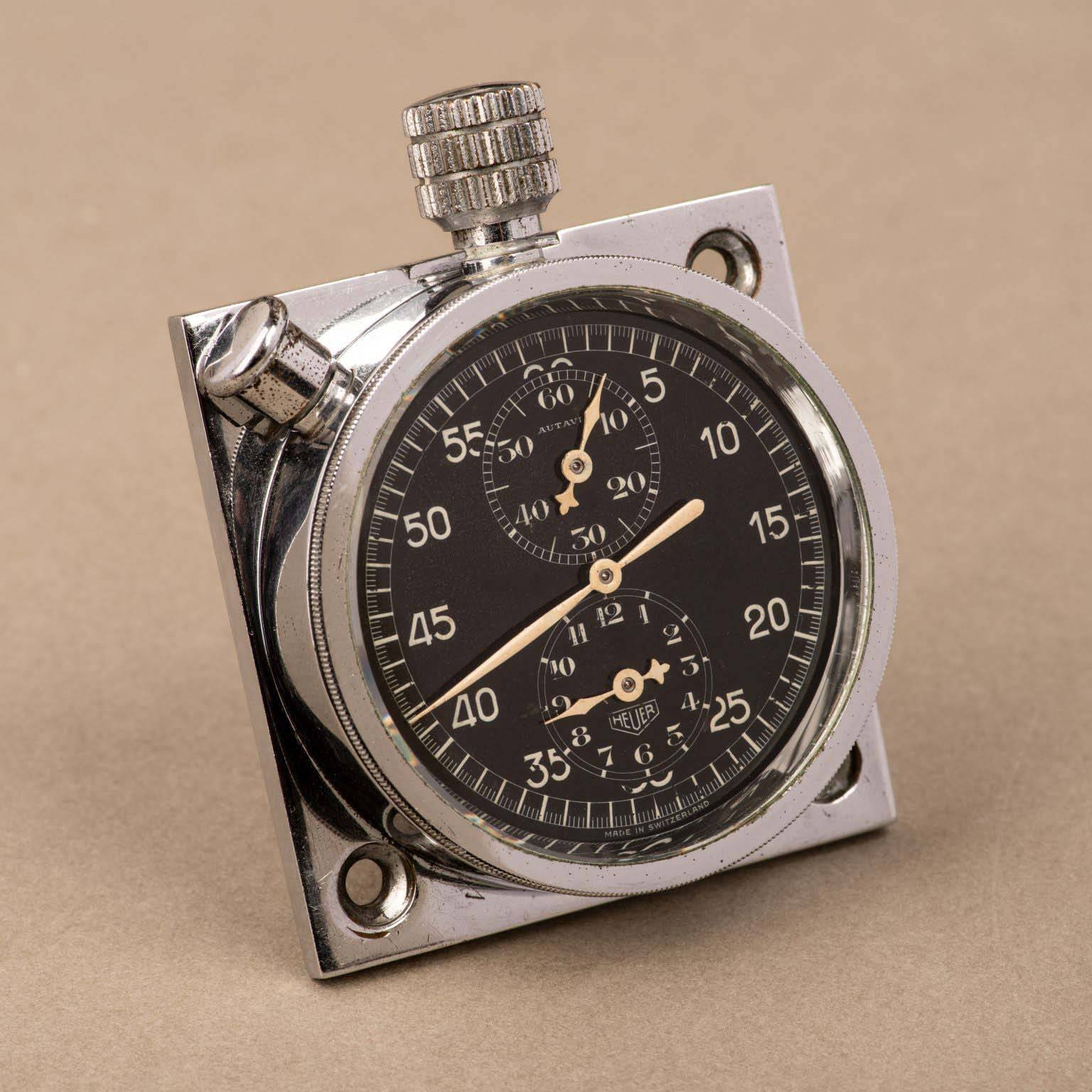
Heuer Autavia dashboard instrument, 1933 (Source: Watches of Lancashire)
But things really accelerated in the 1960s. During that decade, several chronograph watches directly tied to the automotive world came to life. In 1962, the wristwatch version of the Heuer Autavia made its debut.
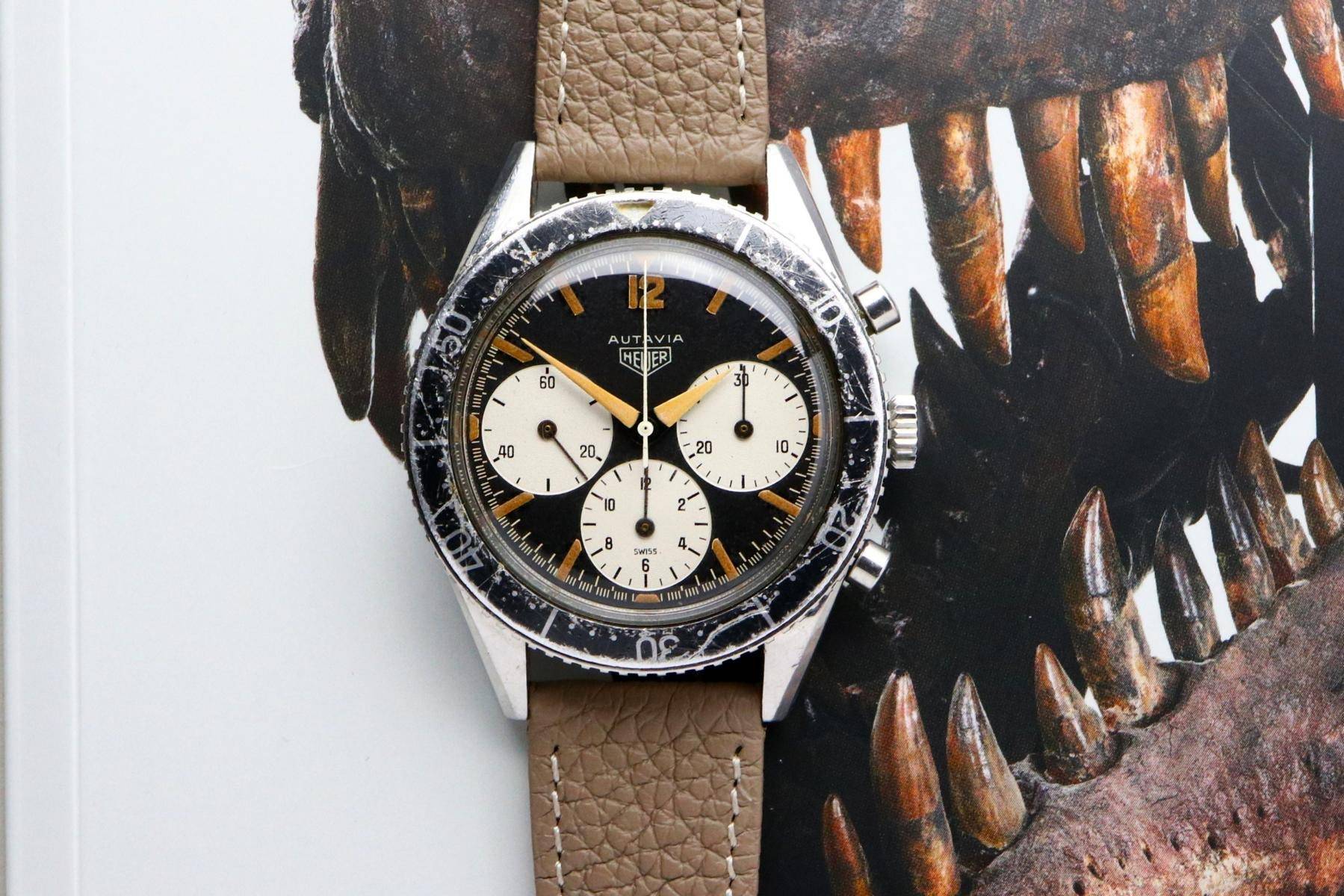
Heuer Autavia Ref. 2446, 1962 (Source: Wristclassics)
Its compact 38mm stainless steel case houses a manual-winding mechanical movement, the Valjoux 72 - a caliber that was highly regarded in high-end chronograph watches of the era.
A year later, in 1963, Rolex unveiled the Rolex Daytona Reference 6239, a watch that has since become iconic. Yet its origins go back slightly further. This model should not be seen as an entirely new creation, but rather as the evolution of an earlier chronograph: the Rolex 6234, which purists affectionately call the "Pre-Daytona."
For the record, the name "Daytona" is directly inspired by the famous oval circuit Daytona International Speedway, located in Florida.

Daytona International Speedway, Florida (Source: FOX 35 Orlando)
The Rolex Daytona Reference 6239, made famous by American actor Paul Newman, is today considered one of the most desirable watches in the world. It becomes even more so in the exact configuration worn by the actor: fitted with the celebrated "exotic" dial, instantly recognizable by its distinctive black and cream two-tone color scheme.
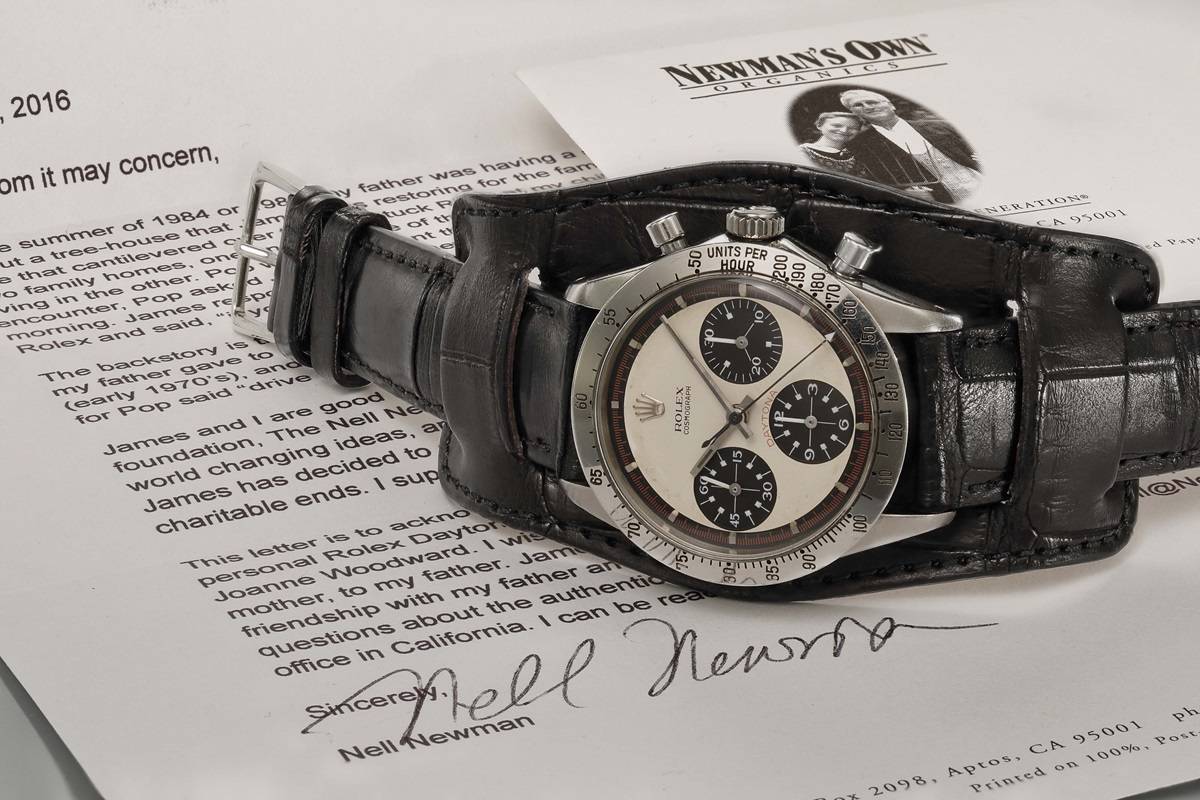
Rolex Daytona Ref. 6239 by Paul Newman (Source: La Cote des Montres)
For the record, it was Joanne Newman, the actor's wife, who gave him the watch. She even had a touching phrase engraved on the caseback: "DRIVE CAREFULLY ME." A gesture that became legendary. Paul Newman's personal watch was ultimately sold at auction by Phillips in New York at the end of 2017, for the staggering sum of 17 752 500 $.
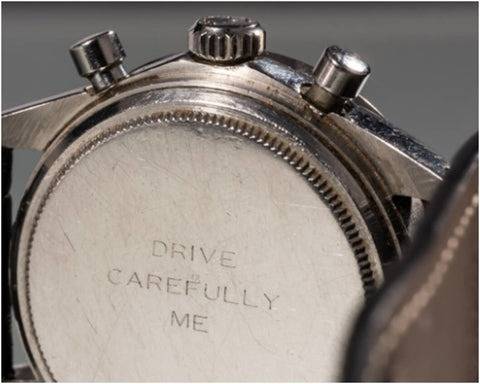
"DRIVE CAREFULLY ME" engraving on Paul Newman's Rolex Daytona (Source: Retour en Vol)
During the second half of the 1960s, a few years after unveiling its Superman - a watch we discussed in our guide to dive watches - French watchmaker Yema made another bold move by releasing a motorsport watch called the "Rallygraf."
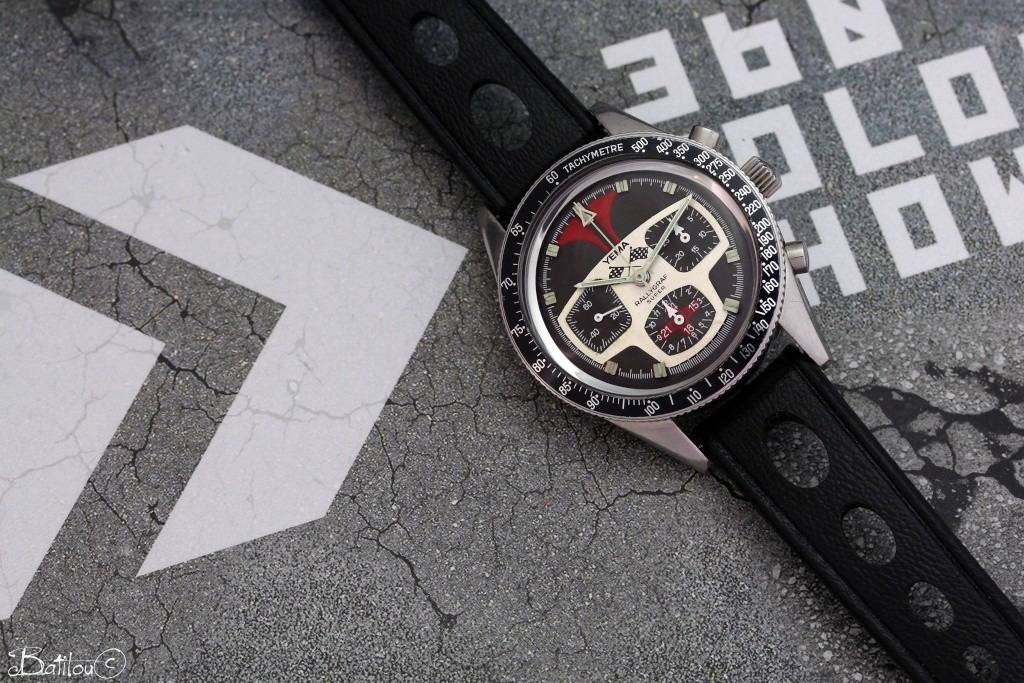
Yema Rallygraf Super, circa 1966 (Source: LE CLUB YEMA)
The dial of the Yema Rallygraf stands out immediately from other chronographs on the market. Its highly distinctive presentation clearly evokes an automotive dashboard. Adorned with two checkered flags, it firmly places this French watch - today highly sought after by vintage watch collectors - in the world of motorsport.
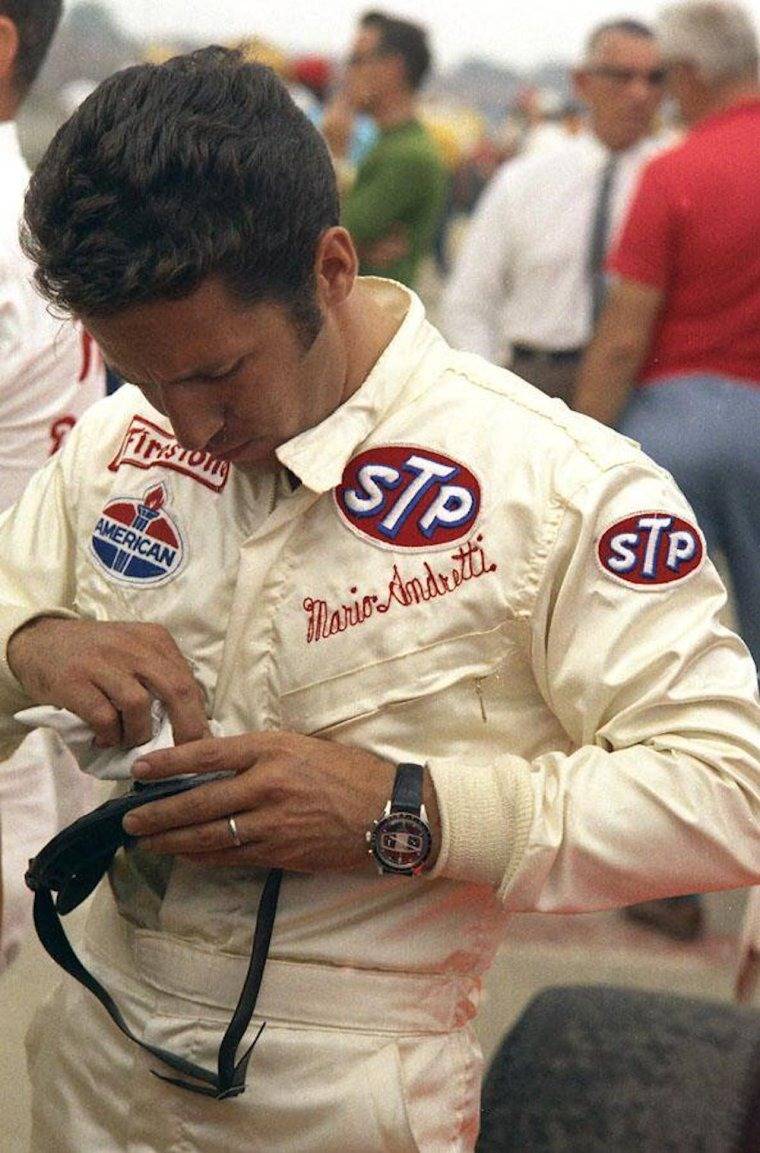
Mario Andretti wearing a Yema Rallygraf (Source: chronographes.net)
An interesting story surrounds this model… The Yema Rallygraf was worn at the time by Italian-American racing driver Mario Andretti, who won the Daytona 500 in 1967 behind the wheel of his Ford Fairlane, prepared by the Holman-Moody racing team.
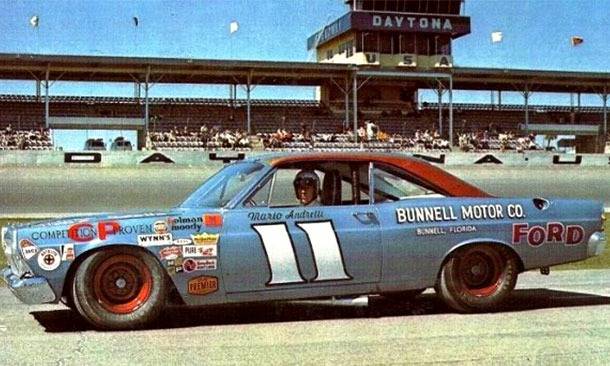
Mario Andretti at the Daytona 500, 1967 (Source: IndyCar Series)
In 1969, Heuer stepped back into the spotlight by unveiling a trio of chronograph watches that would leave a lasting mark on watchmaking history. It was nothing short of a masterstroke: all three would go on to become icons.
Heuer Monaco, Heuer Autavia, and Heuer Carrera: three names that resonate with every enthusiast. These models share a major distinction for their time - all three are powered by a self-winding mechanical movement called "Chronomatic," which was later renamed the Calibre 11.
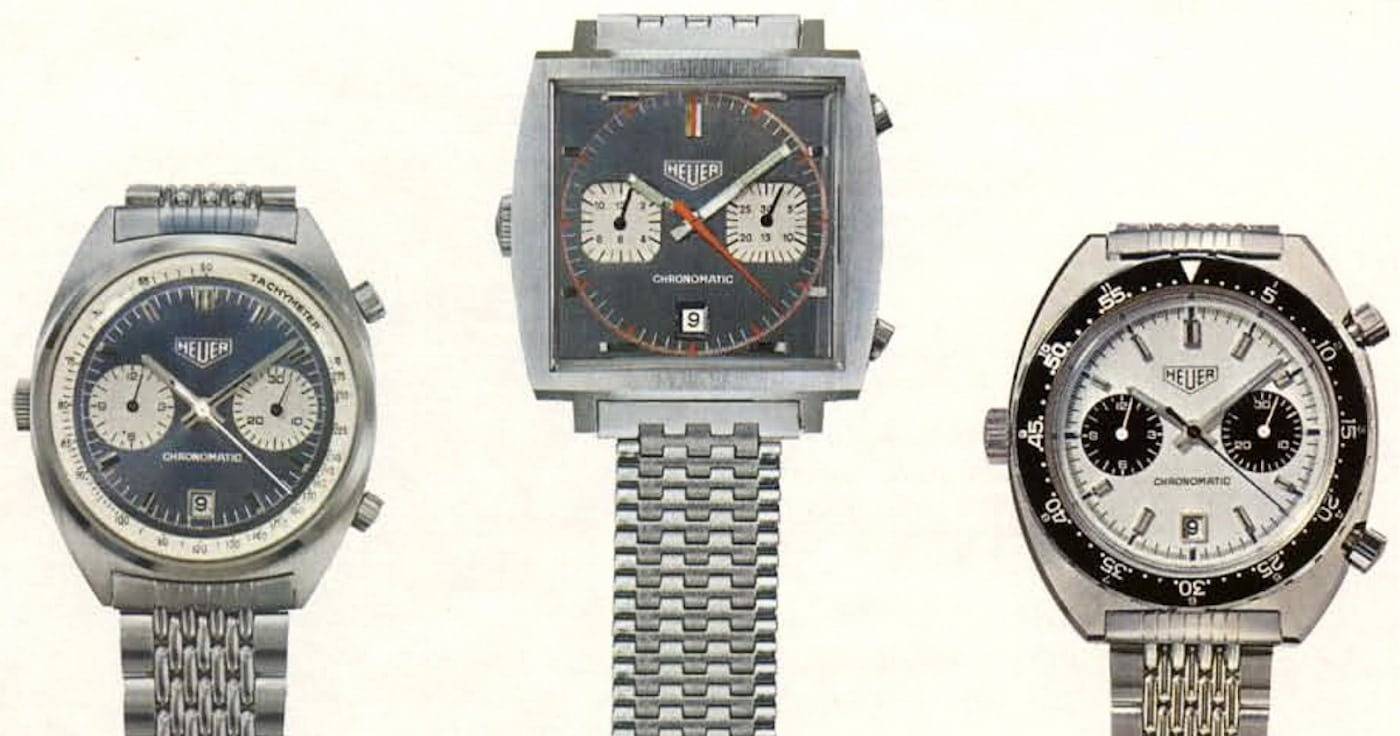
Heuer Carrera, Monaco, and Autavia watches, circa 1969 (Source: Hodinkee)
Interestingly, although each of these watches belongs to a distinct collection, their earliest versions featured particularly clean, understated dials. They carried only the Heuer logo and the word "Chronomatic," a reminder of the movement that powered them.
If you read our guide to the chronograph complication, you may have noticed that these models feature a configuration known as "Bicompax." This means they have two sub-dials - one at 3 o'clock, the other at 9 o'clock. The Calibre 11 also featured a date display at 6 o'clock, as well as an unusual layout: the pushers were positioned on the right side of the case, while the crown was placed at 9 o'clock.
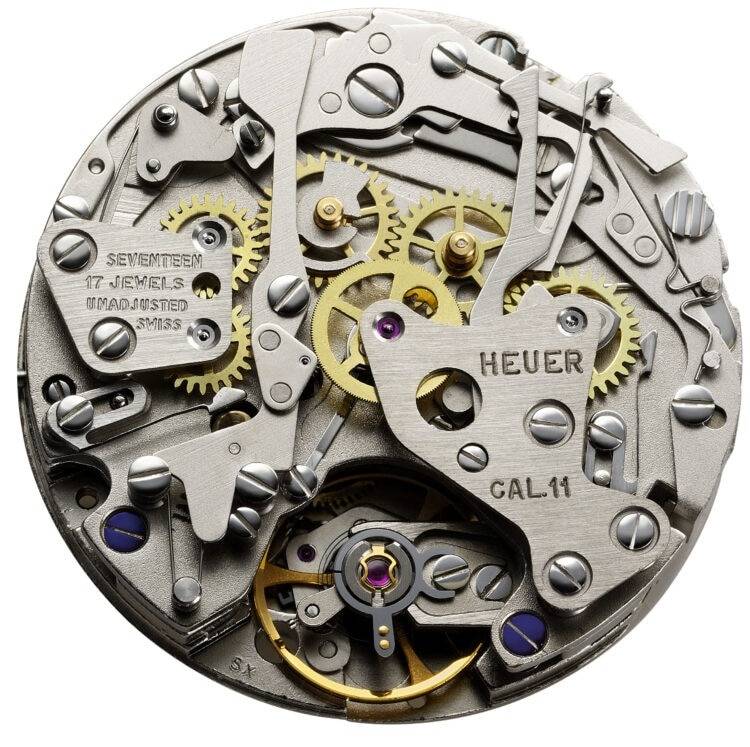
Heuer Calibre 11 (Source: TAG Heuer Magazine)
Another technical detail worth highlighting: the Calibre 11 features a micro-rotor - a tiny oscillating weight that is not visible on the surface of the movement, as it is sandwiched between various components of the mechanism. An ingenious configuration that makes it invisible without partially disassembling the movement.
Among this mythical trio, the most iconic is undeniably the Heuer Monaco. Its fame doesn't rest solely on its square case, which was remarkably bold for its time. Above all, it owes its legendary status to being worn by Steve McQueen in the film "Le Mans," released in 1971.
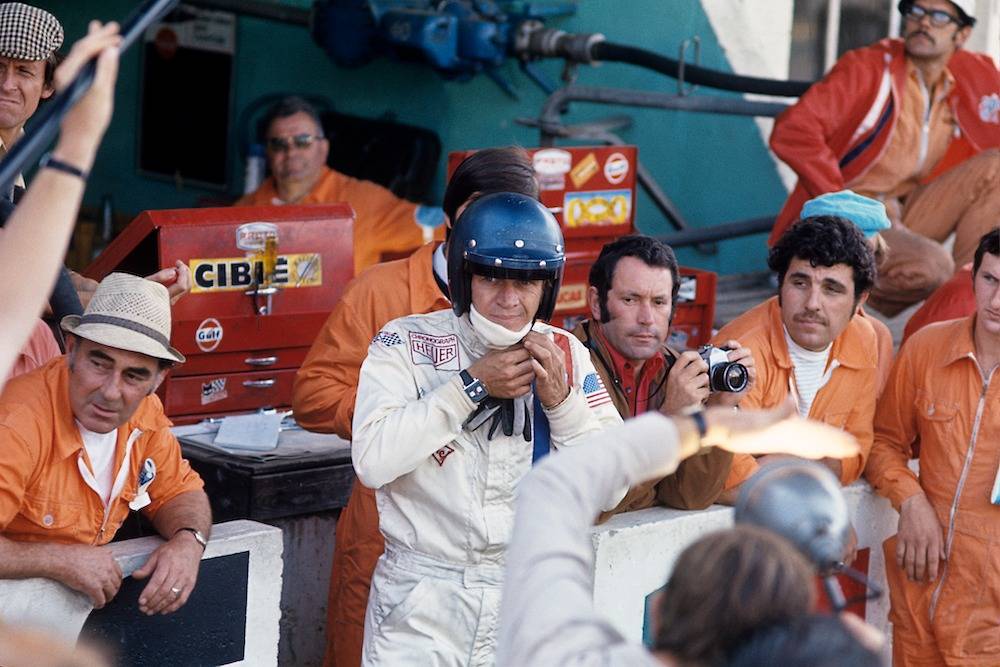
Steve McQueen wearing a Heuer Monaco in the film Le Mans, 1971 (Source: ATimelyPerspective)
As a result, many viewers assumed it was the actor's personal watch. At the time, it was indeed common for actors to wear their own clothes and sometimes their own watches on set. In this particular case, however, the Heuer Monaco had simply been loaned to Steve McQueen for the film.
A few years later, another motorsport-connected watch made its debut. In 1988, Chopard launched the Mille Miglia, a model developed specifically for the famous Italian open-road endurance race. Why 1988? Simply because that year, Chopard became the event's official timekeeper.
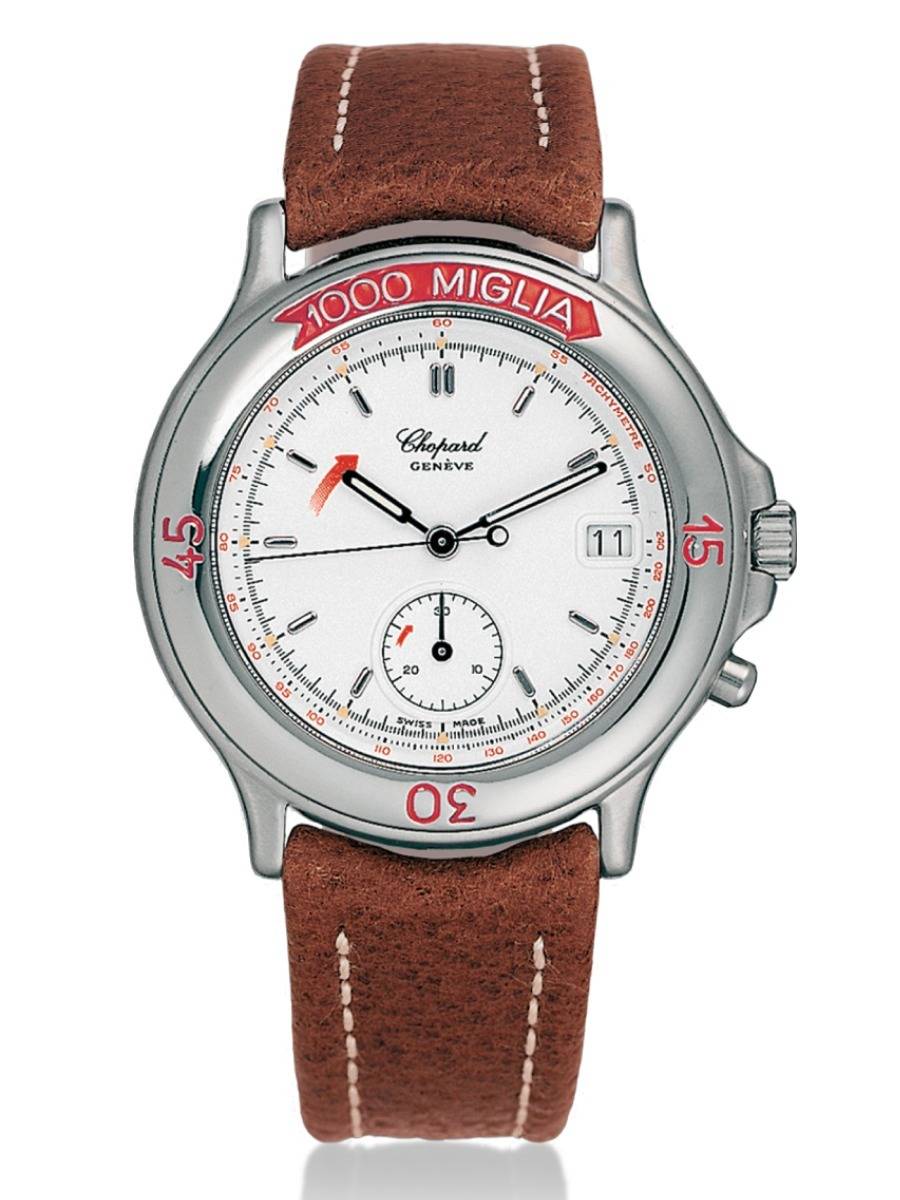
Chopard Mille Miglia, 1988 (Source: Robb Report Singapore)
The first version of the Mille Miglia differed considerably from the model we know today. It was in fact a quartz watch equipped with a tachymeter, whose aesthetics did not yet match the image now associated with motorsport chronographs. A few years later, the collection evolved significantly, and the Chopard Mille Miglia adopted a new design to become the iconic watch we know today.
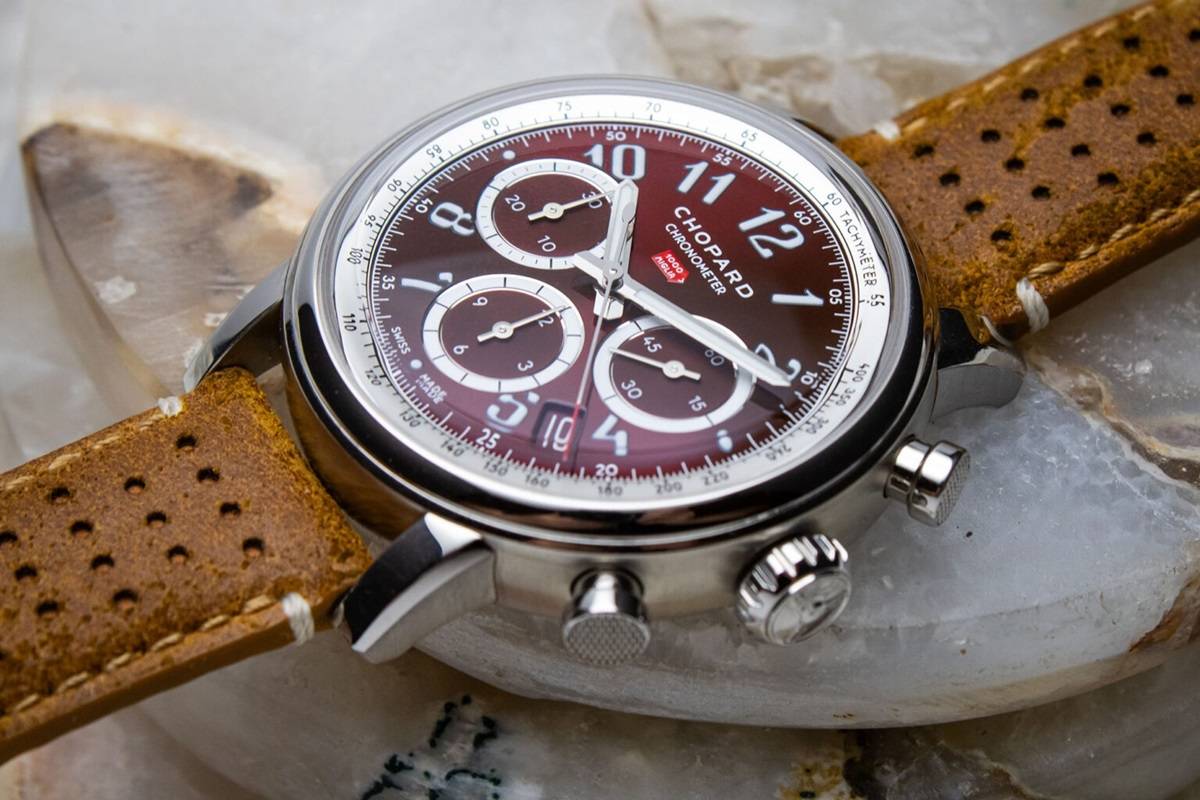
Chopard Mille Miglia Chronograph, 2023 (Source: aBlogtoWatch)
As in many fields, certain brands have gradually established themselves as benchmarks in the world of motorsport watches. For a long time, Heuer (later TAG Heuer), Rolex, and Chopard have occupied the top of the podium in this space.
To this day, the ties between watchmaking and motorsport remain strong. Several manufacturers maintain partnerships with the Formula 1 world - Tudor, Richard Mille, and IWC among them - further cementing their presence in the motorsport arena.
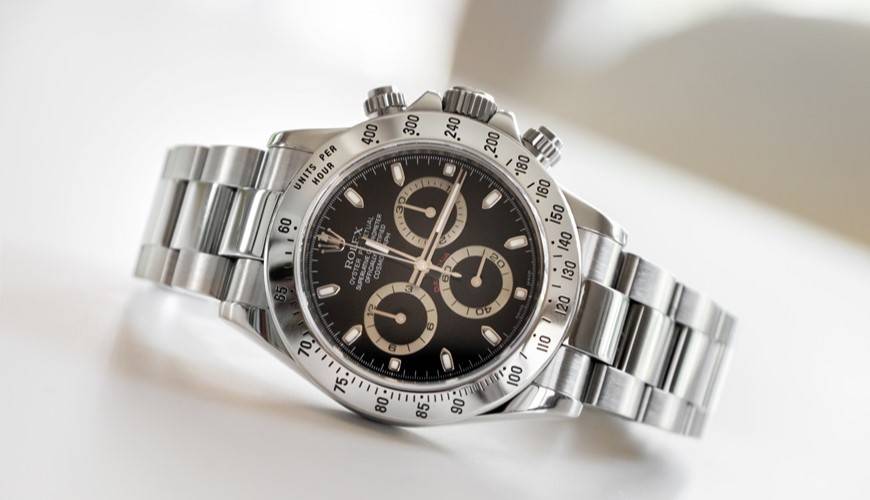
As you might expect, motorsport watches have very specific technical characteristics - attributes that make them genuine tools racing drivers can rely on.
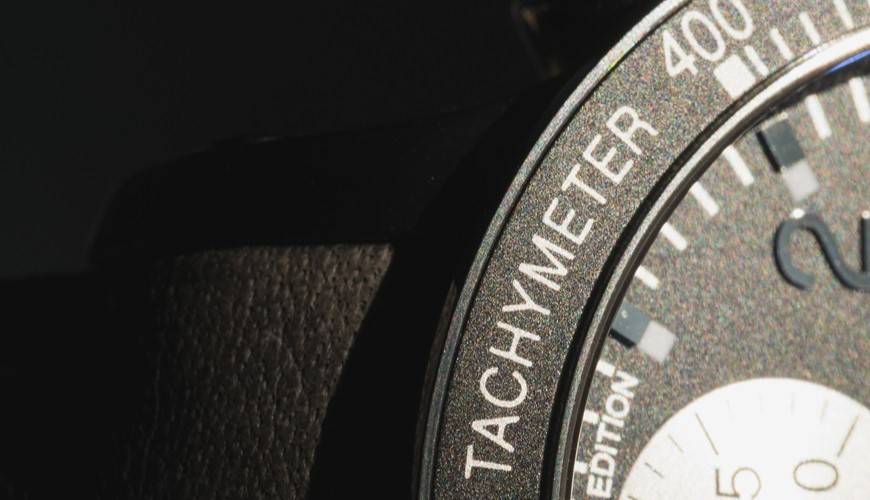
The tachymeter is a graduated scale, typically engraved on the bezel or around the dial, that converts a measured time into average speed. Its principle is simple: the less time it takes to cover a given distance, the higher the average speed. The tachymeter scale automatically translates this relationship into kilometers per hour (or miles per hour).
Technically, the scale is calibrated for a reference distance of one kilometer or one mile, and corresponds to the formula 3600 divided by the time measured in seconds. The number 3600 represents the number of seconds in an hour. So if a vehicle takes 25.7 seconds to cover one kilometer, the calculation is 3600 ÷ 25.7 = 140. The chronograph's central hand then points to 140 on the bezel, indicating an average speed of 140 km/h.
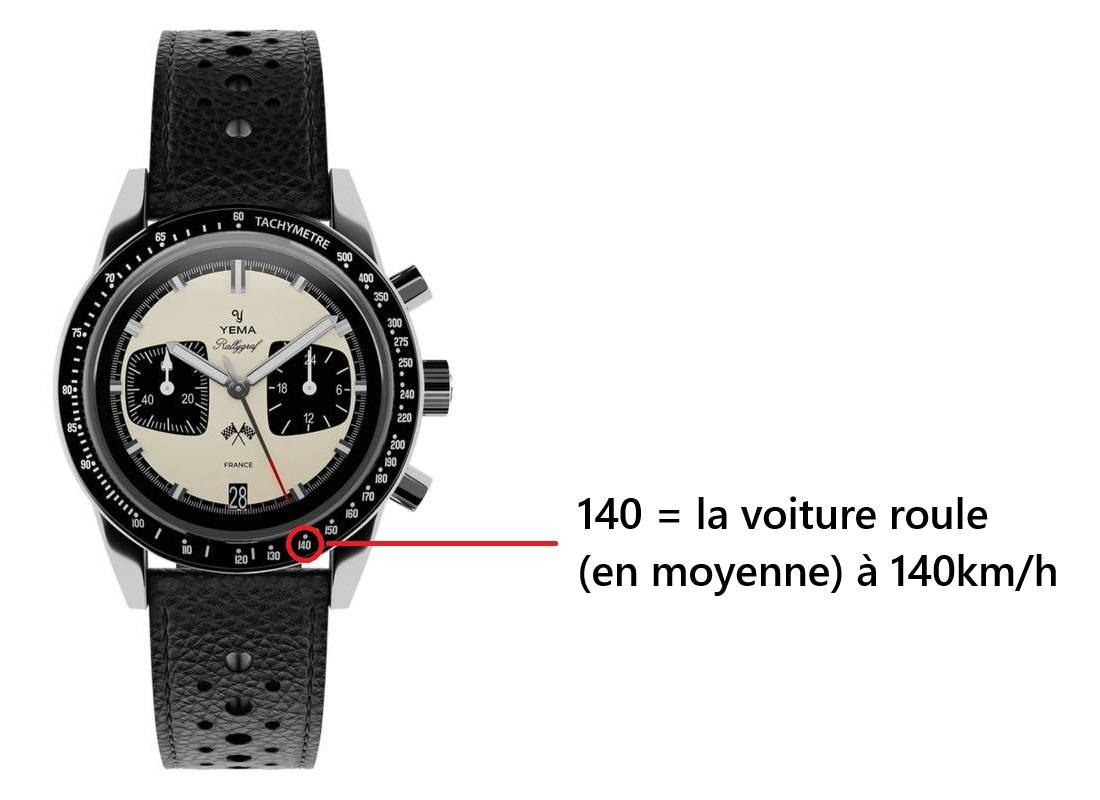
Average speed readout via the tachymeter of a chronograph watch
The operation is straightforward. Start the chronograph as you pass a precise reference point - a kilometer marker or a line on the track. When the vehicle reaches the point exactly one kilometer further, stop the chronograph. Then simply read the number on the scale where the chronograph's second hand points. The watch essentially does the math instantly, with no mental calculation required.
On a racetrack, the value is very tangible: this data makes it possible to compare different attempts, assess the effect of an engine tune or a driving line, or measure the impact of changing conditions - temperature, tire pressure, or slipstream.
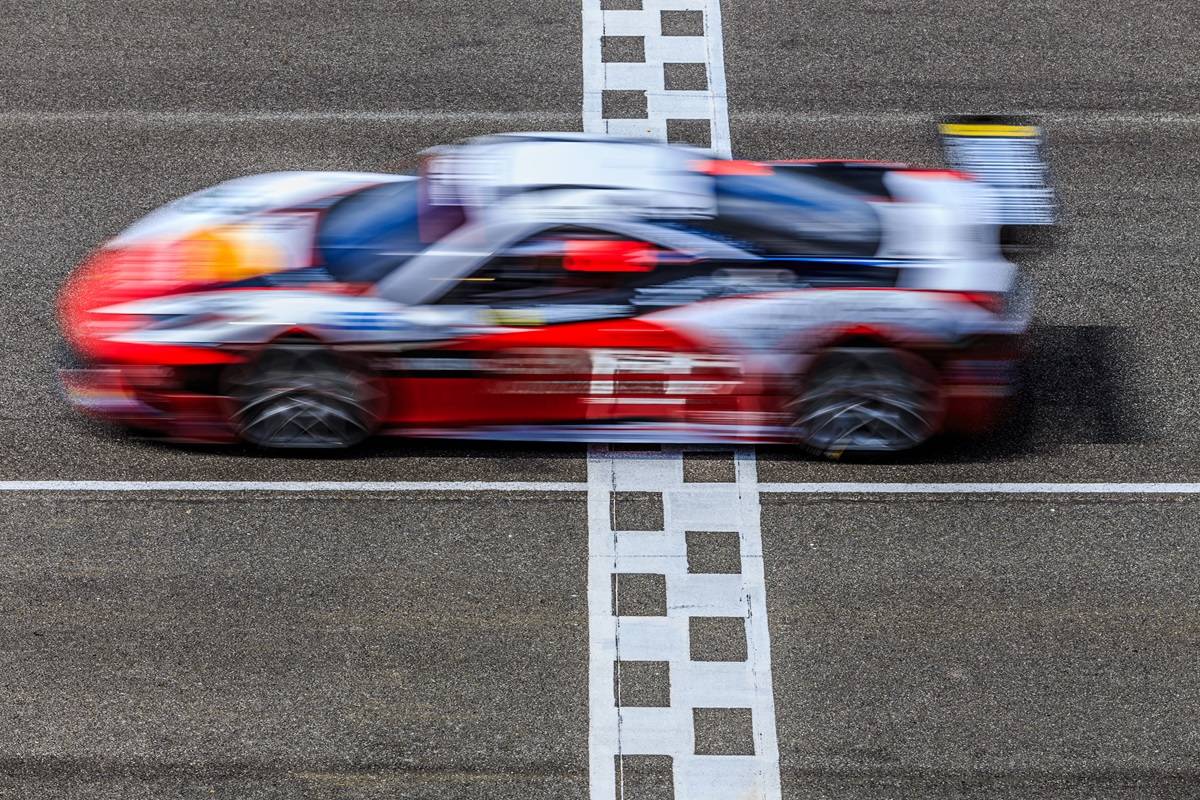
Race car passing a reference marker
It is worth noting that the tachymeter does not measure instantaneous speed like a car's speedometer, but rather average speed over a given distance. That is precisely what made it such a relevant tool in an era when onboard instruments were far less sophisticated: it allowed the driver or their team to quickly obtain usable data, straight from the wrist.
In the context of motorsport watches, this function perfectly illustrates the connection between watchmaking mechanics and on-track performance: a measurement that is simple, fast, readable, and built for action.
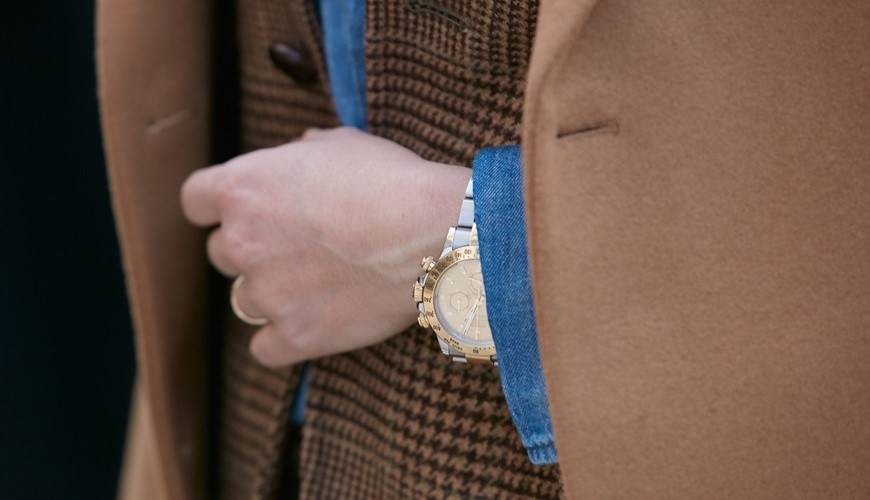
There's no question about it. Motorsport watches are highly technical pieces, originally designed to accompany racing drivers and help them measure their performance with precision. But it would be a mistake to think these watches are only for professional drivers. Don't get caught up in that assumption!
No statistics needed to prove the point. Just look around - motorsport-inspired chronograph watches on the wrist are everywhere. And for good reason: countless brands now offer this type of watch, powered by either quartz or mechanical movements, across a wide range of price points.
One of the greatest strengths of motorsport watches is their versatility. Yes, the chronograph and tachymeter scale make them genuine instruments of measurement. But their dynamic, often elegant aesthetic also makes them easy to pair with a wide variety of styles. They work just as well with a dressed-up look as with a more casual outfit.
Motorsport watches have that extra spark that comes from objects born of - or inspired by - competition. They deliver a unique feeling on the wrist and keep you connected, in a subtle way, to the world of racing. That's exactly why they continue to win over a broader audience every year.
Share :
Official European Union notice on your rights in the event of a product's lack of conformity.