
0
Product added
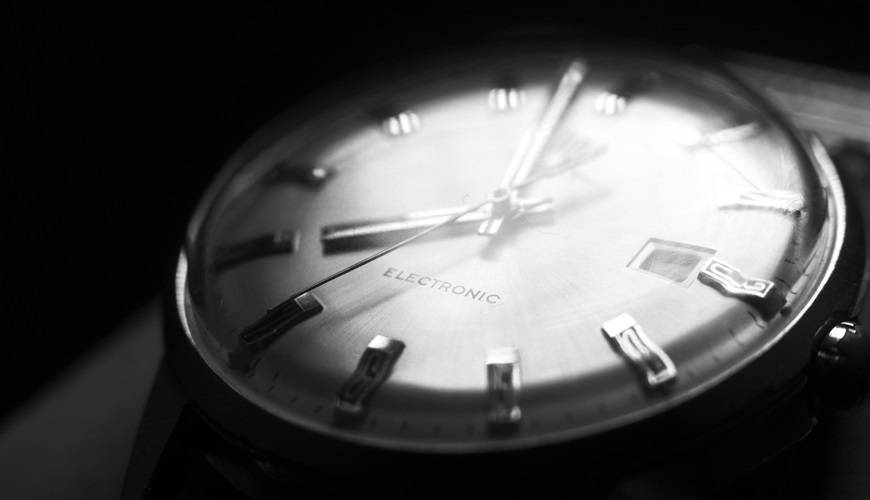
Electric watches are largely unknown to the general public. Why? Simply because they are masterpieces of bygone watchmaking ingenuity that are no longer produced today. Don't believe us? Ask the people around you if they know what an electric watch is. Chances are, most of them will mix it up with a digital watch…
So, to set the record straight, our complete guide covers everything you need to know about these timepieces and their one-of-a-kind technology!
Electric watches have a fascinating history. They are the result of years of horological research, driven largely by the pursuit of greater precision.
The first timekeeping device based on this technology was none other than a clock developed in the 19th century. Presented in the 1840s by Scottish inventor Alexander Bain, this creation featured an electric balance - a true novelty for the time!
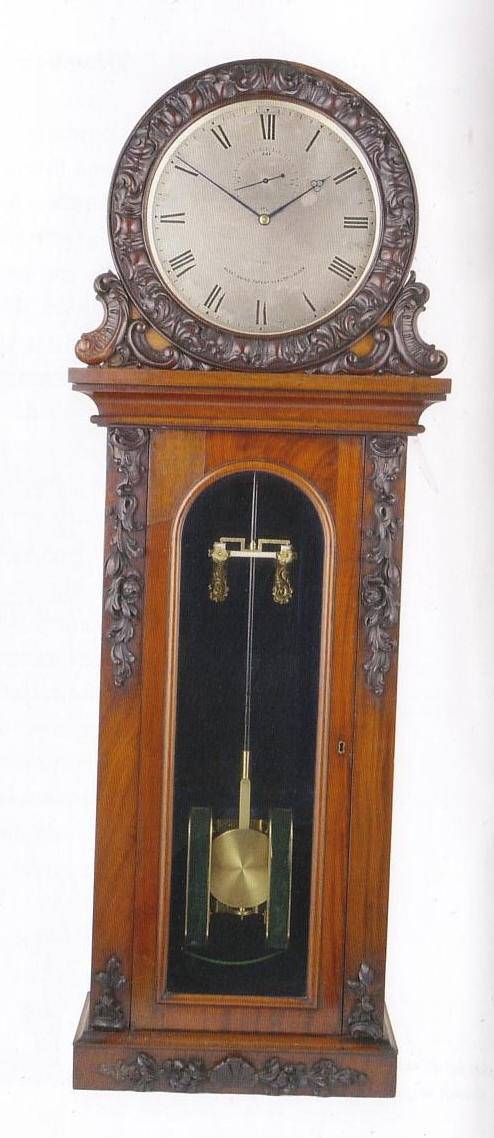
Electric clock by Alexander Bain, circa 1840 (Source: Wikipedia)
The years passed, and we find ourselves at the start of the 20th century - in 1921, to be precise. This is when the Shortt clock was unveiled, a piece with unique characteristics: it featured a fully free pendulum suspended in a vacuum.

Shortt "Synchronome" clock, 1921 (Source: Wikimedia)
Also known as the "Synchronome free-pendulum clock," this invention is built in two distinct parts. A "master mantel clock" is housed in a vacuum-sealed frame. Completely free of any mechanical connection, it precisely regulates a "slave mantel clock" that, in turn, controls the running of the clock. This multi-component setup is known as a "servo system."
Beyond their remarkable technology, these timekeeping instruments remained bulky - very bulky. At this stage, watchmakers were still far from imagining that electric technology could ever be integrated into a wristwatch.
Especially since, as we covered in our guide to the history of watchmaking, wristwatches were still a rare sight on the market in the 1920s!
Just a few years before the outbreak of World War II, in 1934, French brand Lip and Scandinavian firm Ericsson joined forces to create an electric mantel clock far more compact than the two models we just reviewed. The fruit of their collaboration was none other than a desk mantel clock!
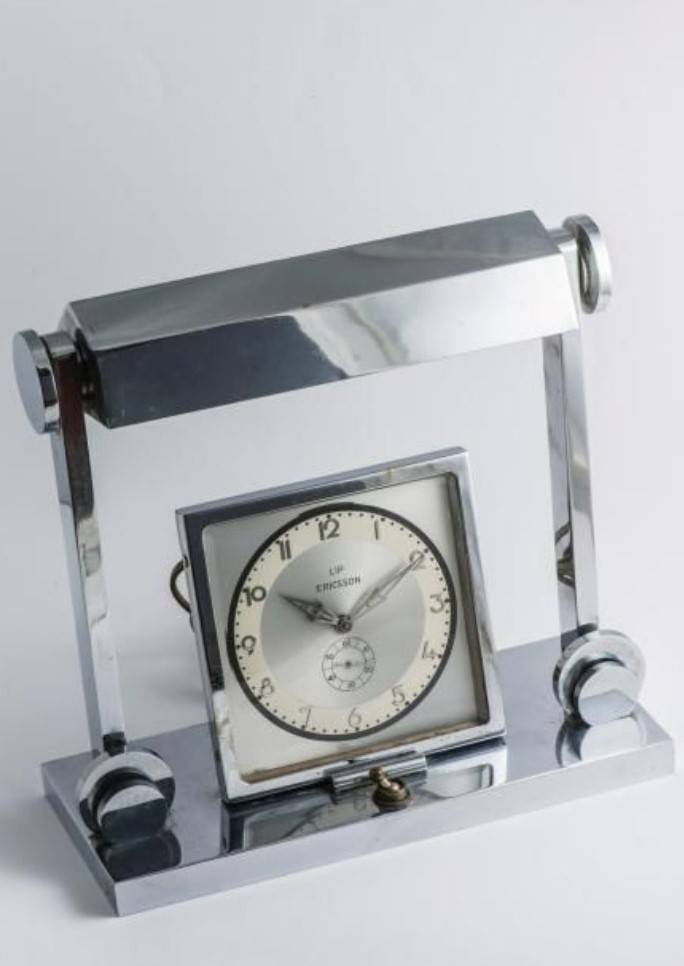
Lip - Ericsson desk mantel clock, circa 1934 (Source: Pestel Debord)
Beyond their refined design, their small mantel clock stood out for featuring a movement in which the mechanical escapement was kept running by an electric module. In other words, the movement of their invention was very similar to that of a conventional mantel clock - with one key difference: it ran on electricity rather than mechanical force.
After World War II, research into developing the first electric wristwatch began. This work centered around two distinct geographic areas: the United States and France. Brands Elgin (USA) and Lip (France) were particularly involved in the project!
If you've read our guide on mechanical / automatic watches, you'll know that at the time, all watches were powered by a mechanical movement - often hand-wound, and sometimes automatic. Without trying to make a pun, the goal of introducing electricity into these miniature objects worn directly on the wrist was no small feat!
During the 1940s, battery miniaturization was well underway, and the first flat, shirt-button-sized cells made their appearance. Shortly after, in 1952, John Bardeen and Walter Brattain discovered the transistor - an invention that opened the door to the possibility of creating battery-powered wristwatches.
That same year, Fred Lip unveiled the prototype of what would be considered the first electric watch in history!
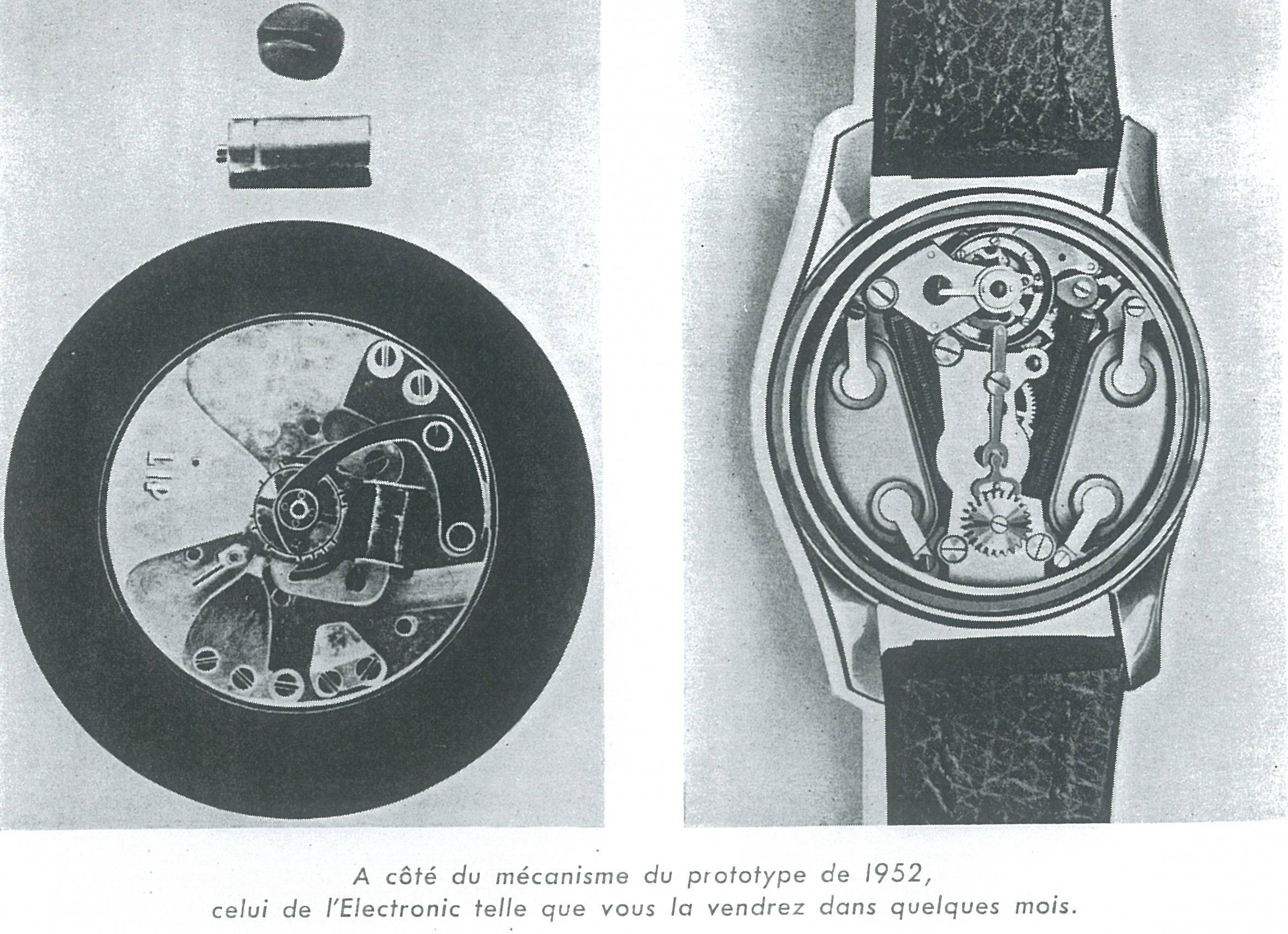
Prototype of the Lip electric movement, on the left (Source: Musée Lip)
Powered by a simple battery, this avant-garde timepiece was developed in Lip's secret laboratory, SIDHOR, located in Besançon on the Rue de la Moulière. The stakes were so high that the prototype of this Lip "Electric" watch was presented to the Académie des Sciences in Paris before crossing the Atlantic to be exhibited in Chicago. The world's first fully functional electromechanical wristwatch had been born - and it was French!
In the 1950s, American brand Hamilton - also in the race - launched a line of electric watches in 1957. Among the new releases, the iconic Hamilton Ventura made its debut: the asymmetric watch famously worn by Elvis Presley, the "King."
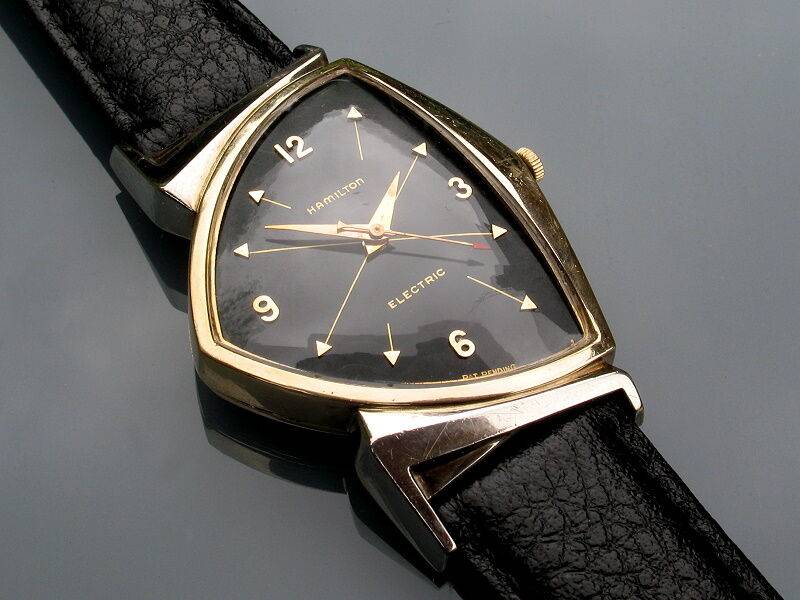
Hamilton "Ventura" fitted with Caliber 500, circa 1957 (Source: Clinique Horlogère)
You should know that the very first iteration of the model was fitted with the Caliber 500, an electric movement measuring just 25.4 mm in diameter and 6.5 mm thick.
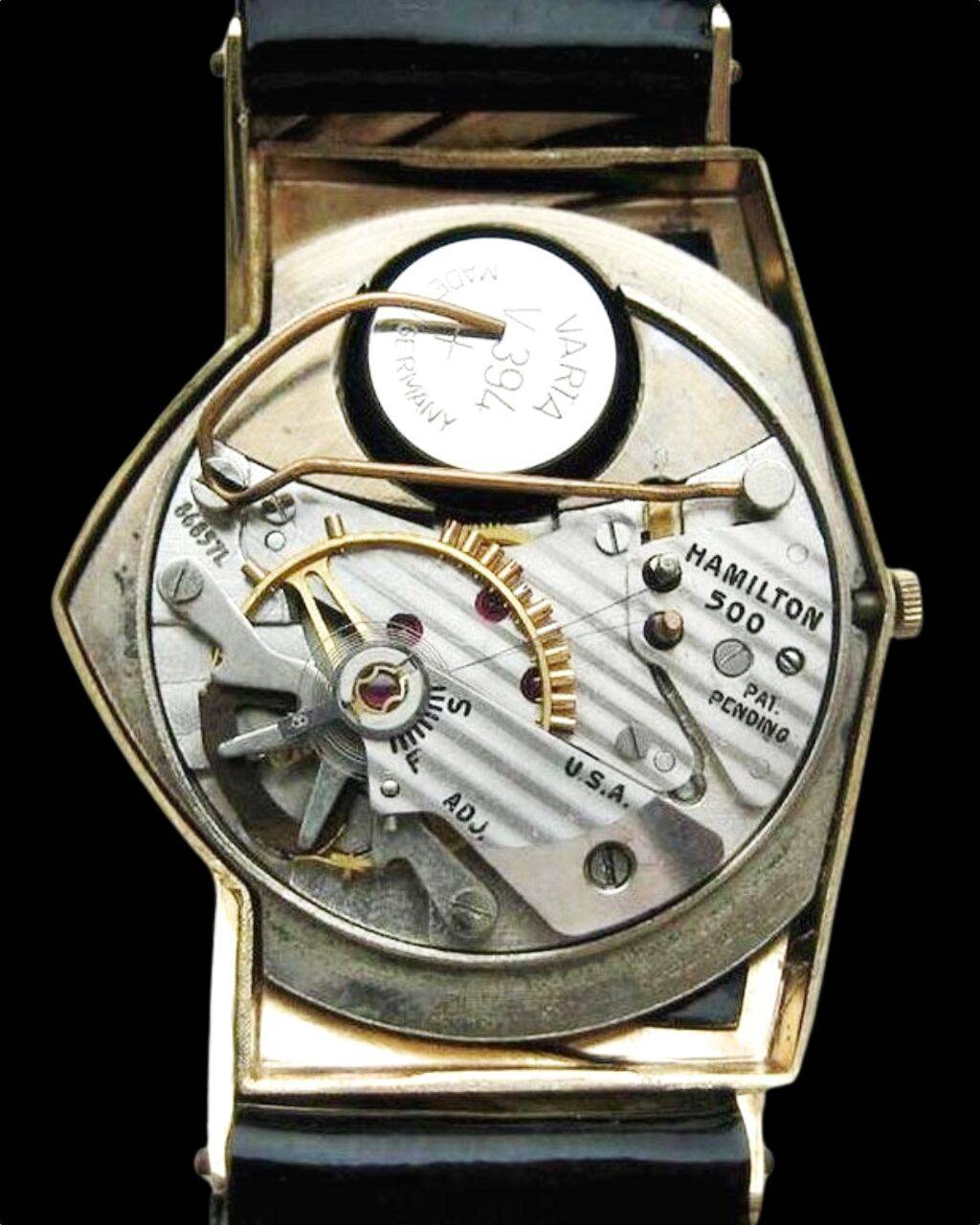
Hamilton 500 electric movement (Source: Clinique Horlogère)
Shortly after, French watchmaker Lip unveiled its R27 caliber and began commercializing it - we were then at the end of 1958. As a side note, this R27 movement is precisely the one that would equip the famous watch worn by General de Gaulle.
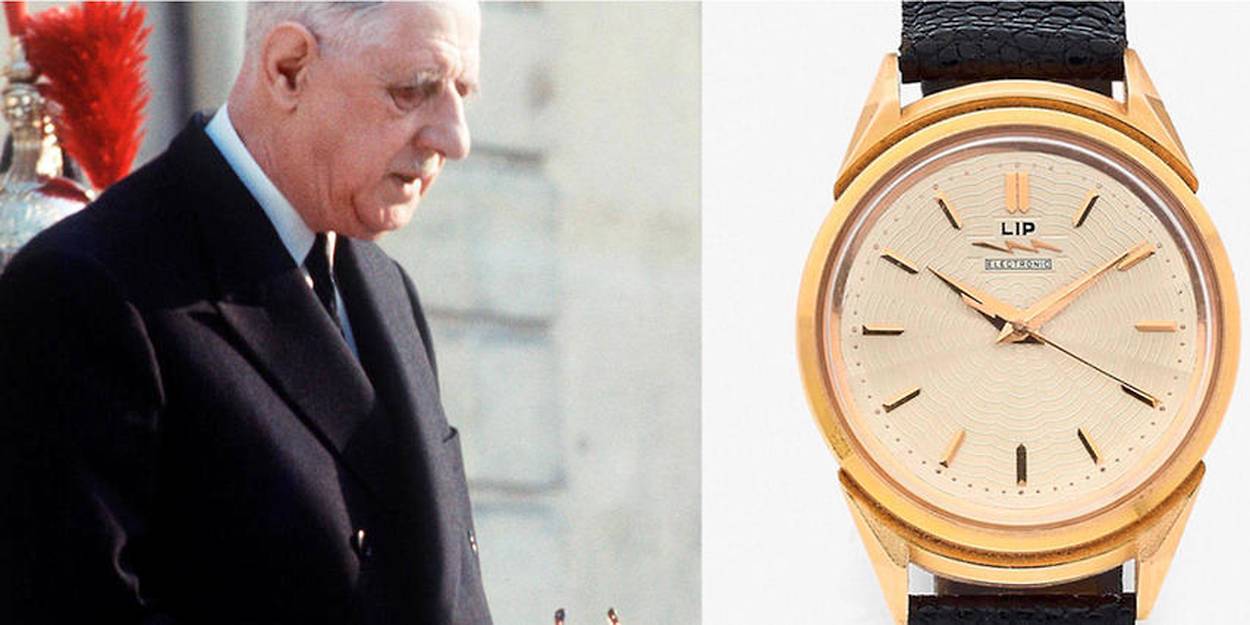
Lip R27 watch owned by General de Gaulle (Source: Le Point)
This may come as a surprise, but the watch worn by our former President ran on two batteries. Yes, two batteries! The explanation is straightforward: the Lip R27 caliber was fairly power-hungry. Ads of the era even boasted that the included batteries were guaranteed for 1 year.
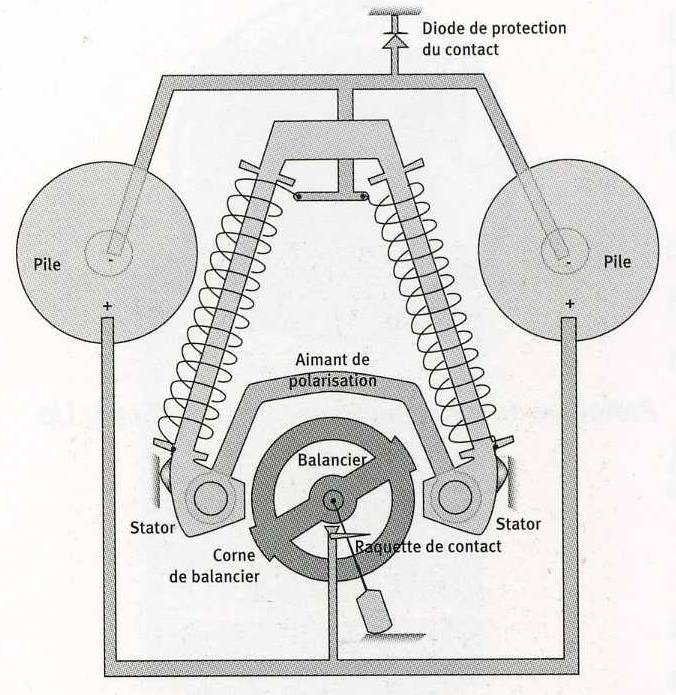
Diagram of the Lip R27 caliber movement (Credit: Marie Pia Coustans - Lip, des heures à conter)
At 27.8 mm in diameter and just 9.4 mm thick, it was a remarkable feat of miniaturization for its time. Its operating frequency closely matched that of most watches from the 1950s: 18,000 vph (or 2.5 Hz). We'll come back to why that matters shortly…
This watch - whose movement required 10 years of research and development - had another distinctive feature: the crown used to set the time was placed, quite unusually, on the back of the case.
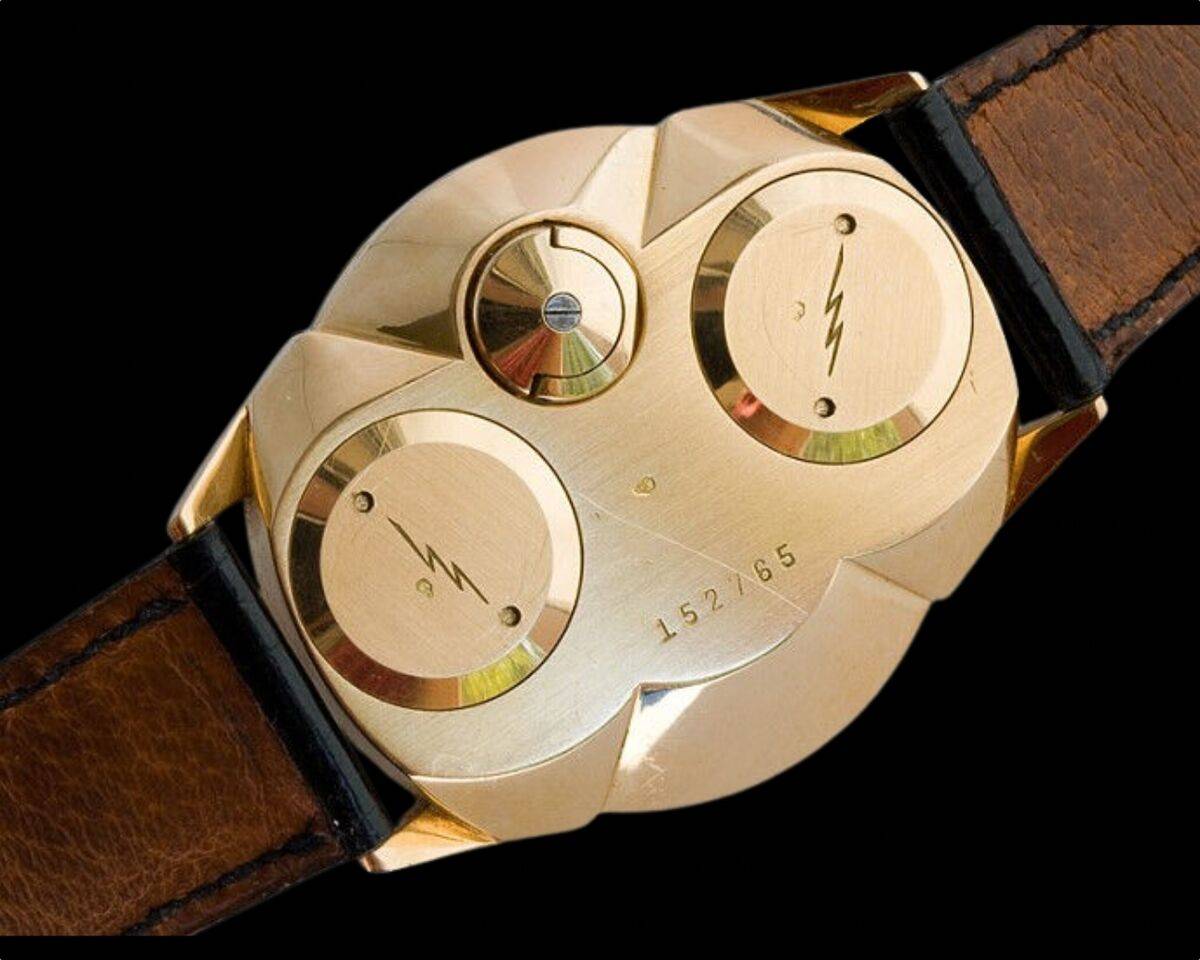
Case back of a Lip R27 watch (Source: Clinique Horlogère)
Looking at the back of Charles de Gaulle's watch, you can clearly make out two compartment covers providing access to the batteries. At the center of these two covers, each engraved with a lightning bolt symbol, sits the key used to set the watch. To avoid any discomfort on the wrist, the key is flat and features an articulated mechanism for easier handling. Its unusual configuration is actually reminiscent of the winding crown found on vintage mechanical alarm clocks.
Lip, which had heavily invested in electric technology, decided to export its R27 caliber to European markets. As a result, Lip granted German watchmaker Epperlein a license to produce its renowned R27.
In 1960, watches fitted with the Lip R27 caliber were sold in Germany under other watch brands, including Lanco and Benrus.
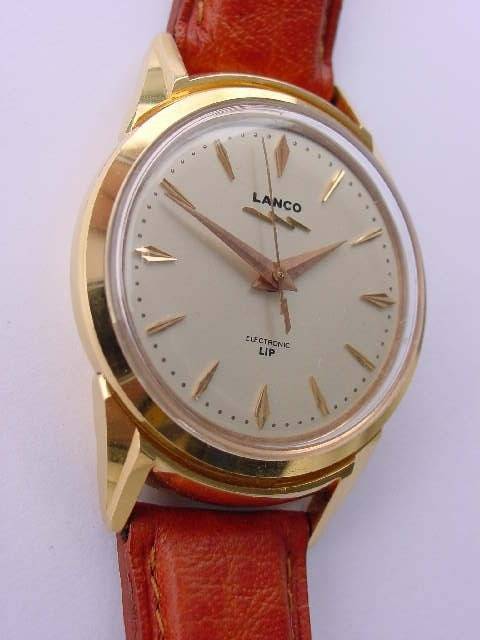
Lanco watch, Lip R27 caliber (Credit: Jens Kirchhoff)
The Lip R27 caliber was produced from 1958 to 1963 - a short run of just 5 years.
Here's an interesting footnote: the last R27 movements produced by the Lip manufacture were used to make a handful of watches - and also some small mantel clocks. Goes to show, nothing goes to waste!
Meanwhile, across the Atlantic, Bulova was developing the world's first tuning fork watch. Nicknamed the « Accutron », its name is a blend of "accuracy" and "electronic." Engineer Max Hetzel is credited with the invention, which debuted in 1962. But, much like the Lip watch, this electric piece from Bulova didn't come together overnight…
In 1952 - the very year Lip publicly unveiled the prototype of its first electric watch - Bulova's management consulted Max Hetzel for his take on this French innovation. The engineer replied that, since it used a regulating organ very similar to that of traditional mechanical watches (remember the 18,000 vph?), it offered no gain in precision and simply provided a longer power reserve. At the time, however, watchmakers were locked in a battle for accuracy. In other words, everyone wanted to release the most precise watch possible. It was precisely this logic that drove the development of the Bulova Accutron.
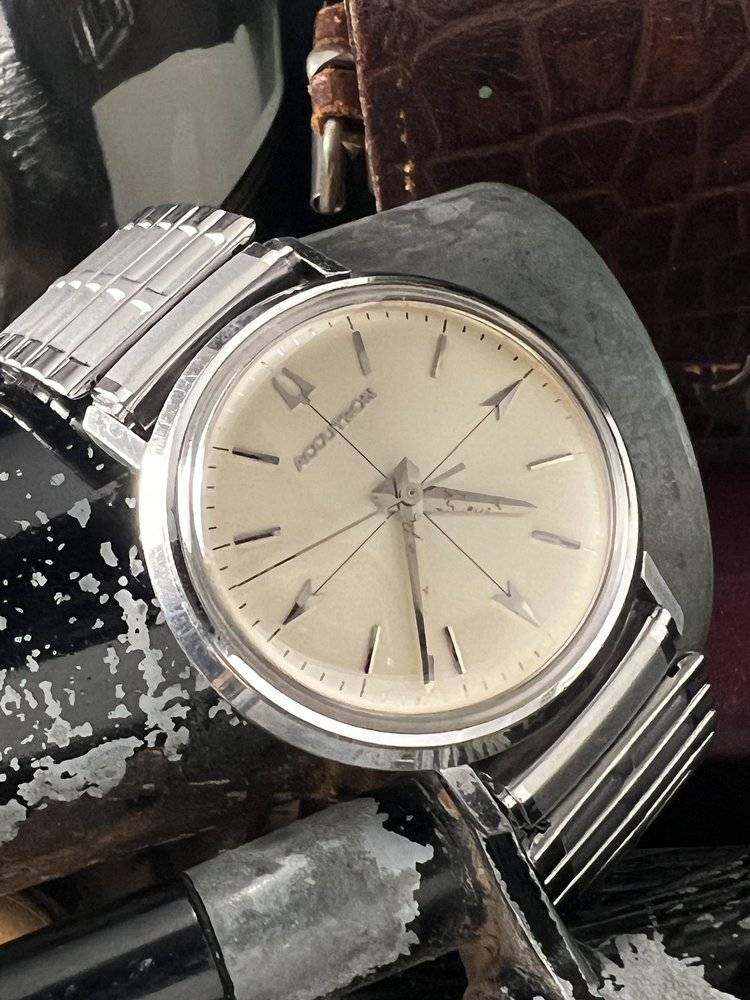
Bulova Accutron watch, 1962 (Source: Cool Vintage Watches)
This American-born watch marked a true turning point compared to the electric models that came before it: it features no balance wheel whatsoever. Instead, a tiny tuning fork just 3 mm long takes on the role of regulating organ. Its operating frequency was light-years ahead of the timepieces of the day - 360 Hz, compared to a mere 2.5 Hz to 3 Hz for the competition. Quite the difference, you'll agree!
The tuning fork is considered such a groundbreaking innovation that it was incorporated into the Bulova logo.

Bulova logo with tuning fork (Source: Wikipedia)
Its exceptionally high operating frequency allowed it to display the time with unmatched precision for the era. To put it plainly, in the 1960s, the daily drift on an Accutron was often just 2 seconds - or less!
The accuracy of the Bulova electric movement was so impressive that, in the 1960s, NASA decided to use the Accutron as a timekeeping instrument inside its lunar module. Pretty remarkable, isn't it?
Bulova was so proud of its new technology that in the early 1960s, it released several Accutron iterations featuring a see-through dial that put the movement's inner workings on full display. These models were known as the « Spaceview ».
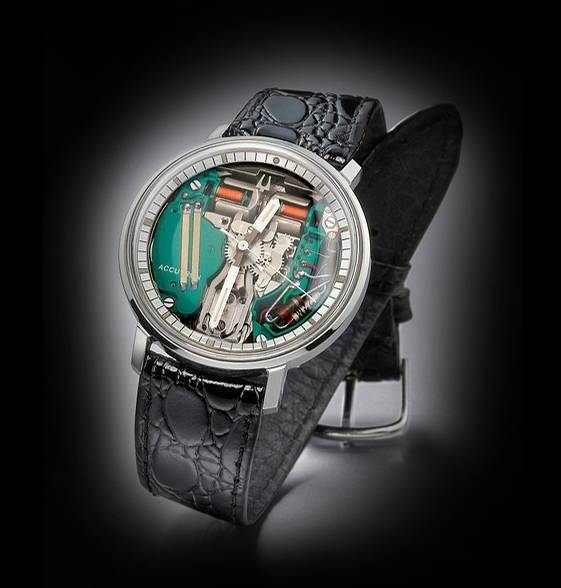
Bulova Accutron Spaceview, 1962 (Source: Bulova)
Looking at the back of a Bulova Accutron, you'll notice that time-setting is done via a key system similar to the one found on Lip watches fitted with the R27 caliber.
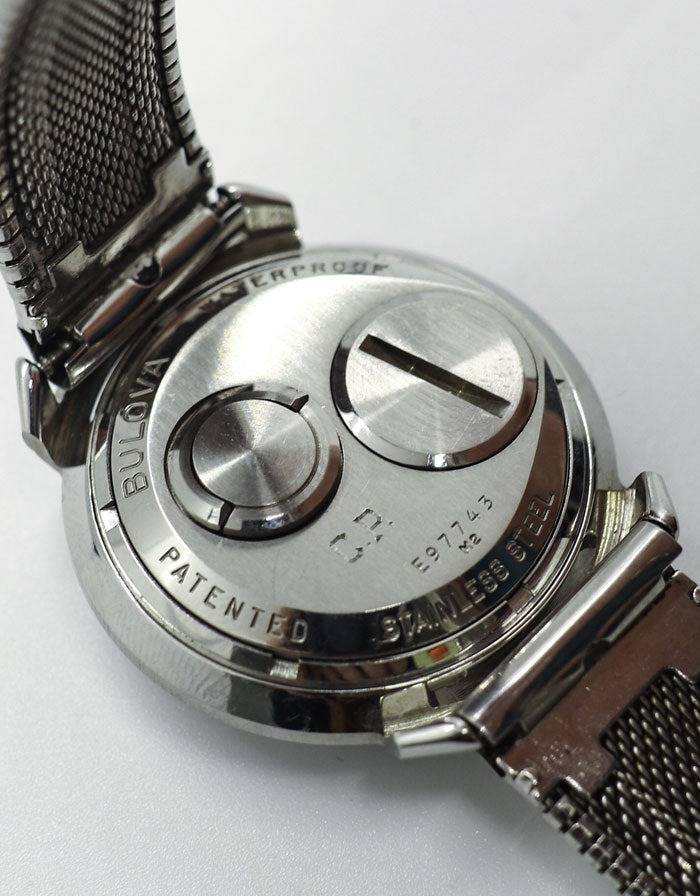
Case back of a Bulova Accutron (Source: J. Press Online)
You'll also notice that the Bulova model used just a single battery. Which was impressive - very impressive!
Another standout feature of the Bulova Accutron is its incredibly smooth sweep second hand, with no ticking or stuttering whatsoever.
Want to be surprised? Listen to the sound of an Accutron movement! Search online for videos on the subject, and you'll quickly notice that this caliber has a very distinctive sound… straight out of science fiction. Close your eyes and you could almost imagine yourself drifting through the galaxy aboard a space shuttle. It's no coincidence that the tagline chosen for American ads promoting the Bulova Accutron was "The watch that hums."
At Hamilton, Lip, and Bulova, electric watches were riding a wave of excitement. But while the models developed by these brands were revolutionary for their time, they remained high-end pieces with impeccable finishing.
To bring electric watches within reach of everyday consumers, Timex decided to enter the game. Known for its entry-level timepieces, the brand embraced a philosophy not unlike what Swatch stands for today: fun, accessible, and affordable.
The first electric watch signed by Timex was unveiled to the public in 1962 - it was reference 9017.
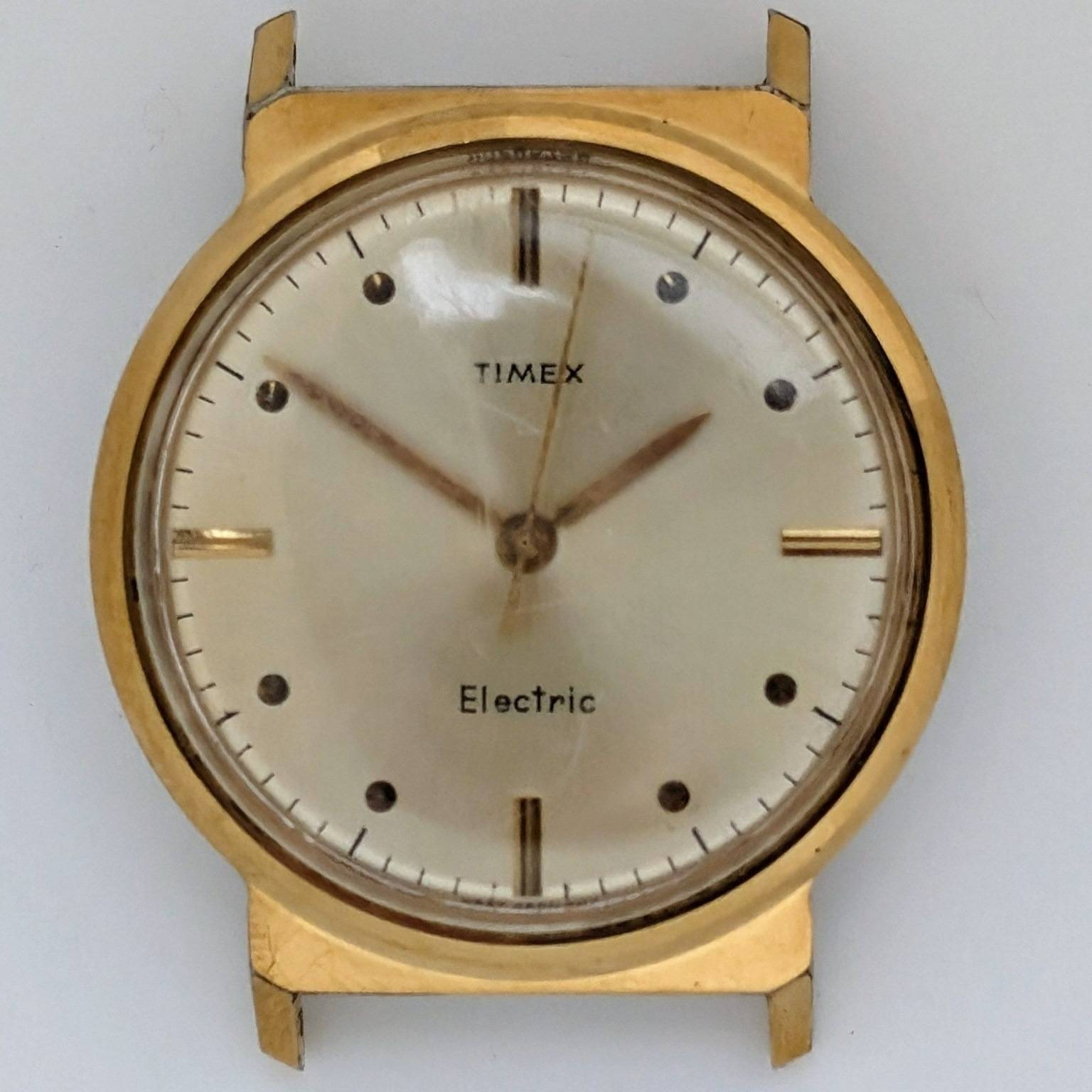
Timex electric watch ref. 9017, 1963 (Source: Vintage Timex Watches)
Its operation is similar to that of Hamilton electric watches released a few years earlier.
Of course, multiple variants followed, and the brand went on to offer electric models in every style - from sporty to dressed-up, for men as well as women.
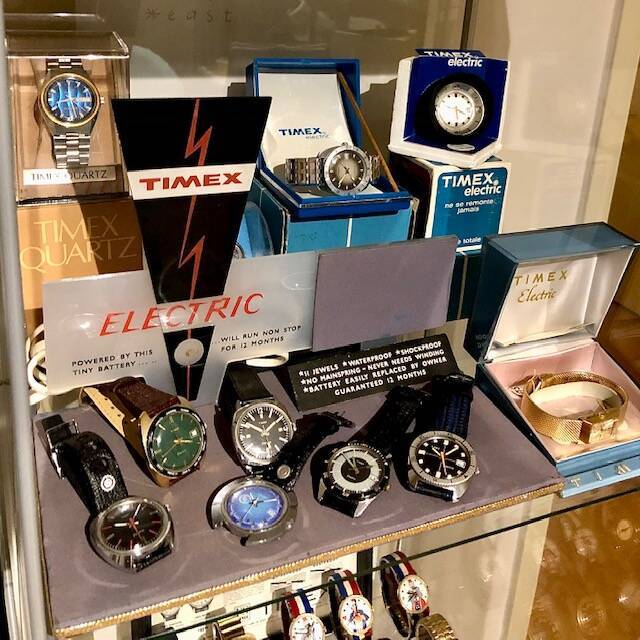
Timex Electric watches in a display case (Source: Arteepee's Watch Collection)
Offered at low prices, Timex watches represented an accessible and compelling alternative to pieces from major brands like Lip or Hamilton.
To give you a sense of what Timex electric pieces cost back then, the brand advertised a price of $25 in one of its early-1970s ads - the equivalent of just under 200 € today, adjusted for inflation.
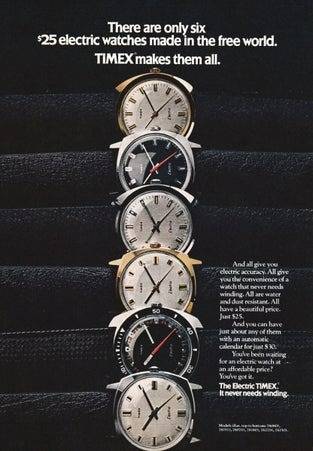
Timex electric watches advertisement, 1971 (Source: Arteepee's Watch Collection)
By comparison, Lip electric watches (in steel) fitted with the R27 caliber were sold at the time for the equivalent of roughly 1 000 € in today's money.
For many people, the Timex Electric line served as an accessible entry point into the world of electric watches. The affordable price of these Timex timepieces was driven by several factors, including the simplified architecture of their movements.
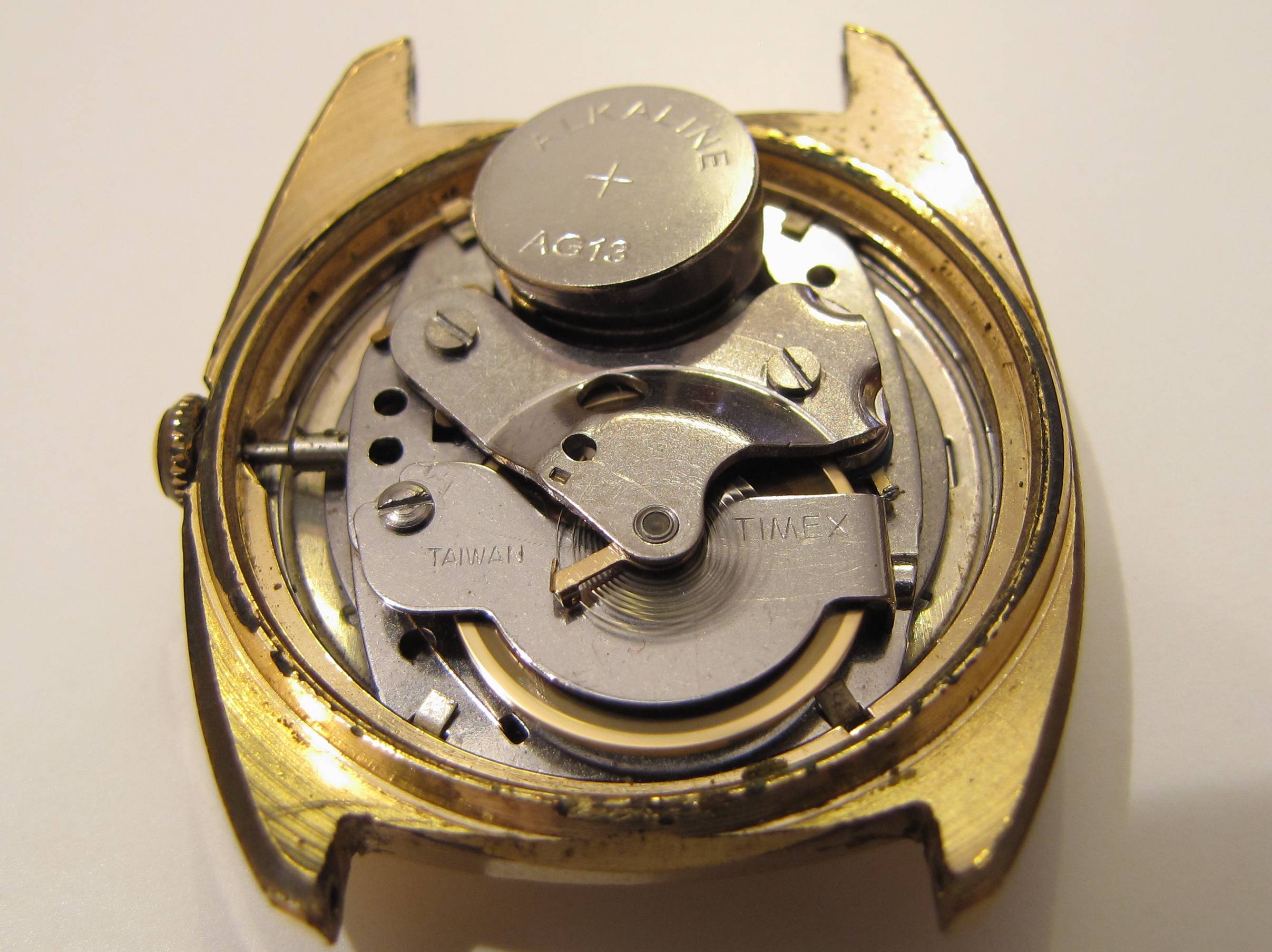
Timex Electric movement (Source: Wikipedia)
It's also worth noting that production of the calibers found in Timex Electric watches was quickly relocated to Taiwan as a cost-cutting measure.
But let's step back a few years to revisit French brand Lip, which wasn't done making its mark. As early as September 1962, the Maison began offering electric watches on the American market fitted with a new caliber, the R148.
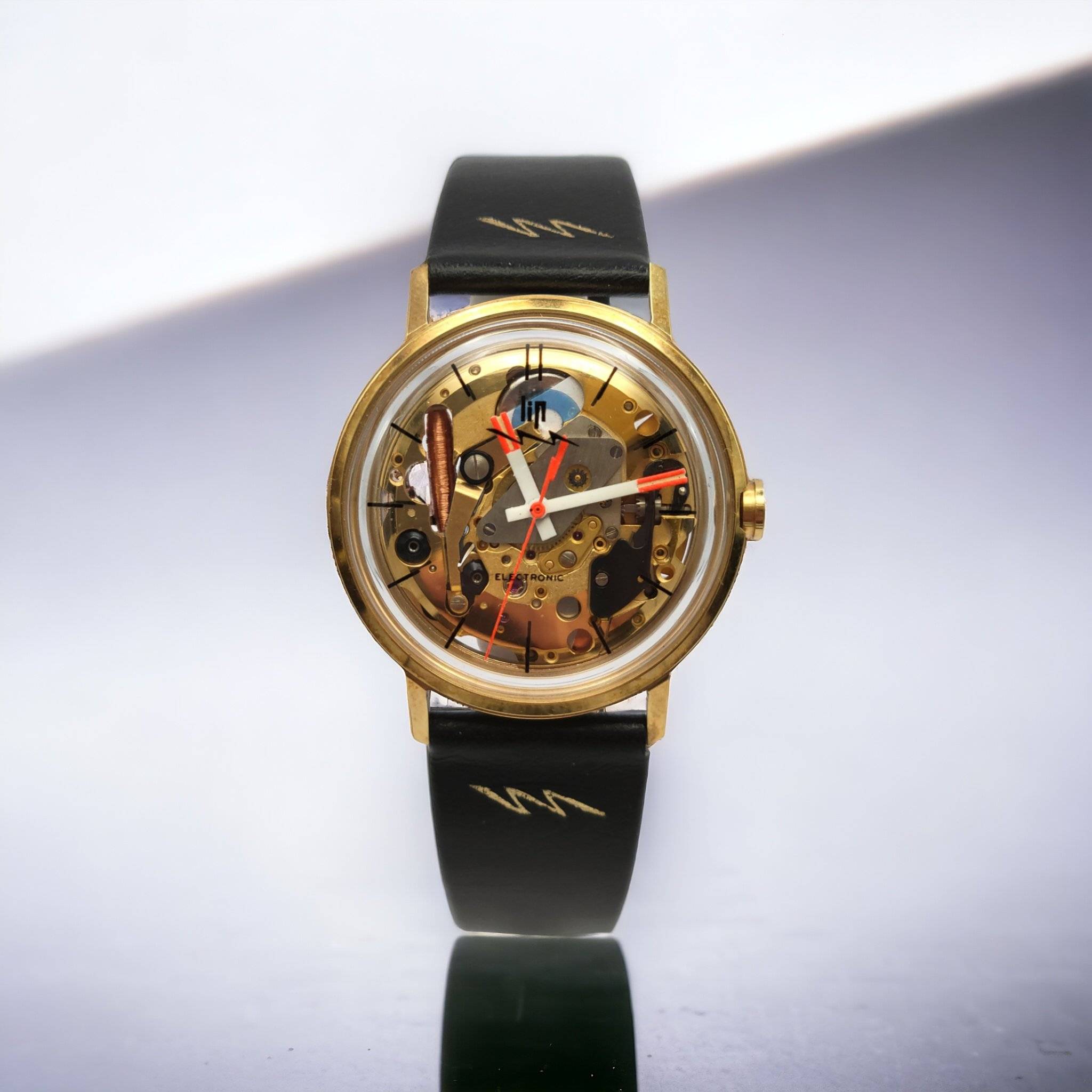
Lip watch, R148 movement (Source: Atelier de la montre)
In France, timepieces powered by this new movement became available for purchase at the start of the following year - 1963.
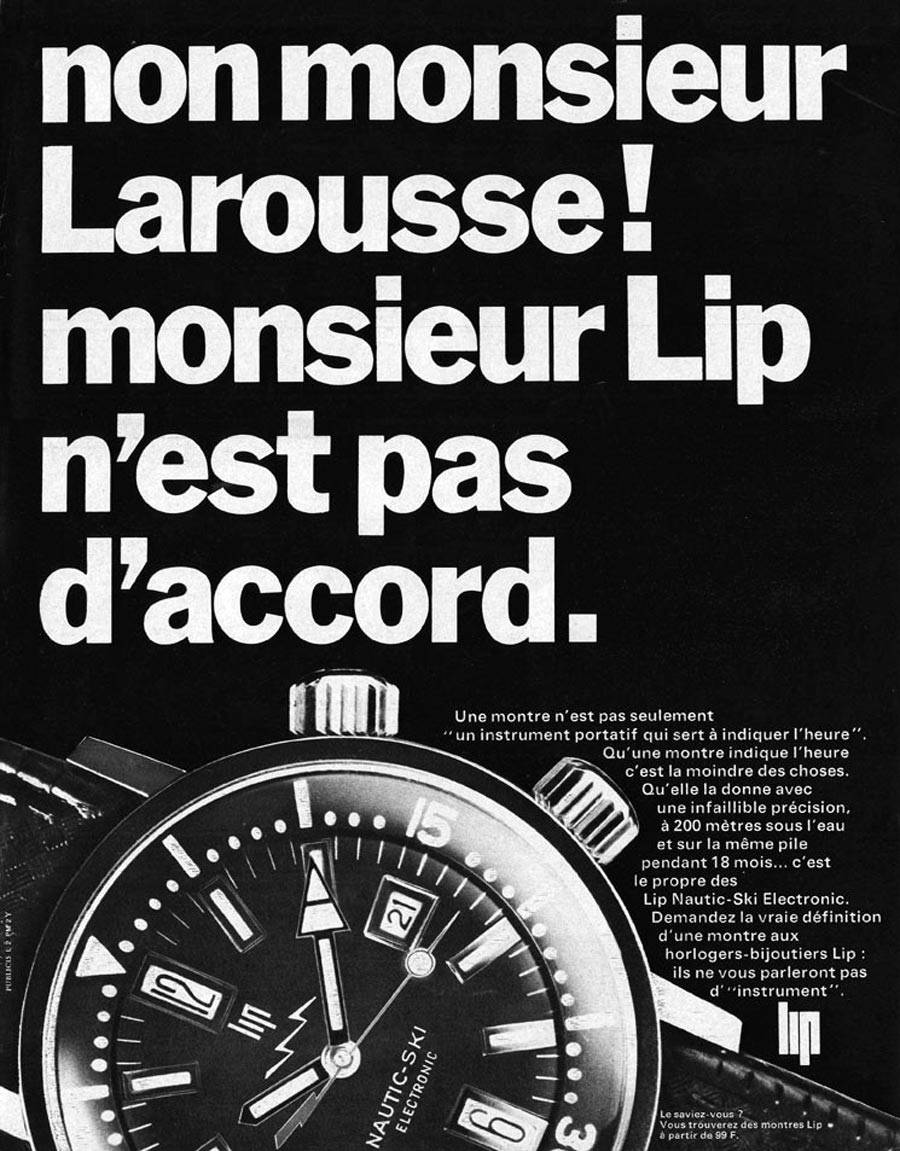
Vintage Lip Nautic-Ski advertisement (Source: Les Rhabilleurs)
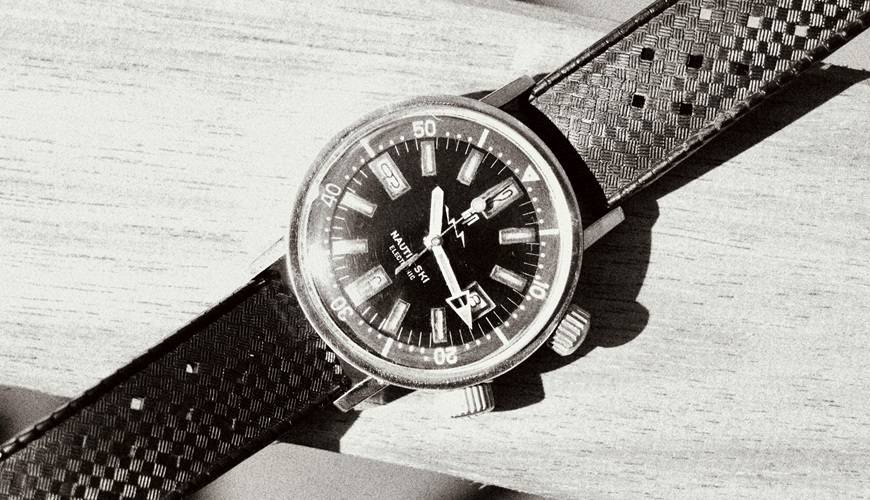
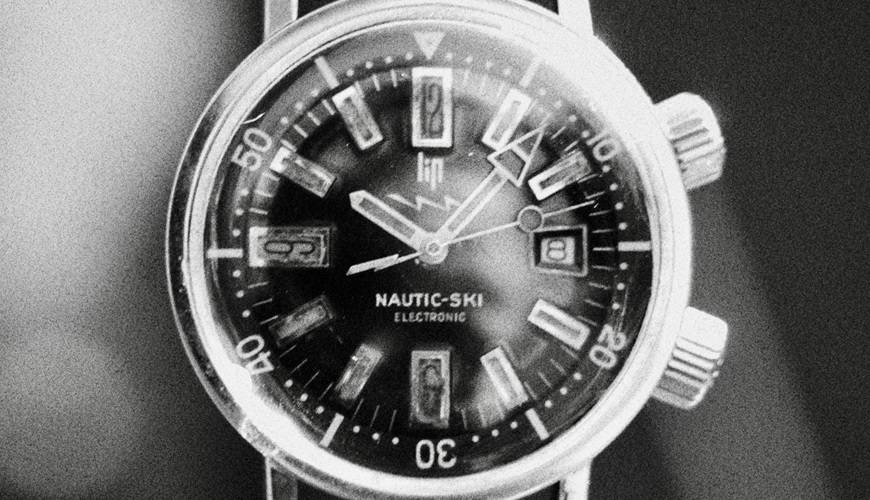
A date-complication version named the R184 followed in 1964. It became famous for being used from 1967 in the Lip Nautic-Ski - a true icon of French watchmaking! Have you noticed, by the way, that the dial of this diving watch bears the inscription « Electronic » rather than « Electric »? This marking, similar to the one found on earlier Lip watches fitted with the R27 caliber, has a reason behind it - one we'll explore later…
During the 1960s, Lip even offered customers who brought their timepieces in for servicing or repair a courtesy watch bearing the dial inscription "Après-Vente" (After-Sales).
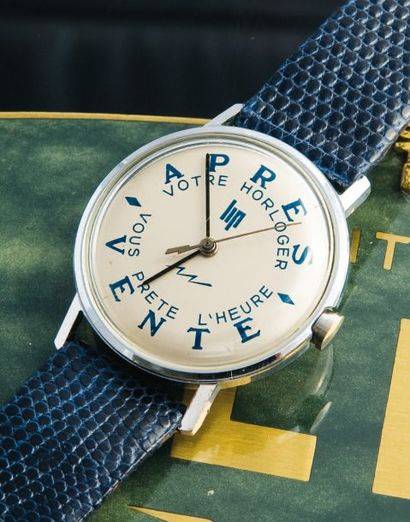
Lip loaner watch "After-Sales Service" (Source: Gros & Delettrez)
Each letter printed on the dial of these R148-powered pieces served as an hour index. The loaner watches were designed to promote Lip's electric technology - and naturally, to win over new customers along the way. Each of these pieces bore the inscription "Votre horloger vous prête l'heure" ("Your watchmaker lends you the time").
In 1969, movement manufacturer Ebauches SA, which had acquired Bulova's patents, began offering brands its ESA 9162 caliber - a tuning fork movement running at 300 Hz. A chronograph-complication variant, the ESA 9210, was also made available.
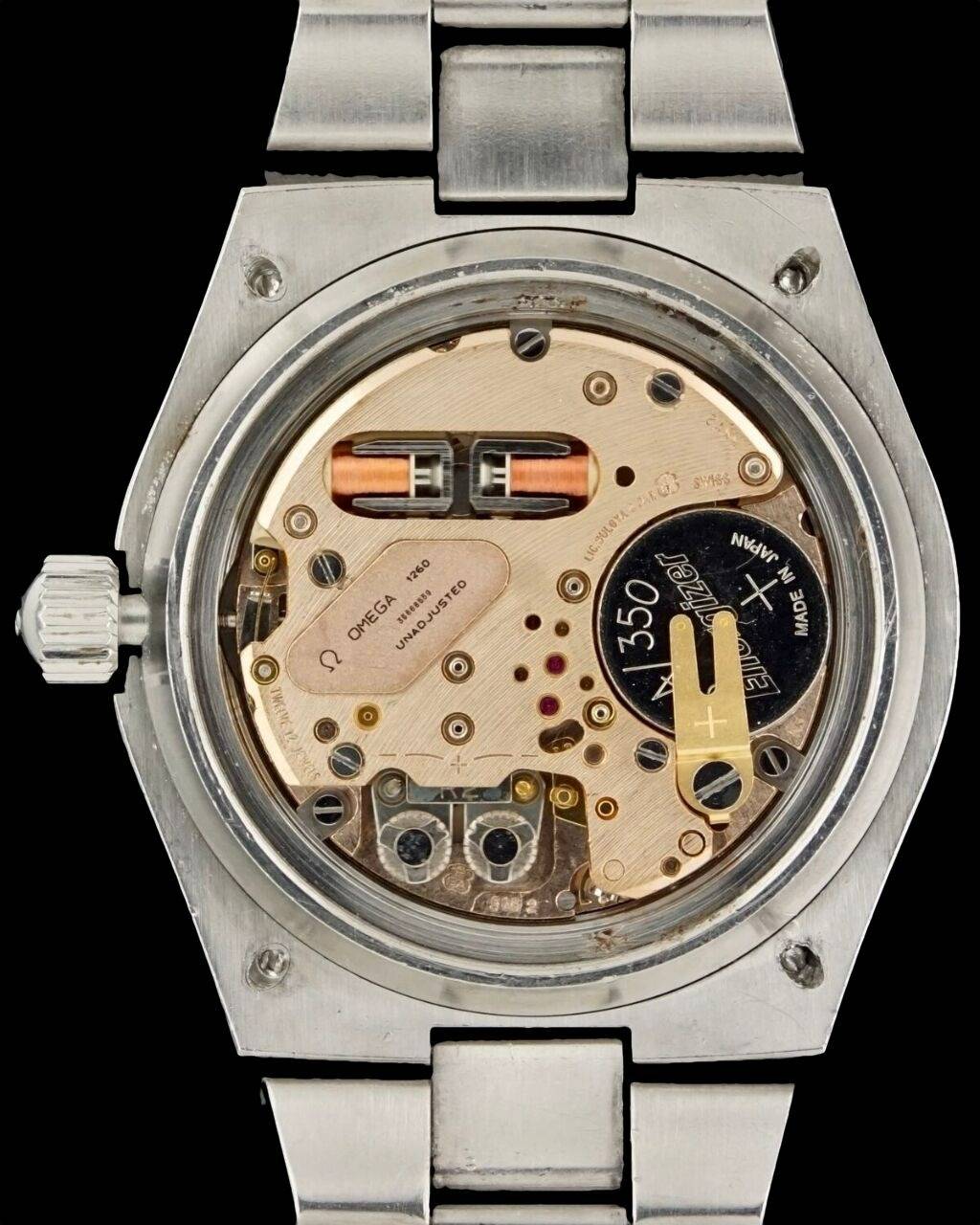
ESA 9162 caliber (Source: La Clinique Horlogère)
Major watchmaking names such as Longines, Omega, and Tissot housed these movements in their timepieces.
For their part, Citizen and Universal Genève also acquired licenses for Bulova's tuning fork movement. This allowed Citizen to bring electric technology to Japanese soil in 1966 with the launch of the Citizen Cosmotron X8.
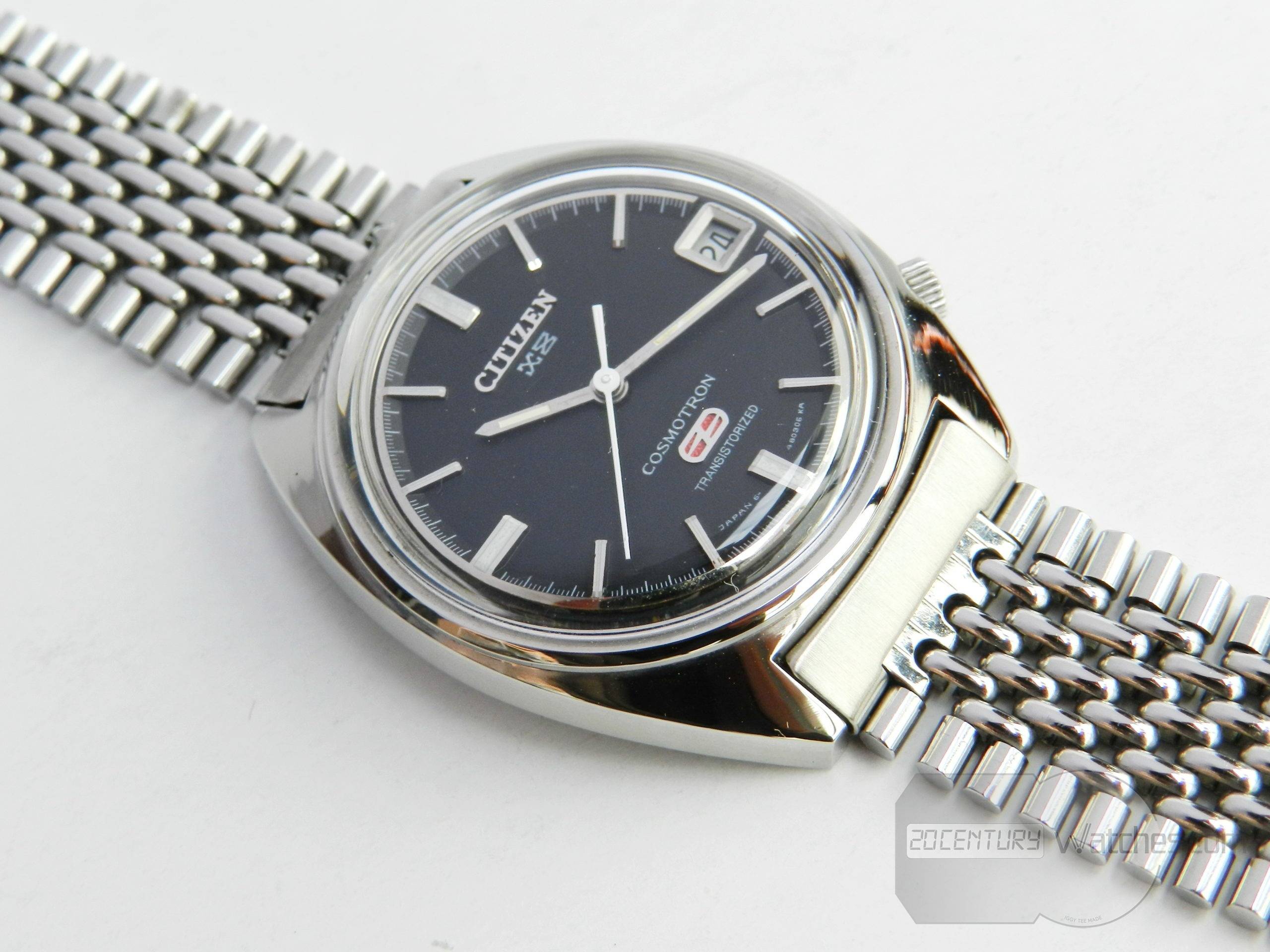
Citizen Cosmotron X8 electric watch, early 1970s (Source: 20 Century Watches)
In 1972, Omega unveiled a watch powered by an in-house tuning fork movement: the Omega 1220 Megasonic, an even more sophisticated piece than its competitors'. The model was designed by Max Hetzel, the same man who had shortly before invented Bulova's Accutron.
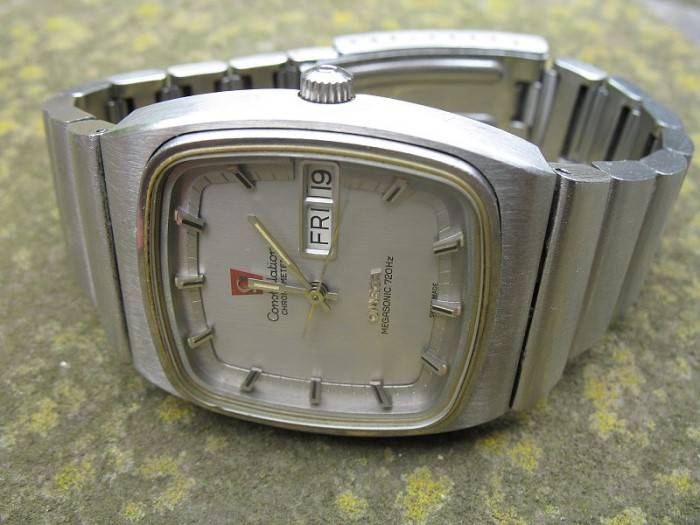
Omega Megasonic 720 Hz, Constellation line (Source: Electric Watches)
This Omega watch operates at a frequency of 720 Hz (compared to 360 Hz for the Bulova Accutron), and the architecture of its movement is ingeniously designed to minimize mechanical wear on the components.
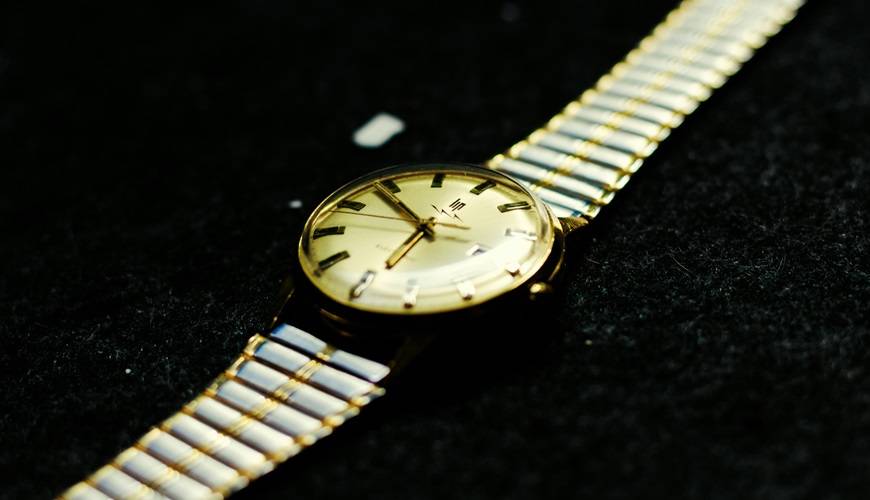
You may have noticed it in the illustrations throughout this guide: vintage electric watches often featured a lightning bolt symbol to highlight the fact that they ran on electrical energy from a battery. They also tended to sport a distinctive, ultra-thin seconds hand tipped with a discreet arrow - sometimes painted red. A subtle nod to absolute precision, perhaps?
Despite the progress that electric watches represented at the time, brands chose to sell them alongside their traditional mechanical watches. What's more, not all watchmakers were willing to take the risk and venture into this new territory. In reality, very few brands ever offered electric watches.
At Seiko, for example, as early as 1959, a team of researchers was working on another technology that would shake the watchmaking world to its core: quartz.
Want to know how the story ends? Check out our guide to quartz watches!
Now that we've traced the history of these early electrically powered timepieces, let's take a closer look at how they actually work.
Let's start with something that may seem obvious: the energy source used by an electric watch is purely electrical, coming from a battery. That means none of these models incorporate a mainspring, as you'd find in a traditional mechanical watch.
There are 2 major families of electric watches: those fitted with a « motor balance wheel », and those equipped with a « tuning fork ». Let's explore what makes each one unique!
This may surprise you, but these models operate on a principle closely related to that of traditional mechanical watches. Why? Simply because they share the same regulating organ.
Inside these specific electric watches, you'll find a balance wheel and a hairspring that allow them to run at an operating frequency typically between 2.5 Hz (18,000 vph) and 3 Hz (21,600 vph).
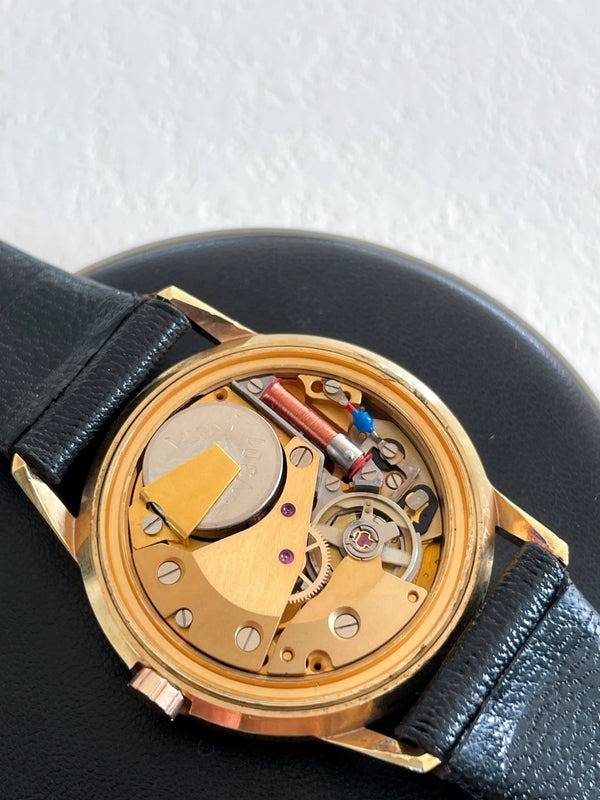
Lip R184 movement (Source: Drop and Watch)
What sets electric balance wheel watches apart from purely mechanical models is precisely the way they keep the balance wheel in motion. This is achieved through what is known as an « electromagnet » - a small component whose role is to convert electrical energy (in this case, from the battery) into magnetic energy.
Electric watches developed by Lip, Hamilton, Timex, Slava, and Epperlein belong to this family.
As a side note, Lip electric watches are not marked "Electric" - they use the label "Electronic" instead. The reason? They were the first to incorporate an electronic component: a diode designed to suppress the tiny sparks generated within the movement.
Historically more recent than electric watches with a motor balance wheel, tuning fork electric watches operate in an entirely different way.
Go ahead and look - you won't find a balance wheel inside these timepieces! Instead, they use a tiny tuning fork (tuning fork) just 3 mm long as their regulating organ. This unique configuration allows them to operate at a frequency of 300 Hz or higher. Yes, 300 Hz!
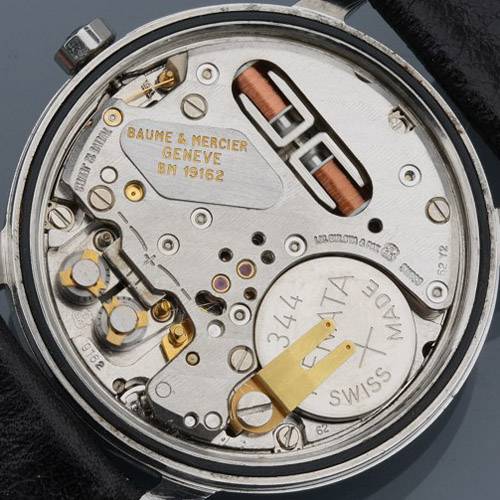
Omega f300 Caliber ESA9162 watch (Source: Electric Watches)
Two electromagnets keep the tiny tuning fork vibrating by exerting a pull on the two magnets located at the tips of the fork. This magnetic force generates vibrations that enable the pawl attached to the tuning fork to drive the teeth of the escape wheel.
We'll admit, this is a bit technical - but keep in mind that tuning fork electric watches represented a remarkable technological leap for their era! Thanks to their high-frequency operation, they delivered a level of precision that was truly unprecedented, far beyond anything else available on the market at the time.
Electric watches developed by Bulova, Omega, Longines, Tissot, Eterna, Universal Genève, and Citizen belong to this family.
Thinking about picking up a vintage electric watch? Before you dive in, it's important to weigh both the advantages and the drawbacks of these fascinating timepieces. Let's get into it!
So, just how accurate are electric watches? If you've read the first part of this guide - dedicated to the fascinating history of these timepieces - you probably already have a sense of the answer.
It really depends on the model in question!
We've seen that electric watches (with a motor balance wheel) from Lip, Hamilton, Lanco, and Benrus feature a regulating organ comparable to the one found in mechanical watches. As a result, they offer a level of accuracy very similar to that of vintage mechanical timepieces.
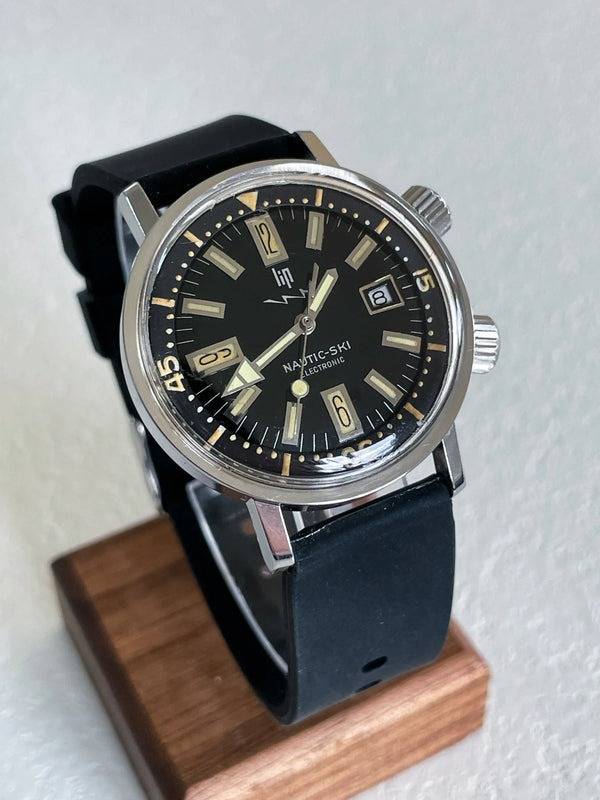
Lip Nautic Ski vintage, R184 movement (Source: Drop and watch)
To give you a sense of scale, a healthy Lip Nautic-Ski fitted with the R184 caliber can be expected to achieve accuracy of between 0 and +/-45 seconds per day. The same naturally applies to a Lip Dauphine with the R148.
Electric watches powered by a tuning fork movement - such as those from Bulova, Tissot, Omega, Universal Genève, Longines, and Citizen - offer significantly greater precision.
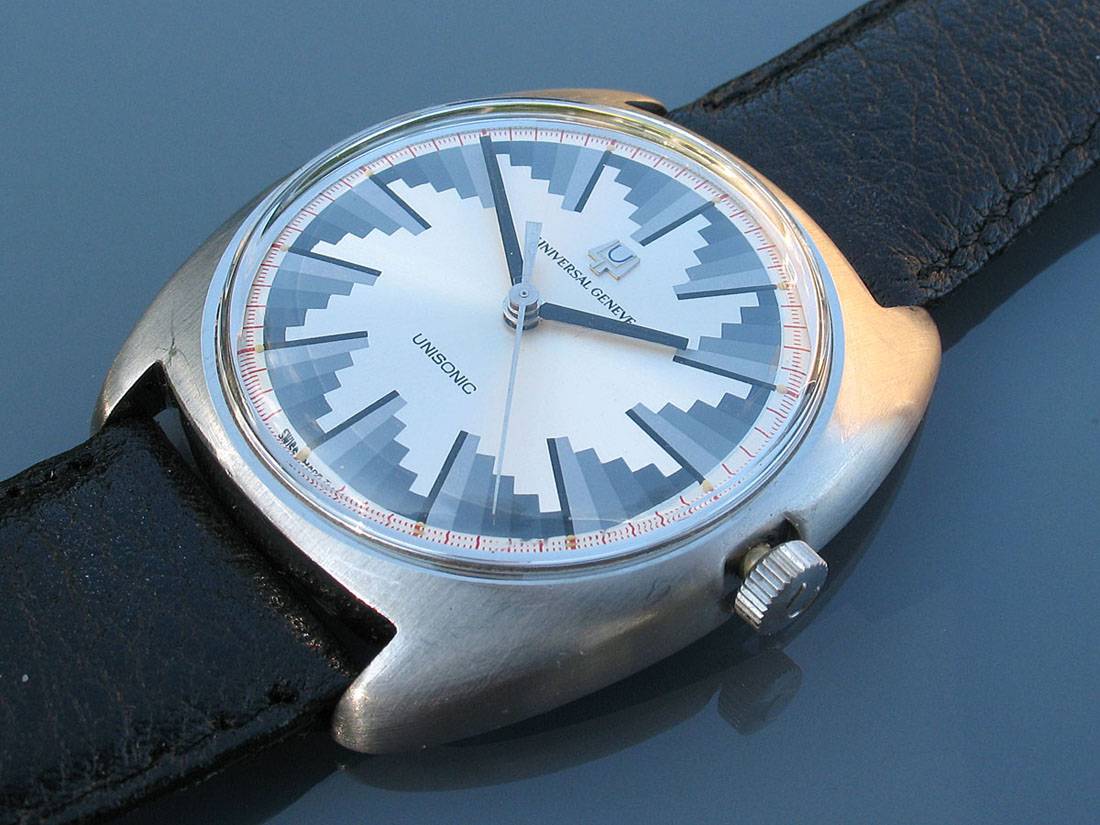
Universal Genève Unisonic (Source: Electric watches)
Online, several collectors report that their vintage Bulova Accutron currently runs with an accuracy of around +15 seconds per day. This surprises some people - because, as you may recall, the Accutron was originally rated at +1 minute per month.
This loss of accuracy is, in reality, caused by the batteries available today. They are not exactly the same as the cells used in the past - and that explains everything!
Make no mistake: electric watches - whether powered by a motor balance wheel or a tuning fork - have nothing, absolutely nothing, in common with digital watches. Beyond their often striking designs, they stand as a testament to the technological breakthroughs that shaped watchmaking throughout the second half of the 20th century.
These retro pieces are absolutely not to be missed!
Share :
Official European Union notice on your rights in the event of a product's lack of conformity.


