
0
Product added
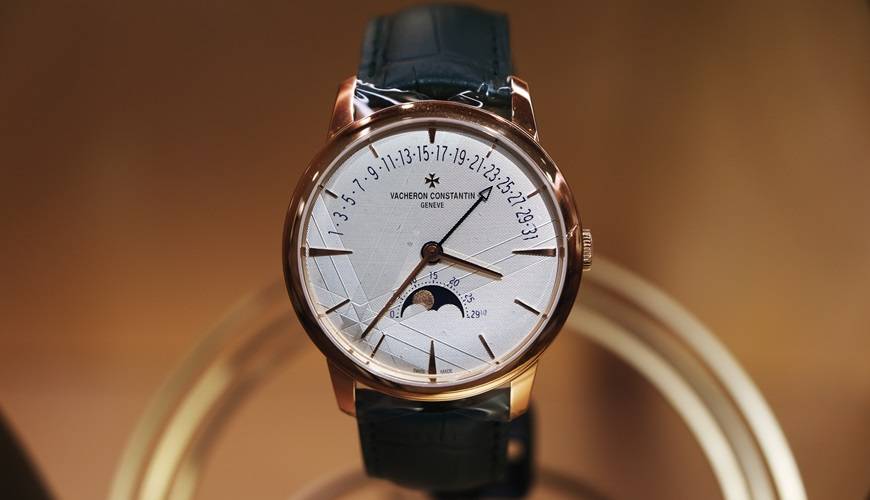
The fascinating world of watchmaking is filled with complications of every kind. Some stand out for their impressive technical complexity and the new functions they introduce, while others - seemingly simpler - surprise you with their sheer originality.
Meet the retrograde complication! Thanks to a dedicated hand, it offers a whole new way to read the passage of time. Intrigued? Dive in - and discover everything there is to know about this one-of-a-kind complication…
The retrograde complication is somewhat unique in that it can be defined as a display complication. In other words, it doesn't add a new function to the watch - it simply offers a different way to read a function that's already present on the dial.
In watchmaking, when a complication is indicated by a hand, it typically completes a full 360-degree rotation on a subdial. The retrograde works differently… Here, the hand travels in an arc, and once it reaches the end of its path, it snaps back to its starting position.
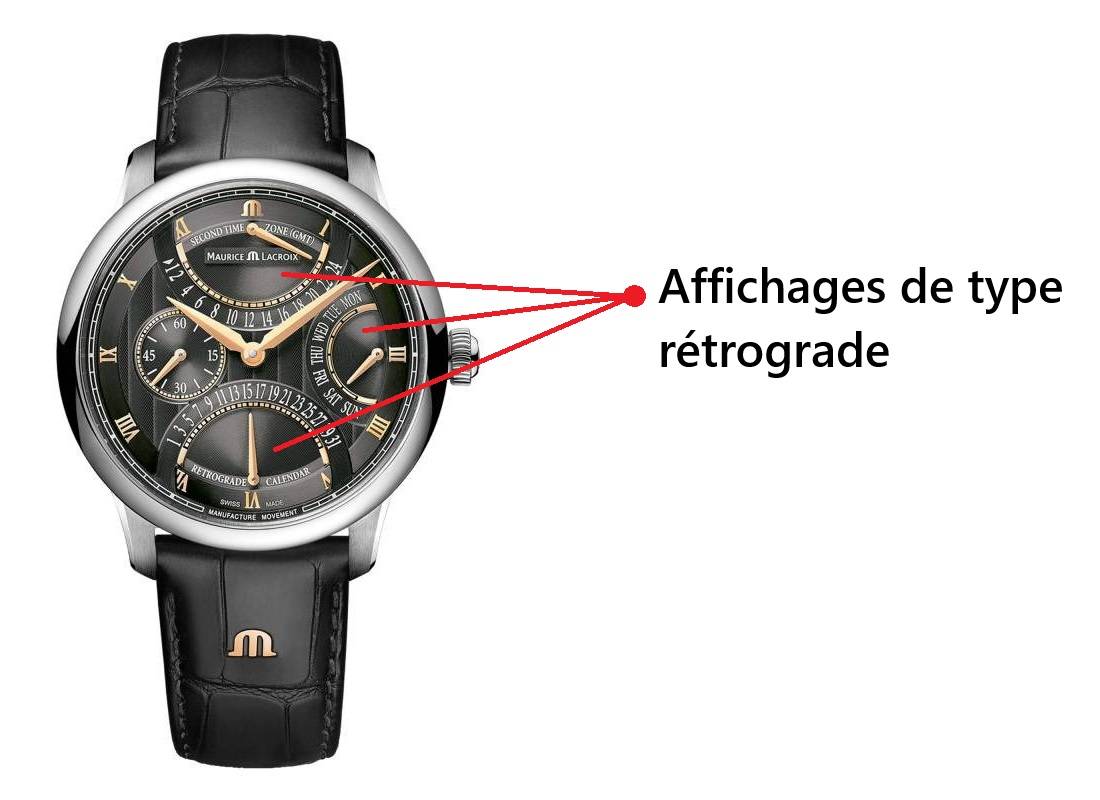
Watch with multiple retrograde-type displays
It may sound counterintuitive, but the retrograde is, in a sense, a complication of a complication.
Its display can be applied to a variety of timekeeping functions:
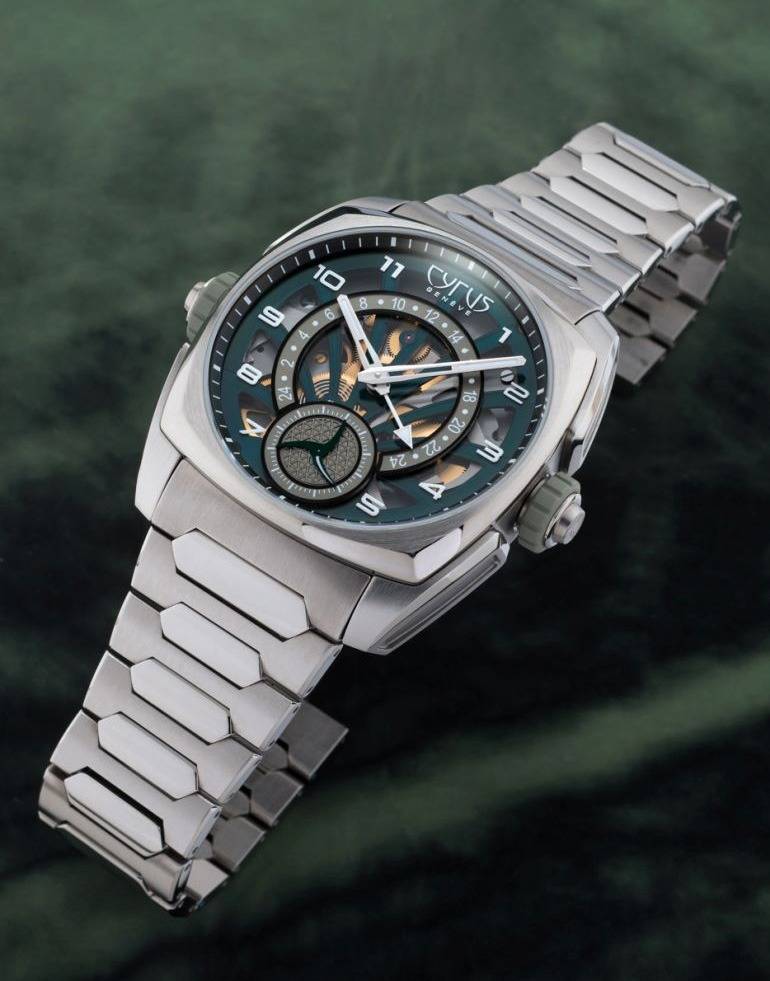
Cyrus Klepcys GMT Retrograde Palm Green watch (Source: orologioblog.net)
By virtue of its uniqueness, the retrograde complication holds a special place in the hearts of watch enthusiasts. Though it was invented quite some time ago, it truly began gaining popularity from the 1930s onward.
If you're a regular reader of our guides dedicated to watch complications, you've no doubt noticed one thing… Many of the functions found on today's watches were invented a long, long time ago! Well, the retrograde complication is no exception…
The first known watch to incorporate a retrograde complication appears to have been developed in the mid-18th century in Germany, featuring a retrograde date display. Later, toward the end of the 18th century in Paris, the Maison Lepine manufacture also created a watch with a retrograde complication, this time for the display of the hours. Unfortunately, no images of these models are currently available online, making it impossible to know what these pioneering timepieces actually looked like.
In the 19th century, Isaac-Daniel Piguet and Philippe-Samuel Meylan developed a retrograde watch around the 1820s.

Portrait of Philippe Samuel Meylan (Source: Piguet family)
It was a pocket watch in the style of Breguet's creations. Its silver dial featured an original configuration with:
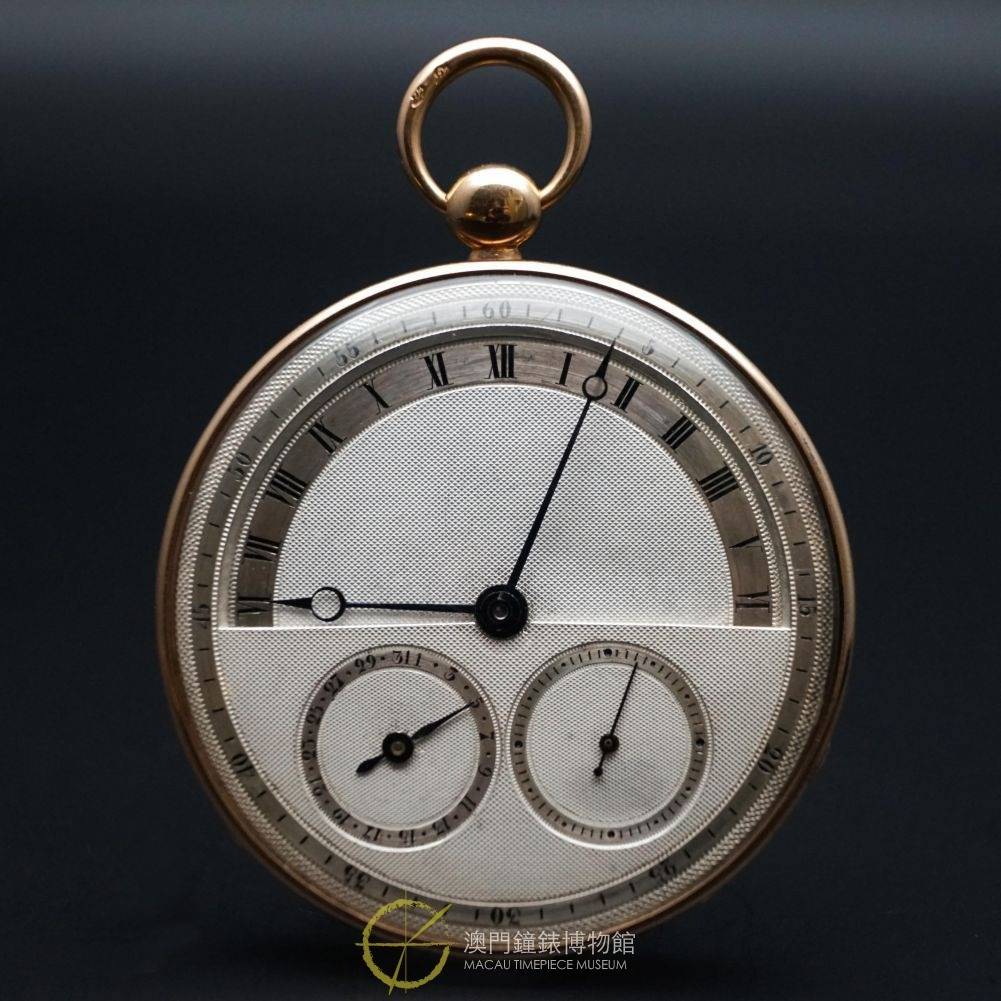
Piguet Meylan pocket watch with retrograde complication (Source: MacauTimepiece Museum)
It's worth keeping in mind, however, that the Piguet-Meylan watch was an exception… In fact, it was truly at the dawn of the 20th century that the retrograde complication began to gain wider traction, notably when Italian watchmaker Giovanni Sgherlino filed patent no. 27961 in 1904, introducing a new way to read the time!
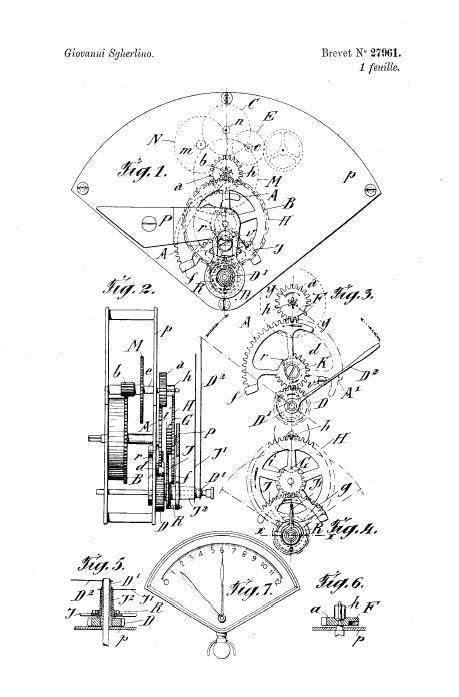
Patent for retrograde complication by Giovanni Sgherlino, 1904 (Source: Forum à Montres @ChP)
It was the height of the Art Nouveau era, and it was in this context that the Record Watch Co manufacture unveiled its "Sector Watch" - a pocket watch with a highly original style. Its silver case drew direct inspiration from the shape of a shell, underscoring the link between mechanical innovation and bold aesthetics.
Housed in this 60 mm wide by 71 mm tall case (including the lug), the hand-wound mechanical movement was crafted by Giovanni Sgherlino, designed to perfectly conform to the shape of the case and the logic of the dial.
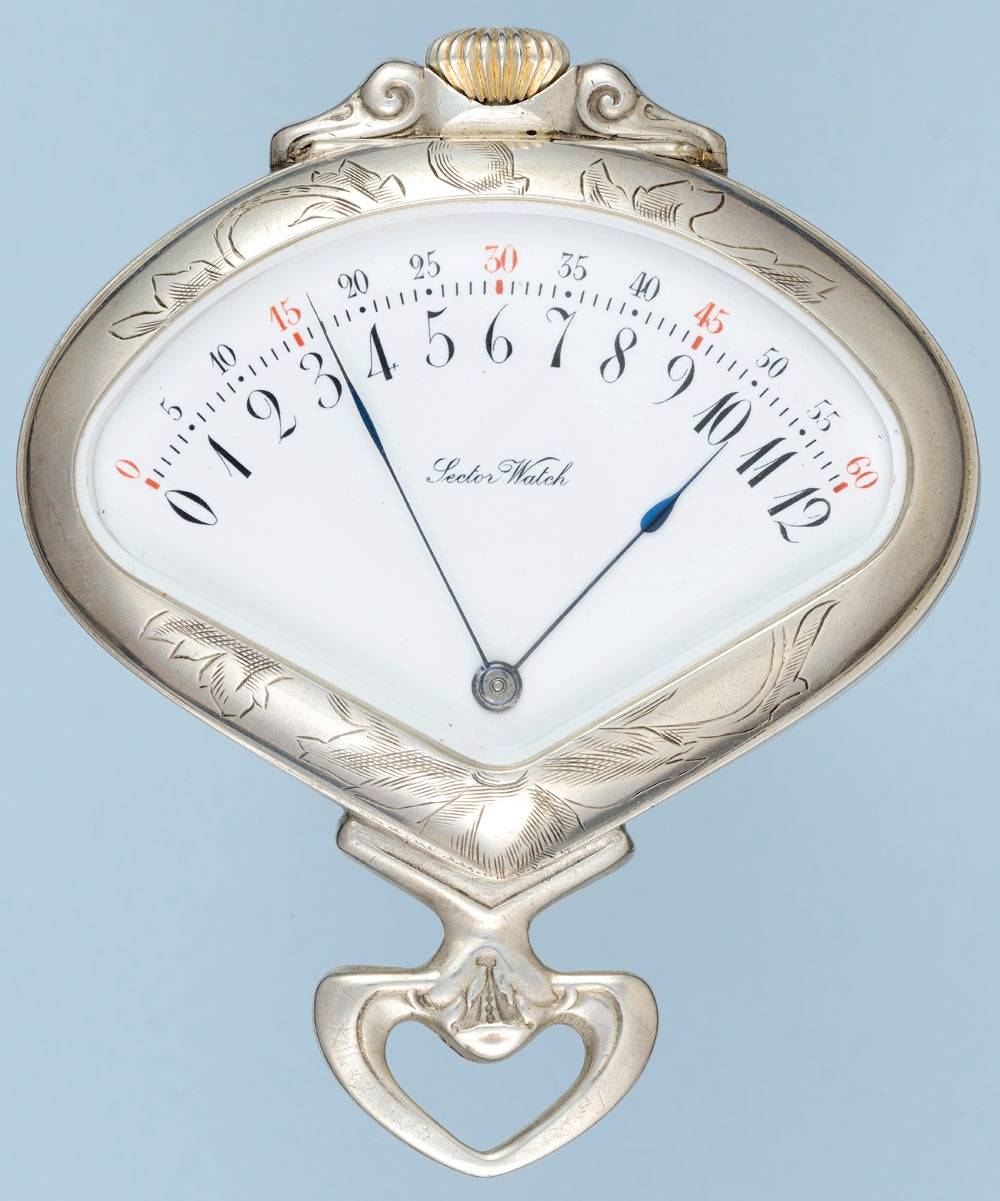
"Sector Watch" by Record Watch Co, circa 1900 (Source: antique-watch.com)
What stands out on this piece is the exceptional legibility of its all-white dial. It features a first graduation over 12 hours and a second over 60 minutes. To make reading the time easier, the numerals 0, 15, 30, 45, and 60 are printed in red, while the railway track provides a unique marker for each minute. The seconds are not shown here, but the slender blued hands allow their progression to be followed with reasonable precision. Beyond that, only the "Sector Watch" inscription appears on the dial of this watch, manufactured in the town of Tramelan, Switzerland.
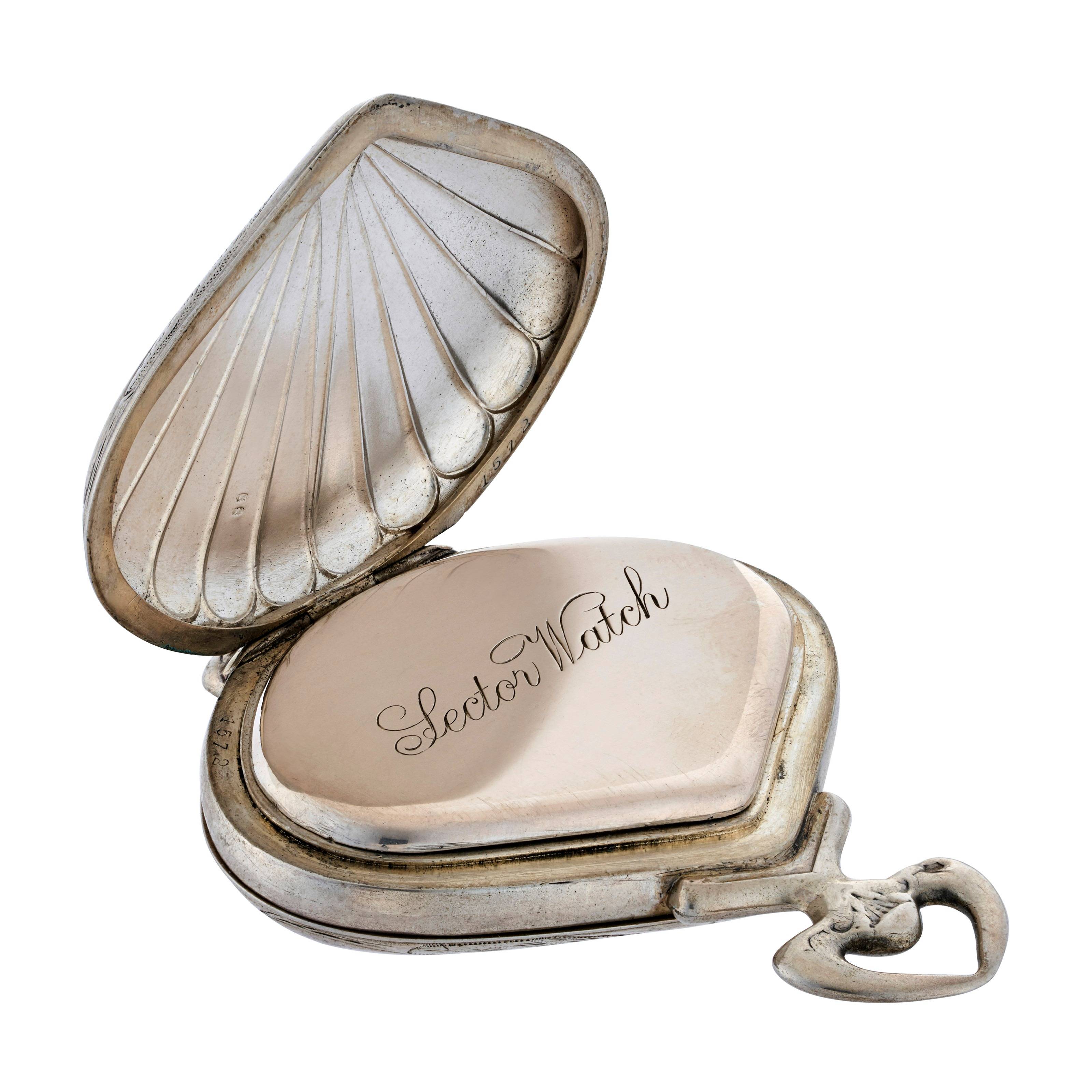
Caseback of the "Sector Watch" by Record Watch Co, circa 1900 (Source: Christie's)
A few years later, around 1930, in the midst of the Art Deco era's rise, the public was hungry for modernity and novelty. Watch complications delivering a spectacular visual effect - such as the jumping hour or the retrograde - were met with real enthusiasm. The retrograde complication gained popularity during the Roaring Twenties, yet remained largely the preserve of luxury watches…
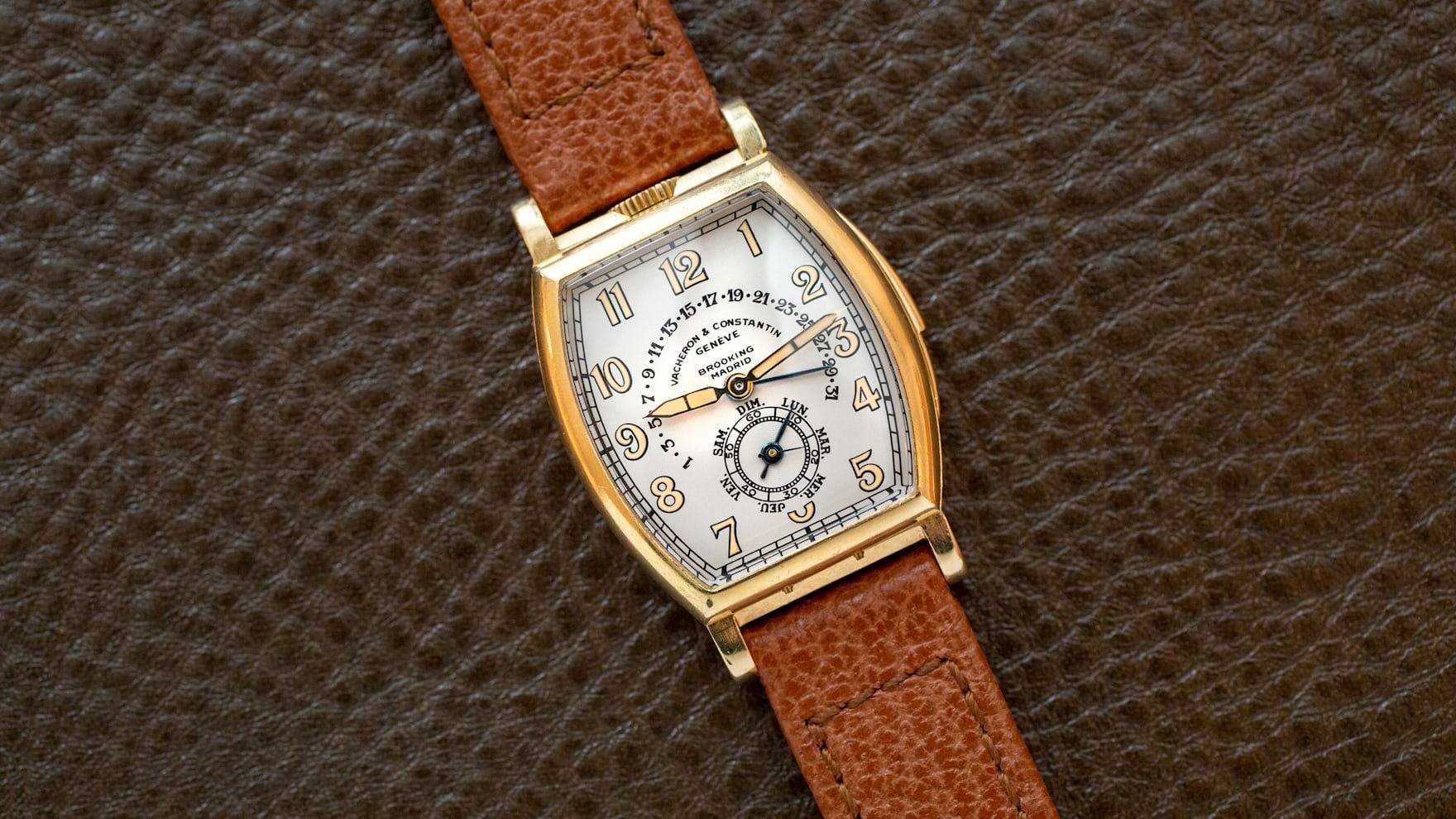
Vacheron Constantin with retrograde date, circa 1930 (Source: Hodinkee)
Vacheron Constantin would be among the first watch houses to offer wristwatches with a retrograde display. Almost always crafted in precious metals, these pieces often feature refined case shapes in keeping with the aesthetic codes of their era.
Beyond these few pieces, and despite their growing popularity at the turn of the 20th century, retrograde complication watches remained true UFOs in the watchmaking landscape for a long time… It would take the extraordinary creative frenzy of the 1970s to bring this complication roaring back into the spotlight. Brands such as Difor, Wittnauer, Waltham, Elgin, Sultana, and Fero began offering watches featuring this fascinating complication.
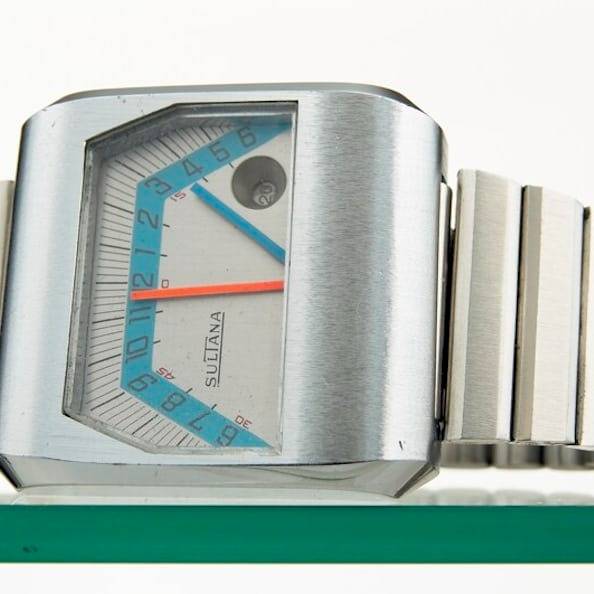
Sultana retrograde watch, circa 1970 (Source: Hodinkee)
Each featured a geometric design that was both unique and colorful, perfectly in tune with the "Space Age" aesthetic that was all the rage at the time. Their cases - often asymmetric and generously sized - blended mirror-polished and brushed finishes, instantly conveying an ultra-futuristic feel. Their look is somewhat reminiscent of the "Directime" watches we covered in our guide on the jumping hour complication. Many of these timepieces are fascinating, but it's undoubtedly the French brand Lip that produced the most spectacular pieces of all!
Based in Besançon (the birthplace of French watchmaking), the Lip manufacture designed an entire line of automatic watches with retrograde displays.
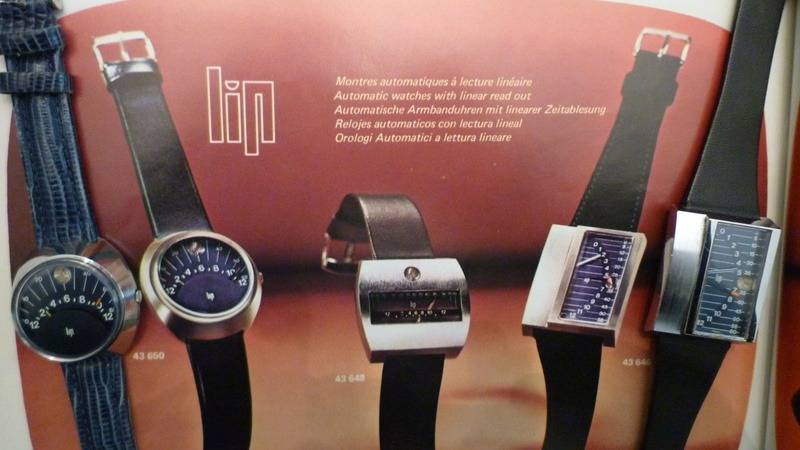
Advertisement for Lip retrograde complication watches, 1973 catalog (Source: Forum à montres - @jmbgrasse)
Several models were offered: some featured a relatively classic round case, while others were rectangular or barrel-shaped. These watches were powered by Swiss automatic movements developed by PUW or ETA, modified by Lip with an in-house retrograde module developed in Besançon. Rather than calling them "retrograde complication" watches, Lip's advertising of the era preferred the term "linear display" watches.
Interestingly, while chrome-finish watches were hugely popular at the time, Lip still chose to offer several of its references in a gold-plated version - and the results were sometimes quite striking. Despite their unmistakably modern look, these pieces seemed dusted with a hint of classicism…
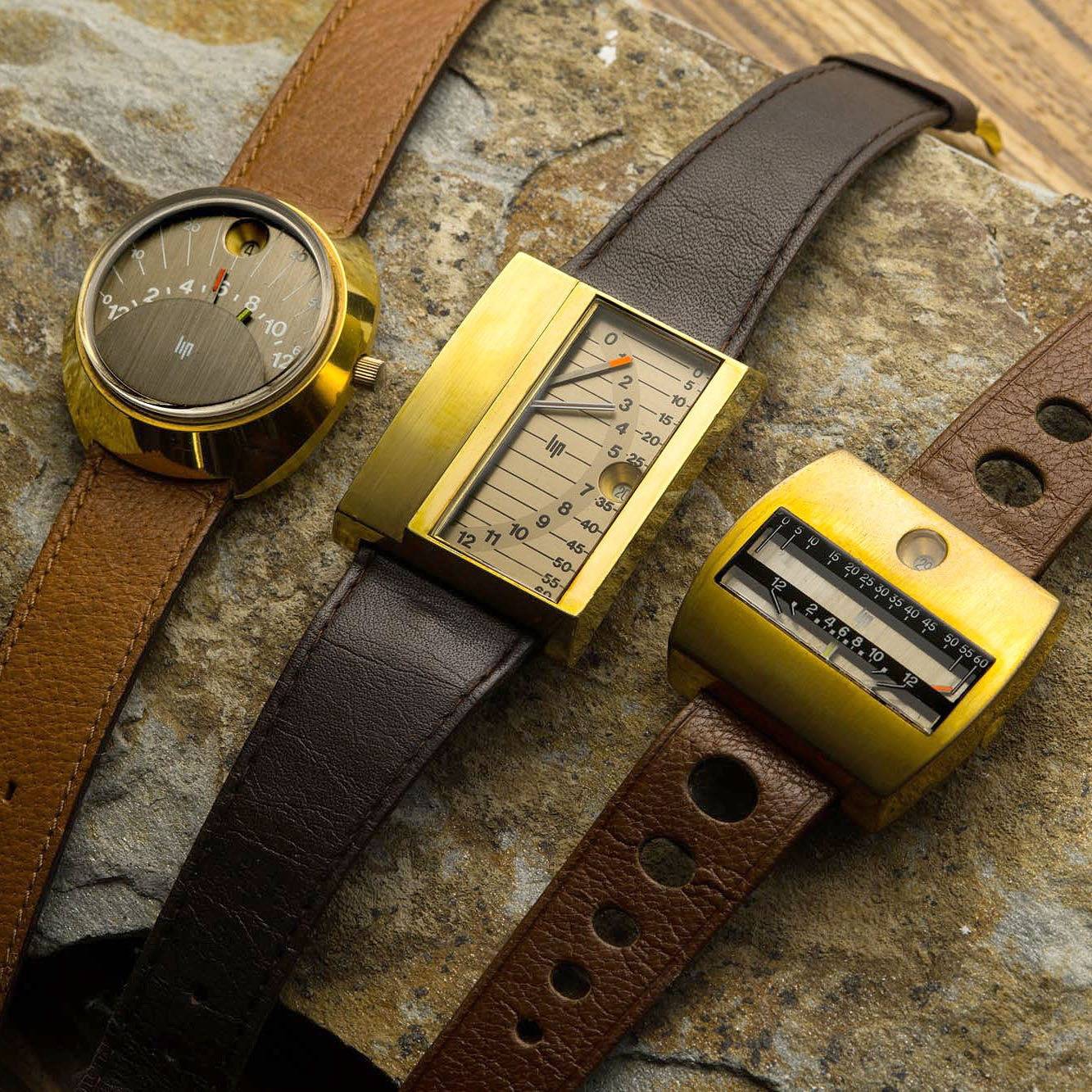
Gold-plated Lip watches with retrograde complication, circa 1973 (Source: watches.com)
And don't be surprised… True to the spirit of the 1970s, it wasn't unusual to find various slightly fluorescent orange accents on the dials or hands of these models!
In the 1980s, as quartz movements swept the mainstream, Jean d'Eve stood out with its "Sectora" - a battery-powered watch featuring a retrograde display. Its asymmetric case subtly echoed the famous Sector Watch by Record Watch Co, released 80 years earlier, as though rotated 90 degrees. The Sectora's dial design also appears to draw inspiration from that historic piece.
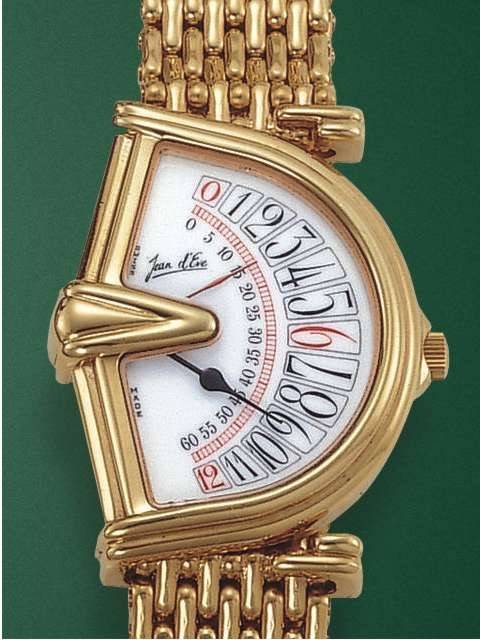
Jean d'Eve Sectora watch (Source: Antiquorum)
Jean d'Eve didn't stop at the quartz Sectora - the brand also offered automatic versions of the model. Several other retrograde-display watches followed in its catalog, including the "Vectra." Some came in gold, others in silver; some were paired with a metal bracelet, others mounted on a genuine leather strap. The options were practically endless!
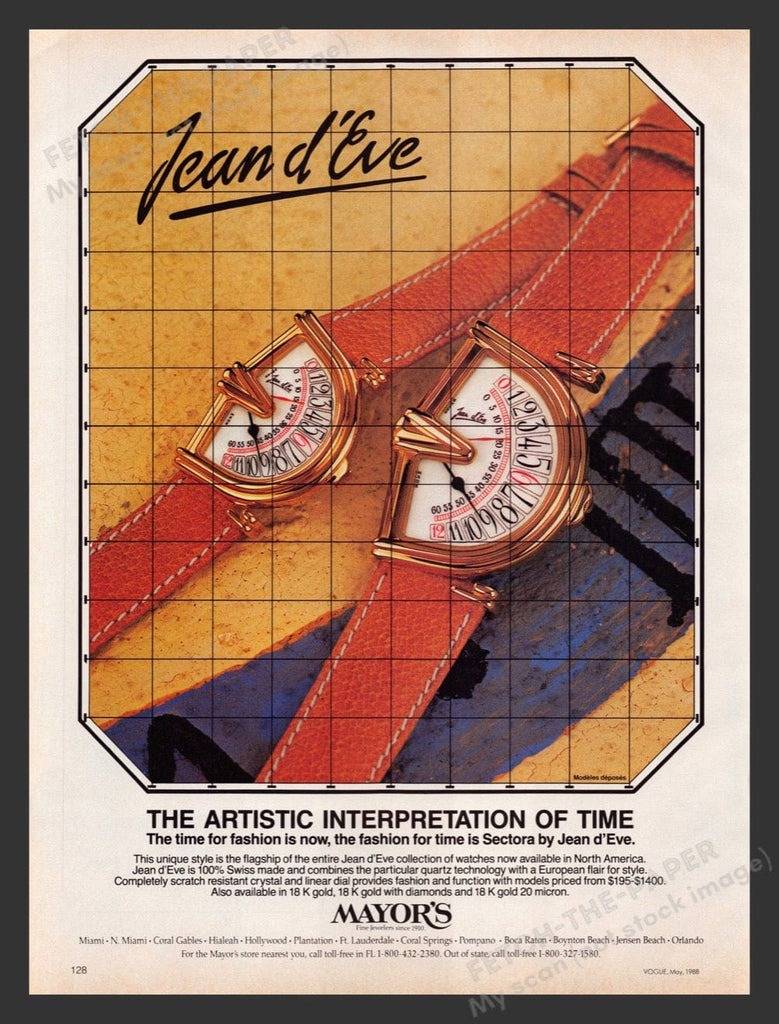
Advertisement for Jean d'Eve Sectora watch, Vogue May 1988 (Source: Fetch The Paper)
In the 1990s, Gerald Genta made waves with his "Retro" line, putting the retrograde complication front and center. He went on to develop several sub-collections: Retro Classic, Retro Sport, and the iconic Retro Fantasy, which paired the retrograde display with the jumping hour complication - producing pieces that were as technically impressive as they were visually spectacular.
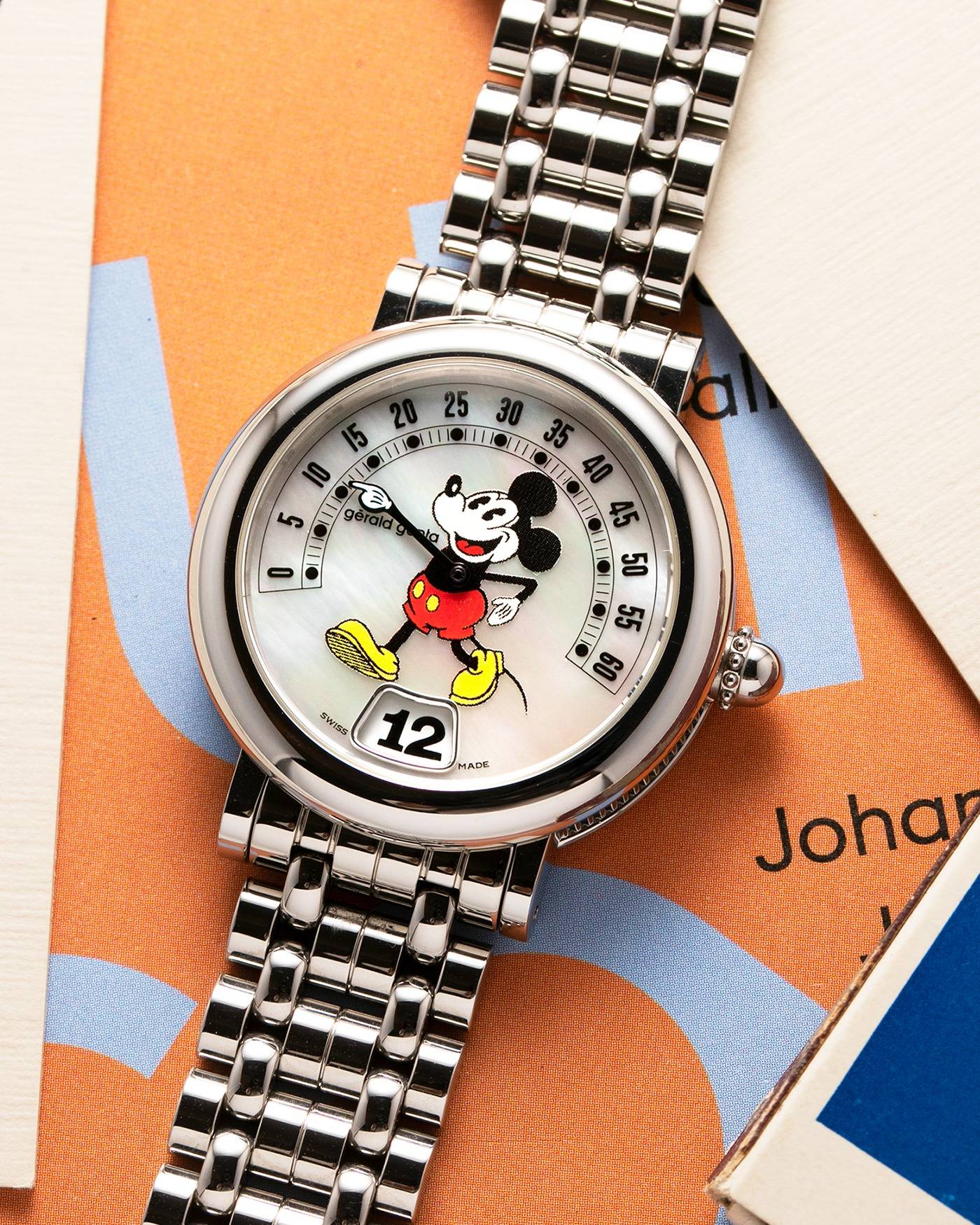
Gerald Genta Retro Fantasy watch with Mickey Mouse, circa 1990 (Source: S.SONG Watches)
The dials of these instantly recognizable models often feature a Disney character. Mickey Mouse and Donald Duck take pride of place on the faces of these watches!
In the mid-2000s, Jean d'Eve introduced the "Sectora II" - a faithful and lightly modernized reissue of the original model released a few years earlier.
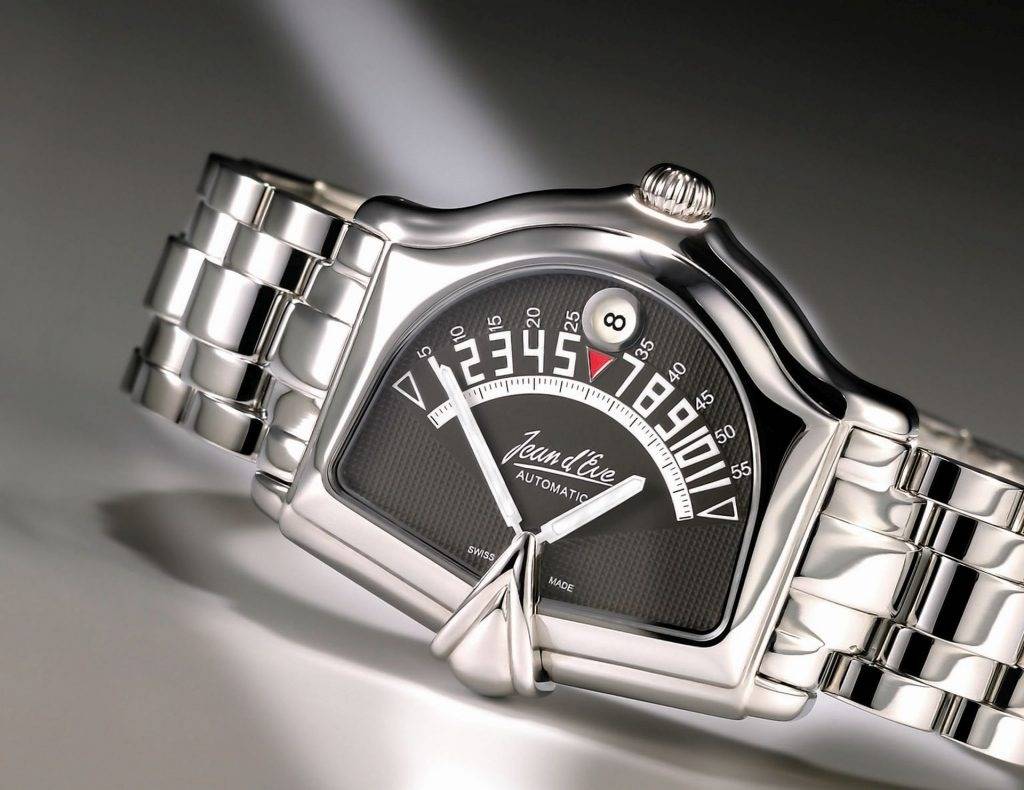
Jean d'Eve Sectora 2 watch, circa 2007 (Source: MasterHorologer)
Today, retrograde watches seem more popular than ever - though they remain decidedly premium options. You'll find them at houses such as Maurice Lacroix, Schaumburg Watches, Blancpain, Breguet, Vacheron Constantin, and Patek Philippe. But it's among more niche, independent brands that the most innovative pieces tend to emerge. Xeric, Guebly, Kauri, Otsuka Lotec, HYT, and Jacob & Co are prime examples.
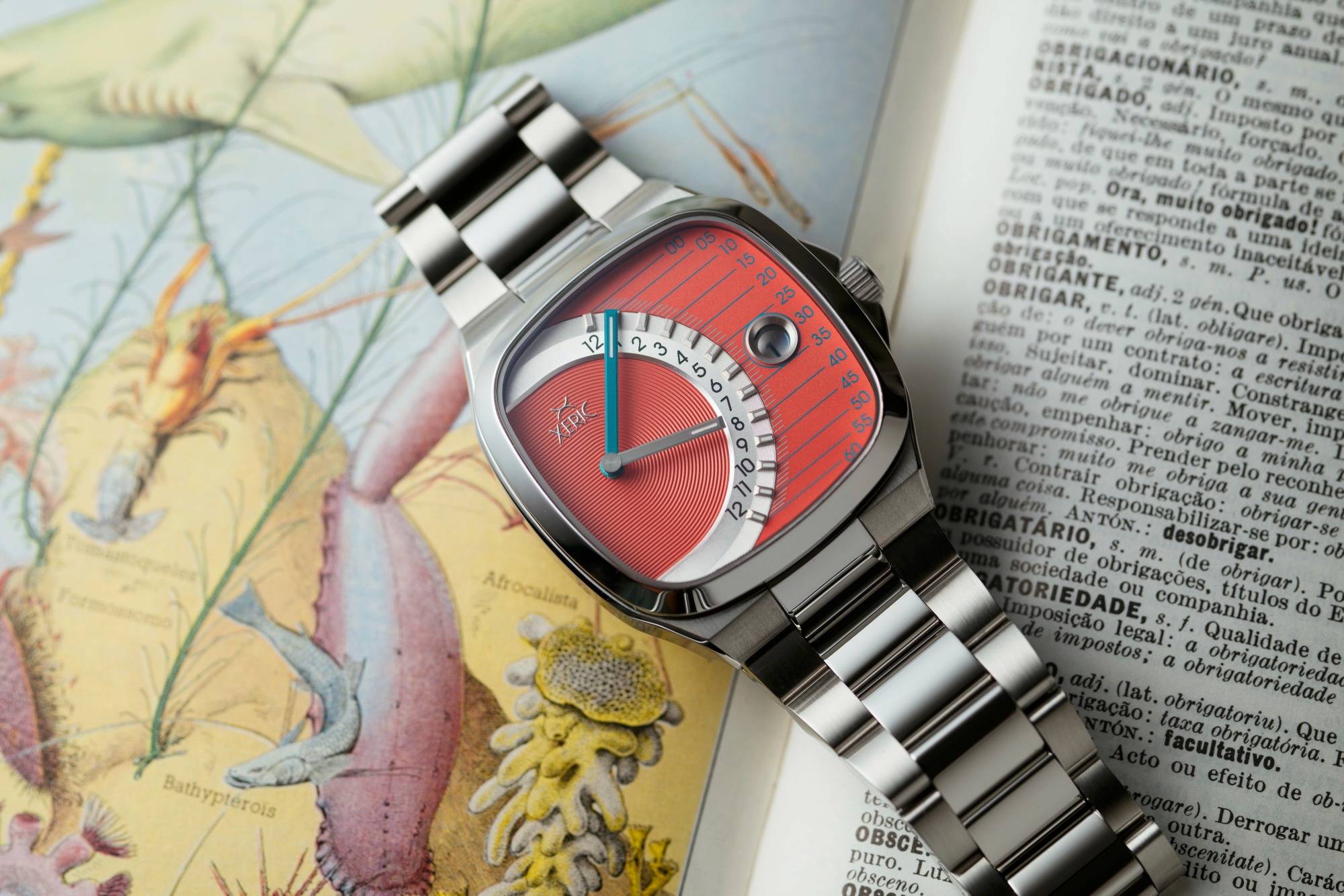
Xeric Timeline Retrograde watch (Source: aBlogtoWatch)
Special mention goes to Réservoir, a brand that has seemingly made the retrograde complication the cornerstone of its collections. In its catalog, you'll find one-of-a-kind pieces, including the iconic "Comics by Reservoir" models - watches celebrating beloved comic book characters such as Popeye, Olive Oyl, Abdulla Lutfi, and Blake and Mortimer.
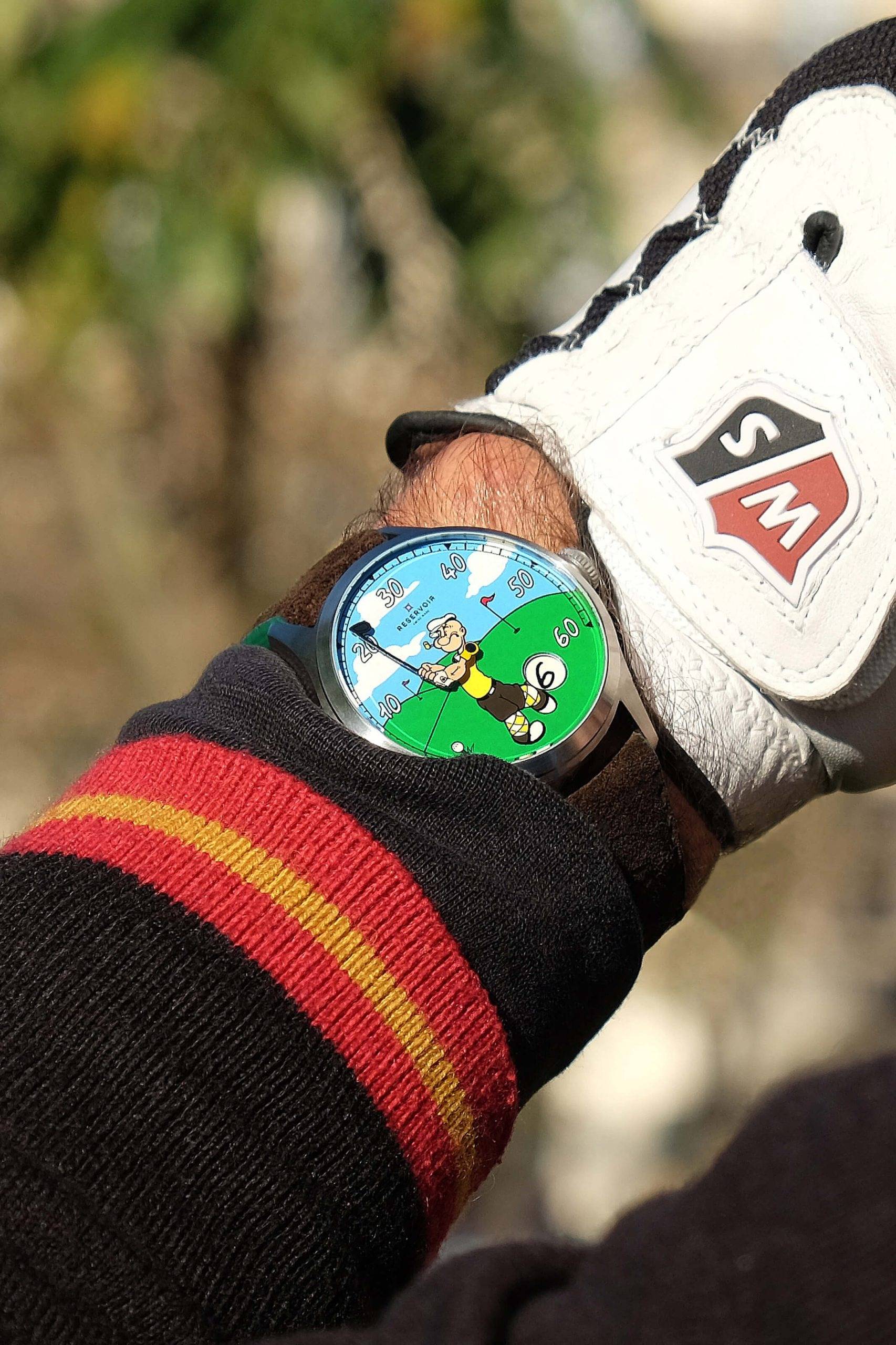
Reservoir Comics Popeye watch (Source: Reservoir Watch)
For those who dream of owning a truly one-of-a-kind luxury watch - one where the time is told by Popeye's arms swinging at cricket or Olive Oyl's limbs flying through a frenzied dance - you already know exactly where to look. And if you're active on social media, chances are you've already stumbled across these references on Instagram.
The brand TheTimeChanger also offers a particularly original retrograde chronograph, created in collaboration with renowned French modernist artist Alain Silberstein. It's a professional retrograde chronograph whose operating logic is every bit as original as its striking design!
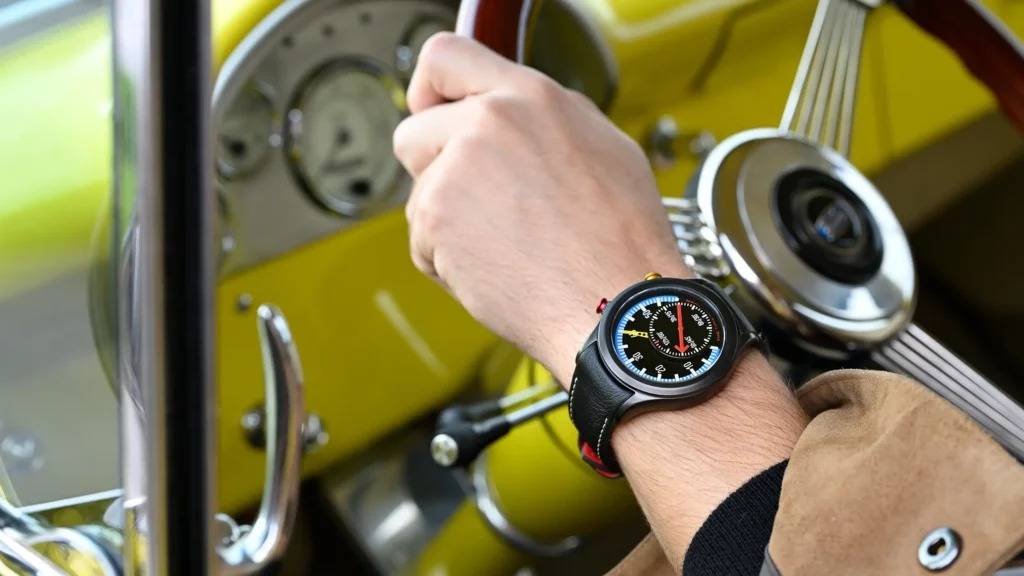
TheTimeChanger x Alain Silberstein chronograph (Source: thetimechanger.com)
This TheTimeChanger watch was released in two versions: the first features a blue and white dial while the second goes all black - each limited to just 150 pieces, making this edition a truly exclusive collectible.
In short, the retrograde complication is having a real moment… Invented in the early 20th century, it enjoyed periods of glory in the 1930s and 1970s. After a quieter spell, it's back in the spotlight today, championed by luxury houses and under-the-radar independents alike. Whether you're a vintage watch enthusiast or a fan of contemporary design, there's never been more to choose from.
Even if retrograde complication watches often come with a premium price tag, they never fail to inspire wonder - whether for their singular design or their utterly unique way of telling time.
As we've just seen, the principle behind a retrograde display is elegantly simple… Rather than following a continuous circular motion like the hands of a conventional watch, the indication travels along a graduated arc (for example, from 0 to 60 for a retrograde minute, or from 1 to 31 for a retrograde date). Once the arc is fully traversed, the hand snaps back and begins a new cycle.
To achieve this result, watchmakers use an ingenious combination of components…
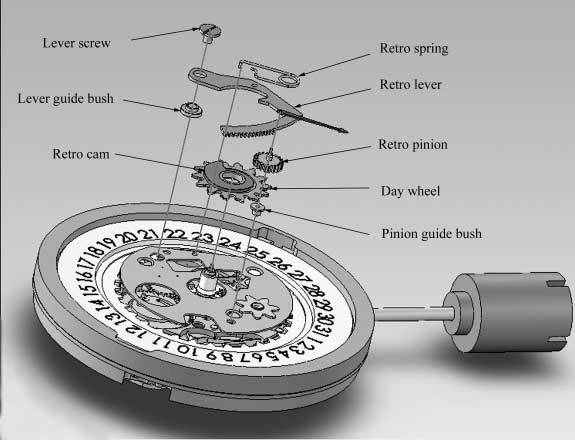
Exploded view of the retrograde complication components (Source: ResearchGate - @S.P. Sarmah)
The real challenge of the retrograde complication lies in balancing speed and control… If the spring is too powerful, the return snap is too violent and risks damaging the mechanism. If it's too weak, the return lacks crispness and loses precision. The watchmaker must therefore fine-tune the spring force, the cam profile, and the detent system to achieve a snap that is simultaneously fast, precise, and reliably durable over time.
The retrograde complication truly occupies a special place in the world of watchmaking… By offering a fresh way to read familiar functions - day, date, GMT - it captivates enthusiasts hungry for something new. After brief moments in the spotlight during the 1930s and 1970s, it faded somewhat from the scene. But if you love its display style, fear not: this one-of-a-kind complication is more popular today than ever!
Share :