
0
Product added
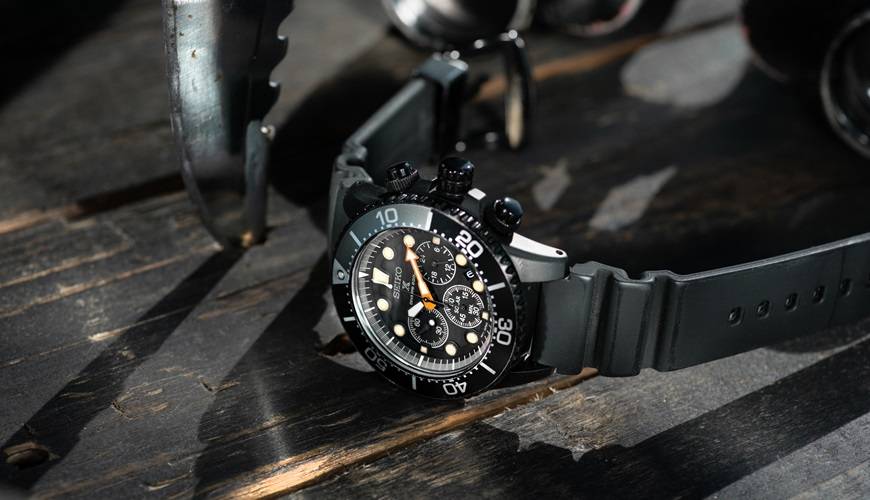
We've all come across a solar watch at some point - whether in the window of a small boutique or while browsing online. Chances are, it sparked a few questions.
It's only natural to be curious about timepieces whose inner workings remain, let's face it, a mystery to most people. In this dedicated guide, we'll walk you through everything you need to know about solar watches.
So don't be left in the dark!
Ready to browse? Head to our dedicated pages to explore our full range of men's and women's solar watches.
Let's start by explaining how solar watches actually work. The honest answer: they function almost exactly like quartz watches - with one key difference.
Inside, you'll find the same components covered in our quartz watch guide: coil, encapsulated quartz, integrated circuit - terms that are now familiar to you. The key difference, however, is that a solar watch draws the energy it needs from light, which continuously recharges the battery inside the watch.

Natural light charges solar watches most effectively
Let's clear up one common misconception right away: a "solar" watch does not actually need sunlight to recharge. It can charge just as well near an artificial light source - a fluorescent tube or a spotlight, for example.
A solar watch recharges using both natural light (sunlight) and artificial light. So even if you work indoors, a solar-powered timepiece is a perfectly viable option - and as we'll explore, it comes with a number of real advantages.
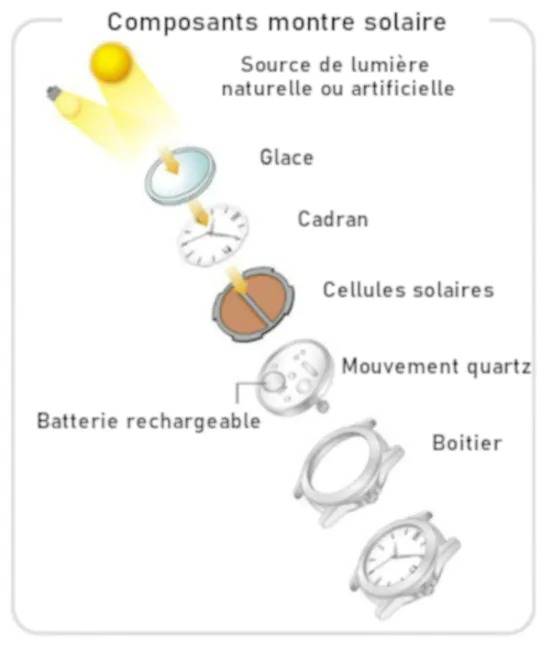
Exploded view of a solar watch (Source: Montre ta montre)
The charging process of a solar watch is fairly straightforward. Ambient light passes through the dial, beneath which sit what are known as solar cells - think of them as nothing more than a miniature solar panel.
Note that while some of these timepieces sport a distinctive tapestry-patterned dial - or even a small solar strip that makes their charging method unmistakable - others feature a far more traditional, understated dial.
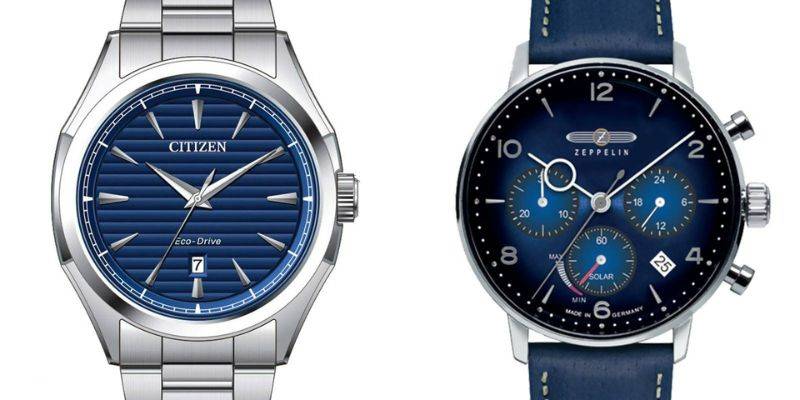
2 solar watches with very different dials
So a quick glance is not always enough to identify a solar watch!
Once captured, the ambient light is stored in a tiny battery built directly into the watch movement, which then delivers a continuous supply of energy to the mechanism.
The battery life of a solar watch varies by model, but as a general rule, you can expect it to last between 3 and 4 months.
Charging time for a solar watch depends on the type of light source. While both natural and artificial light can recharge a solar watch, sunlight does the job significantly faster. After all, there's a reason it's called a "solar" watch!
Keep in mind that a solar watch doesn't need a lot of light to keep running. Just 15 minutes of daily exposure to daylight is enough to keep it running smoothly. If the battery is completely drained, a 5-hour charge in direct sunlight will bring it back to full power.
As mentioned, you can also recharge a solar watch using artificial light - which is especially handy in winter when you tend to cover up more. That said, this method requires a significantly longer exposure time before the watch is fully charged.
Some watch brands state that one to two hours of exposure to artificial light is enough to charge a solar watch for the day.
One tip: stick to natural light!
When all is said and done, a solar watch is simply a quartz watch whose battery recharges automatically whenever you wear it with your wrists exposed. Not so complicated after all!
Do you have any idea when solar watches first came on the scene? If you're not familiar with the subject, pinpointing exactly when this technology emerged can be surprisingly tricky.
To understand all of this, let's step back a few decades to the seventies - a time when battery-powered watches were just beginning to go mainstream. Alongside this shift, growing public interest in renewable energy was fueling a broader conversation about reducing humanity's environmental footprint.
It was in this context that an American engineer set out to build, in his own home, a watch powered entirely by solar energy. At the time, solar panels were far from mainstream - making it a bold and ambitious project. Yet in 1972, that engineer, Roger W. Riehl, invented the « Synchronar 2100 » - a watch that was futuristic in every sense of the word.
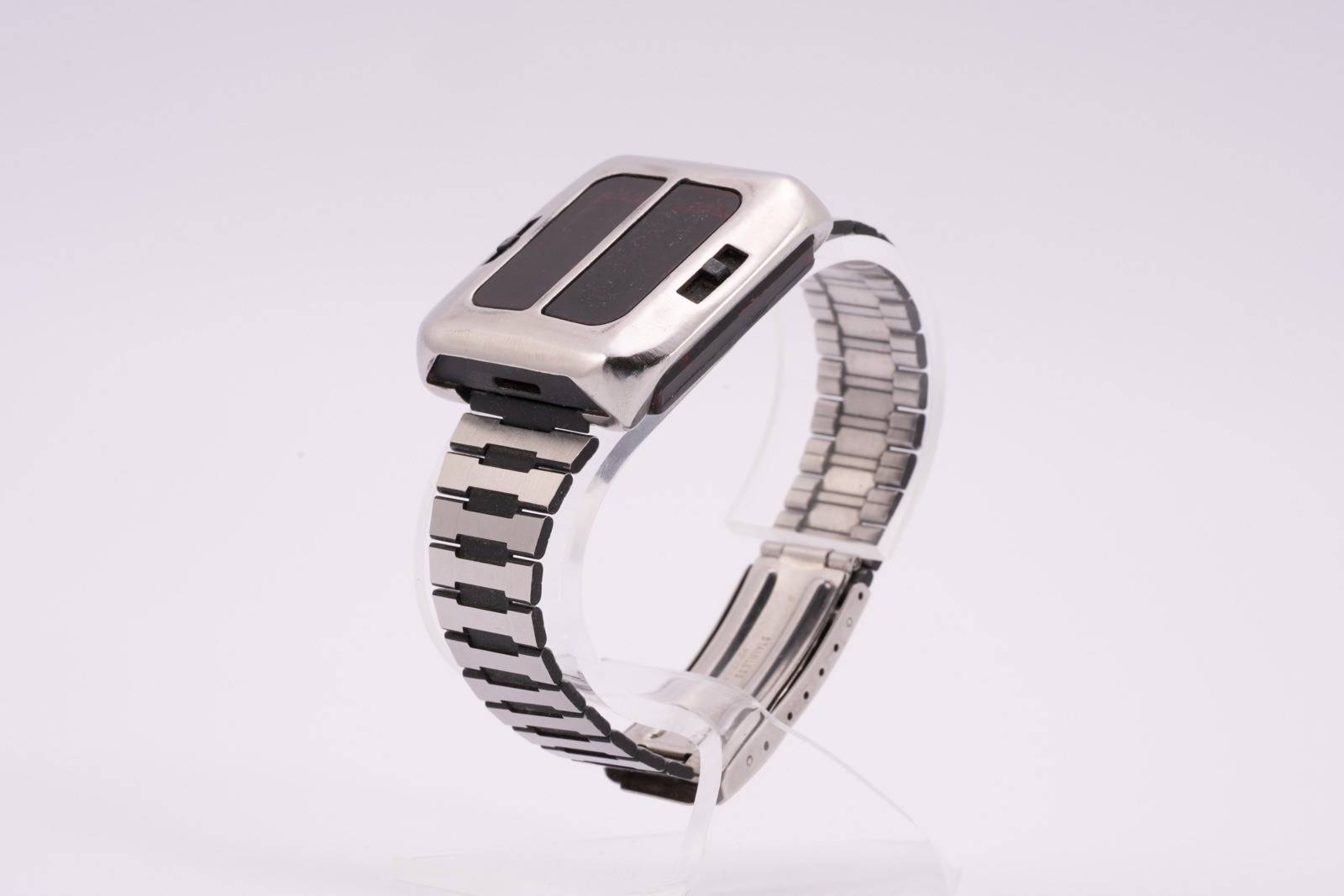
"Synchronar 2100" watch from 1972 (Source: Solar Museum)
This Space Age-style timepiece, quintessentially 1970s in design, featured 2 solar panels on top and displayed the time digitally via a small rectangular screen positioned on its edge at 6 o'clock.
Water-resistant to over 200 meters and highly shock-resistant, this model featured a screen with 3 brightness levels - and, even more impressively, it could automatically adjust screen brightness based on ambient light conditions.
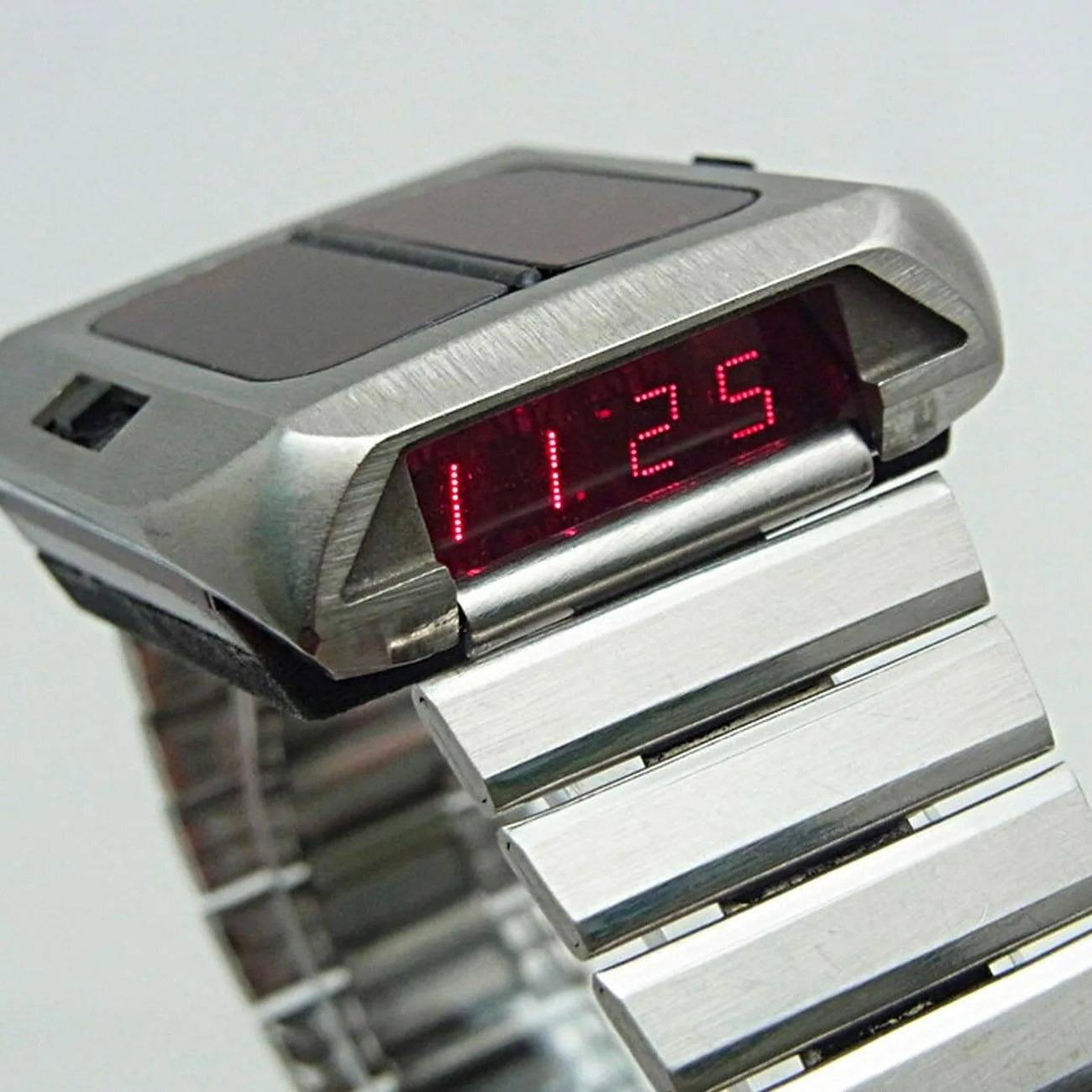
Display of a Synchronar 2100 (Source: Gear Patrol)
One fun fact: the Synchronar 2100 featured a perpetual calendar function that ran all the way to the year 2100 - hence its name. Plenty of time to wear this 55-gram watch well-set throughout your entire life.
And if you're wondering how much the Synchronar 2100 cost - it retailed for $500!
At that point, several brands began introducing solar-rechargeable quartz watches: Nepro, Sicura, Cristalonic, Seiko - and most notably, Citizen.
The year was 1976, and Japanese brand Citizen unveiled an analog (hand-driven) watch powered entirely by light. That groundbreaking technology would eventually be named « Eco-Drive » - a name that probably rings a bell.
But it wasn't until 1995 that Eco-Drive began to reach a truly mass audience - the year Citizen launched its first three solar-powered watches.
What Eco-Drive truly transformed was the very look of solar watches. Before its arrival, they were all easy to spot - every one of them featured a clearly visible photovoltaic panel. We all remember that very '80s image of a Citizen or Casio digital watch with a tiny solar panel built right into the face.

Citizen Crystron Solar Cell (Source: Flickr - paflechien33)
Eco-Drive changed all that. The light-capturing cells are now built directly into the watch dial. Slightly visible on early Citizen solar models, they are today completely invisible - making some solar watches genuinely difficult to identify.
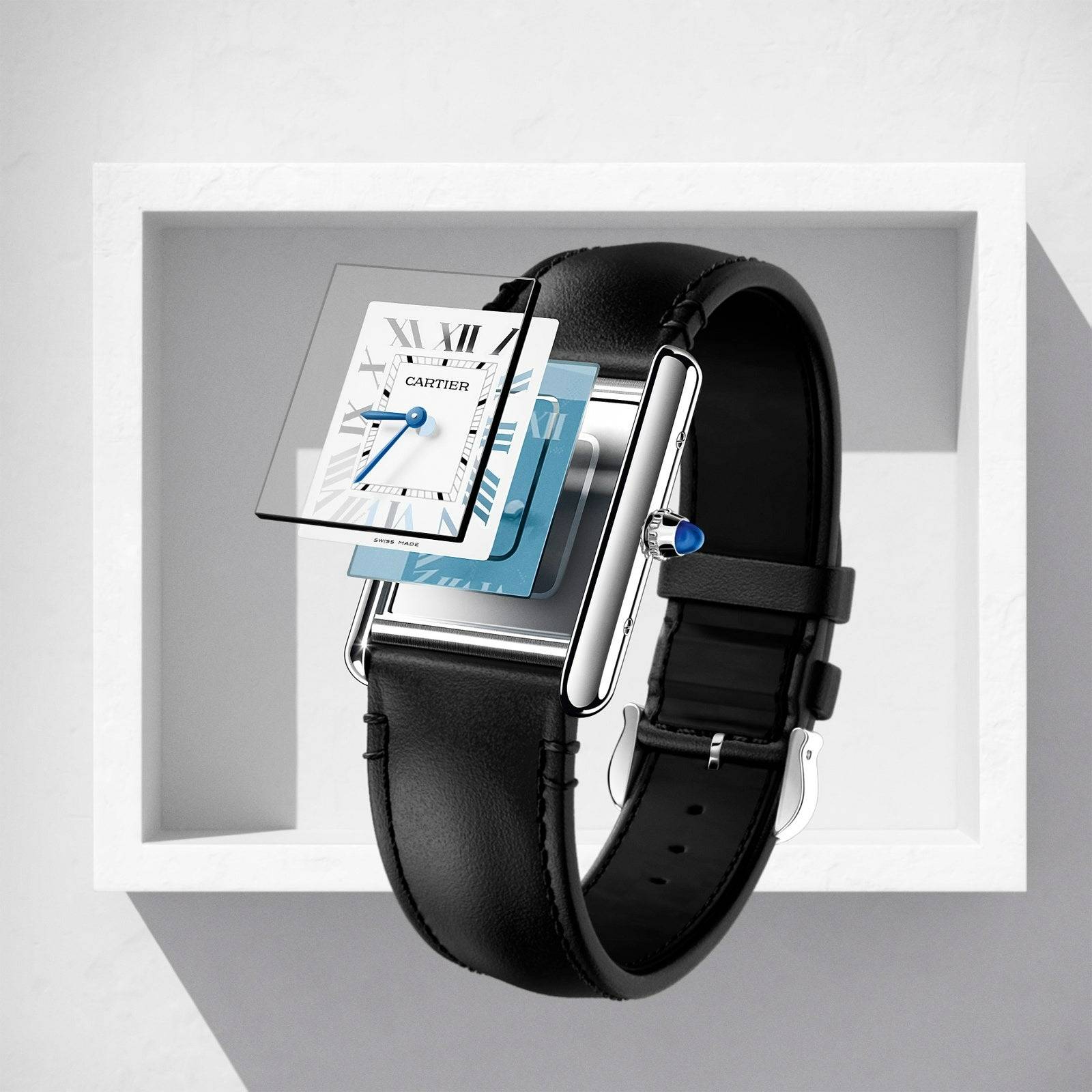
Cartier Tank Must SolarBeat (Source: Vogue France)
Today, solar watches aren't as ubiquitous as quartz or automatic models - but there's one for every budget. Even luxury brands have joined the movement.
Solar watches have a lot going for them - but they're not without their drawbacks. Here's a look at the full picture.
To sum it all up: solar watches combine the best of both worlds, blending the practical benefits of quartz with qualities you'd typically associate with mechanical timepieces. That makes them an excellent choice for anyone looking for a timepiece that's practical, reliable, and accurate.
Before diving in, let's clarify one important point: solar watches are not nearly as widespread as quartz watches. The technology they rely on is quite specialized, and as we'll see, virtually every solar watch on the market today comes from major watchmaking names you've almost certainly heard of.
Chances are, on a stroll through town, you've already come face to face with a Citizen Eco-Drive, a Seiko, or a Casio watch powered by solar technology.
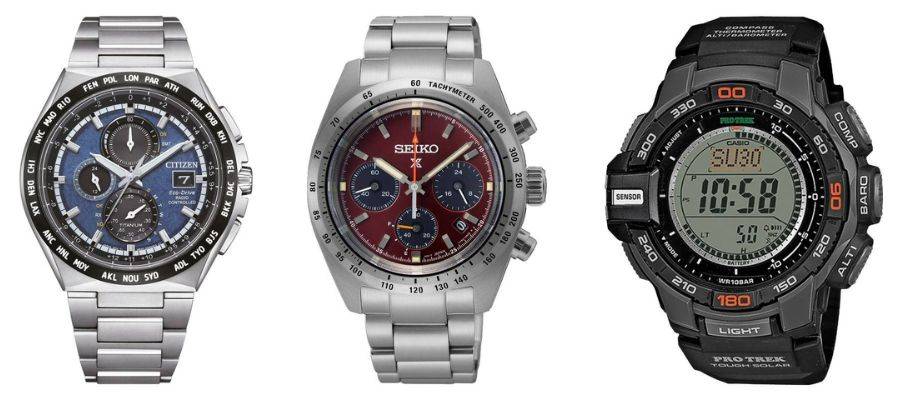
3 solar watches: Citizen, Seiko and Casio Pro Trek
No surprise there - these three brands are now recognized as the dominant players in the solar watch market. They are large-scale companies with the in-house capability to develop, from start to finish, technically sophisticated timepieces built around this unique technology.
On the market today, you'll find the Seiko Prospex, Seiko Astron, Casio G-Shock, Casio Edifice, Casio Pro Trek, and Citizen Promaster - all available in solar-powered versions. If you're after a sport watch, these are well worth your attention.
That said, Citizen, Seiko, and Casio are far from the only watchmakers offering solar-powered timepieces. You'll also find solar watches from Festina, Tissot, Timex, Garmin, Fossil, Zeppelin, and Pierre Lannier. What many of their solar collections have in common? They rely on movements developed by third-party manufacturers such as ETA, Miyota, Epson, and others.
If you're in the market for a solar watch, you're in luck - today there are great options available at every price point.
As covered in the first section of this guide, solar watches work very much like quartz watches - so it stands to reason that their accuracy is very similar. In a word: excellent.
To learn more about this topic, we invite you to explore the section "How accurate is a quartz watch?" in our quartz watch guide.
Whether the topic comes up in conversation or at the point of purchase, you're now equipped to explain how solar watches work, weigh their pros and cons, and make informed choices - knowing the key brands and the level of accuracy you can expect from these timepieces.
Share :