
0
Product added
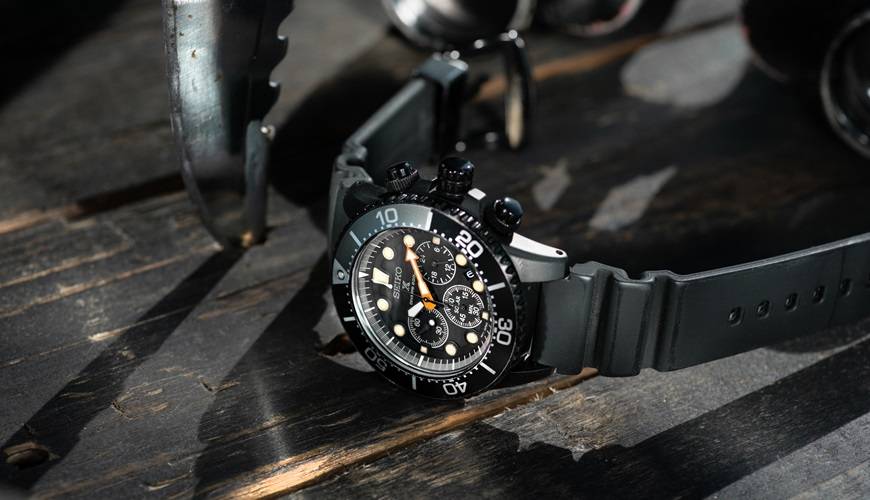
We've all come across at least one solar watch at some point in our lives - whether spotted in the window of a small boutique or while browsing online. Chances are, these timepieces left you with a few questions.
It's only natural to wonder how these timepieces work - and let's be honest, for most people, they remain something of a mystery. In this dedicated guide, we'll walk you through everything you need to know about solar watches.
Don't stay in the shadows!
Let's start by explaining how solar watches actually work. The truth is, they function in almost exactly the same way as quartz watches - with one key difference.
Inside, you'll find the same components covered in our guide on quartz watches: coil, encapsulated quartz crystal, integrated circuit… All familiar territory by now. The key difference, as the name suggests, is that a solar watch draws the energy it needs from light - which recharges the battery inside the watch.

Natural light charges solar watches most effectively
Let's clear something up right away. No, a "solar" watch doesn't actually need to be exposed to sunlight to recharge. It can charge just as well near an artificial light source - a fluorescent light or a spotlight, for instance.
A solar watch recharges via natural light (sunlight), but also via artificial light. If you work indoors, a solar watch is a perfectly viable option - and as we'll see, it comes with a number of real advantages.
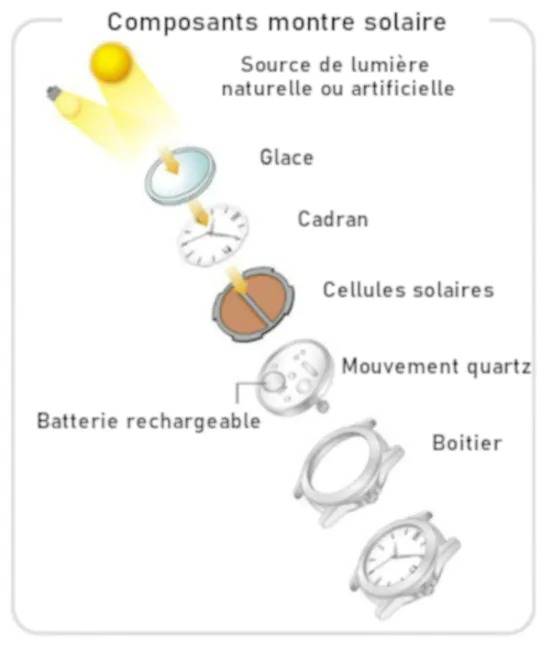
Exploded view of a solar watch (Source: Montre ta montre)
The recharging process behind a solar watch is fairly straightforward. Ambient light passes through the dial, beneath which sit what are known as "solar cells" - think of them as nothing more than a miniature solar panel.
Worth noting: while some of these timepieces feature a distinctive tapestry-patterned dial or a small solar strip that makes their charging method immediately obvious, others sport a far more traditional, understated dial.
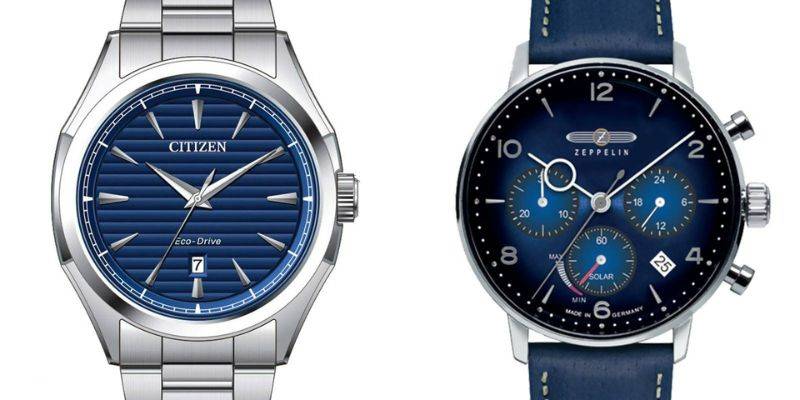
2 solar watches with very different dials
A quick glance isn't always enough to spot a solar watch.
Once the ambient light is captured, it is stored in a tiny battery integrated directly into the watch movement. That battery then continuously supplies energy to the mechanism.
The battery life of a solar watch varies by model, but as a general rule, expect it to fall somewhere between 3 and 4 months.
Recharge time for a solar watch depends on the type of light it's exposed to. While both natural and artificial light can recharge a solar watch, sunlight charges it significantly faster. After all, there's a reason it's called a "solar" watch!
Keep in mind that a solar watch doesn't need a lot of light to keep running. Just 15 minutes of daily exposure to daylight is enough to keep it running smoothly. If the battery is completely drained, a 5-hour charge in direct sunlight will fully restore it.
As mentioned, you can also recharge your solar watch using an artificial light source - which comes in handy in winter when you're more covered up. That said, this method requires significantly longer exposure time before the watch is fully charged.
Some watch brands indicate that exposing a solar watch to artificial light for one to two hours is enough to keep it running for the day.
One piece of advice: stick to natural light.
At the end of the day, a solar watch is simply a quartz watch whose battery recharges automatically whenever you wear it with bare arms. Not so complicated after all!
Do you have any idea when solar watches first came onto the scene? If you're not already familiar with the subject, pinning down the exact origins of this technology can be surprisingly tricky.
To understand all this, let's step back a few decades to the seventies - a time when battery-powered watches were just beginning to go mainstream. Alongside that, growing public interest in renewable energy was driving a push to reduce the negative impact of human activity on the environment.
It was in this context that an American engineer set out to build, in his own home, a watch powered by solar energy. Keep in mind that at the time, solar panels were far from the mainstream technology they are today - making this a truly ambitious project. And yet, in 1972, that engineer, Roger W. Riehl, invented the "Synchronar 2100" - a watch that was futuristic in every sense of the word.
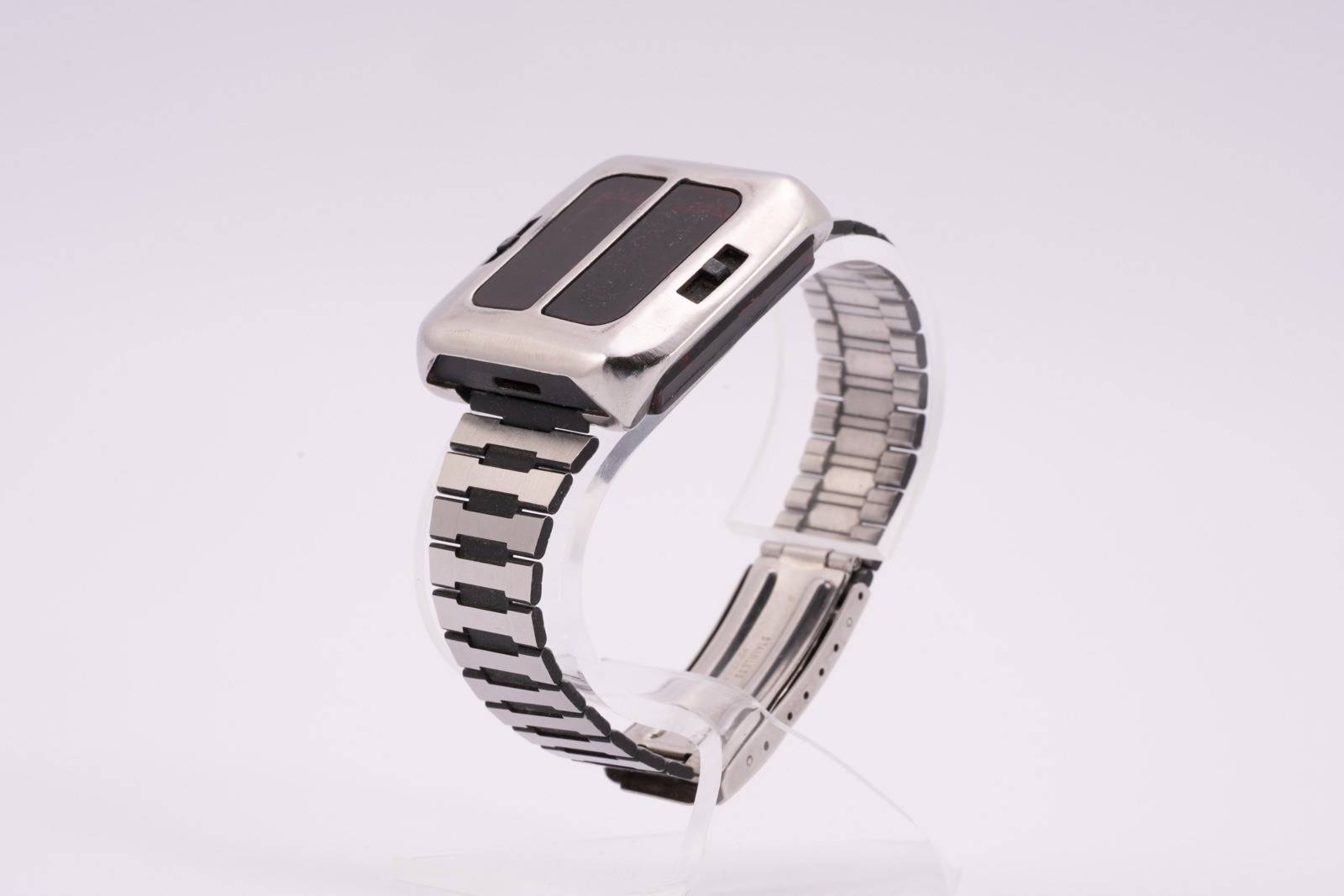
"Synchronar 2100" watch from 1972 (Source: Solar Museum)
This "Space Age" timepiece, quintessentially 1970s in style, featured 2 solar panels on its top and displayed the time digitally via a small rectangular screen positioned on its side at 6 o'clock.
Water-resistant to over 200 meters and highly shock-resistant, this model featured a screen with 3 brightness levels. Even more impressively, it could automatically adjust screen brightness based on ambient light conditions.
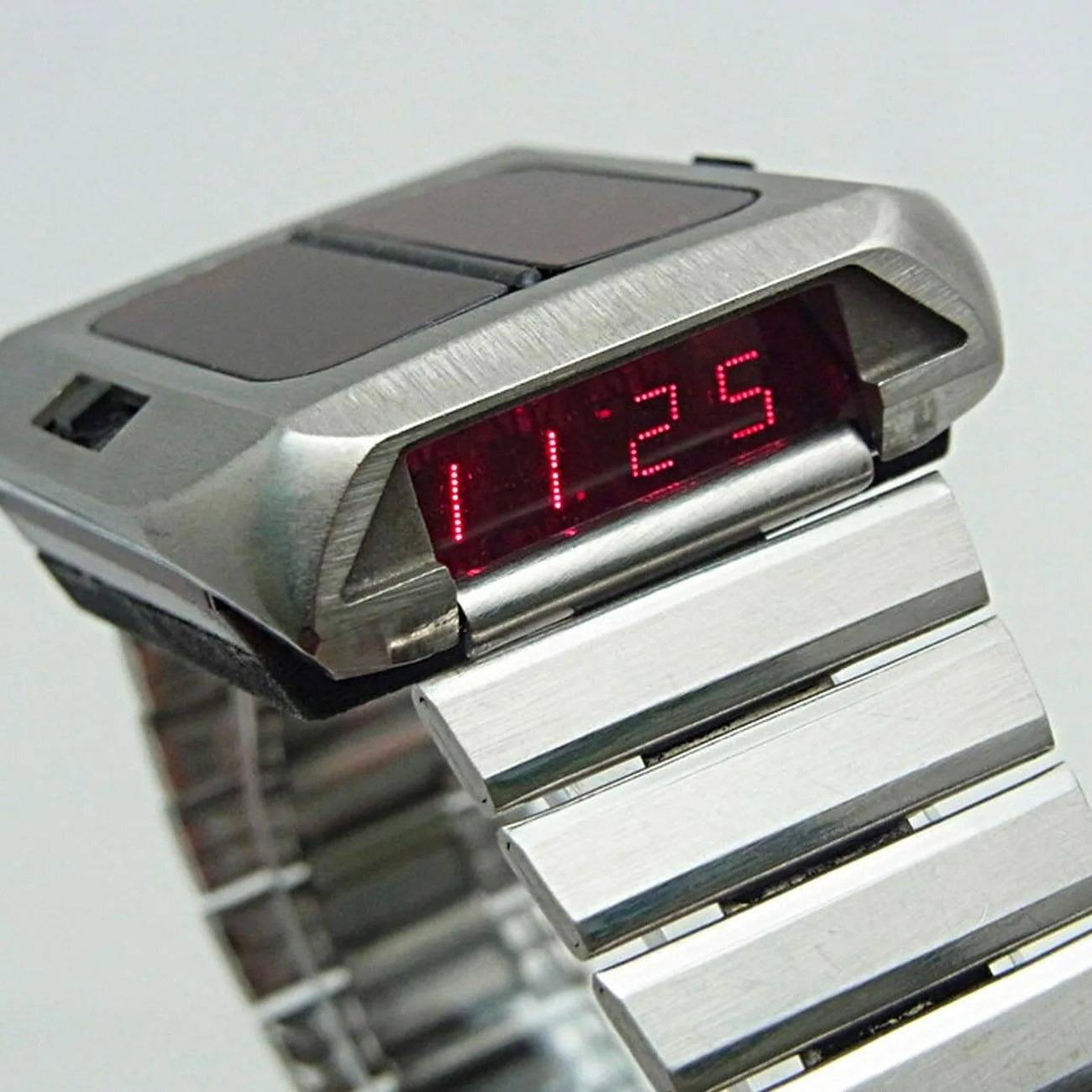
Synchronar 2100 display (Source: Gear Patrol)
Here's an interesting detail: the Synchronar 2100 featured a perpetual calendar function that ran all the way to the year 2100 (hence the name). Plenty of time to wear this 55-gram watch, well-set, for the rest of your life.
And if you're wondering what the Synchronar 2100 cost at the time - it retailed for $500.
At that point, several brands began introducing solar-rechargeable quartz watches: Nepro, Sicura, Cristalonic, Seiko - and most notably, Citizen.
The year was 1976, and Japanese company Citizen unveiled an analog (hands-based) watch powered entirely by light. This groundbreaking technology would eventually be named "Eco-Drive", a name that probably rings a bell.
It wasn't until 1995 that Eco-Drive began to gain widespread traction - that's when Citizen launched its first three solar-powered watches.
What Eco-Drive technology truly changed was the look of solar watches. Before its arrival, they were all easy to spot - each one featuring a clearly visible photovoltaic panel. We all remember that very '80s image of a Citizen or Casio digital watch with a tiny solar panel built right in.

Citizen Crystron Solar Cell (Source: Flickr - paflechien33)
With Eco-Drive, all that changed. The light-capturing cells are now integrated directly into the dial. Barely visible on early Citizen solar models, they are today completely invisible to the naked eye - making some solar watches genuinely difficult to identify as such.
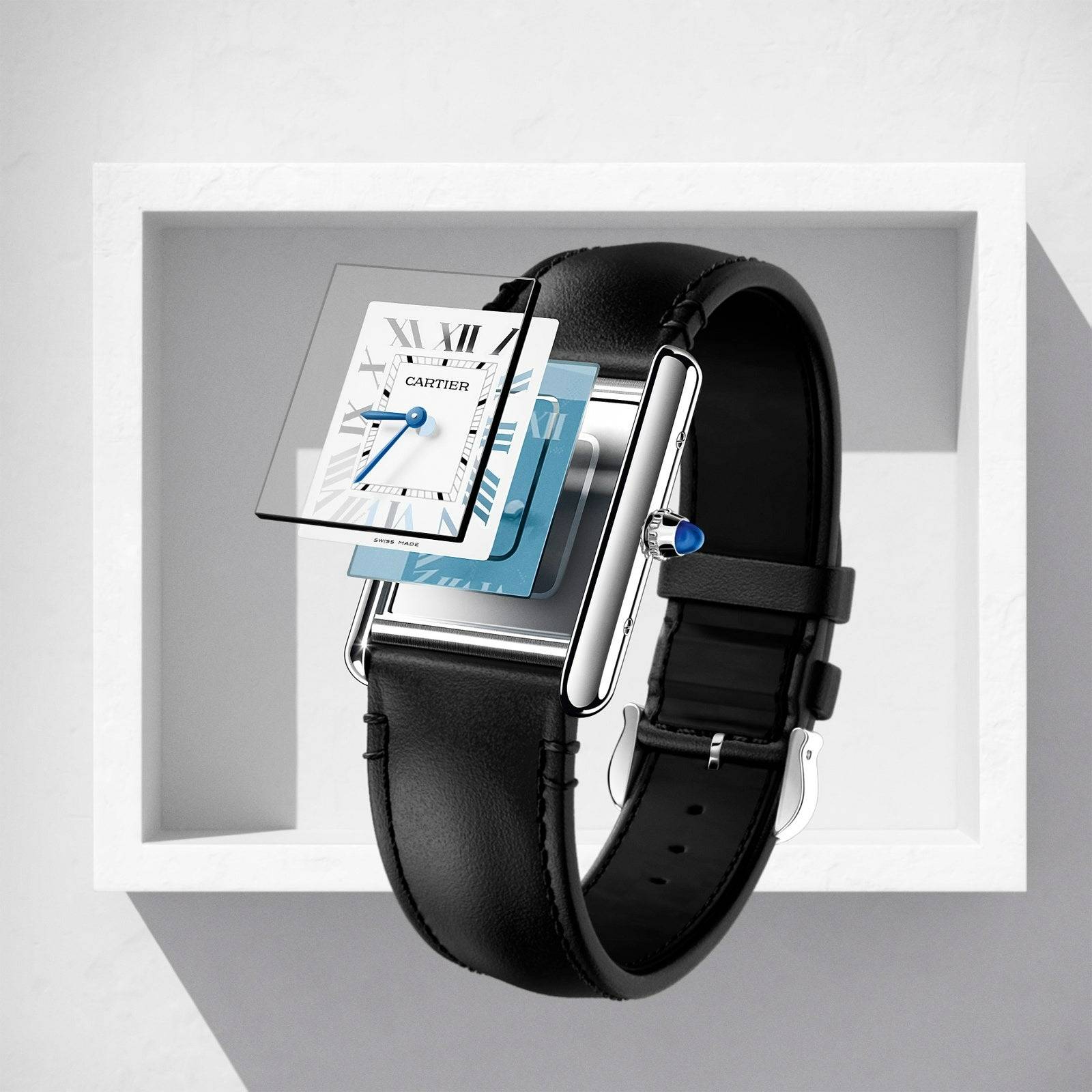
Cartier Tank Must SolarBeat (Source: Vogue France)
Today, solar watches aren't as common as quartz or automatic models - but you can still find one at virtually any price point. Even luxury brands are getting in on the action.
Solar watches have a lot going for them - but they're not without their drawbacks. Let's take a look at the pros and cons.
To sum it up, solar watches offer a unique combination of benefits found in both quartz and mechanical timepieces - making them an excellent choice for anyone looking for a practical, reliable, and accurate watch.
Before diving in, let's address one important point: solar watches are not as widespread as you might think - certainly not as common as quartz watches. The technology they rely on is quite specialized, and as we'll see, nearly every solar watch on the market today comes from major watchmaking names you're likely already familiar with.
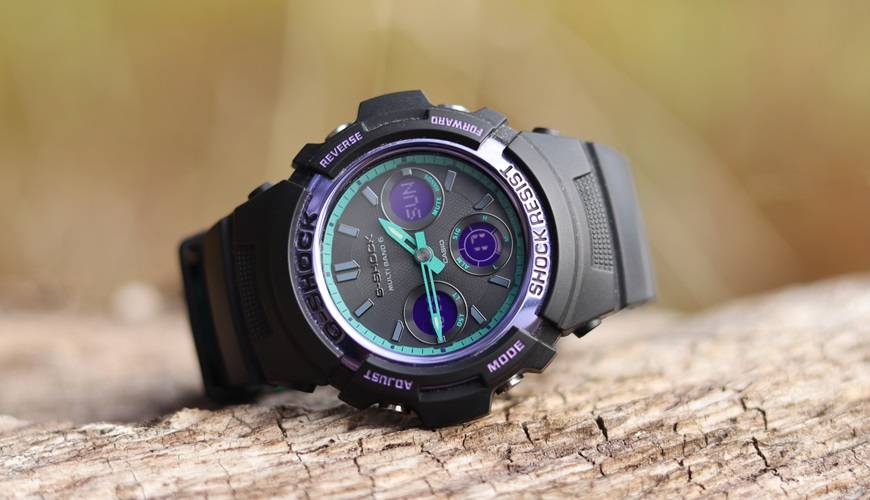
Chances are, during a stroll through town, you've already come face to face with a Citizen Eco-Drive, a Seiko, or a Casio powered by this well-known solar technology.
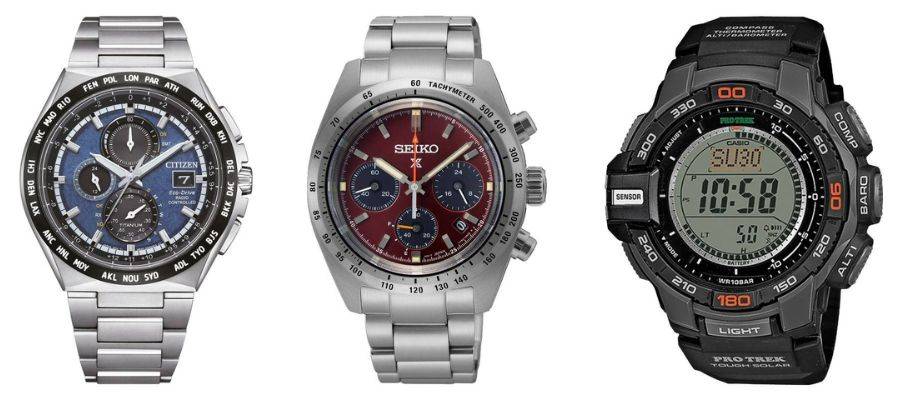
3 solar watches: Citizen, Seiko, and Casio Pro Trek
That's no surprise - these three brands are today considered the leading players in the solar watch market. They are large companies with the in-house capability to develop, from A to Z, technically advanced timepieces built around this distinctive technology.
On the market, you'll find solar-rechargeable options including the Seiko Prospex, Seiko Astron, Casio G-Shock, Casio Edifice, Casio Pro Trek, and Citizen Promaster. If you're after a sport watch, these are definitely worth a look.
That said, these aren't the only watchmakers offering solar-powered timepieces. You can also find solar watches from Festina, Tissot, Timex, Garmin, Fossil, Zeppelin, and Pierre Lannier. What many of these brands have in common? They rely on solar movements developed by third-party suppliers such as ETA, Miyota, Epson, and others.
If you're in the market for a solar watch, you're in luck - there are great options available at every price point today.
As covered in the first section of this guide, solar watches operate very similarly to quartz watches - so it should come as no surprise that their accuracy is comparable. In a word: excellent.
To learn more about this topic, we invite you to check out the "How accurate is a quartz watch?" section of our quartz watch guide.
Now that you understand how solar watches work, their pros and cons, the main brands behind them, and the level of accuracy you can expect, you're well equipped to make informed choices going forward.
Share :
Official European Union notice on your rights in the event of a product's lack of conformity.


