
0
Product added
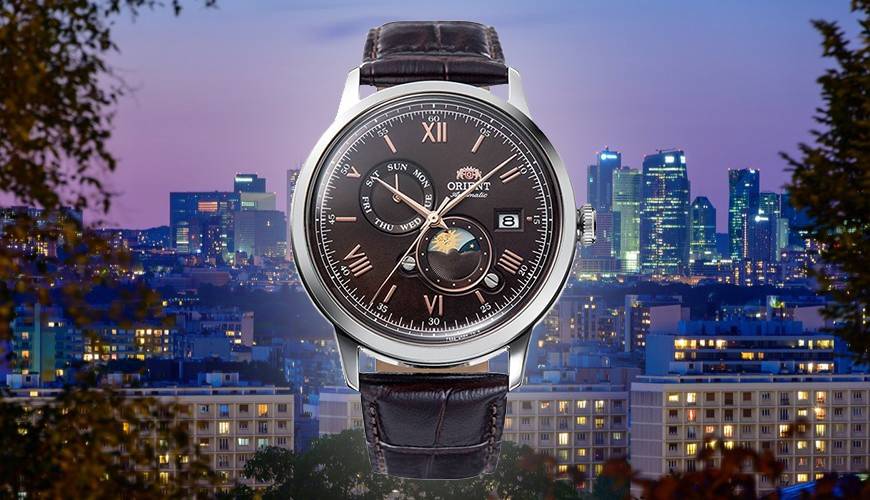
Day, night, day, night, day, night… No, we are not talking about a movie. Today's subject is a watch complication whose name, we admit, can be a little confusing! Whether shown in a discreet aperture or an oversized window, the day/night complication always makes an impression.
And yet… Have you noticed how hard it is to find clear information about it? So we set ourselves a challenge: to create the most comprehensive watch guide we could to this display that transforms the face of the watches we love!
The day/night complication distinguishes daytime hours from nighttime hours. It typically takes the form of a small opening on the dial, known in watchmaking as an "aperture" or "window."
Depending on the watch, this aperture can vary in size and be positioned in different locations on the dial: at 3 o'clock, 4 o'clock, 9 o'clock, and so on. Creative freedom reigns here, and each watchmaker brings its own interpretation.
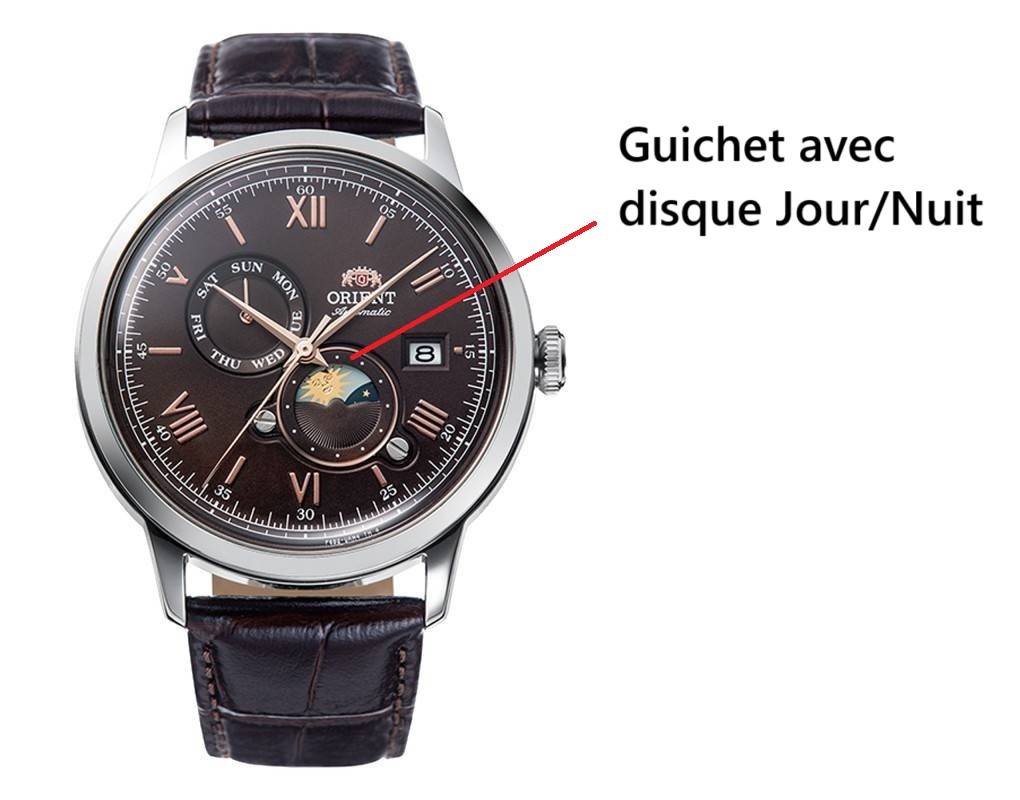
Positioning of the Day/Night Aperture on an Orient Watch
Through this opening, a rotating disc is visible, most often decorated with an expressive Sun and Moon. It is precisely this pictorial representation that leads these watches to be commonly referred to as "Sun & Moon" watches.
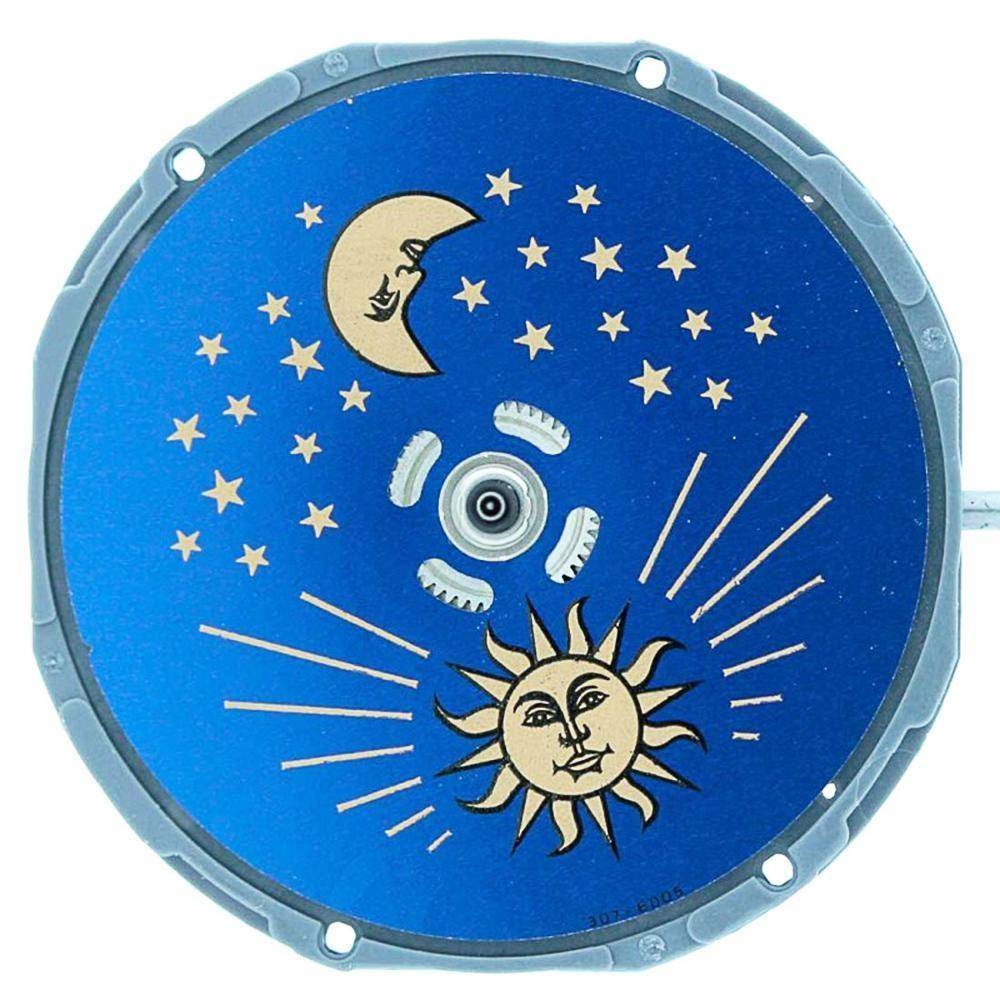
Day/Night disc from a Miyota 6m90 movement (Source: My-Montre)
This disc logically completes a full rotation every 24 hours, making it easy to tell at a glance whether the displayed time falls during the day or at night. This small detail can prove especially useful, particularly when you're about to set a watch equipped with a date function.
Be careful not to confuse this complication with the one displaying moon phases. While the two may look similar at first glance, they actually convey very different information!
As you're about to discover, the day/night complication is far from a modern invention - it was already present on certain watches made several hundred years ago.
Available documentation on the day/night complication remains very limited, but here is what we know about it…
The first pocket watches fitted with this indicator appear to have originated in England during the 18th century. Drawing on various sources - including auction house archives and specialist vintage watch sites - it seems that two main families of watches incorporating this complication existed at the time.
On one hand, the simplest (and oldest) models were built around a single hand used to track the hours. On these pieces, the day/night indicator was displayed within a wide aperture, typically positioned on the upper portion of the dial.
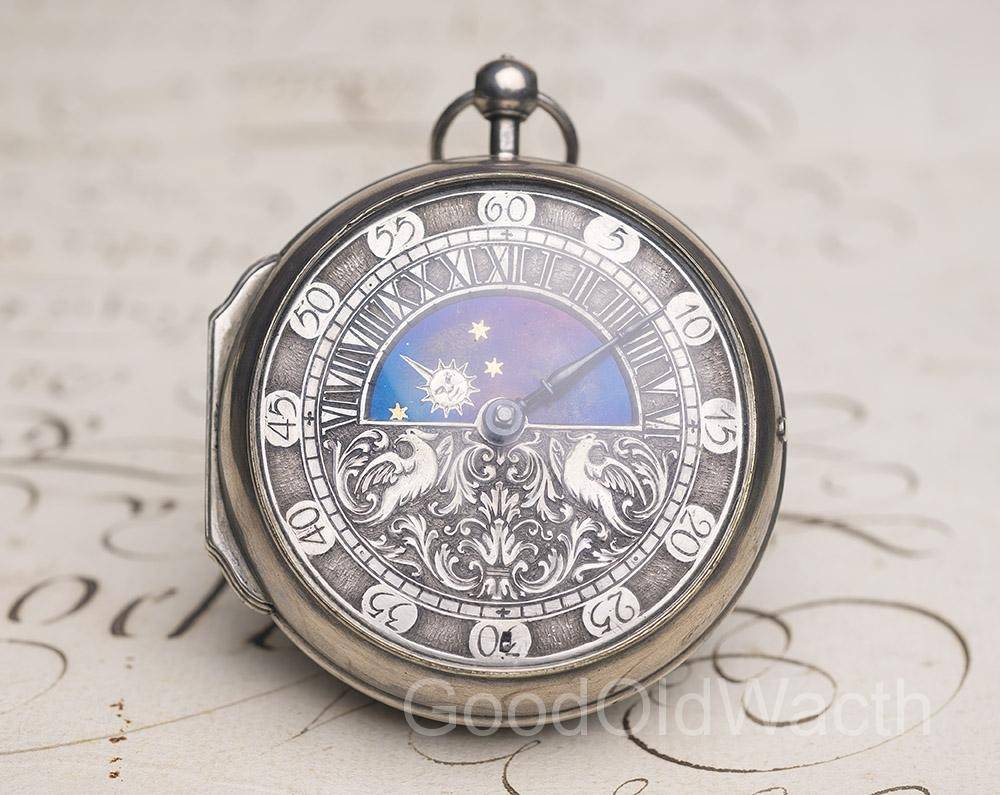
Onion-type pocket watch, circa 1690-1700 (Source: Gold Old Watch)
The watch pictured here belongs to this category. It is an "onion-type" pocket watch weighing exactly 163 grams. Relatively thick, its configuration is quite different from the timepieces we wear today. Its dial is divided into two distinct sections:
You'll notice that no hand is used to display the hours here. Instead, the small arrow on the Sun points to the daytime hours, while the one on the Moon points to the nighttime hours.
We won't go into every detail, but on this watch the hours are displayed in what is known as a "retrograde" fashion. In short, the Sun and Moon don't travel like a conventional hand - they jump mechanically each time the hour changes. The minutes, on the other hand, are displayed in a completely traditional manner via a hand that points to the railroad-track minute track and the 5-to-60 graduation visible around the periphery of the dial. The minute hand makes a full sweep of the dial, just like on a standard watch.
Wondering what a watch like this might cost? A similar example was sold at auction by Sotheby's in 2008 for the tidy sum of 12 500 Swiss francs.
Another interesting note: this type of configuration appears to have started falling out of fashion as early as 1710. Proof that trends have always come and gone, in every field imaginable.
Later, more complex models with two hands (one for the hours, one for the minutes) began to appear. These incorporated a full range of complications, including a day/night indicator.
During World War II, some American soldiers were issued a simple yet effective watch with a day/night indicator. It was a mechanical hand-wound Bulova featuring a dial divided into two 12-hour zones: one for the morning, the other for the afternoon.
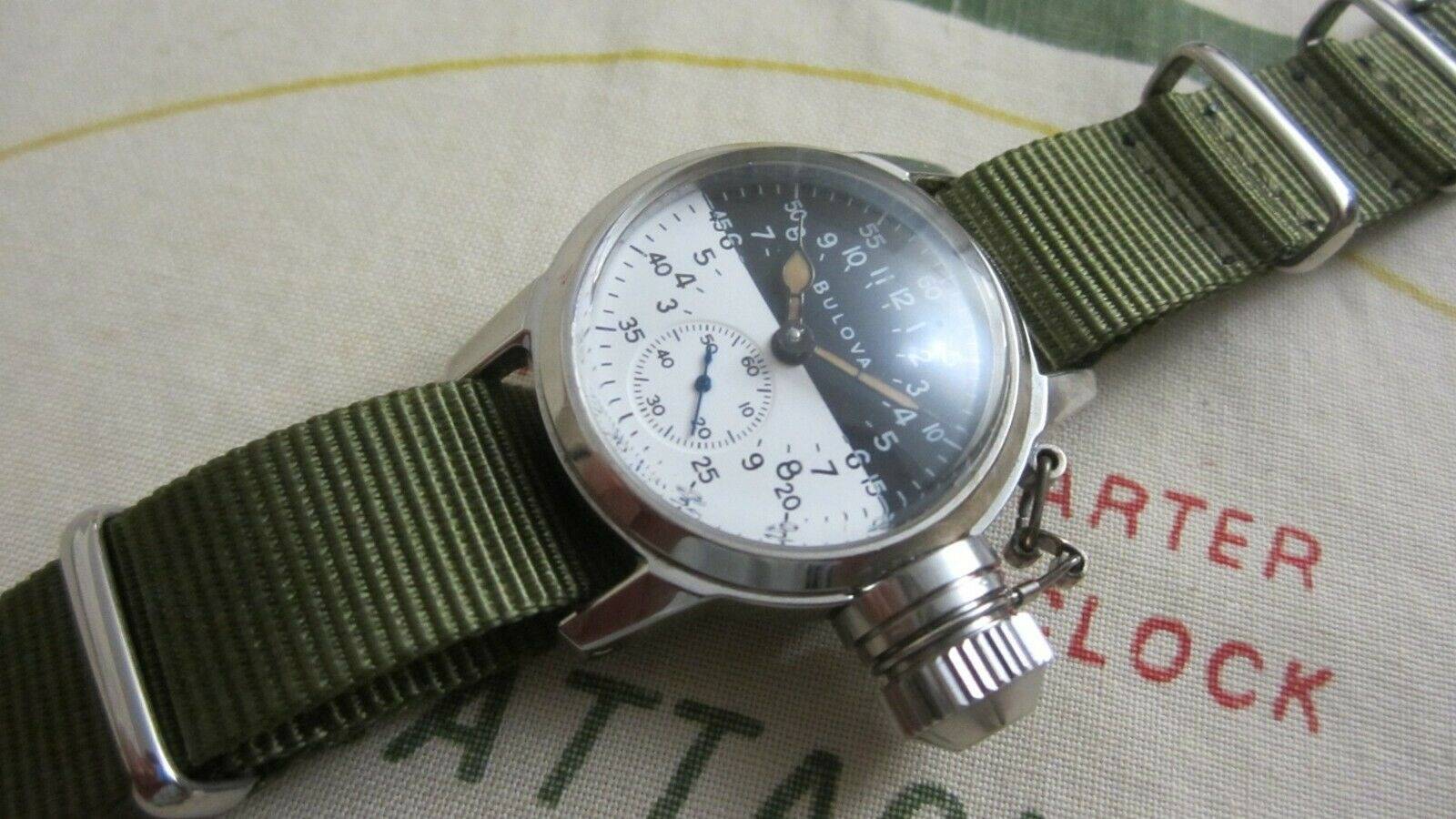
American Bulova watch, World War II (Source: WatchCharts)
This two-tone color scheme allowed soldiers to distinguish daytime hours - displayed against a white background - from nighttime hours on a black background. It's worth noting that Bulova also produced similar models at the time with a dial graduated from 1 to 24. Those are even rarer!
Another American brand, Elgin, produced two-tone watches during the same period. But they followed a different logic: their dials distinguished morning hours from afternoon hours. As such, it wasn't truly a day/night function, but rather an AM/PM indicator.
It seems the day/night complication lost some of its appeal during the 1950s. But in the 1960s, Gruen (a brand founded by Dietrich Gruen, a German émigré to the United States) pushed the concept in a new direction with a rather unconventional day/night indicator watch…
Gone was the traditional dial aperture revealing a Sun and then a Moon. The Gruen "Precision Day-Night" watches (also known as the "Gruen Day-Night") featured 12 hour indices - every single one of them perforated!
The dial of these models was cut out at each of the 12 hour indices, revealing one color during the day and another at night.
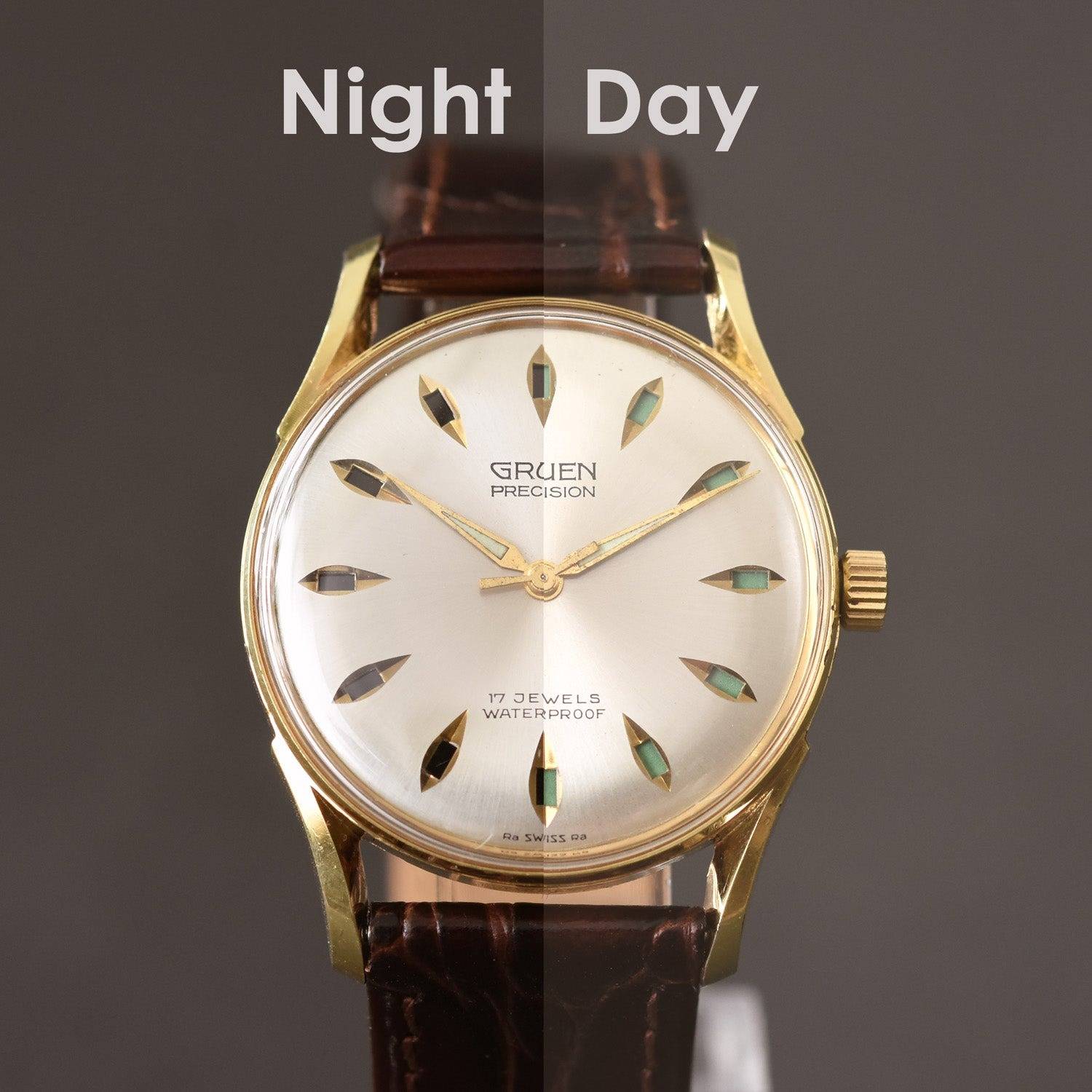
Gruen Precision Day-Night, circa 1960 (Source: Empressissi)
A two-tone rotating disc beneath the dial caused all indices to appear green between 6h and 18h (daytime hours) and black between 18h and 6h (nighttime hours). This intuitive visual system gave the watch a strong visual identity - as you can clearly see in the photo.
But to tell you the whole story, this Gruen Precision Day-Night actually grew out of another watch the brand had developed a few years earlier: the Super-G!
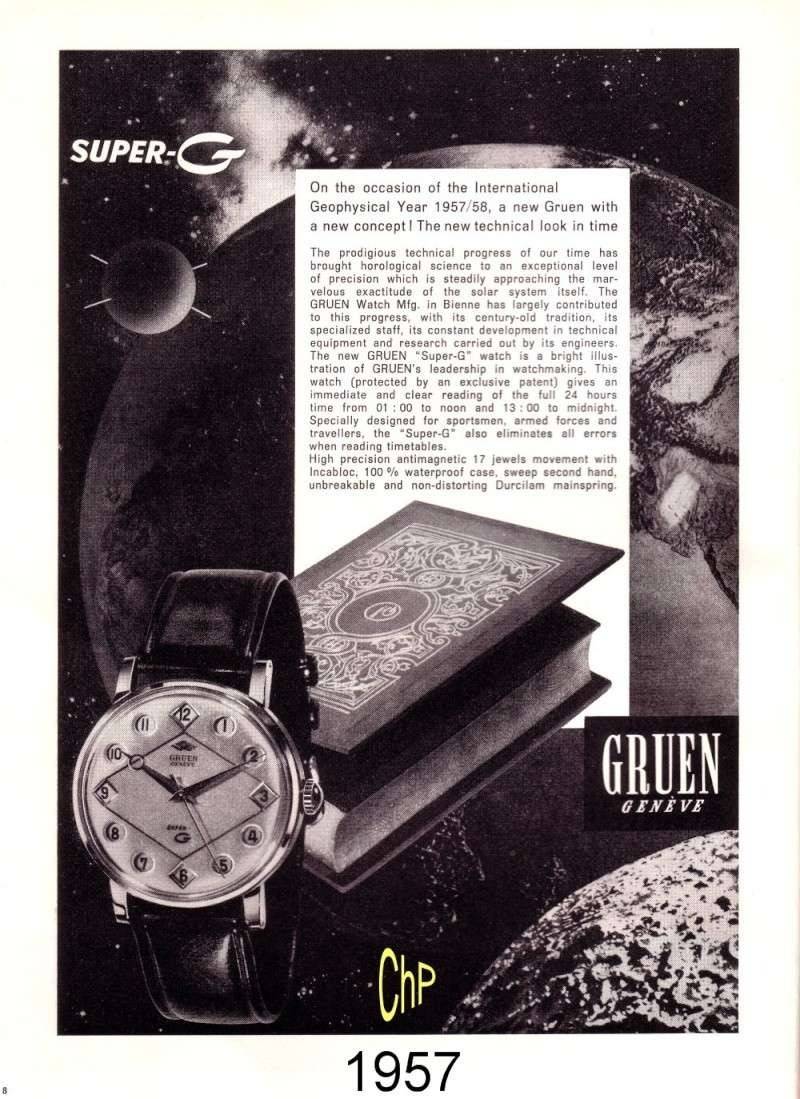
Vintage advertisement for the Gruen Super-G watch, 1957 (Source: Chronomania forum @ChP)
Originally called the "Super-G," the model was eventually renamed the "Airflight." This watch featured a 12-hour display graduated from 1 to 12 in the morning, which automatically switched at noon to show the afternoon hours, from 13 to 24.
The numerals at the center of these perforations gave the watch the look of a vintage telephone dial - which is exactly why some people nicknamed it the "Telephone Dial." As you've probably gathered, the Airflight didn't feature a true day/night indicator but rather an AM/PM display. Still, we found the anecdote too good not to share!
Remember the concept of military watches with a two-tone dial? Well, that idea was picked up by Rado in the 1960s with its "Starliner Day/Night."
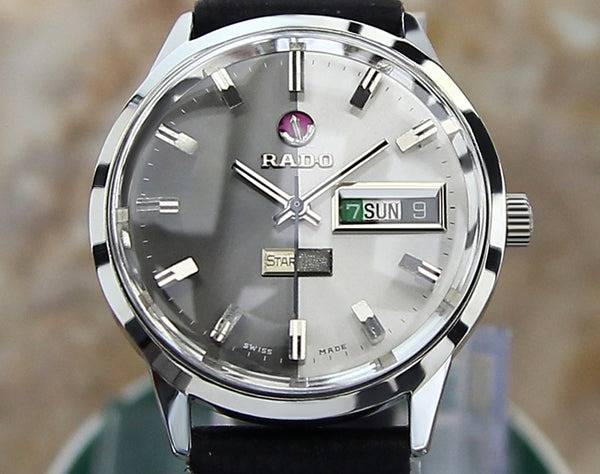
Rado Starliner Day-Night, circa 1960 (Source: WatchArtExchange)
Later on (in the 1970s), Rado introduced the "Day-Night" - a watch whose two-tone color scheme was the reverse of the earlier Starliner Day/Night. The concept, however, remained the same!
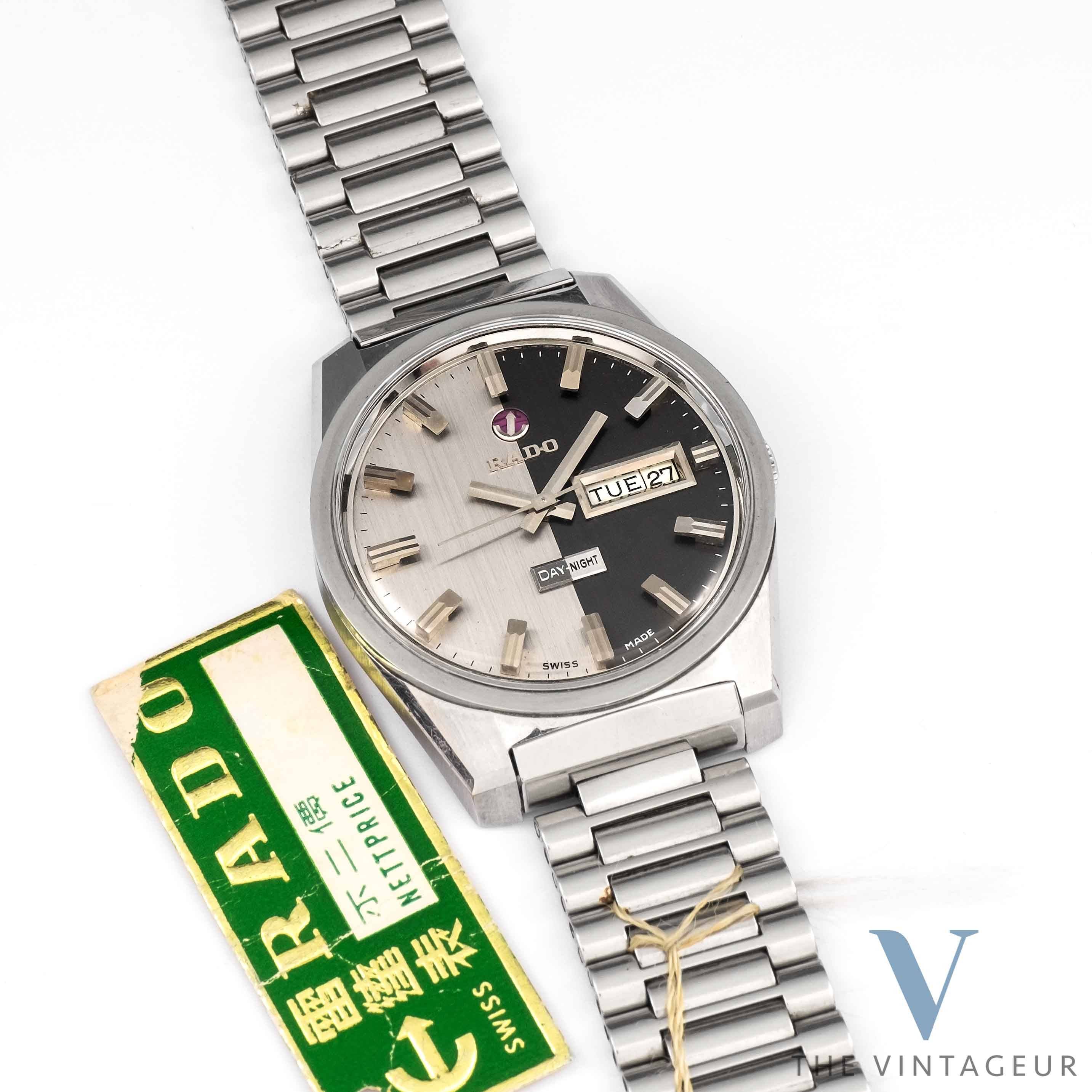
Rado Day-Night reference 11847, circa 1970 (Source: The Vintageur)
As you may have gathered, while wristwatches manufactured between the early 20th century and the 1970s could incorporate a day/night indicator, virtually none of them used a disc decorated with a Sun and Moon. Their display was therefore vastly different from that found on 18th-century watches…
Throughout the 1980s, 1990s, and into the early 2000s, the trend seemed to swing back toward the traditional. During this period, several brands began releasing watches that blended classic styling with refined details - and incorporated the iconic day/night complication.
These pieces can be found among great Swiss, Japanese, French, American, and even Soviet houses. Jaeger-LeCoultre, Maurice Lacroix, L'UORA, Yema, Seiko, Pulsar, Timex, Poljot, and even Raketa have all offered their own models!
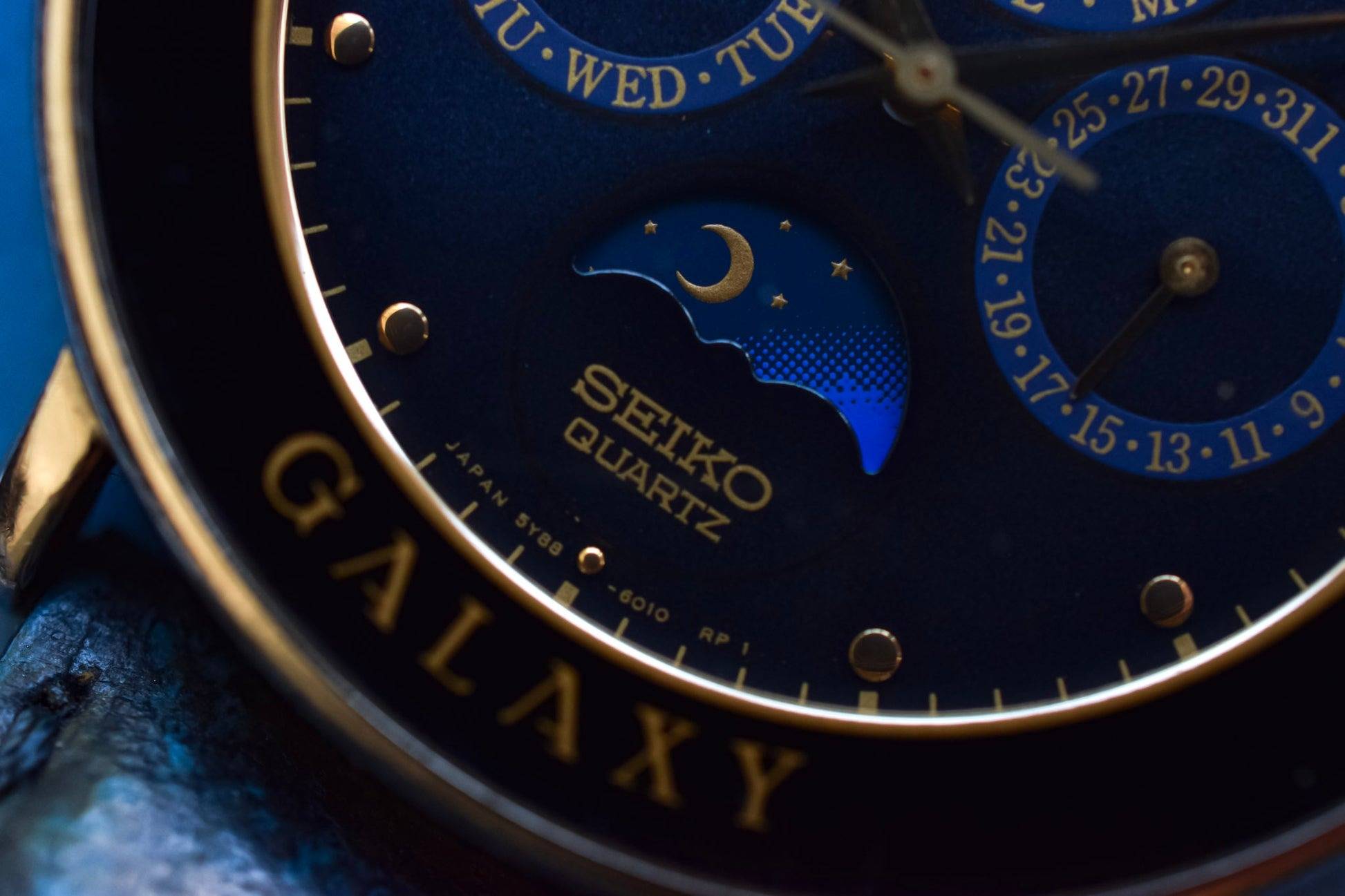
Seiko Galaxy watch, 2002 (Source: Oldtimer Watch Shop)
In the watchmaking spirit of the era, these watches didn't just display the time and a day/night indicator. They were sometimes paired with a chronograph, a full calendar (date, day, month), and even additional complications…
Certain quartz models from Seiko and Charles Delon went even further, combining a day/night indicator with a moon phase display. These ultra-rare pieces are true horological curiosities today!
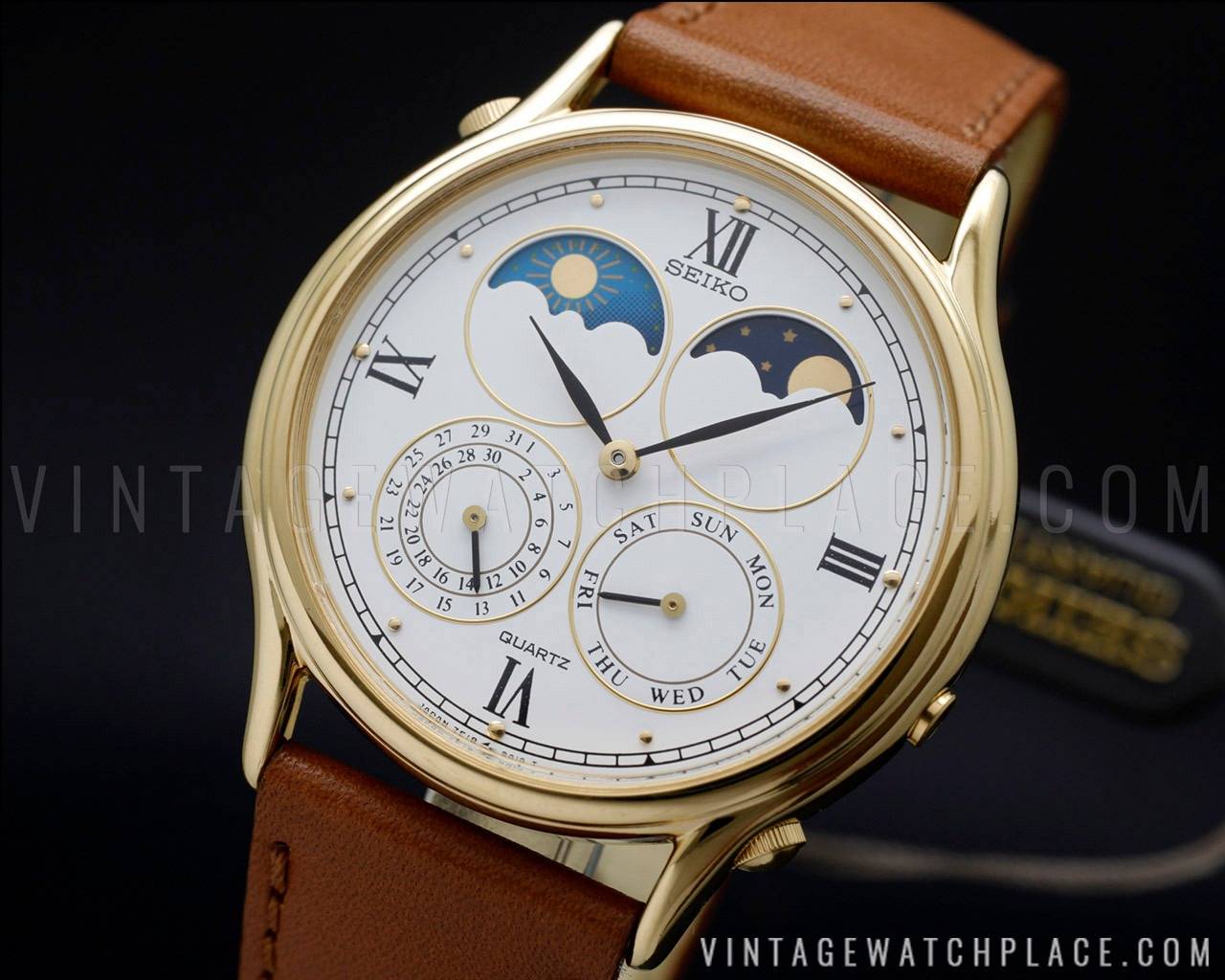
Seiko quartz with day/night indicator and moon phases, 1889 (Source: Vintage Watch Place)
Today, few brands still offer watches with a day/night complication, but Orient is arguably the most iconic of them all. The house has even developed a range with the evocative name "Classic Sun & Moon" - a line entirely dedicated to this complication. And the cherry on top: these high-quality models are offered at surprisingly accessible prices, making this unique horological complication available to everyone.
As we saw earlier, a watch equipped with a day/night complication typically features a disc decorated with a Sun and Moon, visible through an aperture on the dial. This disc completes a full rotation every 24 hours, allowing the transition from day to night - and back again - to be visualized in real time.
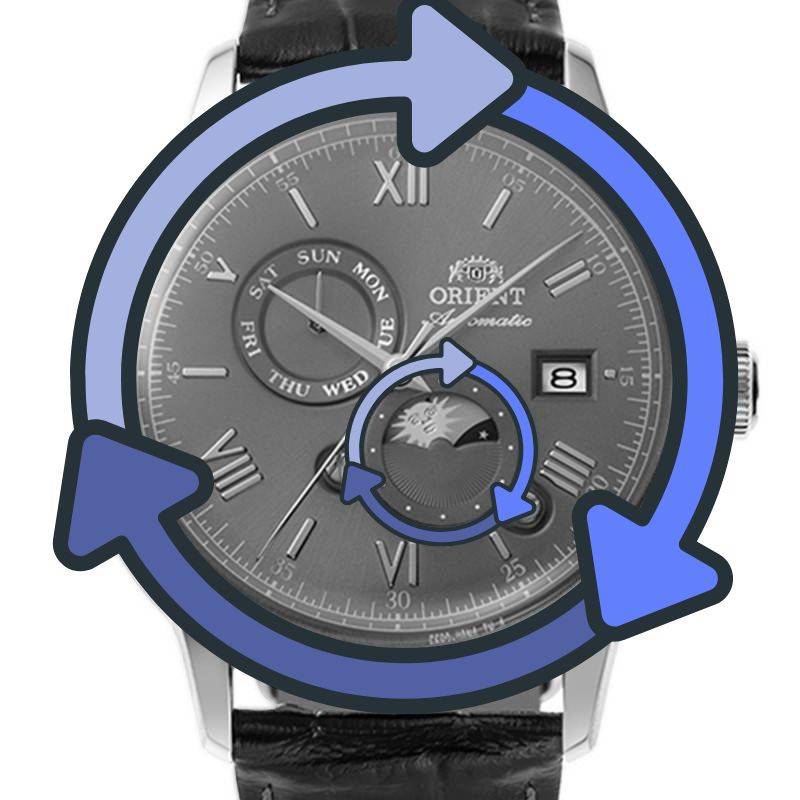
How a Day/Night Complication Watch Works
The mechanism itself is remarkably simple. The disc is driven by the watch movement - more specifically by the hour wheel. In other words, its rotation is perfectly synchronized with the movement of the hands. So when the hour hand reaches 6h, the Sun begins to appear in the window. By noon it is centered, and as the afternoon progresses it gradually disappears, giving way to the Moon, which takes over from 18h to 6h.
This visual alternation makes it instantly clear what part of the day it is: day or night, sunrise or sunset, and so on. And it all happens automatically, with no input required from you. Once the watch is properly set, the disc turns continuously, keeping pace with the passing of time.
As you might expect, a simple complication means a simple setup. To adjust a watch with a day/night indicator, simply pull the crown to the time-setting position and turn it - exactly as you would with any standard watch.
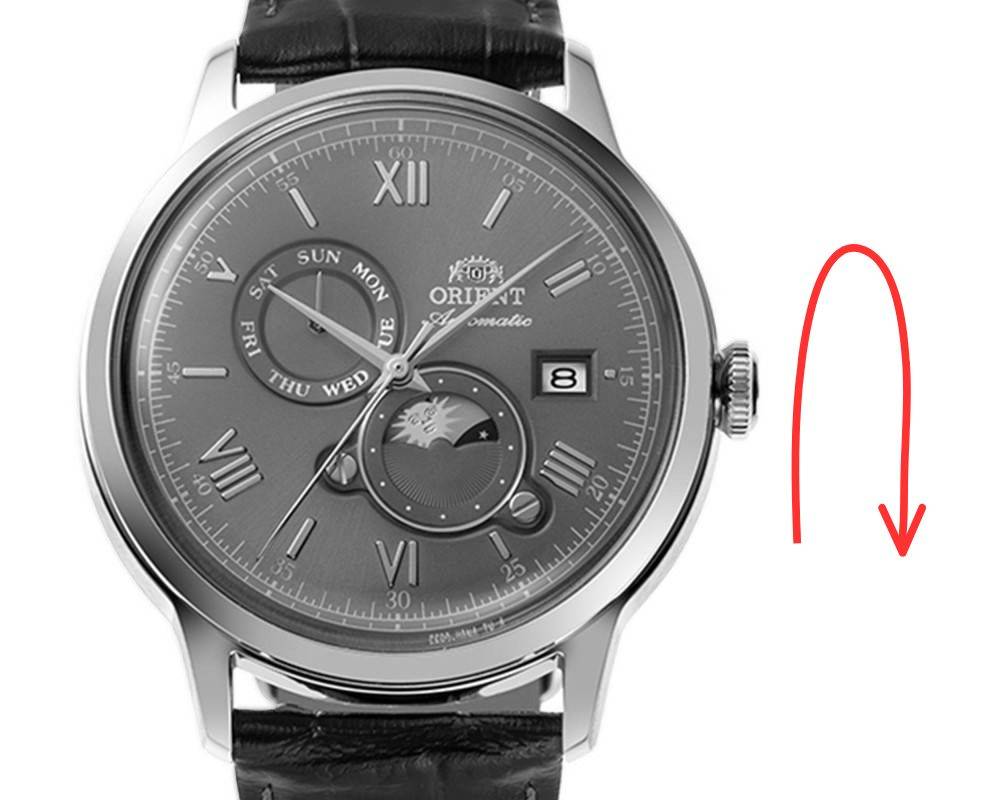
Setting the Day/Night Complication
Once you've found that position, turn the hands clockwise to advance through the hours - and in doing so, advance the day/night disc. Watch the aperture closely: the Sun or Moon will appear depending on the time of day selected.
The goal is simple: match the right symbol to the actual time! For example, if you're setting your watch to 22h, make sure the disc is showing the Moon. If it isn't, keep advancing the hands until the indicator lines up. Once that's done, your watch is correctly set.
Although its history remains somewhat under-documented, the day/night complication dates back several centuries and continues to captivate certain watchmakers today. A handful of brands - sometimes unexpected ones - carry on the tradition by offering quality models featuring this function at accessible price points. A beautiful way to breathe new life into a complication that is both poetic and practical.
Share :
Official European Union notice on your rights in the event of a product's lack of conformity.


