
0
Product added

Wristwatches didn't appear overnight - they are the result of a long, very long watchmaking tradition. If the words "pocket watch" or "sundial" ring a bell, know that many other timekeeping devices were invented before the wristwatch.
In this guide, you'll discover other lesser-known timekeeping tools, their history, and their characteristics. As you'll see, each one demonstrates remarkable ingenuity given the era in which it was invented.
So don't wait any longer - dive into the history of watchmaking!
Let's start at the very beginning: did you know that the earliest traces of timekeeping date back to the Neolithic period? It was around 3500 BC that sundials appeared across many civilizations.
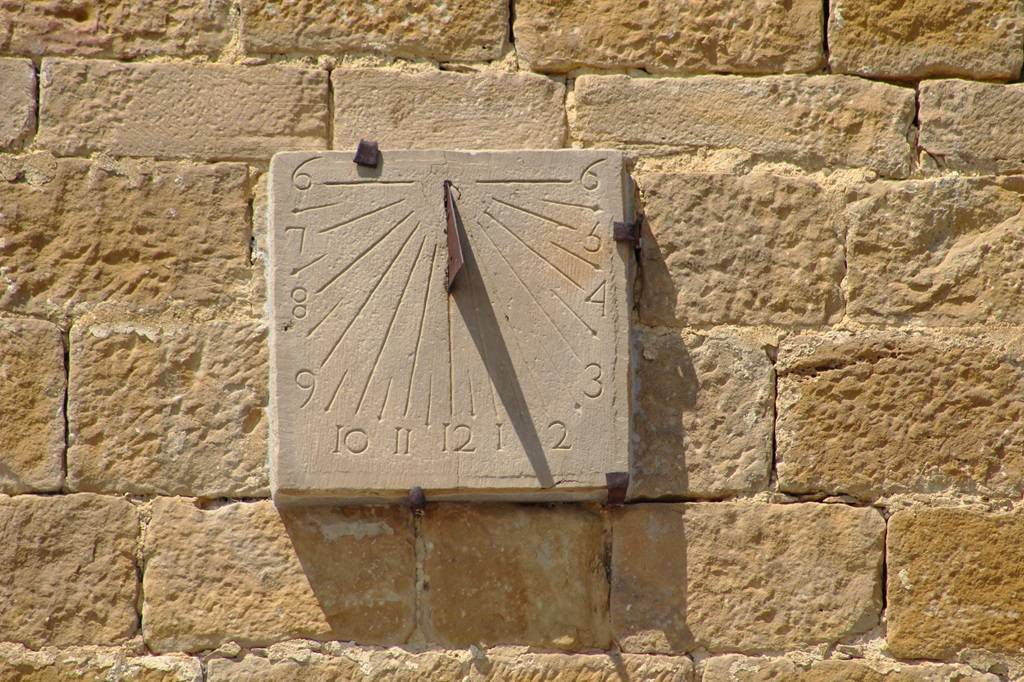
Sundial
Although imprecise and entirely dependent on weather conditions, these rudimentary devices allowed the men and women of the time to organize their lives as a community.
Later, around -1 400 av J.C., the clepsydra brought a first major evolution. Also known as the "water clock," this tool offered an effective solution to the technical limitations of sundials. The clepsydra works in any weather, even without sun!
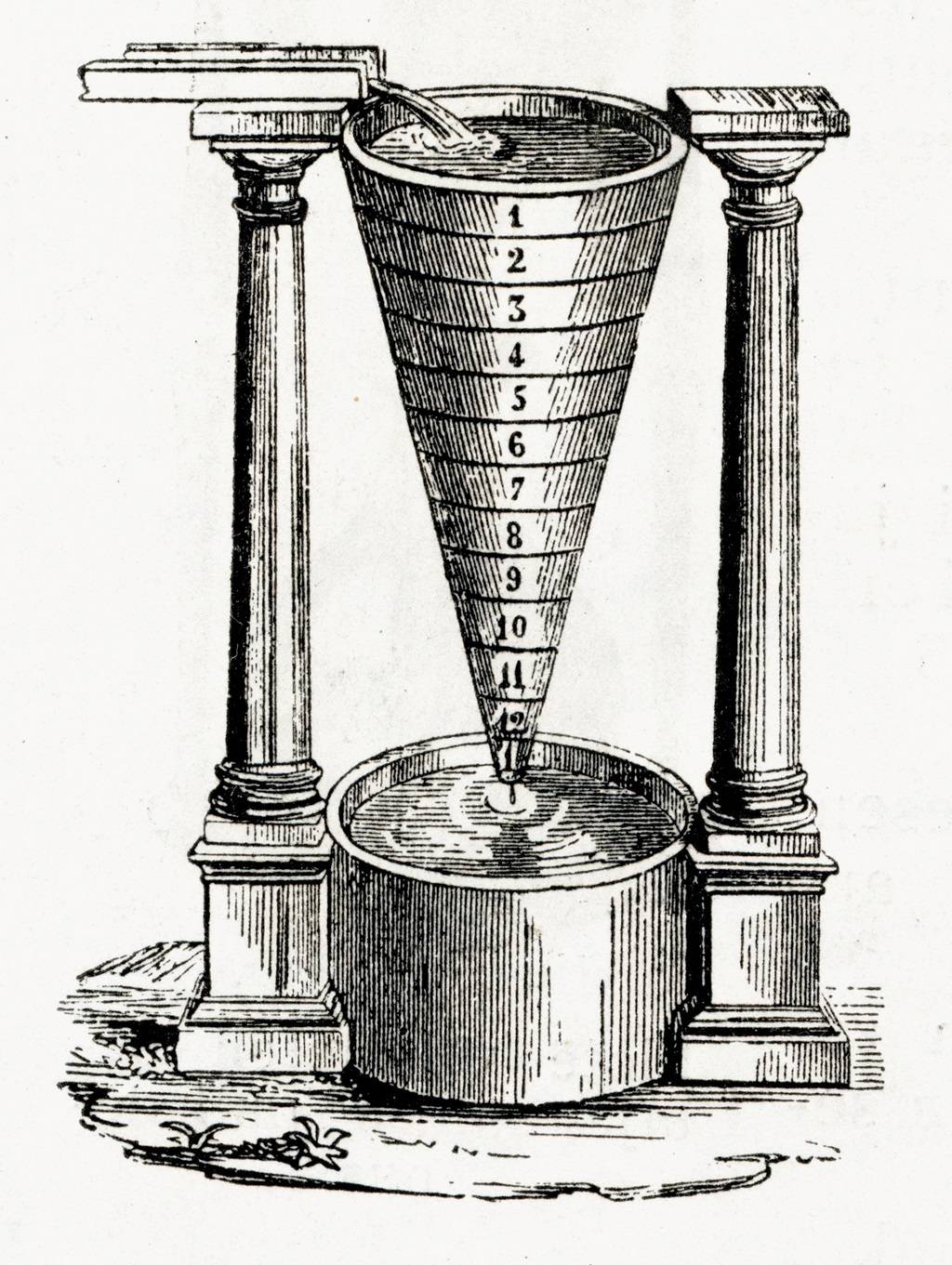
Clepsydra Sketch
Shaped like a water hourglass, it was used by several great civilizations to organize their religious ceremonies. Fun fact: did you know that clepsydras are still used today to time the games on Fort Boyard? They may not look quite the same as the ancient models, but they still rely on flowing water to measure the passage of time. Worth noting too: the clepsydra is a far less precise measuring tool than the hourglass, which is actually more recent in history.
But what about mechanical watchmaking - the kind that runs on interlocking gears and components?
It would take until the 13th century for the first mechanical clocks to appear in Europe. Driven by suspended weights, these clocks were not portable in any way and were reserved exclusively for the elite.
During this period, timekeeping became even more precise and was primarily done in public squares, where cathedrals and other grand buildings were located.
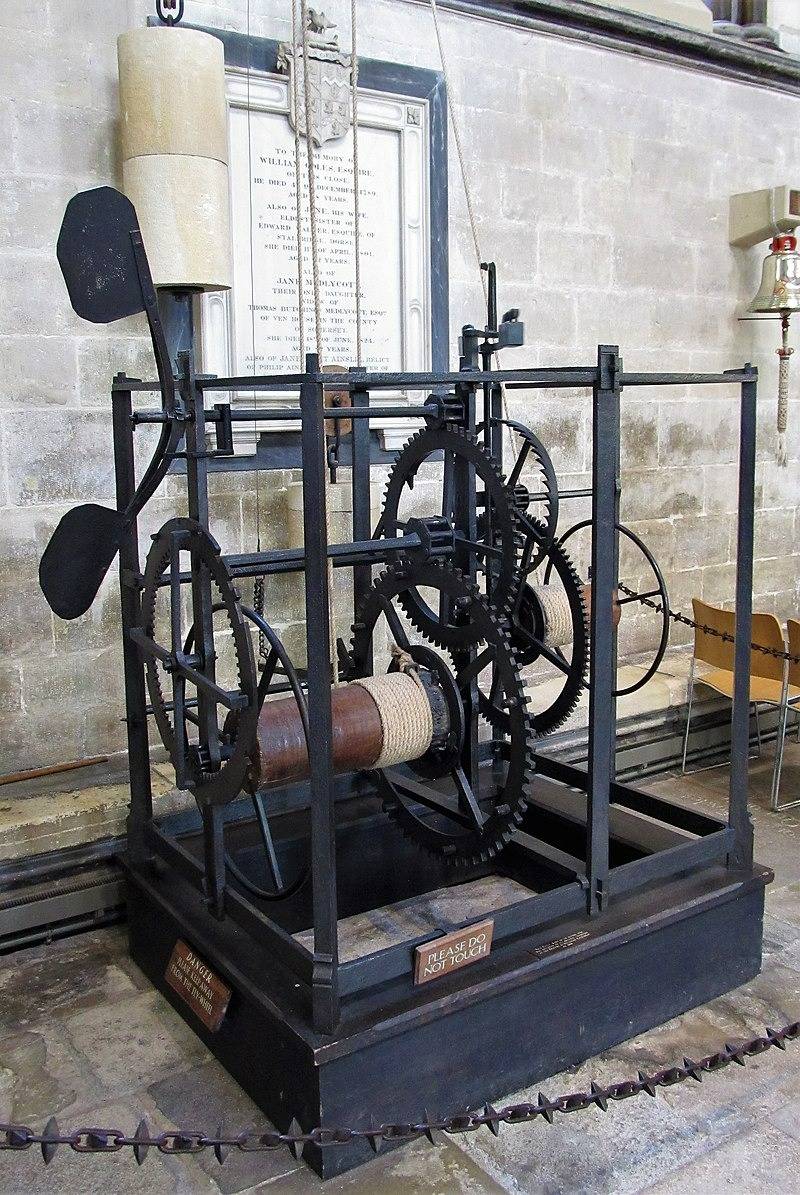
Medieval Clock, Salisbury Cathedral, 1386 (Source: Wikipedia)
The curious will note that one of the very first mechanical clocks in Europe appeared in 1386, in England, and it still stands at Salisbury Cathedral today. If you're ever in the area, it's well worth a stop!
We're still in Europe, but this time in the 15th century, as watchmaking gradually miniaturized. Mantel clocks were becoming accessible to the public, and it was around 1475 and 1480 that the first forms of portable watches appeared. These models remained relatively bulky and were extremely expensive - true luxury objects reserved for aristocrats and the very wealthy of the time.
But bear in mind: although these timepieces were remarkable feats of engineering, they were far from precision instruments. With just a single hand, these early models had a troubling tendency to drift significantly - meaning that while some might run several hours fast, others could run considerably slow, all within the space of a single day. Crafted in precious metals such as gold or silver and often adorned with gemstones, these pocket watches were aimed at a decidedly wealthy clientele.
Portable timekeeping continued its race toward miniaturization, and it was then that truly everyday-carry models began to emerge.
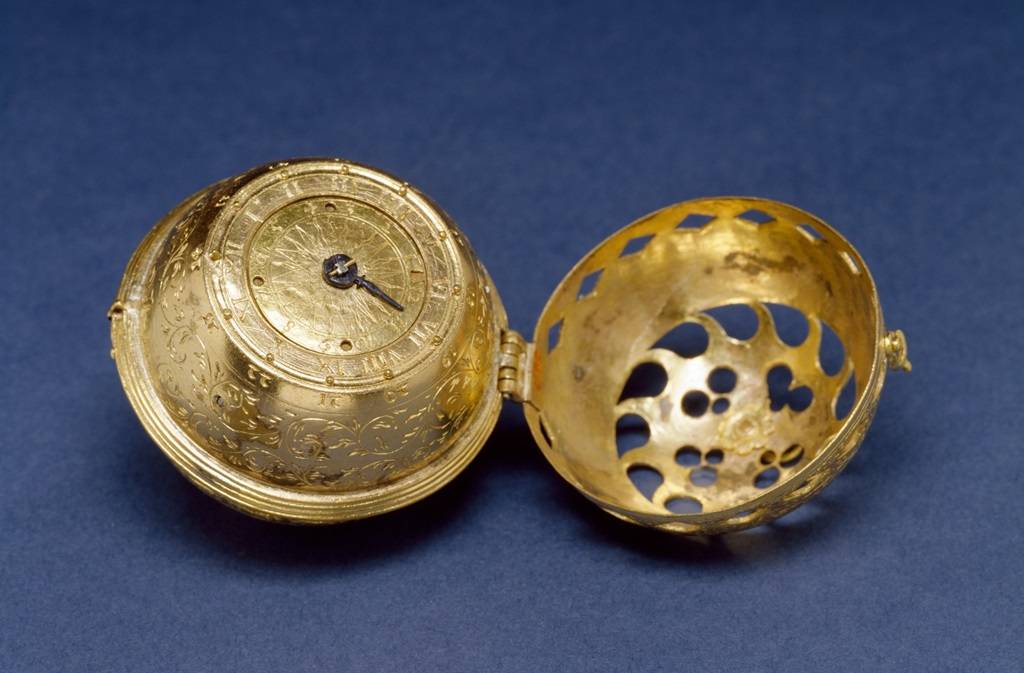
Pomander Watch by Peter Henlein, 1505 (Source: Wikipedia)
Peter Henlein, a locksmith and watchmaker in the city of Nuremberg, had the genius to create, in 1505, an ultra-compact watch for the time. Known as the "Pomander watch," the "PHN 1505," or simply the "Watch 1505," it represented a remarkable technical achievement for its era.
A few years later, Peter Henlein would release a new watch that came to be nicknamed the "Nuremberg Egg" ("Nuremberg Egg"), owing to its oval shape.
His creations were then worn around the necks of notable figures like true jewelry pieces, drawing the curious gaze of onlookers.
We are in the 16th century, and the cradle of European watchmaking is located in Germany - specifically in the cities of Augsburg and Nuremberg.
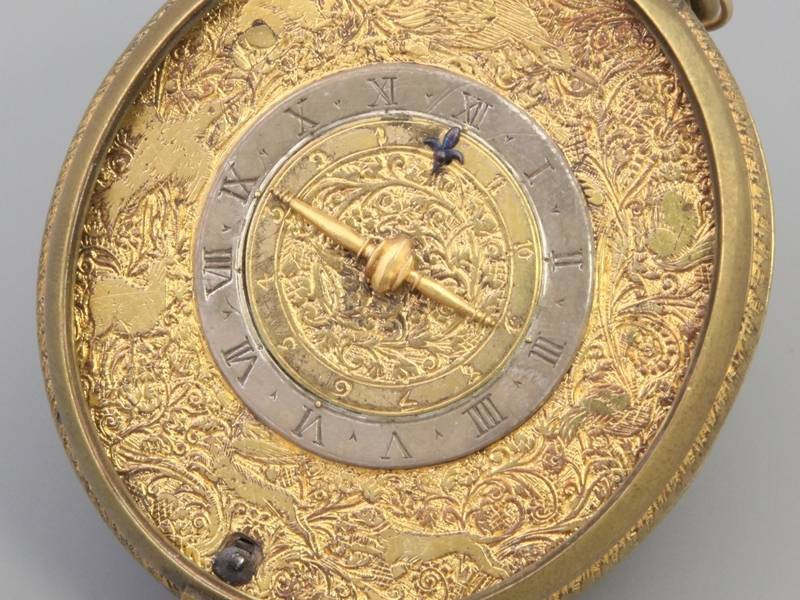
Pocket Watch, 16th Century (Source: izi TRAVEL)
It was there that the first pocket watches were developed - their flat profile making them easy to slip into a jacket pocket. But that wouldn't last: little by little, Europe's watchmaking heartland shifted toward Geneva and London, cities that were home to a growing number of master watchmakers over the years.
The 18th century would be defined by a major innovation, one developed by British carpenter and self-taught clockmaker George Graham. He set out to solve one of the greatest challenges of his era: errors in calculating longitude, which were often responsible for serious navigational disasters at sea.
To understand why keeping precise time at sea was so critical, consider that just a few seconds of drift in timekeeping could have direct consequences for sailors' lives. In the best cases, it led to maneuvering errors - but shipwrecks were sometimes recorded as a result.
Through its "Board of Longitude" program, the British government of the time even offered a £20,000 reward to anyone who could solve the longitude calculation problem facing navigators. And so, in 1761, Graham's marine chronometer arrived.
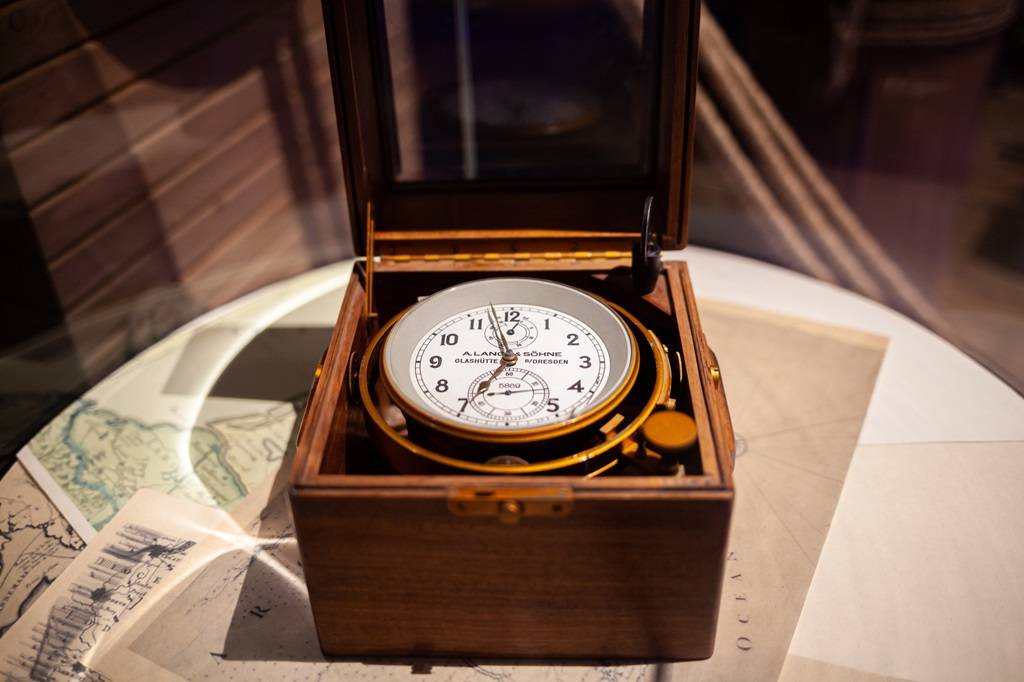
A. Lange & Söhne Marine Chronometer
This revolutionary instrument boasted unrivaled precision, losing just 5 seconds over 6 months - remarkable by any standard. As surprising as it may seem, George Graham had to fight hard to have his invention recognized.
But it was with industrialization and the modern era that the first truly accessible pocket watches appeared. Increasingly powerful machine tools allowed manufacturers to save precious time and produce ever more reliable watches. In 1867, German-born watchmaker Georges-Frédéric Roskopf unveiled a pocket watch sold for the modest sum of 20 francs.
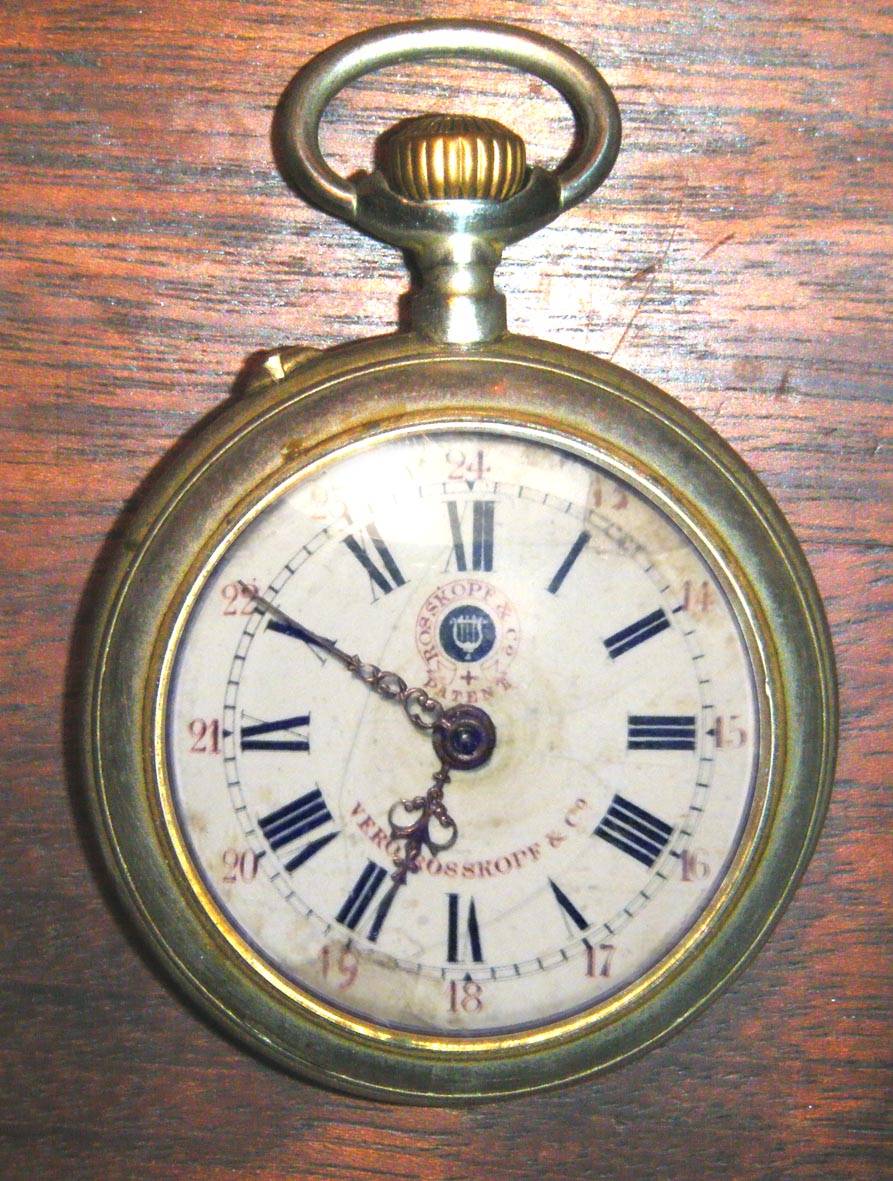
Roskopf Pocket Watch known as "La Prolétaire" (Source: Wikipedia)
With its unique mechanism featuring a reduced number of parts (57 vs. 200 for standard models), this "workers' watch" - also known as "la Prolétaire" - made watchmaking accessible to the masses.
Men and women of the era wore pocket watches, but from the early 19th century, innovations were on the horizon. For example, in 1810, Abraham-Louis Breguet created for Caroline Murat, then Queen of Naples, what would prove to be the first wristwatch in history.
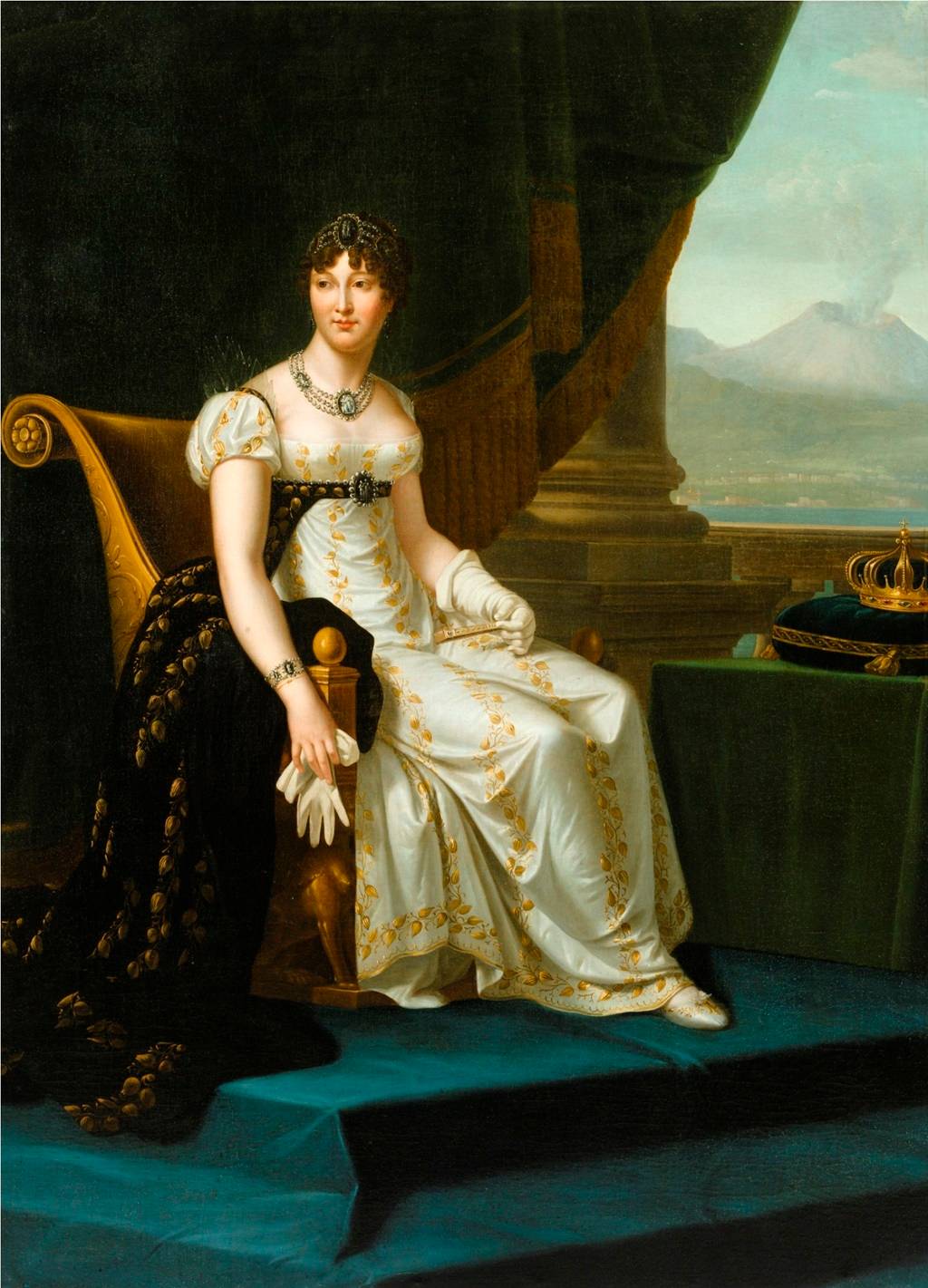
Caroline Murat, Queen of Naples, by François Gérard or Jean-Baptiste Regnault, between 1810 and 1812 (Source: Wikipedia)
Also during this era, the railways were experiencing explosive growth of their own. They promised passengers fast travel over long distances. But a problem soon emerged: at the time, there were so many different local time zones that the hour could vary from one village to the next. To simplify things, England adopted a single national time standard in 1847, aligned with the capital, London. The world would have to wait for the Rome Congress of 1883 to be divided into distinct time zones. Within just one year, 95% of cities with more than 10,000 inhabitants had adopted the system.
Adopting a universal time or "universal time standard" also had the advantage of streamlining commercial transactions during the industrial era. Trade between countries became synchronized, and the movement of goods grew easier.
The 20th century was a period of profound upheaval in watchmaking - starting with the very way people wore their watches. At the very beginning of the era, when pocket watches were still the norm, aviator Alberto Santos-Dumont mentioned to his friend Louis Cartier how difficult it was to check his pocket watch while at the controls of his aircraft.

Portrait of Alberto Santos-Dumont in 1092 (Source: Wikipedia)
To offer him a practical solution, he developed (with the help of Hans Wilsdorf, the founder of Rolex) a watch designed not to be carried in a jacket pocket, but worn directly on the wrist during his time in the air.
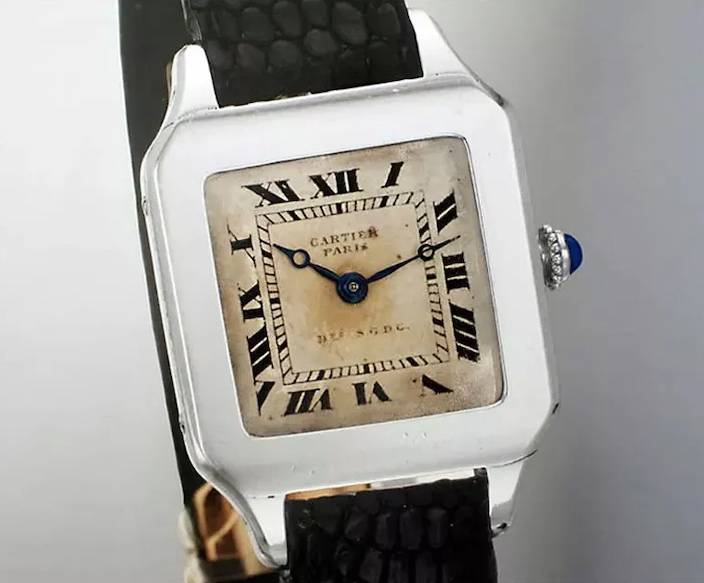
Cartier Santos Dumont Watch, 1904 (Source: The Watch Observer Ouest France)
But this elegant little object, strapped to the wrist of the Franco-Brazilian aviator, quickly caught people's attention, and Cartier decided to commercialize it as early as 1911 to meet the demand of the era. The birth of this first mass-market wristwatch marked the beginning of the decline of the pocket watch.
But don't assume the wristwatch became widespread overnight. Initially perceived as feminine, it took some time to win over the men of the early 20th century. It was the tragic event of World War I that abruptly changed everything - shifting codes and tastes among men.
As you can easily imagine, soldiers sent to the front in 1914 couldn't always afford to pull a pocket watch out during combat. It was for purely practical reasons, then, that they began wearing their watches on the wrist.
At the time, it was not uncommon for women to give their small pocket watch to their husband before he went off to fight. These timepieces were then taken to the jewelers and watchmakers of the day, who would solder fixed lug horns onto them so a bracelet could be attached at the 3 o'clock and 9 o'clock positions (with the crown at 12 o'clock).
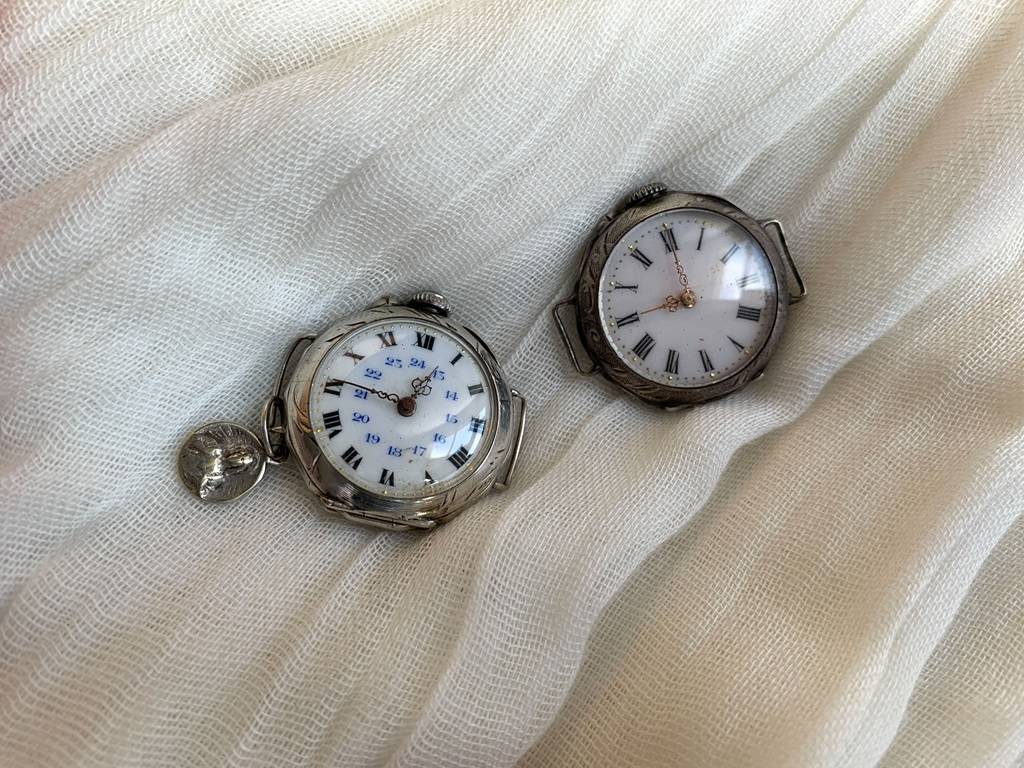
Converted Pocket Watches, 800/1000 Solid Silver
Once strapped to the wrist, these watches had to be read sideways - much like the racing driver watches also known as "driver watches." That is precisely how these discreet pocket watches, originally made for women, ended up on the wrists of soldiers. For personal belief reasons, and also to carry a lucky charm, many soldiers chose to mount a tiny religious medal onto one of the lugs of their watch.
Often crafted in precious materials such as 800/1000 silver or solid gold, these watches - with diameters around 30mm - were fitted with an enamel dial. In addition, multiple decorations in the form of engravings adorned their cases.
The most technically advanced models of the era were even fitted with a metal grille to prevent their mineral glass crystal from shattering when struck by a projectile. Because yes - timepieces of this era were protected by a mineral glass crystal, not plexiglass.
In watchmaking, much like in the worlds of jewelry, fashion, or interior design, every era has been defined by its own distinct style and technology. Let's take a detailed look at how watchmaking evolved from the early 20th century to today.
In the 1920s, watches designed to be worn on the wrist began appearing on the market. Crafted in solid silver, gold, nickel-chrome, or gold-plated metal, they often featured a cushion-shaped case housing a circular dial at its center.
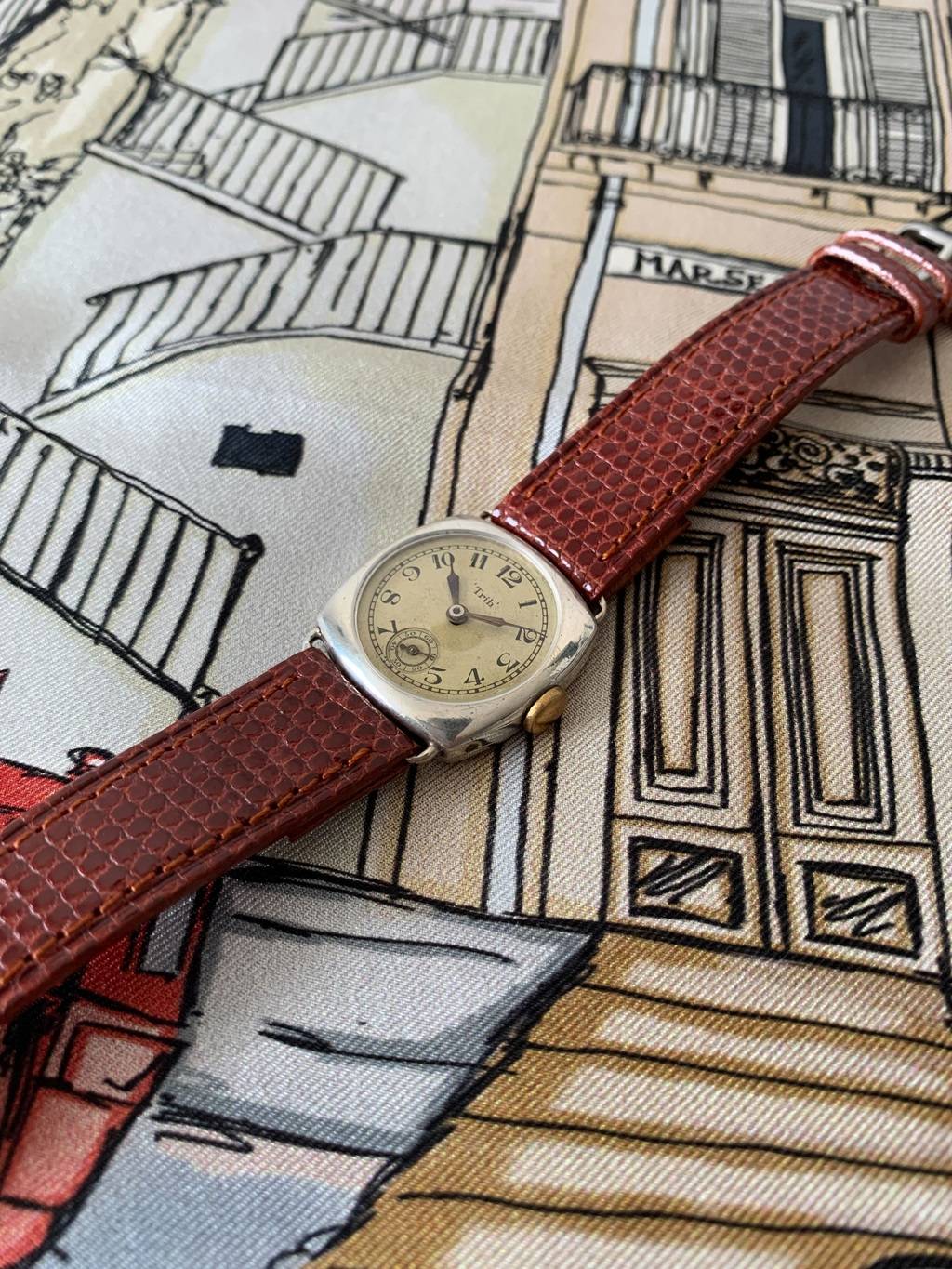
Tribaudeau "Trib" Watch, 800/1000 Solid Silver Case
These timepieces feature a small seconds subdial, their hands are blued, and some were even painted with radium - a radioactive luminescent material discovered by Pierre and Marie Curie that was at the height of its popularity during the Roaring Twenties.
At the time, Rolex - already a master of marketing - decided to make its move in a clever way. In 1927, just a year after releasing its first "Oyster" with a water-resistant crown, the brand partnered with a young English swimmer, Mercedes Gleitze.

Portrait of English Swimmer Mercedes Gleitze (Source: Wikipedia)
By successfully swimming the English Channel with a Rolex strapped to her wrist - still running perfectly at the finish - she helped build the Rolex legend. And here's a fun detail: to win over skeptics of the era, Rolex went as far as displaying fully submerged Oyster watches in aquariums at its main points of sale.
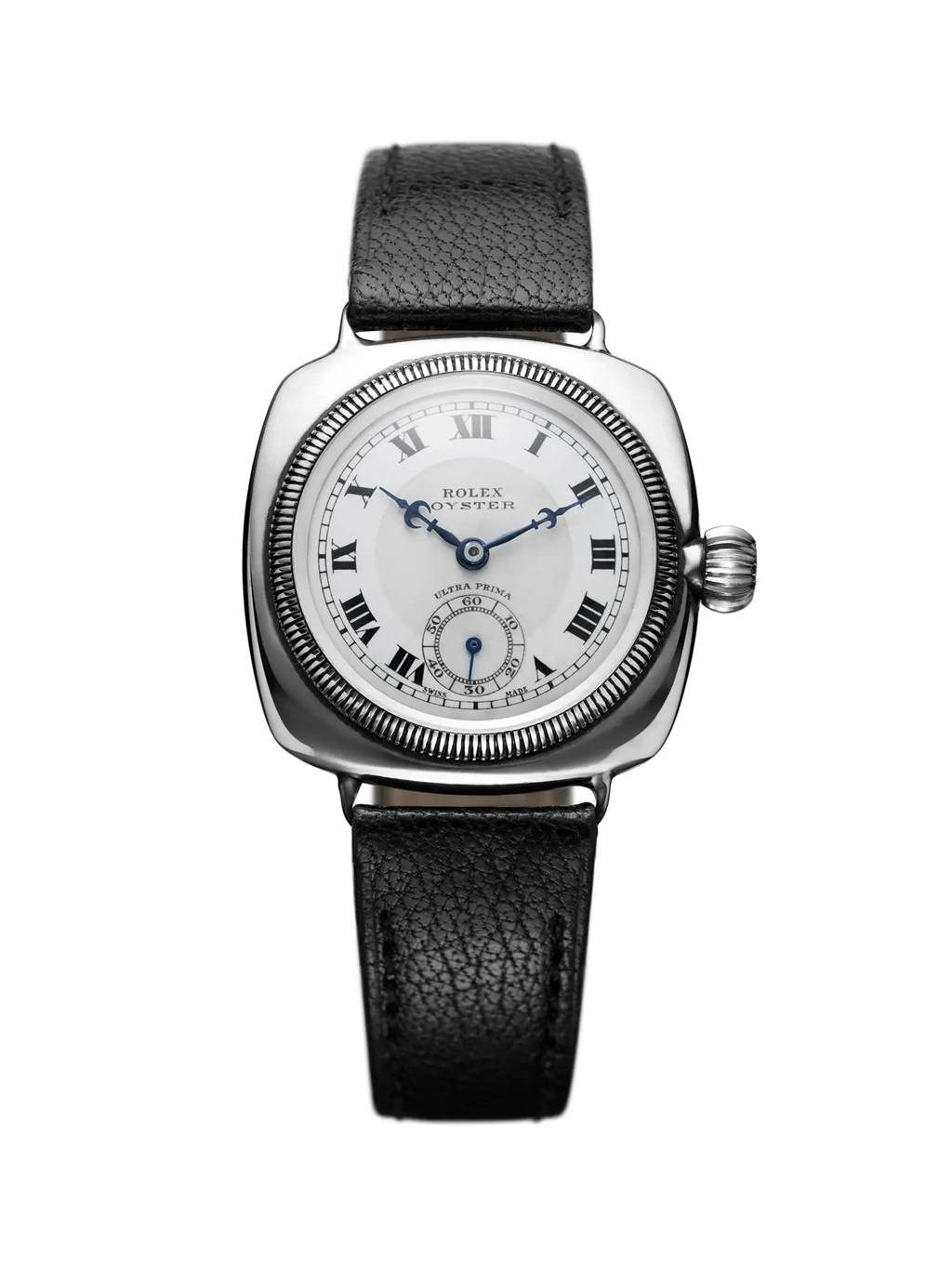
Rolex Oyster Extra Prima Watch (Source: Petit Genève)
But while the Rolex Oyster was the first water-resistant - or "water proof" - watch ever brought to market, the first timepiece considered truly waterproof would appear a few years later…
Also in the 1920s, watchmakers focused on developing a shock-absorption system that would help watches withstand the bumps of everyday life. Made up of around ten parts, this tiny component - just 2mm in size - was named "Incabloc," a name that likely rings a bell for many of you.
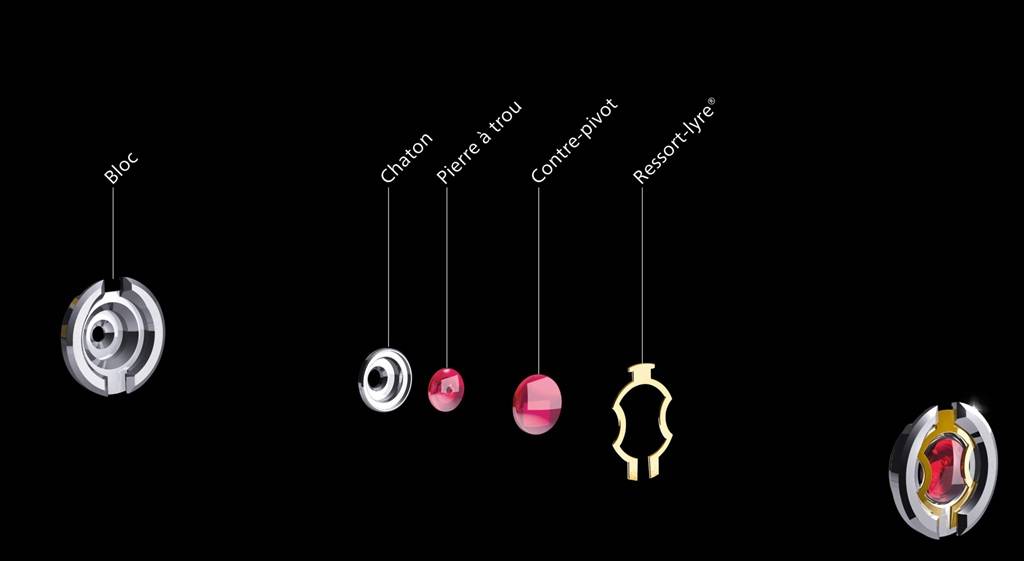
Incabloc Shock Absorber Diagram (Source: Official Incabloc Website)
Once hailed as "more precious than gold by equal weight," this system was seen as a small revolution in the world of watches. The press covered the news extensively, and the general public came to associate Incabloc with quality timepieces.

Incabloc Advertisement in London (Source: Monochrome Watches)
At the time, advertising even made its way onto London's iconic red double-decker buses!
The 1930s gave birth to true watchmaking icons. The Lip T18, the Jaeger-LeCoultre Reverso, and the Omega Marine… all rectangular watches that are still beloved by vintage enthusiasts today.
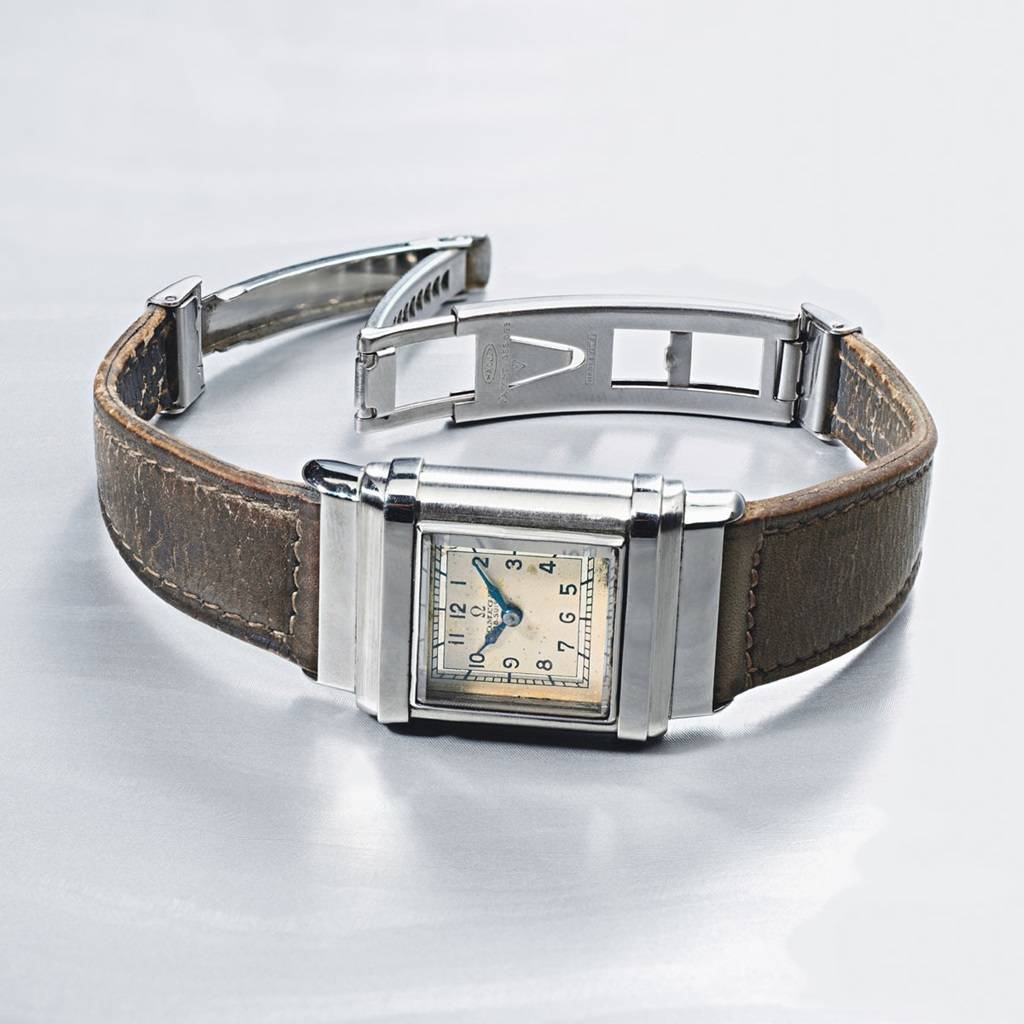
Omega Marine, 1932 (Source: Omega Official Website)
Released in 1932, the last on the list is even considered the very first waterproof watch in history. A true revolution for its time, its double-case system allowed it to withstand immersion down to 135 meters.
The 1930s also saw a brand-new material enter the market for watch case construction. At the time, it wasn't yet called stainless steel - it went by "rustproof steel," "Staybrite," or "Everbright."
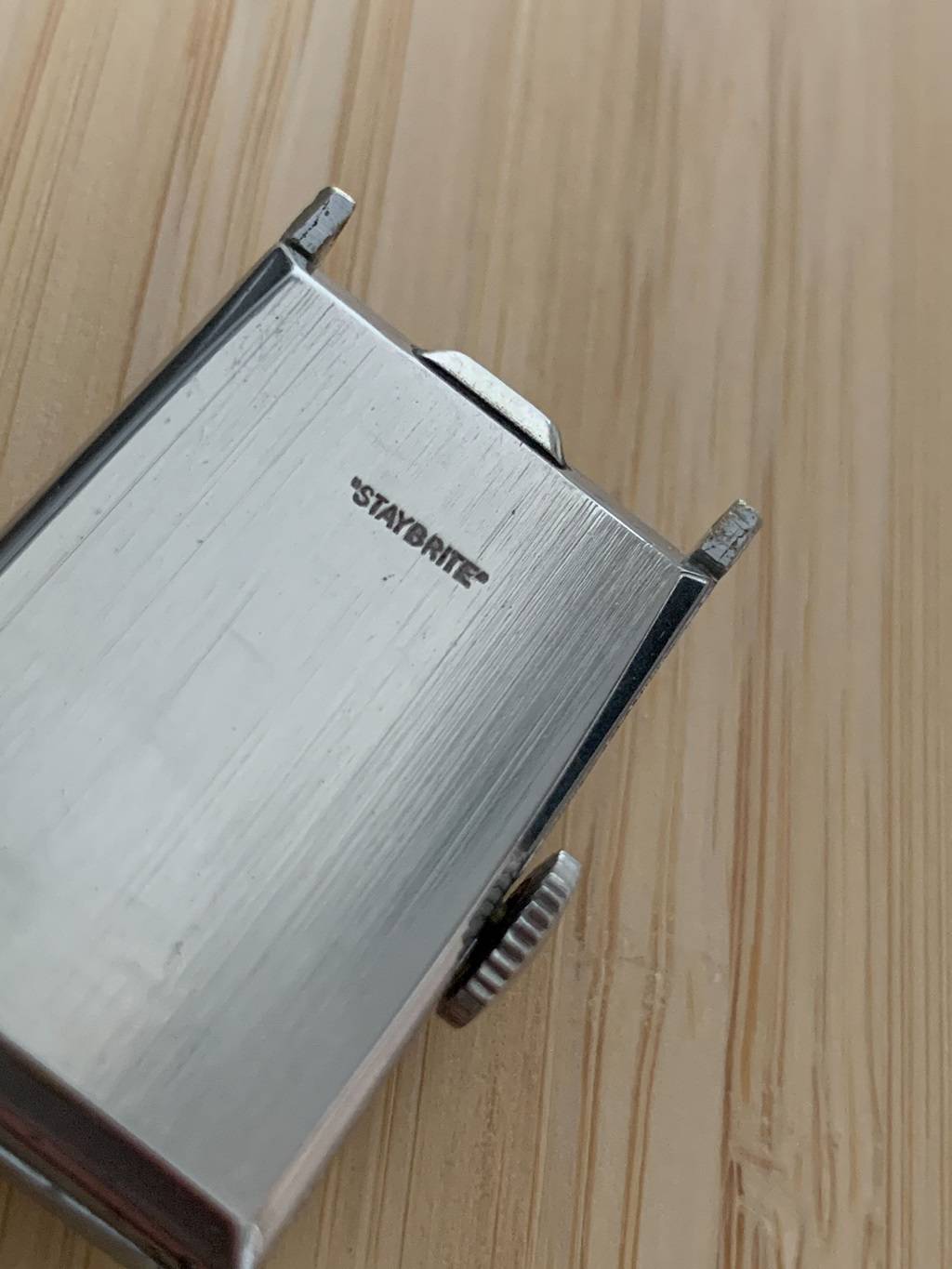
Staybrite Steel Case Back of a Lip "T18"
But why does this represent a step forward? To understand, you have to put yourself in the context of the 1930s. At that time, watches were either made from ultra-durable precious metals or from base metals coated with a shiny layer - and as you can easily imagine, that coating's durability was rather limited.
For their part, these new materials promised watches that were simultaneously robust, gleaming, and corrosion-proof - without relying on precious metals. In fact, some advertising campaigns of the era promoting these steels even referenced a "beautiful platinum color."
Staybrite, for example, is a clever alloy made up of a large proportion of steel blended with small amounts of nickel and chromium.
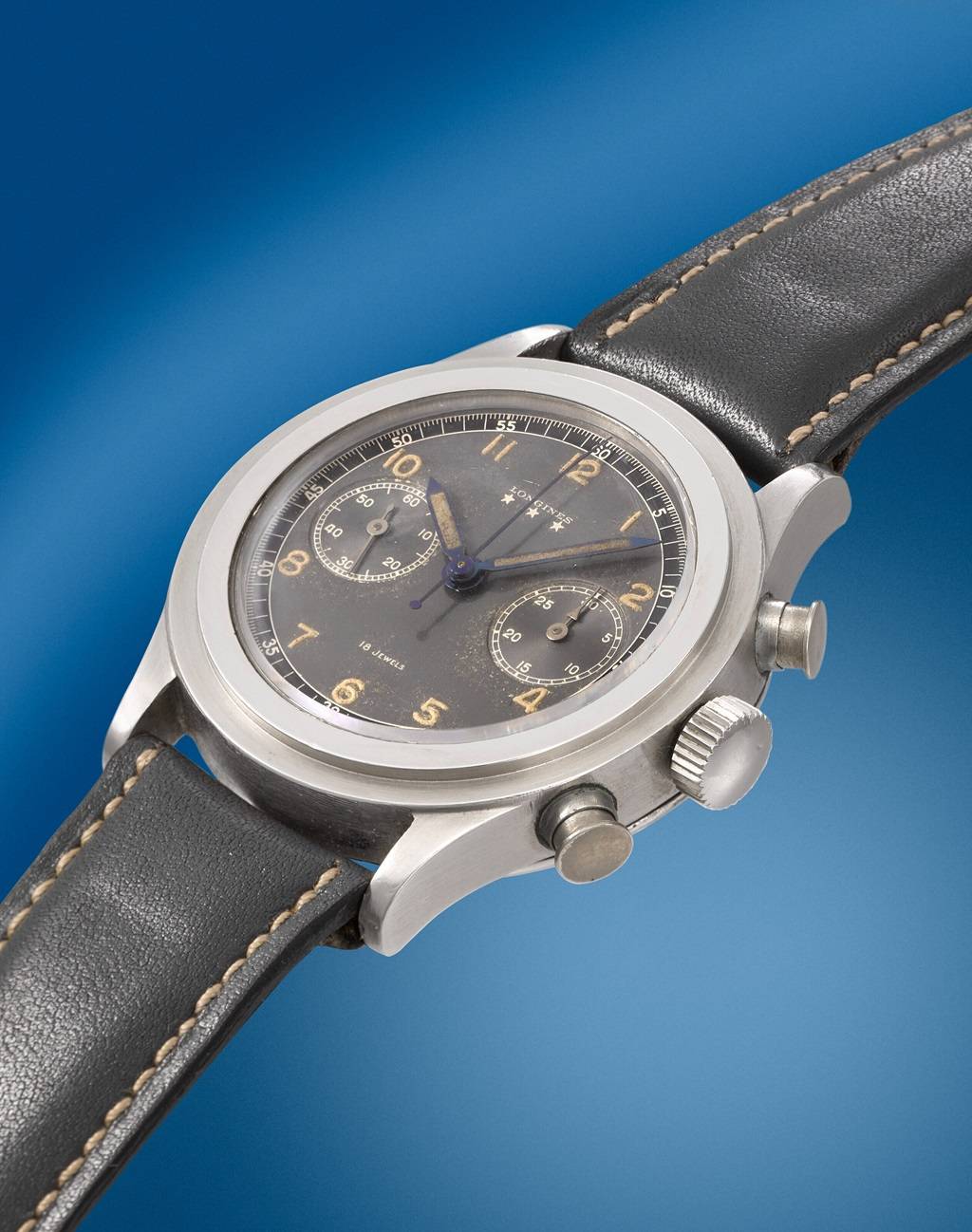
Longines Chronograph with Staybrite Steel Case, 1940 (Source: Christies)
Some of the finest brands of the period used these new materials to equip their high-end sports watches. This is how several Longines, Angelus, Tavannes, Omega, and Alpina chronographs came to be made in Staybrite steel.
The 1950s gave rise to ultra-elegant watches that sometimes showcased extravagant details - such as so-called "cow horn" lugs or original triangular cases. Watches from the early 1950s also very often featured a small seconds subdial: a small, independent counter used solely to display the seconds.
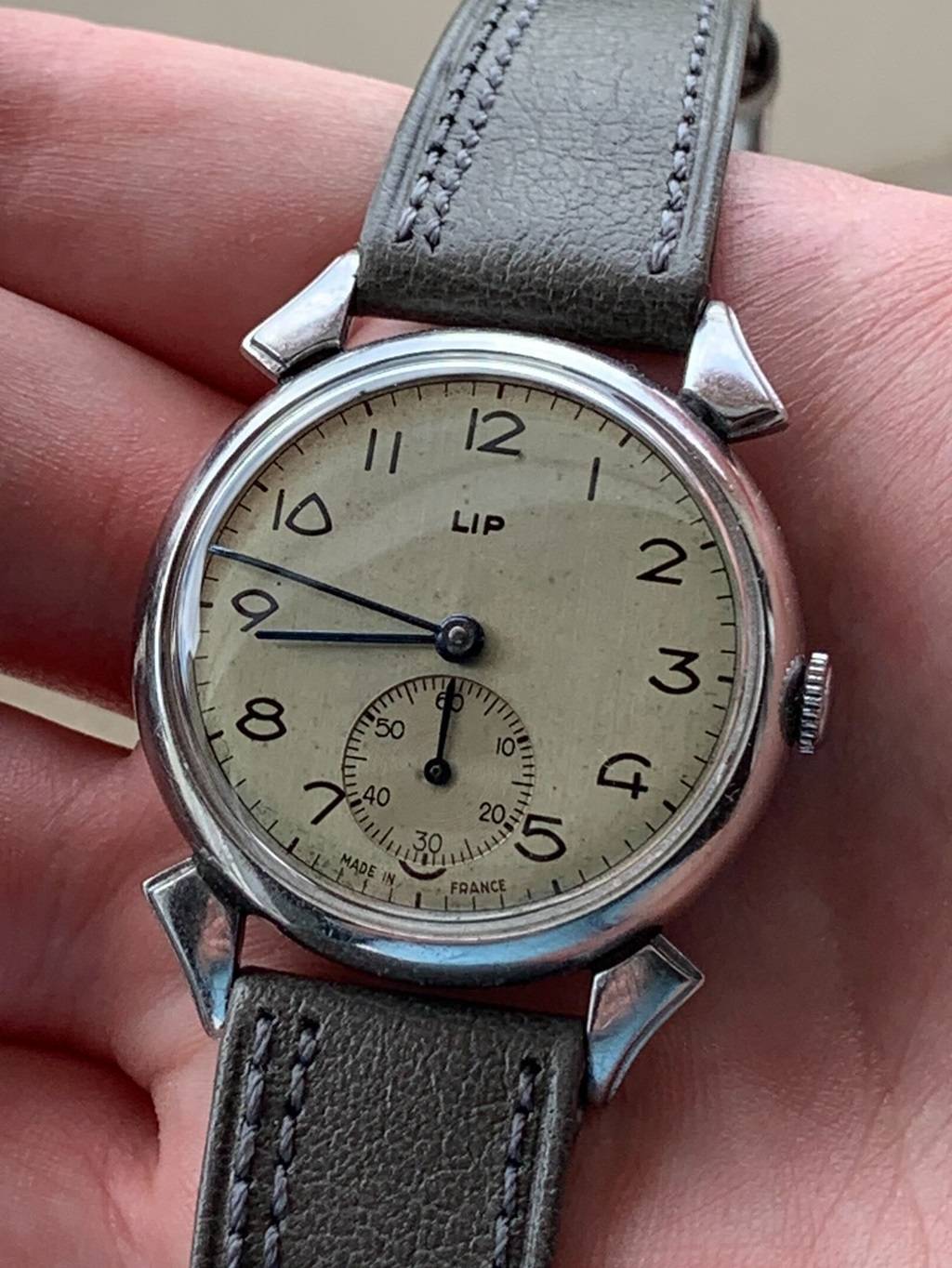
Lip R25 Steel Watch with "cow horn" Lugs, 1950
The 1960s, on the other hand, were quite different. They were defined by minimalist styles one might describe as more restrained. In the sixties, watches were so understated that they still look remarkably contemporary today.
Their modern architecture, often built around an automatic movement, makes them perfectly wearable day to day - as long as you handle them with a little care. In short, they are truly timeless.
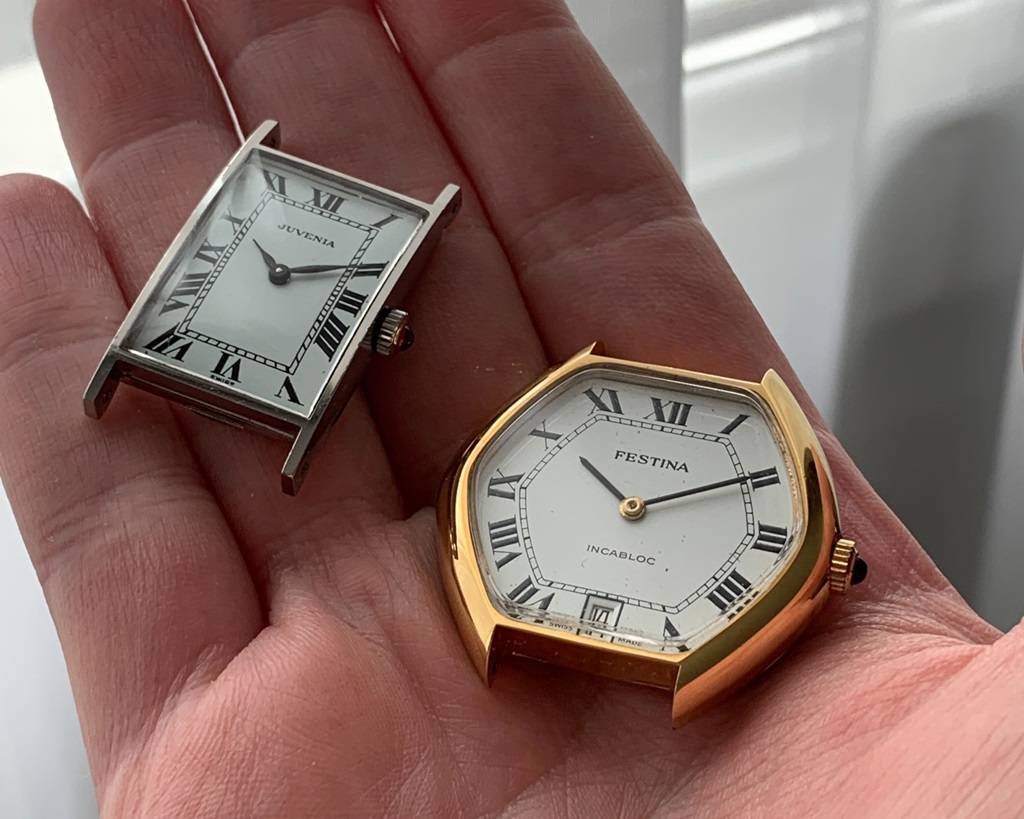
Festina Incabloc and Juvenia Mechanical Watches, 1960s
It's worth noting that during this period, the vast majority of watches were powered by a manual-winding mechanical movement. Moreover, when equipped with the famous shock absorber mentioned earlier, timepieces displayed the word "Incabloc" on their dial - spelled out in full, typically at 6 o'clock.
Then, at the end of the 1960s, Japanese company Seiko unveiled a very special watch: the Seiko Quartz Astron. Powered by a battery, this model - released on Christmas Day 1969 - was the world's first quartz watch. Its promise? To be ultra-precise and robust, all without ever needing a trip to the watchmaker for a service.
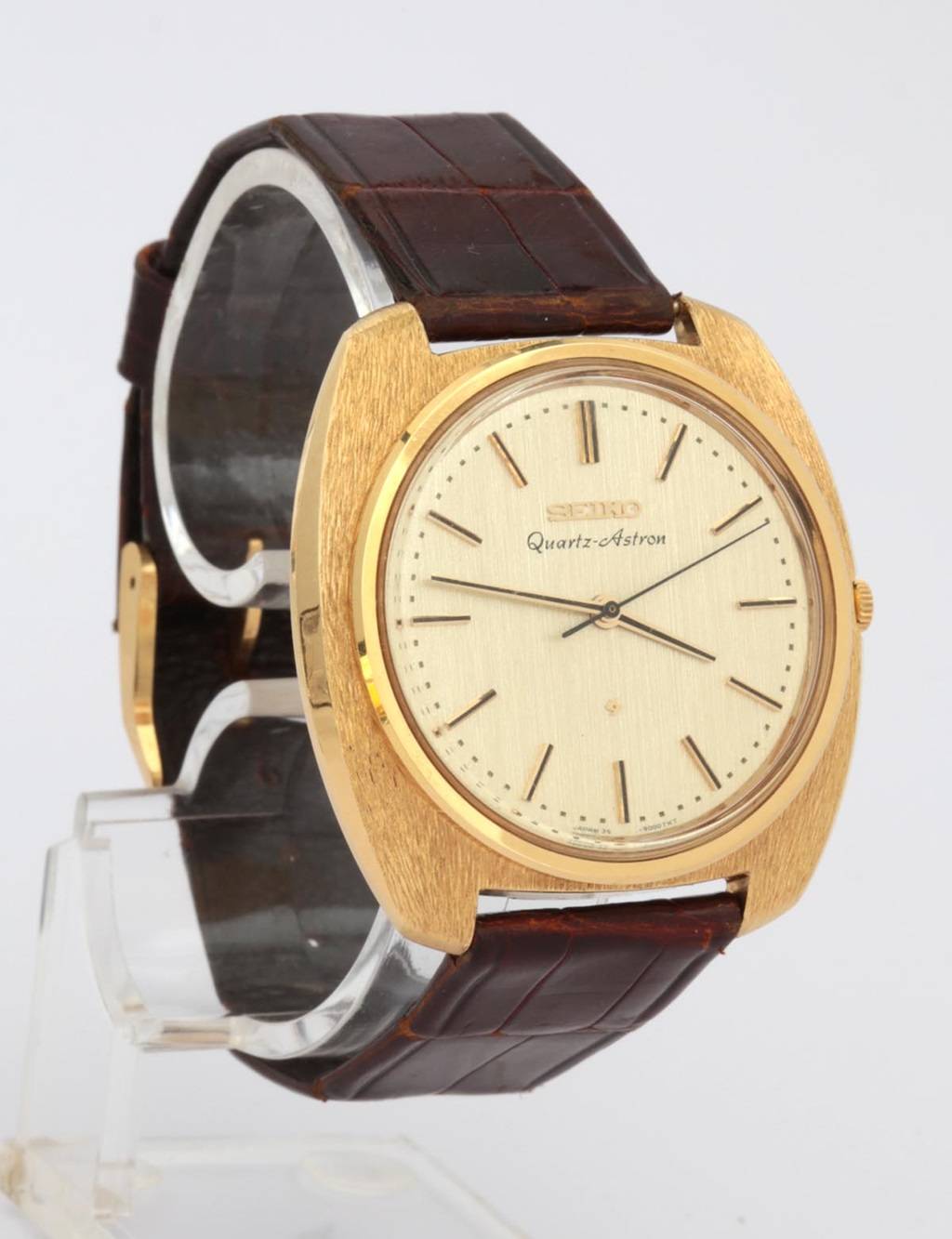
Seiko Quartz Astron, 1969 (Source: Wikipedia)
The Quartz Astron required very little attention - just the occasional battery change.
The 1970s marked a major turning point in the world of watchmaking. The era was defined by genuine risk-taking in design. Automatic watches of the time grew thicker and adopted a sport-chic style that sometimes bordered on the futuristic.
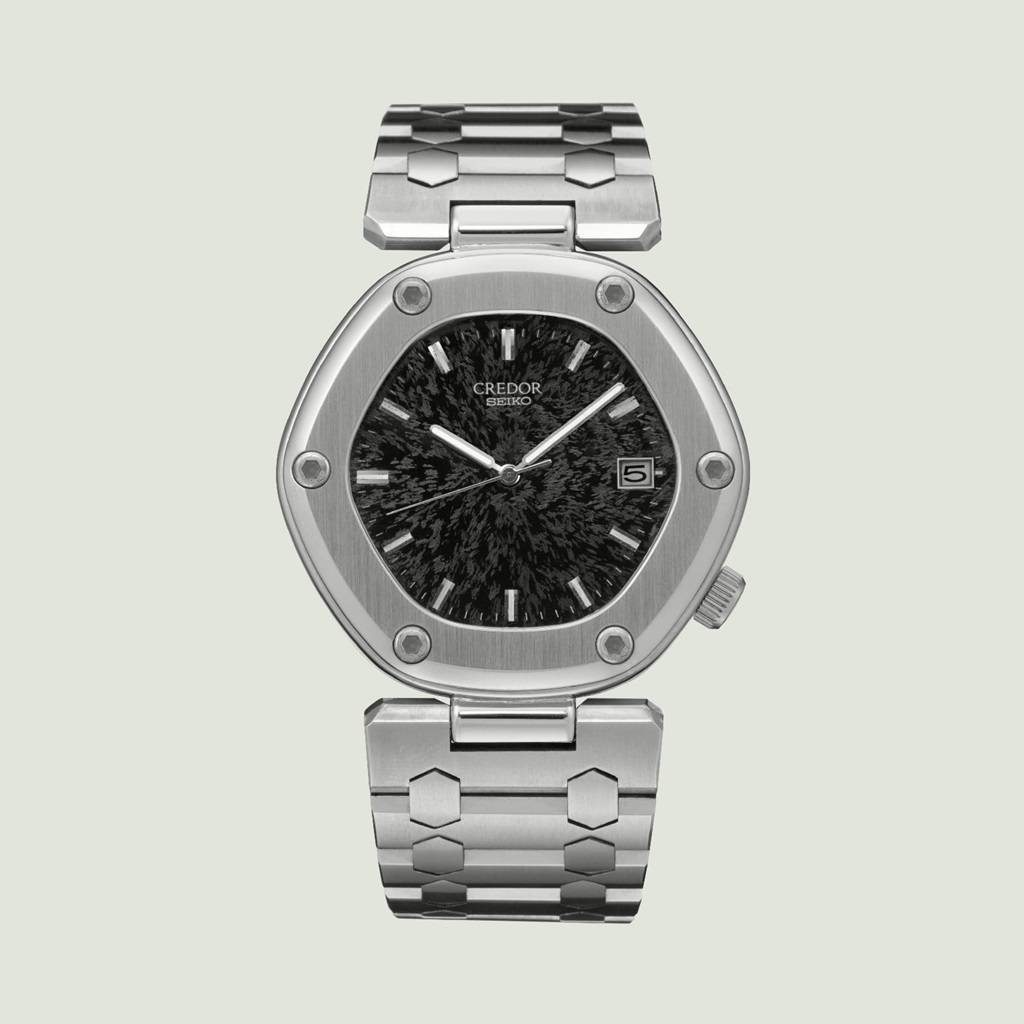
Seiko Credor Locomotive, 1979 (Source: Seiko Design)
They stand out from the crowd, and their remarkable originality may well have been a reaction against the quartz watch tsunami.
In the 1970s, mechanical watches were gradually abandoned by both men and women. They had developed a dated image, and the situation wasn't helped by the launch of the very first digital watch by Pulsar in 1972 - the P1 - or the Casiotron by Casio in 1974 (the first LCD watch). This was the height of what became known as the "quartz crisis."
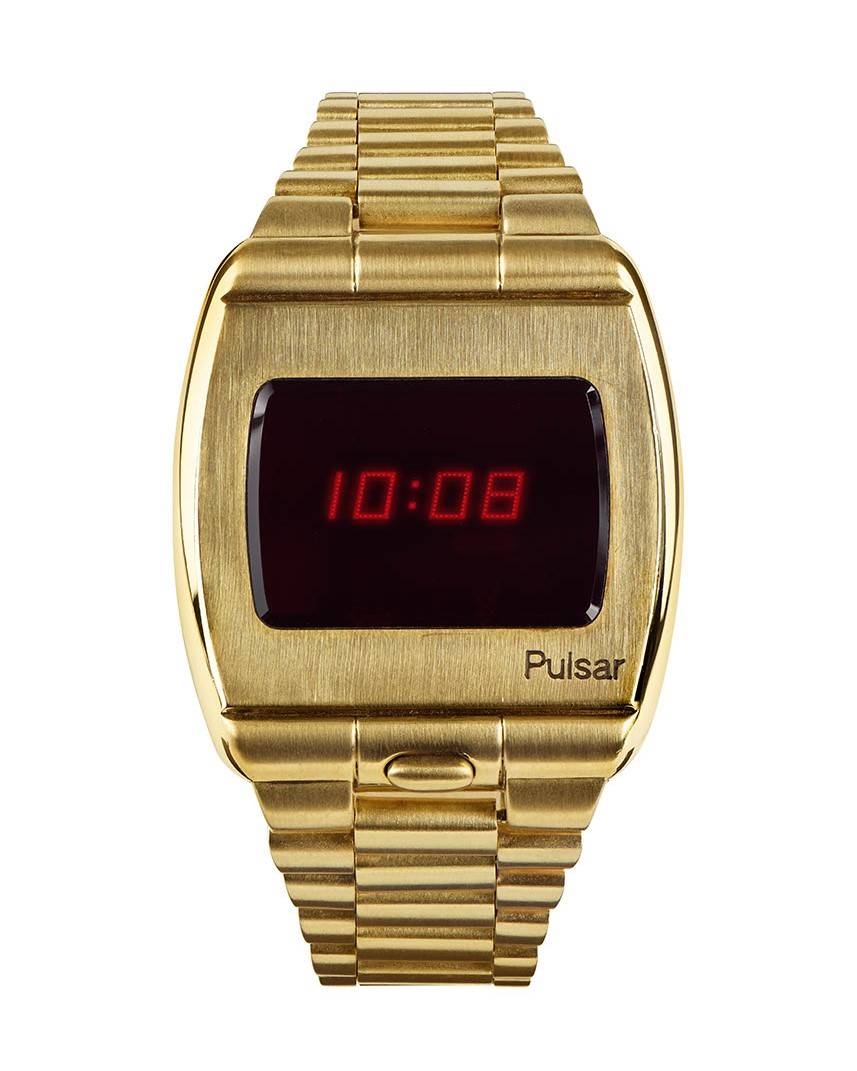
Pulsar P1, 1972 (Source: Revolution Watch)
At that time, Japanese and American companies were flooding the European market with affordable timepieces that appealed to an ever-growing audience.
In the 1980s, analog watches leveraged the possibilities offered by quartz to adopt a flat profile and minimalist aesthetic synonymous with elegance. At the same time, the digital watch was rising in popularity. Championed by Japanese brands like Casio, Seiko, Citizen, Pulsar, and Orient, it quickly built a devoted following. Its LCD screen (liquid crystal display) and low price point played a major role in bringing it to the mainstream.
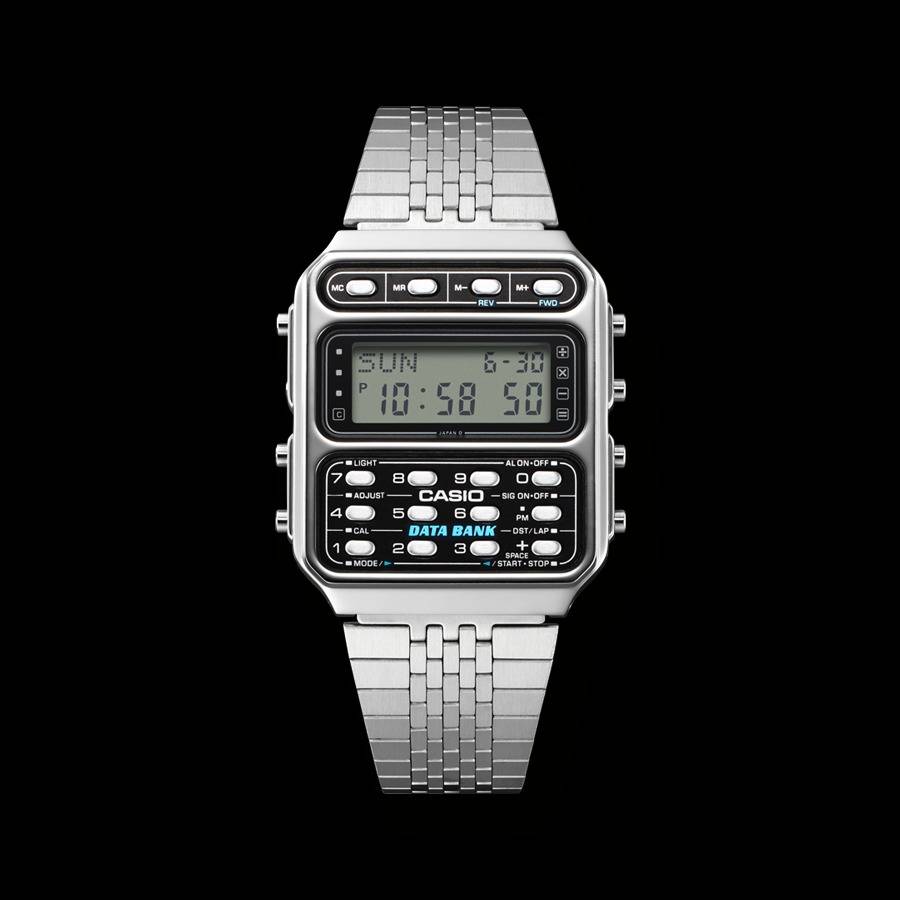
Casio CFX-200 Digital Watch, 1983 (Source: Official Casio Website)
On top of that, some digital watches offered advanced features such as a 1/100-second chronograph, an audible alarm, a calculator, or even a solar charging panel. All strong selling points, to say the least.
On the design front, analog watches began embracing a two-tone style, also known as "bi-tone" or "two tone." This trend, built on the mix of stainless steel elements with yellow gold or gold-plated accents, was pioneered by the Cartier Santos (not to be confused with the Cartier Santos Dumont). Released in the very late 1970s, this watch became a true bestseller throughout the 1980s.
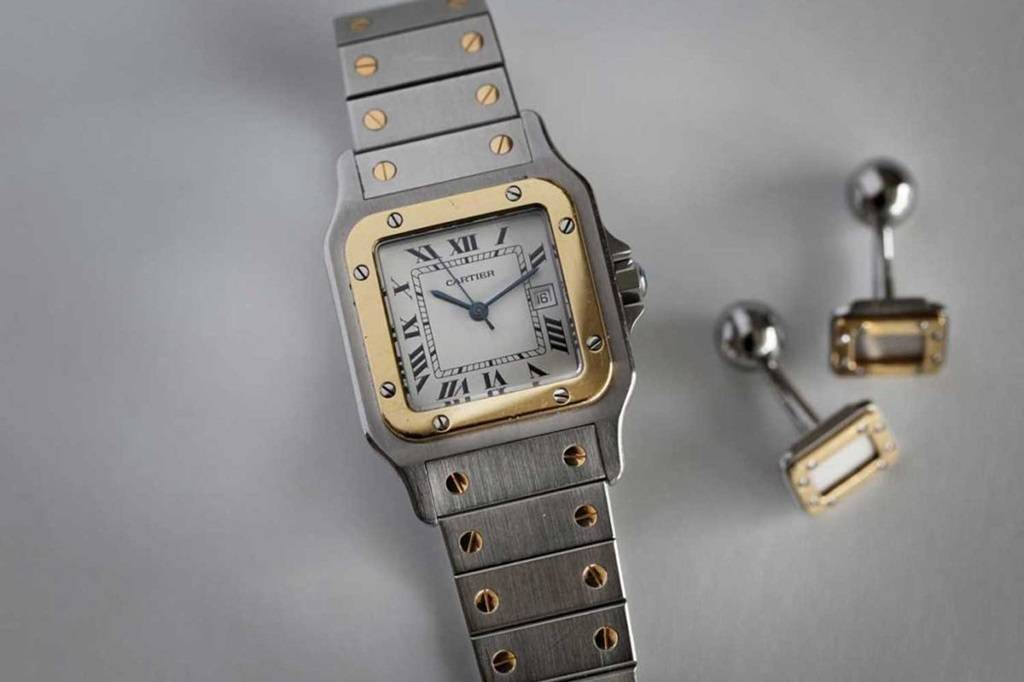
Cartier Santos two-tone gold and steel (Source: George Cramer / Revolution Watch)
To stand out, certain brands like Tag Heuer pushed futuristic designs. The S/el and the brand's various titanium watches are prime examples of bold risk-taking.
But the quartz crisis had already badly weakened the Swiss brands. If you had to remember just two numbers, these would be them: before the quartz crisis hit, Swiss brands held a 50% market share. The arrival of Japanese quartz watches would see that share collapse to 5% - in just a handful of years.
It is thanks to Nicolas Hayek that the Swiss watchmaking industry was saved.
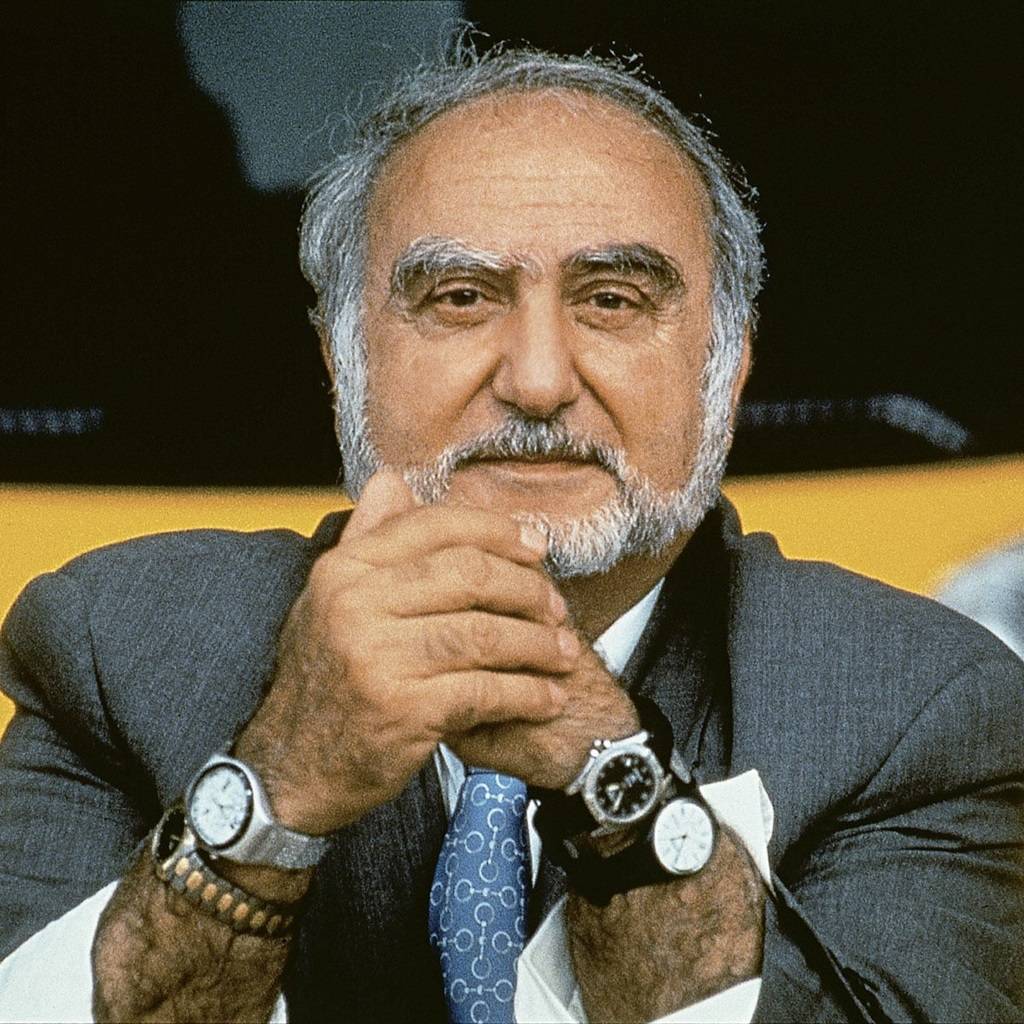
Nicolas G. Hayek, 1928-2010 (Source: Official Omega Website)
In 1983, he founded Swatch with a clear vision: to create "Swiss Made" watches that combined affordability, creative design, and quality craftsmanship.
This winning formula let him capitalize on the prestige of Swiss watchmaking while competing directly with Japanese brands on their own turf - price.
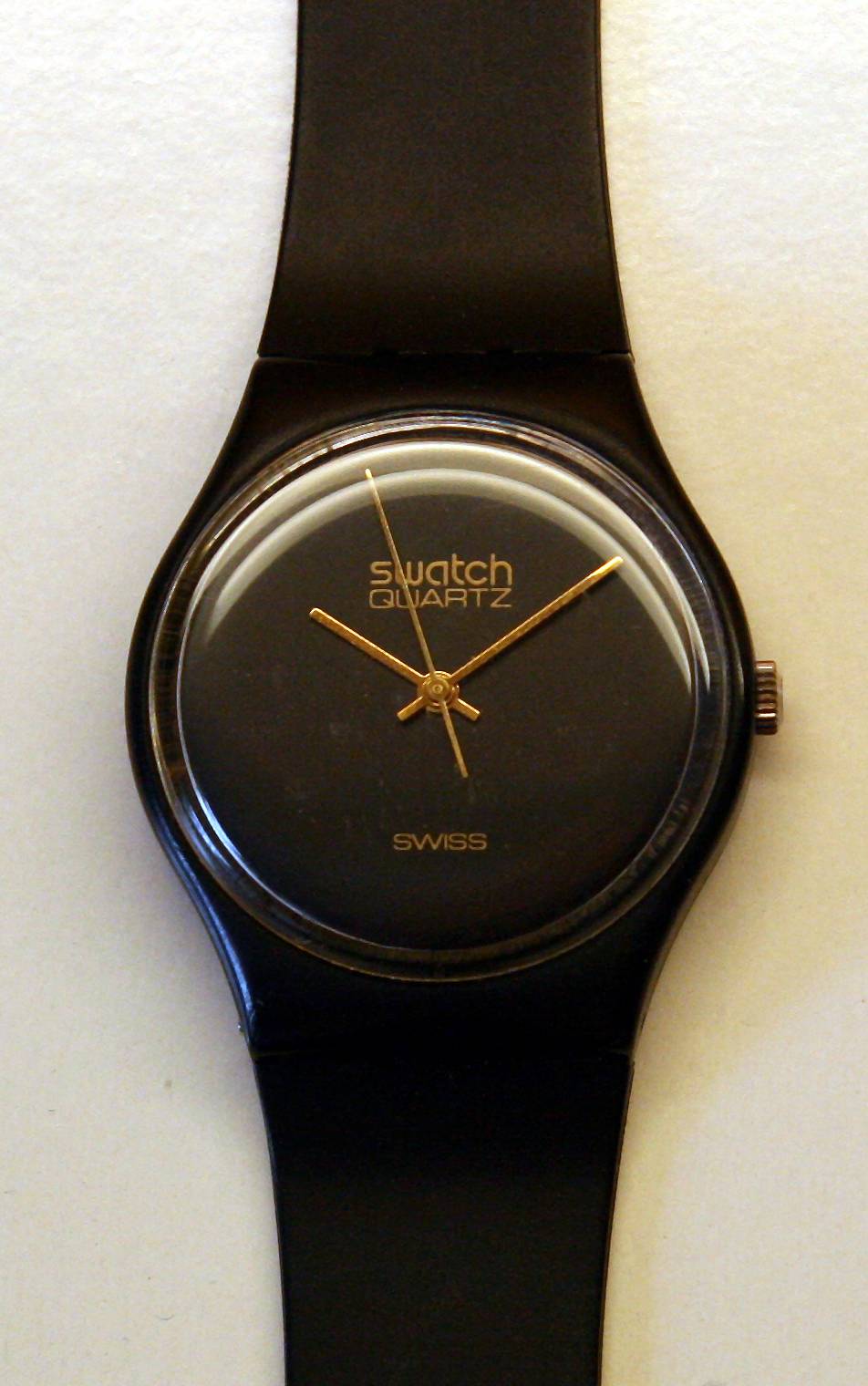
Swatch GB101, 1983 (Source: Wikipedia)
Swatch remains one of the key players in the watchmaking world - and more than just a brand, it is today a fully-fledged group that owns some of the most prestigious watch houses in the world.
While several Swatch watches with automatic movements were released over the years, it wasn't until the early 21st century that the general public truly fell back in love with mechanical watches.
In watchmaking, the 1990s were defined by the powerful comeback of German watch brands.
This event, following the fall of the Berlin Wall, gave a major boost to five manufacture names you'll certainly recognize: NOMOS Glashütte, Mühle Glashütte, Union Glashütte, Glashütte Original, and A. Lange & Söhne.
The 1990s were also defined by the emergence of some quite distinctive pieces: oversized luxury watches.
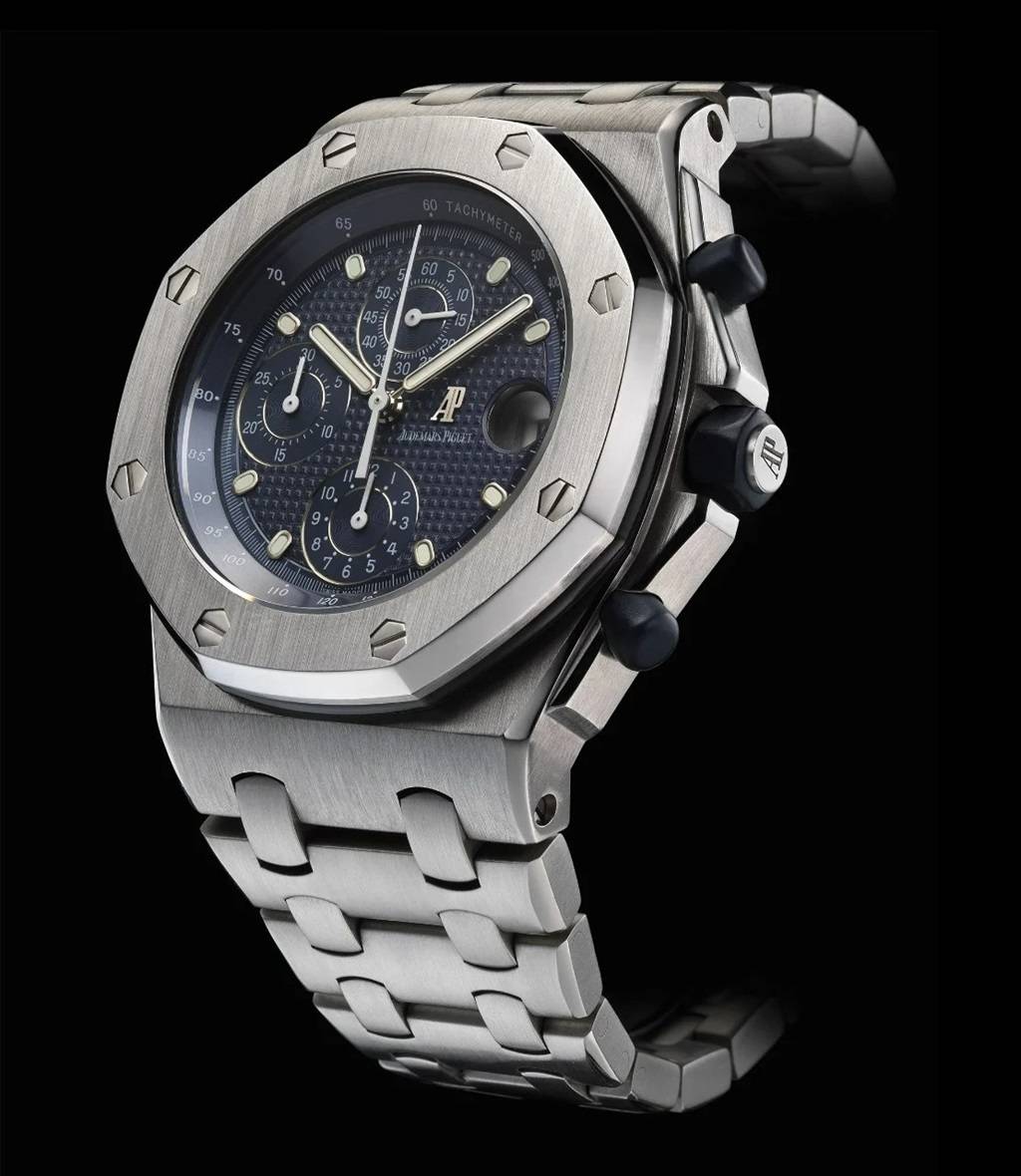
Audemars Piguet Royal Oak Offshore 25721ST, 1993 (Source: Official Audemars Piguet Website)
With its Royal Oak Offshore released in 1993, Audemars Piguet - keen to attract a younger audience - was one of the first manufacturers to lead the way.
On the dress watch side, the most prestigious brands were reclaiming the territory of grand complications. In 1989, an ultra-complex pocket watch was even unveiled: the Patek Philippe Calibre 89.
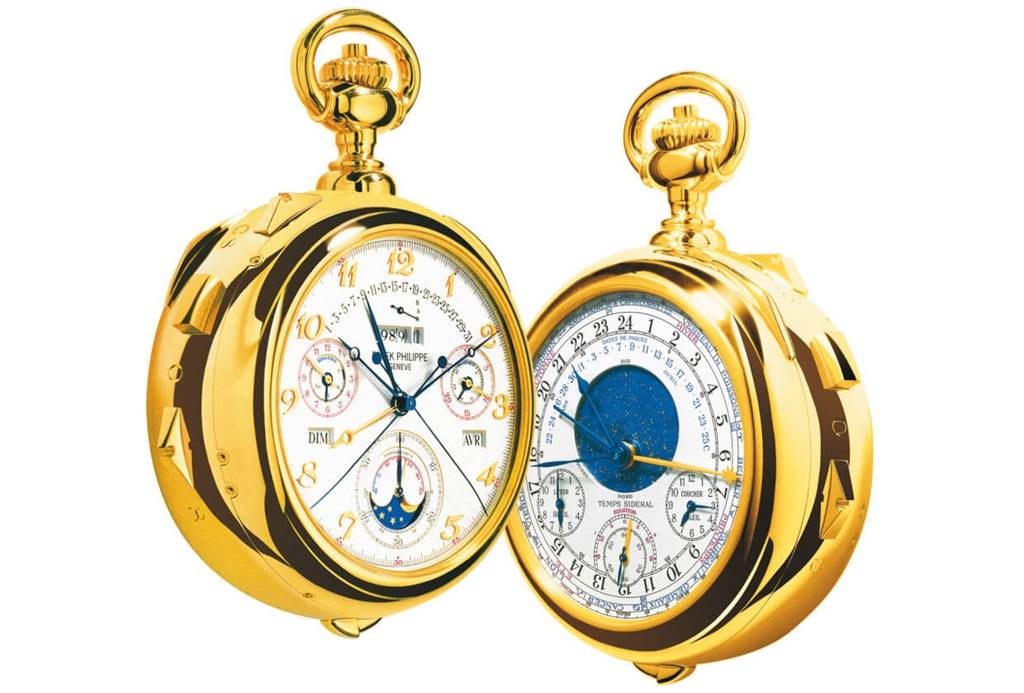
Patek Philippe Calibre 89, 1989 (Source: Watches & Culture Forum)
This XXL pocket watch - conceived to celebrate the brand's 150th anniversary - was considered the most complicated creation the house had ever produced. Entry-level watches would then seize on the grand complications trend, offering accessible alternatives by playing the quartz card.
And so, quartz watches pairing a calendar with a moon phase function began appearing in shop windows everywhere.
On the design front, the decade's watches also stood out for their often incredibly fine and elegant details. Looking at these watches with a modern eye, one often gets the strange impression that the indices, hands, and markings they carry are undersized. And don't think this is simply due to the larger case sizes of the era - the same sensation appears with the most compact pieces too.
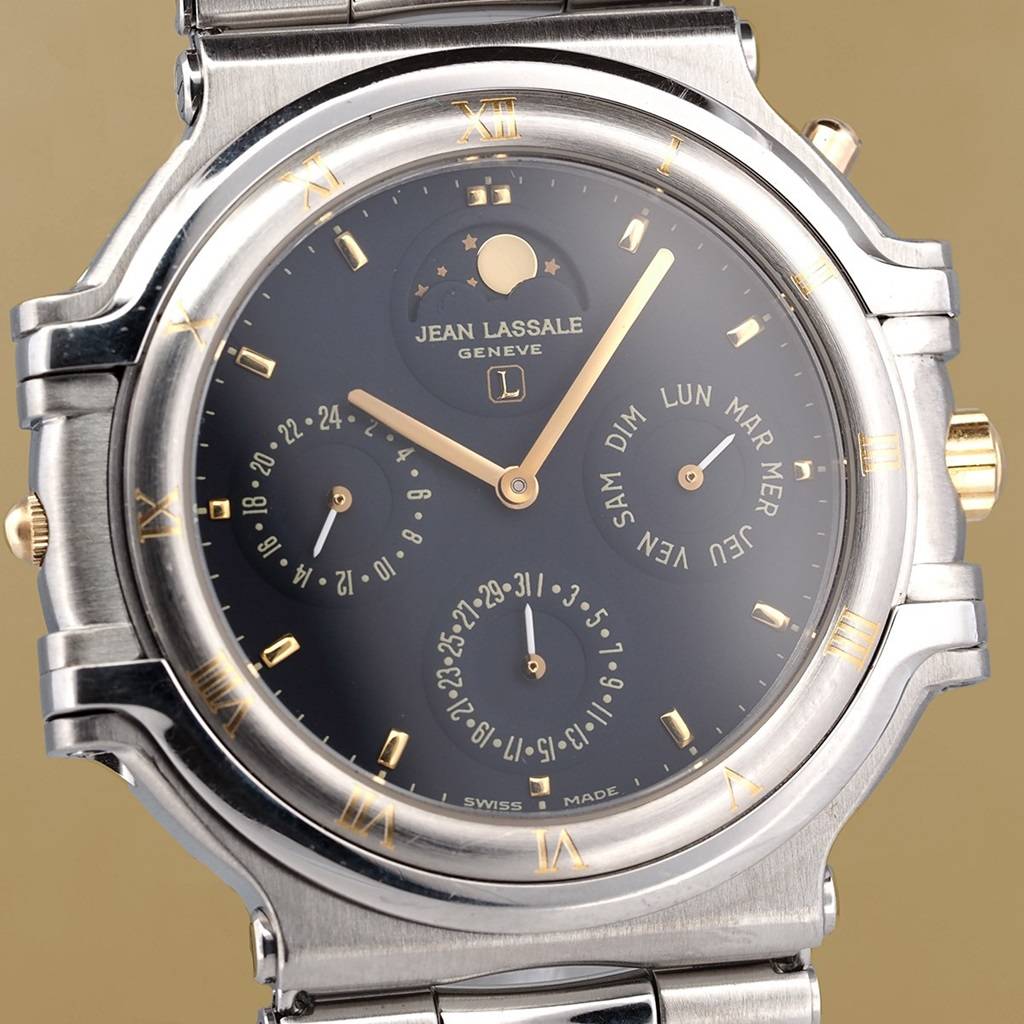
Jean Lassale Thalassa 7F98 018 (Source: Watch Spare)
This very particular style, rarely seen today, is part of what makes 1990s watches so charming.
In the 2000s, Swiss watch houses decided to position themselves in the high-end and sometimes luxury segment. Their names once again sparked dreams among enthusiasts from every corner of the globe - and that's how they gradually reclaimed their place in the market.
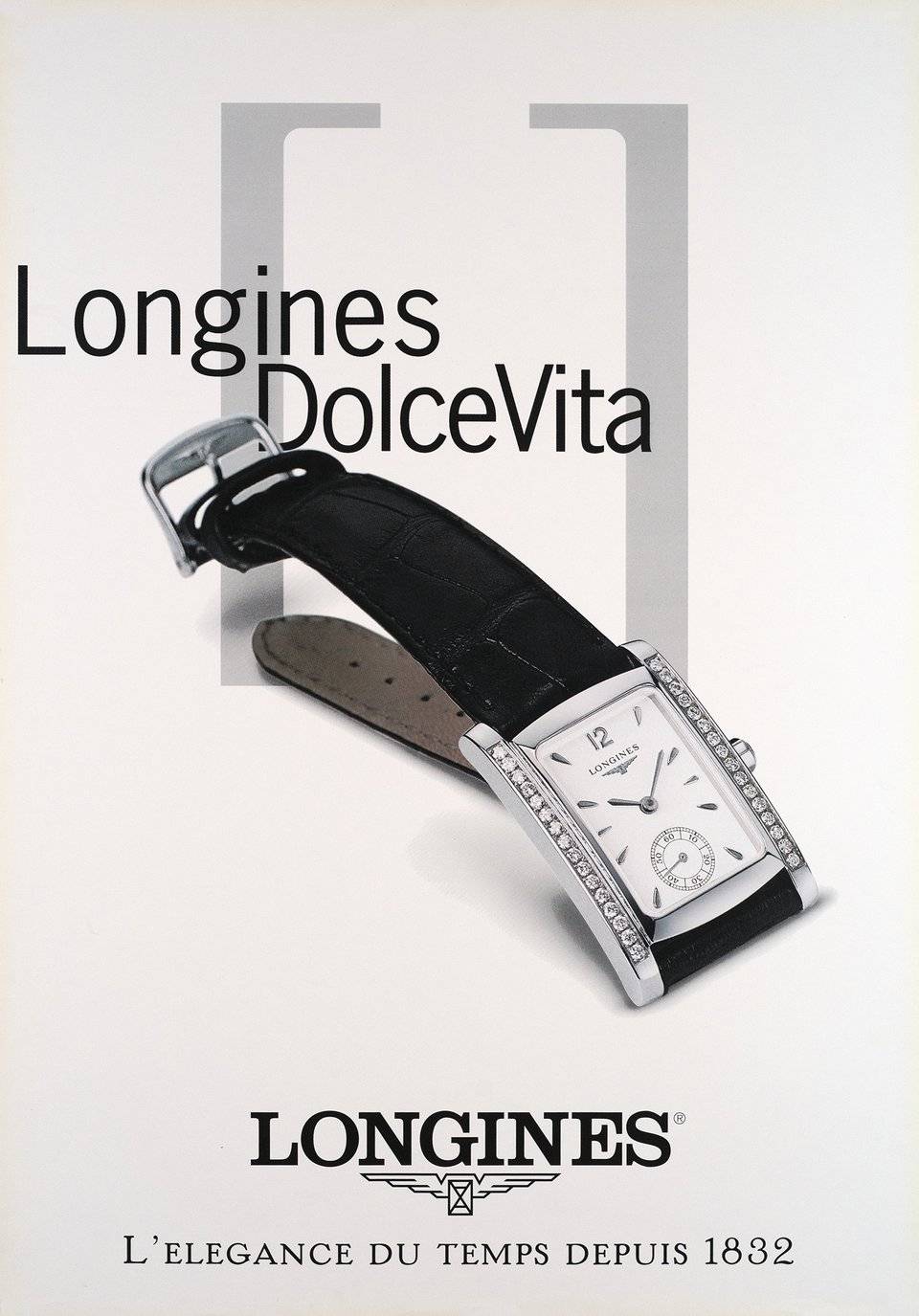
Longines Dolce Vita Advertisement (Source: Galerie 1 2 3)
While dress watches of the period were, in the name of elegance, often slim, quartz-powered, and offered in modest diameters, sports watches followed a very different design direction.
To get a sense of this, simply look at the specs of the dive watches and chronographs from the 2000s.
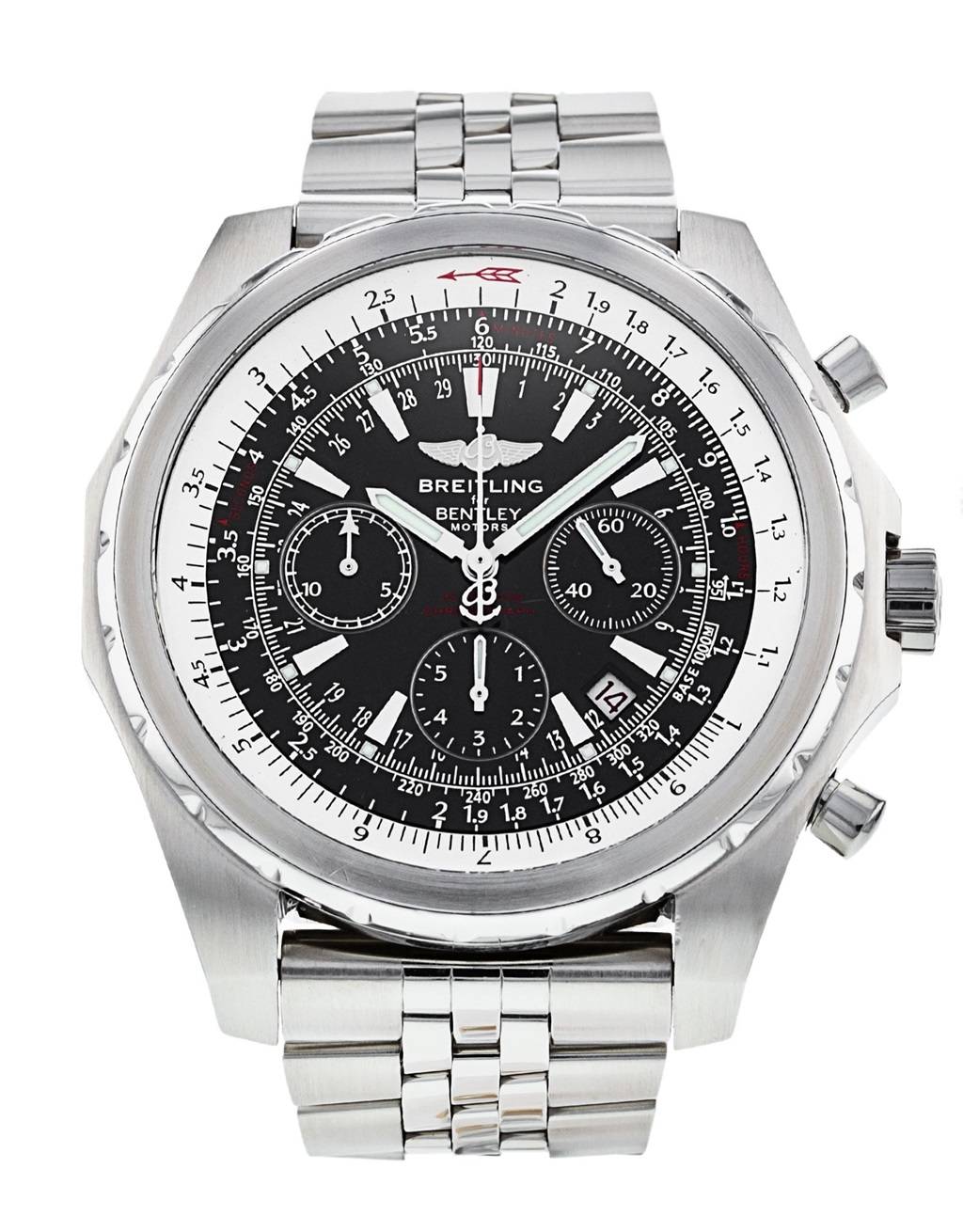
Breitling Bentley Motors T A25363, 2008 (Source: Watchfinder & Co.)
With diameters sometimes comfortably exceeding 45mm, these pieces relied on an XXL case size to appeal to the affluent clientele of the time. Many brands followed the trend, but Breitling, Panerai, and Hublot are perhaps the most representative.
Throughout the 2010s, re-editions took center stage. These watches, often from major brands, followed a distinctive philosophy: blending a vintage aesthetic with next-generation materials such as stainless steel or ceramic.
At this point, vintage began captivating the general public - and watch manufactures took notice. More and more of them started launching entire collections of timepieces inspired by pieces from their own archives.
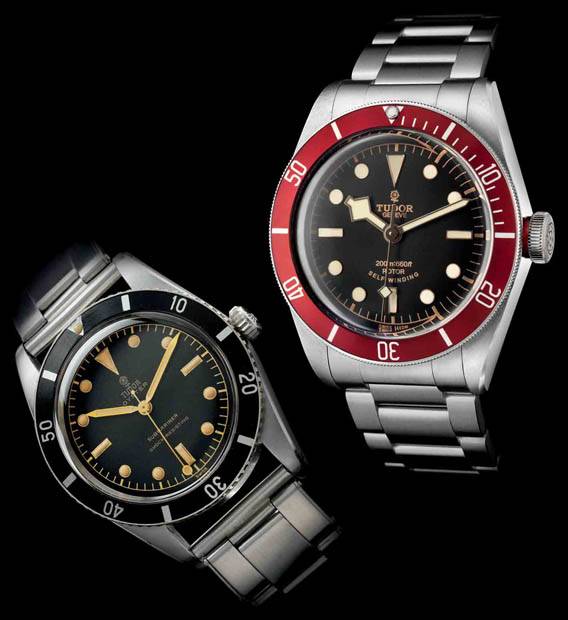
Tudor Heritage Black Bay, 2012 (Source: La Cote des Montres)
Vintage inspiration can fuel entirely new creations. The Tudor Black Bay, launched in 2012, is a prime example: with its matte black dial, golden Snowflake hands, and off-white luminescent material, it drew from the past to forge its own DNA.
A few years later, in April 2015, the first Apple Watch - also known as the "Series 0" - was released.
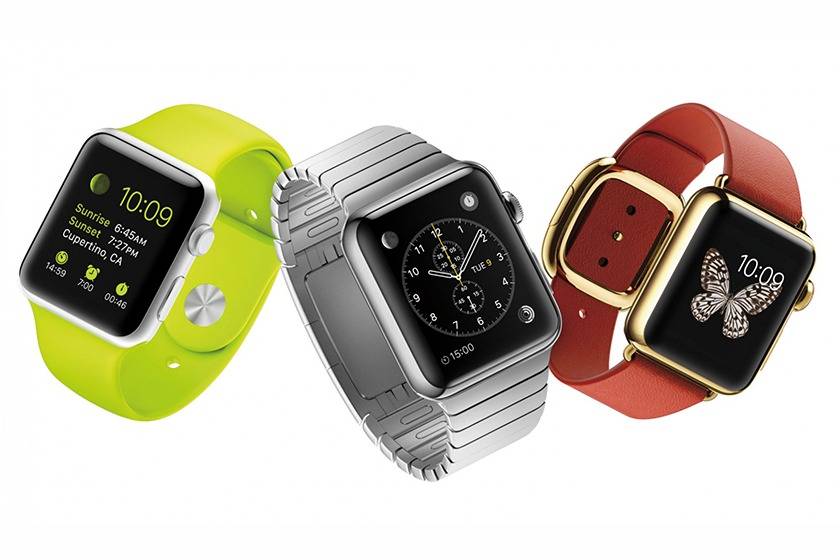
Apple Watch "Series 0", 2015 (Source: Les Rhabilleurs)
With this entirely new product - first introduced as an extension of the smartphone - Apple launched the smartwatch craze. Text messages and GPS directions could now be read right from your wrist.
Although the 2020s still pay tribute to vintage-style watches - particularly through re-editions - the most sought-after references among enthusiasts share one defining trait: a relatively small case diameter. Indeed, many watches coming to market feature cases of 37mm, 35mm, or even 33mm.
Nothing close to what was being made in the early 2000s!
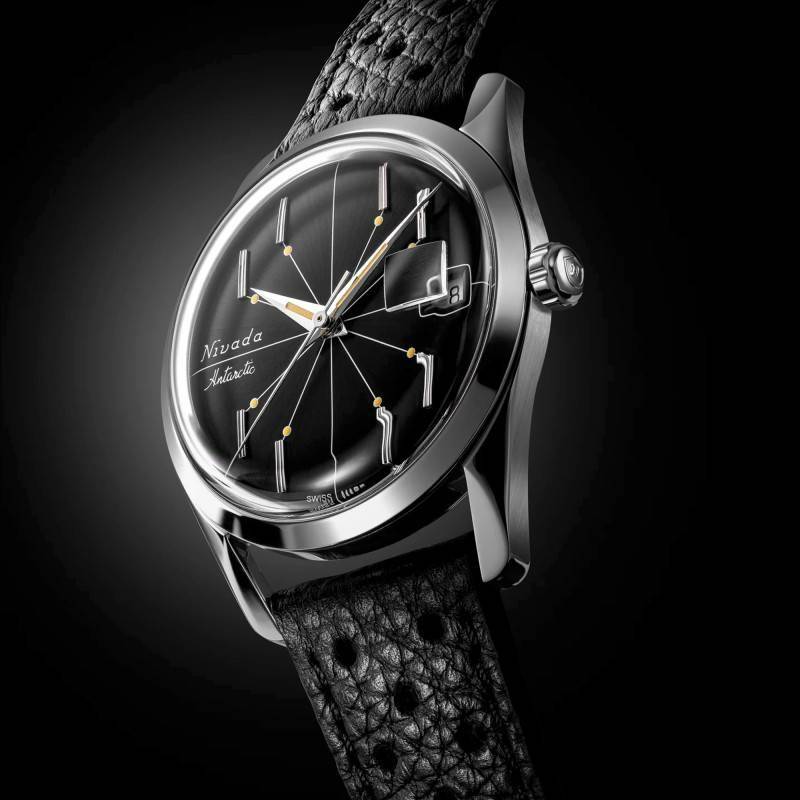
Nivada Grenchen Antarctic Spider Black 35011
We've arrived at a moment in history where it's possible to find watches that share the design and dimensions of pieces from the past, while using durable materials in a modern manufacturing process. These references - combining the best of both worlds - are highly prized by certain collectors who can enjoy vintage style without any of the headaches.
From sundials to today's watches, by way of the clepsydra, the first mantel clocks, the marine chronometer, and pocket watches... you now have a solid grasp of watchmaking history. But what will the trends of the coming decades look like?
Share :