
0
Product added

Gold jewelry is built to last. Yet between gold-plated pieces that wear out within a few years, secondhand jewelry with no legible hallmark, and diamond certificates you're not sure what to make of, there's no shortage of uncertainty. This guide gives you the concrete tools to read a jewelry piece before you buy: the legal markings to look for, the differences between types of gold, checks you can do at home versus those that require a professional, and the specific red flags to watch for when buying secondhand…
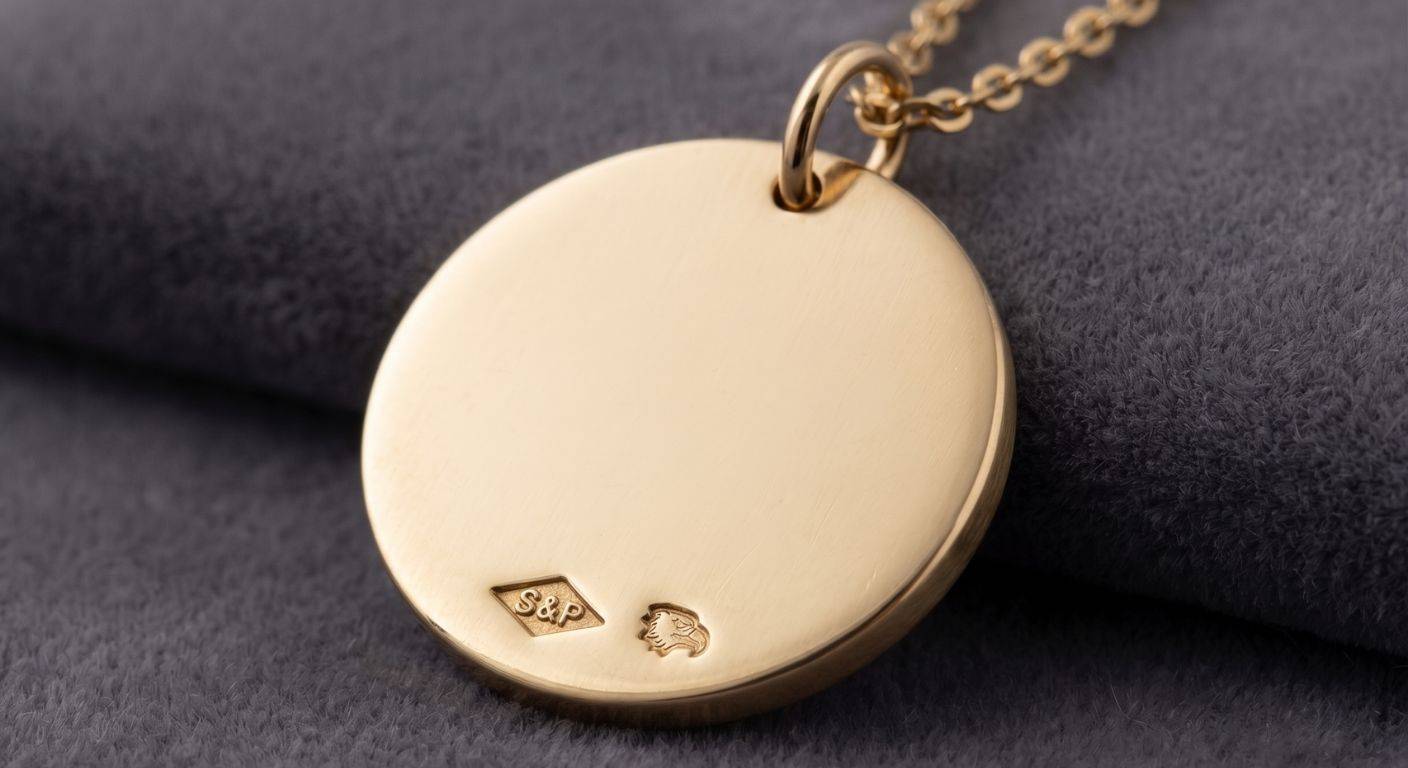
The first step, before any other test, is to look for hallmarks engraved on the piece. In France, the guarantee of precious metals is administered by the Directorate General of Customs (DGDDI), which operates six metropolitan assay offices responsible for testing and marking jewelry.
The assay hallmark - or fineness mark - is the official stamp attesting to the proportion of gold in the alloy. It is applied to every piece of gold jewelry weighing more than 3 grams that is legally sold in France.
The legal gold standards in France are as follows:
| Fineness | Carats | Pure Gold | Hallmark |
|---|---|---|---|
| 999‰ | 24 Carats | 99,9 % | Lion (rarely used in wearable jewelry) |
| 916‰ | 22 Carats | 91,6 % | - |
| 750‰ | 18 Carats | 75 % | Eagle's Head (French jewelry) |
| 585‰ | 14 Carats | 58,5 % | Scallop Shell (imported pieces) |
| 375‰ | 9 Carats | 37,5 % | Clover (imported) / legal minimum |
The eagle's head is the most common hallmark in France: it identifies jewelry made or guaranteed on French territory in 750 gold (18 carats). Imported jewelry carries different hallmarks, defined by an international convention.
Below 375‰, a piece of jewelry cannot legally be described as "gold" in France.
In addition to the hallmark, each piece of jewelry bears a maker's mark - a stamp unique to the manufacturer or importer, engraved in a lozenge-shaped cartouche (manufacturer) or an oval one (importer). This mark is traceable: in the event of a dispute, it identifies who placed the item on the market.
On a new piece of jewelry purchased from a jeweler, both hallmarks should be present. Their absence can be considered a red flag.
They are engraved in discreet but accessible spots: the inside of a gold signet ring, the clasp of a necklace or bracelet, the setting of an earring. On fine pieces, a loupe (×10 magnification) helps to read them. Most jewelers will check this for you at no charge.
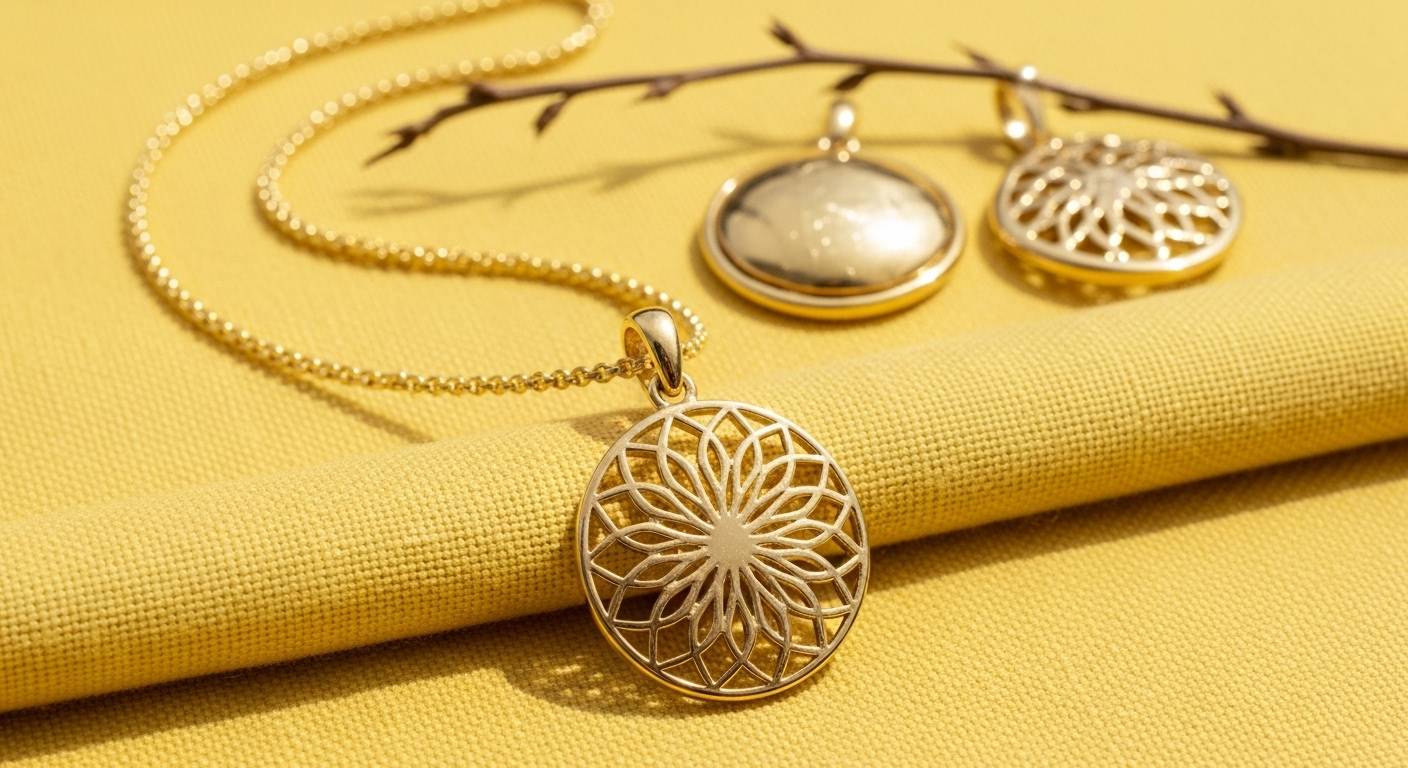
These three designations coexist on the market but represent very different realities - and very different levels of durability.
The distinction shows on the label and hallmark: only solid gold carries an official assay hallmark. Gold-plated and vermeil pieces carry no government stamp - their nature may be stated on the packaging, but this declaration is not subject to the same level of oversight. A square hallmark is often an indicator of gold plating.
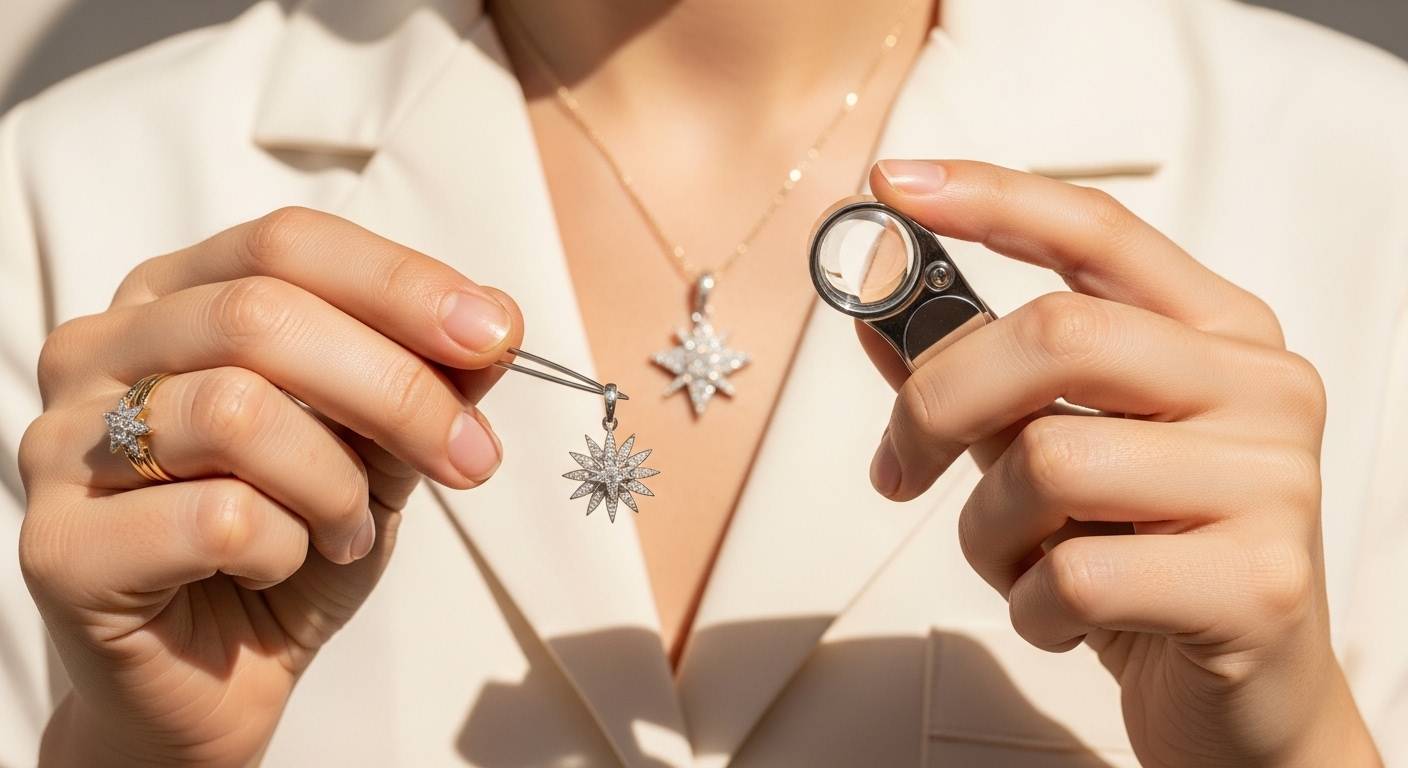
For any valuable piece of jewelry - whether buying or selling - an appraisal by a jeweler, auctioneer, or licensed gold buyer remains the strongest guarantee available.
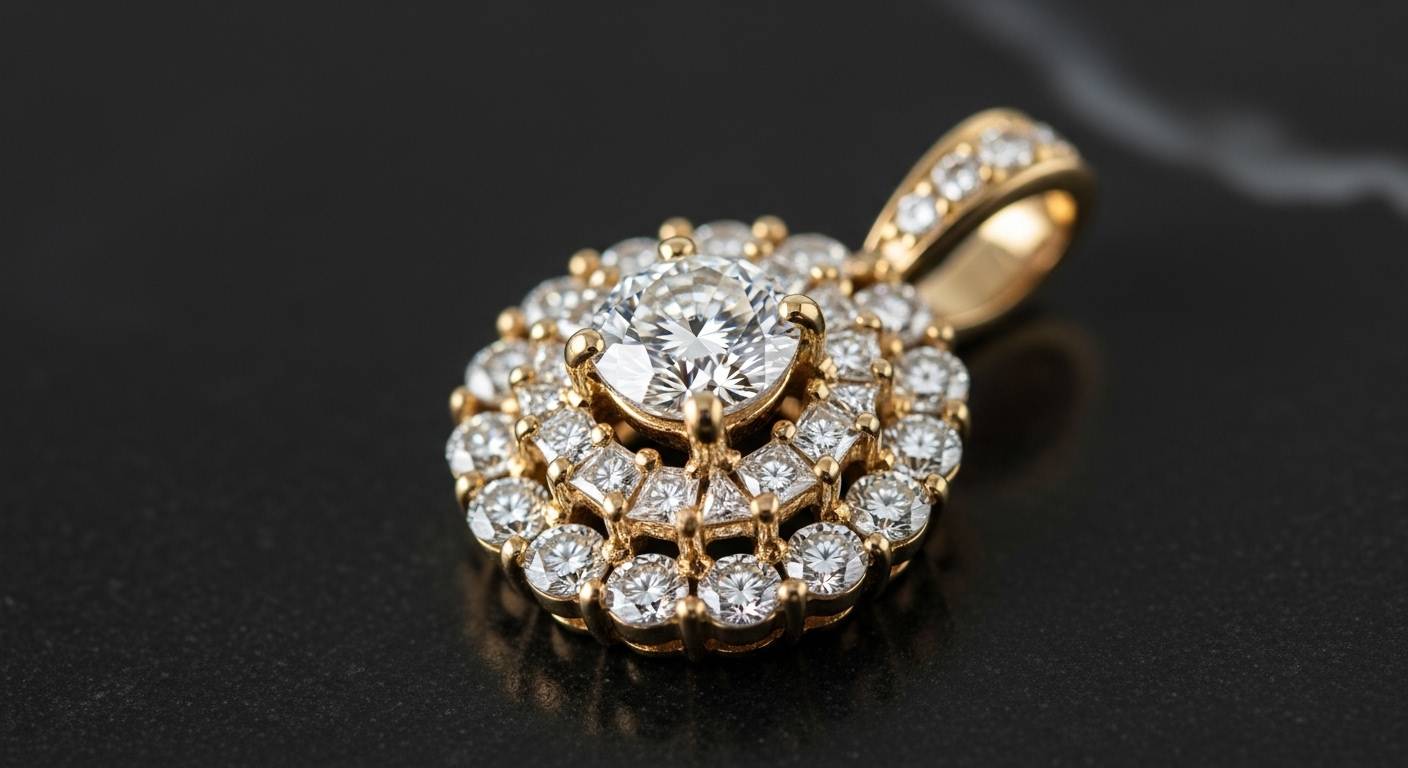
A piece of jewelry set with a precious stone - like a diamond ring or a sapphire bracelet - calls for an additional check: verifying the stone itself.
For any diamond of significant size (from approximately 0.30 carats), always request a certificate issued by a recognized independent laboratory: GIA (Gemological Institute of America), IGI (International Gemological Institute), or HRD (Hoge Raad voor Diamant). These are the world's leading institutions, and their certificates can be verified online directly on their websites.
Each certificate carries a unique number searchable on gia.edu, igi.org, or hrd.be. Entering this number confirms that the report exists, that it matches the stone, and that it correctly states the stone's nature - natural or lab-grown (GIA-certified lab-grown diamonds have carried the mention "Laboratory-Grown" laser-engraved on the girdle since 2019).
Be wary of in-house certificates or those issued by lesser-known laboratories (AIG, EGL Europe in particular): they do not meet the same standards of rigor and are not recognized on the international market.
On a certified set jewelry piece, the report number is laser-engraved on the girdle (the stone's edge), readable under a ×10 loupe. Matching this engraving to the certificate is the minimum verification to perform before any purchase.
An inherited or secondhand piece of jewelry may not come with a gemological certificate. It is possible to have the stone certified after the fact by sending it directly to a recognized laboratory (GIA, IGI). The process generally requires having the stone removed from its setting - which must be done by a jeweler. Expect to pay between 80 and 150 € depending on the stone's size and the laboratory chosen, plus the jeweler's fees for removing and resetting the stone. This step is worthwhile whenever the estimated value of the stone exceeds a few hundred euros.
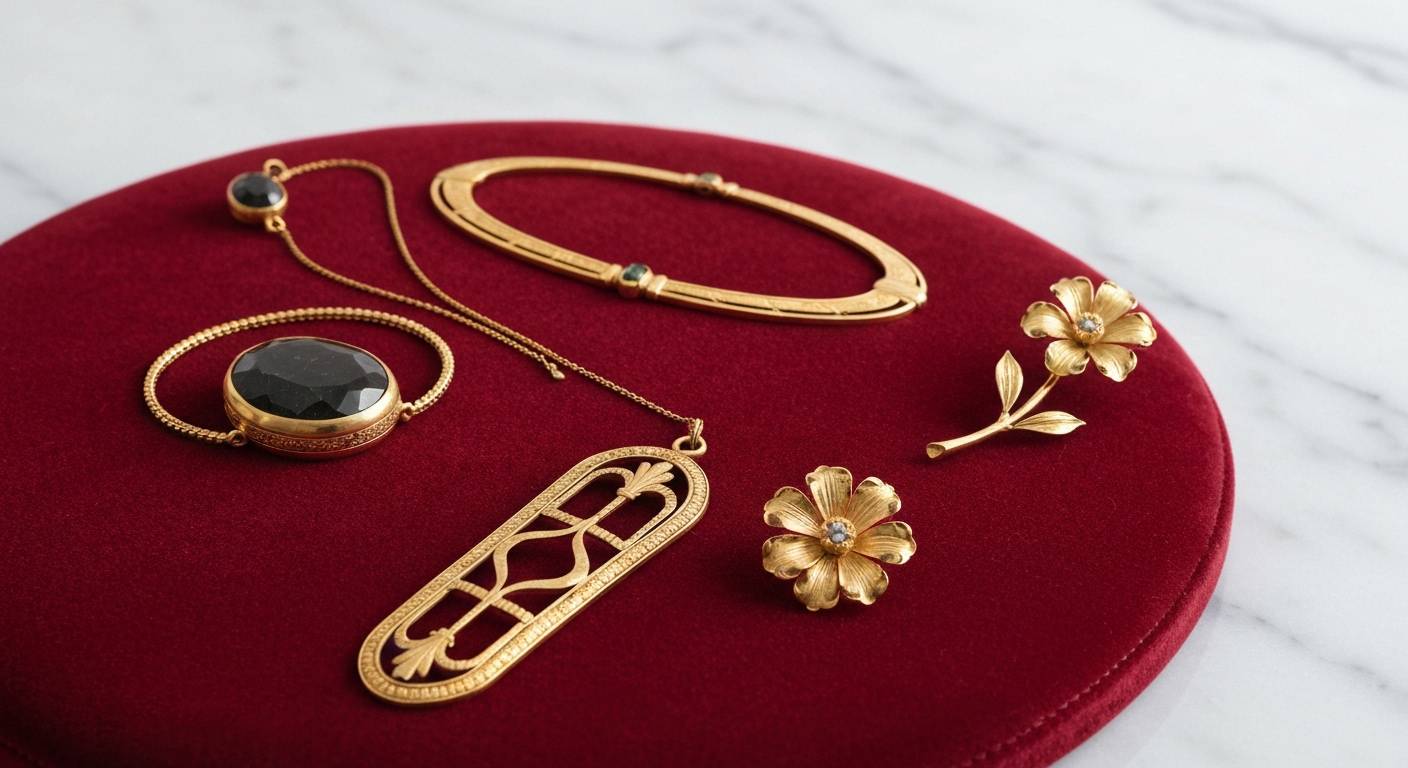
Buying secondhand gold jewelry - from a private seller, a flea market, an auction, or an online platform - offers real opportunities but requires extra precautions.
Check the hallmark first: this matters even more than with new jewelry, since the seller's guarantee is absent or limited. French jewelry from the 20th century will carry the hallmarks described above. Antique pieces (pre-1838 or imported from a specific period) may bear different hallmarks or none at all - which does not necessarily mean they are not gold, but does require a professional appraisal.
Always ask for a receipt or invoice: even in private sales, a document tracing the jewelry's origin carries weight in the event of a dispute.
Be wary of sellers who refuse any pre-purchase appraisal: a seller acting in good faith has no reason to object.
For jewelry with gemstones: as with gemstone rings, the absence of a certificate isn't a dealbreaker for antique jewelry, but it does require an independent gemological appraisal before purchase. The cost of an appraisal (30 to 80 € depending on the piece) is well worth it whenever the amount at stake exceeds a few hundred euros.
Auctioneers and licensed auction houses: for higher-value jewelry, going through a supervised auction offers stronger guarantees than a private sale. Court-appointed experts are legally required to identify the metals and gemstones.
| I Want to Verify… | What I Do | Reliability |
|---|---|---|
| That It Is Genuine Gold | Look for the Eagle's Head Hallmark (750‰) | Very Reliable |
| The Gold Fineness | Reading the Millesimal Fineness Marking on the Hallmark | Reliable |
| That It Is Not Magnetic | Magnet Test | Reliable for Ruling Out Iron - Insufficient on Its Own |
| The Approximate Density | Scale + Graduated Cylinder | Indicative - Confirm with an Expert |
| The Exact Purity of the Alloy | Professional: Acid Test or XRF | Very Reliable |
| The Authenticity of a Diamond | GIA / IGI Certificate Verified Online | Very Reliable |
| An uncertified secondhand piece of jewelry | Jeweler or Auctioneer Appraisal | Essential for Any Item of Significant Value |

Not necessarily. Very old jewelry (predating 19th-century hallmarking reforms), certain handcrafted pieces, and foreign items from specific periods may carry no French hallmark. That said, any recently sold piece described as "750 gold" with no legible hallmark must be independently appraised before purchase.
No. In France, regulations prohibit using the word "gold" alone to describe a gold-plated jewelry item. The description must be explicit: "gold-plated," "gold-toned," or "rolled gold." The term "gold" without further qualification legally refers to solid gold.
White gold has a rhodium surface finish - its tone is slightly warmer than platinum or silver (though rhodium-plated silver pieces also exist). Under a loupe, the hallmark is the deciding factor: an eagle's head for 750 white gold (18 carats), a specific mark for platinum, a different one for silver. When in doubt, a professional XRF test provides a definitive answer.
Absolutely - it's even recommended. A jeweler, auctioneer, or licensed gold buyer can carry out a quick appraisal (often free when it precedes a purchase offer). For valuable pieces, an independent gemological appraisal is preferable to one performed by the potential buyer.
Every piece of gold jewelry offered by Ocarat is guaranteed to meet French legal standards - solid 750 gold (18 carats) or 375 gold (9 carats), hallmarked, and accompanied by a detailed invoice. Jewelry set with a diamond over 0.3 carats is GIA or IGI certified. Free delivery in mainland France and Belgium, 4-installment interest-free payment, 30-day return policy.
→ First gold jewelry purchase - how to choose? · Guide to Precious Metals · Natural vs. lab-grown diamonds - how to choose?
Share :