
0
Product added

"Gold-toned," "gold plated," "fine gold-toned"… Jewelry labels toss these terms around as if they were interchangeable - but they're not! Each one hides a different reality: gold layer thickness, legal framework, everyday lifespan. This guide untangles the two concepts so you can shop with full confidence.
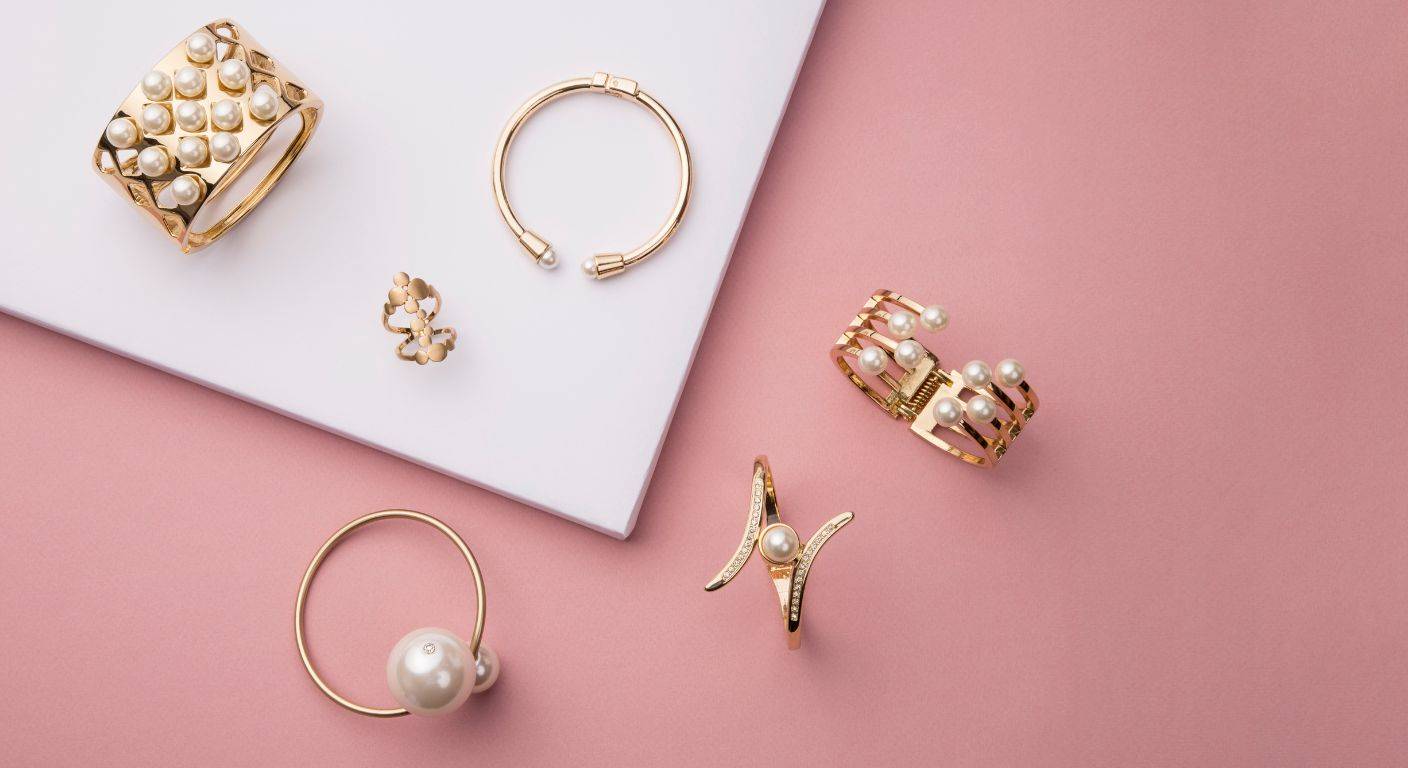
When a product listing says "gold-toned" or "fine gold-toned," no law specifies the thickness of precious metal that must be deposited on the jewelry. The term is unregulated, and a layer of just a few hundredths of a micron (one micron equals one-thousandth of a millimeter) is legally sufficient to use it.
In practice, this usually means a flash: a very rapid electrolytic deposition that coats the surface with a superficial layer of gold. The effect is immediate (the jewelry shines straight out of the box), but wear resistance is very limited. Friction, perspiration, water - all of these accelerate the breakdown of that thin layer.
Gold-toned jewelry is extremely common in fashion jewelry. It makes trendy designs accessible at affordable prices. It's a perfectly legitimate choice for occasional wear - as long as you know what you're buying…
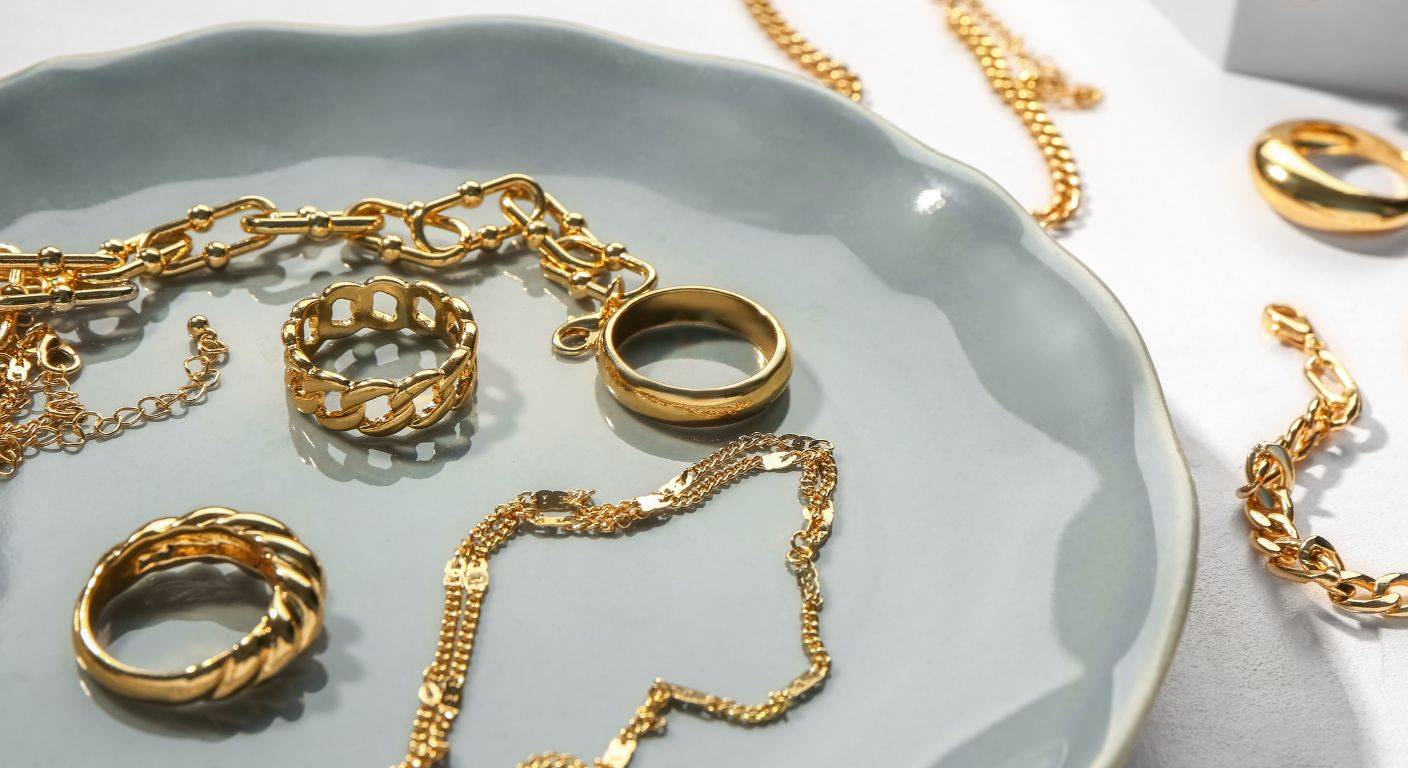
The label "gold plated" is not a free-use marketing claim - it is a regulated designation. In France, for a jewelry piece to legally carry it, the deposited gold layer must reach a minimum of 3 microns on all visible surfaces. Below that threshold, the manufacturer must use alternative terms such as "gold-toned" or "gold finish," or face customs penalties.
The process used is electroplating (also called electrodeposition): an electric current attracts gold ions from a solution onto the surface of the base metal - typically brass or copper. The resulting layer is thin, but uniform and measurable.
In concrete terms, a gold-plated jewelry piece holds up better against oxidation and friction than a simply gold-toned one. Its lifespan is still limited (a few months to several years depending on wearing and care conditions), but it is predictable and backed by a verifiable standard.
| Gold-Toned Jewelry | Gold-Plated Jewelry | |
|---|---|---|
| Gold layer thickness | Less than 3 microns (often just a few tenths) | Minimum 3 microns |
| Regulated designation | No | Yes (French customs) |
| Durability | A few weeks to a few months | A few months to 2-3 years |
| Oxidation resistance | Low | Moderate |
| Recommended use | Occasional wear, trendy jewelry | Regular wear |
| Indicative price | More affordable | Slightly higher |

At the point of purchase, the product sheet is your first reference! The label "gold plated" signals a product subject to a thickness standard. By contrast, terms like "gold-toned," "gold tone," or "gold finish" indicate a gilding free from any regulatory requirement.
Some manufacturers specify the number of microns (e.g., "5-micron gold plating," "18-karat gold plating"). The thicker the layer, the longer the durability - but the legal minimum remains set at 3 microns.
Over time, the difference becomes clear. The layer on a gold-toned jewelry piece wears off first at friction points (the inside of a signet ring, a bracelet clasp, the back of a pendant). Gold-plated jewelry shows more gradual wear - as long as you avoid repeated contact with water, cosmetics, and perspiration.
| I'm looking for | Recommendation |
|---|---|
| A trendy jewelry piece at a low price point, for occasional or special-occasion wear | Gold-toned jewelry, Fashion Jewelry |
| A jewelry piece for regular wear, with durability guaranteed by a standard | Gold-Plated Jewelry |
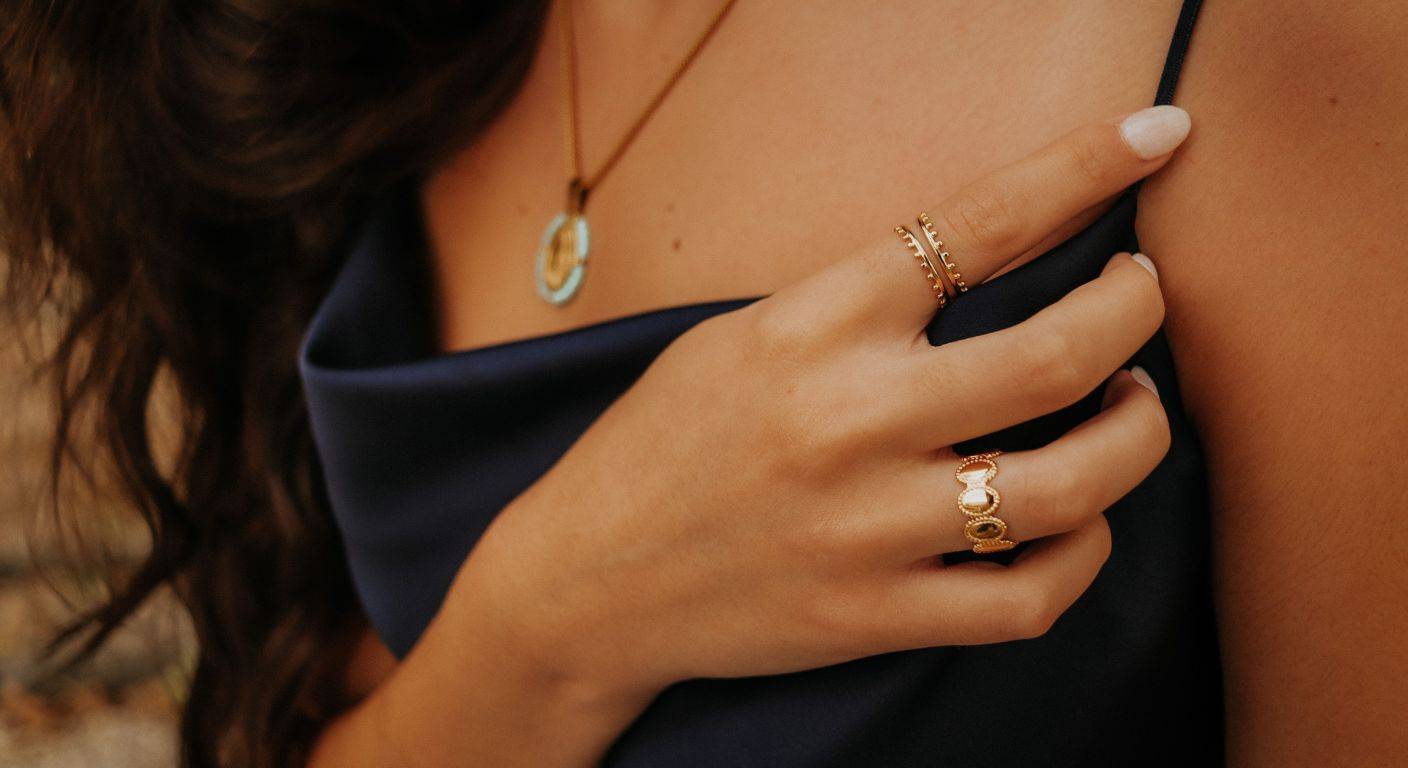
Gold refers to a precious metal present throughout the entire mass of the jewelry, with a minimum legal purity of 375 parts per thousand in France. "Gold-toned" simply describes a surface coated with a thin layer of gold, with no guarantee on its thickness or the metal underneath.
Yes, in the vast majority of cases. The thinner the gold layer, the faster the base metal shows through. It's that base metal - often brass or copper - that oxidizes, not the gold itself. A flash-plated gold-toned jewelry piece can start to tarnish within a few weeks, whereas a 3-micron gold-plated piece can hold up for several months under the same wearing conditions.
Gold-filled (also known as "rolled gold" or "gold filled") is a technique distinct from electrolytic plating. A sheet of gold is mechanically bonded to the base metal through hot rolling. The amount of gold used represents at least 1/20th of the total weight of the jewelry, making it 15 to 25 times thicker than standard gold plating. It's the most durable option among all "non-solid" finishes.
No. Vermeil is gold plating over a 925 sterling silver base, with a minimum thickness of 5 microns of 750/1000 (18-karat) gold. It's a more demanding standard than standard gold plating. Our guide "How do you know if a gold jewelry piece is quality?" covers this distinction as well as the difference with solid gold.
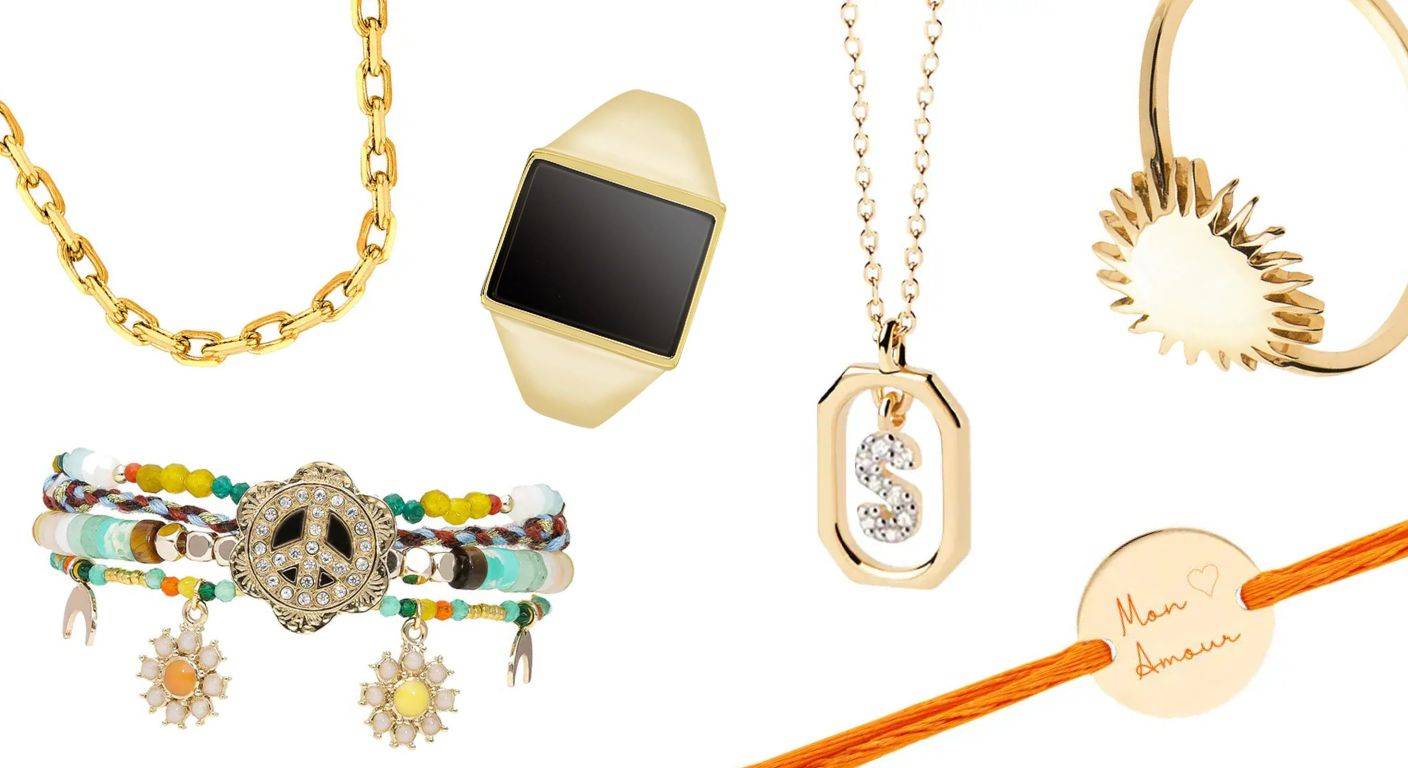
Whether you prioritize the durability of gold-plated jewelry or the creative freedom of gold-toned pieces, Ocarat has a curated selection in both categories. Free shipping to metropolitan France and Belgium, with 4-installment interest-free payment available.
→ How do you know if a gold jewelry piece is quality? · Gold Guide · Jewelry Glossary
Share :
Official European Union notice on your rights in the event of a product's lack of conformity.