
0
Product added
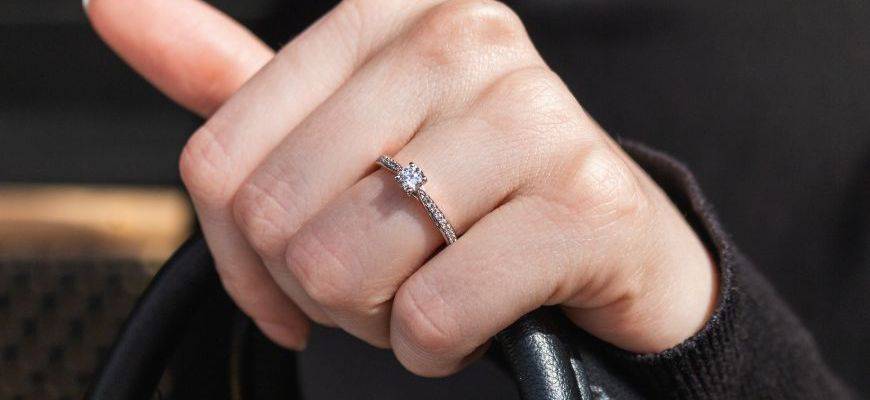
The engagement ring hasn't always sparkled with brilliance. In its earliest form, it was a simple iron band - plain, almost austere. The tradition dates back to ancient Rome, where rings given as pledges of a wedding promise were first made of iron, then gradually of gold. The circle already carried its symbolism: a line with no beginning and no end, the image of a love without limit.
The turning point came in 1477. It was Archduke Maximilian of Austria who sparked a new tradition by presenting Mary of Burgundy with a diamond engagement ring set with stones forming an "M." The diamond, chosen for its exceptional hardness, became a symbol of fidelity. Yet for three more centuries, this gesture remained the privilege of royal courts - deposits were scarce and the stones were prohibitively expensive.
Everything changed in the mid-19th century. Miners discovered major deposits in South Africa, and diamond engagement rings gradually became accessible to a much wider public. But it was one advertising campaign that sealed the shift for good: in 1947, the tagline "A Diamond Is Forever," created for De Beers, turned the diamond ring into a universal symbol. Within twenty years, 80% of American brides were wearing a diamond - cementing a tradition that endures to this day.
In the 2010s, that momentum eased slightly: couples began gravitating toward other forms of luxury, colored stones, and more personal jewelry. Today's engagement ring no longer follows a single template. What hasn't changed is what it means: a promise chosen, given, and worn.
A fun fact: in 1796, Napoleon Bonaparte proposed to Joséphine with a "Toi et Moi" ring featuring a sapphire and a diamond set side by side. This historical detail speaks volumes about the staying power of certain styles - some designs simply never go out of fashion.
Engagement rings fall into a handful of major families. Knowing their vocabulary lets you quickly zero in on what matches a style, without getting lost in a catalog.
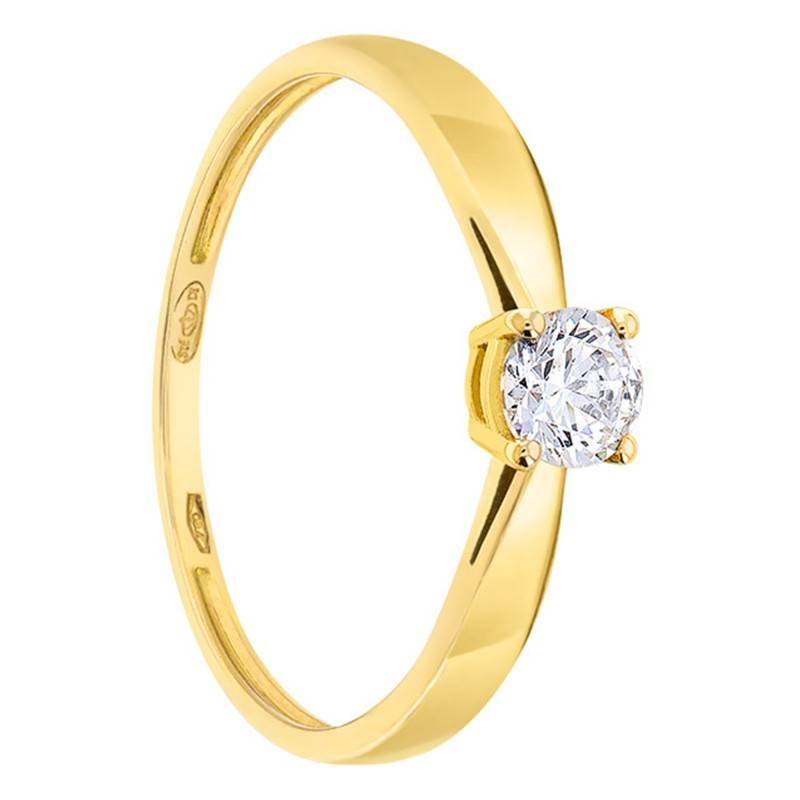
Everything rests on a single stone, set high on a plain band. What you are choosing here is the stone itself - the setting simply elevates it. This is the style that ages best and pairs most naturally with any wedding ring. The classic solitaire suits every style and harmonizes beautifully with all wedding rings.
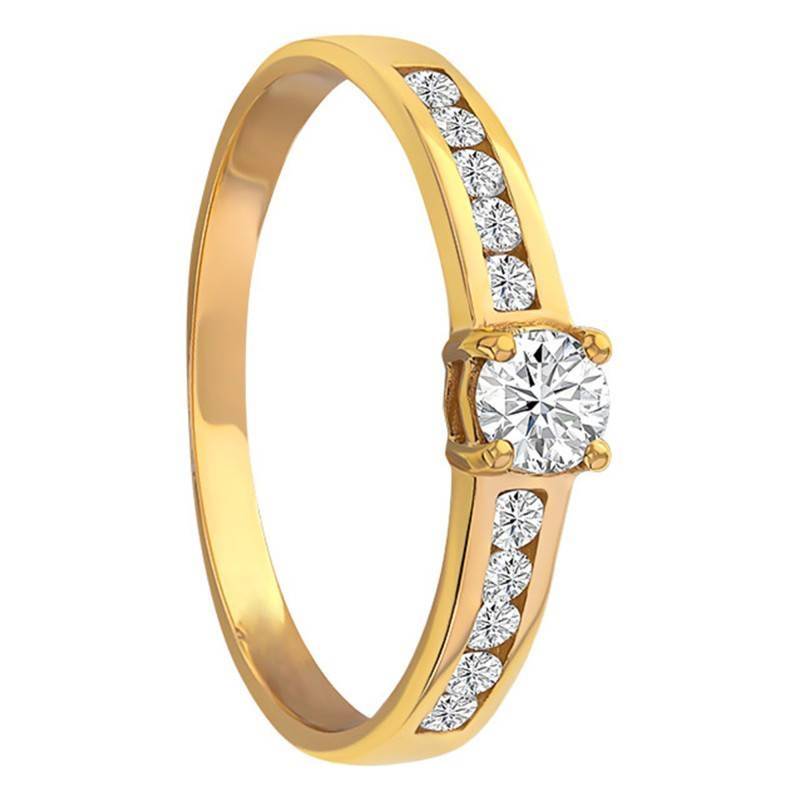
Same structure as a solitaire, but the band is lined with small pavé-set diamonds along all or part of its circumference. The pavé setting adds extra sparkle that enhances the beauty of the center stone. Note: a pavé ring requires more careful maintenance than a plain band, and resizing can be more complex depending on the style.
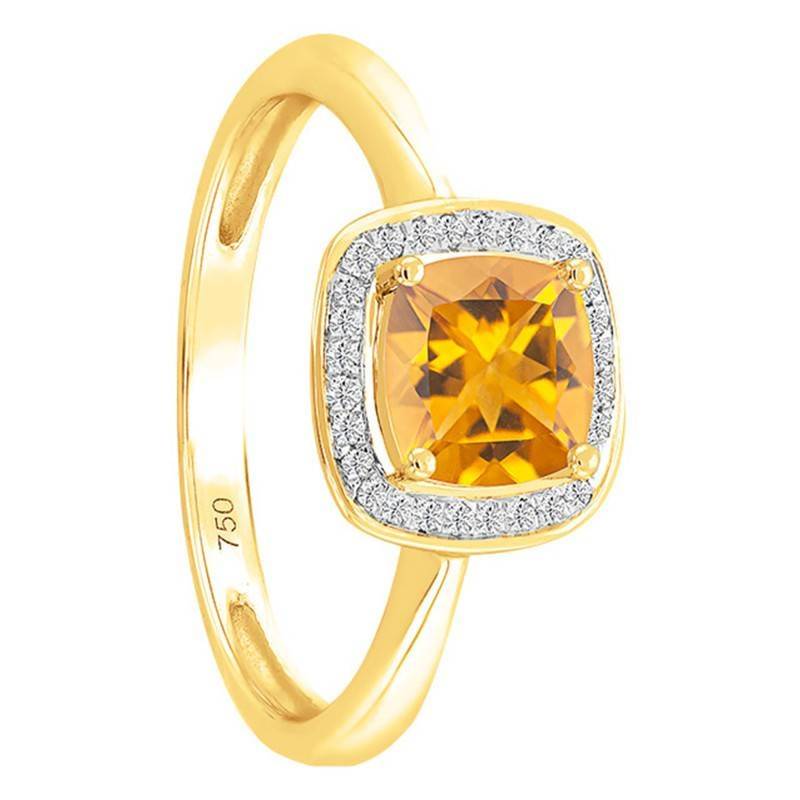
The halo plays on optics: a ring of small diamonds around the center stone makes it appear larger than it actually is. This is the option to consider when you want to maximize visual impact without necessarily increasing the budget on the center carat. It works equally well with a white diamond or a colored stone, giving the latter a very refined look. The result is sophisticated, with a slight vintage character depending on the chosen setting.
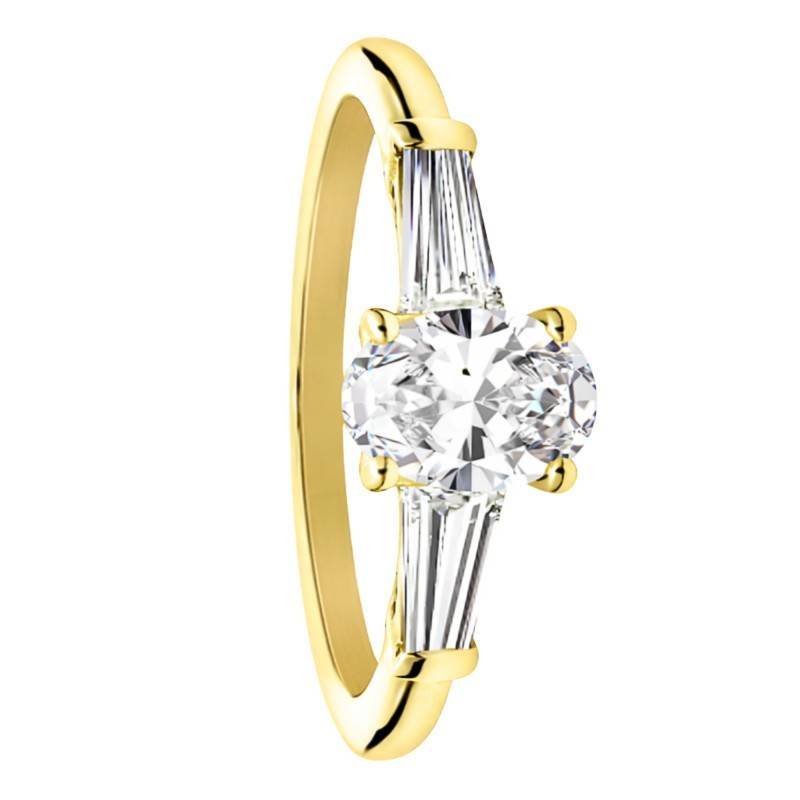
Two stones flank the center stone on either side, in a symmetry reminiscent of fine jewelry compositions from the 1920s-1940s. These rings typically have a retro, Art Deco charm that will appeal to those drawn to vintage-inspired jewelry. The three-stone solitaire offers striking visual volume without reaching the exuberance of a halo.
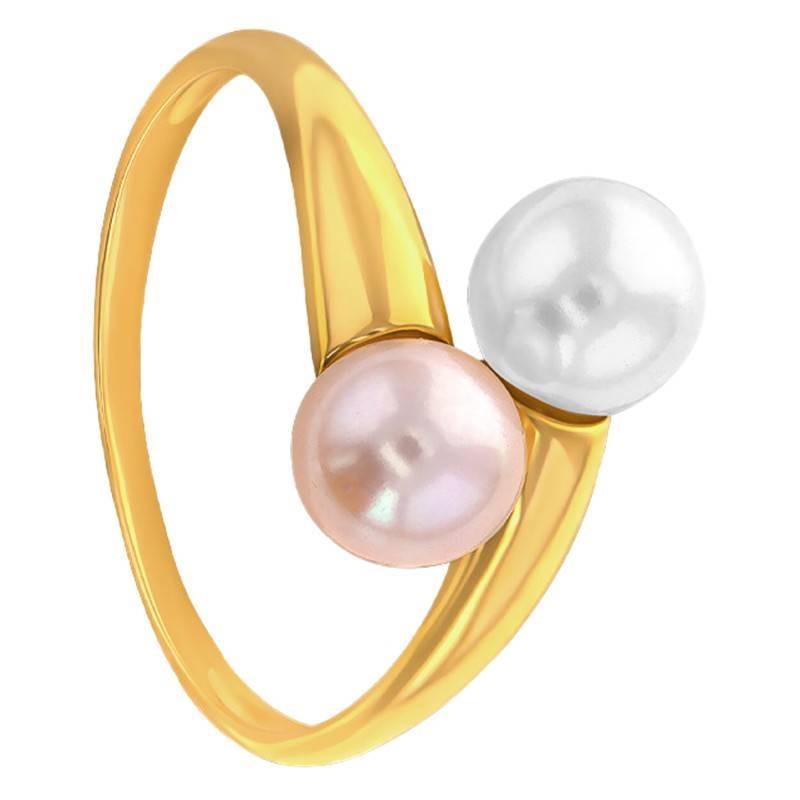
Two stones, side by side, that form a single piece of jewelry. That is its strength: each stone tells a story about someone, and the two together say something more. The choice of both stones - their nature, their color, their respective size - is precisely what makes this style so personal. Two identical diamonds or a diamond paired with a colored stone: each combination produces a different piece of jewelry.
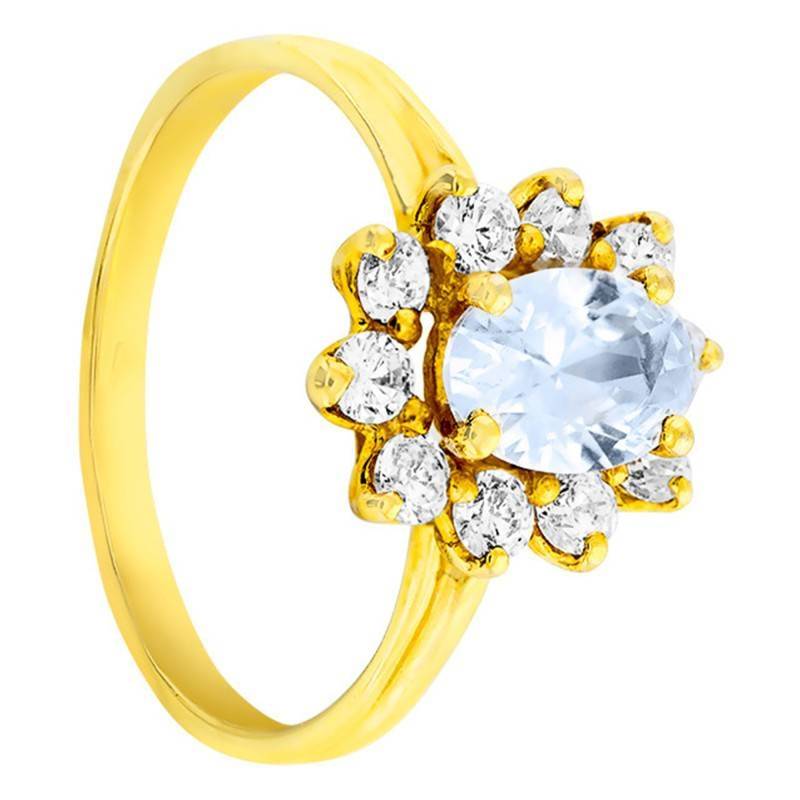
Where the halo builds a continuous frame around the stone, the daisy setting draws something more distinctive: separate petals that give the jewelry the shape of a flower. The difference is subtle to describe, immediate to see. These are two different aesthetics, two different intentions - one mineral, the other botanical. It lends itself particularly well to colored center stones, whose hues contrast with the brilliance of the diamond petals to enhance the botanical effect.
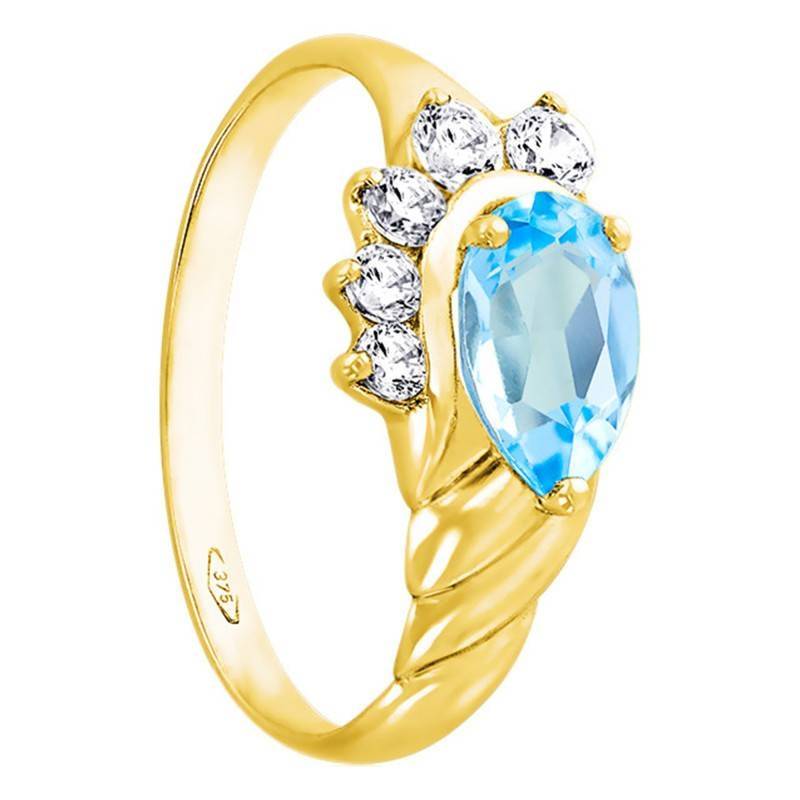
Asymmetric shapes, architectural lines, unconventional settings, multiple stones - the creative ring breaks from convention to offer a truly singular piece of jewelry. It suits those who want a piece of jewelry that genuinely reflects who they are, even if it means stepping away from traditional codes. Best worn alone, or paired with a simple wedding ring.
The stone is the heart of the engagement ring. It is what captures the light, carries the symbolism, and often drives the budget.
The natural diamond - timeless and a symbol of purity - continues to dominate the choice. It embodies absolute brilliance: its unique radiance makes it the most luminous stone in existence. A white diamond pairs with any outfit, from everyday wear to special occasions, and it is unmatched in hardness - 10 on the Mohs scale. For all these combined reasons (brilliance, versatility, durability, symbolism), it remains the absolute benchmark.
Not to be confused: diamond is the hardest stone - nothing can scratch it except another diamond. But that does not make it indestructible: a sharp blow at the right angle can cleave it. Avoid wearing your ring for DIY projects, gardening, or working out.
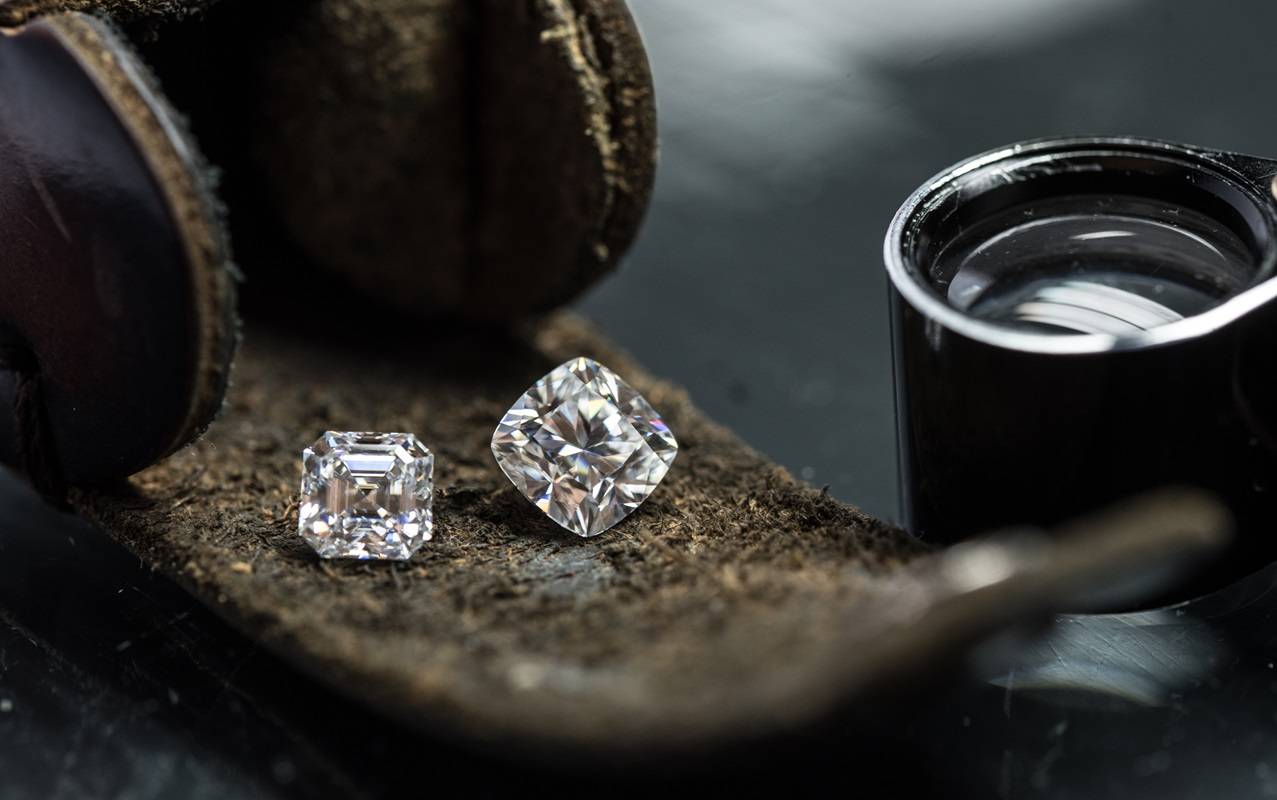
There are 4 internationally recognized quality criteria for diamonds, the "4Cs": Carat, Color, Clarity, Cut. Understanding them allows you to compare stones and make smart trade-offs based on your budget. To go further, check out our complete diamond guide.
Carat - the weight. One carat equals 0.20 grams. The word traces its origins to the Arabic term "qirat," the seed of the carob tree used as a weight standard in antiquity. The higher the carat, the larger the stone - and its price grows exponentially, not linearly. In Europe, diamonds for engagement rings commonly weigh between 0.30 and 1 carat.
Color - the absence of tint. Color is defined on a letter scale ranging from D (the most colorless) to Z (the most yellow). For a ring in white gold or platinum, colors D through H are ideal. In yellow gold or rose gold, shades H through J harmonize better, as the warm metal masks slight tints.
Clarity - internal purity. Diamonds almost always contain small inclusions, traces of their formation deep in the earth's crust. For an engagement ring, a clarity of VS2 or higher is recommended: imperfections are not visible to the naked eye, without paying the premium of higher grades.
Cut - the only human characteristic. Cut determines how the stone will reflect light. Experts recommend prioritizing an Excellent cut first, then adjusting the carat weight accordingly. A well-cut stone will appear more brilliant than a heavier but poorly proportioned one.
For any center diamond above 0.30 carats, a certificate from a recognized independent laboratory is essential. The two global references are the GIA (Gemological Institute of America) and the HRD (Hoge Raad voor Diamant, Antwerp). This document is the stone's identity card: it guarantees its 4Cs as objectively measured and protects against any fraud.
At Ocarat, center diamonds above 0.30 carats come with their GIA or HRD certificate. Ocarat is not itself a certifying body: the stones are certified upstream by these independent laboratories, which guarantee their authenticity.
A white diamond is no longer the only option! More and more couples are embracing alternatives, with each precious stone carrying its own symbolism and its own palette.
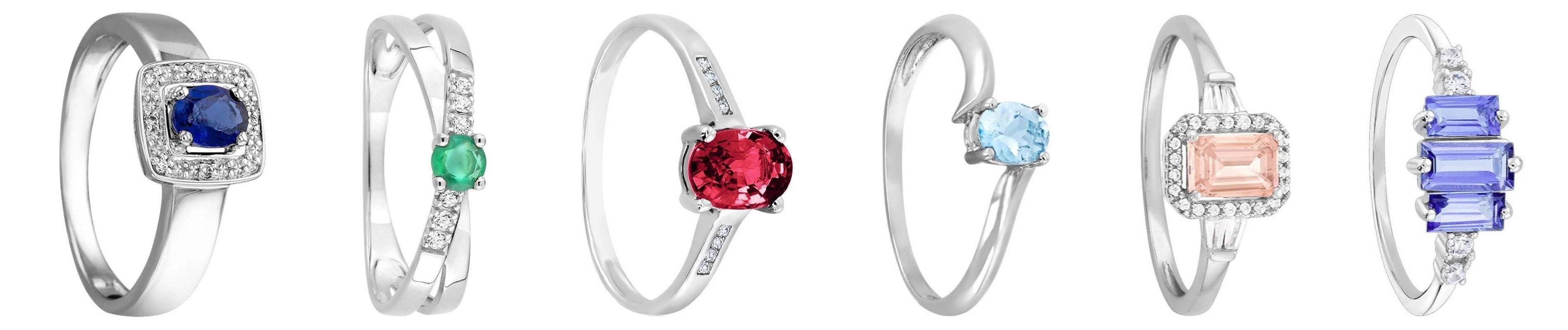
Engagement Rings with Sapphire, Emerald, Ruby, Aquamarine, Morganite, Tanzanite
Sapphire (hardness 9/10) is the most versatile colored stone for everyday jewelry. Its resistance to wear is close to that of a diamond. It comes in a wider spectrum of colors than most people imagine - from deep blue to pale pink, through yellow and white.
Emerald (hardness 7.5/10) requires more care than sapphire or diamond - its setting must be chosen to protect it. In return, it is the stone that offers the most intense and most recognizable color. Each natural emerald is unique, with its own internal inclusions - what gemologists call the stone's 'garden'.
Ruby (hardness 9/10) shares with sapphire the same resistance and the same mineralogical family - corundum. What sets them apart is color alone: chromium gives ruby its characteristic red. It is the only one of the four precious stones whose hue has no neutral variant - choosing a ruby means choosing a bold color.
Aquamarine, morganite, and tanzanite round out this palette for more distinctive options. For everyday wear, keep one practical rule in mind: choose a stone with a minimum hardness of 7 on the Mohs scale, and a setting that protects the stone well.
The metal determines the overall color of the jewelry, its aesthetic longevity, and how it will age over time.
For a detailed presentation of each metal and its properties, visit our precious metals guide.
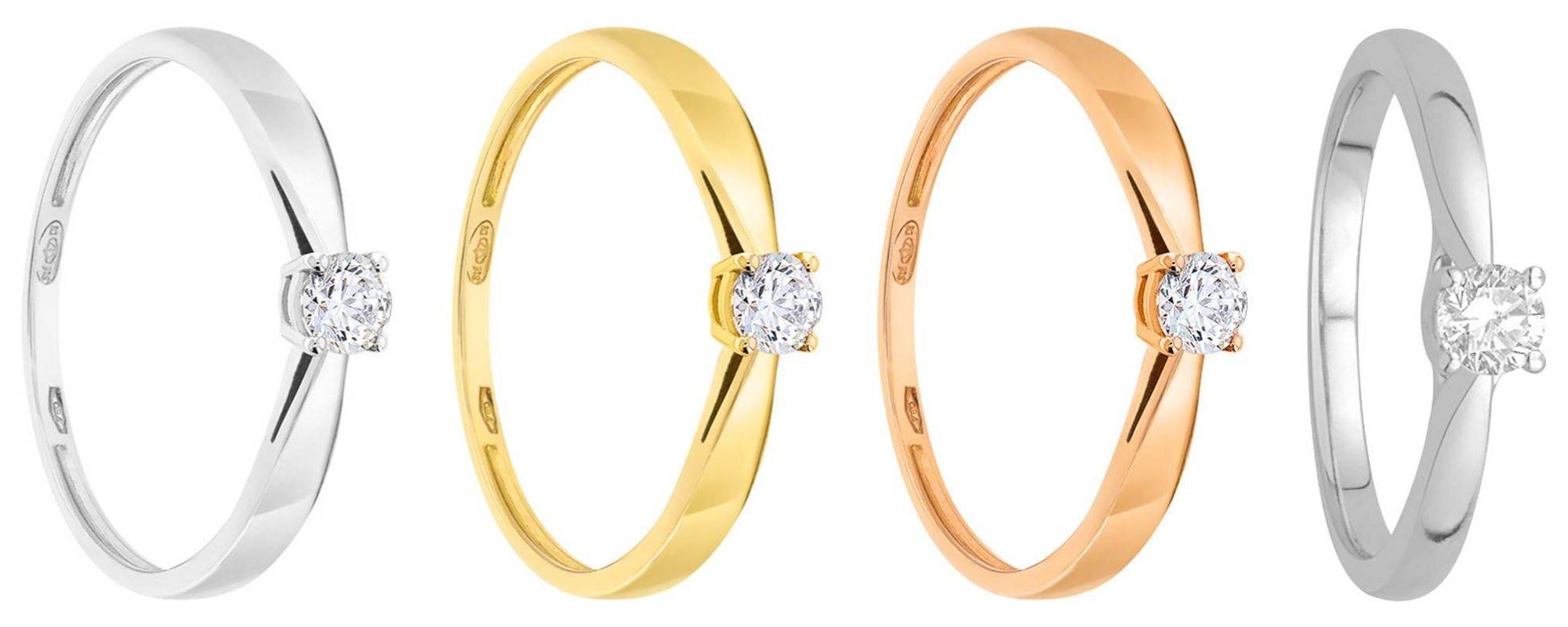
Engagement Rings in White Gold, Yellow Gold, Rose Gold, Platinum
White Gold - neutral and luminous, it enhances diamonds and light-colored stones. Its silver tone is achieved through rhodium plating, a surface layer that gradually wears off and needs to be renewed every 2 to 3 years by a jeweler.
Yellow Gold - the historic metal of fine jewelry, warm and timeless. Its color does not tarnish over time, with no special upkeep required. Particularly flattering on olive skin tones, it has made a strong comeback in recent years. Our gold guide covers all its variations (750 gold, 375 gold).
Rose Gold - romantic and contemporary. Its hue is stable over time, with no surface treatment required. It pairs particularly well with pink stones (morganite, pink sapphire) and suits fair and rosy skin tones.
Platinum - naturally white, 95% pure, no rhodium plating. It keeps its color indefinitely and develops a subtle matte patina over time. Heavier and more expensive than gold jewelry, it is the choice for those who demand the very best. Hypoallergenic - ideal for sensitive skin. To learn more, visit our platinum guide.
Metal quality determines the durability of the jewelry. 750/1000 gold (18K) is recommended for everyday wear: it resists wear and oxidation better than 375/1000 gold (9K). The latter remains accessible and suits certain budgets, but it ages differently.
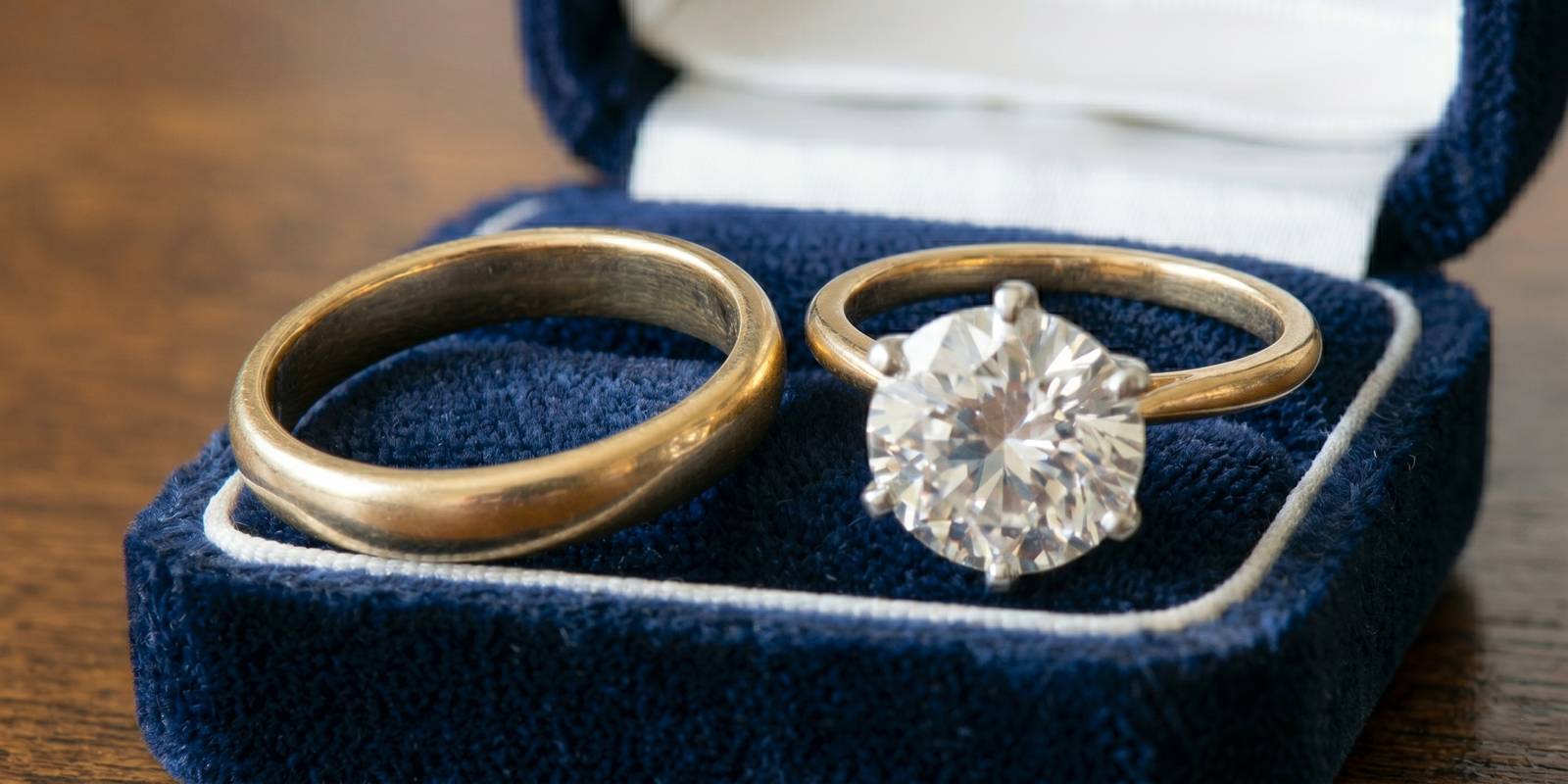
This is a topic worth thinking about from the moment you choose the engagement ring, even if the wedding is still far off. In France, both rings are traditionally worn on the left ring finger. The wedding ring is worn first, closest to the heart, with the engagement ring on top.
In practice, it all comes down to proportions. An engagement ring with a high or very large center stone does not always allow a straight wedding ring to sit flush against it without a gap. Two solutions are available: a contoured wedding ring (designed to follow the curve of the engagement ring's setting), or wearing both rings on different hands - which many people actually do.
Explore our selection of wedding rings to find the style that will pair perfectly with your engagement ring.
If wearing both rings on the same finger matters, it is best to plan ahead: choose an engagement ring with a straight band and a reasonably sized stone, or try both rings together before purchasing the wedding ring.
Metal tip: match the colors. A white gold ring and a yellow gold wedding ring will age differently and create an unintended contrast over time. If you want two distinct metals, make a deliberately contrasting choice. White gold and rose gold, for example, work well together.
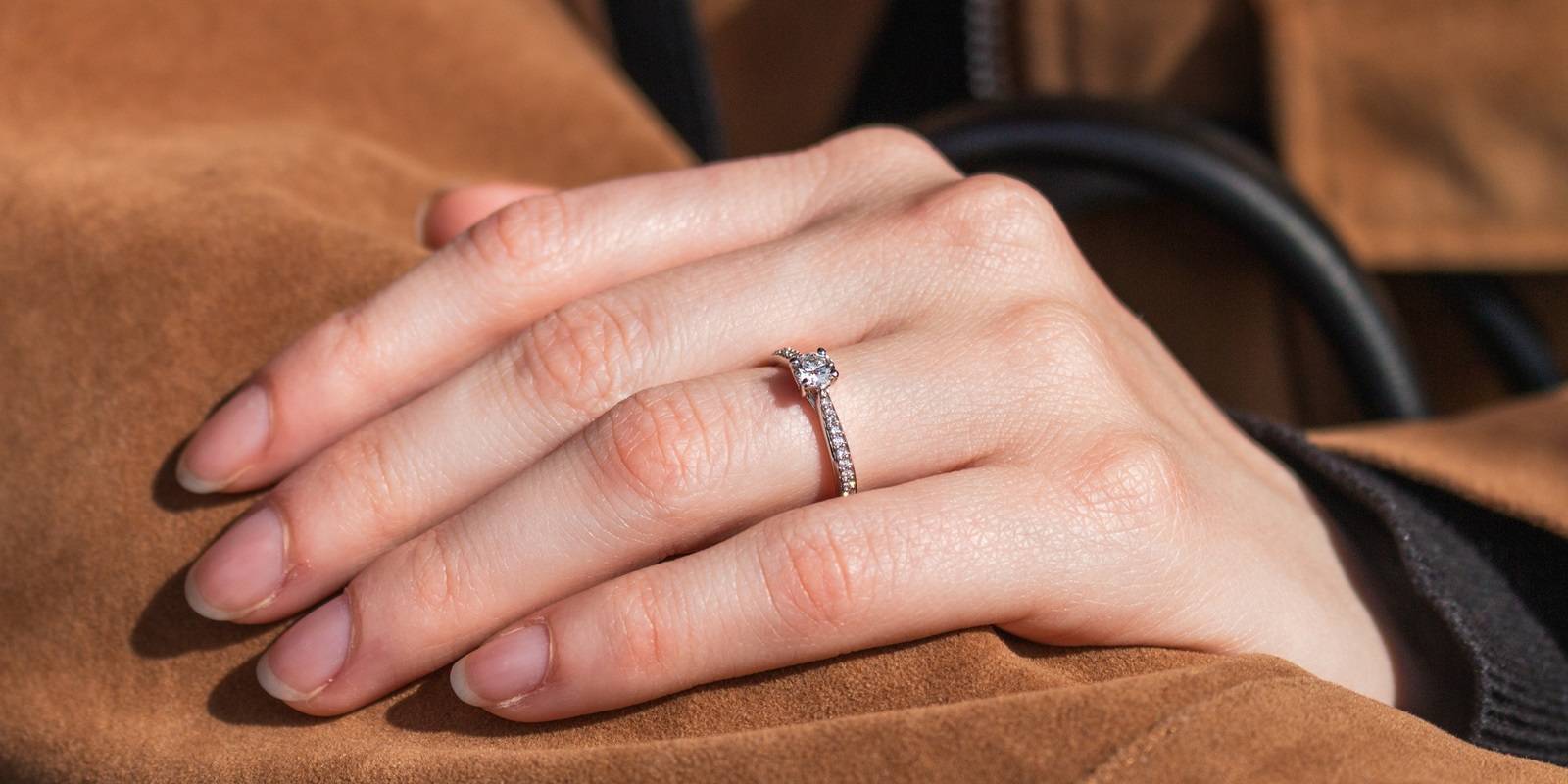
This is often the point that causes the most anxiety when choosing alone. Here are a few reliable approaches.
Discreetly borrowing a ring worn on the left ring finger remains the most reliable method. A jeweler can measure the size precisely in a matter of seconds - without the ring being stretched or damaged.
The ring sizer: Ocarat offers a plastic ring sizer to order, or a printable ring sizer available for free. Be sure to print at actual size (100%) and take measurements at room temperature - fingers can vary slightly with heat or physical activity.
Estimation by description: overall size, finger shape (slender, wide), wrist thickness. An experienced jeweler can estimate with good accuracy from these details.
In any case, check before purchasing that the chosen style can be resized after delivery. Ocarat offers resizing on the vast majority of solitaires; the process is more complex for fully pavé rings or certain creative styles with an unusual band - feel free to contact customer service to confirm before ordering.
There is no universal rule on how much to spend. The American convention of "3 months' salary" is a De Beers marketing construct, not a tradition. In France, every couple adapts their choice to their means and their values.
To navigate confidently, it is more useful to understand how pricing is formed than to rely on fixed price ranges - gold and diamond rates fluctuate regularly, and prices move accordingly. Here are the real drivers:
| Your Profile | Recommended Metal | Recommended Shape | Finish |
|---|---|---|---|
| Olive or Tanned Skin Tone | 750 Yellow Gold | Comfort Half-Band | Polished |
| Fair or Rosy Skin Tone | White Gold, Rose Gold, or Platinum | Band or Half-Band | Polished or Satin |
| Contemporary Style | White Gold or Rose Gold | Band | Satin / Brushed |
| Timeless Classic Style | 750 Yellow Gold | Comfort Half-Band | Polished |
| Very Active Lifestyle | Yellow Gold, Platinum, or Titanium | Bangle or Half-Bangle | Polished |
| Understated Engagement Ring | White Gold + Diamonds | Half Eternity Band | Polished |
| Adorned Engagement Ring | Plain Gold | Comfort Half-Band | Polished or Satin |
| Controlled Budget | 375 Gold or 925 Silver | Band or Half-Band | Polished |
| Maximum Demand | 950 Platinum | Your Choice | Polished |
Metal tip: match the colors. A white gold ring and a yellow gold wedding ring will age differently and create an unintended contrast over time. If you want two distinct metals, make a deliberately contrasting choice. White gold and rose gold, for example, work well together.
Here is a quick reference guide to help narrow down the choice based on the wearer's style profile:
| Parameter | Price Impact |
|---|---|
| Carat Weight | Exponential growth: doubling the carat multiplies the price by 4 to 5 at equal quality |
| Color (D to Z) | A jump of a few grade letters can represent a significant price difference - the impact grows with the size of the stone |
| Clarity (IF to SI) | The difference between a very pure grade (IF) and a common grade (VS2) can be meaningful on stones that look visually similar to the naked eye |
| Cut | An Excellent cut versus an average cut creates a notable difference at equal weight - it is the criterion that influences a stone's beauty the most |
| 750 Gold vs 375 Gold | 750 gold costs more upfront but holds up better over time - a price difference that pays off over the years of wear |
| Platinum vs White Gold | A platinum jewelry piece is noticeably more expensive at equivalent weight, for a naturally white metal with no rhodium plating |
| Setting Style | Simple solitaire: the least expensive setting. Full pavé or halo: longer setting work, higher price |
Ocarat offers a wide selection of engagement rings - diamond solitaires, stone-set rings, colored precious stones - in yellow gold, rose gold, white gold, and platinum. Free delivery in metropolitan France and Belgium, with the option of 4 interest-free installments.
Share :
Official European Union notice on your rights in the event of a product's lack of conformity.