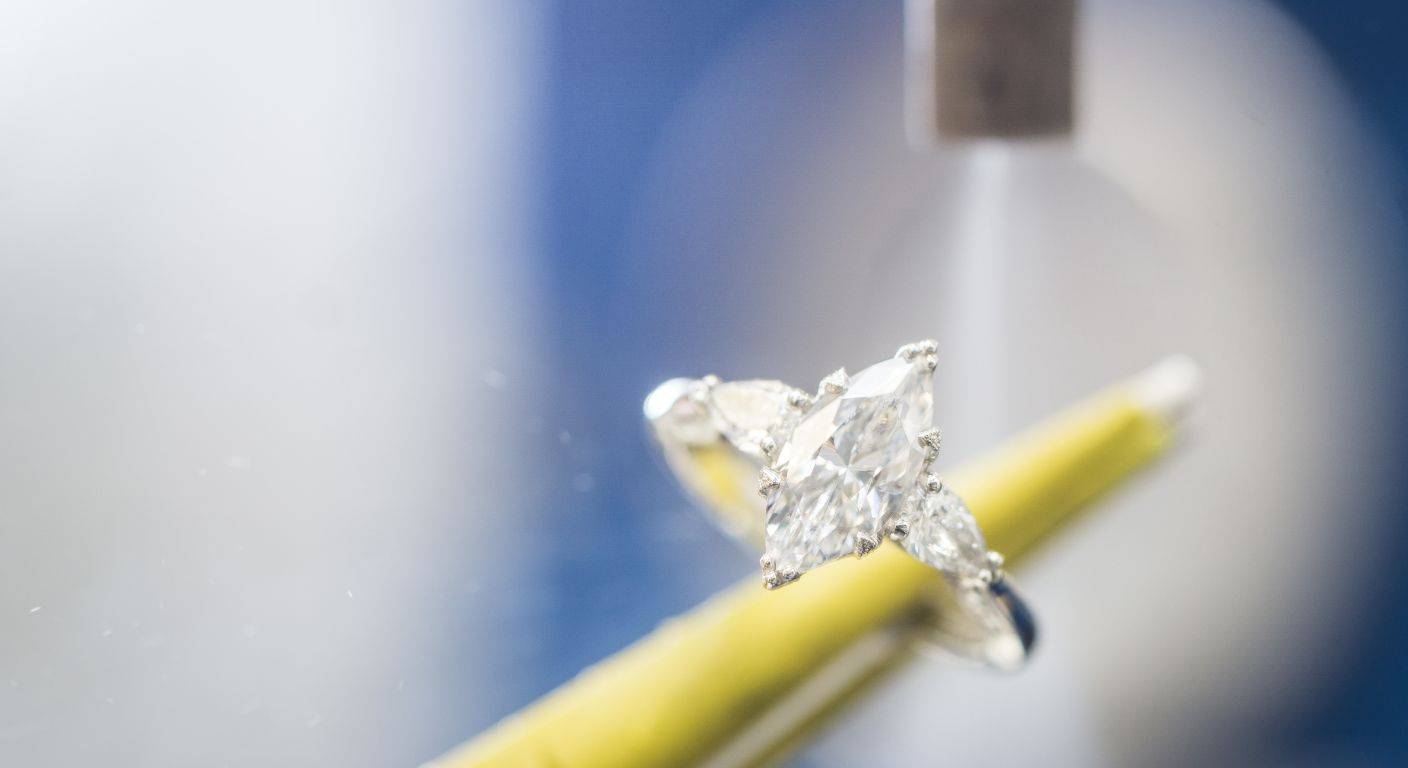
A jewelry piece that tarnishes isn't damaged - it's just chemistry! Tarnishing is a natural and reversible reaction that does not damage the metal at depth. With the right care, silver regains its shine indefinitely. This guide covers the cleaning methods suited to each type of silver, the mistakes to never make, and storage tips to extend the time between cleanings.
Silver darkening is caused by sulfidation: a chemical reaction between silver and traces of hydrogen sulfide present in the surrounding air. A thin layer of silver sulfide forms on the surface - dark, but non-corrosive and reversible.
Certain factors speed up this process: humidity, acidic perspiration, perfumes and cosmetics, contact with rubber or certain synthetic fabrics. Understanding these triggers allows you to act preventively rather than reactively.
Everyday Best Practices
Two simple habits can significantly reduce how often you need to clean:
Put on last, take off first: apply creams, perfumes, and styling products before putting on your jewelry. Remove them before washing your hands, showering, or exercising.
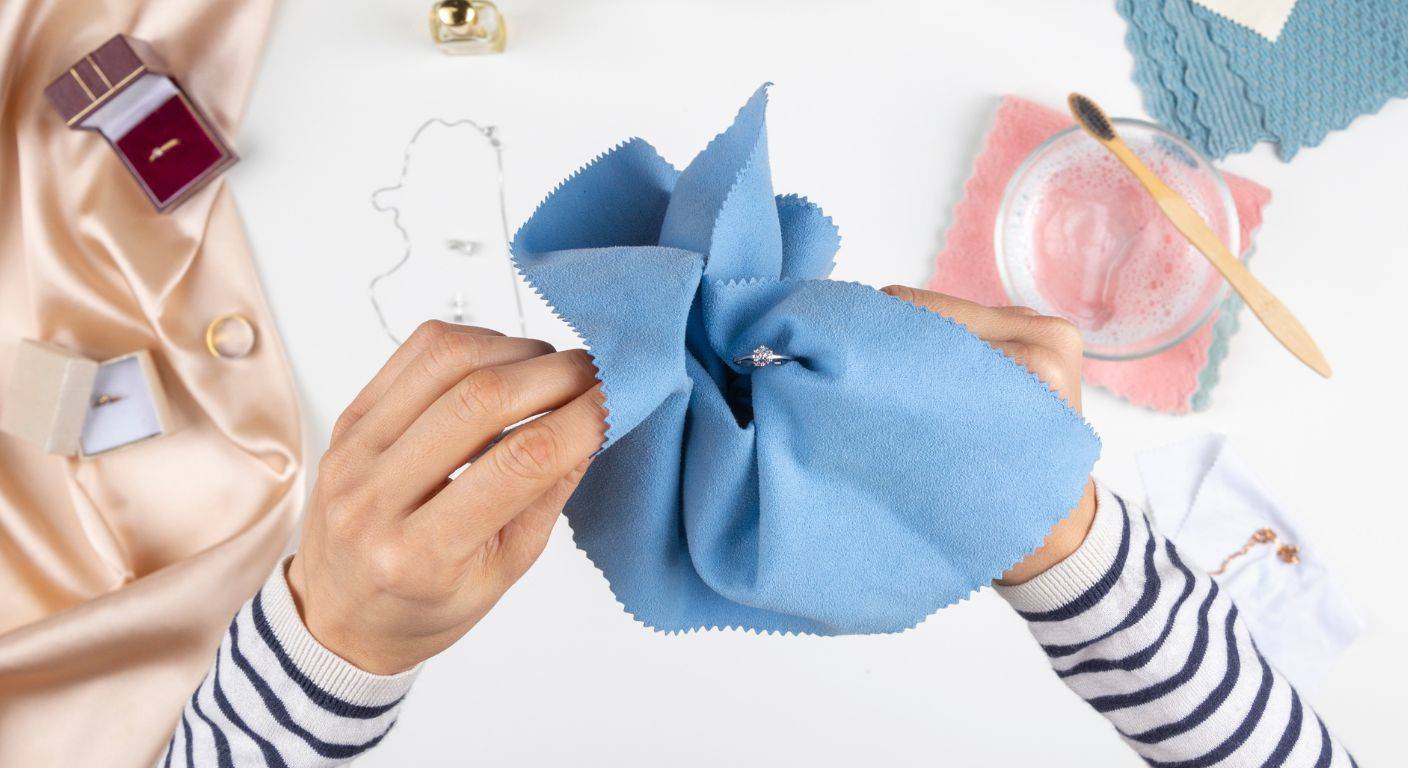
Wipe after every wear: a quick pass with a chamois cloth (a soft chamois or silverware cloth) is enough to remove perspiration residue and slow the onset of tarnishing. It's the most effective long-term care habit - and the most often overlooked.
Clean According to Silver Type
Not all methods are interchangeable. Applying baking soda to rhodium-plated silver, for example, accelerates the degradation of its protective layer. Identifying your type of silver before cleaning is therefore an essential precaution. To do so, browse our guide "How to Tell If a Silver Jewelry Piece Is Good Quality?".
Sterling Silver 925 - Several Methods Available
This is the most forgiving silver type for home cleaning!
Silver polishing cloth: for routine care, rub gently in the direction of the metal. Effective for light tarnishing.
Baking soda paste: mix 2 tablespoons of baking soda with a little warm water to form a paste. Apply with a very soft-bristled toothbrush using gentle circular motions. Rinse thoroughly and dry immediately.
White vinegar and baking soda bath: pour 15 cl of white vinegar into a bowl and add 2 tablespoons of baking soda. The fizzing reaction is normal. Submerge the jewelry for 2 to 3 hours, then rinse and dry thoroughly.
Lemon: a few drops of lemon juice on a soft cloth dissolve silver sulfide. Do not soak in undiluted lemon juice. Rinse immediately with clean water.
Our advice: always test on a small, inconspicuous area first, especially if the jewelry has stones or enamel. Acidic methods (lemon, vinegar) should be avoided on porous stones such as turquoise or pearl.
Rhodium-Plated Silver - Gentle Care Above All
The rhodium layer is thin and delicate. Baking soda, vinegar, lemon juice, and any abrasive product will wear it down prematurely. For routine care, a dry microfiber cloth is enough to restore the shine. For a slightly deeper clean, a brief soak in lukewarm water with a drop of mild soap (no scrubbing), followed by a careful rinse and immediate drying, is acceptable. For persistent tarnishing, take the piece to a jeweler rather than forcing the cleaning.
Vermeil - Gentle Care, Always
Vermeil follows the same rules as rhodium-plated silver: no abrasives, no acids. The gold layer can wear away at friction points if rubbed too vigorously. Use a clean microfiber cloth and light strokes - and if needed, a rinse with lukewarm water. Nothing more.
What to Absolutely Avoid
Some contacts damage silver immediately or irreversibly:
Bleach: blackens silver instantly. A reaction that is difficult - if not impossible - to correct at home, and complex even for a professional jeweler.
Chlorine (swimming pools) and seawater: corrosive, they attack the metal deep down.
Perfumes and hairsprays: their alcohol and sulfur compound content accelerates tarnishing.
Creams and oils: create a film that promotes oxidation and dulls the shine.
Ultrasonic cleaners: not recommended for soft or porous stones (turquoise, pearl, opal, emerald - risk of cracking) or prong settings (risk of loosening with extended cycles). For rhodium-plated or vermeil pieces, avoid repeated use, which mechanically wears down the surface layer.
Rubber and certain plastics: prolonged contact causes a chemical reaction that blackens silver.
Storage and Care
Tarnishing can occur even when the piece isn't being worn, if storage conditions are poor…
The main enemy: humidity. The bathroom - even without direct contact with water - is an unfavorable environment. Store your silver jewelry in a bedroom or dry dressing room, away from direct light and temperature fluctuations.
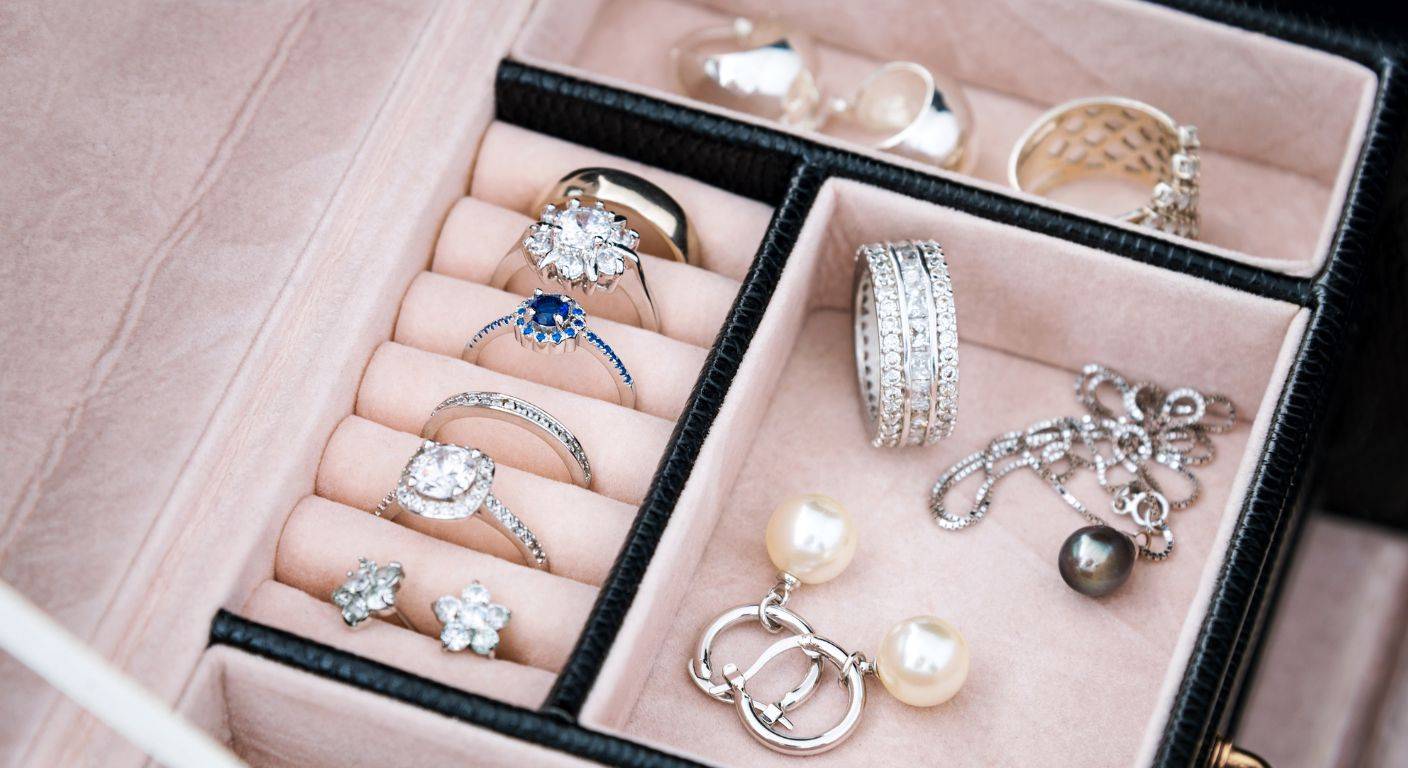
Store pieces separately. Silver is a relatively soft metal: in contact with other jewelry, it scratches. Individual velvet or suede compartments, or anti-tarnish fabric pouches, protect against both oxidation and micro-scratches.
Limit exposure to air. A closed box slows sulfidation by reducing exposure to ambient hydrogen sulfide. A silica gel sachet placed inside the box absorbs residual moisture.
When Should You See a Jeweler?
Sometimes, home care may not be enough… That's the case if you notice:
Deep or persistent darkening that no longer responds to standard cleaning
Accumulated micro-scratches on a polished piece. The jeweler repolishes the surface and restores its mirror finish.
A rhodium-plated jewelry piece whose layer has worn away. A rhodium bath renews the protection in 24 to 48 hours, at a cost generally ranging from 20 € to 80 € depending on the jeweler and the size of the piece. A fresh layer typically lasts 1 to 3 years depending on how often and how it is worn.
A vermeil jewelry piece whose gold plating has faded. A jeweler can reapply the gold layer by electrolysis.
Keep in mind that an annual professional service is recommended for pieces worn daily.
Discover Ocarat Silver Jewelry
Easy-care silver jewelry starts with a quality choice. At Ocarat, every piece is selected from official brands, with free delivery in metropolitan France and Belgium, 4-installment payment with no fees, and 30 days to change your mind.