
0
Product added

Used across countless fields for thousands of years, silver stands as one of the essential precious metals. With its cool white color, silver has a unique appeal that captivates everyone. In fine jewelry and silversmithing, silver is the most common and accessible metal. However, it is never used in its pure form - too malleable in its raw state to be crafted into jewelry. In these fields, an alloy known as 925 silver is used, composed of fine silver and copper. It is sometimes coated with a layer of rhodium to give it extra brilliance.
Silver's neutral, luminous tone allows it to beautifully complement a wide range of gemstones, including diamonds, quartz, amethyst, tourmaline, black spinel, tanzanite, topaz, and sapphire. Thanks to their properties, silver jewelry has always been cherished. Discover all the secrets and beauty of this precious metal right here.
The word "silver" comes from the Latin "argentum", and also from the Greek "argyros", meaning "white". It also derives from the Indo-European word "ar-jun", meaning "shining". The counterpart of gold, silver is more closely associated with the moon, purity, and femininity. It is in fact referred to as the "lunar metal" and used as a symbol for various moon goddesses. In popular mythology, it also serves as protection against malevolent creatures such as vampires and werewolves. Among silver's other symbolic associations, silver wedding anniversaries mark 25 years of marriage.
The use of this precious metal dates back thousands of years - the oldest known silver objects date to the Neolithic period. Silver was used by the ancient Egyptians around 3,500 BC, for whom it sometimes held greater value than gold due to its rarity, pure white color, and incorruptible nature. Silver was first mined from the earth in Anatolia (present-day Turkey). By 1,200 BC, the main center of production was in Greece, at the Laurium mines. These deposits served as a medium of exchange for civilizations across the Near East (Crete, Greece, Egypt).
The first coins were struck in Lydia (a region of Asia Minor) around the 6th century BC. They were composed of an alloy of gold and silver known as "electrum." Later, around 100 AD, Spain became the largest silver producer, supplying even the Roman Empire. In 1492, the discovery of the New World marked a true turning point in the history of silver. It was followed by massive extraction of the precious metal, particularly in Mexico, Peru, and Bolivia, along with a profound shift in its value worldwide.
Over the centuries, silver production grew significantly, right up to the 19th century, which saw numerous technological innovations enabling more efficient extraction of this precious metal. At that time, the United States was the world's largest silver-producing country. Today, silver production comes primarily from mining (silver and other ores) and from jewelry recycling.
Today, the leading silver-producing countries are Mexico, Peru, China, Australia, Russia, and Bolivia. Several other countries also have significant silver output, including the United States, Chile, Argentina, and Poland. On a global scale, the main groups mining silver are Fresnillo, KGHM, Goldcorp, and BHP Billiton.
Silver is found across a wide range of industries: in manufacturing, but also in fine jewelry and silversmithing, in the production of coins, in electronics and electrical engineering, in medicine, and in analog photography. Thanks to its richness and renown, silver is also used as a store of value.

Silver is a rare, white-colored precious metal that occurs naturally as nuggets and veins, in its native form as well as in mineral compounds. Highly malleable and ductile (capable of being stretched), it is stronger than gold. Like gold, it has a face-centered cubic crystal structure. Its hardness is 2.5 on the Mohs scale and its density is approximately 10.5. An excellent conductor of heat and electricity, silver also has anti-microbial and anti-fungal properties.
To determine the proportion of pure silver in an alloy, three measurement scales are used today:
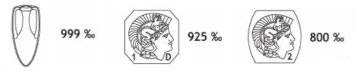
To regulate the precious metals market, hallmarking silver jewelry is now mandatory. These are small marks stamped onto jewelry to indicate their silver content and sometimes to identify the maker through a maker's mark. For silver, the regulatory hallmarks used are as follows:
Depending on its composition, silver can take on different appearances and have specific characteristics.
Mostly composed of pure silver, sterling silver is mixed with another metal to increase its strength. To be classified as sterling silver, it must contain at least 80% pure silver. Sterling silver is divided into three main categories today: 925 silver (the most common), also known as "sterling silver," 950 silver, and 800 silver. Sterling silver jewelry has a much longer lifespan than other types of silver and, with proper care, retains its brilliance. Over time, it can even develop a beautiful natural patina.
This type of silver is 925 silver coated with a thin layer of rhodium. This coating makes it shinier and more durable over time, without requiring any special maintenance. Due to its properties, rhodium-plated silver is also more expensive.
Silver-plated jewelry is made from a base metal coated with a more or less thin layer of silver through an electrolysis process. Since the silver content in this type of jewelry is low, it is the most affordable silver on the market. When opting for this type of jewelry, keep in mind that the silver layer will tend to wear off quickly, revealing the base metal underneath.
Despite its name, this is not actually silver - it is instead an imitation made from an alloy of zinc, nickel, and copper. The sale of this type of silver is banned in France due to the presence of nickel, an allergenic component.
Among precious metals, silver is considered particularly refined and modern. Its unique color and appearance make it equally suited for both men and women. In fine jewelry, it yields stunning pieces that are easy to wear, complementing any outfit and any occasion.
While Earrings, wedding rings, and pendants are among the most sought-after women's silver jewelry, signet rings, ID Bracelets, and chains are styles well suited for men's silver jewelry.
Its malleability also allows for a wide variety of shapes across the different creations it's used in. One of silver's greatest advantages is also its price - it is approximately 30 times less expensive than gold.
To keep your silver jewelry looking its best for as long as possible, a few specific care steps are recommended. Over time, silver tends to tarnish and darken due to the presence - even in small amounts - of copper in its alloy (925 silver). It therefore requires regular maintenance to keep its surface bright and lustrous.
The first thing to do is avoid exposing silver jewelry to water, cleaning products, cosmetics, or perfumes. If you sweat - during a workout, for example - make sure the jewelry is not in direct contact with your skin. These precautions are essential to prevent premature wear of your jewelry.
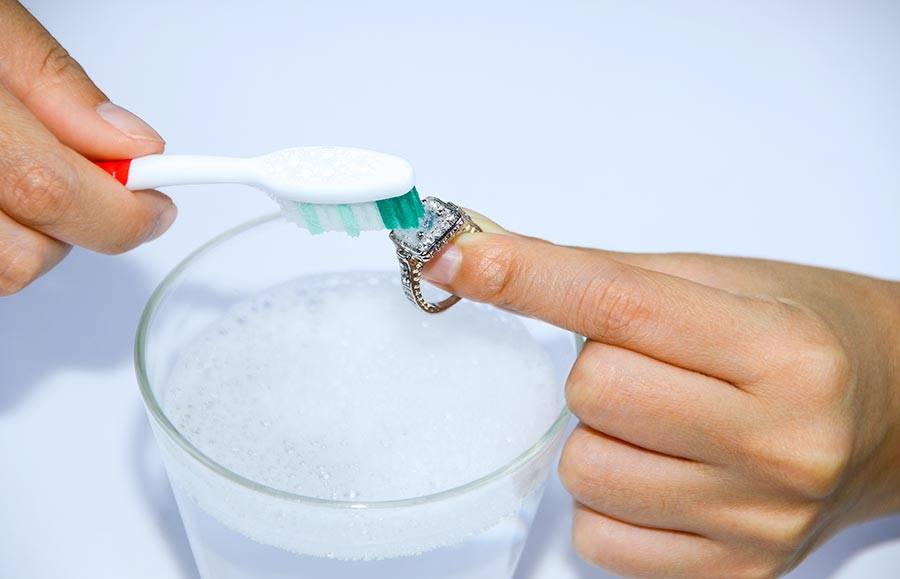
To clean your silver ring, bracelet, earrings, or necklace, one of the best methods is simply to apply a small amount of toothpaste to a slightly damp toothbrush and gently scrub (this technique also works for gold). Once done, use a soft cloth (such as chamois leather) to wipe clean. You can do the same thing using baking soda instead of toothpaste. If natural remedies aren't for you, products specially designed for cleaning silver pieces are also available in stores.
Whatever your reason for looking for silver jewelry, Ocarat is the go-to online fine jewelry store offering a wide range of quality products to suit every taste. Rings, necklaces, bracelets, earrings… Ocarat offers an extensive selection of high-quality silver jewelry. By choosing this luxurious and refined material, you can count on a beautiful piece that will stand the test of time. Depending on your budget and the type of jewelry you're looking for, feel free to browse our full silver jewelry collection at our online fine jewelry store.
Like other precious metals, silver has its own regulatory hallmarks to control and guarantee the quality of silver jewelry. To verify the quality and silver content of your jewelry, you can easily identify silver jewelry by looking for their hallmarks: amphora, Minerve 1st grade, Minerve 2nd grade.
Although very resilient, silver can tend to deteriorate and tarnish over the years. In everyday use, your silver jewelry may be exposed to substances that can damage it. To preserve its beauty as long as possible, a little routine care can go a long way in cleaning and protecting your silver jewelry.
One of silver's greatest strengths is its durability and resilience. As a precious metal, silver has advantageous properties that ensure long-lasting, high-quality jewelry. Silver jewelry can even tend to reveal more of its charm over time.
To meet every customer's expectations, Ocarat offers a wide range of luxury silver jewelry. Committed to the quality of every piece in our collection, we carry the finest high-end models and prestigious brands. To find the most beautiful silver jewelry, explore our online jewelry store.
Share :
Official European Union notice on your rights in the event of a product's lack of conformity.