
0
Product added
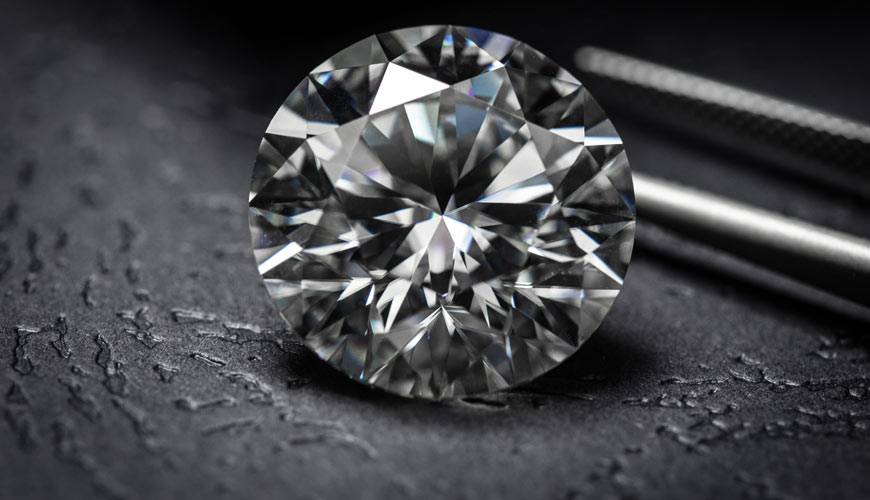
Sublime, sparkling, pure, and fascinating: diamond is without question the most coveted precious stone in the world. Throughout the ages, diamond has embodied eternity and perfection while symbolizing purity and loyalty.
Regarded as the king of gems, diamond is a stone that has captivated humanity since the dawn of time. Frequently used in jewelry design, diamond evokes prestige and luxury.
Diamond, which adorns many jewelry pieces such as rings and earrings, is frequently paired with so-called "cool" metals like platinum or white gold, with which it is a perfect match. This precious stone can also be found on certain yellow or rose gold jewelry pieces, though these are less common.
Mined for thousands of years, diamond is one of the most coveted stones in the world. Its rarity stems in part from the conditions under which it forms. Diamond is found deep within the Earth's mantle, under very specific temperatures and pressures.
In ancient times, diamond was used as a talisman against illness and poison. Christians even called it the "tear of God". This marks the beginning of the powerful symbolism attached to this stone. Today, this gem symbolizes eternal love and adorns many jewelry pieces given on romantic occasions, such as a marriage proposal. The diamond engagement ring is often set with a precious stone whose size can vary from one jewelry piece to another. As an emblem of commitment and fidelity, diamond can also attract abundance - particularly on a financial level - as well as strength and courage. In some beliefs, diamond even amplifies energies, stimulates creativity, and encourages imagination. For others, it has soothing properties that can relieve fear and anxiety in the wearer.
The discovery in 1793 of its composition - pure carbon - by Antoine Lavoisier marked the beginning of the scientific epic of the diamond. However, it was not until the early 20th century that mathematical equations specific to the material were developed to perfectly magnify its brilliance and beauty through what is known as the "brilliant" or "Round" cut, invented in 1919 by Tolkovsky. The brilliant cut features 57 facets.
Born of geological time, diamond is first forged by fire and immense pressure. Pure carbon makes up 99% of its composition, and the conditions of its genesis were truly exceptional. It takes temperatures above 2,500°C combined with pressure of around 70,000 kg per cm² for a diamond to form under the right conditions. If the pressure is too low, the diamond burns under the heat; if the heat is insufficient, the diamond never forms. The true complexity of its genesis is compounded by the fact that this delicate balance must be maintained as the diamond is expelled from the Earth's interior. Pressure and heat must decrease proportionally, with neither force overtaking the other. To use a culinary analogy, the diamond is like a cheese soufflé where Mother Nature is the chef - and she very, very rarely gets it right. If a diamond does come into being, it is at this stage safely protected from the fire within its kimberlite mantle (the rock surrounding the diamond during a volcanic eruption). The diamond is then captured in the volcanic crater as the lava cools, and is preserved for countless millennia within this inverted cone. As erosion does its work, the original volcano disappears, leaving a flat plain waiting for the first strike of a pickaxe to yield its precious treasure. These deposits are called primary sources. They are found in South Africa, for example. The obvious question is: what became of the diamonds lost during the volcanic erosion? Well, they were simply carried along streams into rivers, from rivers into larger rivers, and from those into the ocean. These diamonds are thus distributed randomly across vast territories - sometimes along riverbanks where the course has not changed in a long time, or in small mines. These are called secondary sources, and they explain how some countries with no deposits in the strict sense of the word can be highly productive producers of rough diamonds - the Central African Republic being a prime example. The complexity of its genesis explains its true rarity and the difficulty of reproducing it artificially.
While the first diamonds were originally extracted in India, they are now found in all regions of the world, across different types of deposits: primary deposits (mines), secondary deposits (alluvial rivers), and coastal marine deposits. Today, diamonds are primarily found in Russia, Africa, South America, Canada, and Australia.
Today, diamonds are predominantly used in fine jewelry and can be found on many jewelry pieces. They are also used across a wide range of industrial sectors as well as in the scientific field.

The Main Diamond Producers:
Example of Natural Industrial Diamond Production | ||
|---|---|---|
Country | Millions of Carats | % of total |
Russia | 38,00 | 21,9 |
Botswana | 31,89 | 18,4 |
Australia | 30,67 | 17,7 |
D.R.C. | 27,00 | 15,6 |
South Africa | 15,77 | 9,1 |
Canada | 12,30 | 7,1 |
Angola | 10,00 | 5,8 |
Namibia | 1,90 | 1,1 |
China | 1,19 | 0,7 |
Ghana | 1,06 | 0,6 |
Made entirely of pure carbon, the diamond has a cubic crystal structure. Its hardness is rated 10 on the Mohs scale, making it the hardest natural material in the world. With a density of 3.52 and exceptional resistance, this transparent mineral does not dissolve in any acid. It is inalterable. Furthermore, diamond is an excellent thermal conductor, and its refractive index is remarkably high (2.4), giving it a brilliant sparkle.
In terms of color, colorless (or white) diamonds are the most well-known, but inclusions and imperfections can give rise to colored diamonds (yellow, blue, blue-gray, black, red, green, pink, etc.). The stone can also be transparent, translucent, or opaque. Furthermore, when placed under ultraviolet light, some diamonds exhibit fluorescence (generally blue). On a certificate, a stone's fluorescence is rated on a scale ranging from "None" or "Nil" to "Very Strong".
Like all precious stones, a diamond must be assessed in terms of beauty and value. These are determined according to specific criteria that we will detail below. International gemological laboratories such as GIA, HDR, and IGI are responsible for classifying them according to a particular system.
These 4 characteristics directly influence the price of the stone to varying degrees. In order of importance, they are:
Among the criteria taken into account in diamond grading, color is a determining factor. White or colorless diamonds are classified according to the clarity of their hue, using grading systems ranging from D to Z.
After color, it is a diamond's clarity that most influences its price. Clarity defines the number of impurities visible to the naked eye or with a diamond loupe - that is, at 10x magnification. These inclusions appear in various forms and negatively impact the stone's price.
Of course, the size of the inclusion is the most important factor here. International laboratories have codified the various inclusion sizes in diamonds, from purest to most "included," as follows:
Done entirely by hand, the cut - in the sense of "the shaping" - determines the sparkle and brilliance of a diamond. Due to its extreme hardness, a diamond can only be cut by another diamond, which is why the sculpting and polishing of the stone are its most critical elements.
When the angles and proportions are crafted in just the right way, the stone sparkles with brilliance, adding to its value.
The cut is evaluated according to five criteria (Perfect Cut or Ideal Cut, Excellent Cut, Very Good Cut, Good Cut, Fair Cut) and can vary from one gem to another.
In terms of shape, the most popular "cut" is the round cut, also known as the "brilliant" cut. Created in 1919 by Tolkovsky, this technique transforms rough stones into true jewels of light, revealing 58 facets (57 if the girdle is not counted).
There are 5 other shapes, including the princess cut (square or rectangular), the emerald cut, the pear cut, the oval cut, and the cushion cut.
Arguably the most well-known criterion of all, the carat is one of the most important units of measurement. The weight of a diamond, measured in carats (1 carat = 0.20 grams), plays a key role in determining its final price. Diamonds exceeding 1 carat are very rare and therefore very expensive.
Fluorescence is a somewhat atypical characteristic because it is invisible to the naked eye. It is revealed only under ultraviolet light. This type of light, also known as "black light," is found in nightclubs and tanning booths. A diamond with strong fluorescence typically has a bluish glow of varying intensity. It is an important characteristic to consider because it can make a stone appear whiter than it actually is. The trade-off is a reduction in the stone's inherent fire. In short: the stone looks whiter but shines less. For this reason, strong fluorescence tends to slightly reduce a diamond's price. On the other hand, some people find it appealing that their ring lights up intensely in dark settings like a nightclub. It should be noted that a diamond's color grade is always expressed independently of its fluorescence - meaning it is impossible to sell a certified G-color fluorescent stone as an E-color stone. These criteria are given completely independently. It is worth noting that modern jewelry design has found clever ways to play with stone fluorescence to create distinctive light effects in jewelry worn at night. Fluorescence is graded from least to most as follows:
Diamond is one of the most coveted stones in the world and offers numerous virtues and benefits to those who possess it, whether in the form of jewelry or not. This gem also has properties that act on the physical level. By aiding in healing and recovery, it boosts vitality and brings harmony between body and mind. It also helps rid the body of toxins by purifying it and stimulating the organs.
Diamond also offers a practical advantage. It can be worked in many different ways and comes in a variety of shapes and sizes, allowing for an extensive range of jewelry options. Whatever your tastes and desires, you will find the diamond that suits you.
Every jewelry piece deserves proper care to extend its life, and this applies to diamond jewelry as well. Although diamond is hard and scratch-resistant, it remains fragile. Certain care rules must be followed. You should avoid impacts, never store diamonds together, and keep them away from chemical products, chlorine, and greasy substances.
To clean a diamond, simply soak it in soapy water and gently scrub with a soft brush or cloth. Then rinse with warm water.

Bracelet, ring, diamond pendant… this gem comes in many forms, and every one of them can be found at your online jewelry boutique, Ocarat.
To satisfy your every desire, the boutique showcases a wide range of luxurious and prestigious products. Specializing in fine jewelry and watchmaking, a wealth of quality pieces awaits you. For every diamond jewelry piece or watch, a detailed description will be available so you can know everything about the product you wish to purchase.
When looking to buy diamond jewelry or a diamond watch, it is essential to be able to assess quality. To do so, you will need to refer to the 4Cs system, which influences both the price and quality of the stone. It is strongly recommended to choose a diamond certified by a trusted laboratory (GIA, HRD, IGI) if it weighs more than 0.40 carats. The stone must also come with a gemological certificate detailing its main characteristics.
Unlike natural diamonds, synthetic diamonds are grown in a laboratory through a technological process rather than a geological one. Their chemical composition and characteristics are nearly identical. Note that synthetic diamonds are real diamonds and should not be confused with diamond simulants such as zirconia or moissanite.
Synthetic diamonds are becoming increasingly widespread and sought-after. They are a great alternative to natural diamonds: not only is their appearance nearly identical, but their price is significantly lower, and they require no mining - eliminating the associated concerns around conflict, environmental impact, and more.
Like all stones and metals, diamond is a gem that must be protected from external elements that can affect its quality and longevity. Simple, regular maintenance - such as ultrasonic cleaning - will help preserve it longer and maintain its appearance.
Stores like Ocarat, the online jewelry boutique, strive to offer you a wide range of products to meet your every need. Diamond necklace, ring, bracelet… the choice is yours. Carrying only quality pieces at the best prices, Ocarat has established itself as a leader in fine jewelry and watchmaking.
Share :