
0
Product added
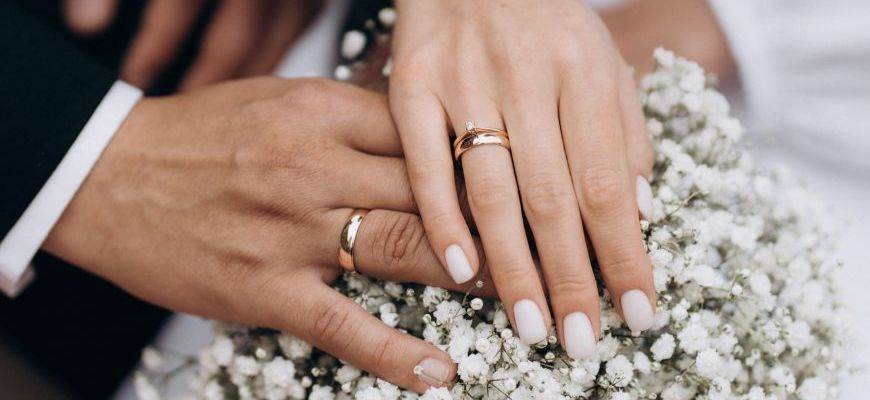
Choosing a wedding ring means joining a tradition that has spanned civilizations since ancient Egypt. The earliest known examples date back 6,000 years: rings woven from reeds or braided hemp, exchanged between spouses. The Egyptians saw in the circle a symbol of eternity - a ring with no beginning and no end, for a love meant to last forever.
It was also the Egyptians who established the tradition of wearing the wedding ring on the left ring finger, believing that a vein in that finger - the vena amoris, "vein of love" - led directly to the heart. Modern medicine has debunked this anatomical belief, but the tradition itself has remained intact.
The Western tradition of metal wedding rings - initially iron - traces back to ancient Greece and Rome, where they served as a pledge of fidelity. It wasn't until the 16th and 17th centuries that the wedding ring moved to the left hand in France. The mutual exchange of wedding rings by both spouses is a relatively recent practice: before the 20th century, only women typically wore a wedding ring.
In France, the tradition is clear: the wedding ring is worn on the left ring finger. Cultural variations and ways of wearing a wedding ring and engagement ring together daily are covered in detail on our women's wedding rings category page.
The wedding ring and the engagement ring are worn on the same finger - and how they coexist is worth thinking through before you buy. Three factors shape the pairing: matching metals, balanced proportions, and a band profile that follows the contour of the engagement ring without creating an awkward gap. That last point is often overlooked: a flat-profile wedding ring set against a shouldered solitaire can create a visible misalignment. That's why some styles are specifically designed to nest against an existing ring. If you already have your engagement ring, our team can help you find a wedding ring with a matching profile - don't hesitate to reach out with a photo.
Before choosing a metal or a finish, it helps to understand how a wedding ring is constructed. Two parameters shape everything else: the profile and the width.
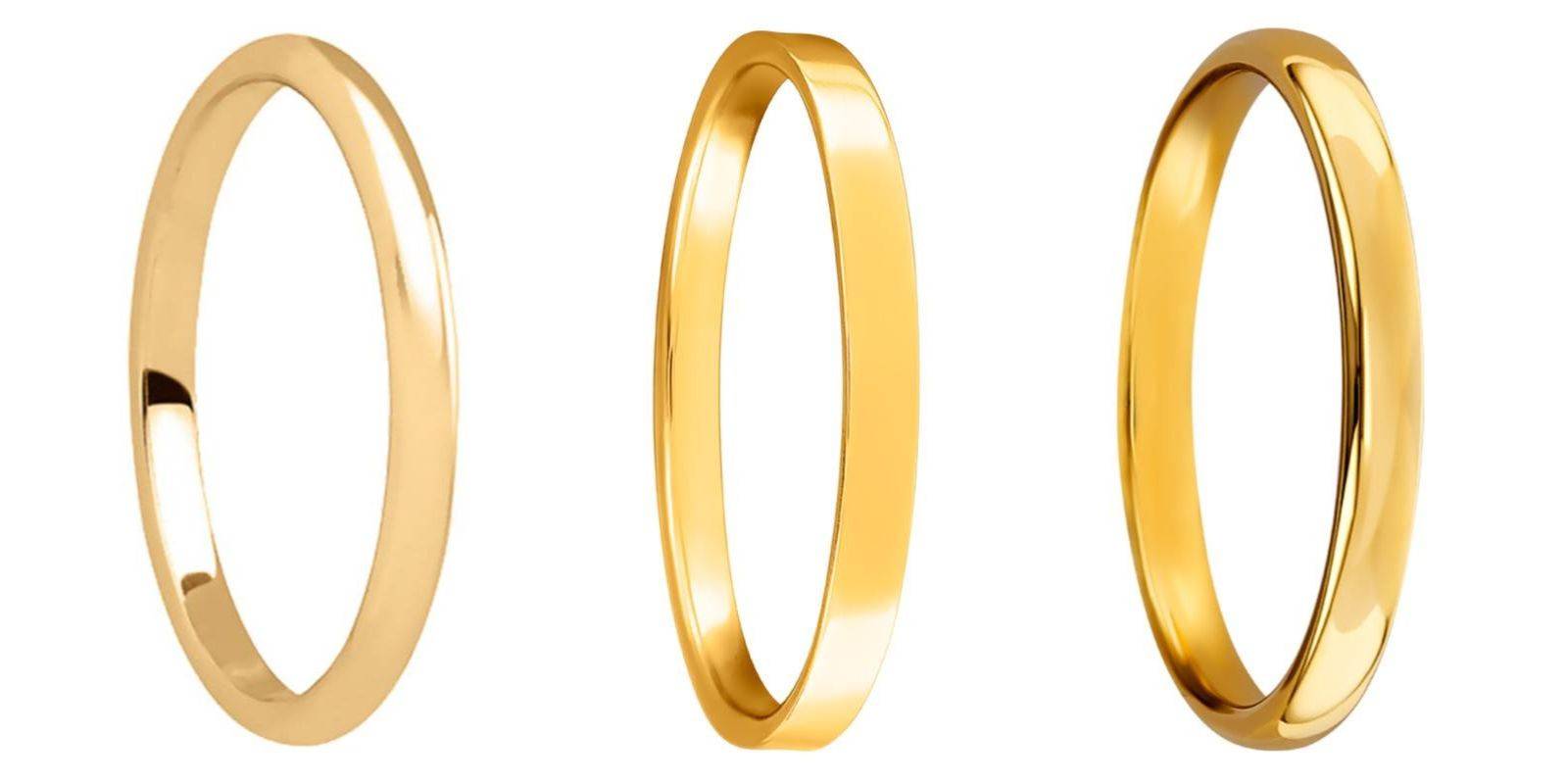
Half-Round, Flat Band, and Parisian Band Wedding Rings
The half-round band is the quintessential traditional wedding ring: slightly rounded on the outside, flat on the inside. It's the most widely worn style. The comfort variant keeps the same profile but with a slightly rounded interior for easier passage over the knuckle. For a wedding ring worn every day for decades, this difference is anything but trivial.
The flat band is a contemporary style with a flat profile on both the inside and outside. Its clean, minimalist aesthetic appeals to couples who prefer understated elegance. Worth noting: flat bands are more prone to scratches than a domed ring - a satin finish is a better choice to help conceal everyday wear.
The Parisian band is thicker than the classic half-round band, giving it a stronger, more architectural presence.
Ocarat also offers half-domed and concave wedding bands for those looking to step outside the classics.
Slim wedding rings, from 2 to 3 mm, are understated and versatile - easy to pair with a variety of engagement rings. Above 4 mm, the wedding ring makes a bolder statement. For women, the average width is 2 mm; for men, it tends to be 3 to 4 mm.
Pro tip: if you wear your wedding ring alongside an engagement ring, choose a width that matches the band of your solitaire for a harmonious, balanced look.
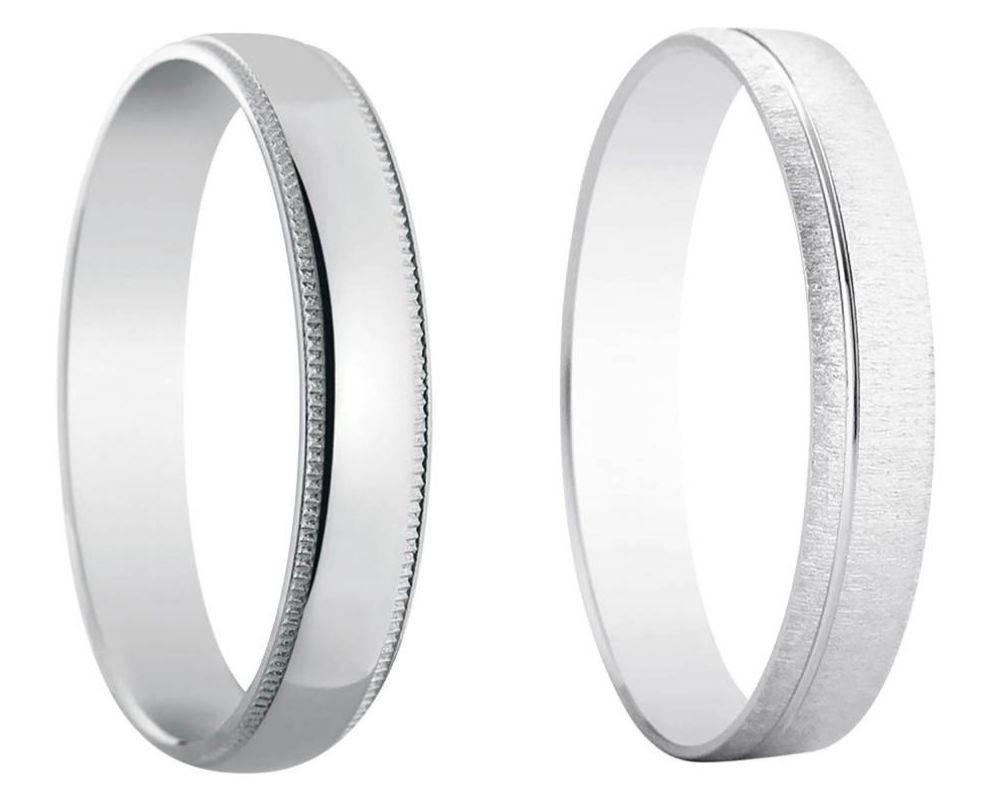
Wedding rings with polished (shiny) finish, satin/brushed finish
Polished (shiny): maximum brilliance, easy to maintain, buffable in case of micro-scratches.
Satin / brushed: a matte, patinated texture, very popular for men's wedding rings. Note: scratches on a satin surface show up as bright marks.
Ocarat also offers grooved, diamond-cut, frosted, sandblasted, star-chiseled, and clous de Paris finishes - each one giving the ring its own distinct character!
Jewelry gold is an alloy. 750/1000 gold (18 karat) contains 75% pure gold mixed with other metals whose composition determines the final color. It is the standard of fine jewelry: durable enough for everyday wear, pure enough to last decades without deteriorating.
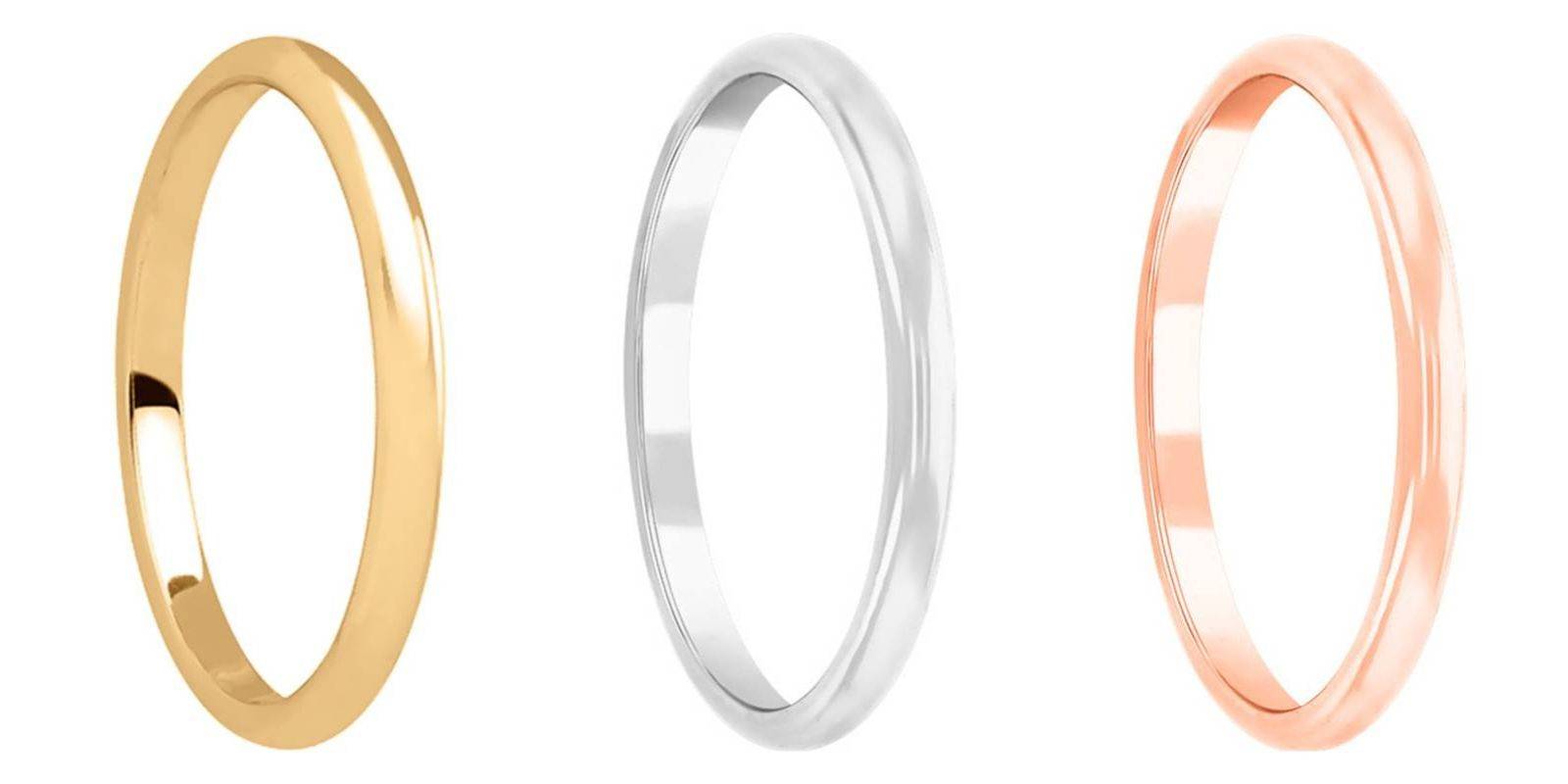
Yellow Gold, White Gold, and Rose Gold Wedding Rings
The timeless choice for a wedding ring, gold yellow has been the standard for centuries. Its color never tarnishes over time, with no special upkeep required. Particularly flattering on olive and tan skin tones. 750 yellow gold is the easiest metal to care for: warm soapy water, rinse, and dry.
The silver tone of white gold wedding rings comes from the alloy (gold + palladium) and a surface layer of rhodium. Extremely popular for showcasing diamonds. Upkeep is slightly more demanding: the rhodium layer wears off and needs to be re-plated by a jeweler every 2 to 3 years.
Achieved by adding copper to the alloy, which gives it that warm tone. Unlike white gold, it requires no surface treatment and its color remains stable over time. Increasingly popular, including for men's wedding rings.
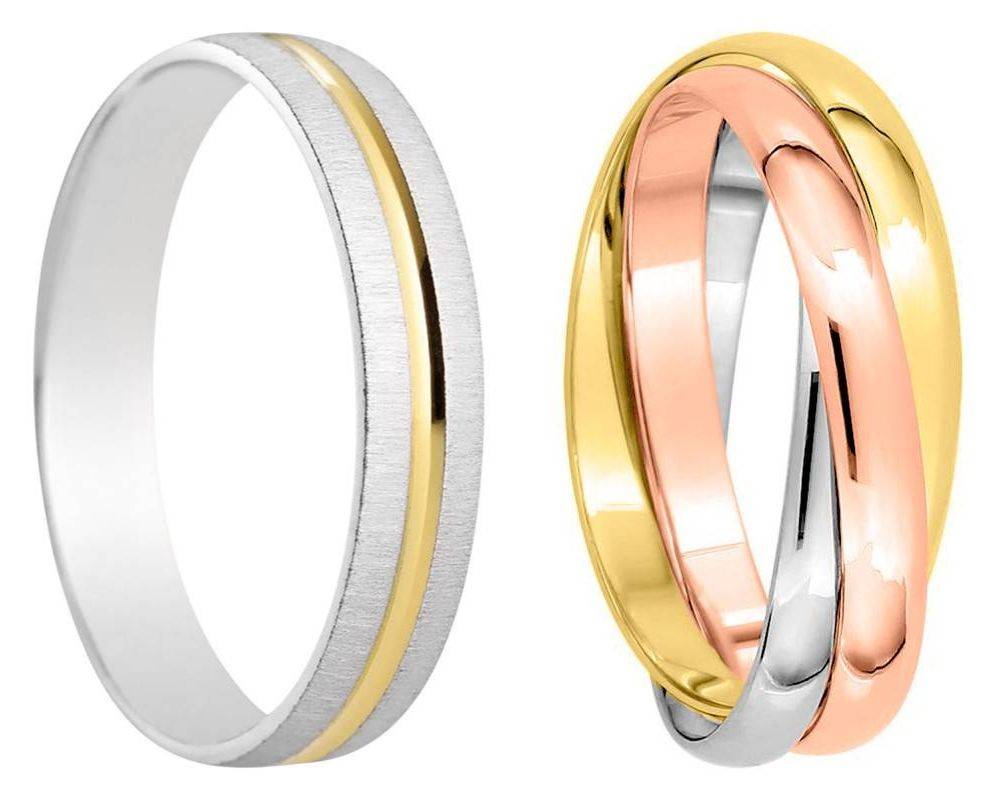
Two-Tone and Three-Tone Wedding Rings
Two-tone wedding rings and three-tone wedding rings combine two or three colors on a single band - yellow gold + white gold, or yellow gold + white gold + rose gold. This is a great compromise when both partners have different preferences.
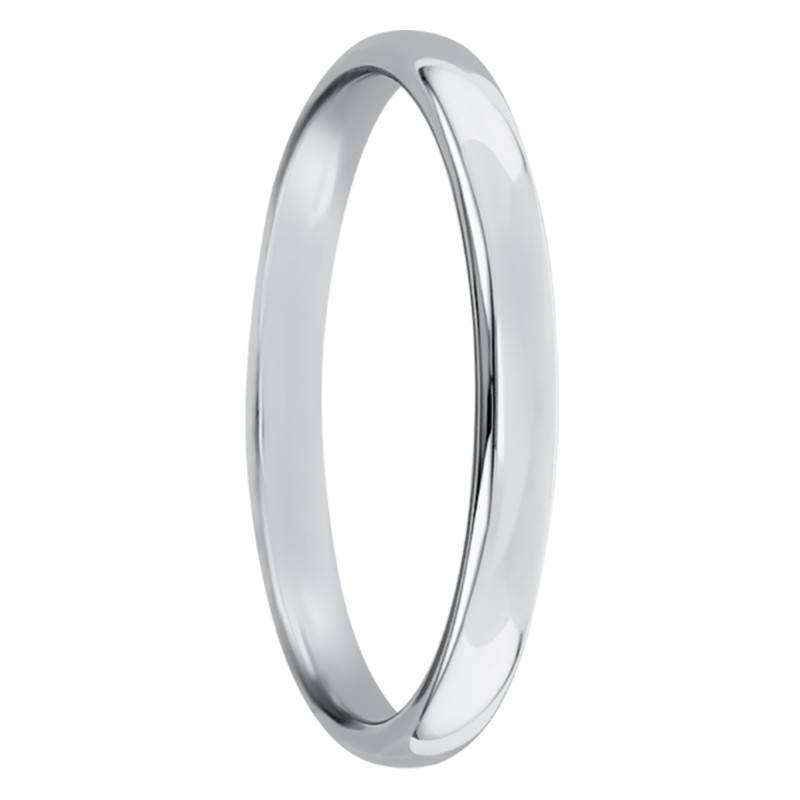
Platinum Wedding Ring
Naturally white and 95% pure, platinum requires no surface treatment: its color is inherent to the metal itself and will never change, without any intervention whatsoever. This is its fundamental difference from white gold, whose silver tone is achieved through rhodium plating that fades with wear. Choosing between the two goes beyond the question of price: it's also a matter of how much maintenance you're willing to do and how you think about longevity. The full comparison - composition, hallmarks, wear behavior, allergies - is detailed on our platinum wedding rings page.
White gold vs platinum: virtually indistinguishable at first glance. The difference shows over time. White gold yellows without rhodium plating; platinum stays naturally white.
Our recommendation for men: if you wear a steel watch, platinum is the better match.
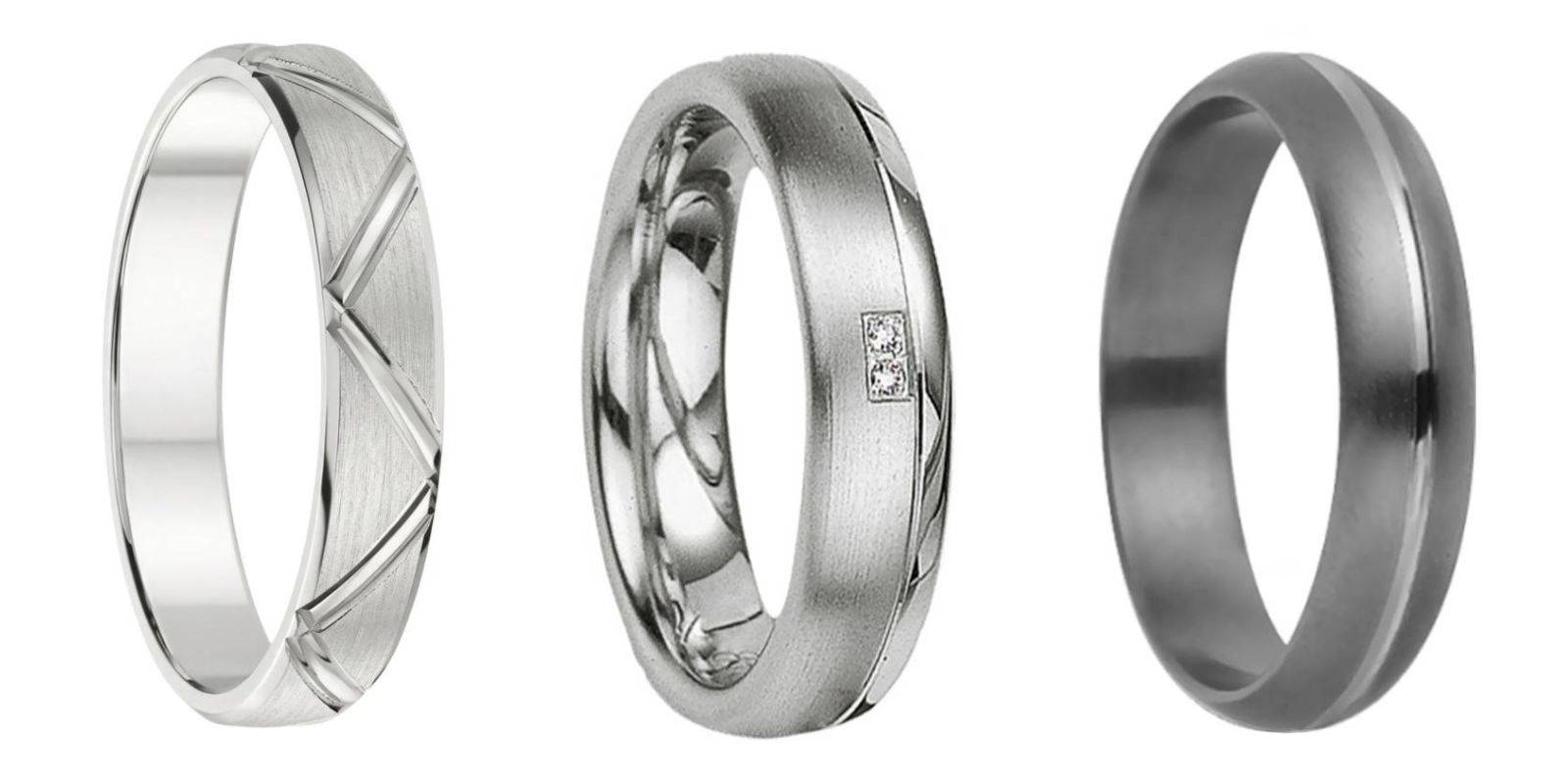
Palladium, Silver, and Titanium Wedding Rings
Ocarat also offers palladium wedding rings (from the platinum family, naturally white, lighter in weight), silver wedding rings in 925 sterling (accessible, ideal for smaller budgets), and titanium wedding rings (extremely light and durable, perfect for active individuals or those with allergies to precious metals).
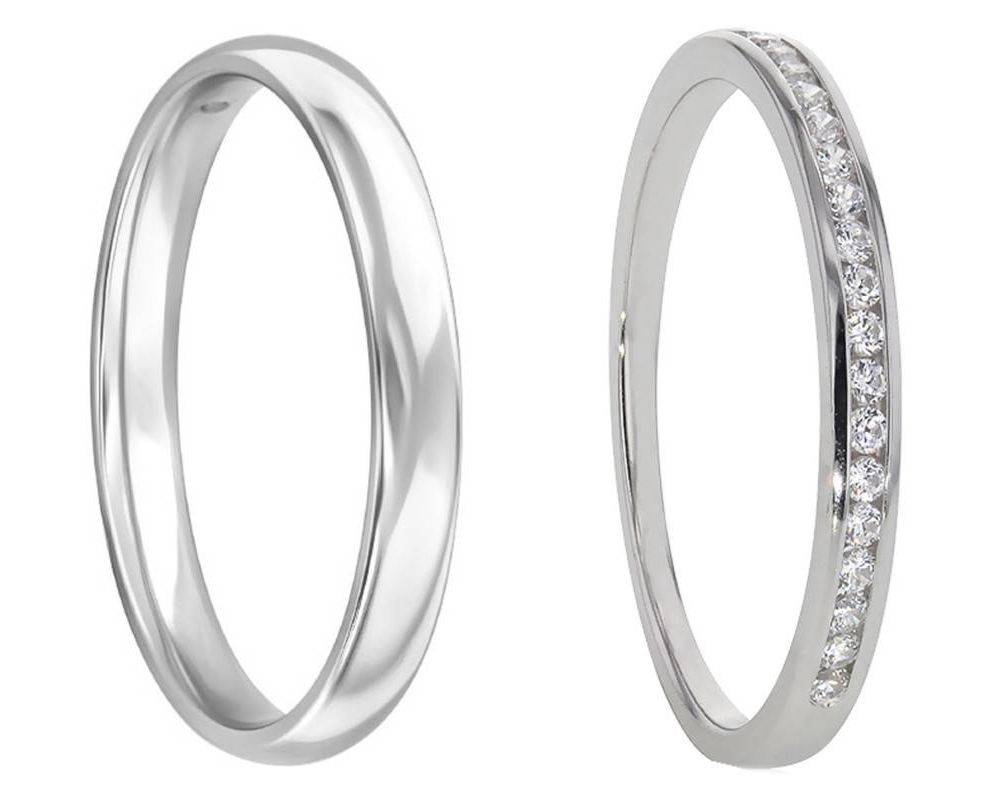
All-metal wedding ring vs stone-set wedding ring
Understated, timeless, and built to handle daily life. Less precaution needed for sports, DIY, or household chores. Over 90% of men choose an all-metal style.
The diamond-set wedding ring adds an extra sparkle, especially beautiful worn alone or alongside a simple engagement ring. Several options are available: full eternity, three-quarter pavé, half pavé, or a few channel-set or grain-set diamonds.
Full or partial coverage? Many stone-set wedding rings are not fully pavé.
Reasons: the inner part of the hand experiences more friction; a plain metal insert makes future resizing easier (pregnancy, weight changes).
A pavé wedding ring requires more day-to-day care: avoid wearing it for sports, swimming, or DIY projects, and have the stone settings checked every 2 years or so.
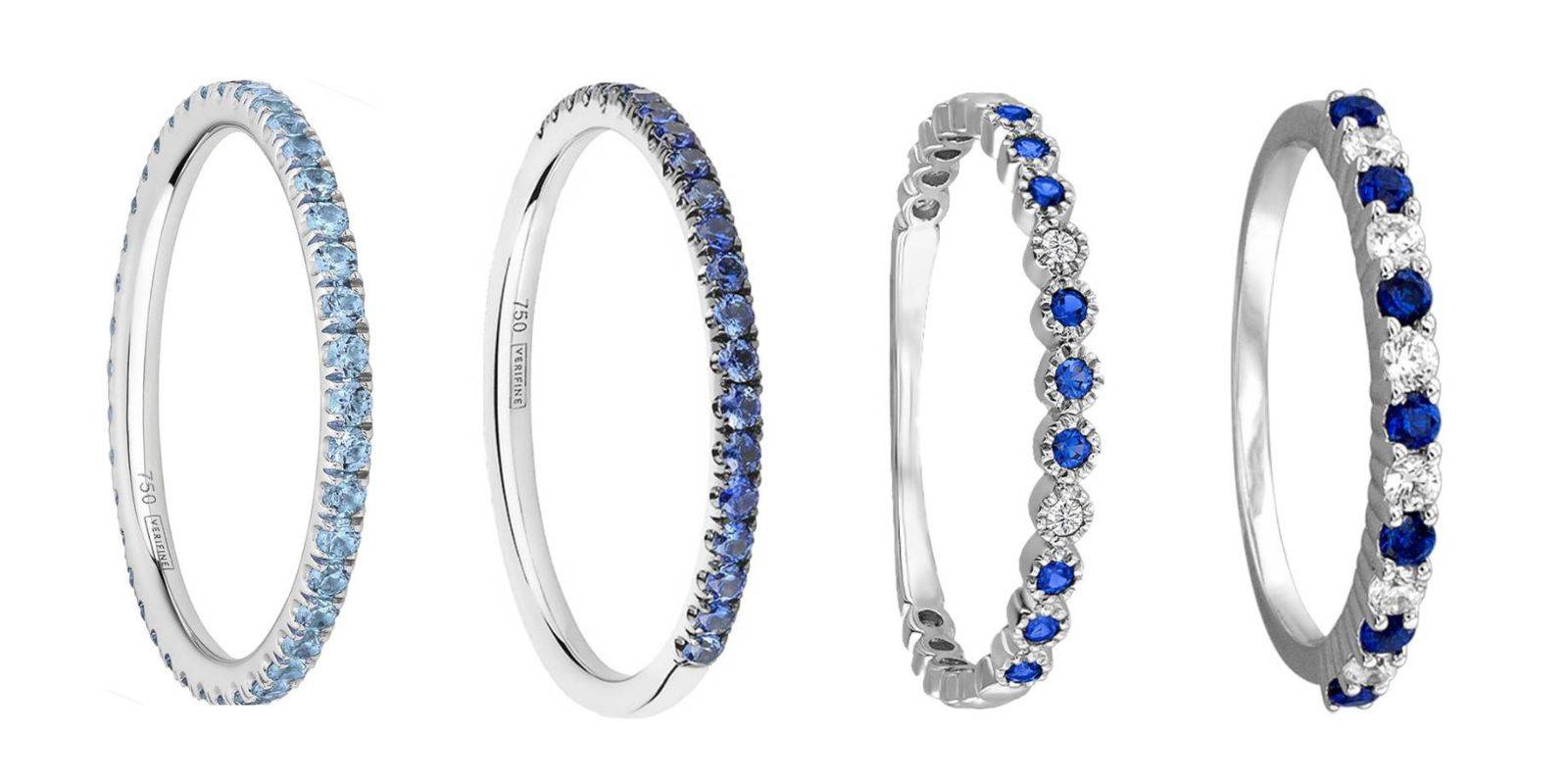
Colored Gemstone Wedding Rings
Sapphires, rubies, and emeralds can adorn certain creative wedding ring styles. Their small size on a wedding ring reduces their color intensity - if the idea appeals to you, prioritize careful setting work and examine the result in natural light.
No. There is no rule requiring matching wedding rings. A wedding ring is above all a personal piece of jewelry, meant to be worn every day. Comfort and a personal connection to that jewelry take priority over everything else.
That said, many couples enjoy choosing styles that complement each other without being identical: same metal, different shapes suited to each hand; or the same shape in different widths (2 mm for her, 3-4 mm for him). This subtle coordination creates a visible connection between the two rings without erasing their individual personalities.
At Ocarat, we offer women's wedding rings and men's wedding rings that are sometimes 100% identical - making it easy to create a coordinated look while honoring each person's individual taste.
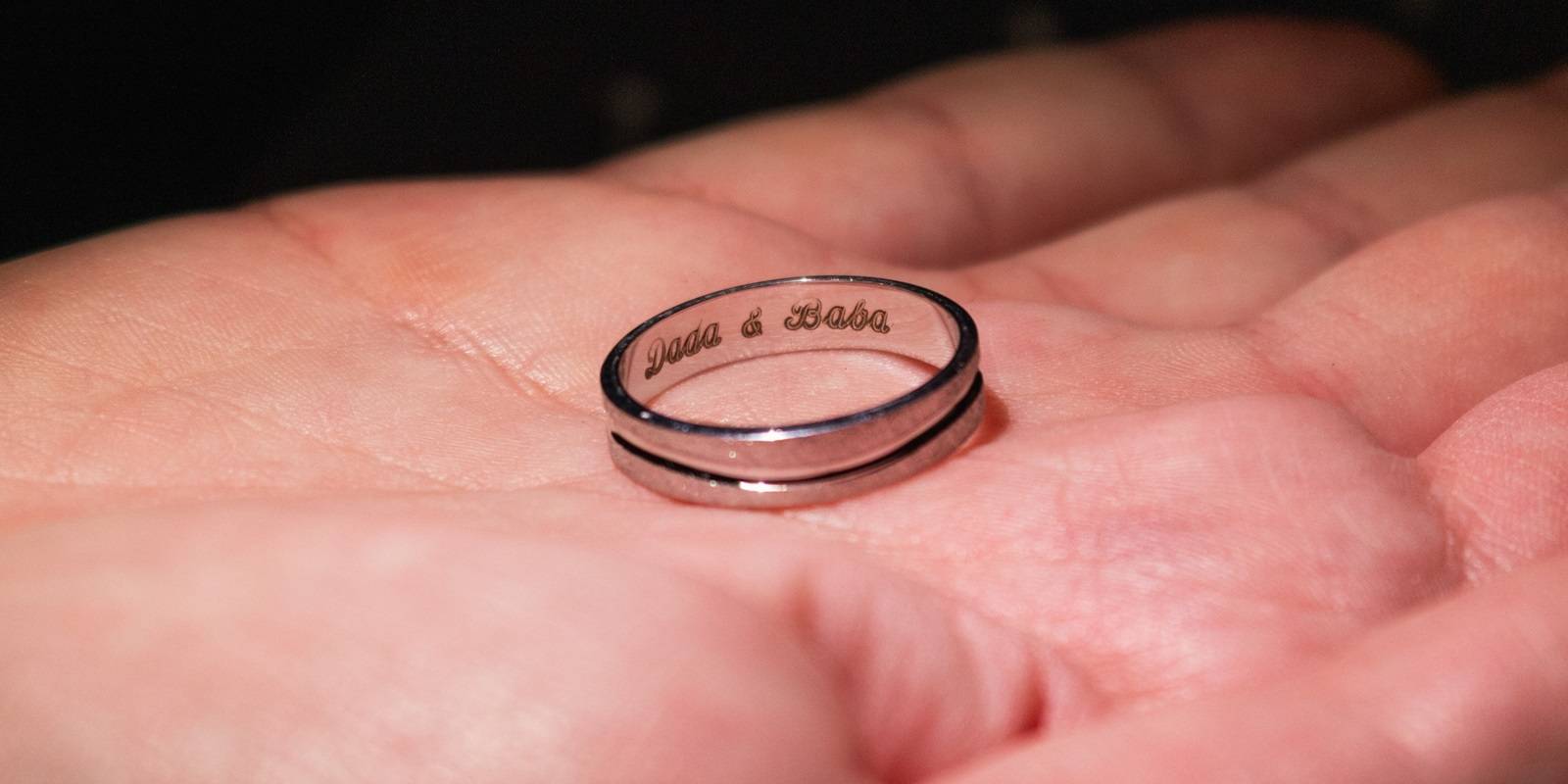
Engraving is the ultimate act of customization. It transforms a beautiful piece of jewelry into a one-of-a-kind piece, carrying a story all its own. The vast majority of couples who order their wedding rings choose to have them engraved.
Traditionally: the first names of both spouses and the wedding date. Convention even holds that the groom's wedding ring is engraved with the bride's name first, and vice versa. But nothing is set in stone - couples increasingly opt for creative engravings.
Some ideas that go beyond the traditional:
Technical constraints (character count, feasibility based on profile, compatibility with a future resize) vary by model and are specified on each Ocarat product page.
Before any purchase, check whether resizing is still possible on an engraved wedding ring - this is not always the case with every supplier. For most brands in the Ocarat catalog, engraving does not rule out a future resize.
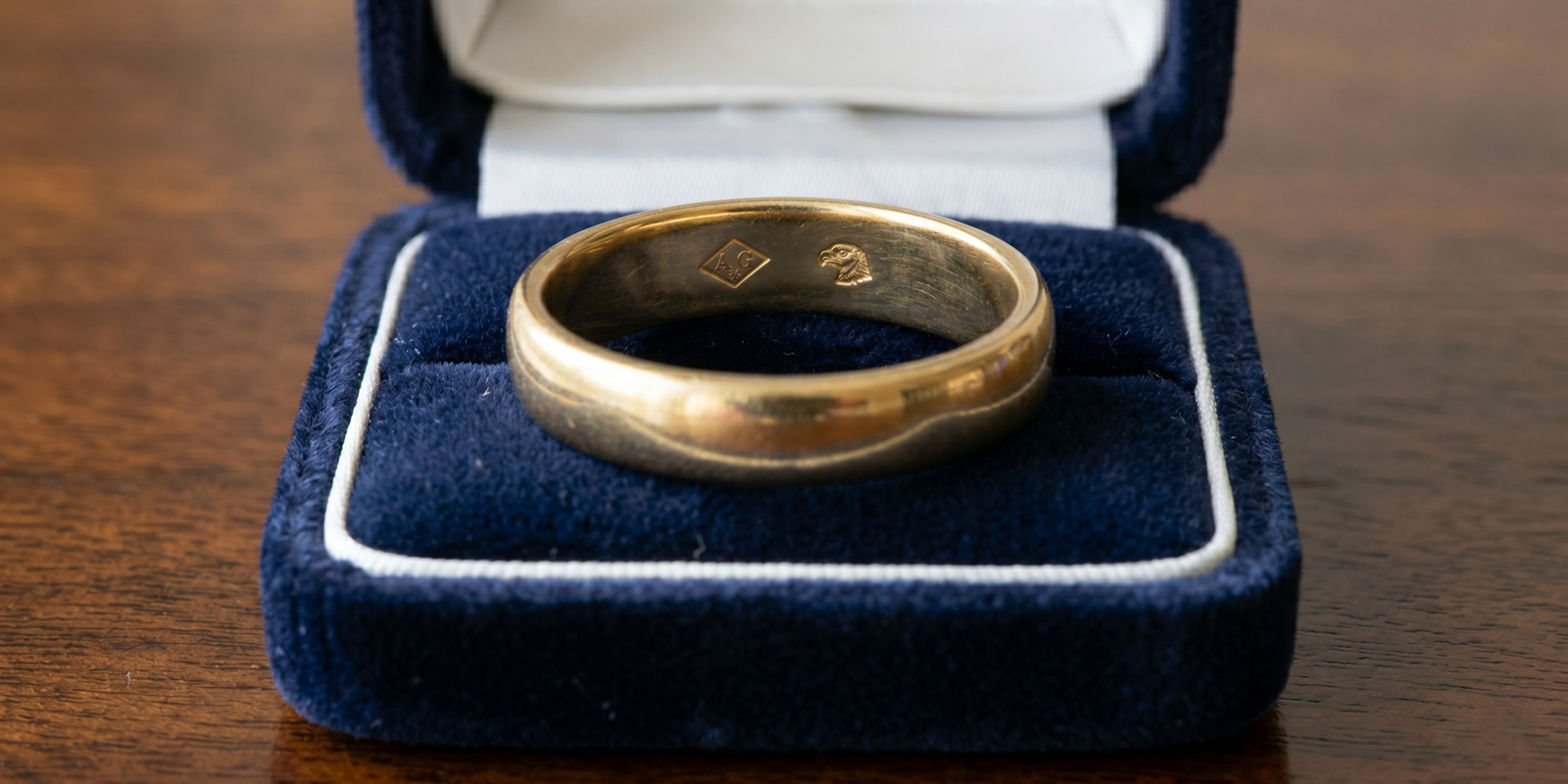
Two small marks are struck on every wedding ring sold in France. Far from being insignificant, they are the legal guarantee of your jewelry's quality.
Diamond-shaped, it certifies that the jewelry was crafted in a registered workshop in France. Each workshop has its own unique hallmark. An oval or square hallmark indicates imported jewelry. This hallmark is a true mark of craftsmanship: French fine jewelry is among the most exacting in the world.
Stamped on gold jewelry over 3 grams, it certifies the exact quality of the metal:
This hallmark is a legal guarantee: it confirms that the metal is exactly what you ordered.
For a wedding ring worn every day for decades, metal quality is no small detail. 750 gold (18 karat) is the standard of fine jewelry: more resistant to wear, oxidation, and scratches than 375 gold (9 karat). The difference in durability shows over time - not at the moment of purchase. The criteria for choosing between the two based on your usage and budget are covered in our guide on precious metals.
No - that's a common misconception. Platinum is actually slightly more malleable than 18-karat gold. It doesn't oxidize, is hypoallergenic, and never changes color, but it can still bend or scratch under pressure. Its prestige comes from its purity and lasting color stability, not from superior hardness.
There is no rule dictating how much you should spend on wedding rings. Every couple tailors their purchase to their own desires and means. Here are some concrete benchmarks drawn from market trends:
| Wedding Ring Type | Indicative Price Range |
|---|---|
| Sterling Silver 925 Wedding Ring - Simple | 50 € - 150 € |
| 375 Gold Wedding Ring - Standard Half-Round Band | 150 € - 350 € |
| 750 Gold Wedding Ring - Comfort Half-Round Band | 350 € - 800 € |
| 750 Gold Wedding Ring - Diamond Half Eternity Band | 800 € - 1 500 € |
| Platinum Wedding Ring - Half-Round Band | 600 € - 1 500 € |
| Custom / Creative Wedding Ring | 800 € - 3 000 €+ |
These ranges are indicative and may vary depending on brand and options (engraving, customization, width, ring size). For two wedding rings, the total budget typically falls between 600 € and 2 000 € depending on your choices.
It's generally recommended to start your search at least three months before the ceremony. This timeline accounts for production lead time (some custom styles can take several weeks), the possibility of resizing if needed, and a safety margin for any logistical surprises.
Things to consider before placing your order:
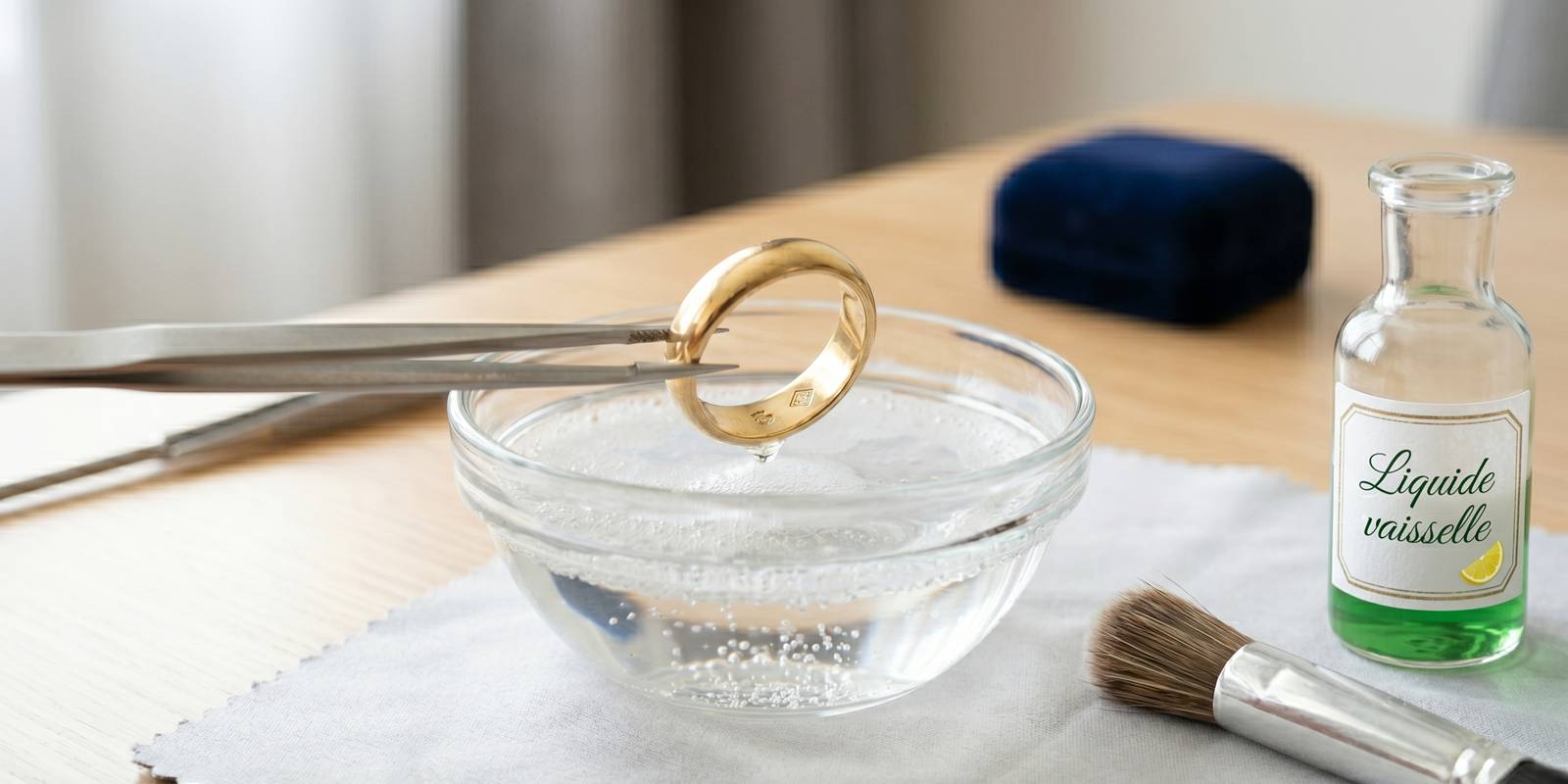
A wedding ring carries the promise of a lifetime. Minimal but consistent care allows it to keep its brilliance for decades.
Soak the wedding ring for 20 minutes in warm water with a few drops of mild dish soap.
It's best to remove your wedding ring before swimming (chlorine attacks metals), exercising, gardening, or any activity that exposes your jewelry to impact or chemicals.
White gold is coated with a thin layer of rhodium during manufacturing. With wear, this layer fades and reveals the natural tone of the alloy, which is slightly warmer. This is a normal and expected process. The solution is rhodium plating, a workshop procedure that takes about 30 minutes and should be repeated every 1 to 3 years depending on how frequently the ring is worn.
Chlorine is the number one enemy of rhodium plating. Always remove your wedding ring before swimming - even in the ocean. Hand sanitizers and perfumes also accelerate rhodium wear.
For stone-set wedding rings, an annual visit to a professional is strongly recommended: prong inspection, ultrasonic cleaning, polishing or rhodium plating as needed. A loose setting that goes undetected can lead to losing a stone.
At Ocarat Atelier, our team of expert jewelers takes care of your wedding rings and helps you keep them sparkling for life!
Here's a quick-reference guide to help you choose based on your lifestyle:
| Your Profile | Recommended Metal | Recommended Shape | Finish |
|---|---|---|---|
| Olive or Tan Skin | 750/1000 Yellow Gold | Comfort Half-Round Band | Polished |
| Fair or Rosy Skin | White Gold, Rose Gold, or Platinum | Flat Band or Half-Round Band | Polished or Satin |
| Contemporary Style | White Gold or Rose Gold | Flat Band | Satin / Brushed |
| Timeless Classic Style | 750/1000 Yellow Gold | Comfort Half-Round Band | Polished |
| Very Active Lifestyle | Yellow Gold, Platinum, or Titanium | Round Band or Half-Round Band | Polished |
| Simple Engagement Ring | White Gold + Diamonds | Half Eternity Band Pavé | Polished |
| Decorated Engagement Ring | Solid Gold | Comfort Half-Round Band | Polished or Satin |
| Controlled Budget | 375/1000 Gold or Sterling Silver 925 | Flat Band or Half-Round Band | Polished |
| Maximum Precision | 950/1000 Platinum | Your Choice | Polished |
Width - quick guide: 2-3 mm = subtle and versatile, pairs with any engagement ring. 4 mm = a stronger presence, often chosen for men's wedding rings. 5 mm and above = architectural or creative styles.
The smartest move before you buy: try on several profiles in different widths. The feel on your finger - how it slides over the knuckle, the sensation on the inside - is often the deciding factor, far beyond anything a photo can convey.
Ocarat offers a catalog of over 1,500 wedding jewelry references - from the classic yellow gold half-round band to the creative stone-set wedding ring, including two-tone and platinum styles. Free shipping in mainland France and Belgium, and 4-installment interest-free payment lets you invest in the jewelry of your choice.
Share :
Official European Union notice on your rights in the event of a product's lack of conformity.