
0
Product added
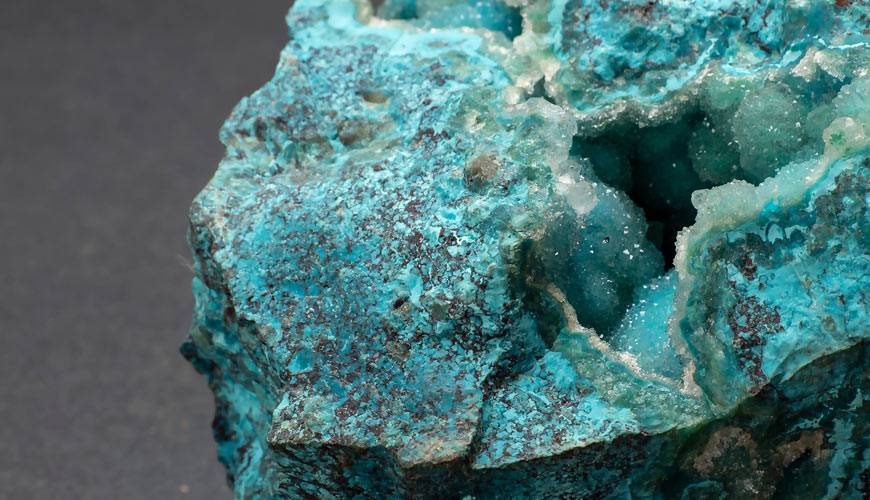
Once little known, chrysocolla is a gemstone that grows more popular every year. A new favorite in jewelry stores, it features unique, varied patterns in beautiful shades of green and blue. Chrysocolla can also take on striking shapes, making it ideal for distinctive, original jewelry.
The stone's blue-green tones pair beautifully with the luminous gray of silver, but also complement other metals, such as gold.
The stone's name comes from the Greek words “chrysos,” meaning “gold,” and “kolla,” meaning “glue”. Named by the Greek philosopher Theophrastus in 300 BC, chrysocolla was, as its name suggests, among the materials ground into powder for working with gold. In ancient times, the Greeks used it to solder this precious yellow metal. Its uses changed over the centuries. The Egyptians wore it for spiritual protection and to bring calm and serenity. Mummified children have been found with chrysocolla amulets, placed there to protect them on their journey to the afterlife. Queen Cleopatra is even said to have worn it regularly during her travels for its calming, positive properties. In the Middle Ages, the stone was used mainly for medicinal purposes, while during the Renaissance it was ground into pigment for painting. In several civilizations, particularly in South America, chrysocolla was used to set jewelry, make figurines and take part in ceremonies.
Today, this gem is especially sought after, in part for its symbolism. Chrysocolla is associated with the moon, femininity and emotions.
In the past, chrysocolla was used mainly for practical purposes, particularly to alloy other metals. Today, it is found in jewelry and used in crystal healing for its many sought-after properties. Collectors also prize it for its appearance and distinctive colors.
Chrysocolla forms as copper deposits weather in arid regions. It is found around the world, but the main deposits are in the United States, Germany, South America (Chile, Brazil, Mexico, Peru and others), Israel, Australia, Russia, England and France.

Chrysocolla has an orthorhombic crystal structure and is composed of hydrated copper silicate (CuSi03 2H2O). It is therefore made primarily of oxygen, silica and copper. The copper gives it a color ranging from turquoise blue to green.
In its natural state, chrysocolla is often mixed with other minerals, including quartz, turquoise, malachite and chalcedony. These minerals give it its unusual color patterns and add hardness. With a hardness of 2 to 4 on the Mohs scale and a density of 2.2, chrysocolla is a very fragile stone that often needs to be combined with others.
In appearance, this gemstone may be translucent or opaque, with a glassy or waxy luster. It also often contains more intensely colored inclusions. In jewelry, chrysocolla is generally cut into cabochons of various shapes, primarily oval.
Chrysocolla is increasingly popular with people around the world for its many properties. On an emotional level, chrysocolla is considered an exceptionally positive stone that fosters relationships, peace, calm and emotional balance. It is said to support communication and meditation while encouraging self-confidence. It is also believed to turn negativity into positivity, recharge the chakras and help people adapt to change. Chrysocolla is said to dispel fears, negative emotions and, when placed in a room, negative energy. Whether worn as jewelry or displayed at home, chrysocolla is valued for its many purported benefits.
Physically, this stone is said to help with menstrual pain, wounds and scars, muscle pain, and blood circulation. It is also believed to clear the airways and help treat throat and larynx infections. Chrysocolla is said to regulate thyroid function and relieve high blood pressure and menopause-related symptoms.
As you can see, chrysocolla is a particularly fragile stone and needs careful handling every day. Avoid exposing it to excessive heat, chemicals or acids. When you're not wearing your chrysocolla jewelry, store it carefully in a box or pouch, away from other stones, and protect it from knocks.
To clean the jewelry and stone, use soapy water and a toothbrush. Then dry gently with a cloth.

Found in more and more jewelry stores, including Ocarat, chrysocolla grows more popular every year. Explore the many styles available at our online jewelry store: earrings, pendants, bracelets… the choice is yours. Whatever you're looking for, Ocarat has something for you. To help you choose, we also offer detailed guides and descriptions with the information you need about the jewelry you want to buy.
When buying chrysocolla, there are a few things to watch for. Sometimes the stone is coated with plastic to make it more durable; if so, the seller must disclose this. Be careful not to confuse it with “Eilat Stone,” which contains chrysocolla as well as turquoise and malachite.
Generally, the most sought-after chrysocolla stones are vivid blue, turquoise or green. Both evenly colored stones and those with interesting patterns are prized.
Chrysocolla is a particularly fragile gemstone. Without proper care and cleaning, its lifespan will inevitably be shortened.
Bracelets, earrings, necklaces… Ocarat's online jewelry store is open 24 hours a day, 7 days a week. Treat yourself to a vast selection of jewelry. Whatever catches your eye, Ocarat offers a wide range of luxury pieces.
Share :
Official European Union notice on your rights in the event of a product's lack of conformity.


