
0
Product added
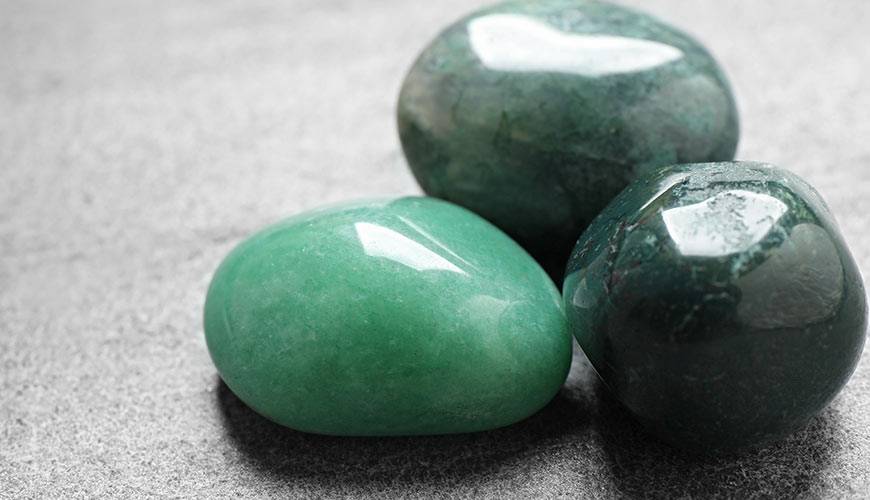
Prized for its beautiful and distinctive iridescent appearance, aventurine is a stone that symbolizes prosperity and good luck. Boasting a wide range of properties and benefits, this gemstone is increasingly sought-after in the world of jewelry. To learn more about this gemstone, we present here a detailed look at all of aventurine's characteristics and how to choose the right piece.
The name "aventurine" comes from the Latin "adventura," meaning "that which is to come." It is believed to have first appeared in the early 17th century on the island of Murano, when an Italian craftsman reportedly - whether intentionally or by accident - dropped copper filings into the molten glass he was working with, creating a new type of crystal. This gave rise to what became known as "goldstone" (or aventurine glass). This material is quite different from the stone itself, and there is no consensus on which - the glass or the stone - first inherited the name.
Regardless, aventurine was already used in antiquity for sculptures and talismans, notably in Egypt, China, Tibet, and South America. It was also valued for its wide range of beneficial properties for the body. Primitive tools made of aventurine dating back to prehistoric times have even been discovered in Ethiopia.
Today, this gemstone is primarily used in jewelry as an ornamental stone. It appears in all types of jewelry: necklaces, pendants, rings, and bracelets. Its excellent hardness and durability make it a great choice for everyday jewelry. Aventurine is also used for carving cameos and ornamental objects such as figurines.
Aventurine forms in magmatic rocks, primarily in pegmatites and hydrothermal veins. The main deposits are found in Brazil, India, Chile, Russia, Tanzania, the United States, and China. It can also be found in France, Austria, and Germany.
Aventurine is a variety of quartz composed of silicon dioxide (SiO2). It has a rhombic crystal structure. It is translucent to opaque, with a vitreous luster. Aventurine comes in several colors, but the most common is green (light to dark). Red, brown, and blue specimens can also be found.
Its distinctive feature is a subtly glittery hue with brilliant reflections. This unique optical phenomenon is known as "aventurescence." It is caused by the presence of fuchsite inclusions in green stones, and hematite or mica inclusions in red or brown stones. The intensity of aventurescence can range from subtle to strong, depending on the density of the gemstone and the size of the metallic inclusions it contains.
The cabochon cut is typically used to showcase aventurine's shimmer. It is also commonly cut into bead shapes for necklaces and bracelets. The hardness of this gemstone ranges from 6.5 to 7 on the Mohs scale, and its density is 2.6.
Like other gemstones, aventurine is paired with metals to be used in jewelry. It is most commonly set in cool metals such as white gold or silver, as these best enhance its hue and brilliance.
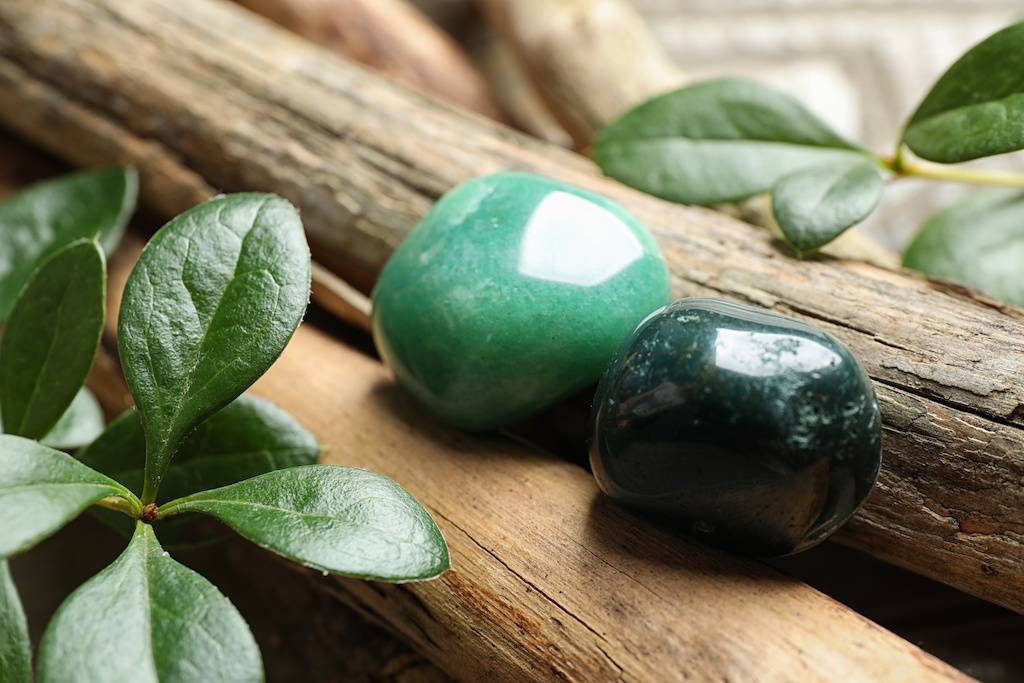
Aventurine offers numerous positive benefits for overall well-being. It soothes the mind, helps overcome fears and anxiety, and calms nervous tension. It also promotes patience, self-confidence, and optimism, while stimulating creativity.
On a physical level, this stone soothes nausea and relaxes muscles. It has positive effects on heart rate, children's growth, and the circulatory system. Aventurine is also used to treat skin conditions and support cellular regeneration. This gemstone can also absorb electromagnetic waves as well as negative energy in a saturated environment.
This gemstone requires no special maintenance and boasts excellent hardness. That said, avoid mixing or rubbing it against other stones that may be harder and could scratch it. The best approach is to store your jewelry in a separate pouch. Also avoid exposing aventurine to harsh chemicals, and keep it away from excessive heat.
Occasional cleaning is still recommended to keep your stone looking its best. To clean aventurine, a little lukewarm water and mild soap are all you need. Rinse, then dry with a soft cloth.
The first thing to do when choosing your jewelry is to confirm that it is genuine aventurine and not the well-known synthetic glass mentioned above (goldstone or aventurine glass). Also be careful not to confuse it with jade or malachite. These stones look similar but are significantly less hard. As for color, gemstones in a green hue (light or dark) with beautiful metallic shimmer are the most sought-after.
Whatever color you're looking for, Ocarat is the perfect destination to find the jewelry that best matches your criteria. Whether you're looking for a ring, a necklace, or earrings, our online jewelry store carries a wide range of aventurine-set jewelry. To ensure the satisfaction of all our customers, we guarantee high-quality pieces whose origins have been verified by our experts.
To identify a piece of jewelry set with aventurine, it helps to know a few of the stone's characteristics: rhombic crystal structure, translucent to opaque appearance, vitreous luster… In terms of color, aventurine can come in several hues, though green remains the most common. On the market, you can also find red, brown, and even blue aventurine.
While aventurine is very hard, it is still best to avoid friction with other stones and contact with harsh chemicals. To preserve the beauty of your jewelry, occasional cleaning with lukewarm water and mild soap works well. Once cleaned, use a soft cloth to dry it without scratching the stone and to remove any water marks.
Aventurine can be confused with goldstone (aventurine glass) or malachite. To confirm that a piece of jewelry is set with genuine aventurine, it helps to know that this stone is significantly harder and typically green in color with metallic shimmer.
Committed to the satisfaction of all our customers, Ocarat's experts strive to offer the finest aventurine jewelry on the market. Our online jewelry store gives you access to the most beautiful pieces and the best brands. Whatever you're looking for, you're guaranteed to find the aventurine jewelry that's perfect for you at Ocarat.
Share :
Official European Union notice on your rights in the event of a product's lack of conformity.