
0
Product added
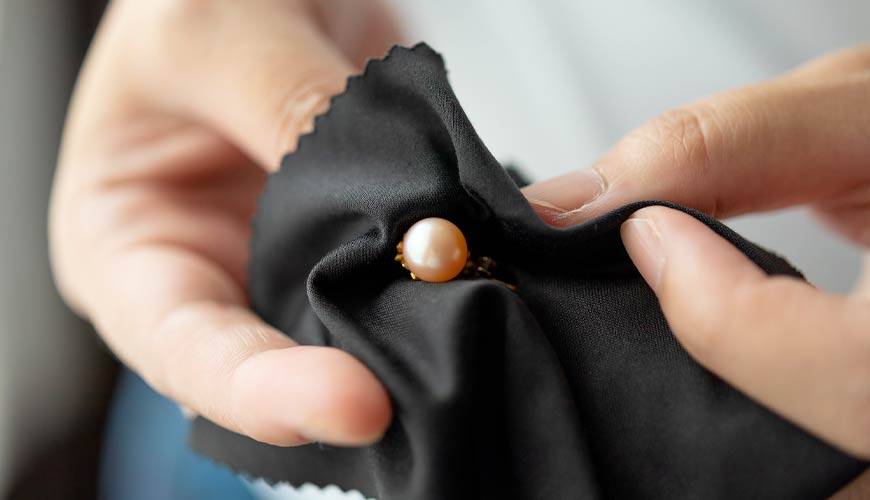
Originally from Japan, pearls are small spheres created primarily by oysters. When an irritating object passes under the shell, the animal responds by coating it in layers of calcium carbonate (CaCO3) in the form of aragonite or calcite. This scientific compound is called nacre.
Pearls have been used to craft jewelry since Antiquity. Roman families who could afford it would buy their daughters one or two pearls each year, so they would have a complete necklace by the time they came of age - these pearls were known as the tears of Aphrodite. Explore a timeless classic of the jewelry world through this jewelry guide.
To assess the value of a pearl and make the right choice, two types of criteria must be considered: objective and subjective.
Objective criteria:
It takes 2 to 3 years, a team of skilled technicians, and over 100 oysters - each cultivated, brushed, cleaned, and grafted - to produce a single beautiful pearl.
Pearls are divided into eight basic shapes: round, semi-round, button, teardrop, pear, oval, baroque (irregular), and ringed. Perfectly round pearls are the rarest and most valuable, and are typically strung into necklaces or simple pearl strands. Teardrop-shaped pearls are most often used in pendants (ear or neck). Button pearls are slightly flattened and can be used in necklaces as well as pendants or earrings. Teardrop and pear-shaped pearls are used in earrings or as the centerpiece of a necklace. Baroque pearls, completely irregular in shape, sometimes have an interesting form that lends itself to necklace settings. Ringed pearls are distinguished by concentric ridges running around the body of the pearl.
Pearls are also divided into five categories based on their symmetry, ranging from AAA to A.
This system evaluates the quality of the nacre surface, or luster:
The aesthetic quality of a pearl depends on the thickness of the nacre, or circumference (more significant in natural pearls), as well as the regularity of crystallization (surface imperfections).
A pearl's size is defined by its diameter in millimeters. The most common diameter ranges from 7 to 7.5 millimeters, and it typically takes 2 to 3 years to grow a pearl of this size.
The larger the pearl, the longer it takes to develop - and the rarer and more expensive it becomes.
Subjective criteria:
The beauty of a pearl comes from the combination of orient, luster, and color.
A fine pearl reflects like a mirror. It's important to distinguish between orient - a phenomenon of light playing deep within the material - and luster, which is the reflection of light at its surface. Orient results from the decomposition of light through aragonite crystals. This phenomenon gives the observer the impression of gazing into a radiant sphere with diaphanous edges.
Most pearl oysters produce white pearls. Only the Pinctada margaritifera species yields cultured pearls spanning a wide color spectrum. Color depends on many factors: the oyster species, the mineral salts in the water, salinity levels, water temperature, the choice of graft - and chance! The environment also plays an important role, though its influence is not yet fully understood.
These are cultured pearls rooted in the Japanese tradition (though production is increasingly shifting to China). Cultivated for over a century by implanting a graft into saltwater oysters, they measure between 2 and 9 mm in diameter. Naturally yellow, green, and cream, they are treated to achieve champagne, white, or silver tones.
They are among the largest and most durable pearls - the record is held by a pearl nearly 3 centimeters in diameter. Also produced using the Japanese technique, they come in a wide variety of shades (deeper tones in Australia and across the Pacific).
Oysters from Polynesia produce what are known as "Tahitian black pearls" - a protected designation of origin (AOC) - whose iridescent tones range from green to darker or lighter shades, with hints of violet.
Freshwater pearls can take on a remarkable variety of shapes and colors. They offer exceptional value for money, and when carefully selected by Ocarat and Perlegrina, our freshwater pearl specialist, they can achieve a truly impressive level of finish.
Share :
Official European Union notice on your rights in the event of a product's lack of conformity.