
0
Product added
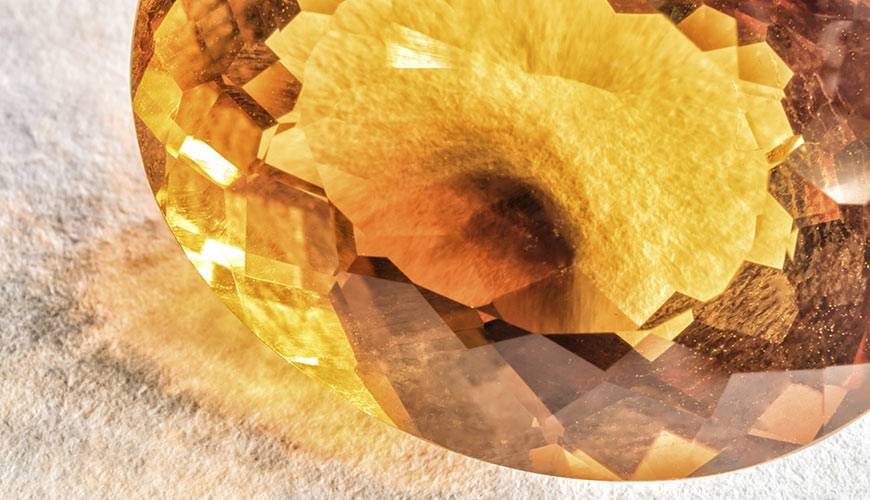
Citrine is a variety of quartz that turns heads with its natural beauty. With its lemon-yellow hues, it's making a major comeback and outshining some of its gemstone rivals. The most sought-after variety, Madeira citrine, boasts a rich, saturated red-orange tone that is particularly striking. As a general rule, the more intense and uniform the color, the higher the value.
In fine jewelry, citrine pairs beautifully with yellow gold, as well as rose gold, whose warm tones it subtly enhances. It's also a stunning match for white gold or silver, creating a striking balance between honey yellow and cool white. The citrine ring is by far the most popular choice today!
The word "citrine" comes from the Latin "citrus," meaning "lemon." The name was given to the stone in the 16th century by Georgius Agricola (Georg Bauer), the father of mineralogy. Before that, it was simply referred to as "yellow quartz."
In antiquity, it was used by the Romans to create cabochons and intaglios (engraved stones used for seals and stamps). In the 19th century, citrine enjoyed a resurgence in popularity, becoming central to many Art Deco fine jewelry creations. It was also found on various royal jewelry pieces, thanks to its perfect pairing with gold.
Symbolically, citrine is considered a good-luck charm, which is why many talismans were adorned with it to ward off the evil eye and venomous bites. It also symbolizes joy, energy, wealth, and abundance. This solar gemstone, whose warm tones evoke autumn, is the birthstone for November and also marks 13 years of wedding anniversary.
While citrine was once used in more practical applications, it is now primarily used in jewelry-making - crafted into rings, pendants, citrine bracelets, and more.
As for its extraction, citrine is typically found in the same types of deposits as amethyst - inside geodes located throughout the world. The main countries where it is found include Brazil, Madagascar, the United States, India, Spain, Russia, Uruguay, and Australia.
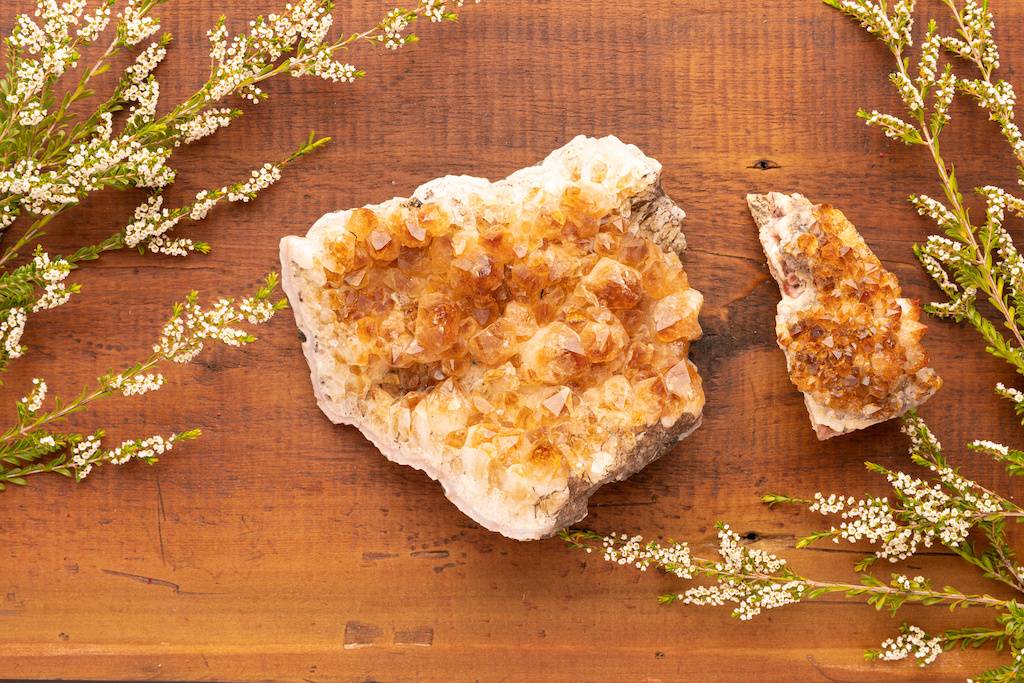
Citrine belongs to the quartz family and is composed of silicon dioxide (SiO2). It is a stone with a rhombohedral crystal structure, a hardness of 7 on the Mohs scale, and a density of 2.6. A cousin of amethyst, the two are sometimes found together in a single gem known as "ametrine."
In terms of color, citrine ranges from pale yellow (lemon, gold) to orange, and sometimes to yellow-brown. These hues are produced by iron oxide present in the stone, which determines its color. These yellow tones are also why citrine is frequently mistaken for yellow topaz. Its price, however, remains considerably lower, making it an excellent substitute.
Citrine is a gemstone that offers both emotional and physical benefits. It is indeed a soothing gem that brings serenity and inner peace. It helps rebalance energy and restore vitality to both body and mind. Promoting optimism, self-confidence, focus, creativity, and intuition, it also helps dispel negative influences, making room for enthusiasm and a positive outlook.
This gemstone also offers notable physical benefits. In particular, it is said to have positive effects on skin, hair, and nails. It also plays a beneficial role in the endocrine system and thyroid, helps combat chronic fatigue, and supports the digestive system, urinary tract, and kidneys.
Caring for and protecting your gemstones is essential to ensure their longevity. While citrine is a particularly durable gem that holds up well to everyday wear, it still requires some basic care. Avoid exposing it to intense heat or strong light, which can damage the stone. It's also important to keep it away from all types of chemicals. Finally, it's recommended to store citrines in a dedicated box, separate from other jewelry and stones, to prevent impact damage.
Caring for a gemstone also means cleaning it regularly to prevent signs of wear from appearing. Using lukewarm water and dish soap, you can clean the stone and then dry it with a soft cloth to avoid any limestone deposits.

Ocarat, your online jewelry store, offers a vast catalog to match your every desire. Whatever type of jewelry you're dreaming of - bracelets, necklaces, rings, and more - Ocarat has a wide range of quality pieces. You'll also get to choose from a wealth of different gemstones, with a dedicated guide to help you make the best decision. Let yourself be guided while enjoying unbeatable prices. Don't wait - explore Ocarat's luxurious collection today.
Citrine is a gemstone with remarkable properties. Worn every day, it brings serenity and inner peace. It's also an excellent alternative to yellow topaz, at a much more attractive price point.
Citrine is a gemstone often found in round or oval cuts. When shopping for one, pay close attention to clarity: a citrine should have no inclusions or cracks visible to the naked eye. Be careful not to confuse it with amethyst, which can sometimes have a similar hue to citrine.
On a daily basis, protect your citrine jewelry from harsh conditions such as extreme heat or intense light. It's also a good idea to clean them regularly with water and dish soap.
Ocarat, your online jewelry store, offers an extensive selection where you're sure to find exactly what you're looking for. Whether you're treating a loved one or yourself, browse hundreds of styles for every taste. We especially invite you to explore our full collection in the citrine pendant section.
Share :
Official European Union notice on your rights in the event of a product's lack of conformity.